Search This Blog

Monday, 16 April 2012

Possible Options for the Euro

The single currency has arrived at a three-pronged fork in the road

There are three possible ways out of the eurozone crisis: austerity, investment or the route taken by Argentina in the 90s
Protest Bank of Greece
Greeks protest outside the headquarters of the Bank of Greece in Athens. Photograph: Simela Pantzartzi/EPA

The next 12 months will decide the fate of the eurozone. The single currency's problems have not gone away and will again dominate this week's meeting of the International Monetary Fund in Washington. Every one of those attending knows that the crisis could erupt again at any moment; last week's selloff in Spanish and Italian bonds was like the puff of smoke billowing out of a volcano getting ready to blow.

Here's a summary of how things stand. The euro was constructed on the false premise that monetary union would lead to a harmonisation of economic performance across member states. Greece would become like Germany; Portugal would be similar to Finland. Instead, the euro has led to a widening gulf between rich and poor, and this has been brutally exposed by the financial crisis and its aftermath.

It became clear that the countries on the periphery of the eurozone had a cocktail of problems. Their economies were much less productive than those at the core, so they were gradually becoming less competitive. They had shaky banking systems. And they had weak public finances. Investors, unsurprisingly, came to believe that holding Greek, Italian or Spanish bonds was risky, and demanded higher interest rates for doing so. This added to the pressure on banks and governments, and by pushing up borrowing costs, affected growth prospects as well.

By late last year the eurozone was on the brink of meltdown. At that point, the European Central Bank stepped in and announced long-term refinancing operations (LTROs). These pumped unlimited ultra-cheap money into the eurozone banking system to satisfy the funding needs of banks for three years.

The idea was to kill two birds with one stone. Banks would have more cash and could use it to buy government bonds in their own countries, thus driving down interest rates and so boosting growth.
This was a high-risk strategy that depended on the crisis-affected countries quickly returning to steady and robust growth. If they didn't, their banks would be loaded up with government bonds and vulnerable to a selloff in the markets.

In the past couple of weeks this possibility has dawned on markets. They have started to mull over a scenario in which a deepening recession in Spain leads to the government missing its deficit-reduction targets, prompting rising bond yields and eventually necessitating an international bailout.
There is much talk in European circles about how Greece was a one-off. Few in the markets believe that.

In the very worst case the euro will break up entirely, leaving the ECB nursing big losses and ruing the day when it embarked on an expansion of the money supply.

As George Soros noted last week, the Bundesbank perceives the risk, which is why it is campaigning hard against any further LTROs. The message from Germany, and from other core countries, is that it is time for Spain, Italy, Greece and Portugal to start delivering on their promised structural reforms.
All that explains why Christine Lagarde, managing director of the IMF, keeps insisting that Europe has bought itself just a little time to sort out its problems. Lagarde is absolutely right about that: the single currency has arrived at a three-pronged fork in the road.

Route number one is Austerity Avenue. The eurozone continues on the same road, the poorer countries on the fringe making themselves more competitive by what is known as internal devaluation. This involves driving down production costs via wage and welfare cuts, and state assets selloffs. Living standards take a big hit for a prolonged period, but eventually countries such as Greece bridge the gap between themselves and Germany.

Economic and political problems beset this route. Austerity is killing growth, making it harder to reduce government borrowing, and it inflames populations unhappy at the prospect of falling living standards year after year. It's a bumpy road; it could also prove a short one.

Next up is the High-Investment Highway. The premise for this route is that the single currency can survive but only if measures are taken to stimulate growth. Soros proposed a plan last week in which all countries could refinance their debts at the same rate – but, as he admitted, this would never get past the Bundesbank.

Another idea, suggested by the former Labour MP Stuart Holland, is bond-financed investment programmes modelled on Roosevelt's New Deal. This would have two components: Union bonds, under which a country could convert up to 60% of its national debt into non-traded Union bonds; and Eurobonds, which would be traded and actively marketed to fast-growing countries of the emerging world wanting an alternative to dollar reserves.

The idea, which caught the interest of France's socialist presidential candidate, François Hollande, would be to use Union bonds to stabilise debt and Eurobonds to finance investment.

As with the Soros plan, this would no doubt run into stiff opposition from Germany. It would also involve a much higher degree of fiscal integration. But if Austerity Avenue is a dead end and High-Investment Highway a road to nowhere, that really leaves only one other exit: Buenos Aires Boulevard.

A paper published last week by Capital Economics described the similarities between the struggling eurozone countries today and Argentina in the late 1990s. Argentina had fixed the peso against the dollar irrevocably at the start of the 90s but, after a few good years of strong growth and low inflation, by the end of the decade was under severe strain.

The solutions tried now in Greece – austerity, debt rescheduling, IMF programmes – were tried in Argentina to no avail. Indeed, output crashed, making the country's debt position even worse. Eventually the pressure was too much and Argentina devalued and defaulted.

But far from the sky falling in, which was what the IMF and the other proponents of orthodoxy predicted, Argentina's growth averaged 9% a year from 2003 to 2007.

As Andrew Kenningham, of Capital Economics, accepts, Greece would not be expected to do nearly as well as post-crisis Argentina, which benefited from rising commodity prices and did not have to cope with the inevitable contagion effects arising from a country leaving a single currency. But, he says, Argentina's example offers a "painful but viable" exit from the crisis that the current deflationary policies do not. And unless policymakers in Europe can offer their citizens somethingmore enticing than endless austerity, a stroll down Buenos Aires Boulevard will look increasingly enticing.

Sunday, 15 April 2012

The Great Indian Hope Trick - Brazil and India

In the late 1800s, the story of a startling magic trick emerged from India and spread. In its fullblown version, the story describes a street performer who begins to play his flute over a coiled rope, which climbs dancing like a cobra to a great height. The boy assistant scrambles to the top of the rope and disappears. The magician calls for the boy, grows impatient, grabs a large knife and scrambles up the rope, vanishing too. Then limbs, a torso, and a head fall out of the sky. The magician reappears, reassembles and covers the body parts, and from under a bloody sheet the boy reappears , grinning. It would be one hundred years before "the great Indian rope trick" was fully exposed as a hoax: a composite pasted together in the imagination of Western visitors from the full menu of tricks performed by Indian street magicians. Magic societies offered rewards, but no one ever performed "the world's greatest illusion."

In recent years visitors have been returning from India in a similar state of awe, overwhelmingly impressed by the nation that perhaps has been most deeply transformed by the emerging-market levitation act of the last decade. But India now risks falling for its own hype, based largely on the assumption that it is repeating a trick pioneered by China - a seemingly endless stretch of 8 to 9 percent growth - and is therefore destined to be the fastest-growing economy over the next decade. At least until the last months of 2011, when growth forecasts dipped below 7 percent and rattled investor confidence, the Indian elite seemed more focused on how to spend the boom's windfall than on working to make sure the rapid growth actually happens.

The best example of this rosy thinking was the way the ongoing baby boom in India has been transformed from a "population time bomb" into a "demographic dividend" . Until the 1990s the Indian government was still working hard to rally the nation against the dangers of overpopulation, but that fear has melted away, based on the argument that a baby-boom generation of newworkers helped fuel China's rise and will do the same for India. India's confidence ignores the postwar experience of many countries in Africa and the Middle East, where a flood of young people into the labor market produced unemployment , unrest, and more mouths to feed. I put the probability of India's continuing its journey as a breakout nation this decade at closer to 50 percent, owing to a whole series of risks that are underappreciated, including bloated government, crony capitalism, falling turnover among the rich and powerful, and a disturbing tendency of farmers to stay on the farm.

The next decade is full of bright spots, but you can't find them by looking back at the nations that got the most hype in the last decade, and hope they will hit new highs going forward. The stars of this decade will be the breakout nations, by which I mean the nations that can sustain rapid growth, beating or at least matching high expectations and the average growth rates of their income class; for the richer emerging markets with average incomes of $20,000 to $25,000 (like the Czech Republic or South Korea) breaking out will mean 3 to 4 percent growth in GDP, while for China, in the class of $5,000 and less, anything less than 6 to 7 percent will feel like a recession. Similarly, it makes no sense to think of India ($1,500 per capita income, with a high-growth population) in the same way as Russia ($13,000, with a shrinking population ). The richer the country the tougher the growth challenge.

The growth game is above all about expectations. People are always asking me, "So what if India slows from 9 percent to 6 to 7 percent - that is still three times faster than growth in the West, right?" Well, for India that slip would initially feel like a recession, because it is one of the poorer nations in the low-income group - the economies with per capita income under $5,000 - and every Indian has come to enjoy the levitating sensation of rising fast from a low base. Last year, New Delhi built its budget based on the revenue it could expect at 9 percent growth, and the prices in the Mumbai stock market were based on what Indian companies would be worth down the road if the economy continued to grow at a pace of at least 8 percent. In 2011, therefore, a growth rate of 7 percent was enough to trigger a bear market in Indian stocks.

India's 'Silent Cal'

Signs of an unraveling have begun to emerge under the administration of Prime Minister Manmohan Singh, but not really because of it. When Singh was tapped to become prime minister in 2004, many hoped that he could continue to push reform, but in reality he became more of a figurehead, presiding over an economic boom unleashed by global rather than local forces, particularly the tide of easy money that was flooding out of the United States, stirring an unprecedented boom across all emerging markets.

Singh could not force reform on a political class and culture that had grown deeply complacent, and he now reminds me of U.S. President Calvin Coolidge, the nondescript leader who was in office during the boom of the 1920s but did not use his power to correct fault lines that would bring down the U.S. economy in the 1930s. A man of few words, Coolidge earned the moniker "Silent Cal," and Singh too is known for keeping his mouth shut..

Brazil, Not China

China is not the only possible model for India. Culturally and politically India has far more in common with the confusion of modern Brazil than with the command-and-control environment that defines China.

Both India and Brazil are "highcontext" societies, a term popularized by the anthropologist Edward Hall to describe cultures in which people are noisy, quick to make promises that cannot always be relied on, and a bit casual about meeting deadlines. These societies tend to be built on close ties built over long periods of time, creating an environment in which a lot goes unsaid-or is said very briefly-because much is implicitly understood from context. The spoken word is often flowery and vague; apologies are long and formal. Such societies believe deeply in tradition, history, and favoring the in-group , whether it is one's family or business circle, and thus they are vulnerable to corruption.

"Low context," in contrast, describes societies like the United States and Germany in which people are individual oriented, care about privacy, and are more likely to stick to timelines and their word. People tend to be on the move, to have many brief relationships, and thus rely on simple, open communications and codified rules to guide behavior.

The most popular soap opera in Brazil in recent times has been A Passage to India, a Brazilian-Indian love story filmed in the Indian cities of Agra and Jodhpur in which Brazilian actors play the Indian roles and pass easily for North Indians. To Indians who have seen it, the show is a dead ringer, in terms of look and mood, for the style of the Indian producer Ekta Kapoor, who has turned out some of the most popular serial dramas in Indian TV history.

In politics there is also a distinct Indo-Brazilian connection: a desire for state protection from life's risks - social welfare for the nation as one big in-group-to a degree rarely found in other highcontext societies. The political elites of India and Brazil are fond of welfare-state liberalism, and both populations demand high levels of income support even though the economies do not yet generate the revenue to support a welfare state. Per capita income is about $12,000 in Brazil and $1,500 in India.

It was easy for India to increase spending in the midst of a global boom, but the spending has continued to rise in the post-crisis period. If this continues, India may meet the same fate as Brazil in the late 1970s, when excessive government spending set off hyperinflation and crowded out private investment, ending the country's economic boom.

Crony Capitalism

Crony capitalism is a cancer that undermines competition and slows economic growth. That is why the United States moved to take down the robber barons by passing anti-trust laws in the 1920s. Ever since, the American economy has seen constant change in its ranks of the rich and powerful, including both people and companies. On average , the Dow index of the top-thirty U.S. industrial companies replaces half its members every fifteen years. India's market used to generate heavy turnover too, but in late 2011, twenty-seven - 90 percent - of the top-thirty companies tracked by the benchmark Sensex index were holdovers from 2006. Back in 2006 the comparable figure was just 68 percent. Further, the top-ten stocks on the Sensex now account for twothirds of the total value, while the top ten on the Dow account for just half the total value, showing a higher concentration of corporate wealth in India.

Like most emerging nations India celebrates when its companies "go global," but this is not necessarily a good sign. To hit its 8 to 9 percent growth target India needs its businesses to reinvest at home, but they are looking abroad. Investment by Indian businesses has declined from 17 percent of GDP in 2008 to 13 percent now. Overseas operations of all Indian companies now account for more than 10 percent of overall corporate profitability, compared with just 2 percent five years ago. Given the boom in the Indian middle class, Indian companies should see huge opportunity at home: they are leaving because of the growing resentment against the domestic operating environment.

In the global media India is closely associated with its dynamic technology entrepreneurs, who often grace the covers of international magazines. But this misses the retreat inward, the high-context side of India. Lately the enterprising moguls are getting replaced on the billionaire list by a new group: provincial tycoons who have built fortunes based on sweetheart deals with state governments to corner the market in location-based industries like mining and real estate. India has always been top-heavy with billionaires, which is partly a function of the way ingroups work to horde the economic pie for themselves.

Political Chameleon

India's boom has also sparked a rise in inequality, which to some extent is natural in the early stages of economic development; however, inequality can stall growth if it goes unchecked. Over the last decade, consumption levels have grown dramatically for all Indians, but 6 percentage points faster per year for the richest 10 percent than for the poorest 10 percent. Political leaders have been working to contain social tensions, mainly by increasing government handouts rather than by widening business and job opportunities. The Gandhi family has continued to show its trademark sensitivity to the poor, but in ways that may backfire against economic growth by running up deficits.

This habit - deficit spending in good times as well as bad - was a major contributor to the current debt problems in the United States and Western Europe, and India can ill afford it. What's more, welfare schemes such as the rural employment guarantees create a perverse incentive for villagers to stay on the farm. China was able to convert its growing labor force into an economic miracle by encouraging a rapid mass migration of inland farmers to the more productive coastal cities. Over the past decade the share of the Chinese population living in urban areas rose from 35 to 46 percent. During the same period India's urban population grew much more slowly-from 26 percent to 30 percent of the whole.

Why it is 50-50

No other large economy has so many stars aligned in its favor, from its demographic profile to its entrepreneurial energy and, perhaps most important, an annual per capita income that is only onefourth of China's . But Indian policy makers cannot assume that demographics will triumph and that problems such as rising crony capitalism and increased welfare spending are just sideshows instead of major challenges . These are exactly the factors that have prematurely choked growth in other emerging markets.

The wild card for India is its freewheeling democracy, an environment in which the zeitgeist can change very quickly. It was only in the last decade that India came to see itself as the next China, and came to see its growing population as a competitive advantage rather than as a threat. The recent case of national overconfidence could give way just as fast to a healthy sense of urgency, with new state-level leaders who see the complex picture of India for what it is.

The great Indian rope trick may be impossible, in its mythical form, but Indian leaders don't need to come up with something that dazzling. An economy with low per capita income is relatively easy to levitate. And lesser versions of the rope trick - with no one disappearing into the sky and no falling body parts - are still impressive enough to keep audiences riveted to the show.


Excerpts from Ruchir Sharma's new book, Breakout Nations: In Pursuit of the Next Economic Miracles, published by Allen Lane/Penguin. The author is head of Emerging Markets and Global Macro at Morgan Stanley Investment Management

Thursday, 12 April 2012

When is poor form just randomness?

Ed Smith in Cricinfo

There is a nasty moment in the career of every coach or captain when he looks around the dressing room during one of his own team talks and asks himself the startling but pertinent question, "Who am I talking to? These words, these exhortation, these commands - who are they aimed at? Who do I want to be listening? Is anyone? And should anyone be listening, even to me?" 

And yet all captains were once themselves in the ranks, so they must still remember the days when they were among the non-listeners rather than the un-listened to. One colleague of mine kept a newspaper crossword (unobtrusively placed next to his left thigh) to look at during every team talk. As the coach yelled and blamed players, my team-mate would nod sagely, as if in agreement. But he wasn't nodding about the team talk at all; he was nodding in satisfaction at having cracked nine across.

And I don't blame him. In fact, the ability to tune out of team talks is a vital preliminary for preserving your sanity as a player. Why? Because cricket is a very difficult game to generalise about and because it is very rare that all the components of a team underperform simultaneously. Far more often - after any day's play - the dressing room contains a wide variety of individual performances. So why should a player who has prepared optimally and performed admirably allow his mood to be ruined by a team talk that is aimed entirely at someone else? Cricket is famously a team game played by individuals - a fact it is all too easy to forget when you are speaking to the whole team.

Look at England's performances in Test matches this winter and ask yourself what changed between the abject failures of Pakistan and the superb victory of the second Test in Colombo?
The bowling? No change - it was excellent throughout. The wicketkeeping? No change. The fielding? No change. The body language? A symptom rather than a cause. The team mentality? No change that I could discern. The effort and discipline? No change that I could pick up.

The difference was very simple: England succeeded in getting runs in Colombo where they failed to get runs in the UAE and in Galle. Only one element of their game had been problematic. And once England's batting was fixed - or fixed itself - the team returned to winning ways and preserved their status as the No. 1-ranked Test team in the world.

It is alarmingly simple. All that disappointment and suffering - the defeats, the soul searching, the media criticism, the frankly baffling idea that Andrew Strauss ought to be sacked as captain, and the barking mad suggestion that Kevin Pietersen was no longer good enough - it was all caused by something utterly straightforward: England's six frontline batsmen simply weren't scoring enough runs.

How can we explain the fact that so many good players were out of form simultaneously? The coach, Andy Flower, was typically self-critical in blaming the team's preparation for the batting failures earlier this winter. I have a different theory. England's collective batting woes did not necessarily have a direct "cause" of the sort that journalists and fans like to believe must always exist. It may not have been a question of effort or preparation or even collective mood.

Team batting failures are sometimes caused by the simple fact of randomness. What do I mean by randomness? Imagine the career scores of each batsman in the team printed in sequence on a piece on paper. It would look like a cardiogram - the upward spikes are the hundreds, the lowest points are the zeroes. Now imagine six of these cardiograms - one for each of the team's batsmen - laid one above the other on the same page.


England's collective batting woes did not necessarily have a direct "cause" of the sort that journalists and fans like to believe must always exist. It may not have been a question of effort or preparation or even collective mood


If the same batting team stays together for a long enough period of time - and England's selection policy is very stable - there will inevitably be a time at which all six of the cardiograms are at a low point. Obviously this is a catastrophe for the team: no one is getting any runs! But it does not follow that the batsmen are slacking or the coaches are useless or the tactics are flawed. It really is just one of those things.

The question, and it is a hugely problematic one, is: how can we know if it really was random rather than "caused" by errors of approach and application? There is no complete answer to that. It is a question of judgement; and good judgement is what singles out the top coaches and captains.

The best coach I've ever worked with constantly used to ask if what everyone else was calling "form" was in fact randomness. When my team was bowled out for a low score, he'd say, "Did you actually bat badly? Or did you just nick everything?" He meant that sometimes the ratio of edges to plays-and-misses is unusually high. The underlying logic is important: it is a sign of wisdom not to draw too many conclusions from a small sample of outcomes.

If this coach sounds like a soft touch, don't be fooled. He sometimes asked the same question in reverse form when we won. He would shock me by saying, "You won, but for much of the game you were outplayed. I think you need to consider changes." The point - a point that most students of sport entirely miss - is that the foundations of lasting success are built on the correct assessment of a team's fundamentals: its ability, its cohesion, its discipline and preparation. Those fundamentals change slowly, and it is easy to misinterpret a random fluctuation as a fundamental crisis.

Look at other sports. Last autumn, after a string of defeats, Arsenal languished at the bottom of the Premier League. There was a clamour for Arsene Wenger, their superb manager, to be sacked - despite his stellar record of producing successful teams while also balancing the budget. Does anyone now believe that Arsenal would have recovered so brilliantly (they are third in the table and set for yet another year of qualification for Europe) under a different manager? No, what was required was for Arsenal's board and fans to hold their nerve instead of over-react to a small sample of poor results.

The same applies to this England team. They had a shock this winter. They are right to ask themselves tough questions about how such a good team lost four consecutive Test matches. But they would be wrong to think it is because they are picking the wrong players or have the wrong captain.

Sunday, 8 April 2012

Post Soviet Privatisation - A policy of mass destruction

http://www.cam.ac.uk/research/news/a-policy-of-mass-destruction/


Credit: Rios via Wikimedia Commons.

A new study reveals how a radical economic policy devised by western economists put former Soviet states on a road to bankruptcy and corruption.


A new analysis showing how the radical policies advocated by western economists helped to bankrupt Russia and other former Soviet countries after the Cold War has been released by researchers.

The study, led by academics at the University of Cambridge, is the first to trace a direct link between the mass privatisation programmes adopted by several former Soviet states, and the economic failure and corruption that followed.

Devised principally by western economists, mass privatisation was a radical policy to privatise rapidly large parts of the economies of countries such as Russia during the early 1990s. the policy was pushed heavily by the International Monetary Fund, the World Bank and the European Bank for Reconstruction and Development (EBRD). Its aim was to guarantee a swift transition to capitalism, before Soviet sympathisers could seize back the reins of power.

Instead of the predicted economic boom, what followed in many ex-Communist countries was a severe recession, on a par with the Great Depression of the United States and Europe in the 1930s. The reasons for economic collapse and skyrocketing poverty in Eastern Europe, however, have never been fully understood. Nor have researchers been able to explain why this happened in some countries, like Russia, but not in others, such as Estonia.

Some economists argue that mass privatisation would have worked if it had been implemented even more rapidly and extensively. Conversely, others argue that although mass privatisation was the right policy, the initial conditions were not met to make it work well. Further still, some scholars suggest that the real problem had more to do with political reform.

Writing in the new, April issue of the American Sociological Review, Lawrence King and David Stuckler from the University of Cambridge and Patrick Hamm, from Harvard University, test for the first time the idea that implementing mass privatisation was linked to worsening economic outcomes, both for individual firms, and entire economies. The more faithfully countries adopted the policy, the more they endured economic crime, corruption and economic failure. This happened, the study argues, because the policy itself undermined the state’s functioning and exposed swathes of the economy to corruption.

The report also carries a warning for the modern age: “Rapid and extensive privatisation is being promoted by some economists to resolve the current debt crises in the West and to help achieve reform in Middle Eastern and North African economies,” said King. “This paper shows that the most radical privatisation programme in history failed the countries it was meant to help. The lessons of unintended consequences in Russia suggest we should proceed with great caution when implementing untested economic reforms.”

Mass privatisation was adopted in about half of former Communist countries after the Soviet Union’s collapse. Sometimes known as “coupon privatisation”, it involved distributing vouchers to ordinary citizens which could then be redeemed as shares in national enterprises. In practice, few people understood the policy and most were desperately poor, so they sold their vouchers as quickly as possible. In countries like Russia, this enabled profiteers to buy up shares and take over large parts of the new private sector.

The researchers argue that mass privatization failed for two main reasons. First, it undermined the state by removing its revenue base – the profits from state-owned enterprises that had existed under Soviet rule – and its ability to regulate the emerging market economy. Second, mass privatization created enterprises devoid of strategic ownership and guidance by opening them up to corrupt owners who stripped assets and failed to develop their firms. “The result was a vicious cycle of a failing state and economy,” King said.

To test this hypothesis, King, Stuckler and Hamm compared the fortunes between 1990 and 2000 of 25 former Communist countries, among them states that mass-privatised and others that did not. World Bank survey data of managers from more than 3,500 firms in 24 post-communist countries was also examined.

The results show a direct and consistent link between mass privatisation, declining state fiscal revenues, and worse economic growth. Between 1990 and 2000, government spending was about 20% lower in mass privatising countries than in those which underwent a steadier form of change. This was the case even after the researchers adjusted for political reforms, other economic reforms, the presence of oil, and other initial transition conditions.

Similarly, mass privatising states experienced an average dip in GDP per capita more than 16% above that of non mass-privatising countries after the programme was implemented.

The analysis of individual firms revealed that among mass-privatising countries, firms privatised to domestic owners had greater risks of economic corruption. Private domestic companies in these countries were 78% more likely than state-owned companies to resort to barter rather than monetary transactions. This was revealed to be the case after the researchers had corrected the data for firm, market and sector characteristics, as well as the possibility that the worst performing firms were the ones privatised.

The study also revealed that such privatised firms were less likely to pay taxes – a critical factor in ensuring the failure of the policy, which western economists predicted would generate private wealth that could be taxed and ploughed back into the state. However, firms that were privatised to foreign owners were much less likely to engage in barter and accumulate tax arrears.

“Our analysis suggests that when designing economic reforms, especially aiming to develop the private sector, safeguarding government revenues and state capacity should be a priority,” the authors add. “Counting on a future burst of productivity from a restructured, private economy to compensate for declining revenues is a risky proposition.”

Shouldering the pain of throwing

Andrew Leipus in Cricinfo

Able to bowl but not throw because of shoulder pain? Or maybe you have lost power in your throw? Have to throw side-arm? Does your whole arm go "dead" for a few seconds after you release the ball? Or you are now experiencing a click, crunch or clunk when you lift the arm? These are just some of the many symptoms and behaviours that can be present in the cricketer's shoulder and which can help clinicians diagnose what your underlying problem might be. 

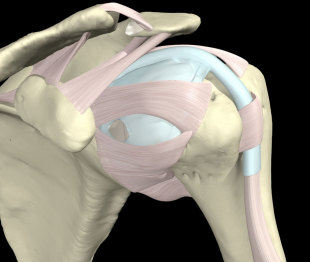
There can't be a shoulder discussion without a brief anatomy lesson. In terms of understanding the basics, the glenohumeral joint is a shallow ball-and-socket design, allowing a huge amount of mobility yet remaining as stable as possible. It also has to tolerate massive torques or rotational forces generated. Some people equate the head of the humerus (HOH) and its relation to the scapula with a golf ball sitting on a tee, i.e. easy to topple over. But it is actually more like trying to balance a soccer ball on your forehead, with both the ball and the head/body constantly moving to maintain "balance" and stop the ball from dropping off. It is this balance between the socket joint and the scapula position which we need to consider in the cricketer's shoulder as it is where a lot of problems begin and where a lot of rehab programmes fail.

As is the case with all injuries, the anatomy often lets us down by not being able to cope with the functional demands. Some injuries develop acutely, such as occurs with one hard throw when off balance, and some develop over a period of time through lots of high repetition - degenerative type injuries. The two most commonly injured structures in cricket are the infamous rotator cuff and the glenoid labrum.

The cuff is a group of small muscles acting primarily to pull and hold the HOH into its glenoid socket. The long head of biceps tendon assists the rotator cuff in this role. The labrum is a circular cartilage structure designed to "cup" or deepen this socket and provide attachment for the biceps tendon.

An injury to the labrum results in the HOH having excess translatory motion and not staying centred in the glenoid. The cuff then has to work harder to compensate for this structural instability. This translation often results in a "clunky" shoulder or one which goes "dead" when called upon to throw at pace. Anil Kumble's shoulder had a damaged labrum due to his high-arm legspin action. Years of repetitive stress had detached his labrum from the glenoid, resulting in the need for surgery. He's not alone. Muttiah Muralitharan and Shane Warne also had shoulder surgeries in their careers. And it's not just spin bowling, as many labral compression injuries occur during fielding when diving onto an outstretched arm.

Injury to the cuff, however, also results in a dynamic instability, whereby the HOH is again not held centred, and subsequently over time stresses both the labrum and cuff. Impingement is a common term used to describe a narrowing of the space in the shoulder that can result from this loss of centering. The cuff doesn't actually need to be injured for this to occur - repetitive throwing can tighten the posterior cuff muscles and effectively "squeeze" the HOH out of its normal centre of rotation in the glenoid. It really is a vicious circle and cricketers compound any underlying dysfunction by the repetitive nature of the game. They might not throw much in a match but when they do it is usually with great speed. The bulk of the throwing volume occurs during their practice sessions.

And when talking about shoulder mechanics we need to also understand critical role of the scapula. In order to ensure that the HOH remains remain centred in the glenoid, the scapula must slide and rotate appropriately around the chest wall (that soccer ball example). Any dysfunction in scapula movement is typically evidenced by a "winging" motion when the arm is elevated or by observing the posture of the upper back. Whether the winging comes before the injury or as a consequence is hotly debated. Either way it needs to function properly. And to complicate things even further, the thoracic spine also needs to be able to extend and rotate fully to allow the scapula to move. Kyphotic or slouched upper backs are terrible for allowing the arm to reach full elevation and is a big contributor to shoulder problems.

It should be clear that in order for a cricketer's shoulder to be pain-free, there needs to be a lot of dynamic strength and mobility of the upper trunk and shoulder girdle. But throwing technique is equally critical to both performance and injury prevention. Studies have shown that the shoulder itself contributes only 25% to the release speed of the ball. To impart this 25%, the angular velocity of the joint can reach 7000 degrees per second. However, what is interesting is that a whopping 50% is contributed by the hips and trunk when the player is in a good position for the throw (allowing for a coordinated weight transfer). But when off-balance and shying at the stumps, as often occurs within the 30-yard circle, the shoulder alone can be called upon to produce more than its usual load. Thus it is important to remember that throwing should be considered as a whole body skill.

The ligaments of the shoulder joint
Injury to the deep joint capsule ligaments and biceps tendon are difficult to diagnose but can account for that "problem" shoulder © Getty Images
Enlarge

Often a player will be able to bowl without experiencing symptoms, but will struggle to throw. In these cases, it is common to find pathology involving the long head of biceps or where it anchors superiorly onto the labrum. The latter is also commonly known as a SLAP lesion. In the transition from the cocking to acceleration phase of throwing, the shoulder is forcefully externally rotated. The biceps is significantly involved in stabilising the HOH at this point and often pulls so hard that it peels the labrum off the glenoid, giving symptoms of pain and instability. The overhead bowling action, however, does not put the shoulder into extremes of external rotation and hence symptoms do not usually occur. If pain is experienced during the release phase of throwing then there is a good chance that technique is again at fault. In order to decelerate the arm after the ball is released, the trunk and arm need to "follow through", using the big trunk muscles and weight shift towards the target. Failure to do this results in a massive eccentric load on the biceps tendon, also potentially tugging on its anchor on the glenoid. Throwing side-arm to avoid extremes of external rotation and pain is a common sign that all is not well internally.

As you can see, an injury to the shoulder is not a simple problem. And there are many other types of pathology found. It requires thorough assessment and management of a host of potential contributing factors which are mostly modifiable when identified. And whilst a lot can go wrong in a cricketer's shoulder, there is a lot that can be done to make sure it stays strong and healthy. Because prevention is always better than surgery in terms of outcomes, next week I'll discuss some shoulder training and injury prevention tips used by elite cricketers.

Friday, 6 April 2012

Switch is a hit

Mark Nicholas in Cricinfo

Pity the umpire in the split second before the switch hit. ICC's directive picks the moment that a bowler's back foot lands as the start of the delivery. From this point the batsman can do as he pleases with hands and feet but not before. Three times Kevin Pietersen made to switch and three times Tillakaratne Dilshan pulled away from releasing his offbreak. On the third occasion Asad Rauf warned Pietersen for time wasting. 

Incredible really. International teams bowl their overs at 13 an hour and no one blinks an eye while the most thrilling batsman makes to switch hit and finds himself on the wrong side of the law. Not Rauf's fault, he is the messenger and one with a lot on his plate. Rauf could not possibly have been sure of exactly the moment when Pietersen changed his stance because he was watching Dilshan's back foot. Er, or was he watching Dilshan's front foot, lest he no ball? Hmm, or was he watching the return crease, lest he no ball there? Or was he intent on the striker's end of the wicket, the business end, with the popping crease in his peripheral? Or was he briefly somewhere else? Long days out there in the Colombo sun.

David Warner's switch hit six over mid-off - or is it mid-on?- in a T20I against India earlier this year rang the bells once more. Now Pietersen has them clanging like Notre Dame. The switch hit is different from the reverse hit because the batsman swaps his hands on the bat and rotates his body 180 degrees, to become a left-hander in Pietersen's case. Generally, the stroke is a plus for a game that is not completely sure how to embrace the 21st century. When it is played successfully spectators, quite literally, gasp in wonder. They talk about it, most love it. We don't see it often because it is difficult, showy and takes big cojones. It's right up Pietersen's street, and Warner's. Less so say Andrew Strauss or Rahul Dravid. But they wouldn't want to stand in the way of progress.

There are two things to consider here. Cricket's lifeline is the balance between bat and ball. Given the bowler must commit to releasing the ball from one side of the wicket and with a part of his foot behind the popping crease, the batsman who is not so shackled must give something away if he wishes to change striking position. This should be leg stump.

As the law stands, a batsman should not be given out lbw if the ball pitches outside leg stump. A simple change to that law, effectively taking the leg-stump advantage away from the batsman would even it up. Thus, if you choose to switch hit you forego your leg stump and can be lbw if you are hit between wicket and wicket either way round.

The second thing is the ICC directive mentioned above. Once the bowler is at the point of delivery there is little he can do in response to the batsman's move. The directive should be that the batsman may do as he pleases from the start of the bowlers' approach to the crease. This way the bowler has a better chance to respond and should not feel that pulling way is his only defence. Were the lbw law changed, the bowler would have an aggressive option and may even see the batsman's change of stance as an opportunity to take his wicket.

From this more evenly balanced reaction to the switch hit would come the conclusion that it is the bowler who is timewasting by refusing to deliver. Not the batsman, who is bringing to the game his sense of imagination and adventure.

Thursday, 5 April 2012

The Heathen Manifesto

Many religious citizens will be grateful to Baggini for marking out some promising shared ground, but the devil is in the detail
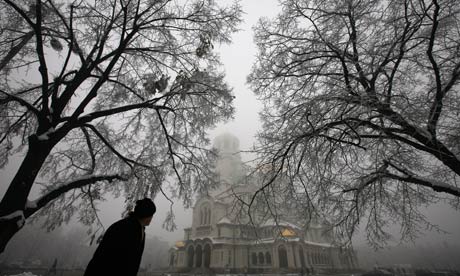
A man walks past the golden domed Alexander Nevski cathedral in Sofia, Bulgaria
A man walks past the golden-domed Alexander Nevski cathedral in Sofia, Bulgaria. Photograph: Petar Petrov/AP

Living in a heathen state might not be as bad as religious believers had feared. If I've understood article eight of Julian Baggini's heathen manifesto correctly, many religious citizens should be able to affirm quite readily three features of the secular state that he summarises.

First, religion has a legitimate place in politics. Unlike those on the control-freak wing of secularism, Baggini has no desire to banish religious or other worldviews from public life or to stop their adherents invoking such beliefs in policy debates. So presumably it's fine, then, for Operation Noah's recent Ash Wednesday Declaration not only to cite the familiar grim statistics about climate change, but also to quote ancient Jewish sacred texts and lobby the government accordingly. By implication, it's equally legitimate for secular humanists seeking the legalisation of assisted suicide not just to confine themselves to the prosaic legal language of rights, but also to appeal to deeper and more expansive convictions such as that human dignity ultimately resides in the capacity for moral autonomy (a view represented in chapter 2 of the Falconer commission report).

Second, while democratic debate should thus not be arbitrarily hampered by restrictions on religious or other worldview-based ideas, the state "should not give any special privilege to any particular sect or group, or use their creeds as a basis for policy". Actually, the two parts of that claim are distinct. One is that the state should treat groups holding various worldviews even-handedly, for example by avoiding funding or granting access to one while arbitrarily excluding others. The other is that the state should refrain from officially invoking any worldview or creed in publicly justifying any of its policies. So state officials shouldn't quote the Bible as official justification for the 2008 Climate Change Act, and nor should they cite a humanist doctrine of the primacy of moral autonomy in support of a law allowing assisted suicide. In other words, while we citizens can appeal to such grounds, ministers and civil servants shouldn't, even if they personally endorse them.

Third, in democratic politics, people should "formulate and justify policy in terms that all understand, on the basis of principles that as many as possible can share". Christian philosopher Christopher Eberle calls this the "obligation to pursue public justification" and commends it as part of a wider "ideal of conscientious engagement". That is, citizens who respect each other as equals should do their best to appeal to public norms their fellow citizens can affirm or at least acknowledge as valid, and not just for the obvious pragmatic reason that they might actually be listened to.

Many religious citizens will thus be grateful to Baggini for marking out some promising shared ground. But when we try to specify the precise meaning of the second and third features of his secular state, we rapidly find ourselves in territory that is hotly contested both within and between religious and secular worldviews. "State neutrality" implies some notion of equal treatment. But while it plainly rules out the official "establishment" of a worldview – Christianity in the Roman empire, Islam in Iran, or atheistic communism in the USSR – it is far from obvious what else it implies. Does it exclude all and any state funding of faith-based schooling, as in the US, or does it require a pluralistic European model in which several religious and worldview-based schools are funded proportionately? Does it mandate equal recognition of all conceptions of "marriage" or only those honouring the equality of men and women (or men and men, and women and women)? Appealing to "neutrality" doesn't solve questions like these, but merely prods at a hornets' nest of vigorous disagreement. Neutrality itself is an empty concept that is parasitic upon a prior social ontology that takes a view on the nature of the entities among which the state is supposed to be neutral.

Specifying what "public justification" amounts to is no less demanding. After an exhaustive analysis of what the term might actually require of participants in democratic debate, Eberle concludes that both religious and secular citizens may, despite their best efforts, find themselves coming up with justifications that turn out to seem invalid by many members of the public. And this isn't a sign of epistemic failure, only of the inherent limits of rational communication in a morally fragmented culture. The problem isn't unintelligibility: any passably educated secular humanist can make sense of an appeal to an ancient Hebrew text, just as a reasonably well-informed Muslim can make sense of a Kantian conception of human dignity. The problem is incompatibility; the deep chasm separating one citizen's deepest worldview commitments from another's.

More troublingly, the requirement to justify one's policy commitments only in terms of supposedly "shared principles" can serve to entrench the discursive hegemony of whatever happens to be the current majority position – such as the stubbornly persistent yet irrational faith, shared by every party except the Greens, that endless growth of GDP is the only way out of recession and even the only route to address global warming. Marginalised minorities know all about the power of such hegemonic convictions when their dissenting demands run up against what a complacent majority takes as self-evidently true.

The high principle of article eight of the heathen manifesto has flagged up an important debate. Let's now take up the difficult work of analysing what it might actually mean on the ground.

-----


Atheists, please read my heathen manifesto

Atheists are too often portrayed as bishop-bashing extremists and any meaningful debate with the religious becomes impossible. How can this be remedied? At the Guardian Open Weekend, Julian Baggini presented his 12 rules for heathens
Atheists protest in Tacoma, Washington.
Atheists protest in Tacoma, Washington. Photograph: Joshua Trujillo

In recent years, we atheists have become more confident and outspoken in articulating and defending our godlessness in the public square. Much has been gained by this. There is now wider awareness of the reasonableness of a naturalist world view, and some of the unjustified deference to religion has been removed, exposing them to much needed critical scrutiny.

Unfortunately, however, in a culture that tends to focus on the widest distinctions, the most extreme positions and the most strident advocates, the "moderate middle" has been sidelined by this debate. There is a perception of unbridgeable polarisation, and a sense that the debates have sunk into a stale impasse, with the same tired old arguments being rehearsed time and again by protagonists who are getting more and more entrenched.

It is time, therefore, for those of us who are tired of the status quo to try to shift the focus of our public discussions of atheism into areas where more progress and genuine dialogue is possible. To achieve this, we need to rethink what atheism stands for and how to present it. The so-called "new atheism" may have put us on the map, but in the public imagination it amounts to little more than a caricature of Richard Dawkins, which is not an accurate representation of the terrain many of us occupy. We now need something else.

This manifesto is an attempt to point towards the next phase of atheism's involvement in public discourse. It is not a list of doctrines that people are asked to sign up to but a set of suggestions to provide a focus for debate and discussion. Nor is it an attempt to accurately describe what all atheists have in common. Rather it is an attempt to prescribe what the best form of atheism should be like.

1 Why we are heathens

It has long been recognised that the term "atheist" has unhelpful connotations. It has too many dark associations and also defines itself negatively, against what it opposes, not what it stands for. "Humanist" is one alternative, but humanists are a subset of atheists who have a formal organisation and set of beliefs many atheists do not share. Whatever the intentions of those who adopt the labels, "rationalist" and "bright" both suffer from sounding too self-satisfied, too confident, implying that others are irrationalists or dim.

If we want an alternative, we should look to other groups who have reclaimed mocking nicknames, such as gays, Methodists and Quakers. We need a name that shows that we do not think too highly of ourselves. This is no trivial point: atheism faces the human condition with honesty, and that requires acknowledging our absurdity, weakness and stupidity, not just our capacity for creativity, intelligence, love and compassion. "Heathen" fulfils this ambition. We are heathens because we have not been saved by God and because in the absence of divine revelation, we are in so many ways deeply unenlightened. The main difference between us and the religious is that we know this to be true of all of us, but they believe it is not true of them.

2 Heathens are naturalists

Heathens are not merely unbelievers: we believe many things too. Most importantly, we believe in naturalism: the natural world is all there is and there is no purposive, conscious agency that created or guides it. This natural world may contain many mysteries and even unseen dimensions, but we have no reason to believe that they are anything like the heavens, spirit worlds and deities that have characterised supernatural religious beliefs over history. Many religious believers deny the "supernatural" label, but unless they are willing to disavow such beliefs as in the reality of a divine person, miracles, resurrections or life after death, they are not naturalists.

3 Our first commitment is to the truth

Although we believe many things about what does and does not exist, these are the conclusions we come to, not the basis of our worldview. That basis is a commitment to see the world as truthfully as we can, using our rational faculties as best we can, based on the best evidence we have. That is where our primary commitment lies, not the conclusions we reach. Hence we are prepared to accept the possibility that we are wrong. It also means that we respect and have much in common with people who come to very different conclusions but have an equal respect for truth, reason and evidence. A heathen has more in common with a sincere, rational, religious truth-seeker than an atheist whose lack of belief is unquestioned, or has become unquestionable.

4 We respect science, not scientism

Heathens place science in high regard, being the most successful means humans have devised to come to a true understanding of the real nature of the world on the basis of reason and evidence. If a belief conflicts with science, then no matter how much we cherish it, science should prevail. That is why the religious beliefs we most oppose are those that defy scientific knowledge, such as young earth creationism.

Nonetheless, this does not make us scientistic. Scientism is the belief that science provides the only means of gaining true knowledge of the world, and that everything has to be understood through the lens of science or not at all. There are scientistic atheists but heathens are not among them. Science is limited in what it can contribute to our understanding of who we are and how we should live because many of the most important facts of human life only emerge at a level of description on which science remains silent. History, for example, may ultimately depend on nothing more than the movements of atoms, but you cannot understand the battle of Hastings by examining interactions of fermions and bosons. Love may depend on nothing more than the physical firing of neurons, but anyone who tries to understand it solely in those terms just does not know what love means.
Science may also make life uncomfortable for us. For example, it may undermine certain beliefs about free will that many atheists have relied on to give dignity and autonomy to our species.
Heathens are therefore properly respectful of science but also mindful of its limits. Science is not our Bible: the last word on everything.

5 We value reason as precious but fragile

Heathens have a commitment to reason that fully acknowledges the limits of reason. Reason is itself a multi-faceted thing that cannot be reduced to pure logic. We use reason whenever we try to form true beliefs on the basis of the clearest thinking, using the best evidence. But reason almost always leaves us short of certain knowledge and very often leaves us with a need to make a judgment in order to come to a conclusion. We also need to accept that human beings are very imperfect users of reason, susceptible to biases, distortions and prejudices that lead even the most intelligent astray. In short, if we understand what reason is and how it works, we have very good reason to doubt those who claim rationality solely for those who accept their worldview and who deny the rationality of those who disagree.

6 We are convinced, not dogmatic

The heathen's modesty about the power of reason and the certainty of her conclusions should not be mistaken for a shoulder-shrugging agnosticism. We have a very high degree of confidence in the truth of our naturalistic worldview. But we do not dogmatically assert it. Being open to being wrong and to changing our minds does not mean we lack conviction that we are right. Strength of belief is not the same as rigidity of dogma.

7 We have no illusions about life as a heathen

Many people do not understand that it is possible to lead a meaningful, happy life as a heathen, but we maintain that it is and can point to any number of atheist philosophers and thinkers who have explained why this is so. But such meaning and contentment does not inevitably follow from becoming a heathen. Ours is a universe without guarantees of redemption or salvation and sometimes people have terrible lives or do terrible things and thrive. On such occasions, we have no consolation. That is the dark side of accepting the truth, and we are prepared to acknowledge it. We are heathens because we value living in the truth. But that does not mean that we pretend that always makes life easy or us happy. If the evidence were to show that religious people are happier and healthier than us, we would not see that as any reason to give up our convictions.

8 We are secularists

We support a state that is neutral as regards people's fundamental worldviews. It is not neutral when it comes to the shared values necessary for people of different conviction to live and thrive together. But it should not give any special privilege to any particular sect or group, or use their creeds as a basis for policy. Politics requires a coming together of people of different fundamental convictions to formulate and justify policy in terms that all understand, on the basis of principles that as many as possible can share.

This secularism does not require that religion is banished from public life or that people may not be open as to how their faiths, or lack of one, motivate their values. As long as the core of the business of state is neutral as regards to comprehensive worldviews, we can be relaxed about expressions of these commitments in society at large. We want to maintain the state's neutrality on fundamental worldviews, not purge religion from society.

9 Heathens can be religious

There are a small minority of forms of religion that are entirely compatible with the heathen position. These are forms of religion that reject the real existence of supernatural entities and divinely authored texts, accept that science trumps dogma, and who see the essential core of religion in its values and practices. We have very little evidence that anything more than a small fraction of actual existent religion is like this, but when it does conform to this description, heathens have no reason to dismiss it as false.

10 Religion is often our friend

We believe in not being tone-deaf to religion and to understand it in the most charitable way possible. So we support religions when they work to promote values we share, including those of social justice and compassion. We are respectful and sympathetic to the religious when they arrive at their different conclusions on the basis of the same commitment to sincere, rational, undogmatic inquiry as us, without in any way denying that we believe them to be false and misguided. We are also sympathetic to religion when its effects are more benign than malign. We appreciate that commitment to truth is but one value and that a commitment to compassion and kindness to others is also of supreme importance. We are not prepared to insist that it is indubitably better to live guided by such values allied with false beliefs than it is to live without such values but also without false belief.

11 We are critical of religion when necessary

Our willingness to accept what is good in religion is balanced by an equally honest commitment to be critical of it when necessary. We object when religion invokes mystery to avoid difficult questions or to obfuscate when clarity is needed. We do not like the way in which "people of faith" tend to huddle together in an unprincipled coalition of self-interest, even when that means liberals getting into bed with homophobes and misogynists. We think it is disingenuous for religious people to talk about the reasonableness of their beliefs and the importance of values and practice, while drawing a veil over their embrace of superstitious beliefs. In these and other areas, we assert the right and need to make civil but acute criticisms.

And although our general stance is not one of hostility towards religion, there are some occasions when this is exactly what is called for. When religions promote prejudice, division or discrimination, suppress truth or stand in the way of medical or social progress, a hostile response is an appropriate, principled one, just as it is when atheists are guilty of the same crimes.

12 This manifesto is less concerned with distinguishing heathens from others than forging links between us and others

Our commitment to independent thought and the provisionality of belief means that few heathens are likely to agree completely with this manifesto. It is therefore almost a precondition of supporting it that you do not entirely support it. At the same time, although very few people of faith can be heathens, many will find themselves in agreement with much of what heathens belief. This is what provides the common ground to make fruitful dialogue possible: we need to accept what we share in order to accept with civility and understanding what we most certainly do not. This is what the heathen manifesto is really about.

Telling Isn't Teaching: The Fine Art of Coaching

Richard Curwin

I have the greatest respect for coaches; not every coach of course, but those who care more about their players than about winning. I include those who coach drama, choir, band and all those who spend so much of their time and energy on helping children far beyond the confines of the classroom. Good coaches make great teachers.

Coaches understand that telling a player (or singer, actor, etc.) what to do is not enough. No drama director or soccer coach asks students to sit in the room and explain what to do. They go to the playing environment, demonstrate correct technique and then put the students through multiple repetitions; practice, practice, practice. Repetition ensures that correct technique will become close to automatic when the game is on the line, emotions run high and calm under pressure is required.

Coaches are fully aware that knowing what to do is not the same as knowing how to do it.
The same model needs to be used when changing student behavior if we want to successfully improve the choices students make. Incentives, threats, discussions, contracts, consequences, punishments, removal from class and every other technique we use to change behavior are 100% useless if the student does not know how to do something else.

Practice Makes Perfect?

Most interventions are based on letting the student know why his or her choice was inappropriate, and usually what to do instead. "Issac, fighting is wrong. In this classroom we resolve problems by talking, not hitting. Do you understand?" This is telling, and it is insufficient. Even if the teacher showed Issac one time how to talk when angry, and then had Issac demonstrate the technique, also one time, it would still be insufficient. What is missing are repetitions; practice, practice, practice.

When emotions run high, Issac will hit again; not because the threat of punishment wasn't strong enough or because the incentive wasn't big enough, but because the new behavior wasn't learned in a way that makes it close enough to automatic. Ask any coach how many repetitions are required for a player or actor to use correct technique in the game. You will never hear any number less than ten, and it's usually a lot higher.

Sometimes we ask a student, "Issac, what are you supposed to do when someone calls you a name?" "I should say I don't like it and walk away." This interaction does not mean that Issac will walk away. He knows the words, but that does not mean he knows how to do it. I can tell you how to shoot a foul shot in basketball, but under pressure I can't always do it. Knowing what is not the same as knowing how.

Transferable Skills

This issue gets confusing because we assume that students know how to do the right thing and simply choose not to do it. And in many cases, this is true. Other cases depend on circumstances. Telling a student to sit down seems on the surface to be pretty straightforward. But in some cases, it is not quite as simple as it seems. How does a child sit down when he was just bullied, learned his parents are getting divorced, found out his brother has cancer, or any of the myriad of possibilities that make sitting down hard to do?

My best suggestion is to teach by the coaching method starting from kindergarten: demonstrate with repetition how to make the right choice in different circumstances, and keep teaching it through high school. Starting early is best, but not starting at all is the worst. Individual student consequences should include a teaching component that goes far beyond telling. It can't hurt even if the child knows both what and how to behave correctly.

And to all the wonderful coaches who give so much to children, I offer my thanks.

Wednesday, 4 April 2012

Libertarianism and the Leap of Faith – The Origins of a Political Cult


By Philip Pilkington, a journalist and writer living in Dublin, Ireland

You wanted God’s ideas about what was best for you to coincide with your ideas, but you also wanted him to be the almighty Creator of heaven and earth so that he could properly fulfil your wish. And yet, if he were to share your ideas, he would cease to be the almighty Father.
Søren Kierkegaard

Political cults often have the strangest and most obscure origins. Take Marxism, for example. Today it is well-known that Marxist doctrine essentially sprang out of the obscure 19th century economic debates over the source of ‘value’. By ‘proving’ – that is, lifting the assumption from classical political economy – that all ‘value’ came from labour, Karl Marx went on to show that it was therefore only logical to assume the existence of something called ‘surplus value’ that was sucked out of labourers by a parasitic capitalist class. From out of this obscure debate flowed an awesome political movement – and a tyranny to match.

What is less well-known is that today’s most popular political cult – that is, libertarianism – was born in very similar circumstances; it too, arrived into the world out of the obscure 19th century debates over economic ‘value’. But before we explore this in any detail it might be appropriate to speculate a little on what characterises a political cult and why so many of these find their sustenance in economic theories of value.

What is a Political Cult and Why Do they Often Love Economic Value Theory?

A political cult is characterised by a political or economic doctrine that answers all the ‘big questions’ about life, the world and everything else. The doctrine that is handed down is then to be conceived of as a way to live one’s life – a project, handed down from Mount Sinai, that one is under the moral obligation to spread far and wide. This is why we refer to these movements as cults. And it is this that gives them such an awesome status in the glazed eyes of their devotees.

Under such circumstances, politics becomes a sort of religious calling. In these doctrines there is usually an ‘Evil Being’ who is opposing the spread of the ‘Good’ on earth and it is these that are to blame for all the bad things in the world. In Marxism this Evil Being is the capitalist; in libertarianism it is the figure who is at different times referred to as the ‘collectivist’, the ‘liberal’ or the ‘socialist’. Needless to say that, since these figures are usually ones of Extreme Evil they must be ‘liquidated’ or ‘eliminated’ at the first possible opportunity lest they spread their Demonic Gospel to the masses.

Political cults thus provide their devotees with a firm identity in an otherwise changeable and, let us be frank, confusing world. Like all cults they provide an anchor for their devotees with which they can fasten themselves to a rigid doctrine. They also typically lend their devotees a Holier-Than-Thou attitude as they provide them with ‘secrets’ that those outside of the cult cannot grasp. Not only does this allow the devotees to feel ‘special’, in modern political cults it also gives them practical, albeit ‘secret’ advice about what they should do in their day-to-day lives. (Think of the advice to buy gold or foreign stocks coming out of certain libertarian front men, for example).

Finally, the political cult will usually offer their followers the possibility of a Heaven on Earth. If the follower behaves well and spreads their beliefs to others they will eventually arrive at some sort of Utopia. This is their reward for believing in the doctrines, despite these doctrines being ridiculed by others.

So, why do these cults spring out of economic doctrines based on value? Well, this is a very complex question but there is one key aspect that is absolutely fundamental. In order to understand it a little better we must think for a moment about what economic ‘value’ supposedly is. It is, in fact, when we boil it right down, a moral entity. If we can tell what people ‘value’ and why, then we can make prognostications on what is Good for society as a whole.

In times past organised religions handed down fixed value systems to their adherents. Today people have become disillusioned with religious systems – ostensibly because they conflict with these peoples’ supposedly ‘scientific’ worldview. But the impulse among some for the self-assurance provided by a religion is so strong that they seek out ‘scientific’ systems that operate in an identical manner to religious or cult systems.

This is why the economic doctrine of ‘value’ is such a good foundational stone for such a cult. It provides a pseudo-scientific account about how people attribute value to things and in doing so tells the cult member a ‘Truth’ that they can use to make turn the world into a Utopia in which the optimal amount of ‘value’ is realised by the optimal amount of people.

Karl Marx claimed that ‘value’ was embodied labour and hence his followers concluded with him that all that was Good sprang from labour and that society should thus be based on free labour. The libertarians – together with the neoclassicals that they otherwise scorn – believe that all ‘value’ springs from utility maximisation. While the neoclassicals simply tinker with toy-models of ‘value’ to bolster their pseudo-scientific prestige, the libertarians undertake a leap of faith into the unknown and claim that in the theory of marginal utility they have found a ‘Truth’ that must be brought down from Heaven to Earth.

The Birthing of a Cult

Libertarianism was born out of the late 19th century doctrine of marginalism; a doctrine that went on to gain popularity with those opposed to Marxism. We will not dwell too much on the doctrine of marginalism when applied to the analysis of ‘value’ – having done so elsewhere. Here we will merely note that marginalism provides a moral defence for the supposedly ‘free market’ system that we live under today.

Marginalism, when applied to ‘value’ analysis, holds that it is in Man’s nature to follow a certain path in his consumption habits. These habits are determined by his maximising his utility. Most modern marginalists claim that they can use this concept to show that a ‘free market’ system is the fairest social system possible, since it responds automatically to Man’s marginal utility preference it delivers ‘value’ in a perfect and harmonious manner.

Markets deliver this ‘value’ through the mechanism of price. Prices, which reflect peoples’ desires to maximise their marginal utility, ensure that the most equitable distribution of ‘value-in-the-abstract’ is accommodated for by the ‘free market system’. And this is the point at which marginal value analysis becomes a value judgment in a very real sense.

The neoclassicals held, and continue to hold, that their models could capture this complex dynamic. Such an assertion was and is, of course, absolute rubbish. But the Austrians took a different tack. “Yes,” they said, “marginal utility theory is the correct way to go, but we cannot formulate models that adequately capture the inner workings of this great mechanism.”

In their book Modern Political Economics: Making Sense of the Post-2008 World, the authors provide a good summary of this approach. In the book they discuss what effect the discovery of marginalism’s inherent uselessness had on the Austrians:

Faced with the impossibility of mathematically deriving prices and quantities on the one hand and a metric of social welfare on the other, some Marginalists understood the limitations of their utility calculus. Mainly of an Austrian persuasion (most notably Ludwig von Mises, Friedrich von Hayek and Joseph Schumpeter), they even gallantly tried to use this failure to the advantage of their claims on behalf of untrammelled markets and against the encroachments of collective agencies, trade unions, governments etc.

This was a clever move. While the neoclassicals tinkered with their silly toy-models, trying to show how prices are determined through a sort of grand marginal calculus, the Austrians shrugged their shoulders as to how such a Divine Event could occur. Instead they began to think of price as a sort of Miracle that proved the divinity of the Market mechanism. They then went on deploy this argument to show that anything that encroached upon this Divine Being’s presence was inherently Evil:
If no degree of mathematical sophistication can pin down the ‘right’ prices and quantities, how can a government or any other form of collective agency work them out? How could a socialist economy, or even a national health service, ever price things? Thus, the market mechanism is indispensible because of the radical indeterminacy of prices.

Note what is happening here. The Austrians, like their marginalist brothers and sisters, thought that in marginal utility theory they had found the source from which ‘value’ truly flowed. They never for one moment questioned that. Even when they came to conclude that marginalist analysis could never definitively show anything useful about price determination, they remained confident – indeed, they became even more confident – that such an analysis was Truth.

In short, they postulated a theory and then when confronted with the inconsistencies of the theory when it was applied to any practical ventures they simply threw up their arms and claimed that such inconsistency showed just how true theory was and how much we should respect it. The knowledge that the theory imparted then became, in a very real sense, Divine, in that we meagre humans would never be able to grasp it and instead should simply bow down in front of the Great Being that possessed this knowledge – that is: the Market.

This is what gives the libertarians their religious zeal. In their quest for the Grand Truth they find this Truth to be inaccessible to Man. But in this inaccessibility they find a Higher Truth again; namely, that there is some other entity out there – a benevolent entity called ‘the Market’ – that possesses this Truth and all we have to do is follow the Laws which it has handed down to us and we will eventually reach Utopia. This is, of course, a leap of faith – a truly Kierkegaardian Leap of Faith.

From the Leap of Faith to the Knight of Faith

The Austrians were never quite content with the chicanery and political posturing that they had passed off as scientific debate. As alluded to above, their theories about market prices were forged in the debates with those who advocated a socilialistic planned economy. Being ideological to the core, the Austrians were, for a while at least, perfectly content with saying that while no economist could say anything worthwhile about price determination – and thus, any attempt at a socialist planned economy would be doomed to fail because there could be no perfectly informed coven of evil socialist economists who could administer it – they were still happy with the airy theory of market prices that they had just poked such a large hole in. Yes, they had undertaken a Leap of Faith by admitting that their logical constructions would never be whole but, as Kierkegaard well knew, every Leap of Faith needs a hero, a Knight of Faith – and the Austrians soon found theirs.

The Austrians had, although one suspects that they never fully realised this, essentially proved that their theories were inconsistent. There was always, lurking somewhere, that element that disturbed the calculation of prices in the market models.

Let us emphasise here that this element of disturbance was found, not in reality, but only in their models and in their minds. The fact is that the Austrians, even in out-stepping their neoclassical brethren, were still only exploring their own fantasies. This fact must always be kept in the front of one’s mind when considering their doctrines.

We highlight this because it was precisely at this point that the Austrians could have conceded that they were building castles in the sky – ideologically and emotionally motivated castles in the sky, no less – and that it might be time to grow up and give up on the whole sordid venture of trying to establish a ‘logical’ ‘economic’ basis for ‘value’ that would temper them with the moral certainty they needed to carry on their political crusade. But not so. Instead they found a Kierkegaardian Knight of Faith to fill the gap in their logic. And that Knight of Faith was the entrepreneur.

The Austrian economist Israel Kirzner put it as such in his fine paper ‘The Economic Calculation Debate: Lessons for Austrians’ (which is also an excellent historical overview of much of what we have here been discussing):

[T]he truth is that Hayek opened the door to an entirely new perspective on the “goodness” of economic policies and institutional arrangements. Instead of judging policies or institutional arrangements in terms of the resource-allocation pattern they are expected to produce (in comparison with the hypothetically optimal allocation pattern), we can now understand the possibility of judging them in terms of their ability to promote discovery.

And this ‘discovery’, of course, comes from the entrepreneur who was hereafter identified by the libertarian as the social hero who broke through all barriers in the pursuit of the creation of new ‘values’ – and by that, we mean economic ‘values’ – for the community as a whole. Kizner again:

For Austrians, prices emerge in an open-ended context in which entrepreneurs must grapple with true Knightian uncertainty. This context generates precisely the kind of choice that stimulates the competitive discovery process. In this context, the entrepreneur does not treat prices as parameters out of his control but, on the contrary, represents the very causal force that moves prices in coordinating directions.

In Kierkegaard’s writings which, like the writings of the Austrians sought to establish a theological metaphysic from which an individual could derive principles of moral certitude, it was the Knight of Faith – the true believer with complete faith and certainty in both himself and God – that filled in the logical gaps inherent in even the greatest philosophical systems. For the Austrians the entrepreneur filled the same role – except that this was a great hero that had both full faith in the Market and the ability to find opportunities to inject disequilibrium into the price system through innovation.

By now we are far outside the realm of anything even remotely resembling a science of ‘value’. What we have instead is a vast metaphysical and moral system that is built around a very specific – not to mention very narrow – conception of value, together with a sort of existential appendage in the form of the hero-entrepreneur. The hero veneers over the logical flaws in the metaphysical system, while that system remains in place as a faith-based explanatory schema which can be applied to the world around the libertarian.

Note how fantasy blends into reality almost completely at this point. No longer do we separate our supposedly ‘factual’ ideas about ‘value’ from the mythological figure of the entrepreneur. Fact and fantasy merge to form a sort of continuum the purpose of which is to insulate the devotee from any empirical evidence that might arise to prove them wrong – or, at least, misled – regarding, for example, more fundamental and more pressing macroeconomic questions. They simply know what is what because they have it all worked out – and no silly facts are going to tell them otherwise.

From the fertile source of marginal utility value calculus the Austrians thus constructed a pristine moral and metaphysical system. But in doing so – like all metaphysicians – they allowed their imaginations to run away with them. They never noticed the point at which they crossed that fateful line; that line that separates our attempts to represent the world accurately and dispassionately to ourselves from our attempts to create a fantasy world in which we can live. The Austrians had, at first, attempted to use their imaginations to explain the world around them and, in doing so, had fallen into a dream world of their own creation.

And so the foundations of the political cult we call libertarianism were firmly in place. It is an ingenious creation which even came to include what CG Jung and other mythologists might call a central ‘archetypal’ or mythic figure. Even more specifically, what the Austrians have done is insert into their narrative what the great American mythologist Joseph Campbell called the ‘monomyth’. The monomyth is a recurrent theme in mythologies from all over the world. It is essentially a ‘hero myth’ and, as Campbell argues, can be located in most major religious narratives (Christ, Buddha etc.). In this the Austrians provided the libertarian religion with their very own version of the monomyth.

That most libertarians are ignorant of the source of their beliefs – just as most of them are not very conversant with economic theory generally, their protestations to the contrary notwithstanding – only adds a sociological dimension to their cult. Their cult forms a hierarchy where those who are closer to the Grand Truth are supposed to know more than those who are less conversant. Those who are less conversant then scrutinise the Great Texts – which are largely taken to be Holy Writ – until they can advance up the priestly ranks.

The Malign Consequences of Political Cults

After experiencing what used to be called ‘Bolshevism’ we are well aware of the dangers of political cults if they should ever ascend to power. Indeed, we already had forewarnings of this danger in the cult of Reason that Robespierre erected in revolutionary France upon the intellectual architecture that Jean-Jacques Rousseau had constructed for him. All of these cults espouse liberty and freedom and end up creating regimes of pure tyranny. Why? Because in their violent desire to turn reality into a Utopia, they stamp all over reality as it fails to conform to the images in their minds.

Some have objected to fellow Naked Capitalism writer Andrew Dittmer’s ‘interview’ series as an attempt to misrepresent the libertarian movement by espousing the ideas of an extremist. This is unfair. The views of people like Hoppe may be fringe among libertarians – then again, they may not be – but the zealousness is the same across the whole movement.

Libertarians think that they have unearthed a Truth that no one else can grasp (because, of course, this Truth being so pure, anyone who could possibly grasp it must then by default recognise it as Truth). And they think that if they can get adequate social and political power to enforce this Truth we will all be better off for it. Hoppe’s vision of a totalitarian, corporatist future is thus realistic in that if libertarians were ever truly to get into power they would have to enact an immense violence upon the world to try to get it to conform to their vision of Utopia. In this, they are like every other political cult that has ever existed. And they are just as dangerous.

In fact, the libertarians are the direct heirs to the Marxist-Leninist throne. Even though their motives differ substantially, their Faith is based on very similar principles – which is not surprising given that both movements grew out of the same 19th century debate over economic value. In this regard it is useful to recall John Maynard Keynes’ characterisation of Marxism-Leninism:

[It] is the combination of two things which Europeans have kept for some centuries in different compartments of the soul – religion and business.
Keynes also highlighted an important point about how such cults become influenetial:
[They derive their] power not from the multitude but from a small minority of enthusiastic converts whose zeal and intolerance make each one equal in strength to a hundred indifferentists.

The goal may have changed, but the unswerving faith in pseudo-scientific – or, to be very precise, in the Austrians case, because they tend to eschew ‘scientificity’: pseudo-rational – economic doctrines has not. Let us just hope that such a cult does not deliver to us another era of primitive tyranny and medieval inquisition. It is our democracies that are at stake.