Search This Blog

Sunday, 29 October 2017

Dons, donors and the murky business of funding universities

John Lloyd in The Financial Times

The University of Oxford is in constant need of money — and it takes an approach to raising it that oscillates between the severe and the relaxed. Those familiar with its procedures say many would-be donors have been turned away. No names are given, outside of senior common room gossip. “Oxford doesn’t need to compromise,” says Sir Anthony Seldon, vice-chancellor of the independent Buckingham University. “People want to be associated with it.” But that confident sense that the great universities will do the right thing has been called into question by a Swedish academic who has thrown down the gauntlet to one of Oxford’s most prominent donors. 

For many centuries the deal has been clear: donations buy gratitude and even a named chair or library, but no rights to influence the running of the institution. In return, barring evidence of illegality, the university will not probe the funder’s finances. “You don’t have to like sponsors,” says the Canadian scholar Margaret MacMillan, an admired contemporary historian and former warden of St Antony’s College, Oxford. “But if they don’t interfere with your teaching and your choice of colleagues, then the rest is their own affair.” 

The Rhodes scholarship is a case in point. It began in 1902 with a bequest from Cecil Rhodes, the enthusiastic imperialist who argued that Anglo-Saxons deserved to be the dominant global race. His scholarship was founded to bring “the whole of the uncivilised world under British rule”, by funding young men to Oxford. Two years ago a South African Rhodes scholar, Ntokozo Qwabe, started a campaign to recognise the “colonial genocide” underpinning Rhodes’ wealth. He called for the removal of his statue from Oriel College, Rhodes’ alma mater. The campaign escalated, but the university and college resisted and the statue still stands. 

You cannot accept stolen money, but who is to decide what is stolen? Money from the oligarchs? 

A more recent bequest, beginning with £20m in 1985 and rising to over £50m, is that of the Syrian-born businessman Wafic Saïd to Oxford’s business school, which bears his name. With high-level contacts in the Saudi royal family, Saïd had helped to arrange the Al-Yamamah contracts between Saudi Arabia and British Aerospace and other UK companies from the mid-1980s onwards, worth some £44bn. In the 2000s it emerged that millions of pounds had been paid to senior Saudi royals to smooth the deal. BAE agreed to pay over £250m in the US in 2010, after the Department of Justice found it guilty of “intentionally failing to put appropriate anti-bribery preventive measures in place”. No wrongdoing was proved against Saïd, who said he had received no commissions for assisting in the deal. Last year, he opened legal proceedings against Barclays Bank, which had forced him to close several accounts, and had told him he was no longer welcome as a customer. (He later dropped the lawsuit after the bank apologised and confirmed the closures had been a business decision that was not based on any wrongdoing in relation to account activity.) 

The traditional argument justifying such relationships is ensuring a robust division between gift and subsequent influence. The economist and FT commentator John Kay, the first director of the Saïd Business School (1997-99), says he takes “a relaxed view of the relationship between the leadership of a university or college and the donor. It’s rare to have a very rich donor who has accumulated his wealth by simple hard work and dedication to honest business. There’s often something like monopolistic practices. You cannot accept stolen money, but who is to decide what is stolen? Money from the oligarchs? From Nigerian businessmen?” 

Seldon at Buckingham adds, “Even if it’s bad money, it can serve good causes. The key thing is that there are no conditions attached, and that there is a clear statement of the establishment of a firewall between the money and the decisions of the institute. We would all be in a pickle if we were to be morally pure.” 

Bo Rothstein, a former professor at Oxford University who resigned his post in protest against one of its funders But moral purity has come to Oxford, in the shape of Professor Bo Rothstein. A fellow of Nuffield College, Rothstein is a Swedish sociologist whose work has centred on ethical issues, most recently on studies of corruption in government. In 2015, he joined the faculty at the Blavatnik School of Government — where, in early August, he learnt that Len Blavatnik, the billionaire Ukrainian-born businessman whose £75m gift had founded the school, had given $1m to help finance Donald Trump’s inauguration. Blavatnik, one of Britain’s richest men, was knighted this year for services to philanthropy: he has given large sums to the Tate Modern and, with the New York Academy of Sciences, has established the Blavatnik Award for Young Scientists. After a pause for reflection, Rothstein resigned in protest. 

Rothstein believes Trump is an existential danger to western values. To become entangled financially with such a man in any way, he argues, is an affront to both universal and university values. “I teach about the importance of rights,” he says. “How am I to explain to a student why I am giving legitimacy, by teaching at the school, to one who gives money to him? It’s impossible.” How far would you take this argument, he adds. “Would you take money from one who was a Nazi? Would you have a Hermann Göring chair of aviation?” 

Rothstein’s challenge to Oxford’s see-no-evil consensus has brought him into conflict with one of the university’s brightest stars, the economist and international-relations scholar Professor Ngaire Woods. It was Woods who conceived of and secured the funding for the Blavatnik School of Government, becoming its founding director in 2011. 

She disputes almost everything Rothstein says about the immediate aftermath of his resignation — something he refers to as an “excommunication”, because he was asked to leave the school very soon after his resignation. On the central issue, she says that “we do not tell our donors how to exercise their political points of view; they do not tell us how to run the institute. Len Blavatnik has never said anything to me about what I should do or how I should teach. Never. Not once. There was a representative of the donor on the building committee for the institute, as is the Oxford practice, and that has been the extent of it.” 

Woods believes Rothstein had not grasped the difference between supporting Trump’s campaign and giving to the inauguration. “Lots of people give money to the inauguration, because it can’t be paid for from government funds,” she points out. “You cannot seriously think that the institute is in some way linked to Trump. We teach our students to try to get the facts right, to reason and to learn from diversity. We recently held a ‘challenges to government’ conference, in which all the issues of governance were debated. We have an open, argumentative centre.” 

Rothstein’s campaign has been a lonely one, not least given that established opinion in Oxford is squarely against him. Macmillan says that “to give money for Trump’s inaugural was quite legal, a perfectly sensible thing to do. I think he [Rothstein] put himself in an indefensible position.” Kay commends Rothstein for having the courage of his convictions, and “not engaging in a protest which costs nothing in the way of harm to the protester, but accepting the damage this will do to his position”, but he believes he was wrong to act as he did. At Buckingham, Seldon says: “I have sympathy for what he has done, but if the Blavatnik institute gets money that is unattached, and it’s clear there must be no influence, then that is OK.” 

This consensual view is anathema to Rothstein, a Luther among Renaissance popes. “Trump is a very serious threat to liberal democracy. My colleagues think it’s not too serious. Some say we shouldn’t oppose him head on, but we should just give the platform to strong liberals and democrats. But I am not keen on that. It’s trying to take a middle course which, with Trump, now you cannot take.” 

Rothstein sees the infamous case involving the London School of Economics as proving his point. In 2008, the LSE’s Global Governance Centre accepted a donation of £1.5m from Saif al-Islam Gaddafi, son of the long-time despot of Libya, Muammer Gaddafi. 

Amid charges that a PhD had been awarded to Saif improperly, and after a speech in Tripoli in 2011 in which he promised “rivers of blood” to flow if protests against his father’s regime did not stop, the LSE acknowledged it had erred in pursuing the relationship and in taking the money. The then-director, Sir Howard Davies, resigned. Says Rothstein: “There are of course donors whose behaviour you cannot just ignore and say, ‘Well, it’s their business.’ ” 

Rothstein has at least one prominent supporter in the academy, back in his native Sweden: the president of the Stockholm School of Economics, Lars Strannegård. “I think he was right to do it. Things which a year ago were thought not even to be allowed to be said are now daily announced from the White House. This strikes at the core of what universities do. It is like when you dip a watercolour brush into water — the first time it is slightly darkened, then more, and more until it is completely dark.” 

The Blavatnik affair finds an echo in the 1951 CP Snow novel, The Masters. Set in a Cambridge college in 1937, it concerns a struggle over the election of a new master — the two main contestants being an establishment figure seeking to bolster his chances by attracting a donation, and a radical scientist determined the college should take a stance against the steady advance of fascism. 

But universities are now far from Snow’s times. Those who now run them attest to a much more harried life than in the past. The state has retreated from full funding — universities charge fees, and most have created units that raise money — but it now expects higher teaching and research standards. At the same time as the universities have come under more intense financial pressure, their student bodies have become more combative. Aside from the “Rhodes Must Fall” campaign, there has been a rash of “no platforming” incidents in which controversial speakers have been barred from appearing on campus. 

More threatening still are the campaigns to force universities to divest themselves of investment considered unethical. Cambridge university has ceased investment in coal and tar sand “heavy” oil, but the pressure to go further is intensifying. Many students, faculty members and influential figures including Rowan Williams, former Archbishop of Canterbury and now master of Magdalene College, are calling for Cambridge to divest from all energy companies. So far the university has resisted, but Nick Butler, a former senior executive in BP and now a visiting professor at King’s College London, believes the tide runs against them. “The universities don’t want to be told what to do with their money,” he says. “But I think that, since the protests will continue, more and more will give in.” 

Money is power, but so is a university, especially one as storied as Oxford. Large donors are not always kept at arm’s length, and influences can be subtle, a question of implicit understandings more than explicit direction. They can also be fruitful: as a co-founder of the university’s Reuters Institute for the Study of Journalism (2006), whose funding comes largely from the Thomson Reuters Foundation, I think it right that Reuters representatives sit on the committees of the institute — balancing those who represent the interests of the university. The idea was, in part, to have the academy and the journalism trade interact and inform each other — not always without friction, but always with benefits. 

Donor-ship is an increasingly complex business in the digital age. What once might have been a campus kerfuffle can become a global furore. Last month, Washington DC saw such a dispute when a scholar named Barry Lynn was fired from the New America Foundation think-tank (not attached to a university) by its chief executive, Anne-Marie Slaughter. Lynn had written a statement about Google and “other dominant platform monopolists” and called for more robust antitrust action against them. Google, a major funder of the foundation, complained via Eric Schmidt, executive chairman of its parent company, Alphabet, according to the New York Times. Slaughter, a former director of policy planning at the State Department, at first called the Times’ report false, then backtracked. She later conceded: “There are unavoidable tensions the minute you take corporation funding or foreign government funding.” 

Universities must now manage tensions more actively than before; in doing so, all make deals and ethical zigzags. The two main protagonists in this updated CP Snow imbroglio deserve each other, for both are driven: Woods, by a desire to fashion her school into a world centre for the study of good governance; Rothstein, by a hyperactive political conscience that demanded a demonstrative act, essential to dramatise the scale of the disaster that, he believes, the Trump presidency presages. Two beliefs clash: one, that continuing to offer a rational-liberal education will maintain and expand rational-liberal governance; the other, that these very assumptions are being destroyed, and that larger protest must be made. Both are, at root, principled. Both cannot be right.
From climate change to robots: what politicians aren’t telling us

Simon Kuper in The Financial Times

On US television news this autumn, wildfires and hurricanes have replaced terrorism and — mostly — even mass shootings as primetime content. Climate change is making natural disasters more frequent, and more Americans now live in at-risk areas. But meanwhile, Donald Trump argues on Twitter about what he supposedly said to a soldier’s widow. So far, Trump is dangerous less because of what he says (hot air) or does (little) than because of the issues he ignores. 

He’s not alone: politics in many western countries has become a displacement activity. Most politicians bang on about identity while ignoring automation, climate change and the imminent revolution in medicine. They talk more about the 1950s than the 2020s. This is partly because they want to distract voters from real problems, and partly because today’s politicians tend to be lawyers, entertainers and ex-journalists who know less about tech than the average 14-year-old. (Trump said in a sworn deposition in 2007 that he didn’t own a computer; his secretary sent his emails.) But the new forces are already transforming politics. 

Ironically, given the volume of American climate denial, the US looks like becoming the first western country to be hit by climate change. Each new natural disaster will prompt political squabbles over whether Washington should bail out the stricken region. At-risk cities such as Miami and New Orleans will gradually lose appeal as the risks become uninsurable. If you buy an apartment on Miami Beach now, are you confident it will survive another 30 years undamaged? And who will want to buy it from you in 2047? Miami could fade as Detroit did. 

American climate denial may fade too, as tech companies displace Big Oil as the country’s chief lobbyists. Already in the first half of this year, Amazon outspent Exxon and Walmart on lobbying. Facebook, now taking a kicking over fake news, will lobby its way back. Meanwhile, northern Europe, for some years at least, will benefit from its historical unique selling point: its mild and rainy climate. Its problem will be that millions of Africans will try to move there. 

On the upside, many Africans will soon, for the first time ever, have access to energy (thanks to solar panels) and medical care (as apps monitor everything from blood pressure to sugar levels, and instantly prescribe treatment). But as Africa gets hotter, drier and overpopulated, people will struggle to feed themselves, says the United Nations University. So they will head north, in much greater numbers than Syrians have, becoming the new bogeymen for European populists. Patrolling robots — possibly with attack capabilities — will guard Fortress Europe. 

Everywhere, automation will continue to eat low-skilled jobs. That will keep people angry. Carl Benedikt Frey of Oxford university’s Martin School recalls workers smashing up machines during the British industrial revolution, and says: “There was a machinery riot last year: it was the US presidential election.” American workers hit by automation overwhelmingly voted Trump, even though he doesn’t talk about robots. 

Soon, working-class men will lose driving jobs to autonomous vehicles. They could find new jobs servicing rich people as cleaners (a profession that’s surprisingly hard to automate), carers or yoga teachers. Young men will develop new notions of masculinity and embrace this traditionally feminine work. But older working-class men will probably embrace politicians like Trump. 

The most coveted good of all — years of life — will become even more unfairly distributed. The lifespans of poor westerners will continue to stagnate or shorten, following the worldwide surge in obesity since the 1980s. Many poorer people will work into their seventies, then die, skipping the now standard phase of retirement. Meanwhile, from the 2020s the rich will live ever longer as they start buying precision medicine. They will fix their faulty DNA and edit their embryos, predicts Vivek Wadhwa, thinker on technology. (I heard him and Frey at this month’s excellent Khazanah Megatrends Forum in Malaysia.) Even if governments want to redress inequality, they won’t be able to, given that paying tax has become almost voluntary for global companies. 

The country hit hardest by automation could be China (though Germany could suffer too, especially if its carmakers fail to transform). China’s model of exploiting cheap factory labour without environmental regulations has run its course, says Wadhwa. “I don’t think we need Chinese robots.” Even if China’s economy keeps growing, low-skilled men won’t find appealing careers, and they won’t even have the option of electing a pretend system-smasher like Trump. The most likely outcome: China’s regime joins the populist trend and runs with aggressive nationalism. 

Troubled regimes will also ratchet up surveillance. Now they merely know what you say. In 10 years, thanks to your devices, they will know your next move even before you do. Already, satellites are monitoring Egypt’s wheat fields, so as to predict the harvest, which predicts the chance of social strife. Meanwhile, western politicians will probably keep obsessing over newsy identity issues. My prediction for the 2020s: moral panics over virtual-reality sex.

How Joseph Conrad foresaw the dark heart of Brexit Britain

From financial crises to the threat of terrorism, the works of the Polish-British author display remarkable insight into an era, like ours, of elemental change in a globalised world


Maya Jasanoff in The Guardian


A terrorist bombing in London, a shipping accident in southeast Asia, political unrest in a South American republic and mass violence in central Africa: each of these topics has made headlines in the past few months. But these “news” stories have also been in circulation for more than a century, as plotlines in the novels of Joseph Conrad, one of the greatest and most controversial modern English writers.

Conrad is known to most readers as the author of Heart of Darkness, about a British sea captain’s journey up an unnamed African river. And Heart of Darknessis known to many as the object of a blistering critique by the late Nigerian novelist Chinua Achebe, who condemned Conrad as “a bloody racist” for his degrading portrayal of Africans. It is right to call out the racism – and, for that matter, the orientalism, antisemitism and androcentrism – in Conrad’s work. But his dated prejudices, abhorrent though they are to readers today, coexist in his work with elements of exceptional clairvoyance.


The 100 best novels: No 32 – Heart of Darkness by Joseph Conrad (1899)


Today, more than ever, Conrad demands our attention for his insight into the moral challenges of a globalised world. In an age of Islamist terrorism, it is striking to note that the same author who condemned imperialism in Heart of Darkness(1899) also wrote The Secret Agent (1907), which centres around a conspiracy of foreign terrorists in London. In the wake of the 2008 financial crisis, it is uncanny to read Conrad in Nostromo (1904) portraying multinational capitalism as a maker and breaker of states. As the digital revolution gathers momentum, one finds Conrad writing movingly, in Lord Jim (1900) and many other works set at sea, about the consequences of technological disruption. As debates about immigration unsettle Europe and the US, one can only marvel afresh at how Conrad produced any of these books in English – his third language, which he learned only as an adult.

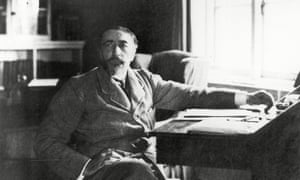
Conrad was born Józef Teodor Konrad Korzeniowski in 1857 to Polish nationalist parents in the Russian empire. He came of age in the shadow of imperial oppression; his parents were exiled for political activism. Both of them died under the stress, leaving Conrad an orphan at 11. For the rest of his life, he carried the scars of a youth traumatised by punishing authoritarianism, as well as what he considered a fatal, useless idealism.


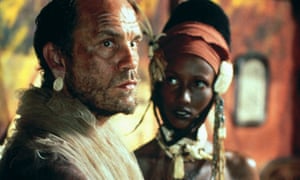
 John Malkovich and Iman in the 1993 film adaptation of Heart of Darkness. The book has been criticised for its degrading portrayal of Africans. Photograph: Allstar

He travelled to France aged 16 to train as a sailor. For the next 20 years, he worked as a professional mariner, sailing to the Caribbean, Africa, southeast Asia and Australia. From the deck of a ship, he witnessed a transformation in the intensity of global interconnections. Conrad docked alongside oceangoing steamers that transported immigrants from Europe and Asia on a scale never seen before or since. He cruised over the transoceanic telegraph cables that moved news, for the first time in history, faster than people. Between voyages, he made his home in London, the centre of a global financial market that was more integrated during his lifetime than it would be again until the 1980s.

Based in England from 1878, Conrad learned English from scratch, became a proud naturalised British citizen and moved up the ranks of the merchant marine – an all-round immigrant success story. But he also witnessed the rise of xenophobia and nativism. A string of anarchist bombings and assassinations on the continent stoked suspicions of young foreign men – even though what terrorist bombings there were in 1880s Britain were committed by Fenians. Paranoia about anarchism, combined with antisemitism and fears about immigrants stealing British jobs, led to the passing of the 1905 Aliens Act, the first peacetime immigration restriction in British history.

By then, Conrad had left the sea and become a published author and a married father, living in Kent. He channelled his international perspective into a body of writing based overwhelmingly on personal experience and real incidents. A map of Conrad’s fiction looks strikingly different from that of his contemporary Rudyard Kipling, the informal poet laureate of the British empire. Conrad roamed across Asia, Africa, Europe and South America without setting a single novel in a British colony. Although he was a fervent British patriot – he believed that, of all the empires, Britain’s was the best – Conrad was acutely aware of the limits of British power. Nostromo predicts American ascendancy with chilling clarity. In the novel, a San Francisco mining magnate declares: “We shall run the world’s business whether the world likes it or not.”


‘It almost seems as if he wrote his fiction through a zoom lens pointed at the future’... Joseph Conrad. Photograph: Granger/REX/Shutterstock

Across his writing, Conrad grappled with the ethical ramifications of living in a globalised world: the effects of dislocation, the tension and opportunity of multiethnic societies, the disruption wrought by technological change. He understood acutely the way that individuals move within systems larger than themselves, that even the freest will can be constrained by what he would have called fate. Conrad’s moral universe revolved around a critique of the European notion of civilisation, which for Conrad generally spelled selfishness and greed in place of honour and a sense of the greater good. He mocks its bourgeois pieties in The Secret Agent; in Heart of Darkness, he tears off its hypocritical mask. In Lord Jim, he offers a compelling portrait of a flawed person stumbling to chart an honourable course when the world’s moral compass has lost its poles.

Conrad, a lifelong depressive, excelled at the art of the unhappy ending. Yet the essential ethical question of his work – how can one do good in a bad world? – transcends any character or plot. His novels stand as invitations for readers to seek happier answers for themselves.

While the British empire is gone and Kipling’s relevance has receded, Conrad’s realms shimmer beneath the surface of our own. Internet cables run along the sea floor beside the old telegraph wires. Conrad’s characters whisper in the ears of new generations of antiglobalisation protesters and champions of free trade, liberal interventionists and radical terrorists, social justice activists and xenophobic nativists. Ninety per cent of world trade travels by sea, which makes ships and sailors more important to the world economy than ever before.

Conrad brought to all his work the sensibility of a “homo duplex”, as he once called himself – a man of multiple identities. This gives his fiction a particular power for those of us trying to reconcile competing scales of value and beliefs. That Conrad failed to measure up to our moral standards of racial tolerance is a humbling reminder of how our own practices might be judged wanting in future.

It is especially poignant to read Conrad in the context of a post-Brexit Britain. One of Conrad’s most moving short stories, “Amy Foster”, describes the fate of an eastern European man named Yanko, who is shipwrecked on the shores of Kent. In the rural community into which he stumbles, he is rejected as an outlandish stranger by everyone except Amy, a simple farm girl. They fall in love, get married and have a baby boy – but when Yanko cradles his son with an eastern lullaby, his wife snatches the infant away. He falls ill, slips into his native language and dies of a broken heart. “His foreignness had a peculiar and indelible stamp,” wrote Conrad. “At last people became used to see him. But they never became used to him.”

In Lowestoft, where Conrad landed in Britain in 1878, there is a pub opposite the railway station called the Joseph Conrad – which is fitting, since Conrad recalled learning English by poring over newspapers in Lowestoft pubs. He would have been astonished to learn that Poles are now by far the largest foreign-born population in Britain. But Lowestoft voted heavily for Brexit and the Joseph Conrad is part of the pub chain JD Wetherspoon, whose chairman, Tim Martin, was a staunch supporter of leave. One can only wonder what reception a freshly arrived Konrad Korzeniowski would get there today.


Saturday, 28 October 2017

‘Modi Doesn’t Talk of Achche Din Now Because He Knows People Will Laugh’

P Chidambaram

Yes, we must decolonise: our teaching has to go beyond elite white men

Something is very wrong when a simple request from a large number of students, that their reading lists be broadened slightly to include some black and minority ethnic writers, becomes the basis of a manufactured racial “row”.

Priyamvada Gopal in The Guardian

Something is very wrong when a simple request from a large number of students, that their reading lists be broadened slightly to include some black and minority ethnic writers, becomes the basis of a manufactured racial “row”.

Rather than acknowledge that a major university was right to be responsive to student concerns, two British newspapers saw fit to turn an open letter from Cambridge English students into a trumped-up existential crisis for white male writers. By “decolonising” the curriculum this endangered species would now be sacrificed, apparently, like so many hapless Guys on bonfire night, to the burning fires of black and minority ethnic special interest. Nice dramatic scenario, pity about the truth content. 

The real danger is that the substantive issues at stake that concern us all, not just ethnic minorities, become obscured in this facile attempt at stoking a keyboard race war with real-life consequences at a time when hate crimes are on the rise. The young people who wrote this letter, however, have an admirable clarity of vision and a robust faith in knowledge that is inspiring. They are interested in asking challenging questions about themselves and others, and how we see ourselves in relation to each other.

Decolonising the curriculum is, first of all, the acceptance that education, literary or otherwise, needs to enable self-understanding. This is particularly important to people not used to seeing themselves reflected in the mirror of conventional learning – whether women, gay people, disabled people, the working classes or ethnic minorities. Knowledge and culture is collectively produced and these groups, which intersect in different ways, have as much right as elite white men to understand what their own role has been in forging artistic and intellectual achievements.

However, it is not only about admiring yourself in the mirror – a fact that eludes those shrieking about the nonexistent elimination of straight white men from the curriculum. Real knowledge is not self-puffery, the repeated validation of oneself. In English literature, it involves learning about the lives of others, whether these be Robert Wedderburn, the fiery black Scottish working-class preacher who believed in self-emancipation; the working-class poet Robert Bloomfield; or Una Marson, the suffragist and broadcaster who wrote eloquently about race and the colour-bar in Britain as well as resonant poetry about her native Jamaica.


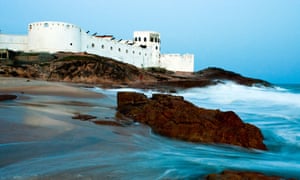
 Cape Coast Castle, Ghana: ‘Our students have rightly asked to know more about the colonial context in which much English literature was produced.’ Photograph: Alamy

Surely, Sultana’s Dream, the early 20th-century fantasy story by Rokeya Sakhawat Hossain – where men stayed home while only women went out – has a relevance for our understanding of Muslim women’s long and rich history of writing and debate. (Yes, it exists.)

To decolonise and not just diversify curriculums is to recognise that knowledge is inevitably marked by power relations. In a society still shaped by a long colonial history in which straight white upper-class men are at the top of the social order, most disciplines give disproportionate prominence to the experiences, concerns and achievements of this one group. In my native India, upper-caste Hindu men have long held sway over learning and efforts are being made, in the face of predictable resistance, to dislodge that supremacy.


Britain has a long history of black and Asian communities that contributed significantly to its wealth and heritage

A decolonised curriculum would bring questions of class, caste, race, gender, ability and sexuality into dialogue with each other, instead of pretending that there is some kind of generic identity we all share.

It is telling that efforts to inject some breadth and variety into teaching are being dismissed as “artificial balance”.
The assumption here is precisely the problem – that the best of all that has been thought and said just happens to have been produced in the west by white upper-class people, largely men.

Scholars such as Peter Fryer and Rozina Visram have shown that black and Asian people have a history in Britain that stretches back nearly 500 years, and that these communities contributed significantly to its wealth and heritage. In fact, the very idea of what it meant to be “white” or “English” relied on the presence of those, including the Irish, who could be marked as neither.

Yet decolonisation is not just about bringing in minority texts but also how we read “traditional” texts. Our students have rightly asked to know more about the colonial context in which much English literature was produced – indeed, in which the very idea of “English” literature came to be.

The British empire, love it or loathe it, paradoxically provides the common ground upon which our histories and identities were forged, whether those be of a white Etonian with Sandhurst military training or a queer British Asian female social worker. Between total denial of imperial history and mindless celebration of it comes actual knowledge of what happened. British literature has a great dissident tradition which acknowledges this. Barry Unsworth’s magisterial 1992 Booker prizewinner, Sacred Hunger, a powerful novel set in the context of the triangular slave trade of the 18th century, shows how the emergence of capitalist greed, the “sacred” unquestionable value, inflicted suffering on black men and women, and on working-class Britons, in different ways.

Ultimately, to decolonise is to ask difficult questions of ourselves. The Antiguan author Jamaica Kincaid puts it thus: “And might not knowing why they are the way they are, why they do the things they do, why they live the way they live, why the things that happened to them happened, lead … people to a different relationship with the world, a more demanding relationship?” Our students have chosen the demanding way.

Friday, 27 October 2017

My fantasy Corbyn speech: ‘I can no longer go along with a ruinous Brexit’

Alastair Campbell in The Guardian


Last week I wrote a speech for Theresa May, which concluded with an announcement that she had decided Brexit was impossible to deliver. Sadly she didn’t listen, and so onwards she leads us towards the cliff edge. I am hoping for better luck with Jeremy Corbyn, fantasising that he delivers this speech to a rally of his faithful Momentum followers …

“Thank you for that wonderful reception. Yes, yes, I know my name. ‘Oh Jeremy Corbyn’. Yes, that’s me. Now please stop singing and sit down. Please.

“I will be honest with you. I didn’t want the job. I didn’t think I would get the job. I wasn’t sure I could do the job. But thanks to you I got it. Thanks to you I now have the confidence to do it. I approach the challenge of being prime minister not with fear or trepidation but with confidence that our time is coming. That it is our duty now to serve. Protest is one thing. Government is another. And we must now prepare, genuinely prepare, as a government in waiting.

“If I become prime minister it is Brexit that will define my leadership. As a result of what happened on 23 June 2016 I have no choice in the matter. The people’s choice dictates that it is so.


I have concluded that rejecting this vision of Brexit is the only route to the vision of the world that drives us


“It is clear to me the constructive ambiguity of our position on Brexit is no longer tenable. It is fine for a party of protest. It is not good enough for a party one step away from government.

“Let’s imagine this entirely credible scenario. As the current chaos inside the government continues, Mrs May falls. The Tories try to foist another prime minister on us, chosen by their ageing membership. But we and the public won’t wear it. We force an election. We win an election. I am prime minister. Now the hard part begins.

“What does our ‘jobs-first’ Brexit mean then, in power? What is a jobs-first Brexit if our leaving the single market hurts growth, as every analysis in the world says it will? What is a jobs-first Brexit dependent on trade if trade slows and even grinds to a halt with the absence of a proper customs infrastructure at our ports, the absence of good trade deals not just with the EU but with the 66 countries with whom we have deals as part of the EU? What is a jobs-first Brexit if firms decide that if the UK leaves the EU, they leave the UK, and take their jobs and their tax take with them? 

“And how can we fund all the things in our election manifesto that we need and want to fund in the future if our economy tanks?


“At Labour’s party conference, I said that our continued membership of the EU would prevent us from implementing many of the plans in our manifesto. I am grateful to the New European, which sought legal advice in Brussels and established this was not the case. So the question becomes, not ‘What do we lose by staying in?’, but ‘What do we lose by coming out?’

“The dominance of the hard right is clear in their pressing Mrs May to walk away from the negotiations, crash out of the EU, into the World Trade Organisation. I am of the internationalist left. We exist to fight the nationalist right, not to dance to its tune. We believe in support for the many, not the prosperity of the few. It is the nationalist right that is leading the Brexit Mrs May is pursuing, whatever the cost. It is their only route to the vision of the world that drives them. And, today I want to tell you – I have concluded that rejecting this vision of Brexit is the only route to the vision of the world that drives us. In this debate, they are the reactionaries, we and the Europeans the progressives.

“Take back control, they said. But what kind of control? Their control. Their right to dump decades of law with their ‘great repeal bill’, and bring about their vision of a low-tax, low-regulation economy, public services there for profit not public, employment and environmental rights shredded, one of the great powers of the world reduced to a gigantic Cayman Islands. That is their dream. And many of those who voted for Brexit, in the poorest areas, the places we represent, they will be the hardest hit. As the reality of power nears, I must tell you, candidly, that I can no longer go along with it. Not now. Not in two years. Not ever.

“No deal, I must warn you, would be a catastrophe. So if Mrs May is still prime minister, and presents the no-deal option to parliament, be in no doubt – we will vote against it. We will press for a deal with keeps us in the single market and the customs union, to protect trade and avoid chaos.

“But today I want to go further. The referendum was close. It was not, contrary to the claims of the Brextremists, ‘clear’, let alone ‘overwhelming’. Millions are deeply concerned about what is happening to our country. I believe people have a right to change their minds as this all unfolds. And politicians have a duty to reflect that, and to give proper vent to the debate it represents.

“Democracy is a process, not a moment in time. If the government falls, and we win an election, then we can put a different vision of Brexit to the country, and we will. If we can bring about a fresh election, this is the Brexit policy you will be voting for.

“We will take over the negotiations from Mrs May and her hapless, hopeless team. We will review what progress has been made and assess whether Brexit can be delivered on the timescale set out under the article 50 process she triggered.

“If we conclude, as on any current assessment seems likely, that Brexit cannot be delivered without real damage to our economy, that a jobs-first Brexit is impossible, that it will mean lower growth, higher prices, higher unemployment, more austerity, cuts to public services, customs chaos, the return of a hard border in Ireland and the potential undoing of the Good Friday agreement, the loss of security cooperation with our partners, then I will revoke article 50.
“I am clear that a referendum decision can only be overturned by another one, and so we will legislate for a new referendum, and the choice we will put before the British people is between staying in, or leaving on the terms then on offer.

“If, as I believe they will, the British people opt to reverse their decision of last June, that will put us in a strong position then to succeed where David Cameron failed, and win the argument for a reformed EU that works for all.

“Comrades, this has been a lot to take in. But I believe it is the right course for our party, for our movement, and most important of all, for the country.

“This is our country too. This is our time. Let’s take back control of our destiny, and build a country future generations will be proud to call home. Thank you.”

Publicly owned energy minnows take on big six in troubled UK market

Adam Vaughan in The Guardian


A wave of new publicly owned companies is taking on the big six energy suppliers, as local authorities search out new revenue and seek to restore faith in public services and tackle fuel poverty.
Islington council last week launched a not-for-profit energy firm, London’s first municipal operator in more than a century, while Doncaster’s energy company will start early next month.

Portsmouth is also on the verge of becoming the first Conservative-controlled council to launch one, to bring down residents’ bills as well as bringing investment to the city.

The first and best-known publicly owned energy companies, Robin Hood Energy in Nottingham and Bristol Energy, started two years ago. But the growing trend came to the fore this month when Nicola Sturgeon promised to create a Scottish public energy company by 2021.

“No shareholders to worry about. No corporate bonuses to consider. It would give people – particularly those on low incomes – more choice and the option of a supplier whose only job is to secure the lowest price for consumers,” Scotland’s first minister said, in an echo of the marketing used by the councils who have already started their own energy companies.

Sturgeon’s firm will be entering an increasingly crowded space: publicly owned firms include Liverpool’s Leccy, Derby’s Ram, and Leeds’ White Rose. Councils in Sussex are clubbing together to launch Your Energy Sussex latter this year.

The driving forces for these councils stepping into the complex, heavily regulated energy space are largely twofold. One is the need to create a new revenue stream in a time of austerity, as well as rebuilding the public sphere – councils are perhaps most visible to residents when they close libraries and cut other services.

But there is also a political project afoot as well, as Labour-controlled councils such as Nottingham push an agenda that has since been picked up by Jeremy Corbyn during the last election.

There is also genuine concern over fuel poverty, and a hope that local authorities will be more trusted than the usual energy suppliers, that even Theresa May says have ripped customers off
.

“It’s about councils trying to provide a trusted and better service for people to switch. We want a challenger model to the big six,” said Labour MP Caroline Flint, whose Doncaster constituency will see the launch of publicly owned Great Northern Energy on 7 November.

The flurry of such firms showed Labour’s manifesto pledge of a publicly owned energy supplier in each region was happening regardless of the party’s failure to win power in June’s snap general election, Flint said.

Tackling the growing amount of households in fuel poverty, which number 2.5 million in England and Wales, is another big motivation.

Steve Battlemuch, chair of the board of Robin Hood Energy and a Labour councillor, said: “Nottingham has a lot of fuel poverty, lot of people on prepayment meters [which people in energy debt are often moved on to]. That was what drove us: coming into the market and driving down prices for the customer.”

Like other public firms, part of his sales pitch is that there are no corporate masters to pay.

“There’s no shareholder bonuses, because there’s no shareholder apart from Nottingham city council. There’s no director bonuses. I had a cupcake on our first anniversary,” he said.

Peter Haigh, managing director of Bristol Energy, said his organisation was more inclusive than private companies, and its physical presence in the city was a big attraction.

“Customers can and do walk in, sign up and pay a bill. That often attracts customers who have never switched, people who can pop in face to face,” he said.

Part of the reason councils are getting into energy is the barriers to market are not as great as they once were.

Mark Coyle, strategy director of Utiligroup, which has provided services to most of the publicly owned energy companies, said: “We’ve been able to lower the barriers for them, without lowering compliance.”

But while the sector appears to be burgeoning, combined these companies are a minnow compared with the blue whales that are the big six firms, which between them account for 80% share of the market.

Bristol Energy is biggest publicly owned energy supplier, with about 110,000 customers; Robin Hood has just over 100,000. Both have created more than 100 jobs locally, but neither has yet recovered their start-up costs.

Moreover, while such firms appear to be proliferating, most are simply rebranding off Robin Hood rather than setting up as fully licensed suppliers which can buy energy on the wholesale market. The approach has its critics.

“Islington are doing a good thing but it’s a shame that they’ve had to go to Nottingham to buy the energy,” said Caroline Russell, a Green party London assembly member.

Sadiq Khan, London’s mayor, has promised to create an energy company for Londoners, but has been slow to deliver.

Last month he was advised by experts to piggyback off an existing supplier, rather than create his own licensed company. While cheaper and quicker to do, it would also mean he had less power and flexibility to offer something genuinely new and different compared with the 50-plus private firms already in the market.

Nigel Cornwall, founder of energy analysts Cornwall Insight, said that while he was supportive of publicly owned energy companies, it was revealing that many councils were opting to ride on Robin Hood’s coat-tails rather than set up their own licensed firm.

“This is high-risk stuff. The sector is complicated. You [the council] probably don’t have the resources. You’ve probably underestimated the costs. And that’s with costs of entry falling dramatically,” he said.

Cornwall said he was also sceptical as to whether the companies would be sustainable and would become a permanent fixture in the market – but that would not stop them trying.

Battlemuch said: “What we need to do is break through into the mass market. That’s what we’re trying to do.”