Search This Blog

Sunday, 7 April 2013

Patent justice


SAKTHIVEL SELVARAJ  
The Supreme Court’s patent denial to Novartis for its anti-cancer drug Gleevec leaves the door open for Indian pharmaceutical companies to produce their own versions of the drug.
The HinduThe Supreme Court’s patent denial to Novartis for its anti-cancer drug Gleevec leaves the door open for Indian pharmaceutical companies to produce their own versions of the drug.

Drug patents are designed to create profits that enable more research on diseases affecting millions. But in practice, they have often generated super profits for big pharma companies while erecting access barriers for the poor. The Novartis case spotlights much that is wrong with the system.


The rejection of the Novartis petition challenging one of the most progressive tenets of the Indian Patents Act (1970), as amended in 2005 by the Supreme Court, is a landmark verdict for the public health community and the generic drugs industry, in particular, and for global health. Under the amended Indian Patents Act, Section 3(d) allows drug companies to obtain product patents for new salts or chemical ingredients. This is intended to encourage drug companies to protect their rights and prevent these from being copied by competitors, allowing for a 20-year protection period to recoup investments. However, Section 3 (d) does not encourage frivolous patents. It is intended to encourage only breakthrough innovations and discourage new use of known chemical substances or new delivery mechanisms of existing chemical compounds.
Transnational drug companies not only possess the first mover advantage, but owing to the high-voltage brand image they create, often extend their patents well beyond the already long period of protection. Drug companies are known for ‘evergreening’ patents by filing new patents, tweaking existing molecules to show novelty. Innovation is a red-herring, often used by multinational drug companies to make super-profits at the expense of social good and well-being. Under the mailbox agreement of Trade-Related Aspects of Intellectual Property Rights (TRIPS) provisions, India received over 9,000 mailbox applications as patent filings post-2000, while a major share of those were for pharmaceutical patents. Global evidence, on the other hand, shows that roughly 275 such patents were filed and granted for blockbuster drugs during this period. In order to pre-empt Indian generics companies from producing these drugs and to keep them away from the market, the big pharma companies have flooded the patent offices with frivolous patent applications, known to be existing molecules tweaked to appear as a novel product.
The R&D myth
The night before the apex court verdict, Novartis threatened to stop investing in research and development in India, if the verdict went against it. How serious is the threat and how realistic the scenario? In India’s drug production of over Rs. 100,000 crore, Novartis’ turnover is a little over Rs. 1,000 crore, constituting around one per cent. Out of the total expenditure of over Rs. 800 crores incurred by Novartis India in 2012, a paltry Rs. 29 lakhs was for R&D, constituting roughly 0.03 per cent of its entire expenditure in India.
Can such low spending can be considered R&D investment? In fact, Novartis R&D expenditure in India for the past five years has been in a similar range. On the other hand, Novartis consistently posted a profitability ratio (Profit After Tax as percentage of Total Income) of over 15 per cent in the last five years, something to envy for other sectors.
Big Pharma argues that if global R&D of innovator companies were to be considered, transnational drug corporations spend over US $ one billion to come up with a new drug. This includes cost of R&D incurred on failed drugs as well, as pharmaceutical companies take, on an average, roughly 12-13 years to get patents on new drugs. The magic one billion dollar figure is a gross overestimate. Even by conservative calculations, this figure would be one-fifth or one-fourth of the billion dollar estimate. But Big Pharma is quick to recoup its R&D spending from blockbuster drugs. Take the case of Gleevec (Imatinib Mesylate), sold in the US. Novartis raked in a total turnover of US $ 1.69 billion from the US alone in 2012 from the drug. The global turnover on Gleevec is anybody’s guess. It is also widely known that the cost of manufacturing drugs is only a fraction of the turnover.
Novartis currently sells Glivec (Gleevec) for Rs. 4,115 per tablet, while Resonance, an Indian generic drug company dispenses it at Rs. 30 per tablet. The annual cost of treatment per patient on Glivec would be in the range of Rs. 15 lakhs while Indian generic companies are offering it at Rs. 10,000. If Novartis were to get its patent on Glivec, Indian generic companies would have to stop their production, and therefore an unaffordable scenario would have prevailed for the common man in not only India but in other developing countries. Thankfully, the court ruled in favour of Section 3 (d) of the Patent Act.
Novartis claims that 95 per cent of cancer patients in India were provided the medicine free. This is patent untruth. Retail market sales in India for Glivec, sold by Indian generics producers are currently worth Rs. 20 crores. Novartis sells Glivec directly to patients and not through the usual retail chain, a system that is designed to make people believe that they offer the drug free.
After seven years of battle, the Supreme Court verdict seals this issue, facilitating Patent Controllers to strictly enforce Section 3 (d), thereby pre-empting pharmaceutical companies that seek to evergreen products. However, there are several other safeguards that are enshrined in the patent law that must be utilised to make life-saving and essential drugs affordable. And one such key safeguard is invoking compulsory licensing for blockbuster drugs, if the original manufacturer fails to sell it affordable rates.
Last year, India invoked the provision to license generic player Natco to produce Nexavar, after Bayer, the innovator failed to make it affordable. Such policy measures are critical, in order to improve access to life-saving medicines, as households in India are known to pay nearly 70 per cent of their health care spending on medicines.
(Dr. Sakthivel Selvaraj is Senior Health Economist, Public Health Foundation of India, New Delhi.)
Also read

Company profits depend on the 'welfare payments' they get from society


Why Novartis case will help innovation

    ACHAL PRABHALA
    SUDHIR KRISHNASWAMY 

The Supreme Court judgment on Glivec is a blow for a patent regime with a higher threshold of inventiveness


On April 1, 2013, the Supreme Court upheld the Intellectual Property Appellate Board’s decision to deny patent protection to Novartis’s application covering a beta crystalline form of imatinib —the medicine Novartis brands as Glivec, and which is very effective against the form of cancer known as chronic myeloid leukaemia (CML). The judgment marked a crucial conclusion to a saga that has been several decades in the making. The story could start in 1972, if you like, when the Indian Patents Act of 1970 — grounded in the findings of the Bakshi Tek Chand and Ayyangar Committee Reports — came into force, enabling the explosive growth of the Indian generics industry into the world’s largest exporter of bulk medicines. Or, it could start in 2005, when India amended its patent law to comply with the Agreement on Trade-Related Aspects of Intellectual Property Rights (TRIPs), a trade rule at the World Trade Organisation (WTO) that established a new global regime of intellectual property.

Key lesson
No matter where we start, the saga has come to a close, and the key lesson seeping through is that good sense won. Firstly, the Supreme Court decision was not about the patentability of the imatinib compound as such: that patent, having been instituted in 1993, is excluded from the purview of the Indian patent system, which is only obligated to consider patents filed in 1995 or after. The case the Supreme Court heard was whether Novartis’ beta crystalline form of imatinib was worthy of patent protection: its judgment was that this modification by Novartis did not satisfy the standard of inventiveness required under Indian patent law. Secondly, Indian patent law is as yet unchallenged at the WTO; Novartis’s earlier challenge to the constitutionality and TRIPs compatibility of Indian patent law was rebuffed by the Madras High Court in 2007 and no appeal was pursued. Thirdly, the Supreme Court judgment effectively recast Indian patent law as being nuanced and original in its meshing of domestic political economy concerns with the integrated global economy it participates in.
The outcome of this nuance and originality? Imatinib will continue to be 

available to patients in India from multiple suppliers at a price 10 times less than the current cost of Glivec; approximately 27,000 cancer patients in the country who pay for their imatinib will continue to have access to the medicine in the public and private sectors at the lowest cost possible; and should Novartis ever suspend its charitable programme, all 15,000 of the cancer patients who currently receive imatinib free from Novartis will have similarly equitable access to the medicine.

Hackneyed narrative
Despite substantial progress in the popular understanding of the place of patents in a developing country like India, a hackneyed narrative has emerged, especially in the pink press, warning us that this judgment will have a negative impact on innovation in the long run. As it happens, one of the most useful outcomes of the Supreme Court judgment is a renewed focus on what innovation is — and how it should be rewarded. Behind the headlines foretelling various levels of doom — the death of innovation in the country and the end of research for diseases which matter to us — is the popular idea that patents are a proxy for innovation. After all, patents are widely understood as short-term monopolies enshrined in the law and provided as incentive to inventors on the evaluation of publicly disclosed innovation. It would seem as if patents are synonymous with innovation. Except, this is not quite the case.

Minor variations
In the last three decades, the global gold rush for patents has been dominated by filings for minor and mostly inconsequential innovations — at the expense of breakthrough innovation. In large part, this is because weak standards in the patent laws of developed countries (led by the U.S. and Europe) have explicitly encouraged this shift. The whittled-down, lobbied-out, stretched-beyond-recognition patent regime that is characteristic of these countries — and other less-developed countries where they influence the polity — is unfortunately the ‘norm’ to which India now finds itself an ‘outlier.’ But the outlier is a solution: the norm is the problem. A British Medical Journal report from 2012 succinctly summarises the global research situation for new medicines: “This is the real innovation crisis: pharmaceutical research and development turns out mostly minor variations on existing drugs, and most new drugs are not superior on clinical measures.”
If the patent regimes of developed countries are dominated by minor patents, many or most of which have no demonstrable innovation to show, why are they so avidly pursued by global pharmaceutical companies? A Public Library of Science study from 2012 points to the answer: secondary patents extend the patent life (and thereby, the monopoly pricing) of pharmaceutical products long beyond their designated life span, adding, on average, between six and seven years to the patent life of the original compound. Any patent regime which incentivises secondary patents with weak laws will only serve to extend commercial monopolies at low levels of innovation — and will no longer provide the incentive for genuine innovation. The genius of the Supreme Court judgment on Novartis’s patent application lies in restoring the connection between patents and innovation by upholding and legitimising a regime with a higher threshold of inventiveness.
Will Indian patent law change the way the global pharmaceutical industry innovates? No; not immediately, at least. Could it positively affect pharmaceutical innovation in the long run? Absolutely. In the present day, India comprises 1.3 per cent of the global pharmaceutical market by value. That figure, in itself, is why changes to Indian patent law will not help global pharmaceutical giants break free from the incentive model they are prisoners of. At most, they might have to learn how to compete in a crowded market for some of their less original products. The symbolic opportunity presented by the Supreme Court’s backing of Indian patent law, however, is a real threat — and pharma CEOs in New York, London and Basel get it. In the long run, as more countries understand the Indian model, appreciate its legitimacy, and reflect on its benefits to both public health and innovation, they might want the same. And if that happens, when that happens, we may begin to see real, positive change in the way pharmaceutical innovation works.

Empowered scenario

The Indian Patents Act of 1970 was a game changer. From the perspective of 43 years of experience, we can safely say that it shook up the pharmaceutical industry and altered it irreversibly. The new, empowered scenario was most vividly illustrated during the peak of the HIV/AIDS treatment crisis in the first decade of the 21st century, when countries like Brazil, Thailand, South Africa and, of course, India, took health security into their own hands and legitimately moulded their domestic patent systems to respond to the crises within. The Indian Patents Amendment Act of 2005, which gave us the law we have today — a law which was ratified last week — has the potential to change the game once again. This time, however, the change might come more slowly; the hell the Indian government was dragged through has not been lost on anyone. The lengthy trials, the frequent challenges, the full-scale vilification, and every other scare tactic thrown our way by a public-relations juggernaut (along with the implicit support of many developed country governments) was not for nothing. And the Supreme Court judgment is all the more important as a result, for it shows a new way may be hard and tiresome, but is ultimately possible.

(Achal Prabhala works on access to medicines; Sudhir Krishnaswamy is on the faculty of Azim Premji University, and is the Dr. B.R. Ambedkar Visiting Professor of Indian Constitutional Law at Columbia Law School)


Saturday, 6 April 2013

The nation at the heart of the offshore tax haven scandal is Britain

Britain's relationship with its overseas territories means it could – if it wanted – easily tackle offshore global secrecy
Phone Booth, british virgin islands
'The British Virgin Islands are perhaps rivalled only by Switzerland as a global capital for the offshore industry'. Photograph: James Marshall/Corbis
It's a tumultuous time for the offshore industry. For decades, there's been an uneasy equilibrium: opprobrium from campaigners, torpor from regulators, apathy from the wider public, and delight for the wealthy benefiting from the arrangements to cut their tax bill or avoid regulatory scrutiny.

Recently, though, the rhetoric and action have changed. In tougher economic times – for which the financial sector has copped a huge amount of the blame – the public is more aggrieved by tax avoidance arrangements than ever, while recent proposed offshore crackdowns have been cautiously welcomed by campaigners as having the potential to actually be effective.

The leaking of more than 2m offshore files to the International Consortium of Investigative Journalists, and through them to the Guardian for our Offshore Secrets stories is just the latest in a series of unwelcome developments.

Amid this backdrop, and with ministers from George Osborne to Vince Cable willing to speak out strongly against offshoring and tax avoidance, it's easy to imagine the villains of the piece to be irresponsible foreign nations – happy to shelter the mega-rich in offshore secrecy, unconcerned about the tax avoided in other, larger countries.

If only the British government can prevail in these overseas battles, things will get better, it seems.
But such a stance ignores that one nation in particular has ties to offshore havens everywhere. It's a veritable nexus of offshore influence, related to havens in the Caribbean, and much closer to home. That nation is, of course, the United Kingdom.

The clue is quite often in the name. The British Virgin Islands are perhaps rivalled only by Switzerland as a global capital for the offshore industry, with more than 1m offshore companies registered on the Caribbean island (population 31,900). Plaques for registration agents, solicitors and more line almost every wall of the islands' tiny capital.

The islands are a British Overseas Territory: legally under the jurisdiction of the UK (and with a British governor), but in practice self-governed. Other havens with this UK imprimatur include the Cayman islands, Gibraltar, and the Turks and Caicos Islands.

Closer to home, the UK wields even more control over the crown dependencies: Jersey, Guernsey and the Isle of Man, whose role in legal tax avoidance techniques has been documented time and again for decades.
Even within the UK itself, little is done against tricks of the offshore trade that have been known for decades.

In 1999, Sark islander Philip Croshaw was struck off as a UK director for acting as a "nominee" – a sham director who hides a company's real controllers – for thousands of companies in the UK.

At the time, then-trade minister Kim Howells said: "The government today struck a fatal blow against the practice of so-called 'nominee directorships' … The trade in providing 'nominee director' services from the island of Sark has been a scandal … The courts have now effectively outlawed this abuse."

And yet today – 14 years later – more than 175,000 UK companies have had directors based in offshore havens, and the Guardian has identified 28 sham directors with tens of thousands of companies between them.

In short, a huge string of the world's foremost offshore havens have, at minimum, a strong and long-lasting symbolic relationship with the UK, and in practice are susceptible to significant influence and pressure from the UK government.

Even at home, offshore practices known and deplored by governments for more than a decade are still going strong. The temptation for campaigners and government alike is to look overseas for the villains in the offshore trade. The reality is more complex, and the trouble closer to home. The upside of this is it means that if Britain really wants to tackle global offshore secrecy, there's a lot it can do.

But so far, everywhere – on its home turf, in its dependencies, and in its overseas territories – the UK brand is on both sides of the fight. For Britain, the battle against offshore tax havens – if it wants to fight it – begins at home.

US universities offer software which they claim can instantly grade students' essays and short written answers


From The Independent 6/4/2013

Students could soon find their essays being instantly graded by a computer - rather than waiting weeks for a professor’s ponderous comments.


New software developed in the United States which means they receive an instant grade through their computer if they send it online will be available for UK universities to use.
The software programme has been developed by EdX, a non-profit making enterprise set up by Harvard and Massachusetts Institute of Technology, and will be available free on the web to any organisation that wants to use it.

It uses artificial intelligence to grade students' essays and short written answers - freeing professors to carry out other work.

So far its use has been confined to the US - where a row is raging over whether it is right to use it to measure students’ essays which, in some subjects, include a fair amount of opinion around the factual content.  Many academics believe it cannot replace the words of wisdom of a professional lecturer.

However, Anant Agarwal, president of EdX, predicted it would be a useful pedagogic tool - allowing students to redo essays over and over again thus improving the quality of their answers.

“There is huge value in learning with instant feedback,” he said.  “Students are telling us they learn much better with instant feedback.”

He added: “We found that the quality of the grading is similar to the variation you find from instructor to instructor.”

An online petition against the practice, launched by a group calling itself Professionals Against Machine Scoring of Student Essays in High-Stakes Assessment, has amassed almost 2,000 signatures - including that of Noam Chomsky - protesting at the idea.

The group’s petition says: “Let’s face the realities of automatic essay scoring. Computers cannot ‘read’. They cannot measure the essentials of communication; accuracy, reasoning, adequacy of evidence, good sense, ethical stance, convincing argument, meaningful organisation, clarity and veracity, among others.”

On the other hand, students said that - if it was available for the individual to use - it could become a handy tool for a student to test the water on their essay before submitting to a professor for grading.

Friday, 5 April 2013

Company profits depend on the 'welfare payments' they get from society


The free market is a myth. From drug patents to quantitative easing, businesses make money because of state help
Swiss drugmaker Novartis's headquarters in Basel
Swiss drugmaker Novartis's headquarters in Basel. ‘Switzerland infamously had no patent law until 1888, half a century after its introduction in most of rich capitalist countries.’ Photograph: Christian Hartmann/Reuters
Earlier this week, India's supreme court ruled that the country will not grant a patent to Novartis, the Swiss pharmaceutical company, for the cancer drug, Glivec. Being a new version of an existing drug, the ruling said, it does not deliver enough innovation to warrant a patent. Novartis condemned the ruling as "a setback for patients that will hinder medical progress for diseases without effective treatment options".
This statement is rich coming from a company from Switzerland – a country that infamously had no patent law until 1888, half a century after its introduction in most rich capitalist countries.
Even after 1888, Switzerland refused to award pharmaceutical and other chemical patents for two decades, the new patent law having stipulated that patents are granted only to "inventions that can be represented by mechanical models". The country introduced chemical patents only in 1907 under intense pressure from Germany, whose technologies its pharmaceutical companies were liberally "borrowing". Ciba-Geigy and Sandoz, whose merger in 1996 created Novartis, were among those companies.
What is more, until 1978, Switzerland granted patents only for chemical process (that is, how you make a chemical) and not for chemical substance (that is, the chemical itself), on the reasonable ground that the substance had always existed in nature and the "inventor" has only found a way of isolating it. This was actually a rather widely accepted view at the time. Germany and France had only just introduced chemical substance patents in the late 1960s. Canada and Spain refused to grant patents to pharmaceutical substances until 1992.
Despite all this history, the pharmaceutical industry is extremely aggressive with substance patents, as in the case of Glivec, because it knows that its profit level will fall dramatically without them. Unlike a BMW or an Airbus, chemical substances are very easy to copy. Even if the processes of manufacturing them are patented, you can relatively easily come up with alternative processes. Without the artificial monopoly conferred by the patent, the inventor of a chemical substance can make only little money (generic drugs typically cost 5% of drugs with patent monopoly).
Patent monopoly creates a lot of problems. It allows the patentee to charge the maximum to consumers. This may not be a problem if the patented product is a luxury item, like parts that go into a smartphone, but can violate basic human rights if it involves things such as life-saving drugs. Patent monopoly also blocks technological progress in the relevant fields during its duration (20 years), as other people cannot use the patented technologies in developing other technologies.
Despite all these problems, we, as society, grant patent monopoly because we believe that it brings more than compensating benefits. By giving greater incentives to invest in developing new technologies, patent monopoly can create more innovative technologies. This means that society has the right not to grant a patent for a technology when it feels that the benefits are outweighed by the costs, as in the Indian court ruling against Novartis.
The pharmaceutical industry most starkly reveals how profits are "social" creations – it makes its profit because it is granted artificial monopolies in the form of patents. But it is not alone in this respect.
Another obvious case is the banking industry. Today, many banks all over the world would not have existed but for the huge public money poured into them in the aftermath of the 2008 crisis. Even in the case of those that have not been bailed out, their profits would have been much lower (or their losses far bigger, in the case of loss-making ones) without the cheap money showered on them – without any condition, unlike in the case of state supports such as unemployment benefit – through cuts in interest rates and thequantitative easing by the Bank of England.
In other instances, the social protection of business is more roundabout. The horsemeat scandal has revealed that British supermarkets and the European meat industry have made higher profits from the relaxation of regulations regarding food standards, introduced by the coalition government in 2010 in the name of cutting government spending and, more important, "red tape". The Poundland scandal has revealed that British retail stores would make lower profits if they were not allowed to use the claimants of unemployment benefits as unpaid workers.
I can go on, but the point is that all businesses make what profits they make only because the government, and the electorate as the ultimate sovereign (at least in theory), helps them in all sorts of ways – free money (banks), free workers (Poundland), monopoly rights (pharmaceutical companies), implicit permission for substandard products (supermarkets).
Once we accept that the amounts of profit companies make are ultimately determined by these "welfare payments" society decides to confer upon them, we begin to see the problem with the free-market view that has dominated the world for the last few decades.
For far too long we have been told by the business lobby and free-market ideologues that profit is the objective indicator of a company's contribution to the economy, when it is really socially and politically determined. Poor people receiving government benefits have been told far too often that they are spongers, when the rich get even more government benefits.
It is time that we dispensed with the myth that the market is a force of nature that should not be meddled with. Markets are social creations that can be, and have been, modified for social purposes.

---------


West should learn from India’s high patent standards

SA Aiyar
07 April 2013, 06:03 AM IST


The Supreme Court’s denial of a patent for Glivec, an anti-leukaemia drug made by Novartis of Switzerland, has been widely but wrongly hailed by NGOs and castigated by pharmaceutical companies as an attack on patents and a victory for cheap medicine. Actually, the Court fully upheld the principle of patents, but set a high bar for deciding what’s innovative and what’s mere tweaking. 

Instead of attacking the verdict, Western countries should raise their standards too. Their overliberal grant of patents has led to the tiniest design changes becoming patentable. This was exemplified by last year’s ridiculous battle between Samsung and Apple on whether features like a rounded rectangular cellphone screen and finger movements were patentable. Smartphones are a great invention, but hardly justify the grant of as many as 25,000 patents, many for piffling details. 

Till 1995, India refused to patent drug molecules. But as a consequence of WTO membership, India in 2005 allowed product patents for drugs, but only for innovations after 1995. This meant no patent for Glivec, which was patented first in 1993. To get around this, in 2006 Novartis tried to patent a new variation of Glivec, for which it claimed improved efficacy. Some other countries granted patents for this variation. But the Indian Patents Office rejected the claim as insufficiently innovative. So too has the Supreme Court. 

Many NGOs hailed the judgment for the wrong reason. The Cancer Patients Aid Association, which led the fight against Glivec, declared: “We are happy that the apex court has recognised the right of patients to access affordable medicines over profits for big pharmaceutical companies through patents.” 

False: no such right was recognized by the court. It simply said Novartis had not proved that the new variation was innovative enough. The court clarified that it would grant patents for variations that were more efficacious, but set a higher standard for proof than many western courts do. 

NGOs are wrong to paint Novartis as a bloodsucker that pauperizes patients. Glivec has saved lakhs of leukaemia patients from death. This is a great boon, and we must encourage more such life-saving boons by granting patents for new drugs. However, this does not mean giving patents for mere tweaking and “evergreening” of existing drugs through minor variations. 

Normally, governments promote competition and prohibit monopolies. But temporary monopolies (patents) are justified to promote innovation in drugs and other fields. The patent regime should ensure that the public benefit from innovation far exceeds the cost imposed by monopoly profits. This implies a high bar for granting patents. But the US and other western countries have been giving patents so liberally and broadly that these lead more to lawsuits than innovation, leaving lawyers as the chief beneficiaries . Patents are supposed to spur innovation, but when granted over-liberally they create so much lawsuit risk and cost that they end up hampering innovation, not aiding it. 

The Economist (UK), no basher of multinationals, acknowledges that over-liberal “proliferation of patents harms the public in three ways. First, it means that technology companies will compete more at the courtroom than in the marketplace. Second, it hampers follow-on improvements by firms that implement an existing technology but build upon it as well. Third, it fuels many of the American patent system’s broader problems, such as patent trolls (speculative lawsuits by patentholders who have no intention of actually making anything); defensive patenting (acquiring patents mainly to pre-empt the risk of litigation, which raises business costs); and “innovation gridlock” (the difficulty of combining multiple technologies to create a single new product because too many small patents are spread among too many players).” 

Patent trolls buy up patents in bulk, typically from bankrupt companies, not for actual use but simply to hit other innovators with lawsuits for patent infringement, forcing them to settle to avoid fat legal bills. One US study estimated such legal costs at $ 29 billion in 2011 alone. 

Last year, Google bought Motorola’s failing smartphone business for $ 12.5 billion, to access its 17,000 patents. Microsoft and others paid $ 4.5 billion for 6,000 patents from Nortel. Most of these will never be used in actual production: they are simply kept as legal weapons for possible lawsuits. This has nothing to do with innovation, which patents are supposed to promote. 

The West’s over-liberal patent system is broken. It should learn from India’s much tougher system. Patents should be seen as monopolies, to be given sparingly only for genuine innovations where the public benefit clearly exceeds the monopoly cost. This means setting a high bar for innovation. High standards are desirable for patents, as for everything else.

Why Cook's right for England


Or: the merits of long-term character over short-term flashiness
Ed Smith
April 3, 2013
Comments: 31 | Login via  | Text size: A | A

Alastair Cook was left frustrated by the weather, New Zealand v England, 2nd Test, Wellington, 5th day, March 18, 2013
Cook: not a "natural" leader, and that's perfectly fine © PA Photos 
Enlarge
Related Links
Players/Officials: Alastair Cook | Brendon McCullum
Series/Tournaments: England tour of New Zealand
Teams: England
Alastair Cook took on the job of England Test captain with a reputation as a man unlikely to spring many surprises. In fact, he has produced two shocks already: a series win over India, coming back from 0-1 down, and then a scramble to avoid series defeat against eighth-placed New Zealand.
Captaincy being what it is - a convenient mechanism for pundits to shoehorn their general opinions of a team into a judgement of a single human being, as though the captain actually is the team - Cook has already experienced an accelerated cycle of ups and downs. Lauded in India, he was immediately widely criticised for his tactics in New Zealand.
Both judgements were hasty and incomplete. India first. England did superbly to win the series. But it was, in fact, a moment of hubris that let them back into the series. India prepared an ultra-turning pitch for the second Test, in Mumbai, mistakenly believing they were attacking England's weakness. In fact, the decision empowered Monty Panesar, who helped swing the series. On flat pitches, as we later saw in New Zealand, Panesar would have been unlikely to challenge the Indian batsmen. If India hadn't got cute with their pitch preparation, England would have struggled.
Then, in New Zealand, though Cook clearly made some mistakes, I saw nothing to challenge my initial view that Cook possesses the tools to become a very considerable England captain. In fact, after one winter in the job, I think it is more likely than ever that Cook will prove to be the right man for the job. If the England management takes a single lesson from the tour, it should be to do everything possible to provide Cook with as much support as possible. Here are three reasons why England should feel optimistic about backing Cook:
A huge question mark about all captains is how office will affect their individual performance. A captain has a short shelf-life if he doesn't produce his fair share of runs and wickets (invoking the example of Mike Brearley does not buy much time in the modern game). Cook's form, if you take the whole winter as a whole, has been spectacular. Seven matches, four hundreds, all of them scored in critical situations.
Ah, but we always knew he could bat. Can he set a field? Many successful captains have been widely regarded as tactically unremarkable. Allan Border was never talked about as a captain who set innovative, surprising fields. He relied on leading by example through his personal resilience and tenacity. It worked. Andrew Strauss led England to two Ashes victories, throughout which time a standard view in the media was that he was "tactically naïve". I challenge anyone to reach 35 years old as a professional sportsman and remain "naïve". No, the word is "cautious", or, if you're feeling more generous, "conventional".
The crucial point here is that you never get everything with one captain. Imagine having to choose between two leaders. The first is a talented, adventurous tactician who is personally unreliable and a flaky performer. The second is a strong, reliable player and a courageous person but a cautious and unsurprising tactician. Give both captains 50 matches in charge with the full support of the management. I know where my money lies about who will achieve the better results.
 
 
I asked Geoff Boycott if he could remember an England batsman who had a more admirable talent-to-performance ratio. Boycott had to go back to David Steele before he could think of someone who had squeezed more from his ability
 
The media generally overrates captains who are exciting and interesting to watch. That is partly because such captains provide more talking points, hence making the media's job easier. Alpha-male captains also receive disproportionate praise. Pundits are quick to credit the work of "natural captains" - by which they usually mean people with gladiatorial body language - even though a moment's reflection reveals that the whole concept of a natural captain is undermined by the extraordinary diversity of characters who have become successful captains.
We saw the "alpha male/pro-adventure" bias at work in the reaction to Brendon McCullum's captaincy. The experts loved him because he was bold, intuitive and original. And I would generally agree. But a bandwagon effect emerged in which everything McCullum tried was greeted with gasps of admiration, while many tactics Cook used were written off without first considering whether it was the fault of the tactic or simply the fault of the execution by the bowler.
Let me give two examples to balance the ledger. On the last morning of the final Test, in Auckland, McCullum, searching for a victory, opened the bowling with the part-time offspin of Kane Williamson rather than his best bowler, Trent Boult. The batsmen at the crease were Ian Bell and Joe Root, both accomplished players of spin. By that point in the series, however, it had already been decided that McCullum was "a brilliant tactician", so the mistake slipped by mostly without criticism.
A second example came in the over before the second-last one of the match. After the fourth ball, McCullum seemed undecided about whether to bring up the field or leave it out. It seemed to me that everyone in the New Zealand team had an opinion and McCullum was finding it difficult to navigate events. Finally, watch again the last over of the match. Many arms were waving around in the field, not all of them belonging to McCullum. Had it been Cook, this would have been taken as evidence that he was insufficiently "in charge".
My point, far from attacking McCullum, is two-fold. First, the incredibly challenging role of captaincy demands constant decision-making, not just "natural leadership". Secondly, any captain can be easily criticised if you are minded to search for mistakes.
We already know enough about Cook to be sure he is an exceptionally balanced and accomplished young man. At the age of 28, he has more hundreds than any other Englishman. More revealingly, he has batted with more prolonged calmness and self-awareness than any English player I have seen. In New Zealand, I asked Geoff Boycott if he could remember an England batsman who had a more admirable talent-to-performance ratio. Boycott had to go back to David Steele before he could think of someone who had squeezed more from his ability, and Cook, of course, has far more ability to squeeze.
In making predictions, we should be guided by past achievements. Cook has a proven record of self-improvement. After one winter of varied, difficult Test cricket, there is no evidence to overthrow the presumption that Cook the captain will follow a similar path to Cook the batsman. Put differently, English cricket should back long-term character not short-term flashiness.
****
A favourite theme of this column is the tension, in both sport and life, between rationality and intuitive judgement. There is no doubt about the orientation of Trouble With the Curve, Clint Eastwood's new film about baseball. It is a manifesto for homespun wisdom, experience and intuition, and a thinly veiled attack on data, innovation and novelty.
Eastwood's film is the inverse Moneyball. Michael Lewis' story was full of liberal optimism, how the scientific method could shine a light on sporting success. It lampooned the faux-wisdom of old baseball scouts, the crusty old men in baseball jackets with their arch-conservatism and imperviousness to the evidence. Now, with Trouble With the Curve, we have the conservative rejoinder. These flash guys with laptops: phonies, charlatans, lightweights. The old men in the stands: sages, gurus, keepers of the flame.
You do not have to take sides to enjoy both interpretations of sport. Indeed, perhaps not taking sides ideologically is a prerequisite for a full enjoyment of sport. Five years ago I wrote this in my book What Sport Tells Us About Life:
We are what we want to see when we watch sport. The angry fan finds tribal belonging; the pessimist sees steady decline and fall; the optimist hails progress in each innovation; the sympathetic soul feels every blow and disappointment; the rationalist wonders how the haze of illogical thinking endures.
What I failed to point out in that paragraph is that we all, to some degree, take on each of those perspectives within one lifetime. One individual sports fan can be all of those people, sometimes simultaneously.
Sport provides us with a never-ending conversation about the nature of experience. Not only do we constantly change our minds, we never reach a final judgement. We are right not to.

The problem with Indian cricket academies


Increasingly young players (and their parents) look at them as ways to generate returns on investment
April 5, 2013
Text size: A | A

Sachin Tendulkar drives down the ground, India v Australia, 1st Test, Chennai, 2nd day, February 23, 2013
Can a modern academy allow the talent of a Tendulkar to flourish? Unlikely © BCCI 
Enlarge
Related Links
Teams: India
A few years ago my son was protesting about the way he had to prepare for his ICSE exams. "I won't be tested on my knowledge anyway…" he started. "They only want to check if I can reproduce the answers that someone has already written." He was right, our education system seeks to produce homogeneous masses, production lines of identical students. This reduces us to excellent followers of a particular system.
I was reminded of that when I read Greg Chappell's thought-provoking article in the Hindu about how modern batsmen are struggling to "survive, let alone make runs, when the pitch is other than a flat road where the odds are overwhelmingly in the batsman's favour". He thinks it could be a result of academies that "do not produce the creative thinkers that become the next champions", and whose "highly intrusive coaching methods… have replaced those creative learning environments".
Even as academies mushroom everywhere, there is little proof that they are enriching Indian cricket and not merely providing another source of income to retired cricketers. It is a good exercise at social events to say, "You know, my son goes to such and such academy run by so and so former cricketer", but it does little else. My fear is that it thrusts eager children into another school of regimented learning; instead of the unfettered joy of hitting and chasing and bowling a cricket ball, they are checking out their stance, their foot movement and the alignment of the shoulder. That is like answering a question on five aspects of the architectural layouts of 16th century temples, instead of learning history. Sport can run the risk, as my friend Shyam Balasubramaniam says, of "becoming an industrial time and motion study".
You can see why academies flower in urban jungles like Mumbai, where playgrounds are cruelly encroached upon. With no place of your own, you get pushed into camps; cramped, crowded factories where you pay to become nobody. When you pay a stiff fee, you very quickly start looking for returns on it. Playing cricket becomes an exercise where returns are sought on monetary investment. Mumbai understands that language well, and so, caught between no space, long journeys and expensive gear, potential cricketers become insecure and feel the need to produce results quickly. The fun goes out of it, and fun is such a vital ingredient in producing a champion. When you are growing up, when you are learning, you have to play for no reward, and it is my thesis that that is where a financially driven city like Mumbai loses talent early.
And so as playgrounds vanished, as time began commanding a premium, as academies flourished and as experiential learning diminished, Mumbai started going downhill. They still win the Ranji Trophy but the only genuine international Mumbai have produced since Sachin Tendulkar is Ajit Agarkar in one-day cricket. One in 24 years is poor.
Chappell also talks about MS Dhoni, and of how he evolved his own style, unfettered by a curriculum. That is how it should be, with a player free to play in the way that comes naturally to him. Academies can then become finishing schools where you nudge a player a bit here, prod him a bit there but largely let him remain the natural player he is. I think that is best done when a player is around 16. I know that is the age when Tendulkar played international cricket but he was a freak; you cannot hold him up as a product of a system. Critically, Tendulkar was not over-coached; his heavy-bat, bottom-handed style would never have survived otherwise. What Ramakant Achrekar did was make him play matches, face different bowlers, different situations, and though his arm was on his ward's shoulder, though they talked cricket, Tendulkar learnt to play it by himself.
And so, accepting that Tendulkar is an aberration, and almost from another era, I am convinced that the best talent will come out of the small towns, where time and space are not rapidly perishable commodities; where a young Harbhajan Singh wants to bowl late into the evening with a revved-up scooter providing light. There are academies there too, but players who emerge from those places seem to talk fondly about their coaches, amateur sports lovers who give freely of their time.
If academies can retain joy, and provide time, they will give themselves a chance of producing unique cricketers. But if coaches and parents are looking at academies for a quick return on investment, they will continue to gobble up talent.

Thursday, 4 April 2013

More than 175,000 UK companies have offshore directors


Figures raise concern about scale of offshore secrecy arrangements by British businesses
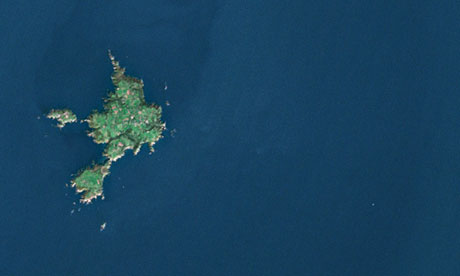
Channel Islands, Europe, True Colour Satellite Image
On Sark in the Channel islands there have been 24 current and former UK company directors for every resident. Photograph: Universalimagesgroup/UIG via Getty Images
More than 175,000 UK-registered companies have used directors giving addresses in offshore jurisdictions, the Guardian has established. This raises fresh concerns about the scale of Britain's involvement in offshore secrecy arrangements.
Data obtained from the corporate information service Duedil reveals 177,020 companies have listed directors in jurisdictions such as the Channel Islands, British Virgin Islands, Cyprus, Dubai and the Seychelles.
More than 60,000 of those companies are listed as currently active on Companies House, the official register of UK businesses.
Having directors in offshore jurisdictions does not indicate a company is doing anything illegal, or that a director is necessarily a sham.
British expats who retain directorships of their business would feature in this data, as do "personal services companies" based in the Isle of Man, which help self-employed people incorporate themselves as a limited company.
However, the figures do reveal the huge scale of company registration relative to some of the islands' tiny populations: 47,161 companies have listed directors from the Isle of Man – representing one British company for every 1.8 residents of the island.
The figure is even more stark for the secrecy haven of the British Virgin Islands, where there is one director listed for every 1.3 residents of the islands, for a total of 17,959 UK businesses, past and present.
On the tiny Channel Island of Sark, there have been 24 current and former UK company directors for every resident of the island.
Many of the key figures involved in the "Sark Lark", as it was known, emigrated when the island's controversial practices came under scrutiny a decade ago. Most of those companies are now defunct, with only around 209 active directorships.
A Guardian/ICIJ investigation, published last November, documented the activities of more than two dozen "sham directors" – Britons each listed as directors of hundreds, and sometimes thousands, of companies registered across the world, allowing the real people behind them to stay in the shadows.
These sham directors held directorships not only in offshore companies but also in more than 8,900 British-registered companies – meaning UK authorities were left in the dark as to who was really in charge of supposedly British businesses.
These new findings suggest the numbers of such less-than-genuine directors on British company registers may be much greater than the 28 so far identified.
The Offshore Secrets investigation identified groups of nominee directors working out of territories scattered across the world. Atlas Corporate Services operated from Dubai and the Seychelles with six sham directors purportedly controlling more than 5,400 international companies.
Another pair of British expats, Sarah and Edward Petre-Mears, appeared to have a global empire of more than 2,250 directorships between them – run, initially, from their home in Sark, and then from a collection of addresses on the tiny Caribbean island of Nevis.
Writing in the Guardian in the wake of the initial findings, and before the latest figures came to light, the business secretary, Vince Cable, warned against the practice of using sham directors based in offshore territories. "[We] must identify and stop the minority who sail too close to the wind in order to protect the UK's reputation as a trusted place to do business," he said. "Becoming a company director carries with it legal responsibilities which, if breached, can result in disqualification, fines and prison.
"Some people think that putting up a straw man as a director makes them immune from the consequences. This is not the case: if you are acting as a director, you are liable."