Search This Blog

Tuesday, 15 January 2013

To grasp the genius of PG Wodehouse, read him

The great writer’s gifts do not translate to the screen, so 'Blandings’ was bound to fail

Auberon Waugh called PG Wodehouse, pictured, 'the most influential novelist of our age' and a master of 'the Great English Joke' - To grasp the genius of Wodehouse, read him
Auberon Waugh called PG Wodehouse, pictured, 'the most influential novelist of our age' and a master of 'the Great English Joke' Photo: ALAMY
Blandings, the BBC’s new PG Wodehouse adaptation, will not win many converts to one of the great comic writers of the 20th century. It makes for perfectly harmless family viewing, and Wodehouse enthusiasts will back it out of loyalty. But Wodehouse’s sublime story of Lord Emsworth, and his devotion to his prize pig, was reduced to a banal, knockabout tale of toffs acting stupidly, decorated with a series of jaunty Twenties props.
All the posh Jazz Age signifiers were there – the plinkety-plonk Charleston banging away in the background, the thin-fat font on the opening credits. Timothy Spall, a gifted comedian, played Lord Emsworth straight out of the Central Casting school of Silly Earls. He never stood a chance. TV and film versions of Wodehouse are always bound to fail: Stephen Fry and Hugh Laurie, both extremely witty Wodehouse fans, also reduced Jeeves and Wooster to dull, mirthless caricature.

Wodehouse’s exceptional talent was as a supreme prose writer – his work must be read, not performed. He may have written successful musicals; his dialogue may be perfectly timed, his plot lines beautifully crafted, as a glance at his densely worked manuscripts shows. But his real comic power depends on him being read – for the variety of literary references; for the bathetic pay-off at the end of a high-flown piece of writing; for the originality of his similes. These things don’t work when they’re put in the mouth of an actor – they sound too elaborate and forced.

Take this line in The Inimitable Jeeves: “When Aunt is calling to Aunt like mastodons bellowing across primeval swamps.” It incorporates several Wodehouse devices: the contrary thought of elderly aunts being the most terrifying of creatures; the Boris Johnson-esque tendency to drop in obscure Latinate words; the metaphor that becomes a simile.

All this takes skill, knowledge and wit which combine in the mind to produce the comic effect; on film, that line would fall flat. Without the brilliant prose, the BBC’s Blandings became just bland; a silly story about posh twits making a pig fat.
It’s not as if people aren’t interested in the subject matter – just look at Downton Abbey. Funny, posh people are in vogue, too: witness Miranda Hart, riding high in the Christmas TV viewing figures and the non-fiction bestseller charts.

Part of the reason is Wodehouse’s references. However lightly delivered, they depend on at least a passing understanding of classics, English literature and the Bible; Wodehouse won a senior classical scholarship to Dulwich College in 1897. He never shows off how clever he is, but he does assume a certain level of knowledge in order for the reader to laugh at, say, Bertie Wooster in Right Ho, Jeeves: “I retired to an armchair and put my feet up, sipping the mixture with carefree enjoyment, rather like Caesar having one in his tent the day he overcame the Nervii.”

In order to get that, you don’t have to know who the Nervii were; but you do have to know who Caesar was. There has also been a coarsening shift in English humour over the last generation that has left Wodehouse marooned on an island with his ageing band of fans.

In the 1973 anthology, Homage to PG Wodehouse, Auberon Waugh called him “the most influential novelist of our age” and a master of “the Great English Joke”. By that, Waugh meant the teasing of all people who take themselves too seriously – whether it’s the Prime Minister, the Archbishop of Canterbury or your self-important next-door neighbour.

That teasing still goes on, of course. But modern comedy is either a race to the bottom – be as rude as you can be about the Queen – or it’s ultra-gentle, observational Michael McIntyre stuff.

The BBC has wrongly placed Wodehouse in the ultra-gentle category – thus the Sunday teatime slot. He doesn’t belong there. Wodehouse is caught between the two poles of the modern age – mischievous but not vulgar, inoffensive but not anodyne. His gifts cannot be captured by the screen, the ultimate medium of the modern age, either. That’s not to say he’s outdated. His genius has been obscured, not promoted, by television exposure. Read him; don’t watch him. He is still timelessly funny.

Overcome by a sense of betrayal


Prem Shankar Jha
The Hindu
 
People are beginning to believe that democracy, in which they had faith all these years, is part of the problem and, therefore, cannot be part of the solution

The torrent of anger that erupted all over the country after the 23-year-old physiotherapy student in Delhi — whom the media named ‘Nirbhaya’ — was raped and thrown out of a moving bus has obscured a profoundly disturbing anomaly: the rape was a criminal act committed by individuals. But most of the anger of the public has been directed at the government. Barring a few lapses, the Central and State governments acted promptly, and with commendable efficiency. The Delhi police captured the alleged rapists within hours and the government spared no expense in its attempt to save her life.
The police also showed an uncharacteristic restraint in dealing with the protesters. To control the crowds with a minimum of violence, policemen put themselves repeatedly in harm’s way. A constable, P.C. Tomar, laid down his life doing his duty. Many others were injured.

The Delhi High Court and the State government took the pent up grievances of women’s associations and other human rights groups to heart and acted speedily to meet their demands. The former set up five special courts to hear the backlog of rape cases. The Lt. Governor made it mandatory for police stations to register all complaints of rape and other crimes against women. So why did the media and the public spare no effort to shift as much of the blame as possible on to the shoulders of the state?
 
Smouldering anger

The answer is that the rape acted as the trigger for an older, and deeper, anger in people — one that has been smouldering for years in their hearts. This stems from a profound sense of betrayal. Democracy was meant to empower them. Instead, in a way that few of them understand even today, it has done the exact opposite.

Empowerment requires the rule of law. People feel empowered only when they know that they have rights, and that the institutions of government exist, first and foremost, to enforce them. The rule of law is, however, only another name for justice. Empowerment therefore requires justice. The bedrock from which the anger that erupted on December 17 sprang is the denial of justice. In spite of being a democracy for 65 years, the Indian state has not been able to create something that people value even more than material benefits: a just society. It has achieved this unique feat by making both its elected legislators and its bureaucracy, not to mention its lower judiciary, immune to accountability. It has therefore become a predatory state that the people have learned to fear.

The hallmark of the predatory state is the universality of extortion. In India, we regularly lump extortion together with bribery under the generic title of corruption. In doing so, even the most ardent of reformers inadvertently conspire with the predators to hide the true, ugly, face of our democracy. Bribery and extortion are, in fact, two entirely different forms of predatory behaviour, and have markedly different effects upon the relationship of state with society.

Bribery is voluntary. The bribe giver chooses to give money or favours to influence a choice, steal a march over rivals, or hasten (sometimes delay) a decision. Bribery harms the economy and society cumulatively over a period of time by preventing optimal choice, increasing cost and lowering the quality of the product or the service rendered. But it has limited political impact because it is a voluntary transaction between consenting adults and the injustice it does is confined to a small circle of rivals.

Extortion is an entirely different form of predation. It requires no contract; no negotiation; and therefore no element of consent. It is a simple exercise of brute power by an employee or representative of the state over the citizen. Its commonest form is to deny the citizen the services to which he is entitled until he agrees to make a ‘private’ payment to the functionary in whom the power of the state is vested. Every act of extortion is a fresh reminder to the citizen of his or her impotence. This becomes complete if he or she is denied redress for the abuse of power.

In India this has been all-but-denied not simply by law but by the Constitution itself. Article 311 of the Constitution reads: “No person who is a member of a civil service of the Union or an all India service or a civil service of a State or holds a civil post under the Union or a State shall be dismissed or removed by an authority subordinate to that by which he was appointed.” It makes it clear that this injunction applies to not only civil but criminal cases as well. For the Central services, the empowered Authority is the President of India; for the State civil services, it is the Governor. This has meant that no prosecution can by initiated without the permission of the Central or State government. As the dismal experience of the Central Vigilance Commission has shown, in civil cases this permission is rarely given.
 
Complaints against police

One set of figures illustrates the impunity with which civil servants can break the law. According to the National Crime Records Bureau’s annual report Crime in India 2007, between 2003 and 2007 citizens filed 282, 384 complaints of human rights abuses against the police. Of these only 79,000 were investigated; only 1,070 policemen were brought to trial and only 264 — less than one in a thousand — were convicted. All but a handful stayed on at their posts, free to wreak vengeance on those who had dared to complain against them. It is therefore a safe bet that the actual number of such abuses is at least 10 times the number reported. It helps to explain why a girl who filed a complaint of rape with the police in Lucknow about two months ago was raped by the Station House Officer, then repeatedly by the investigating officer, but could not muster the courage to get the latter caught, and report the former till she felt empowered by the protests in Delhi.

The Constituent Assembly lifted Article 311 almost verbatim from a clause in the Government of India Act 1935 whose purpose was to protect British civil servants, notably the police, from incessant harassment by sharp-witted Congress lawyers. But the 1935 Act did not put the civil servant above the law. This was because he could be held accountable, as Edmund Burke had shown, by the British Parliament. In independent India, however, this restraint was destroyed by the progressive corruption, and criminalisation, of the political class that it now serves.

The root cause of both is the lack of any provision in the Constitution for the financing of elections. In Britain where the average constituency covers 380 square kilometres and has around 60,000 voters this is a nuisance. In India where the parliamentary constituency covers 6,000 sq km and holds 1.3 million voters it has proved a catastrophe.

In the 1950s, the need for funds was met to a large extent by the rising industrial class and by the Princes. But when these two began to desert the Congress in favour of the Swatantra Party and the Jana Sangh in the 1960s, Indira Gandhi banned company donations to political parties and abolished the privy purses. After that the only way in which political parties could stay in the game was to break the law.

Over the ensuing decades, two sets of predatory networks have developed to finance, or otherwise influence, elections. The first is of criminals who provide the muscle to intimidate voters; the second is of local money-bags and power-brokers who rally support for candidates belonging to one or the other party in exchange for favours when it comes to power.

As these have become more entrenched, they have virtually eliminated intra-party democracy at the grass roots and progressively reduced the number of constituencies in which State and Central party leaders can bring in fresh candidates chosen on the basis of merit. In the current Parliament, for instance, at the last count 159 MPs had criminal charges pending against them. Another 156 are second generation ‘princelings’ whose parents established the clientelist networks that now serve them. The State Assemblies are even more closed to new aspirants: 44 per cent of the MLAs in Bihar, 35 per cent in West Bengal and 30 per cent in Gujarat face criminal charges. The proportion of ‘pocket boroughs’ is also higher in the States than at the Centre.
 
Predatory state

The perennial need for money lies at the roots of the predatory state that India has become. Today, its ruling class consists of corrupt politicians who are served by an extortionate bureaucracy and police that are shielded from public wrath by nothing less than the Constitution of India.

In earlier decades, people’s anger was held in check by their faith in the democratic system. They therefore gave vent to their demand for accountability in the state by turning out to vote in ever larger numbers and regularly overthrowing incumbent governments. Only in recent years has it begun to dawn on them that democracy has become a part of the problem and cannot therefore be part of the solution. The protest is therefore moving closer to the borders of revolt. This has been apparent in the Maoist uprising that began in 2005, and has driven the state out of large parts of 83 districts in the country.

The Anna movement last year was another turning point because it was the first time that the urban middle class took to the streets. December’s mass protests in Delhi were the second time. History teaches us that this is the point at which the state usually begins to crumble. Were this to happen in India, it would not lead to the emergence of a more just and accountable Indian state but to its disintegration.

There is still time for our Central and State leaders to remember that no society that has lost its sense of justice, and, therefore, its moral legitimacy, has survived for long. But they are beginning to run out of it.
 
(The writer is a senior journalist)

If you think we're done with neoliberalism, think again

The global application of a fraudulent economic theory brought the west to its knees. Yet for those in power, it offers riches
Daniel Pudles 15012013
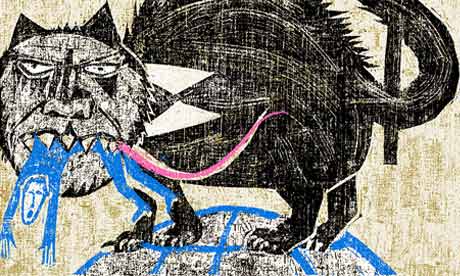
The demands of the ultra-rich have been dressed up as sophisticated economic theory and applied regardless of the outcome.' Illustration: Daniel Pudles


How they must bleed for us. In 2012, the world's 100 richest people became $241 billion richer. They are now worth $1.9 trillion: just a little less than the entire output of the United Kingdom.


This is not the result of chance. The rise in the fortunes of the super-rich is the direct result of policies. Here are a few: the reduction of tax rates and tax enforcement; governments' refusal to recoup a decent share of revenues from minerals and land; the privatisation of public assets and the creation of a toll-booth economy; wage liberalisation and the destruction of collective bargaining.

The policies that made the global monarchs so rich are the policies squeezing everyone else. This is not what the theory predicted. Friedrich Hayek, Milton Friedman and their disciples – in a thousand business schools, the IMF, the World Bank, the OECD and just about every modern government – have argued that the less governments tax the rich, defend workers and redistribute wealth, the more prosperous everyone will be. Any attempt to reduce inequality would damage the efficiency of the market, impeding the rising tide that lifts all boats. The apostles have conducted a 30-year global experiment, and the results are now in. Total failure.

Before I go on, I should point out that I don't believe perpetual economic growth is either sustainable or desirable. But if growth is your aim – an aim to which every government claims to subscribe – you couldn't make a bigger mess of it than by releasing the super-rich from the constraints of democracy.

 Last year's annual report by the UN Conference on Trade and Development should have been an obituary for the neoliberal model developed by Hayek and Friedman and their disciples. It shows unequivocally that their policies have created the opposite outcomes to those they predicted. As neoliberal policies (cutting taxes for the rich, privatising state assets, deregulating labour, reducing social security) began to bite from the 1980s onwards, growth rates started to fall and unemployment to rise.

The remarkable growth in the rich nations during the 50s, 60s and 70s was made possible by the destruction of the wealth and power of the elite, as a result of the 1930s depression and the second world war. Their embarrassment gave the other 99% an unprecedented chance to demand redistribution, state spending and social security, all of which stimulated demand.

Neoliberalism was an attempt to turn back these reforms. Lavishly funded by millionaires, its advocates were amazingly successful – politically. Economically they flopped.

Throughout the OECD countries taxation has become more regressive: the rich pay less, the poor pay more. The result, the neoliberals claimed, would be that economic efficiency and investment would rise, enriching everyone. The opposite occurred. As taxes on the rich and on business diminished, the spending power of both the state and poorer people fell, and demand contracted. The result was that investment rates declined, in step with companies' expectations of growth.

The neoliberals also insisted that unrestrained inequality in incomes and flexible wages would reduce unemployment. But throughout the rich world both inequality and unemployment have soared. The recent jump in unemployment in most developed countries – worse than in any previous recession of the past three decades – was preceded by the lowest level of wages as a share of GDP since the second world war. Bang goes the theory. It failed for the same obvious reason: low wages suppress demand, which suppresses employment.

As wages stagnated, people supplemented their income with debt. Rising debt fed the deregulated banks, with consequences of which we are all aware. The greater inequality becomes, the UN report finds, the less stable the economy and the lower its rates of growth. The policies with which neoliberal governments seek to reduce their deficits and stimulate their economies are counter-productive.

The impending reduction of the UK's top rate of income tax (from 50% to 45%) will not boost government revenue or private enterprise, but it will enrich the speculators who tanked the economy. Goldman Sachs and other banks are now thinking of delaying their bonus payments to take advantage of it. The welfare bill approved by parliament last week will not help to clear the deficit or stimulate employment: it will reduce demand, suppressing economic recovery. The same goes for the capping of public sector pay. "Relearning some old lessons about fairness and participation," the UN says, "is the only way to eventually overcome the crisis and pursue a path of sustainable economic development."

As I say, I have no dog in this race, except a belief that no one, in this sea of riches, should have to be poor. But staring dumbfounded at the lessons unlearned in Britain, Europe and the US, it strikes me that the entire structure of neoliberal thought is a fraud. The demands of the ultra-rich have been dressed up as sophisticated economic theory and applied regardless of the outcome. The complete failure of this world-scale experiment is no impediment to its repetition. This has nothing to do with economics. It has everything to do with power.

Statistics cast doubt on coalition's '500,000 new jobs' claim

Labour accuses government of 'fiddling figures' after ONS data shows 105,000 of total on mostly unpaid back-to-work schemes
Stephen Timms, shadoopw employment minister
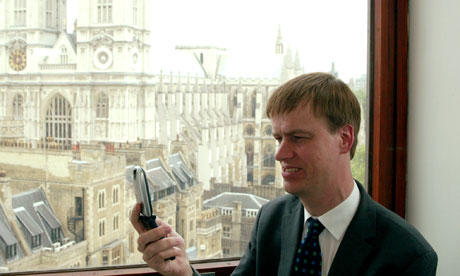
'105,000 of claimed new jobs turn out to be just schemes - this explains why employment seems to have risen,' said Stephen Timms, the shadow employment minister. Photograph: Graham Turner for the Guardian
 
Government claims to have created an additional 500,000 jobs in the past year have been called into question after it was revealed that one in five of the people involved are on government work schemes, including tens of thousands still claiming unemployment benefits.

In the last few months the government has trumpeted "record high" employment and the net creation of half a million jobs over the past year.

But figures obtained by the Guardian from the Office for National Statistics show that just over 20% of this total (105,000) involves those on largely unpaid government back-to-work schemes, the majority of whom are still claiming jobseeker's allowance.

They include unpaid workers doing voluntary and mandatory work experience in supermarkets and charity shops.

Many more tens of thousands with no jobs, training or pay, who simply attend regular job hunt workshops as part of the work programme run by the Department for Work and Pensions, are also being counted as employed.

The ONS, which is responsible for employment figures, says it is following guidelines set out by the International Labour Organisation (ILO) and counts people as employed if they are adding to the nation's economic output, regardless of whether or not they are paid.

But Labour accused the government of "fiddling the figures" by continuing to highlight them.
Ministers said that they were aware of the "quirk" in the system and had asked the ONS to alter its methods but still insisted that it made little difference to the overall picture.

Figures released in November showed that in the year from September 2011 510,000 net jobs had been created in the UK.

In December's autumn statement, the chancellor, George Osborne, highlighted these statistics, saying employment was "at a record high" and that it was forecast to continue to rise, adding that Britain now had "a greater proportion of its people in work than either the eurozone or the US".
But of those "employed", 105,000 were in back-to-work schemes. While people on such schemes have been counted within the employment figures for years, last year there was a dramatic increase in their number. This growth was partly down to new ONS 2012 counting criteria, under which the statisticians stopped tracking people on Labour's back-to-work schemes as the programmes were being wound down, and started tracking those on the new schemes of the coalition.
Though some of the people on government schemes were doing paid work while being helped as part of the work programme's support service, data from the Labour Force Survey, upon which employment figures are calculated, shows that at least 26,305 of these were doing voluntary unpaid work experience.

Overall a substantial majority of the 105,000 were likely to be subsisting on unemployment benefits – given that several DWP schemes are entirely unpaid – and only a minority of people on the work programme would have been in paid work placements.

Paul Bivand, from the research organisation Centre for Economic and Social Inclusion, said: "People who are unemployed should be counted as unemployed, whether or not they are on government schemes.

"The ONS should recognise that people who are not in a paid job, and are required to look for work to get their benefit, are unemployed. Whether they are getting job search help from Jobcentre Plus or work programme providers is immaterial."

A parliamentary answer from the ONS director general, Glen Watson, given in October last year, confirms that even if people were claiming jobseeker's allowance, they could still be counted as employed.

He said: "Those participants [in government schemes] whose activity comprises any form of work, work experience, or work-related training, are classified as in employment. This is regardless of whether the individual is paid or not."

Shortly after taking office in the last reshuffle in the autumn, the employment minister, Mark Hoban, wrote to the ONS director general seeking a change in the organisation's methods, saying he was "surprised to discover that a number of people on government programmes are classed as in employment".

Hoban wrote: "Many people struggle with the idea that someone in work-based training or a period of work experience can be categorised [as employed]."

The DWP dismissed as ridiculous any suggestion that it was creating back-to-work schemes involving work experience to boost overall job figures, saying its record of trying to deliver transparent figures spoke for itself.

Hoban said: "The fact is that there are 700,000 extra people in work compared to 2010 and unemployment has been falling since last spring. Any quirk in the way a small number of people on our schemes are counted makes little difference.

"These figures are independent of government and were collected in the same way under the previous administration, but I want them to be absolutely transparent which is why I've already raised this issue with the ONS last year."

The shadow employment minister, Stephen Timms, said that the government had been caught "fiddling employment figures".

He said: "105,000 of the claimed new jobs turn out to be just schemes. This helps to explain why employment seems to have risen when there has been no growth.

"Ever since the election ministers have accused the last government of fiddling employment figures – now they have been caught red-handed themselves."

Asked whether it was appropriate to count those on the jobseeker's allowance as employed, an ONS spokesperson said: "The classification of people as either employed, unemployed or economically inactive is based on an internationally agreed set of guidelines.

"This approach has been applied as consistently as possible to our labour market statistics for over 20 years, despite many changes to government training programmes and work-related benefits.
"The criteria are reviewed on a regular basis although no fundamental changes are expected in the foreseeable future."

Monday, 14 January 2013

Is this the loneliest generation?

The Government is trying to quantify social isolation amid health fears


Government officials have been ordered to find out exactly how lonely Britain's population is, amid concerns that "the most isolated generation ever" will overwhelm the NHS.

The Department of Health is attempting to measure the extent of "social isolation" in the UK, after warnings that it has sparked spiralling levels of illnesses including heart disease, high blood pressure, dementia and depression.

Research has revealed that loneliness is a growing problem in the UK – particularly among the elderly – with one in three admitting that they sometimes feel lonely. Among older people, more than half live alone, 17 per cent are in contact with family, friends and neighbours less than once a week, and almost five million say the television is their main form of company.

However, the trend is expected to worsen in the coming years. The Office for National Statistics disclosed last year that the number of Britons living alone has risen to a record 7.6 million – one million more than in 1996 and amounting to almost one in three households.

But beyond the personal problems the "loneliness epidemic" presents, ministers have been put on alert over its wider impact – and financial costs. Loneliness is blamed for piling more pressure on to health and social care services, because it can increase the risk of complaints including heart disease and blood clots. Experts also believe it encourages people to exercise less and drink more – and ultimately go to hospital more often and move into residential care at an earlier stage.

The Government's attempts to measure social isolation among people using health and social care will increase the pressure on the NHS and councils to tackle the problem now – to slash millions from their spending on the effects of loneliness in the future.

The care and support minister, Norman Lamb, said: "For the first time, we will be aiming to define the extent of the problem by introducing a national measure for loneliness. We will be encouraging local authorities, NHS organisations and others to get better at measuring the issue in their communities. Once they have this information, they can then come up with the right solutions to address loneliness and isolation."

It is the latest in a number of attempts to gauge, and change, the national mood: Tony Blair appointed the LSE academic Lord Layard as his "happiness tsar", while David Cameron has previously tried to measure people's well-being. In each case, the driving aim was to cut health and social welfare costs by making people feel better about their lot.

An official guide on combating isolation, issued to local authorities by the organisation Campaign to End Loneliness, says: "Tackling loneliness will reduce the demand for costly health care and, by reconnecting individuals to their communities, it will give renewed access to older people's economic and social capital." The guide points out that a scheme in Essex where lonely people were "befriended" by volunteers cost £80 per person but produced annual savings of £300 per person. Another project directing older people to local services cost £480 but realised savings of £900 per person.

Anne Hayden, a Dorset GP, saved more than £80,000 in costs for six patients who were "high users of NHS services" with a befriending scheme to boost their emotional well-being. David McCullough, chief executive of the WRVS (formerly the Women's Royal Voluntary Service), said: "It's to the benefit of not only the patient, but also the NHS as a whole, that GPs spot the early warning signs of isolation and refer patients to services such as befriending or community centres."

Case study

Win Noble was a nurse who had to give up work to care for her husband after he had a stroke and heart attack.

"It's not until you're on your own that you feel miserable. My husband died in 2001. I had nursed him for 20 years.

"In 2005, my next-to-oldest daughter died and then so did my youngest daughter. I was on my own because the rest of the family don't live in the area and I'm partially disabled, so I can't really socialise. One of my other daughters is housebound, one lives in Rhyl and one in Skegness and my only son is in Sleaford. I hadn't seen my son for five years but he rings me and came down this week.
"I don't see the others. I used to read a lot of books, from the mobile library, and I do a lot of puzzles just to keep occupied.

"Age Concern contacted me and suggested a craft class. After a few weeks they started to get a group together to play games like Scrabble and have quizzes. I got really involved and really enjoyed it. I became a volunteer and people needed me again."

Rachael Bentham

Britain's first state-certified sex coach

Unlike conventional sex therapists - who talk to clients having sexual problems and give them advice on how to overcome them - sex coaching can take place in the bedroom

Jane walked up and down the street outside what looked like a nondescript house in north London three times before she summoned up the courage to ring the doorbell. The 51-year-old was about to have her first session with Britain's - and indeed one of the world's - first state-certified sex coaches. She was overwhelmed with nerves.
Unlike conventional sex therapists - who talk to clients having sexual problems and give them advice on how to overcome them in their own homes - sex coaching can take place in the bedroom. Its benefits can include anything from achieving better orgasms to simply feeling more comfortable naked with a partner. They can use a range of techniques: talk, role-play or intimate physical approaches like touching or massage.

Until now, this sector has been largely unregulated, and understandably scepticism has run high. But experts talk of a "booming industry" that is moving out of the shadows and into the mainstream. California has become the first state worldwide to certify sex coaches, but it is Britons who are its very first graduates. Jane's instructor, Mike Lousada, is so committed to the regulation of the sector that he is launching the first professional body for the industry across Europe later this year.

Lousada, 45, moved from the corporate world into sex coaching as a way do something "more meaningful" in his life. With his own hang-ups and "shame around the body," he became trained as a counsellor, and graduated from the Advanced Study of Human Sexuality last month as a sex coach. He now charges £80 an hour for talking therapy, and £120 for physical work, which includes genital massage, but can include having intercourse with a client. This would be in very rare cases; say to overcome a situation where a woman wanted, but wasn't able to, have penetrative sex.

Lousada calls his work "sex positive," differing from sex therapy which "arises from the point of view that something's wrong that needs to be fixed." He insists his services, often used by women who have been abused in some way in the past, is "boundaried" and run with a "strict code of ethics." He added: "'I'm showing people how to connect their bodies with someone else's. We are taught at school about pregnancy and sexual disease, but not about pleasure."

There are no recorded figures for the number of sex coaches in Britain, but one of the world's pioneering sex coaches, Dr Patti Britton, found there are at least 80 worldwide, when she conducted the first international survey last year.

Namita Caen, 46, from London, is another state-certified sex coach, working in California. She says interest in her services, which focus on talk, are on the increase as they become "legitimised": "Attitudes are totally changing; People are dying to share what's happening in their relationship".

Jane agrees. She had been living an asexual life for almost thirty years when she decided to take up sessions with Lousada. She said she chose to see a sex coach over a sex therapist, because her "issues were around discovering who [she] was as a sexual woman - in relationship to another." Engaging in talk sessions and intimate massage with Lousada, she said she is now "more comfortable with men" and able to "look in the mirror and see a sexy woman" again.

She added: "I find it fascinating that in the UK 'sex coaches' generally have the unfounded reputation of being some sort of prostitutes by another name - exploiting men and women who are either bored and rich or vulnerable and stupid. Mike's work provided me with a safe supportive environment where I could explore my sexuality as a woman and address the issues and hurts of the past."

The Department of Health advises that "people visit their GP if they are experiencing a sexual health problem" and some therapists have voiced suspicion of coaches lacking their accreditation. But Lousada hopes to change this. His professional body will be launched in the next few months: "Sex coaching is becoming a new profession. We need to have a code of ethics, a disciplinary code, and standards, in order to do this work safely."

Jane's name has been changed

Sunday, 13 January 2013

The US and UK remain wedded to Quantitative Easing to stifle a debate on fiscal policy

Has quantitative easing had its day?

QE's failure to power recovery is clear, but the US and UK remain wedded to the policy to stifle debate about fiscal policy
Mark Carney
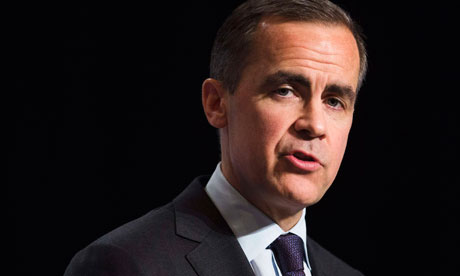
Mark Carney, governor-elect of the Bank of England, wants to retain QE as the chief policy instrument for engineering recovery. Photograph: Mark Blinch/Reuters
 
Last autumn the chairman of the US Federal Reserve, Ben Bernanke, ended months of speculation about whether there would be another round of quantitative easing – the policy of buying up securities from banks so that more money is injected into the financial system. The idea has been that this will get them lending more and powering a recovery. Since the first two rounds had patently failed to generate recovery, he now announced a QE3 with a difference: not only did he announce QE3, its sheer scale and boundlessness made it a veritable QE infinity. The Fed would continue buying up mortgage-backed securities to the tune of $40bn a month until the labour market improved and would keep interest rates to their current near-zero levels until unemployment fell below 6.5%.

Having targeted inflation to please the holders of capital for almost two decades, even when the resulting high interest rates stifled investment and kept unemployment high, the Fed's concern about employment was certainly novel. To be sure, it is mandated to keep both inflation and unemployment low, but until now it had succeeded in finessing this mandate and concentrating more or less exclusively on keeping the former alone in check.

Meanwhile, the UK's new central banker in waiting, Mark Carney, proposed his own innovation in monetary policy: the Bank of England's two-decade-old policy of targeting inflation should be dropped in favour of targeting nominal GDP growth. This would keep up liquidity injections into the financial system until targeted nominal growth materialised. He did not say what he would do if the nominal growth target yielded more inflation than growth. Discussion centred on whether the Bank of England's mandate would be revised. Both David Cameron and Vince Cable appeared open to the concept.

Bernanke and Carey's new and improved monetary policies are designed to retain QE as the chief policy instrument for engineering recovery despite its failure so far. Given that its most vocal opponents are the economic neanderthals of the US Tea Party right, it is usually assumed that QE is progressive, if not, so far at least, very effective.

In reality, QE has served, first and foremost, to socialise the losses of the financial systems of the two countries at the centre of the financial crisis, the US and the UK. In contrast to the publicly fought over Troubled Asset Relief Program (TARP), QE contributed far more to achieving that objective and did so without the fuss and melodrama of Treasury secretaries going on bended knee before House speakers to beg its passage.

Some find consolation in the thought that at the very least QE prevented the economies of these two countries from falling into outright depression. In reality, two other things accomplished this. First, unlike in the 1930s, the "automatic stabilisers" – government spending and transfers – formed a floor beneath which the economy could not fall. Second, there were mild fiscal stimuli. But their end now threatens to send economic activity south again in both economies.

Indeed, insofar as QE was part of a wider set of policy choices that focused on relieving financial institutions of their irresponsibly extended loans but not the households and firms, QE ensured that a highly leveraged private sector would be unable to borrow, whether to invest or consume. It would also ensure that the resulting demand conditions would deter even the comparatively unleveraged from borrowing to invest.

So we shouldn't assume that QE will power a recovery. It probably won't. As Keynes pointed out, under certain conditions (such as those today: rock-bottom interest rates, poor demand outlook, heavily leveraged firms and households) credit easing would amount to little more than "pushing on a string". So why are Bernanke and Carney seeking to tie recovery even tighter to monetary policy with their innovations in QE precisely when its failure to power recovery is clearer than ever?

It's because without some action on their part, public discussion is bound to turn towards the alternative: a vigorously expansionary fiscal policy, with massively increased state investment in the economy. This option lies just below the surface of public discourse: the neoliberal triumph of recent decades was never able to entirely eradicate it from public discourse and memory. But as long as the public can be kept believing that monetary policy will achieve some semblance of growth, later if not sooner, that the economy's managers are busy refining monetary policy tools to accomplish that, fiscal policy can be that much more effectively kept out of the picture.

In effect the public in both these countries is being told that they cannot get recovery unless the banks give it to them. And keeping recovery hostage to the financial system is tied up with something very fundamental. Announcing the failure of monetary policy is to displace that holy of holies – the private sector – from its current centrality in our understanding of the economy and admitting that government action and expenditure, probably on a large and unprecedented scale, is necessary for recovery.