Search This Blog

Friday, 2 August 2013

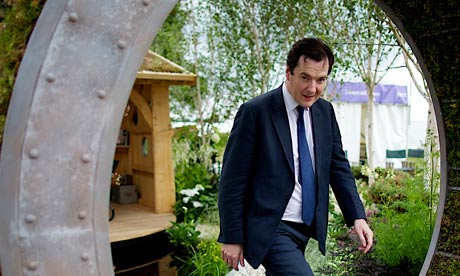
Party Donors nominated to House of Lords

from The Independent

The naming of business chiefs who have donated millions of pounds to the major political parties as new members of the House of Lords has provoked accusations that money is “polluting” Parliament.


The donors are included on a list of 30 new peers who will take the total membership of the Second Chamber to nearly 850 – the biggest number since it was reformed 14 years ago.
The 14 Conservative nominations include Sir Anthony Bamford, the chairman of JCB, whose family and firm has handed £5m to the party in recent years. His elevation comes three years after a previous attempt by David Cameron to award him a peerage was dropped.

JCB has close links with the Conservative Party. It employed the Foreign Secretary William Hague as an adviser after he stepped down as party leader in 2001 and Mr Cameron last year opened a company factory in Brazil.

A Tory source praised Sir Anthony as an “incredibly significantly industrialist” whose business employs thousands of people and pointed out he was invited on a foreign delegation organised by the last Labour government.

The Conservative list also includes Howard Leigh, a Tory treasurer and fundraiser, who has donated more than £200,000 personally and through his company.

Two prominent Liberal Democrat donors are among the 10 party supporters nominated to the Upper House by Nick Clegg. They are the entrepreneur Rumi Verjee, who brought Domino’s Pizza to Britain and has given the Liberal Democrats more than £800,000 and the nightclub developer James Palumbo, whose Ministry of Sound company has donated almost £700,000.
One of Labour’s five new peers is the businessman Sir William Haughey, a former director of Celtic football club, who has given the party more than £1.3m since 2003.

The campaign group Unlock Democracy said the nominees were the “usual list of party donors and cronies” and accused Downing Street of producing the names in Parliament’s summer recess to minimise adverse publicity.

Lord Oakeshott of Seagrove Bay, a Liberal Democrat member of the committee of MPs and peers which drew up a blueprint for Lords reform blocked by Mr Cameron, said: “Cash for peerages pollutes Parliament and political parties. We are all in it. It is now more urgent than ever to elect the Lords and get the big money out of British politics for good.”

The swathe of appointments brings the number of people entitled to sit in the Lords to 838 (although 53 are currently absent), the largest figure since most hereditary peers were removed in 1999.

The new peers could cost the taxpayer about £1.2m, plus travel and other expenses, leaving Mr Cameron with awkward questions over his promise to cut the cost of politics.

New peers
1. Sir Anthony Bamford (Con) Veteran industrialist whose family is a long-standing, generous Tory supporter.
2. Danny Finkelstein (Con) Times columnist, below left, and old friend of George Osborne. A youthful supporter of the SDP.
3. John Horam (Con) Britain’s most travelled politician sat in the Commons for Labour, the SDP and finally the Tories.
4. Howard Leigh (Con) Chairman of the Leaders Group, a network for supporters requiring members to donate at least £50,000 a year.
5. Olly Grender (Lib Dem) First worked for the party in the 1980s and was Paddy Ashdown’s chief spin doctor. Has just stood down from a Downing Street stint.
6. Brian Paddick (Lib Dem) Former senior officer in the Metropolitan Police, above right, has twice been a candidate for London Mayor.
7. James Palumbo (Lib Dem) Friend of Nick Clegg and has lent his nightclub, free of charge, to the Lib Dems.
8. Sir William Haughey (Lab) Glaswegian businessman above right, who built a fortune in the refrigeration business. Has given more than £5m to charity.
9. Jon Mendelsohn (Lab) Chief fund-raiser for Labour who set up his own lobbying company with two party colleagues.
10. Jenny Jones (Green) One of their most prominent figures on the London Assembly for 13 years.

Uruguay - the first country to create a legal market for drugs

Uruguay has taken a momentous step towards becoming the first country in the world to create a legal, national market for cannabis after the lower chamber of its Congress voted in favour of the groundbreaking plan.


The Bill would allow consumers to either grow up to six plants at home or buy up to 40g per month of the soft drug – produced by the government – from licensed chemists for recreational or medical use. Previously, although possession of small amounts for personal consumption was not criminalised in the small South American nation, growing and selling it was against the law.

The Bill passed by 50 votes to 46 shortly before midnight on Wednesday after a 14-hour debate as pro-legalisation activists crowded the balconies above the legislature floor. 

Uruguay’s Senate, where the ruling left-wing coalition has a larger majority, is now expected to approve the measure. President José Mujica, an octogenarian former armed rebel – who has previously overseen the passing of measures to allow abortion and gay marriage – backs the move.

Proponents of the Bill argue marijuana use is already prevalent in Uruguay and that by bringing consumers out of the shadows the government will be better able to regulate their behaviour, drive a wedge between them and peddlers of harder, more dangerous drugs, and tax cannabis sales.

They also believe that it closes the loophole that outlaws growing or buying cannabis while turning a legal blind eye to its consumption. Currently, judges in Uruguay have discretion to decide whether an undefined small quantity of the drug is for personal use or not.

Campaigners for an end to prohibition were quick to claim the vote as a landmark in the international push for drug policy reform. “Sometimes small countries do great things,” said Ethan Nadelmann, executive director of the New York-based Drug Policy Alliance, whose board includes entrepreneur Richard Branson, but also the late President Ronald Reagan’s former Secretary of State, George Shultz.

“Uruguay’s bold move does more than follow in the footsteps of Colorado and Washington,” added Mr Nadelmann, referring to the two Western US states that recently also permitted recreational cannabis use. “It provides a model for legally regulating marijuana that other countries, and US states, will want to consider.”

Hannah Hetzer, the Drug Policy Alliance’s Americas coordinator, who is based in Montevideo, added: “At the heart of the Uruguayan marijuana regulation Bill is a focus on improving public health and public safety. Instead of closing their eyes to the problem of drug abuse and drug trafficking, Uruguay is taking an important step towards responsible regulation of an existing reality.”

Nevertheless, the measure has divided Uruguay and in the run-up to the vote few dared predict its outcome, with the 99-member house almost split down the middle. All 49 opposition deputies had agreed to vote against the measure en bloc, while the 50 members of President Mujica’s ruling coalition were due to back it.

One of the government deputies, Darío Pérez, a doctor by training, had warned that cannabis is a gateway drug to harder substances and feared that fully legalising it would trigger a mushrooming of Uruguay’s already serious problems with crack and other cheaper, highly addictive cocaine derivatives.

In the most keenly awaited speech of the debate, Mr Pérez attacked the Bill but said he would vote in line with the coalition whip, although he could not have made his displeasure clearer. “Marijuana is manure,” he told the chamber. “With or without this law, it is the enemy of the student and of the worker.”

Mr Pérez was also unhappy with what he saw as a broken promise by Mr Mujica not to foist the law on a society that was not yet ready for it, citing a recent survey by pollsters Cifra that found 63 per cent of Uruguayans opposed cannabis legalisation while 23 per cent backed it.
Last December, the president had temporarily placed the measure on the back burner to give advocates a chance to rally public opinion. “The majority has to come in the streets,” he said then. “The people need to understand that with bullets and baton blows, putting people in jail, the only thing we are doing is gifting a market to the narco-traffickers.”

But those arguments failed to convince Gerardo Amarilla, a deputy for the conservative opposition National Party, who told the chamber: “We are playing with fire. Maybe we think that this is a way to change reality. Unfortunately, we are discovering a worse reality.”
Official studies from Uruguay’s National Drugs Board have found that of the country’s population of 3.4 million, around 184,000 people have smoked cannabis in the last year. Of that number, 18,400 are daily consumers. But independent researchers believe that may be a serious underestimate. The Association of Cannabis Studies has claimed there are 200,000 regular users in Uruguay.

One thing that no one disputes is that Uruguay has a serious and growing problem with harder drugs, principally cocaine and its highly addictive derivatives flooding into the Southern Cone and Brazil, mainly from Peru and Bolivia. That, in turn, has fuelled a crime wave as addicts seek to fund their cravings. Breaking the link between them and cannabis users is one of the government’s principal justifications for marijuana legalisation.

Under the measure, registered users will be able to buy cannabis from the nation’s chemists, cultivate plants at home and form cannabis clubs of 15 to 45 members to collectively grow up to 99 plants. Although the high would depend on the strength of the cannabis, which can vary significantly, the 40g per month limit would allow a user to potentially smoke several joints every day. To prevent cannabis tourism, such as that which has developed in Amsterdam, only Uruguayan nationals will be able to register as cannabis purchasers or growers.

Uruguay’s move comes as pressure grows across Latin America for a new approach to Washington’s “war on drugs”, which has ravaged the region, seeing hundreds of thousands die in drug-fuelled conflicts from Brazil’s favelas to Mexico’s troubled border cities.
Colombia President Juan Manuel Santos has called for a discussion of the alternatives while his Guatemalan counterpart Otto Pérez Molina has openly advocated legalisation. Meanwhile, Felipe Calderón, President of Mexico from 2006 to 2012, has also called for a look at “market” solutions to the drug trade.

Crucially, all three are conservatives with impeccable records as tough opponents of the drug trade. Mr Pérez Molina is a former army general with a no-nonsense reputation, while Mr Santos served as Defence Minister for his predecessor, the hard-right President Álvaro Uribe. Meanwhile, Mr Calderón was widely criticised during his time in power for the bloodbath unleashed by his full-frontal assault on the drug cartels, a conflict which cost an estimated 60,000 lives during his presidency.

Home Office is now a tool for stirring up racial tension

Dave Garret in The Independent 01/08/2013

Over the last few weeks we’ve seen some very visible signs of the Government’s “hostile environment” crusade. There have been vans out on the streets with threatening slogans and, reportedly, non-white people being visibly stopped and searched.
The Home Office is responsible for community cohesion. Yet we are increasingly seeing what appears to be hostility towards non-white immigration, which will do nothing but incite racial tensions and divisions within otherwise rich and diverse communities.
This has to change. We urgently need a more balanced public debate on immigration, free of political agendas. Without it we risk eroding the very foundations of communities across the UK.
The Government has now made the Home Office, who are also responsible for community policing and safety, a highly visible, taxpayer-funded tool for stirring up racial tension and community unrest. The method and location of these stunts make it hard to believe that they are not targeted at non-white communities, but, whatever the truth, they are certainly perceived that way.
Refugee Action wants to see a more balanced debate about immigration, and believes the Home Office has a huge responsibility to avoid adding to its toxicity. At least in the interests of balance, we’d like some vans which say: “The NHS would collapse without foreign-born staff,” or “the Office of Budget Responsibility says that migration has a positive impact on the sustainability of public finances” or “without immigration Britain would be without tea”.
Dave Garratt is chief executive of Refugee Action

Thursday, 1 August 2013

Audi Drivers

Audi Drivers
Girish Menon
 1/08/2013

Your speed limit is @ seventy
To protect each road user
But I'll drive my Audi @ one sixty
Coz I am not a loser

The judge banned me for three years
And fined me five one five
Fine, I said, will you take cash
It's time for my next drive

None of your laws will stop me
I've got more cash than you think
I can buy your cops and judges
With my tax haven market riches

Your income tax is @ 45 percent
To protect every lazy Briton
But I will pay @ zero percent
Coz I am not a cretin

The taxman may audit my books
To get cash for the treasury
His mates help me cook the books
And I won't share my luxury

None of your laws will stop me
I've got more cash than you think
I can buy your rulers and judges
With my tax haven market riches

Wednesday, 31 July 2013

How do we talk about cancer?


Knowing whether to say 'how are you?' or mention 'bravery' is one problem, another is our society in which death is a taboo
A young cancer patient
'If you ask someone with cancer how she or he is, do be prepared to listen to the answer.' Photograph: Ali Jarekji/Reuters
Among cancer sufferers there's often a shared moan about how some friends or acquaintances "just don't get it", how some turn away and retreat, and some meddle and proselytise.
Cancer sufferers all have their own pet grievances and I wouldn't claim to speak for others. In fact, recognising the infinite variety of individual responses to cancer is a necessary part of having, handling and treating cancer. To revise Tolstoy, all healthy people are alike, all unhealthy people are unhealthy after their own fashion. We are all variants from a norm; that's why we're being treated.
So there are no uniform rules of the game when it comes to talking to friends or acquaintances who have cancer about their condition.
Take "you're looking well" or variants thereof. Sometimes people do get a boost from such remarks, or are at least relieved to know that they don't look as bad as they feel. But for me there's always a disconnection: if I really do look well (and I suspect that's mainly because I don't look as bad as people expect or fear), then my appearance belies reality. I'm not well. I'm ill. And there are times when "you look well" feels like a denial, and places you in the awkward position of having to deny the denial (and say you may look well but feel like shit) or to go along, keep up the pretence, and thereby suppress an underlying, insistent truth.
Some people feel buoyed when people compliment their "bravery". Others, including me, find the bravery rhetoric around cancer deeply misconceived. It shifts responsibility on to the patient; if you succumb to your cancer, or even if you just complain about it, are you wanting in "bravery"? When someone tells me I've been "brave" I don't know what to make of it. There's no choice in the matter. This is a front line it's impossible to flee from.
Then there's "how are you?", a casual enquiry, in practice little more than a salutation, that acquires all kinds of challenges for the person with cancer. How do you answer? What does the person asking really want to know? How earnest is the question? Responses vary according to mood and context. Sometimes, I simply say "OK" – either because at that moment I can't muster the energy required to give a meaningful answer or because I'm unsure whether the inquirer really wants to hear that answer. Sometimes, when I do attempt to give a candid reply, I sense the inquirer shrinking way, uncertain how to respond, how to handle this discourse of pain and mortality.
While I don't think there can be a protocol to govern this kind of dialogue, I would say that if you ask someone with cancer how she or he is, do be prepared to listen to the answer. And remember that listening to it is nowhere near as uncomfortable as living with it.
Before I was diagnosed with multiple myeloma, and began my own journey through the labyrinth of cancer, I was as insensitive as anyone to these issues. So I know this question – how we talk about cancer – is not about individual foibles. It's not about making people feel guilty. The situation, for both parties, is impossible: a convergence of reticence and disquiet, closeness and distance, helplessness and the desire to help. The conventions of everyday language are stretched to breaking point.
But while some of our difficulties in engaging in this kind of dialogue may be rooted in the human condition, I've also been asking myself how much of it is peculiar to our own society. Surrounded by commercial displays of young, trim, blemish-free bodies, it's easy to feel marginalised. Our culture enjoins celebration and affirmation; huge efforts go into the manufacturing of "feel-good" moments, one succeeded rapidly by another. The affirmative act becomes a social duty, a gesture that we, the ill, are expected to make, and for which we are congratulated.
Sure, even for the severely ill, there's plenty to affirm in life – wondrous works of art, sublime acts of rebellion, love and friendship – but life is also arbitrarily cruel, and it's an additional cruelty to ask people to deny that reality.
A society that vaunts individual success, where nothing is disdained so much as a "loser", does not quite know what to do with the ill or disabled. Unless our suffering can be sentimentally packaged, or recast as part of the neoliberal cult of "can do, will do", it remains unrepresented. The consumerist regime generates a perpetual present, in which life is a succession of satisfied desires, without links to past or future. Terminal illness cannot be accommodated within that framework.
We lack the ritual and social contextualisation of death found in pre-modern societies, and while there's no going back to that, an honest, self-aware, humane society must find ways and means of integrating death and suffering into its everyday norms.

Tuesday, 30 July 2013

The dishonesty in counting the poor

UTSA PATNAIK
  

The Planning Commission’s spurious method shows a decline in poverty because it has continuously lowered the measuring standard


The Planning Commission has once again embarrassed us with its claims of decline in poverty by 2011-12 to grossly unrealistic levels of 13.7 per cent of population in urban areas and 25.7 per cent in rural areas, using monthly poverty lines of Rs. 1000 and Rs. 816 respectively, or Rs. 33.3 and Rs. 27.2 per day. These princely amounts will pay for one urban male haircut while they are supposed to meet all daily food and non-food living costs. The poverty decline claimed is huge, a full 8 per cent points fall in rural areas over the two years since 2009-10, and a 7 per cent points fall in urban areas, never mind that these two years saw the aftermath of drought, poor employment growth and exceptionally rapid food price rise. The logically incorrect estimation method that the Commission continues to use makes it an absolute certainty that in another four years, when the 2014-15 survey results become available, it will claim that urban poverty is near zero and rural poverty only around 12 per cent. This will be the case regardless of any rise in actual deprivation and intensification of actual poverty.

Substantial rise

All official claims of low poverty level and poverty decline are quite spurious, solely the result of mistaken method. In reality, poverty is high and rising. By 2009-10, after meeting all essential non-food expenses (manufactured necessities, utilities, rent, transport, health, education), 75.5 per cent of rural persons could not consume enough food to give 2200 calories per day, while 73 per cent of all urban persons could not access 2100 calories per day. The comparable percentages for 2004-5 were 69.5 rural and 64.5 urban, so there has been a substantial poverty rise. Once the NSS releases its nutritional intake data for 2011-12 we can see the change up to that year, but given the high rate of inflation and sluggish job growth, the situation is likely to be as bad, if not worse. Our figures are obtained by applying the Planning Commission’s own original definition of poverty line. Given the rapidly rising cost of privatised health care, education and utilities (electricity, petrol, gas), combined with high food price inflation and exclusion of the majority of the actually poor from affordable PDS grain, it is hardly surprising that the bulk of the population is getting more impoverished, and its nutritional level is declining faster than before.

What is the basic problem with the Planning Commission’s method which produces its low and necessarily declining estimates, regardless of ground reality? The Commission in practice gave up its own definition of the poverty line which was applied only once — to get the 1973-74 estimate. After that, it has never looked over the next 40 years even once for deriving poverty lines at the actual current spending level, which will allow the population to maintain the same standard of living in terms of nutrition after meeting all non-food costs — even though these data have been available in every five-yearly NSS survey.

The Commission instead simply applied price indices to bring forward the base year monthly poverty lines of Rs 49 rural and Rs.56 urban in 1973-74. The Tendulkar committee did not change this aspect; it merely altered the specific index.

Price indexation does not capture the actual rise in the cost of living over long periods. Those doing the poverty estimates would be the first to protest if their own salaries were indexed only through dearness allowance. A fairly high level government employee getting Rs.1,000 a month in 1973-74 would get Rs.18,000 a month today if the salary was only indexed. The fact that indexing does not capture the actual rise in the cost of living is recognised by the government itself by appointing decadal Pay Commissions which push up the entire structure of salaries — an employee in the same position today gets not Rs.18,000 but a four times higher salary of over Rs.70,000. Yet those doing poverty estimates continue to maintain the fiction that the same standard of living can be accessed by the poor by merely indexing the original poverty line, and they never mention the severely lowered nutritional access at their poverty lines which, by now, are destitution lines.

Worsening deprivation

The fact is that official poverty lines give command over time to a lower and lower standard of living. With a steadily lowered standard, the poverty figures will always show apparent improvement even when actual deprivation is worsening. A school child knows that if last year’s percentage of students passing the annual examination is to be compared to this year’s percentage, the pass mark should be the same. The school principal cannot quietly lower the pass mark without informing the public, say from 50 out of hundred last year to 40 this year, and then claim that the school’s performance has improved because 80 per cent of students are recorded as ‘passed’ this year at the clandestinely lowered pass mark, compared to 75 per cent of students last year. If, at the same pass mark of 50, we find that 70 per cent of students have passed this year, we are justified in saying that the performance, far from improving, has worsened. If the school is allowed to continue with its wrong method, and lower the pass mark further next year, and again the next year, so ad infinitum, it is eventually bound to record 100 per cent pass and zero failure.

The case is exactly the same with the official poverty lines as with the pass mark: the poverty lines have been lowered continuously below the standard over a very long period of 40 years. ‘Poverty’ so measured is bound to disappear from India even though in reality it may be very high and worsening over time. The Commission’s monthly poverty line for urban Delhi state in 2009-10 is Rs.1040 — but a consumer spending this much could afford food that gave only 1400 calories a day after meeting all other fast rising expenses. The correct poverty line is Rs.5,000 for accessing 2100 calories, and a staggering 90 per cent of people have been pushed below this, compared to 57 per cent below the correct poverty line of Rs.1150 in 2004-05. Given the very high rate of food price inflation plus the rising cost of privatised medical care and utilities, it is not surprising that people are being forced to cut back on food, and the average calorie intake in urban Delhi has fallen to an all-time low of 1756. While a high-visibility minority of households with stable incomes is able to hire-purchase multiple cars per household and enjoy other durable goods, the vast working underclass which is invisible to the rich is struggling to survive. Fifty five per cent of the urban population cannot access even 1800 calories today, compared to less than a quarter in that position a mere five years earlier.

Why, it may be asked, do the highly trained economists in the Commission ignore reality and continue with their incorrect method? Surely they can see as we do, that their Rs.1040 poverty line gives access to a bare-survival 1400 calories. Part of the answer is that the ramifications of using the wrong method extend globally, for the World Bank economists have, for decades, based their poverty estimates on the local currency official poverty lines of developing countries, including India.
The World Bank claim of poverty decline in Asia is equally spurious. In reality, under the regime of poor employment growth and high food price inflation, poverty has been rising. To admit this would mean that the entire imposing-looking global poverty estimation structure, employing hundreds of economists busy churning out wrong figures, would come crashing down like a rotten termite-eaten house. The rest of the answer is that since the method automatically produces numbers showing spurious poverty decline, it is convenient for arguing that globalisation and neo-liberal policies are beneficial for people. Truth will always out, however.

Saturday, 27 July 2013

George Osborne's description of the economy is near-Orwellian


The fact that even Labour accepts the UK is 'on the mend' shows how low our expectations of economic performance are
IPPC
George Osborne this week. 'The UK's economic performance since the start of the coalition government … has been so poor that Thursday's announcement of 0.6% growth … was greeted with a collective sigh of relief.' Photograph: Christopher Thomond
If all else fails, they say, you can always lower your standards. This is what we have become used to doing in relation to the UK economy. The UK's economic performance since the start of the coalition government in May 2010 has been so poor that Thursday's announcement of 0.6% growth in the second quarter of 2013 was greeted with a collective sigh of relief.
Having declared the UK economy to be "on the mend" on the strength of this growth figure, George Osborne is said to have regained his swagger. Even the opposition grudgingly acknowledged that the latest figures were good enough news, although it was quick to add that the benefits of the recovery have been almost exclusively concentrated at the top.
But even the opposition's interpretation may be too charitable. Including the last quarter, the UK economy has grown by just 2.1% during the 12 quarters since the current government came to power. This compares very poorly with the 2% growth that the economy had managed in just four quarters between the third quarter of 2009 and the second quarter of 2010. The coalition blames this poor performance on the eurozone crisis. But this argument is not very persuasive when output has more than recovered to pre-crisis level in many eurozone countries, including France and Germany, while UK output is still 3.3% less than what it was at the beginning of 2008.
It gets worse. During the past five years, the UK's population has grown by 3%. This means that, on a per capita basis, the country's income is 6.3%, not just 3.3%, less today than it was five years go. This performance is far worse than what Japan managed during its infamous "lost decade" of the 90s. At the end of that period, Japan had a per capita income 10% higher than at the start.
If the UK is to match this performance during what looks certain to be its own "lost decade", it will have to grow at the rate of 3.9% every year for the next five years (or 3.3% in per capita terms, assuming that the past five years' population growth rate of 0.6% per year continues). Even the most optimistic cheerleaders for the coalition government are not talking such numbers.
Thus seen, describing the UK economy as being "on the mend" is a near-Orwellian redefinition of economic recovery. The fact that most people accept that description, even if with reservations about the uneven distribution of its benefits, shows how low the standard of performance we expect of the UK economy has become.
But even applying this low standard, it is not clear whether we can expect a sustained recovery in the coming years. There are at least two factors that can derail the recovery process, especially given that it is so feeble. The first is the likely evolution of the global economy. The eurozone may be dragging itself out of a recession, but things can turn for the worse at any moment. Especially given the severity of austerity in countries such as Greece, Spain and Portugal, the policy's continuation may result in another bout of political unrest, negatively affecting the economy.
Thanks to its avoidance of the worst form of austerity policy, the US economy has recovered from the 2008 crisis more strongly than the European countries. But with another federal debt ceiling negotiation looming later in the year, it is possible that the US recovery will be set back by another round of budget cuts. The Chinese economy has visibly slowed down. And the Chinese government seems determined to keep it that way for a while. Concerned with financial stability, it has clamped down on credit expansion. Worried about seething public anger against government corruption and extravagance, it has imposed a ban on "wasteful" government spending (lavish buildings, banquets, and foreign trips). These are all good policies in the long run, but they will dampen Chinese demand in the immediate future.
The other two biggest "emerging" economies, Brazil (second largest) and India (third), have both seriously slowed down in the last couple of years. India's growth rate fell from 10.5% in 2010 to 6.3% in 2011, and then to 3.2% in 2012. The equivalent figures for Brazil were 7.5%, 2.7%, and 0.9%. Both these economies suffer from high inequality and social tensions, as shown by the recent protests in Brazil and the resurgence of Maoist guerillas called the Naxalites in the eastern part of India. Therefore there is always a possibility that political unrest may dampen these economies even further.
These global factors are, of course, beyond the UK's control, but there is another factor at least partially within its control that may derail the recovery. It is the asset bubbles that have developed in the stock market and the property market, fuelled by cheap credit (sounds familiar?).
Share prices have reached levels that simply cannot be justified by the state of the economy. In May 2013, the FTSE 100 share price index surpassed the pre-crisis peak of June 2007, although it has come down a bit since then. Given that the pre-crisis peak was supported by a buoyant (albeit unsustainable) economy, current share prices, which have no such support, can only be described as an even bigger asset bubble.
Although the rest of the country is still experiencing a stagnant housing market, property markets in London and the south-east are beginning to look inflated, given the state of the economy. And the government is stoking this property bubble with the Help to Buy scheme.
These asset bubbles have provided important sources of demand in the UK economy in the past few years. But the trouble is that they are quite shaky even for asset bubbles, for they are only sustained by historically low interest rates and the massive indirect subsidies given to banks through the so-called quantitative easing scheme.
The fragile nature of these bubbles is revealed by the nervousness with which financial market participants react to pronouncements by central bankers. They know that the current price levels are viable only with QE, so they are readying themselves to jump as soon as there is a sign that it may come to an end. When the asset bubbles deflate, there is likely to be a serious fall in demand that will derail the recovery.
In the past few years the UK should have found a way to stage a recovery without having to rely on state-sponsored asset bubbles. As it hasn't even tried, it is facing the prospect of having a "lost decade" that is even more "lost" than the original one in Japan.