Search This Blog

Monday, 10 June 2013

Hypocrisy lies at the heart of the trial of Bradley Manning


It is an outrage that soldiers who killed innocents remain free but the man who exposed them is accused of 'aiding the enemy'
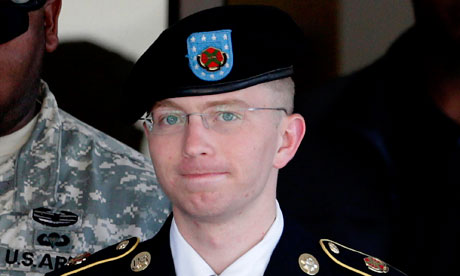
Bradley Manning
Bradley Manning is escorted out of a courthouse in Fort Meade, Maryland. Photograph: Patrick Semansky/AP
In 2009 the American ambassador to Tunisia spent the evening at the home of Mohamed Sakher el-Materi, the president's son-in-law. By any standards the dinner was lavish – yogurt and ice cream were flown in from St Tropez – and the home was opulent. In a cable, made public by WikiLeaks, the diplomat wrote: "The house was recently renovated and includes an infinity pool … there are ancient artefacts everywhere: Roman columns, frescos and even a lion's head from which water pours into the pool. Materi insisted the pieces are real." By Tunisian standards it was particularly obscene. El-Materi owned a tiger and fed it four chickens a day.
The US diplomatic corps in Tunis understood this was a problem. In a cable the previous year, entitled What's yours is mine, they'd written: "With Tunisians facing rising inflation and high unemployment, the conspicuous displays of wealth and persistent rumours of corruption have added fuel to the fire." But the US continued to back the Tunisian president anyway, considering him a reliable ally against terrorism and preferring a dependable dictatorship to an unpredictable democracy. Until, of course, a couple months after the WikiLeaks revelations, Tunisians rose up and ejected him, unleashing a wave of revolutions in the region.
WikiLeaks did not cause these uprisings but it certainly informed them. The dispatches revealed details of corruption and kleptocracy that many Tunisians suspected, but could not prove, and would cite as they took to the streets. They also exposed the blatant discrepancy between the west's professed values and actual foreign policies. Having lectured the Arab world about democracy for years, its collusion in suppressing freedom was undeniable as protesters were met by weaponry and tear gas made in the west, employed by a military trained by westerners.
On Monday Bradley Manning, the young man who leaked those diplomatic cables, goes on trial in a military court in Maryland. He has pleaded guilty to 10 charges which would put him behind bars for 20 years. But that is not enough for the US military that has levelled 22 charges against him, including espionage and "aiding the enemy", which carries up to life in prison without parole. At the time Manning released the diplomatic cables and military reports he wrote: "I want people to see the truth … regardless of who they are. Because without information, you cannot make informed decisions as a public." He hoped by releasing the cables he would spark "worldwide discussion, debates, and reforms".
If the leaks laid bare the hypocritical claim that the US was exporting democracy, then the nature of his incarceration and prosecution illustrate the fallacy of its insistence that it is protecting both freedom and security at home. Manning's treatment since his arrest in May 2010 has involved a number of serious human rights violations.
At various times since his arrest he has been held in solitary confinement for 23 out of 24 hours a day for five months in succession, held in an 8ft by 6ft cell, been forced to sleep naked apart from an anti-suicide smock for two months, and been woken up to three times a night while on suicide watch. Following an investigation, the UN special rapporteur on torture, Juan Ernesto Méndez, last year argued Manning had been "subjected to cruel, inhuman and degrading treatment".
Meanwhile, the case against him indicates the degree to which the war on terror (a campaign that has been officially retired describing a legal, military and political edifice that remains firmly intact) privileges secrecy over not only transparency but humanity. This is exemplified in one of his leak's more explosive revelations – a video that soon went viral showing two Reuters employees, among others, being shot dead by a US Apache helicopter in Iraq. They were among a dozen or so people milling around near an area where US troops had been exposed to small arms fire. The soldiers, believing the camera to be a weapon, opened fire, leaving several dead and some wounded.
"Look at those dead bastards," says one pilot. "Nice," says the other. When a van comes to pick up the wounded they shoot at that too, wounding two children inside. "Well, it's their fault for bringing their kids into a battle," one of the pilots says.
An investigation exonerated the soldiers on the grounds that they couldn't have known who they were shooting. No disciplinary action was taken. When Reuters tried to get a copy of the video under the Freedom of Information Act, its request was denied. Were it not for Manning it would never have been made public. So the men who killed innocents, thereby stoking legitimate grievances across the globe and fanning the flames of resistance, are free to kill another day and the man who exposed them is behind bars, accused of "aiding the enemy".
In this world, murder is not the crime; unmasking and distributing evidence of it is. To insist that Manning's disclosure put his military colleagues in harm's way is a bit like a cheating husband claiming that his partner reading his diary, not the infidelity, is what is truly imperilling their marriage. Avoiding responsibility for action, one instead blames the information and informant who makes that action known.
There is no need to deify Manning, or WikiLeaks, in all of this. While no one has yet to make a credible case that any of the information he released put a single US soldier in greater danger than they already were by occupying a foreign country, not all of it was as damning as the Apache incident or revelatory as the Tunisian cables.
Much was the routine reports of diplomats to their bosses – channels that, for those of us who prefer diplomacy to war, we should want to protect. The chance of exposing hypocrisy must be weighed against the certainty of inhibiting the kind of candid, private back-door discussions that have helped make everything from the Northern Ireland peace process to the release of Nelson Mandela possible.
Elizabeth Goitein, co-director of the Brennan Center for Justice's Liberty and National Security Program, told the Washington Post that Manning's leaks were a "reckless … data dump … [but] he is not an enemy of the state". But it's not just about Manning. It's about a government, obsessed with secrecy, that has prosecuted more whistleblowers than all previous administrations combined. And it's about wars in which the resistance to, and exposure of, crimes and abuses has been criminalised while the criminals and abusers go free. If Manning is an enemy of the state then so too is truth.
Soldiers as teachers why not as doctors?

by Archie Bland in The Independent

In its wisdom, the Government has decided to give members of the Armed Forces a fast-track route into teaching. The plan, long in the making, will give former troops the chance to teach even if they don’t hold a university degree, and I'm all for it, but I don’t think the Government is going far enough. Yes, we need a military ethos in our schools. But what about our hospitals?
Think about it. Schools will benefit from the military values of leadership, discipline, motivation and teamwork, as David Laws and Michael Govehave argued, but you know where else those values would be useful? The chaotic world of hospitals! OK, so not all soldiers have an education in medicine. But they have the right values. And the right values are much more important than the right qualifications.
The image of infantrymen moving from the military’s theatres of operations to the hospitals’ operating theatres is not the only one available to demonstrate how absurd this proposal is, how insulting to teachers and children, and how profoundly anti-intellectual, with its contempt for the idea that knowing about things might be a necessary prerequisite for teaching them. And these other modest proposals make still clearer the rationale for the Government’s pursuit of this particular wheeze. Imagine, for instance, that teachers were to be fast-tracked into combat units because of their capacities to work hard, manage people and deal with stressful situations. Or try to picture charity workers getting teaching jobs without a degree because a philanthropic ethos might be just as worth instilling in our children as a military one. Any such suggestion would be greeted, rightly, with puzzlement.
And yet with the military it’s different. This plan is based on an American example – with the difference that in America, 99 per cent of participants already had a degree – and in recent years we’ve been edging closer to the American model of unthinking glorification of our Armed Forces. When soldiers and sailors behave well, their exploits are used as evidence of military nobility. When they behave badly, they are seen as bad apples, and we rarely ask whether their wrongdoing might in fact be the product of a poisoned culture.
I suppose this squeamishness is understandable: ever since the invasion of Afghanistan, we’ve been engaged in brutal conflicts that cost most of us very little, and a few of us a great deal. We owe those few. But squeamishness, and a heavy debt, are not a sensible basis for policy making. So, although it feels frankly treacherous to say so, here goes: a military culture is appropriate for the front line, but not for the classroom, where independent thinking should be considered essential. Soldiers might be brave, and well-disciplined, but if they aren’t well qualified that probably won’t be enough to make them good educators. Teachers are doing something really difficult. And children? Children are not the enemy.

This battle over how Britain's military and colonial history is taught is also a battle for Britain's future

by Yasmin Alibhai Brown in The Independent

The Government has just agreed to pay £20m to over 5,000 Kenyans tortured under British rule during the Mau Mau uprising in the 1950s. William Hague, in a commendably sober speech, accepted that the victims had suffered pain and grief. Out rode military expert Sir Max Hastings, apoplectic, a very furious Mad Max. Gabriel Gatehouse, the BBC Radio 4 reporter who interviewed survivors, “should die of shame”, roared the Knight of the Realm. Kenyan Human Rights organisations and native oral testimonies could not be trusted; the real baddies were the Mau Mau; no other nation guilty of crimes ever pays compensation and expresses endless guilt and finally there “comes a moment when you have to draw a line under it”. Actually Sir, the Japanese did compensate our PoWs in 2000, and Germany has never stopped paying for what it did to Jewish people.
The UK chooses to relive historical episodes of glory, and there were indeed many of those. But we also glorify those periods which were anything but glorious, and wilfully edit out the dark, unholy, inconvenient parts of the national story. Several other ex-imperial nations do the same. In Turkey, it is illegal to talk publicly about the Armenian Genocide by the Ottomans. France has neatly erased its vicious rule in Arab lands; the US only remembers its own dead in the Vietnam War, not the devastation of that country and its people. Britain proudly remembers the Abolitionists but gets very tetchy when asked to remember slavery, without which there would have been no need for Abolition. The Raj is still seen as a civilizing mission, not as a project of greed and subjugation. Not all the empire builders were personally evil, but occupation and unwanted rule is always morally objectionable. Tony Blair was probably taught too much of the aggrandising stuff and not enough about the ethics of Empire. The Scots, in any case, in spite of being totally involved, have offloaded all culpability for slavery and Empire on to the English. Their post-devolution history has been polished up well. But it is a flattering, falsifying mirror.
Indian history, as retold by William Dalrymple and Pankaj Mishra, among others, is very different from the “patriotic” accounts Britons have been fed for over a century. The 1857 Indian Uprising, for example, was a violent rebellion during which British men, women and children were murdered – so too was the Mau Mau insurrection – but the reprisals were much crueller and against many more people, many innocent. Our War on Terror is just as asymmetrical.
Today we get to hear plans to mark the centenary of the start of the First World War. The Coalition Government wants to spin this terrible conflict into another victory fest in 2014. Brits addicted to war memorialising will cheer. Michael Gove will have our children remembering only the “greatness” of the Great War and David Cameron will pledge millions of pounds for events which will stress the national spirit and be as affirming as “the diamond Jubilee celebrations”. I bet Max Hastings won’t ask for a line to be drawn under that bit of the nation’s past.
A group of writers, actors and politicians, including Jude Law, Tony Benn, Harriet Walter, Tim Pigott-Smith, Ralph Steadman, Simon Callow, Michael Morpurgo and Carol Ann Duffy has expressed concern that such a “military disaster and human catastrophe” is to be turned into another big party: “We believe it is important to remember that this was a war that was driven by big powers’ competition for influence around the globe and caused a degree of suffering all too clear in the statistical record of 16 million people dead and 20 million wounded”. After 1916, soldiers were conscripted from the poorest of families. The officer classes saw them as fodder. Traumatised soldiers, as we know, were shot. In school back in Uganda, I learnt the only words of Latin I know, Wilfred Owen’s Dulce et Decorum Est. His poems got into my heart and there they stay.
Let’s not expect the Establishment keepers of our past to dwell unduly on those facts and figures; or to acknowledge the land grabs in Africa in the latter part of the 19th-century which led to that gruesome war; or to remember how it played out on that continent. With the focus forever on the fields of Flanders, forgotten are those other theatres of that war, in East Africa, Iraq, Egypt and elsewhere.
In Tanganyika, where my mother was born, the Germans played dirty and the British fought back using over 130,000 African and Indian soldiers, thousands of them who died horrible deaths. Her father told her stories of, yes, torture by whites on both sides, trees bent over with strung up bodies, some pregnant women, and fear you could smell on people and in homes. Edward Paice’s book Tip and Run: The Untold Tragedy of the Great Warin Africa, finally broke the long conspiracy of partiality.
The historical truth, the whole truth and nothing but the truth matters. It is hard to get at and forever contested, but the aspiration still matters more than almost anything else in a nation’s self-portrait. With incomplete verities and doctored narratives, younger generations are bound to repeat the mistakes and vanities of the past. There will be a third global war because not enough lessons were learnt about earlier, major modern conflicts. And then our world will end.

Cloud computing is a trap, warns GNU founder Richard Stallman


Web-based programs like Google's Gmail will force people to buy into locked, proprietary systems that will cost more and more over time, according to the free software campaigner
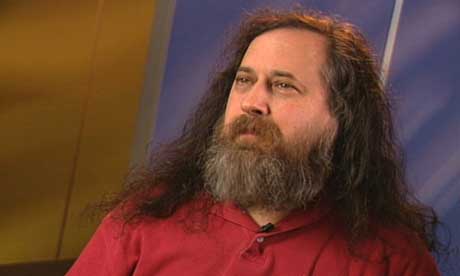
Richard Stallman, creator of the GNU computer operating system
Richard Stallman on cloud computing: "It's stupidity. It's worse than stupidity: it's a marketing hype campaign." Photograph: www.stallman.org
The concept of using web-based programs like Google's Gmail is "worse than stupidity", according to a leading advocate of free software.
Cloud computing – where IT power is delivered over the internet as you need it, rather than drawn from a desktop computer – has gained currency in recent years. Large internet and technology companies including Google, Microsoft and Amazon are pushing forward their plans to deliver information and software over the net.
But Richard Stallman, founder of the Free Software Foundation and creator of the computer operating system GNU, said that cloud computing was simply a trap aimed at forcing more people to buy into locked, proprietary systems that would cost them more and more over time.
"It's stupidity. It's worse than stupidity: it's a marketing hype campaign," he told The Guardian.
"Somebody is saying this is inevitable – and whenever you hear somebody saying that, it's very likely to be a set of businesses campaigning to make it true."
The 55-year-old New Yorker said that computer users should be keen to keep their information in their own hands, rather than hand it over to a third party.
His comments echo those made last week by Larry Ellison, the founder of Oracle, who criticised the rash of cloud computing announcements as "fashion-driven" and "complete gibberish".
"The interesting thing about cloud computing is that we've redefined cloud computing to include everything that we already do," he said. "The computer industry is the only industry that is more fashion-driven than women's fashion. Maybe I'm an idiot, but I have no idea what anyone is talking about. What is it? It's complete gibberish. It's insane. When is this idiocy going to stop?"
The growing number of people storing information on internet-accessible servers rather than on their own machines, has become a core part of the rise of Web 2.0 applications. Millions of people now upload personal data such as emails, photographs and, increasingly, their work, to sites owned by companies such as Google.
But there has been growing concern that mainstream adoption of cloud computing could present a mixture of privacy and ownership issues, with users potentially being locked out of their own files.
Stallman, who is a staunch privacy advocate, advised users to stay local and stick with their own computers.
"One reason you should not use web applications to do your computing is that you lose control," he said. "It's just as bad as using a proprietary program. Do your own computing on your own computer with your copy of a freedom-respecting program. If you use a proprietary program or somebody else's web server, you're defenceless. You're putty in the hands of whoever developed that software."

NSA whistleblower Edward Snowden: 'I do not expect to see home again'


Source for the Guardian's NSA files on why he carried out the biggest intelligence leak in a generation – and what comes next
Edward Snowden was interviewed over several days in Hong Kong by Glenn Greenwald and Ewen MacAskill.
Q: Why did you decide to become a whistleblower?
A: "The NSA has built an infrastructure that allows it to intercept almost everything. With this capability, the vast majority of human communications are automatically ingested without targeting. If I wanted to see your emails or your wife's phone, all I have to do is use intercepts. I can get your emails, passwords, phone records, credit cards.
"I don't want to live in a society that does these sort of things … I do not want to live in a world where everything I do and say is recorded. That is not something I am willing to support or live under."
Q: But isn't there a need for surveillance to try to reduce the chances of terrorist attacks such as Boston?
A: "We have to decide why terrorism is a new threat. There has always been terrorism. Boston was a criminal act. It was not about surveillance but good, old-fashioned police work. The police are very good at what they do."
Q: Do you see yourself as another Bradley Manning?
A: "Manning was a classic whistleblower. He was inspired by the public good."
Q: Do you think what you have done is a crime?
A: "We have seen enough criminality on the part of government. It is hypocritical to make this allegation against me. They have narrowed the public sphere of influence."
Q: What do you think is going to happen to you?
A: "Nothing good."
Q: Why Hong Kong?
A: "I think it is really tragic that an American has to move to a place that has a reputation for less freedom. Still, Hong Kong has a reputation for freedom in spite of the People's Republic of China. It has a strong tradition of free speech."
Q: What do the leaked documents reveal?
A: "That the NSA routinely lies in response to congressional inquiries about the scope of surveillance in America. I believe that when [senator Ron] Wyden and [senator Mark] Udall asked about the scale of this, they [the NSA] said it did not have the tools to provide an answer. We do have the tools and I have maps showing where people have been scrutinised most. We collect more digital communications from America than we do from the Russians."
nsa whistleblower Snowden is a 29-year-old former technical assistant for the CIA

Q: What about the Obama administration's protests about hacking by China?
A: "We hack everyone everywhere. We like to make a distinction between us and the others. But we are in almost every country in the world. We are not at war with these countries."
Q: Is it possible to put security in place to protect against state surveillance?
A: "You are not even aware of what is possible. The extent of their capabilities is horrifying. We can plant bugs in machines. Once you go on the network, I can identify your machine. You will never be safe whatever protections you put in place."
Q: Does your family know you are planning this?
A: "No. My family does not know what is happening … My primary fear is that they will come after my family, my friends, my partner. Anyone I have a relationship with …
I will have to live with that for the rest of my life. I am not going to be able to communicate with them. They [the authorities] will act aggressively against anyone who has known me. That keeps me up at night."
Q: When did you decide to leak the documents?
A: "You see things that may be disturbing. When you see everything you realise that some of these things are abusive. The awareness of wrong-doing builds up. There was not one morning when I woke up [and decided this is it]. It was a natural process.
"A lot of people in 2008 voted for Obama. I did not vote for him. I voted for a third party. But I believed in Obama's promises. I was going to disclose it [but waited because of his election]. He continued with the policies of his predecessor."
Q: What is your reaction to Obama denouncing the leaks on Friday while welcoming a debate on the balance between security and openness?
A: "My immediate reaction was he was having difficulty in defending it himself. He was trying to defend the unjustifiable and he knew it."
Q: What about the response in general to the disclosures?
A: "I have been surprised and pleased to see the public has reacted so strongly in defence of these rights that are being suppressed in the name of security. It is not like Occupy Wall Street but there is a grassroots movement to take to the streets on July 4 in defence of the Fourth Amendment called Restore The Fourth Amendment and it grew out of Reddit. The response over the internet has been huge and supportive."
Q: Washington-based foreign affairs analyst Steve Clemons said he overheard at the capital's Dulles airport four men discussing an intelligence conference they had just attended. Speaking about the leaks, one of them said, according to Clemons, that both the reporter and leaker should be "disappeared". How do you feel about that?
A: "Someone responding to the story said 'real spies do not speak like that'. Well, I am a spy and that is how they talk. Whenever we had a debate in the office on how to handle crimes, they do not defend due process – they defend decisive action. They say it is better to kick someone out of a plane than let these people have a day in court. It is an authoritarian mindset in general."
Q: Do you have a plan in place?
A: "The only thing I can do is sit here and hope the Hong Kong government does not deport me … My predisposition is to seek asylum in a country with shared values. The nation that most encompasses this is Iceland. They stood up for people over internet freedom. I have no idea what my future is going to be.
"They could put out an Interpol note. But I don't think I have committed a crime outside the domain of the US. I think it will be clearly shown to be political in nature."
Q: Do you think you are probably going to end up in prison?
A: "I could not do this without accepting the risk of prison. You can't come up against the world's most powerful intelligence agencies and not accept the risk. If they want to get you, over time they will."
Q: How to you feel now, almost a week after the first leak?
A: "I think the sense of outrage that has been expressed is justified. It has given me hope that, no matter what happens to me, the outcome will be positive for America. I do not expect to see home again, though that is what I want."

Sunday, 9 June 2013

The wasted talent of Danish Kaneria


Hassan Cheema in Cricinfo


The spot-fixing saga brought to an end a career that promised much - particularly in its infancy - but came to a cruel if fitting end. I am not talking about Sreesanth but about Danish Kaneria, the rejection of whose appeal could mean curtains for the man who was supposed to be Pakistan's next great spinner.


It's not that he didn't achieve much - after all, he finished with more Test wickets than any spinner in Pakistan's history - but how he did it. Somehow, one gets the feeling, that even if his career had wound up in different circumstances, there would not have been much celebration and nostalgia.


His likely sporting end calls to mind not just his own achievements and failings, but that of his generation. Pakistan's love affair with inexperienced youth reached its zenith in 1992, when a team comprising the likes of Inzamam-ul-Haq, Aamer Sohail and Moin Khan (each of whom had played less than 15 ODIs before the tournament started) walked off the MCG as world champions. It reinforced the national team's belief in inducting players far before they were ready, almost to save them from the much-maligned domestic first-class scene.


But as one generation gave way to another, there was a belated realisation that this induction required a national team full of leaders. The '92 generation succeeded because they came in with Javed Miandad, Imran Khan, Saleem Malik and Wasim Akram to guide them. One could argue that even the most celebrated players among those who debuted in the mid-to-late-90s (Shahid Afridi, Abdul Razzaq, Shoaib Akhtar and Mohammad Yousuf) could all have been so much more than they ended up being, however many great moments they provided. But even they can't hold a candle to the lot that debuted at the turn of the century - with Kaneria being probably the most obvious example among them.


It all goes back to a fateful day in 2003, when failure in the World Cup meant that the newly appointed chief selector, Aamer Sohail, brought the axe down upon the leaders of that team. Some would return, others (like Wasim, Waqar Younis and Saeed Anwar) wouldn't. And thus progress in many a career was ceased.


Among the 1999-2003 generation was a supremely fit fast bowler with natural outswing, who could bowl yorkers at will. And yet Mohammad Sami would finish as one of the worst bowlers of all time (statistically, at least). Similarly, Shoaib Malik threatened to be a genuine batting allrounder in the middle of the last decade, but is now more famous for who he married than anything he did on the field. Even Kamran Akmal, now the butt of all jokes, was once a wicketkeeper-batsman who could save and win matches, and was called by Ian Chappell "the best wicketkeeper in the world" in a piece of commentary that haunts many a Pakistani to this day. But no one better illustrates the unfulfilled potential of his generation quite like Kaneria does.


I was reminded of something Ramon Calderon, the then-president of Real Madrid, said in a typical outburst. He called Jose Maria "Guti" Gutierrez "the most promising 30-year old in the world". Guti was a star and vice-captain of the team at the time, and was labelled by Calderon as "the eternal promise". With half his career over, he had still not reached maturity or consistency in his play.


Those words could very well be used for Kaneria. He came to prominence as one of the stars of the Pakistan Under-19 team that reached the semi-final of the 2000 World Cup. His debut came later the same year, and in it he outsmarted Marcus Trescothick and had him stumped with a googly that was never picked. It wasn't half-bad for a first international wicket.


Kaneria, quite clearly, had much tangible talent. Here was a guy who could spin the ball, had natural bounce, and all the variations that a Pakistani legspinner is supposed to have. But the "intangible talent", whatever is happening upstairs, never seemed apparent. He, to cite the immortal words Shane Warne used to describe another spinner, ended up playing not 61 Tests but the same Test 61 times.


As his career progressed, Kaneria became synonymous with expensive wickets. He was judged on the work of his predecessors, and didn't come out well. Abdul Qadir, Tauseef Ahmed, Iqbal Qasim, Mushtaq Ahmed and Saqlain combined to pick up 49 five-fors, of which 11 cost more than a hundred runs each. For Kaneria, nine of his 15 five-fors cost triple figures; furthermore, three of the six five-fors where he conceded double figures were against Bangladesh, in 2001 and 2002. And so he became, not unjustly, defined as an expensive wicket-taker who succeeded against the weaker teams. In fact, if his record versus Bangladesh is excluded, his Test average balloons to 37 (the same as Ashley Giles and Paul Harris - neither of whom could be considered good enough for their country to discard the likes of Saqlain and Mushtaq for). This explains why he is the least loved of Pakistan's recent spinners despite being the most successful among them.


It could have been so different, though. Rewind back to 2005. Kaneria started the year with a typically expensive seven-for in Sydney, but gained strength from it, as he went on tour to India, and succeeded where many Pakistani legspinners had failed before. He took 19 wickets (Sami was second-highest with ten) as Pakistan managed to draw the away series. Later in the year, Kaneria was the Robin to Shoaib Akhtar's Batman as Pakistan pulled down the most celebrated English team for two decades.


It should have been the year Kaneria went from a promise to something bigger and better; instead, the following summer he reverted to type. On the England tour that became the beginning of the end for Inzamam and Bob Woolmer's team (and also the tour that started Kamran Akmal's irreversible decline), Kaneria was expected to be the leader of the attack in the absence of Shoaib Akhtar and Mohammad Asif; instead he went for over 50 runs a wicket and got back on track in an underwhelming career. Of course, mere numbers do not always signify the quality of a performance. From that England tour onwards, the inability of Kaneria to become the bowler he was meant to be had much to do with the support he was granted.


With Akmal being as comfortable with gloves as OJ Simpson, Kaneria missed out on 14 wickets just due to his keeper's spills. Regardless of how those wickets would have changed the context of those matches, or Kaneria's confidence, the stats reveal how his career was affected: over those 21 Tests he took 92 wickets at 38.2; if those 14 catches had been taken he would have averaged 33.1 (assuming he had conceded the same number of runs), an eminently respectable number for a modern spinner. While Kaneria has to take the blame for his lack of evolution, one has to concede that Kamran Akmal contributed. That man has a lot to answer for.


Pakistan has mastered the art of wasting raw, supremely talented kids. Throwing them into the national team when they don't understand themselves or their skill set has contributed to this. Kaneria and his ilk led Pakistan to where they are today. In trying to minimise the amount of wasted talent, Pakistan over-corrected and Team Misbah was born. Now Pakistan can go into a Test match with their youngest player being 27-year-old Asad Shafiq and no one bats an eyelid. It would seem that after decades of teaching kids how to swim by throwing them into the deep end, Pakistan may have learned their lesson. Maybe, just maybe, some good has come out of Kaneria and Sami's careers.

I despair as I watch the erosion of the liberal views I hold dear


Unless we take a more robust view of liberalism, tolerance ends up as not caring. Anything goes
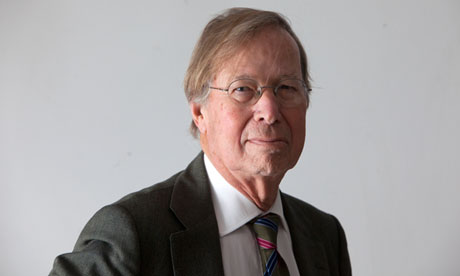
ronald dworkin
Ronald Dworkin – a great liberal thinker. Photograph: Graham Turner for the Guardian
Last Wednesday, there was a memorial service for one of the doyens of American liberalism – Professor Ronnie Dworkin – who died in London, his adopted home, earlier this year. A succession of some of Britain's best-known liberal writers and thinkers took to the rostrum to pay tribute to a man who continued to honour Roosevelt's New Deal, insisted law and morality were indivisible and argued that to live well and with dignity was every human being's aim – one that law and government should support.
It was a moving occasion, but, as his wife, Irene Brendl, wrote in the service notes, this great liberal tradition is increasingly beleaguered. She is right. We live in rightwing times. Law and justice, which Ronnie Dworkin cherished so much, are depicted as burdens on the taxpayer whose costs must be minimised. If you want justice, you must pay for it yourself and have no embedded civic right to expect others to contribute. The good society and moral individuals are those who do without the state. The public sphere is derided and positive public action to promote the common or international good is acceptable only if it involves less, rather than more, government. Instead, what we are invited to hold in common is nationhood, national identity and hostility to foreigners and immigrants. The open society is in retreat.
This may seem an odd commentary in a week in which gay marriage has been agreed by the House of Lords and where companies are increasingly hounded for avoiding their tax. Both are surely liberal rather than conservative preoccupations. In an idiosyncratic leader recently, the Economist proclaimed the strange rebirth of liberal England, arguing that young people's tolerance of ethnic and sexual differences, along with growing distrust of the state and welfare, was proof positive of the emergence of a new liberalism. Ronnie Dworkin should have been happy.
He would have turned in his grave. Such a view of liberalism does not go to the heart of what it means to live well. Tolerance of other people's differences is a core element of a liberal order, but a good society is one where we go beyond just shrugging our shoulders at someone's sexual preferences, religious beliefs or ethnicity. It is one in which we engage with each other, create law and justice as a moral system enshrining human dignity and accept mutual responsibilities. The aim is to live with dignity, to be able to make the best of one's capabilities and to expect that the consequences of undeserved bad luck – what Dworkin called brute bad luck – would be compensated by society in a mutual compact. This is a million miles from the Economist's arid conception of liberalism.
Nor are these disputes just airy-fairy differences between intellectuals – they go to the heart of how we live, what we do and say. Unless we take a much more robust and rounded view of liberalism, tolerance ends up as indifference, disengagement and refusal to respect other people's ambition to live with dignity. Anything goes. One alarming dimension of value-free tolerance is the new licence it gives for men publicly to say noxiously sexist, demeaning or plain wrong things about women. If a woman dresses to appear attractive, that does not mean, as Nick Ross argues in his new book, Crime, that if they succeed they are partly responsible if they get raped. Rape is not gradable to the extent of a woman's dress or character: it is a crime and is the responsibility of – and problem for – men and women alike. To define it in any other way is to make any woman both apart and demeaned, a reversal of the century-long fight for genuine equality between the sexes.
In successive areas of public policy – "reform" of criminal justice and legal aid, the health service, climate change, employment law, social security – the debate is similarly defined wholly in terms of the need to assert individual rights and choice, to minimise social and public responsibilities and, above all, to roll back taxes. If the facts or scientific evidence do not support this drive, then the facts are changed or the science ignored.
The most breathtaking example is climate change. What fires the sceptics' passionate opposition is that preventing global warming will become the rationale for an extension of public initiative and government action, which by definition must be bad. Therefore, the science must be wrong. It is the wholesale inversion of a liberal society. The importance of limiting the state, reducing the scope of law and maximising individual choice with no compensating responsibilities defines how science should become interpreted and understood, even if it indubitably proves that global weather patterns are changing.
Even gay marriage and the quest to end tax avoidance are part of this wider trend. Gay marriage is a crucial and socially legitimate enlargement of gay people's ambitions to live with dignity. Yet the case is rarely made in those positive liberal terms: rather, gay marriage is portrayed as a harmless extension of an unobjectionable entitlement. Faith communities feel that in those terms the proposition is frivolous: their sensibilities are not respected. They feel harmed – and outraged. The row became much more intense than it should.
Equally, David Cameron and George Osborne's quest to limit the now rampant corporate abuse of tax havens is not because they believe that the state is a force for good whose services everyone must legitimately pay for – that taxation is a badge of citizenship. It is because they are against cheating and if big companies don't pay their taxes then taxes are higher for everyone else. You may think the difference is irrelevant, but crucially it offers the tax cheats a perfect line of defence – and one exploited by Eric Schmidt, chair of tax-minimising Google. Companies have no moral responsibility to respect the spirit of the law, he says; if Google can lower its taxes though obscure if legal loopholes, then it is government's responsibility to change the law. The law is not a moral proposition, as in Dworkin's conception: it is simply something to be endlessly gamed by clever tax lawyers.
Schmidt's vision is as arid as the Economist's. But if the right is dominant, a rounded liberalism has one advantage. The right's world leads to economic stagnation, social atomisation and a destructive nationalism. Nor, ultimately, is there happiness and dignity to be found by living as a tax-avoiding, climate-change-denying anti-feminist while mouthing how tolerant you are. There is a quiet and mounting crisis in conservatism. Liberalism, in its best sense, could capitalise on the opportunity. It is a pity Ronnie Dworkin won't be around to be part of the fight back. We'll just have to do it by ourselves.