Search This Blog

Friday, 18 January 2013

'Buddy' scheme to give more multinationals access to ministers


Controversial scheme which gives corporations privileged government access to be extended to a total of up to 80 firms

Shell is part of the multinational-ministerial 'buddy' scheme
Figures suggest Shell has had the greatest access to ministers under the 'buddy' scheme, with 56 face-to-face meetings since May 2010. Photograph: Robin Utrecht/EPA
 
The government is expanding a controversial scheme which pairs dozens of multinational companies with a ministerial "buddy", giving them privileged access to the heart of government, the Guardian has learned.

The minister for trade Lord Green launched the "strategic relations" initiative in July 2011, giving 38 companies, including oil, telecoms and pharmaceutical giants, a direct line to ministers and officials.
The Guardian has obtained a list of 12 further companies which have now been added to the programme, and understands that UK Trade and Investment is considering up to 30 more for addition over 2013.

Analysis of official registers reveals the 38 companies in the first wave of the initiative – more than two-thirds of which are based overseas – have collectively had 698 face-to-face meetings with ministers under the current government, prompting accusations of an over-cosy relationship between corporations and ministers.

The full degree of contact between the chosen companies and the government is not known as telephone calls, emails, and meetings with officials are not recorded on the registers.

Campaigning groups expressed alarm at the level of access that some of the businesses appeared to have to ministers. The Guardian figures, which looked at the meetings the companies held with No 10 and the three departments involved in the buddy scheme – Business, Culture, and Energy and Climate Change – suggested Shell had the greatest access to ministers. The oil giant has had 56 face-to-face meetings since May 2010.

Greenpeace said this consistent access was showing through in government policy.
"The concern about the government's buddy system was always that policy would end up skewed towards narrow corporate interests rather than the wider public good, and these revelations will do nothing to allay those fears," executive director, John Sauven, said.

Other signs of the scheme bearing fruit for business have arisen in public statements made by the universities minister David Willetts. Last week he urged officials to prescribe more of an Astrazeneca drug, and in November he met Novartis officials about streamlining and accelerating UK research and development and clinical trials – something advocated by many clinicians, as well as businesses.
Among the first wave of "buddied" firms were some which have been targeted by campaigners for paying little or no UK tax, or making "sweetheart" deals with tax authorities, including Google and Vodafone. A spokeswoman for UK Uncut, which campaigns against tax avoidance and spending cuts, said the regularity of government access for big business was drowning out other voices.

"There are hundreds of thousands, if not millions, of people who have marched, written to MPs, gone on strike, protested and occupied over the cuts and privatisation which are devastating our lives," she said.

"These demands by ordinary people have been ignored by a cabinet of millionaires which is choosing to only take the calls, the meetings and the dinners with big business and the banks to introduce policies which benefit them and the wealthy minority in this country."

The new companies to be given ministerial buddies – but not yet publicly disclosed – include the property firms Atkins and Balfour Beatty, which have been paired with climate change minister Greg Barker, who is overseeing work on the government's green deal and zero-carbon homes programmes.
David Heath of the Department of Agriculture is paired with food businesses Nestlé, Unilever, Mondeléz (formerly part of Kraft, and includes Cadbury) and Associated British Foods (owner of Primark and Kingsmill). Statoil is added to the oil companies already in touch with Vince Cable; foreign office minister Hugo Swire has been buddied with Procter and Gamble, and David Willetts with Cisco. The culture minister Ed Vaizey is paired with Telefonica (O2) and Everything Everywhere (Orange and T-Mobile), while Green adds engineering firm GKN to his list.

A spokesman for UK Trade and Investment confirmed the government was considering adding "around 30" more companies to the strategic relations programme over 2013.

"As previously, companies will be selected based on a range of criteria, including the complexity of their relationship with government (and hence the need for strong co-ordination) and their existing or potential contribution to the UK economy," he said.

"Understanding business concerns and being clear about government's own priorities can make a real difference to trade and investment."

A Department for Business, Innovation and Skills spokesperson said Willetts was responsible for the "strategic relationship management" for several pharmaceutical companies, including AstraZeneca. "He regularly meets with companies to discuss issues of importance to them, and has a strong interest in making sure that the environment for the life sciences industry is conducive to innovation and growth."

The Federation of Small Businesses defended the relationship with the government, saying members had good access to ministers through representation by the federation at regular meetings with ministers, but the government could do more.

A spokeswoman said: "We support schemes where multinationals support small businesses in the supply chain and give advice and support through mentoring, for example, such a scheme was announced between UKTI and Diageo in 2012. We would like the government to play an important role in encouraging, promoting such schemes, and engaging small businesses more in the process."
The FSB had 34 meetings with ministers in the four departments analysed by the Guardian between May 2010 and June 2012.

Thursday, 17 January 2013

The west's crisis is one of democracy as much as finance


The spirit of dictators like Ceausescu is finding new life in the response of the European elite to pressures in the eurozone
CEAUSESCU
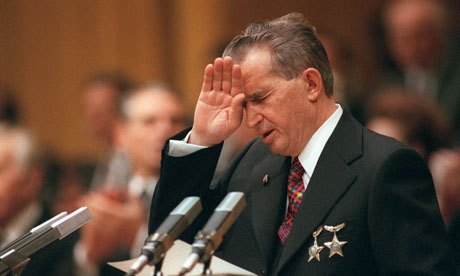
Nicolae Ceausescu addresses Romania's Communist party congress in November 1989, shortly before he was deposed and executed. Photograph: Gerard Fouet/AFP
 
In one of the last interviews before his fall, Nicolae Ceausescu was asked by a western journalist how he justified the fact that Romanian citizens could not travel freely abroad although freedom of movement was guaranteed by the constitution. His answer was in the best tradition of Stalinist sophistry: true, the constitution guarantees freedom of movement, but it also guarantees the right to a safe, prosperous home. So we have here a potential conflict of rights: if Romanian citizens were to be allowed to leave the country, the prosperity of their homeland would be threatened. In this conflict, one has to make a choice, and the right to a prosperous, safe homeland enjoys clear priority …

It seems that this same spirit is alive and well in Slovenia today. Last month the constitutional court found that a referendum on legislation to set up a "bad bank" and a sovereign holding would be unconstitutional – in effect banning a popular vote on the matter. The referendum was proposed by trade unions challenging the government's neoliberal economic politics, and the proposal got enough signatures to make it obligatory.

The idea of the "bad bank" was of a place to transfer all bad credit from main banks, which would then be salvaged by state money (ie at taxpayers' expense), so preventing any serious inquiry into who was responsible for this bad credit in the first place. This measure, debated for months, was far from being generally accepted, even by financial specialists. So why prohibit the referendum? In 2011, when George Papandreou's government in Greece proposed a referendum on austerity measures, there was panic in Brussels, but even there no one dared to directly prohibit it.

According to the Slovenian constitutional court, the referendum "would have caused unconstitutional consequences". How? The court conceded a constitutional right to a referendum, but claimed that its execution would endanger other constitutional values that should be given priority in an economic crisis: the efficient functioning of the state apparatus, especially in creating conditions for economic growth; the realisation of human rights, especially the rights to social security and to free economic initiative.

In short, in assessing the consequences of the referendum, the court simply accepted as fact that failing to obey the dictates of international financial institutions (or to meet their expectations) can lead to political and economic crisis, and is thus unconstitutional. To put it bluntly: since meeting these dictates and expectations is the condition of maintaining the constitutional order, they have priority over the constitution (and eo ipso state sovereignty).

Slovenia may be a small country, but this decision is a symptom of a global tendency towards the limitation of democracy. The idea is that, in a complex economic situation like today's, the majority of the people are not qualified to decide – they are unaware of the catastrophic consequences that would ensue if their demands were to be met. This line of argument is not new. In a TV interview a couple of years ago, the sociologist Ralf Dahrendorf linked the growing distrust for democracy to the fact that, after every revolutionary change, the road to new prosperity leads through a "valley of tears". After the breakdown of socialism, one cannot directly pass to the abundance of a successful market economy: limited, but real, socialist welfare and security have to be dismantled, and these first steps are necessarily painful. The same goes for western Europe, where the passage from the post-second world war welfare state to new global economy involves painful renunciations, less security, less guaranteed social care. For Dahrendorf, the problem is encapsulated by the simple fact that this painful passage through the "valley of tears" lasts longer than the average period between elections, so that the temptation is great to postpone the difficult changes for the short-term electoral gains.

For him, the paradigm here is the disappointment of the large strata of post-communist nations with the economic results of the new democratic order: in the glorious days of 1989, they equated democracy with the abundance of western consumerist societies; and 20 years later, with the abundance still missing, they now blame democracy itself.

Unfortunately, Dahrendorf focuses much less on the opposite temptation: if the majority resist the necessary structural changes in the economy, would one of the logical conclusions not be that, for a decade or so, an enlightened elite should take power, even by non-democratic means, to enforce the necessary measures and thus lay the foundations for truly stable democracy?

Along these lines, the journalist Fareed Zakaria pointed out how democracy can only "catch on" in economically developed countries. If developing countries are "prematurely democratised", the result is a populism that ends in economic catastrophe and political despotism – no wonder that today's economically most successful third world countries (Taiwan, South Korea, Chile) embraced full democracy only after a period of authoritarian rule. And, furthermore, does this line of thinking not provide the best argument for the authoritarian regime in China?

What is new today is that, with the financial crisis that began in 2008, this same distrust of democracy – once constrained to the third world or post-communist developing countries – is gaining ground in the developed west itself: what was a decade or two ago patronising advice to others now concerns ourselves.

The least one can say is that this crisis offers proof that it is not the people but experts themselves who do not know what they are doing. In western Europe we are effectively witnessing a growing inability of the ruling elite – they know less and less how to rule. Look at how Europe is dealing with the Greek crisis: putting pressure on Greece to repay debts, but at the same time ruining its economy through imposed austerity measures and thereby making sure that the Greek debt will never be repaid.

At the end of October last year, the IMF itself released research showing that the economic damage from aggressive austerity measures may be as much as three times larger than previously assumed, thereby nullifying its own advice on austerity in the eurozone crisis. Now the IMF admits that forcing Greece and other debt-burdened countries to reduce their deficits too quickly would be counterproductive, but only after hundreds of thousands of jobs have been lost because of such "miscalculations".

And therein resides the true message of the "irrational" popular protests all around Europe: the protesters know very well what they don't know; they don't pretend to have fast and easy answers; but what their instinct is telling them is nonetheless true – that those in power also don't know it. In Europe today, the blind are leading the blind.

Wednesday, 16 January 2013

Who is Islamic cleric Dr. Tahir ul-Qadri? And why should Pakistan care?


Why is a Canadian Islamic cleric marching on the streets of Pakistan and talking about creating a “peaceful” Tahrir Square in Islamabad?

This is the question which has been perplexing many political analysts and TV anchors in the South Asian country over the past few weeks. This weekend supporters of Dr. Tahir ul Qadri, a dual Canadian nationality holder who arrived in Pakistan last month, led a march of tens of thousands (it was supposed to have been millions) from Lahore to Islamabad to stage a sit-in in order to bring about political reforms in the country. His demands include the dissolution of the Election Commission and ensuring the candidates standing for election pay taxes. He has also made a call on dissolving the assemblies and the formation of a caretaker government.

But what gives a religious scholar, particularly one who has been living in Canada for some seven years, the right to put forward such radical demands? The timing of this protest, only months before a scheduled national election, is also troubling; it risks derailing an already fragile democracy.

Outside Pakistan, Qadri is often been presented as a “moderate” Sufi scholar who famously wrote a 600 page fatwa against terrorism in 2010 which won him international applause.  However while his work to counter extremists has brought him his share of admirers, there hangs a question mark over the extent of Qadri’s own moderating influence. For example one video doing the rounds over the internet shows Qadri giving what appear to be two contradictory statements on blasphemy – the subject of so much controversy in Pakistan. In one clip he is shown speaking in English where he says: “Whatever the law of blasphemy is, it is not applicable on non-Muslims. It is not applicable on Jews, Christians and other non- Muslims minorities. It is just to be dealt with Muslims.” Yet then in Urdu in a different clip he says:  “My stance was that, and this was the law which got made, that whoever commits blasphemy, whether a Muslim or a non-Muslim, man or woman – whether be a Muslim, Jew, Christian, Hindu, anyone –  whoever commits blasphemy their punishment is death."

Certainly Qadri is a contradictory man. While he presents himself as a supporter of democracy, he was elected to parliament under the previous dictatorship of General Pervez Musharaf in 2002. A bigger question to ask is where he is getting all these funds to spend on his campaign? Since last month the city of Lahore has been flooded with Qadri posters advertising his arrival and call for change. TV advertisements have also been airing frequently. On the backs of rickshaws his photo has become the most popular advertisement staring back at all vehicle drivers. One TV station at his sit-in in Islamabad interviewed a woman who described how she had never planned to come to the protest. But after her power supply and cable TV were cut-off she decided to join the protest as she was so fed-up. A few protesters even talked about having traveled all the way from Canada and the United States to participate.

No doubt the current political system is in need of a painful reform. Last month an investigative report showed how nearly 70 per cent of the country’s lawmakers did not pay tax in 2011. Among those who did not file a tax return was the President himself Asif Ali Zardari. Power cuts, gas shortage, bans on mobile phones and daily terrorist bombings have all become associated with the current government. Yet surely the ballot box is the way to bring reform. The Supreme Court has this week ordered the arrest of the Prime Minister Raza Pervez Ashraf over corruption charges – proving there are other avenues towards change without resorting to revolutionary tactics.

The medieval Persian poet, Saadi Shirazi, in his famous work Gulistan narrates a short story about a man of lower than average intelligence. One day, feeling a pain in his eye, he went to see a vet, instead of a doctor. The vet put some medicine in his eye intended for animals and as a result the poor man went blind. To complain about what had happened he took the case to court, but the judge ruled that the vet was not to blame. After all, he pointed out, only a donkey would go to a vet for treatment.
It would appear Dr. Qadri is something of a vet himself. If matters end-up taking a turn for the worse, then perhaps he is not the one who should be blamed.

Hockey - The untold story of how India lost world supremacy


by Minhaz Merchant in the Times of India

Pakistan’s hockey stars have been forced out of the lucrative new Hockey India League, patterned on the cash-rich IPL. I will leave debate on the rights and wrongs of this to a later post as a sequel to Make Pakistan pay. For the moment, let’s stick to hockey – how India lost its global supremacy and how we can regain it.

One afternoon, as I watched the late Tiger Pataudi, India’s former Test cricket captain, playing a hockey match at Bombay Gymkhana, I realized that few were aware how good a hockey player Tiger was. He had long retired from Test cricket but played a brilliant game for the club that afternoon.

Later, chatting casually, he remarked, pointing to the lush green field: “The tragedy of Indian hockey is that we no longer play on grass like this.” Tiger was appalled that the international game had switched to astroturf, putting Indian players at such a disadvantage.

Between 1928 and 1980, India won 8 Olympic gold medals in hockey. After 1980, we have not won a single hockey gold. At the 2012 London Olympics, India’s hockey team finished last in a field of 12.

The reasons for this are complex. But a principal cause is the betrayal of the country’s national sport by those elected to guard it and the ruthless duplicity of European and Australasian hockey authorities.

Till the early-1970s, hockey globally was played on grass. Indian players, bred on the fields of Punjab, Kerala and Goa, were unbeatable. Only Pakistan, with a similar lineage, offered competition.

All that changed in the mid-1970s. The International Hockey Federation (FIH) altered the rules to make synthetic astroturf the mandatory playing surface for international hockey tournaments.

The 1976 Olympics in Montreal was the first Games in which astroturf was used in hockey. For the first time since it began playing hockey in the 1928 Games in Amsterdam, India did not win even a bronze medal. The Indian Hockey Federation (IHF) should have objected. Whether through collusion or apathy, it did not. All Olympic Games henceforth were played on hard astroturf.

India has few astroturf grounds. They are expensive to lay (over Rs. 8 crore) and difficult to play on. While grass, on which hockey had been played internationally for nearly a century, allowed skilled Indian and Pakistani players to trap the ball, dribble and pass, astroturf suits the physicality of European and Australian hockey players based on raw power rather than technical skill.

Affluent Western countries like Holland, Germany and Australia have hundreds of astroturf grounds. The advantage is palpable. Not surprisingly, since 1980, Europe and Australia have dominated world hockey. India and Pakistan have slipped out of the world’s top five hockey-playing nations.

Indian sports administrators must share the blame. Not only were they complicit in allowing the change in playing surface from grass to synthetic astroturf, they were slow to adapt to it once the rules had been changed. Astroturf grounds were not laid. Local tournaments continued to be played on grass. When India played abroad, it started with a huge handicap.

As Sardara Singh, currently India’s best hockey international, said in a television interview, “Hockey players in India play on astroturf for the first time at the age of 19 or 20 and find it hard to adapt.”

What is the way forward? While astroturf cannot now be wished away, India can use its growing commercial influence to host a separate annual field hockey tournament. The game would be transformed. Just as tennis is played on different surfaces (grass at Wimbledon, clay at the French Open and hard courts at the US and Australian Opens), there is no reason why hockey can’t have two optional surfaces: astroturf and grass.

Like tennis players adapt to grass, clay and hard courts within a span of months (between the French Open in May, Wimbledon in July and the US Open in September), so can professional hockey players. Grass is hockey’s natural surface. It tests skill not just strength.

India’s hockey authorities, fractured by internecine rivalries, have little global clout. It is India’s corporate sector, with an interest in future Olympic gold medals, which must lead the campaign to restore natural turf as one of two alternative playing surfaces of choice in future international hockey tournaments. The new Hockey India League could set the example in its next edition. Sponsorships for field hockey tournaments would follow.

India has begun winning Olympic medals in individual sports since the Beijing Games but none in team sports like hockey. That must change. In India less than 0.1% of the population (around one million) has access to the facilities, nutrition and training athletes from Western countries and China do. In “sports-access” terms, our population is equivalent to New Zealand’s. It is no shame to win fewer medals than smaller, richer countries. But it is a shame not to give our national sport, hockey, a level playing field.

The zone and the importance of imagination

A sportsman in the zone, like an artist, has both a wider and a narrower focus. He has the ability to be in the game and yet stand above it, seeing it clearly
Ed Smith
December 16, 2012

Text size: A | A

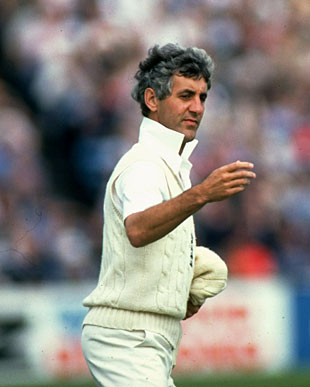
Mike Brearley throws the ball to Bob Willis, fifth Test, England v Australia, Old Trafford, 16 August 1981
Mike Brearley: went beyond merely visualising a desirable outcome Adrian Murrell / © Getty Images
Mike Brearley, the former England and Middlesex captain, recently gave a talk about "the zone". Before cricket, Mike was an academic philosopher; after cricket, he became a psychoanalyst. Taken as a whole, professional sport is a relatively small proportion of Mike's career. But it afforded him an intense period of practical absorption and experience. Looking back on three careers spread over one varied life, Mike spoke to an audience at the London School of Economics about what cricket had taught him about concentration, technique and freedom.


Sometimes the best way to define something is to describe its antithesis. "The zone" can be a slippery concept. But we all know what bad form feels like. Brearley began with a memorable description of a player in crisis: "We try to focus on all sorts of things that should be unconscious - like the centipede, who, trying to think about each leg before it moves, ends up on its back on a ditch." 

"The zone" is the opposite. When we are in the zone, there is a sense of effortlessness, your body acting as though it does not require instructions from the mind. Many batsmen have written about the zone, but this was the first time I've heard anyone describe "captaincy in the zone". 

It was 1982 and Brearley was captaining Middlesex against Nottinghamshire. It was a bouncy pitch, and he was trying to think of a way to dismiss the opposition star player, Clive Rice. Brearley not only sensed there was a chance of Rice misjudging the bounce - many captains would have done that - he also began to imagine as though he, Brearley, was in fact the batsman.

In Brearley's phrase, "Here I felt my way into Rice's body and the shape of the shot. I sensed there might be a thick outside edge, and I pictured the ball flying to a deep wide slip, perhaps 20 yards back. I put Clive Radley in this position, and shortly afterwards it went straight to him at catching height. When something similar happened in the second innings, this time on the leg side, Rice thought there was something magical about my captaincy; in fact, it was a mixture of bodily intuition laced with a great deal of luck."

Brearley is describing something rarely discussed in a sporting context: the practical value of imagination. It transcended merely "visualising" a probable outcome. Brearley used his imagination, as a novelist might, to bring to life a very unlikely potential scenario. "Many years later," he added, "I saw a film of Bushmen hunting a deer on foot. As they followed the tracks of the deer in the stony ground, the hunters 'became' the deer, using the identification to find the faint footprints in the ground; they shaped themselves into the way of moving and likely course of the deer."

It is a rare perspective. We hear a lot about plans, very little about imagination; much about strategy, little about adaptiveness. Brearley's point is that a captain has to balance conscious planning with imaginative hunches.

A team can also enter "the zone", just as a single player does. Brearley explained what happens when a team is "hot": "Each player breathes in the others at their best, is strengthened by that identification, and gives off similar vibes to the rest of the team."

Note how the positivity becomes self-perpetuating, even contagious. That is why good teams always have a strong core of senior players: this core takes the weaker "waverers" with them on the journey towards self-belief. Thus the team - rather than being just a list of individuals - becomes an organic entity in its own right. One of the truest phrases about good teams is that they become "more than the sum of their parts".

What of the individual? One of the thrilling aspects of watching a player in the zone - and I am thinking more of football and rugby than cricket - is the sense that he is both aware of the whole pitch and yet totally absorbed in the small details; he is ahead of the game, yet also living in the here and now.

I once had a memorable conversation with the film director Stephen Frears about the French footballer Zinedine Zidane. Frears saw parallels between a football playmaker in full flow and a film-maker in the zone. "What I really admire - and you see it particularly in players who are just past their prime - is the feeling that what they have lost physically they make up for by seeing the whole picture. They grasp the shape of the game. They can somehow stand above it and see it clearly."

Brearley calls this "seeing the wood and the trees: he looks and takes in the detail; but he also looks with a broader gaze, in a way that allows unconscious ideas and connections to flow". The sportsman in the zone, like the artist, has both a wider and a narrower focus.

This sounds very abstract. What does it feel like in more practical terms? I would say I felt fully "in the zone" only a few times in my career. One day, when I made 149 for Kent in about a session and a half, stands out. And, looking back on it, there was that sense of both narrower and wider focus. I remember being aware of gaps in the field. In fact, there seemed to be a ready-made "channel" - it seemed to exist in its own right - running in a line to the boundary, dissecting mid-off and extra cover. 
Time and again I hit the ball into that channel, as though I had only to aim vaguely in that direction and my body subconsciously directed the ball exactly into the gap between the fielders. Without straining or thinking about it, I could both watch the ball onto the bat, and yet also see that channel leading to the boundary rope.

Later I tried to recall what batting felt like that day: "You stay in the present, enjoying it for what it is: the feel of the bat in the hand, the rhythm of the ball arriving in sync with the shot, the feel of the earth under feet, a lightness and yet a rootedness. Your mind is revving at the same rate as the pace of the game. There is no sense of being rushed (the ball arriving too soon) or impatience (wanting the balls to be delivered quicker). There is harmony. I felt very clearly, on that day in July 2003, that my role was to not get in the way - to make myself the conduit more than the agent."

Brearley described batting in "the zone" in similar terms. But on one point I disagreed, or at least had a different take on things. Brearley interpreted "the zone" as an extreme version of the more common phenomenon of "good form". At one level that is obviously true. But I feel that "the zone" exists in a different sphere to the question of form. Form is an achievement, the zone is a feeling. A batsman can enjoy a spell of scoring heavily without getting anywhere close to the zone. The zone is subtler than form, more mysterious.


I would draw a distinction between success that follows from an effort of will and success that is just allowed to happen. I associate the zone with "letting go", relinquishing the controlling grip of your own will power


In particular, I would draw a distinction between success that follows from an effort of will and success that is just allowed to happen. (I acknowledge that even the latter relies on a great deal of preliminary hard work and practice.) I associate the zone with "letting go", relinquishing the controlling grip of your own will power. In the zone, the world is co-operative; you do not have to bend it to your will.

An awkward, perhaps impossible, question follows: what is the sportsman's optimal relationship with his own will power? On the one hand, we know that will power drives athletes to many of their victories. And yet I also believe that your controlling mind prevents you from playing at your absolute best.

So would you achieve more if you trusted yourself just to "play", instead of trying to manipulate events with your will power and strength of character? I suspect the answer is different for different players.

A good example of two opposite approaches is the rivalry of Rafael Nadal and Roger Federer. Nadal relies on his phenomenal will power - as though he draws confidence from the strength of his own character. Federer, in contrast, seems to play best when he does not interfere with his own talent. It is as though Federer's brilliance exists of itself, in its own right: he merely has to set it free. It must be difficult to advise Federer when he is losing: "try harder", "fight more" - those ideas seem entirely inappropriate for his game.

Maybe for some players (the Federer type), the zone is almost a prerequisite of performance. For others (the Nadal type), the zone is practically an irrelevance.
****
At the dinner after Mike's talk, where the guests were mostly LSE professors, I reflected how easily he could be mistaken for a distinguished lecturer in philosophy. And yet each of the worlds he has touched - academia, sport, psychoanalysis - has benefited from insights and experiences he developed in the others. Had Mike lived a narrower life, and focused on one strand to the exclusion of the others, I suspect he would have had a less surprising life - and, I think, a less influential one. Breadth, paradoxically, can lead to depth.

By nature I am an optimist: my firm conviction is that sport is getting better in many respects. But I could not escape a feeling of sadness that it is highly unlikely that a similar career could happen in today's ultra-professional sporting world. I doubt an academic philosopher in his 20s would be persuaded to return to professional cricket, or that a professional cricketer, having retired from the game in early middle age, would subsequently pursue a full career in psychotherapy.

Perhaps Mike's insights will help a new generation of players get into the zone more often. But I suspect the particular zone he experienced is an increasingly uninhabited space.

Ministers accused of exploiting royal veto to block embarrassing legislation

Bills on Iraq, Rhodesia and hereditary titles were blocked by Queen - on advice of ministers who had political objections
Tam Dalyell
Tam Dalyell, the sponsor of a 1999 bill that aimed to give MPs a vote on military action against Saddam Hussein, said he is 'incandescent and angry' that it was blocked by the Queen under apparent influence from Tony Blair’s government. Photograph: Murdo Macleod
Government ministers have exploited the royal family's secretive power to veto new laws as a way to quell politically embarrassing backbench rebellions, it was claimed on Tuesday.

Tam Dalyell, the sponsor of a 1999 parliamentary bill that aimed to give MPs a vote on military action against Saddam Hussein, said he is "incandescent and angry" that it was blocked by the Queen under apparent influence from Tony Blair's government. It also emerged that Harold Wilson used the Queen's power to kill off politically embarrassing bills about Zimbabwe and peerages.

MPs and republicans have complained the little-known power to veto or consent to new legislation grants the Queen and Prince Charles unwarranted powers and is undemocratic. Detail about its application is only now emerging as a result of a freedom of information campaign by a legal scholar, and the Guardian revealed on Monday at least 39 different laws have been subject to the secretive royal consent arrangement.

Dalyall's military actions against Iraq bill would have given parliament sole authority to sanction strikes on Iraq, and he alleged Blair's government told Buckingham Palace the Queen should withhold her consent. The bill was introduced a month after the US and UK operation Desert Fox air strikes against Iraq.

"The issue as far as I am concerned is that Buckingham Palace was used by Downing Street," said Dalyell. "I don't blame the palace … this was entirely the handiwork of Downing Street. It was about snuffing out a measure they feared would have a lot of support. It was a sneaky way of avoiding an issue that should have come before the House of Commons."

Dalyell said he had been contacted by one of the Queen's aides following the blocking of his backbench bill and he understands the government instructed the Queen to refuse consent in order to kill off a proposal that was gaining Labour support among MPs opposed to military action in Iraq.
That appears to be supported by a Buckingham Palace statement on the application of the veto, which said: "The sovereign has not refused to consent to any bill affecting crown interests unless advised to do so by ministers."

A Cabinet Office spokesman said it would not "discuss any discussions between us and the royal palaces". Alastair Campbell, the prime minister's communications adviser at the time the bill was quashed, said he could not recall the case.

Dalyell said he was concerned that the power could be used to prevent parliament from intervening in future war plans through private members' bills.

"This could happen again," he said. "The palace has to be very careful not to do the government's dirty work. They blocked my bill because the government thought they were threatened in the House of Commons. This is relevant today. I was angry then and I still am."

At least two other bills have been blocked by the Queen, it emerged , both on the advice of ministers who had political objections. The first came in 1964 in the case of the titles (abolition) bill, which was embarrassing to Harold Wilson's newly elected Labour government, which had a slender majority and did not want any legislative debate about the desirability of titles such as lordships and damehoods.

The other was the Rhodesia independence bill of 1969 which sought autonomy for the African colony which Wilson's government was opposed to while it was in a state of rebellion. The examples were identified by Professor Rodney Brazier, a legal academic and informal constitutional adviser to the Queen's private secretary, in an academic paper published in the Cambridge Law Journal in 2007.

Chloe Smith, the Cabinet Office minister, said the Queen and Prince Charles had not vetoed any bills in the past decade, but it remains unknown which, if any bills, have been altered during the consent process. MPs and peers have been calling for greater transparency over the application of the royal powers of consent, but Smith this week told parliament the government would not publish a full account of which bills have been subject to royal consent because it would be too expensive.

The leggie who was one of us


It's hard not to admire the story and spirit of a club spinner who believed he would one day make it to the big leagues - and briefly did

Jarrod Kimber
January 16, 2013
  A

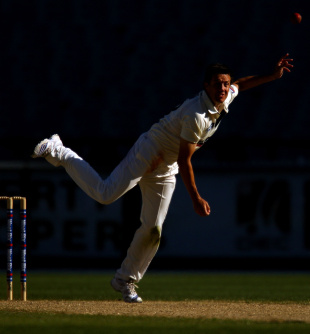
Bryce McGain bowls, Victoria v Tasmania, Sheffield Shield, 3rd day, MCG, October 27, 2010
Bryce McGain saw the darkness but refused to enter it © Getty Images
Enlarge


I grew up in the People's Democratic Republic of Victoria. I was indoctrinated early. Dean Jones was better than Viv Richards in Victoria, and had a bigger ego as well. Darren Berry kept wicket with the softest hands and hardest mouth of any keeper I have ever seen. Ian Harvey had alien cricket. Matthew Elliott could score runs with his eyes shut. The first time I saw Dirk Nannes bowl, I felt like Victoria had thawed a smiley caveman. And even though I never saw Slug Jordan play, I enjoyed his sledging for years on the radio. 

So my favourite player has to be a Victorian. But my other love is cricket's dark art, legspin. I wish I knew whether it was being a legspinner that made me love legspin, or seeing a legspinner that made me want to bowl it. Everything in cricket seemed easy to understand when I was a kid, but not legspin. And that's where I ended up. I'm not a good legspinner, far from it, but I think that any legspinner, even the useless club ones that bowl moon balls, have something special about them. 

The first legspinner I ever fell for was Abdul Qadir. I'm not sure how I saw him, or what tour it was, but even before I understood actual legspin, I could see something special about him. His action was theatrical madness and I loved it.

Then the 1992 World Cup came. I was 12, it was in Melbourne (read Australia), and this little pudgy-faced kid was embarrassing the world's best. I was already a legspinner by then, but Mushie made it cool. This was the age where we were told spinners had no place; it was pace or nothing. Limited-overs cricket was going to take over from Tests, and spinners had no role in it. Mushie made that all look ridiculous as he did his double-arm twirl to propel his killer wrong'uns at groping moustached legends.

By worshipping Mushie I was ahead of the curve, because from then on, in Melbourne, Australia, and eventually England, Shane Warne changed the world. Mushie and Qadir had made legspinning look like it was beyond the realms of understanding, but Warne made it look like something humans could do, even if he wasn't human himself.

It was through Warne I got to Anil Kumble. He bowled legspin in such an understated way. It was completely different to Warne. His wrist wasn't his weapon, so he had to use everything else he had. Warne was the Batmobile, Kumble an Audi A4. Anyone could love Warne, his appeal was obvious. But to love Kumble you needed to really get legspin. The legspinner's leggie.

When I was young, my second favourite was a guy called Craig Howard, who virtually doesn't exist. Howard was the Victorian legspinner who Warne thought was better than him. To my 13- and 14-year-old eyes, Howard was a demon. His legspin was fast and vicious, but it was his wrong'un that was something special. Mushie and Qadir had obvious wrong'uns, subtle wrong'uns, and invisible wrong'uns. Howard had a throat-punching wrong'un. It didn't just beat you or make you look silly; it attacked you off a length and flew up at you violently. I've never seen another leggie who can do that, but neither could Howard. Through bad management and injury he ended up as an office-working offspinner in Bendigo.

But good things can come from office work. It gave me my favourite cricketer of all time. A person who for much of his 20s was a struggling club cricketer no one believed in. But he believed. Even as he played 2nds cricket, moved clubs, worked in IT for a bank, something about this man made him continue. A broken marriage and shared custody of his son. His day job had him moving his way up the chain. The fact that no one wanted him for higher honours. His age. Cameron White's legspin flirtation. And eventually the Victorian selectors, who didn't believe that picking a man over 30 was a good policy.

Through all that, Bryce McGain continued to believe he was good enough. Through most of it, he probably wasn't. He was a club spinner.

Bryce refused to believe that, and using the TV slow-mo and super-long-lens close-ups for teachers, he stayed sober, learnt from every spinner he could and forced himself to be better. He refused to just be mediocre, because Bryce had a dream. It's a dream that every one one of us has had. The difference is, we don't believe, we don't hang in, we don't improve, and we end up just moving on.
Bryce refused.


The world would be a better place if more people saw McGain as a hero and not a failure. He just wanted to fulfil his dream, and that he did against all odds is perhaps one of the great cricket stories of all time


At 32 he was given a brief chance before Victoria put him back in club cricket. Surely that was his last chance. But Bryce refused to believe that. And at the age of 35 he began his first full season as Victoria's spinner. It was an amazing year for Australian spin. It was the first summer without Warne.

Almost as a joke, and because I loved his story, I started writing on my newly formed blog that McGain should be playing for Australia. He made it easy by continually getting wickets, and then even Terry Jenner paid attention. To us legspinners, Jenner is Angelo Dundee, and his word, McGain's form and the circumstances meant that Bryce suddenly became the person most likely.

Stuart MacGill was finished, Brad Hogg wanted out, and Beau Casson was too gentle. Bryce was ready at the age of 36 to be his country's first-choice spinner. Then something happened. It was reported in the least possibly dramatic way ever. McGain had a bad shoulder, the reports said. He may miss a warm-up game.

No, he missed more than that. He missed months. As White, Jason Krezja, Nathan Hauritz and even Marcus North played before him as Australia's spinners. This shoulder problem wouldn't go away. And although Bryce's body hadn't had the workload of the professional spinners, bowling so much at his advanced age had perhaps been too much for him. He had only one match to prove he was fit enough for a tour to South Africa. He took a messy five-for against South Australia and was picked for South Africa. He didn't fly with the rest of the players, though, as he missed his flight. Nothing was ever easy for Bryce.

His second first-class match in six months was a tour match where the South African A team attacked Bryce mercilessly. Perhaps it was a plan sent down by the main management, or perhaps they just sensed he wasn't right, but it wasn't pretty. North played as the spinner in the first two Tests. For the third Test, North got sick, and it would have seemed like the first bit of good fortune to come to Bryce since he hurt his shoulder.

At the age of 36, Bryce made his debut for Australia. It was a dream come true for a man who never stopped believing. It was one of us playing Test cricket for his country. It was seen as a joke by many, but even the cynics had to marvel at how this office worker made it to the baggy green.

I missed the Test live as I was on holidays and proposing to my now-wife. I'm glad I missed it. Sure, I'd wanted Bryce to fulfill his dream as much as I'd wanted to fulfill most of mine, but I wouldn't have liked to see what happened to him live. South Africa clearly saw a damaged player thrown their way and feasted on him. His figures were heartbreaking: 0 for 149. Some called it the worst debut in history.

I contacted him after it, and Bryce was amazingly upbeat. He'd make it back, according to him. He was talking nonsense. There was no way back for him. Australia wouldn't care that his shoulder wasn't right; he couldn't handle the pressure. His body, mind and confidence had cracked under pressure. He was roadkill.

But Bryce wouldn't see it that way, and that's why he's my favourite cricketer. I wasn't there for all the times no one believed in him, for all those times his dream was so far away and life was in his way. But I was there now, at what was obviously the end. Bryce McGain saw the darkness but refused to enter it. That's special. That is how you achieve your dreams when everything is against you.

Before I moved to London to embark on my cricket-writing career, I met Bryce for a lunch interview. It was my first interview with a cricketer. We were just two former office workers who had escaped. At this stage Casson had been preferred over him for the tour to the West Indies. In the Shield final, Bryce's spinning finger had opened up after a swim in the ocean. He was outbowled by Casson and the selectors didn't take him. Surely this was it. Why would anyone pick a 36-year-old who had been below his best in his most important game?

Bryce knew he may have blown it. But he still believed, of course. We were just two former office workers with dreams. Two guys talking about legspin. Two guys just talking shit and hoping things would work out.

At the time it was just cool to have lunch with this guy I admired, but now I look back and know I had lunch with the player who would become my favourite cricketer of all time.

The world would be a better place if more people saw McGain as a hero and not a failure. Shane Warne was dropped on this planet to be a god. Bryce McGain just wanted to fulfil his dream, and that he did against all odds is perhaps one of the great cricket stories of all time.

Bryce is one of us, the one who couldn't give up.