Friday, 17 April 2015
Thursday, 16 April 2015
Seattle CEO Dan Price cuts own salary by 90% to pay every worker at least $70,000

The tech business founder says CEO pay in the US is 'way out of whack'
Dan Price, the CEO of Seattle-based tech company Gravity Payments, gathered together his 120-strong workforce on Monday to tell them the news, which for some will mean a doubling of their salary.
Seattle was already at the heart of the US debate on the gulf in pay between CEOs and ordinary workers, after the city made the ground-breaking decision to raise the minimum wage to $15 (£10.16) an hour in June.
But Mr Price, 30, has gone one step further, after telling ABC News he thought CEO pay was “way out of whack”.
In order not to bankrupt the business, those on less than $70,000 now will receive a $5,000-per-year pay increase or an immediate minimum of $50,000, whichever is greater.
A spokesperson for the company said the average salary was currently $48,000, and the measure will see pay increase for about 70 members of staff.
 The announcement of the plan was made on Monday (YouTube)
The target is for everyone to be on $70,000 by December 2017, while Mr Price has pledged to reduce his own pay from $1 million a year to the same minimum as everyone else, at least until the company’s profits recover.
Making the announcement, Mr Price said: “There are risks associated with this – but this is one of the things we’re doing to try and offset that risk.
“My pay is based on market rates and what it would take to replace me, and because of this growing inequality as a CEO that amount is really high. I make a crazy amount.
The New York Times, which was invited along for the Wolf of Wall Street-esque announcement, reported that after the cheering died down Mr Price shouted: “Is anyone else freaking out right now?”
Mr Price told ABC News he settled on the figure of $70,000 for all after reading study published by the University of Princeton, which found that increases in income above that number did not have a significant positive impact on a person’s happiness. He said that while he had an “incredibly luxurious life” and super-rich associates, he also had friends who earned $40,000 a year and said their descriptions of struggling to deal with surprise rent increases or credit card debts “ate at me inside”.
Mr Price set up Gravity, a credit card payment processing company, in 2004 when he was just 19. Entrepreneurship runs in the family – his father Ron Price is a consultant and motivational speaker who has written a book on business leadership.
And even if the measure to set such a high minimum wage is a publicity stunt, it has resonated with people in a country where some economists estimate CEOs earn nearly 300 times the salary of their average worker.
Mr Price said he “hadn’t even thought about” how he was going to adjust to earning 90 per cent less, adding: “I may have to scale back a little bit, but nothing I’m not willing to do – I’m single, I just have a dog.
“I’m a big believer in less,” he added. “The more you have, sometimes the more complicated your life gets.”
Dan Price, the CEO of Seattle-based tech company Gravity Payments, gathered together his 120-strong workforce on Monday to tell them the news, which for some will mean a doubling of their salary.
Seattle was already at the heart of the US debate on the gulf in pay between CEOs and ordinary workers, after the city made the ground-breaking decision to raise the minimum wage to $15 (£10.16) an hour in June.
But Mr Price, 30, has gone one step further, after telling ABC News he thought CEO pay was “way out of whack”.
In order not to bankrupt the business, those on less than $70,000 now will receive a $5,000-per-year pay increase or an immediate minimum of $50,000, whichever is greater.
A spokesperson for the company said the average salary was currently $48,000, and the measure will see pay increase for about 70 members of staff.
The announcement of the plan was made on Monday (YouTube)
Making the announcement, Mr Price said: “There are risks associated with this – but this is one of the things we’re doing to try and offset that risk.
“My pay is based on market rates and what it would take to replace me, and because of this growing inequality as a CEO that amount is really high. I make a crazy amount.
The New York Times, which was invited along for the Wolf of Wall Street-esque announcement, reported that after the cheering died down Mr Price shouted: “Is anyone else freaking out right now?”
Mr Price told ABC News he settled on the figure of $70,000 for all after reading study published by the University of Princeton, which found that increases in income above that number did not have a significant positive impact on a person’s happiness. He said that while he had an “incredibly luxurious life” and super-rich associates, he also had friends who earned $40,000 a year and said their descriptions of struggling to deal with surprise rent increases or credit card debts “ate at me inside”.
Mr Price set up Gravity, a credit card payment processing company, in 2004 when he was just 19. Entrepreneurship runs in the family – his father Ron Price is a consultant and motivational speaker who has written a book on business leadership.
And even if the measure to set such a high minimum wage is a publicity stunt, it has resonated with people in a country where some economists estimate CEOs earn nearly 300 times the salary of their average worker.
Mr Price said he “hadn’t even thought about” how he was going to adjust to earning 90 per cent less, adding: “I may have to scale back a little bit, but nothing I’m not willing to do – I’m single, I just have a dog.
“I’m a big believer in less,” he added. “The more you have, sometimes the more complicated your life gets.”
Tuesday, 14 April 2015
A very different sort of young cricketer
Will Macpherson in Cricinfo
New South Wales batsman Ryan Carters reads Aldous Huxley, backpacks in Central Asia, and is passionate about helping less fortunate youngsters complete their education
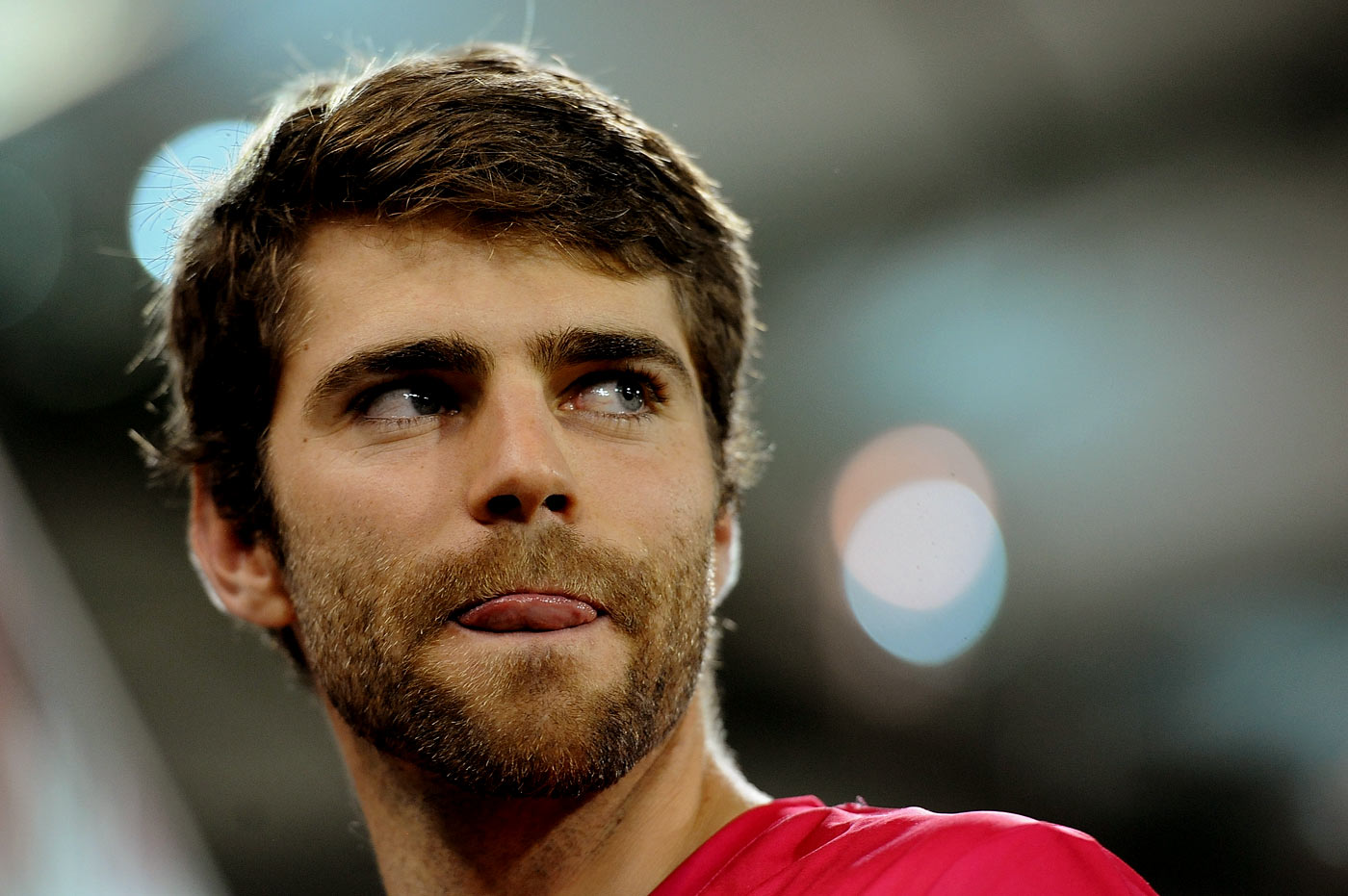 Ryan Carters: majoring in economics and aiming for a Test cap © Getty Images
You'll read plenty about Ryan Carters over the next few years. Sure, you'll read about his cricket, which continues to tick along very nicely indeed, but many of those column inches will be about Carters himself. They will present the young Australian wicketkeeper-batsman as different. Different to modern cricketers, different to the sportsmen whose macho exploits and muddled platitudes fill the back pages, different even to other "normal" young men in their mid-twenties with their normal jobs and normal interests.
And it's true. So far, Carters has had led a cricketing life less ordinary. An on-field career started in his hometown Canberra before a move to Victoria and then, when Matthew Wade's presence provided few opportunities, a swap from Melbourne to Sydney, home to Brad Haddin and Peter Nevill, Australia's first-choice glovemen.
A curious move, but one that has paid off, not behind the stumps but in front of them as an opening batsman. In New South Wales' victorious 2013-14 Sheffield Shield season, Carters managed three centuries in his 861 runs opening the batting. The season just ended was less spectacular for state and player - a third-placed finish and 448 runs at 32 - but did contain one gem of an innings, 198 against Queensland shortly before the Shield broke up for its Big Bash holidays. The guy can clearly play and, as those moves suggest, is pretty fearless.
So, off the field. Why is he different to the rest? In the course of our 45-minute chat at the SCG, we cover ground over which my professional career had not yet taken me: Aldous Huxley's experimentation with mescaline and subsequent recollections in The Doors of Perception; the culture of Central Asian countries such as Tajikistan, Kyrgyzstan and Kazakhstan; and the Australian gambling culture. For the record, the first is what Carters and his book club have just finished reading, the second is where he'll spend his off season travelling and exploring, and the third is the reason he feels his charity, Batting for Change, has enjoyed success so far. It's not, to say the least, all telly and Tinder, Nando's and nightclubs.
"Dougie [Bollinger] calls me 'the philosophy major'," Carters laughs, when asked whether he is a little different to his team-mates. "Which is actually false… because I'm majoring in economics!"
Indeed, away from the field, the studies that followed his cricket from Melbourne University to Sydney after a top-of-the-class school career, the philanthropy, and love of reading place him firmly in the "bookish" category alongside - among others - his friend Eddie Cowan and Cambridge grad Mike Atherton, who famously mistook the letters "FEC" graffitied on his Lancashire locker to mean "future England captain", when in fact the second letter stood for "educated" and the first and third were as coarse as the English language can muster.
 Carters on his way to 198 against Queensland in the 2014-15 Sheffield Shield © Getty Images
"You get a few jokes about being educated," says Carters, smiling effortlessly but incessantly the whole time. "It's always been Nerds versus Julios in Australian cricket and I'm definitely on the nerds' side of that equation. I have a lot of interests that maybe aren't typical of sportsmen my age but I reckon a cricket team is basically a cross section of the different young men you encounter in society. Not everyone is some kind of jock and not everyone is from the same background."
Whatever his interests and whether they are similar to those he works with, it's clear that Carters has a pretty broad view of the world that filters into his cricket.
"Cricket provides an interesting and unusual schedule and this off season I'm going to take advantage of that. Every second week we're away playing a match interstate but now we have a load of time off. Usually I've used this period to study but this is the first time in the last five years that I've decided to get away from it all. First, I'm visiting Nepal, where Batting for Change worked last year. They're holding a tribute match to Phillip Hughes there in April [Carters' side, Team Red, won by one run], then in June and July, I'm playing club cricket for Oxford in the UK.
"But between that I'll take a month completely off the grid for the road trip through central Asia, just driving and camping. It's an important thing to do, to just reset, see where you're at away from daily demands. It's not the classic travel spot for guys our age but that's one of the reasons it appeals. We [two school friends] went to Mongolia two years ago and fell in love with that part of the world, so thought we'd try something else off the beaten track. You don't really know what you're going to encounter, which is exciting."
New South Wales batsman Ryan Carters reads Aldous Huxley, backpacks in Central Asia, and is passionate about helping less fortunate youngsters complete their education
Ryan Carters: majoring in economics and aiming for a Test cap © Getty ImagesYou'll read plenty about Ryan Carters over the next few years. Sure, you'll read about his cricket, which continues to tick along very nicely indeed, but many of those column inches will be about Carters himself. They will present the young Australian wicketkeeper-batsman as different. Different to modern cricketers, different to the sportsmen whose macho exploits and muddled platitudes fill the back pages, different even to other "normal" young men in their mid-twenties with their normal jobs and normal interests.
And it's true. So far, Carters has had led a cricketing life less ordinary. An on-field career started in his hometown Canberra before a move to Victoria and then, when Matthew Wade's presence provided few opportunities, a swap from Melbourne to Sydney, home to Brad Haddin and Peter Nevill, Australia's first-choice glovemen.
A curious move, but one that has paid off, not behind the stumps but in front of them as an opening batsman. In New South Wales' victorious 2013-14 Sheffield Shield season, Carters managed three centuries in his 861 runs opening the batting. The season just ended was less spectacular for state and player - a third-placed finish and 448 runs at 32 - but did contain one gem of an innings, 198 against Queensland shortly before the Shield broke up for its Big Bash holidays. The guy can clearly play and, as those moves suggest, is pretty fearless.
So, off the field. Why is he different to the rest? In the course of our 45-minute chat at the SCG, we cover ground over which my professional career had not yet taken me: Aldous Huxley's experimentation with mescaline and subsequent recollections in The Doors of Perception; the culture of Central Asian countries such as Tajikistan, Kyrgyzstan and Kazakhstan; and the Australian gambling culture. For the record, the first is what Carters and his book club have just finished reading, the second is where he'll spend his off season travelling and exploring, and the third is the reason he feels his charity, Batting for Change, has enjoyed success so far. It's not, to say the least, all telly and Tinder, Nando's and nightclubs.
"Dougie [Bollinger] calls me 'the philosophy major'," Carters laughs, when asked whether he is a little different to his team-mates. "Which is actually false… because I'm majoring in economics!"
Indeed, away from the field, the studies that followed his cricket from Melbourne University to Sydney after a top-of-the-class school career, the philanthropy, and love of reading place him firmly in the "bookish" category alongside - among others - his friend Eddie Cowan and Cambridge grad Mike Atherton, who famously mistook the letters "FEC" graffitied on his Lancashire locker to mean "future England captain", when in fact the second letter stood for "educated" and the first and third were as coarse as the English language can muster.
Carters on his way to 198 against Queensland in the 2014-15 Sheffield Shield © Getty Images"You get a few jokes about being educated," says Carters, smiling effortlessly but incessantly the whole time. "It's always been Nerds versus Julios in Australian cricket and I'm definitely on the nerds' side of that equation. I have a lot of interests that maybe aren't typical of sportsmen my age but I reckon a cricket team is basically a cross section of the different young men you encounter in society. Not everyone is some kind of jock and not everyone is from the same background."
Whatever his interests and whether they are similar to those he works with, it's clear that Carters has a pretty broad view of the world that filters into his cricket.
"Cricket provides an interesting and unusual schedule and this off season I'm going to take advantage of that. Every second week we're away playing a match interstate but now we have a load of time off. Usually I've used this period to study but this is the first time in the last five years that I've decided to get away from it all. First, I'm visiting Nepal, where Batting for Change worked last year. They're holding a tribute match to Phillip Hughes there in April [Carters' side, Team Red, won by one run], then in June and July, I'm playing club cricket for Oxford in the UK.
"But between that I'll take a month completely off the grid for the road trip through central Asia, just driving and camping. It's an important thing to do, to just reset, see where you're at away from daily demands. It's not the classic travel spot for guys our age but that's one of the reasons it appeals. We [two school friends] went to Mongolia two years ago and fell in love with that part of the world, so thought we'd try something else off the beaten track. You don't really know what you're going to encounter, which is exciting."
He admits that the breadth and depth of his extra-curricular interests mean he hasn't much time for cricket when he's not playing, which seems healthy. For all the book-worming, he doesn't read about cricket (although Cowan has recommended CLR James' Beyond a Boundary) and doesn't watch much cricket.
"I love the game, of course, but so much of my life is taken up playing and being involved in cricket that I spend more of my time outside of that doing other things rather than in the cricketing world. Watching cricket is not a chore, but is just not something I do every day. Off the field, I try to avoid thinking about the game, and I think that's a blessing.
"I'd be surprised if anyone could honestly say, 'I haven't made runs for four games but it's not affecting me psychologically', but the best I can do is get away from it for a while, re-engage with other aspects of life, come back feeling fresh and looking forward to playing cricket, as opposed to becoming consumed with it and getting stuck in that cycle of negative thinking. That's the theory behind this break, to be hungry again by September, when the Sydney Sixers have the Champions League. I reckon a break from the game will be conducive to getting the best out of myself."
As talk turns to Carters getting the best out of himself, it's impossible not to avoid Batting for Change, which this BBL season raised $102,431 for the education of young women in Mumbai, after the Sixers hit 47 sixes, with $2,179 pledged by donors for each one. A year earlier, Carters' old team, Sydney Thunder, had raised more than £30,000, used to build the three classrooms at Heartland School, Kathmandu, which Carters visited this month. These are impressive numbers but he's already looking at ways in which to expand his fundraising.
 Carters (standing, third from left) with his Team Red at the Phillip Hughes' Tribute match in Kathmandu © AFP
"Last time I got away from the game, on my trip to Mongolia, I wanted to start a charity initiative to partner my cricket to promote a cause that I care deeply about and use the stage that I'm at in my career, the people that we know, to find an opportunity to reach a big section of the public. The common theme of our projects - which change annually and are linked to the LBW Trust - [Learning for a Better World] - is educating young men and women - usually at a tertiary level - who otherwise wouldn't have the opportunity, as I believe education is the way to help people out of poverty.
"I learned a lesson that if you have an idea that you're passionate about, people will jump behind it - my team-mates but also donors from around the country who have been very generous in their donations and kind in their messages of support. It's certainly making every six the Sixers hit feel that bit more special!"
Carters, evidently, is ambitious in every sense of the word; in his charity work, in his embryonic plans for life after cricket, which one senses is likely to follow philanthropic, not political (as some have suggested) lines. He's clearly a cricketer apart, but speaking of his hopes, dreams and ambitions, both as boy and man, is a reminder that he's not that different at all.
"Growing up my dreams were all cricket-based," he says, grinning again. "I played loads with my brother and Dad in the backyard and loved watching cricket and always dreamed of being a Test cricketer, like so many others in Australia. Sure, I got more interested in the world, how things work, especially as I got older; politics, economics, philosophy, reading, but cricket was the one.
"I've achieved being a pro cricketer, which is awesome, and I'd be amazed by that if you'd told me that as a 12-year-old. But the Test cricket box isn't ticked, and that - along with remembering how lucky I am and to enjoy the game - is what's driving me."
Deep down, he's just like the rest of them.
"I love the game, of course, but so much of my life is taken up playing and being involved in cricket that I spend more of my time outside of that doing other things rather than in the cricketing world. Watching cricket is not a chore, but is just not something I do every day. Off the field, I try to avoid thinking about the game, and I think that's a blessing.
"I'd be surprised if anyone could honestly say, 'I haven't made runs for four games but it's not affecting me psychologically', but the best I can do is get away from it for a while, re-engage with other aspects of life, come back feeling fresh and looking forward to playing cricket, as opposed to becoming consumed with it and getting stuck in that cycle of negative thinking. That's the theory behind this break, to be hungry again by September, when the Sydney Sixers have the Champions League. I reckon a break from the game will be conducive to getting the best out of myself."
As talk turns to Carters getting the best out of himself, it's impossible not to avoid Batting for Change, which this BBL season raised $102,431 for the education of young women in Mumbai, after the Sixers hit 47 sixes, with $2,179 pledged by donors for each one. A year earlier, Carters' old team, Sydney Thunder, had raised more than £30,000, used to build the three classrooms at Heartland School, Kathmandu, which Carters visited this month. These are impressive numbers but he's already looking at ways in which to expand his fundraising.
Carters (standing, third from left) with his Team Red at the Phillip Hughes' Tribute match in Kathmandu © AFP"Last time I got away from the game, on my trip to Mongolia, I wanted to start a charity initiative to partner my cricket to promote a cause that I care deeply about and use the stage that I'm at in my career, the people that we know, to find an opportunity to reach a big section of the public. The common theme of our projects - which change annually and are linked to the LBW Trust - [Learning for a Better World] - is educating young men and women - usually at a tertiary level - who otherwise wouldn't have the opportunity, as I believe education is the way to help people out of poverty.
"I learned a lesson that if you have an idea that you're passionate about, people will jump behind it - my team-mates but also donors from around the country who have been very generous in their donations and kind in their messages of support. It's certainly making every six the Sixers hit feel that bit more special!"
Carters, evidently, is ambitious in every sense of the word; in his charity work, in his embryonic plans for life after cricket, which one senses is likely to follow philanthropic, not political (as some have suggested) lines. He's clearly a cricketer apart, but speaking of his hopes, dreams and ambitions, both as boy and man, is a reminder that he's not that different at all.
"Growing up my dreams were all cricket-based," he says, grinning again. "I played loads with my brother and Dad in the backyard and loved watching cricket and always dreamed of being a Test cricketer, like so many others in Australia. Sure, I got more interested in the world, how things work, especially as I got older; politics, economics, philosophy, reading, but cricket was the one.
"I've achieved being a pro cricketer, which is awesome, and I'd be amazed by that if you'd told me that as a 12-year-old. But the Test cricket box isn't ticked, and that - along with remembering how lucky I am and to enjoy the game - is what's driving me."
Deep down, he's just like the rest of them.
Insults!
From The Independent
1. “In Shakespearean English, a customer was a prostitute.”
2. “In Tudor England, fishmonger’s daughter was a euphemism for a prostitute.”
3. “Conundrum was originally an Oxford University nickname for a pedantic person.”

4. “The surname Mulligan means ‘little bald man’.”
5. “The surname Kennedy means ‘ugly-head’.”
6. “Tory derives from an Irish word for ‘outlaw’.”
7. “The Welsh word for ‘carrots’ is moron.”

8. “An ale-knight is a drinking companion, or habitual drunkard.”
9. “Pumpernickel means ‘farting goblin’.”
10. “Walrus means ‘whale-horse’.”

11. “In the eighteenth century, a figure dancer was a criminal or forger who specialised in altering the numbers on banknotes.”
12. “A spit-poison is an very malicious or spiteful person.”
13. “In Canadian slang, someone who wastes time is called an afternoon
14. “Wardrobe is another name for badger excrement.”

15. “A shot-log is an unwanted friend or drinking companion, whose company is only tolerated so that they can pay for a round for the rest of the group.”
Monday, 13 April 2015
Hospital patients to be asked about UK residence status
BBC News
Patients could be made to show their passports when they use hospital care in England under new rules introduced by the Department of Health.
Those accessing new treatment will be asked questions about their residence status in the UK.
Patients may need to submit passports and immigration documents when this is in doubt, the department said.
Hospitals will also be able to charge short-term visitors from outside Europe 150% of the cost of treatment.
The department said the new rules came into force on 6 April for overseas visitors and migrants who use NHS hospital care in England.
Primary care and A&E care will remain free.
There will also be financial sanctions for trusts which fail to identify and bill patients who should be charged, it said.
The plans are part of a crackdown on so-called "health tourism".
Andrew Bridgen, the Tory MP for North West Leicestershire in the last Parliament,told the Daily Mail: "This is not the International Health Service, it's the National Health Service.
"Non-UK nationals seeking medical attention should pay for their treatment.
"The NHS is funded by UK taxpayers for UK citizens and if any of us went to any of these countries we'd certainly be paying if we needed to be treated."
Most foreign migrants and overseas visitors can currently get free NHS care immediately or soon after arrival in the UK but they are expected to repay the cost of most procedures afterwards.
The charges are based on the standard tariff for a range of procedures, ranging from about £1,860 for cataract surgery to about £8,570 for a hip replacement.
Non-UK citizens who are lawfully entitled to reside in the UK and usually live in the country will be entitled to free NHS care as they are now.
Patients could be made to show their passports when they use hospital care in England under new rules introduced by the Department of Health.
Those accessing new treatment will be asked questions about their residence status in the UK.
Patients may need to submit passports and immigration documents when this is in doubt, the department said.
Hospitals will also be able to charge short-term visitors from outside Europe 150% of the cost of treatment.
-----Also read
UK TOURISTS BEWARE – Cambridge Hospital Staff Demand Instant Money from Sick and Ailing Indian Tourist
-------
The department said the new rules came into force on 6 April for overseas visitors and migrants who use NHS hospital care in England.
Primary care and A&E care will remain free.
There will also be financial sanctions for trusts which fail to identify and bill patients who should be charged, it said.
The plans are part of a crackdown on so-called "health tourism".
Andrew Bridgen, the Tory MP for North West Leicestershire in the last Parliament,told the Daily Mail: "This is not the International Health Service, it's the National Health Service.
"Non-UK nationals seeking medical attention should pay for their treatment.
"The NHS is funded by UK taxpayers for UK citizens and if any of us went to any of these countries we'd certainly be paying if we needed to be treated."
Most foreign migrants and overseas visitors can currently get free NHS care immediately or soon after arrival in the UK but they are expected to repay the cost of most procedures afterwards.
The charges are based on the standard tariff for a range of procedures, ranging from about £1,860 for cataract surgery to about £8,570 for a hip replacement.
Non-UK citizens who are lawfully entitled to reside in the UK and usually live in the country will be entitled to free NHS care as they are now.
Sunday, 12 April 2015
Every man, woman and child in Britain is more than £3,400 in debt – without knowing it and without borrowing a single penny
The UK owes more than £222bn to banks and businesses as a result of Private Finance Initiatives (PFIs) – “buy now, pay later” agreements between the government and private companies on major projects. The startling figure – described by experts as a “financial disaster” – has been calculated as part of an Independent on Sunday analysis of Treasury data on more than 720 PFIs. The analysis has been verified by the National Audit Office (NAO).
The headline debt is based on “unitary charges” which start this month and will continue for 35 years. They include fees for services rendered, such as maintenance and cleaning, as well as the repayment of loans underwritten by banks and investment companies.
 The situation is expected to worsen as PFI projects spread across the world (Getty)
Basically, a PFI is like a mortgage that the government takes out on behalf of the public. The average annual cost of meeting the terms of the UK’s PFI contracts will be more than £10bn over the next decade.
And the cost of servicing PFIs is growing. Last year, it rose by £5bn. It could rise further, with inflation. The upward creep is the price taxpayers’ pay for a financing system which allows private firms to profit from investing in infrastructure.
An NAO briefing, released last month, says: “In the short term using private finance will reduce reported public spending and government debt figures.” But, longer term, “additional public spending will be required to repay the debt and interest of the original investment”.
A case in point is Britain’s biggest health trust, Barts Health NHS Trust in London, which was placed in special measures last month. It is £93m in debt – struggling under the weight of a 43-year PFI contract under which it will pay back more than £7bn on contracts valued at a fraction of that sum (£1.1bn).
PFI’s were the brainchild of the Conservative Party in the 1990s, but were swiftly embraced by New Labour. Successive governments signed hundreds of the deals. PFI-funded schools, streetlights, prisons, services, police stations and care homes can be found across Britain.
The system has yielded assets valued at £56.5bn. But Britain will pay more than five times that amount under the terms of the PFIs used to create them, and in some cases be left with nothing to show for it, because the PFI agreed to is effectively a leasing agreement. Some £88bn has already been spent, and even if the projected cost between now and 2049/50 does not change, the total PFI bill will be in excess of £310bn. This is more than four times the budget deficit used to justify austerity cuts to government budgets and local services.
 Gateway Surgical Centre, London, is run by Barts Health NHS Trust, which is struggling under a £7bn PFI (Alamy)
Responding to the findings, TUC General Secretary Frances O’Grady said: “Crippling PFI debts are exacerbating the funding crisis across our public services, most obviously in our National Health Service.”
According to Jean Shaoul, professor emerita at Manchester Business School, PFIs have been “an enormous financial disaster in terms of cost”. She added: “Frankly, it’s very corrupt... no rational government, looking at the interests of the citizenry as a whole, would do this.”
Unlike government funding, PFI’s cannot be adjusted to match the economy’s fortunes. They are governed by contracts that often run to thousands of pages. In contrast to the radical cuts to public spending, less than 1 per cent has been trimmed from the total cost of PFI deals since 2012.
Danny Alexander, Chief Secretary to the Treasury, admitted last month: “Too many of the old PFI deals were poorly negotiated... with high costs draining local and national coffers.”
 PFI contracts could escalate like America’s subprime mortgage fiasco (Getty)
Repeated concerns over projects suffering years of delays and soaring costs have been raised in Parliament in recent years, chiefly via the Public Accounts Select Committee. Its chair, Margaret Hodge, has spoken of Labour’s promotion of the deals during its time in power: “I’m afraid we got it wrong... we got seduced by PFI.”
Allyson Pollock, professor of public health research and policy, Queen Mary University of London, said the diversion of funds from other budgets to PFI payments make the schemes “an engine for closure of public services and further privatisation”.
In rich Qatar, an Indian restaurant lets poor eat for free
DOHA: In a dusty corner of Qatar's booming capital, a sign outside a modest restaurant popular with migrant labourers reads: "If you are hungry and have no money, eat for free!!!"
Sixteen kilometres (10 miles) from the gleaming glass towers of Doha, one of the richest places on the planet, sits the “Industrial Area” of small-scale workshops, factories and low-cost accommodation.
It is only a 40-minute drive south of the centre of the Qatari capital and its luxury shops, upmarket brands and expensive restaurants.
But the “Industrial Area”, rarely seen by outsiders, is a different Qatar—one which provides essential labour and materials for the country's massive and relentless expansion.
It is at the margin of Doha life, both geographically and metaphorically, but home to a restaurant called Zaiqa doing something apparently unique for the oil-rich Gulf state.
Sixteen kilometres (10 miles) from the gleaming glass towers of Doha, one of the richest places on the planet, sits the “Industrial Area” of small-scale workshops, factories and low-cost accommodation.
It is only a 40-minute drive south of the centre of the Qatari capital and its luxury shops, upmarket brands and expensive restaurants.
But the “Industrial Area”, rarely seen by outsiders, is a different Qatar—one which provides essential labour and materials for the country's massive and relentless expansion.
It is at the margin of Doha life, both geographically and metaphorically, but home to a restaurant called Zaiqa doing something apparently unique for the oil-rich Gulf state.

Workers cook food in 'Zaiqa'.— AFP
About three weeks ago the Indian brothers who own Zaiqa decided to put up a small makeshift sign offering free food to customers who cannot afford to pay.
“When I saw the board I had tears in my eyes,” said one of the owners, Shadab Khan, 47, originally from New Delhi, who has lived in Qatar for 13 years.
“Even now when I talk about it, I get a lump in my throat. “He said the idea came from his younger brother, Nishab.
The 16-seater eaterie stands on the prosaically named Street 23, sandwiched between another restaurant and a steel workshop.
It is a busy area—opposite is a mosque and then a road where large trucks hurtle past.
Inside, on brightly coloured tablecloths, “authentic Indian cuisine from the heart of Delhi” is served 24 hours a day, seven days a week. A fish curry costs six Qatari riyals ($1.65, 1.50 euros), an egg roast is three riyals and a spinach dish of Palak Paneer is 10 riyals—for those who choose to pay.

Workers serving the customers.— AFP
The need for free food in Qatar is particularly acute among labourers and those working in heavy industry.
It is estimated that there are anywhere between 700,000 and one million migrant workers in the tiny Gulf kingdom, out of a total population of 2.3 million.
Rights groups have criticised companies in Qatar for not paying workers on time or, in some cases, not at all. The Qatari government, under pressure to introduce salary reform in the run-up to the 2022 World Cup, vowed earlier this year to force companies to pay wages through direct bank transfers.
Even those who do get paid will be intent on sending most of their money back home, said one of Zaiqa's diners, Nepalese mechanic Ghufran Ahmed.
“Many labourers earn 800-1,000 riyals ($220-$275/200-250 euros) per month.
They have to send money back to home. It's expensive here so there are people who need free food,” he said.

Shadab stands outside the restaurant.—AFP
Shadab, who is a filmmaker as well as a restaurant owner, said those asking for food are mostly construction workers from countries such as India, Nepal and Bangladesh.
Just bread and water
"We realise a lot of people out here do not get paid on time and do not have money, not even money to eat," he said.
"So there were people who would come here and just buy a packet of bread. And they would eat the bread with water."
"So, we realised those people don't have money for anything else. They just buy a packet of bread, which comes to about one riyal. So, we would try to offer them food." But it is not easy, added Shadab.
"Self-respect", he said, means many refuse to take something for nothing.
As a result, in the three weeks since the free food experiment started, “the number of people coming here to get free food is like two or three people a day at the most”.

Shadab Khan, one of the Indian owners of the Zaiqa restaurant, poses for a photograph outside his restaurant in southern suburbs of the Qatari capital Doha.—AFP
As if to emphasise Shadab's point, two workers entered the restaurant while AFP was there but left in case their complimentary lunch should become public knowledge.
In another sign of how people fuelling the Qatari boom are struggling to live, it was recently revealed that some Doha market workers were forced to live in their stalls as they cannot afford rents.
For Zaiqa too, there is a black cloud on the horizon.
The restaurant's future is threatened by a dispute over rent with the property owner and may have to close down. Shadab and his brother have a different plan for their next restaurant.
“We are putting a refrigerator outside, so this refrigerator won't have a lock. It will be facing the road and it will have packets of food with dates on them,” he said.
"So anybody who wants to take it, he doesn't have to come inside."
Subscribe to:
Comments (Atom)