Search This Blog

Thursday, 11 February 2016

The Shashank Redemption - Why not make administrators our role models?


ROB STEEN in Cricinfo
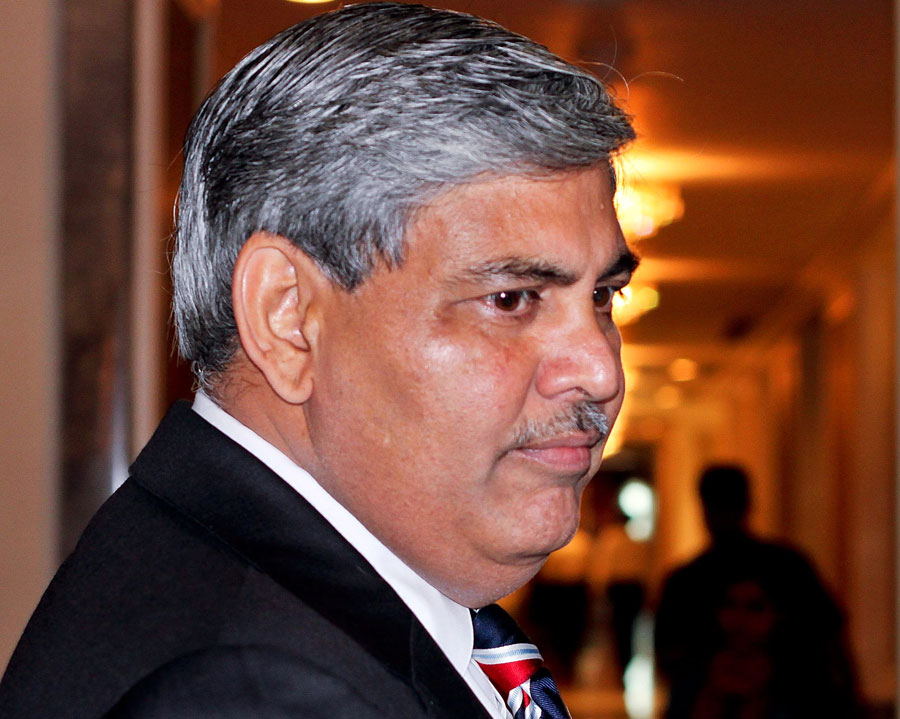

By putting a stop to the brief reign of the Big Three, Shashank Manohar has managed to do something that defied criticism © Getty Images


I simply couldn't believe all the filth which came out of their mouths. All day long. And to anyone. It was hilarious but unrepeatable, and because I wanted them to treat me as one of the lads, I accepted it.

You really know how to control a match buddy. It's a f***ing joke.

Two snapshots of sport in 2016, both from Australia, the nation that, some might say, put the "tit" in competitive.

That first reverberant sound bite emerged last week from England wicketkeeper Sarah Taylor, semi-fondly reminiscing about her recent experiences as the first woman to play the highest grade of male club cricket for Northern Districts in Adelaide. Somewhat unsurprisingly, she discovered that her ears and sensibilities were not going to be spared. As Bryan Ferry so eloquently put it, "Boys will be boys will be boys-yoy-yoys…"

The second, decidedly unsound bite came during last month's Australian Open, when that gifted but very naughty overhead smasher Nick Kyrgios hit fresh heights in his impressive assault on John McEnroe's all-time record for sporting officials harangued, abused and ridiculed. Indeed, at the end of the match in question, Kyrgios approached James Keothavong, the latest object of his loathing, and told the British umpire he was "a terrible referee", thus achieving the notable double of being at once searingly honest and hopelessly wrong.

What distinguishes the verbals encountered by Taylor from those delivered by Kyrgios, of course, is that the former occurred during a match that was not covered by the all-seeing, almost-all-hearing broadcasters. What further unites them is that the rules of the respective games, at amateur and professional level alike, empower the enforcers to penalise the offensive offenders. It is in the now-histrionic court of public approval that things get messy.

Naturally, there are those - almost invariably the sort of folk who claim to have first-hand memories of the '60s but were already too old to join in the fun - who will assure you that bad behaviour during a sporting contest is a strictly late-20th-century curse, triggered by the advent of unseemly rewards and the TV-fuelled obsession with personalities and controversy. This is, of course, absolute rot.

For no justifiable reason, playing sport for a living - unlike acting or singing or dancing or painting - means not only having to behave yourself, but being seen to behave yourself.

Ask Colin McDonald. Roused by Mike Atherton's recent contention that Fred Trueman and Brian Statham were England's No. 1 all-time co-manipulators of the new cherry, the dogged former Australia opener recently reflected on the might of Frank "Typhoon" Tyson: "I will never forget the remarks made by my opening partner Jim Burke during the 1959 Adelaide Test after a Tyson bouncer: 'If you bowl another one of those I'll knock your block off with this bat.' 'Will yer?' replied Frank. Not wishing to enjoy being the recipient of a similar delivery, my pleasant rejoinder to Tyson on his way back to his mark was 'Well bowled.'"

In emailing those wincing reminiscences to the Times, McDonald perhaps unwittingly highlighted the preposterousness of what might best be termed the sporting contract - that timeless unwritten constitution that obliges professional sportsfolk to seek victory at any cost but behave like a pre-pubescent Mormon; the same unwritten constitution that simultaneously obliges our competitive artists to remember, above all, that it's only a blimmin' game.

For those who regard ungentlemanly conduct as perpetually indefensible, last week's Under-19 World Cup game between West Indies and Zimbabwe in Chittagong proffered much to get high and mighty about. With one over remaining and the Zimbabweans requiring a further three runs, Richard Ngarava was "mankaded" by Keemo Paul, sending waves of disgust rippling around the planet.

Indeed, it says all too much about cricket's self-deluding self-image that a photograph of the incident made its way onto the English sports pages even though not one of Blighty's nine national daily papers sent a correspondent to the tournament - thus missing the lethally precocious magnificence of Alzarri Shaheim Joseph, a skyscraping Antiguan beanpole who seems destined to put Kemar Roach and Jerome Taylor to shame by becoming the millennium's first great lean, mean Caribbean pace machine.

In principle, this column agrees wholeheartedly with Tony Cozier: the notion of being honour-bound to deliver a pre-emptive warning is more than a little stupefying. For one thing, it's not as if we expect batsmen to stick their hand up and inform the bowler they're about to suddenly take guard the other way round. For another, baseball, cricket's uppity younger brother, has always been more clear-cut: if a runner is caught straying off base while sneakily seeking a head start, he's out and that's it. No ethical posturing or accusations of moral bankruptcy here. In fact, such dismissals are so common they have their own incriminating name: "picked off".


If Ched Evans wins his appeal and is re-signed by Sheffield United, will he be greeted with apologies? © Getty Images


Should we be perturbed that teenagers such as Paul appear to be every bit as prepared as their elders and alleged betters to seek any legitimate advantage available rather than concern themselves with something so nebulous as "the spirit" of the game? The opposite conclusion should be drawn: their priority is to demonstrate that they are capable of making the leap from outstanding amateurs to - at the very least - competent professionals.

For no justifiable reason, playing sport for a living - unlike acting or singing or dancing or painting - means not only having to behave yourself, but being seen to behave yourself. On and off the park. Why rugby flankers or NFL tight ends - whose job is to disrupt the opposition by virtually any means necessary - should be expected to be angels beyond the touchline is utterly beyond this column's ken. Since successful athletes tend to peak in their late 20s, all this column can say is that when it was that age, it was about as mature as day-old cheddar. Then there are the stresses and strains of doing one's job in public, unaided by an editor or body double, never mind in the incessant glare of the octopus otherwise known as the media. Shouldn't compassion be more prevalent than self-righteous, hypocritical indignation?

This is not to say there are not intensely problematic cases. Nor decry the many Sheffield United FC fans - among them the Olympic heptathlon champion Jessica Ennis-Hill, whose name was removed from a stand at Bramall Lane after she, along with many others, threatened to end their loyalty should the club re-sign the convicted rapist Ched Evans. Nor fault Atlanta Falcons for releasing Michael Vick in 2009 after the quarterback had spent 21 months in jail for running a dogfighting ring. Vick, though, rediscovered his mojo by kind permission of the Philadelphia Eagles. As for Evans, who has always maintained his innocence, his case has been referred to the Court of Appeal. What happens if the verdict is reversed? Would United re-sign him? Would (anti) social media resound with apologies?

"I'm not paid to be a role model. I'm paid to wreak havoc on the basketball court." Thus, in a largely forgotten 1993 commercial, stated the NBA star Charles Barkley, hitting the nail squarely on the head. "Funny how big shots accept all the trappings of role model-dom - especially the residual commercial cash - before they renounce their broader responsibilities to society," retorted Phil Mushnick in the New York Post. Meanwhile, in Sports Illustrated, Barkley's fellow NBA alumnus Karl Malone jabbed hard: "Charles... I don't think it's your decision to make. We don't choose to be role models, we are chosen. Our only choice is whether to be a good role model or a bad one."

Begging to differ was the Boston College sociologist Michael Malec, former editor of theJournal of Sport and Social Issues. "In essence Barkley is correct. If you want to emulate what he does on court, you've got a wonderful model there. That doesn't necessarily mean he ought to be a model as a father or husband."

Time, then, for a radical rethink: if we really must have role models, should we not look to the administrators, the purported adults?
Plainly, suggesting even a tiny proportion fit the bill is tantamount to proposing that the next best option is Robert Mugabe (the current No. 1 global dictator, according to Forbes magazine, just ahead of Bashar al-Assad). Fishing a good guy out of the alphabet soup containing such toxic ingredients as the ICC, IOC, IAAF and FIFA, is akin to locating a needle in the Pacific Ocean.

Tim Wigmore was spot on when he pointed out that, before India - with a little help from their equally greedy, yellow-bellied pals in Australia and England - started muscle-flexing in earnest, the ICC was scarcely a model of enlightened governance. On the other hand, quoting the questionable wit and dubious wisdom of Rahm Emanuel, Barack Obama's former chief of staff ("Never let a serious crisis go to waste") was perhaps not the wisest choice.

Emanuel, after all, "seems committed", attested that zealous American scourge of bad sports Dave Zirin, "to win the current spirited competition as the most loathsome person in American political life". As mayor of Chicago, Emanuel demonstrated how the profits generated by spectator sport can distort social values. Having overseen the closure of 54 schools and six mental-health clinics under the justification of a "budgetary crisis", he handed over $100 million-plus to DePaul University for a new basketball arena.

What, then, of Shashank Manohar? In terminating the mercifully brief reign of the "Big Three" with suitable prejudice, he should be feted as the first major sporting administrator in recent memory to do something that defied criticism. Nonetheless, there are no fewer than three Ranji Trophy sides in his own state. As reader Jose P observed in a comment: "The diversity, and complexity of the well-entrenched multiple power centres within the BCCI structure, is a thousand gordian knots knotted into a more complex humongous knot."

Still, let's be generous and optimistic out there: anyone for the Shashank redemption?

Our adoration is killing the NHS. It needs tough love

Simon Jenkins in The Guardian


Archaic demarcations between GPs, consultants and nurses are wasting billions. These have to go
 
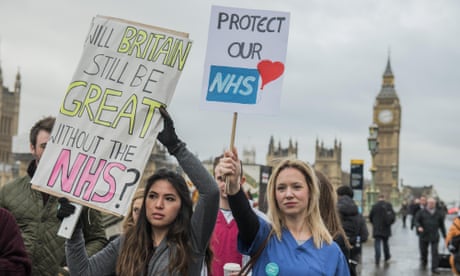
Protestors demonstrate during a doctors strike in Oxford. ‘The sheer scale of past NHS mismanagement has been staggering.’ Photograph: Dylan Martinez/Reuters


John Reid, then the Labour government’s health secretary, in 2004 offered GPs a deal that ended weekend and home visits. They could hardly believe it. He also leveraged their average pay to £100,000 a year. People said it would send thousands rushing to accident and emergency. The British Medical Association called the deal “a bit of a laugh”, and the King’s Fund later calculated it added £30bn in costs to the NHS with no appreciable benefit. But no one blamed the NHS. Everyone loved the NHS.

The attempt by Jeremy Hunt, today’s health secretary, to remedy part of Reid’s disastrous reform enjoys no such popularity. There is two-thirds support for the junior hospital doctors in their strike against weekend restructuring.

People may dislike other public services. They see the police as dodgy, train drivers as bolshy, utilities as run by crooks. But the NHS “saved my mum’s life”. So leave the doctors and nurses alone. Just give them money. Give everyone money.

Nothing dents this love. Day after day, the headlines scream of NHS woe. Last month half of all doctors said they offered a worsening service. Eleven thousand heart patients “die because of poor care”. The NHS wastes £12bn on a computer system that “does not work”. One in four hospital staff feels “harassed and bullied”. Three-quarters of them tell care quality commissioners that “patient safety is now at risk”. If the NHS is to the British, as former chancellor Lord Lawson said, “not a service but a religion”, the religion must be juju.

The sheer scale of past NHS mismanagement – of private finance and of procurement – has been staggering. It makes the Ministry of Defence seem a paragon of efficiency. When David Cameron at the 2010 election promised “no more tiresome, meddling top-down restructuring” and then did just that, I realised the NHS was more powerful than him. The beast had to keep reorganising or, like a shark, it would die.

The NHS’s carapace of love has to be its biggest danger. On Wednesday it was revealed that, despite last year’s Francis report on whistleblowing, not a single sacked NHS whistleblower has been re-employed or manager reprimanded. Instead doctors are eulogised for the “daily miracle of saving lives”. This is despite the OECD reporting that they save fewer lives per head than insurance-based health services in Germany, Switzerland and the Netherlands. Britain’s record on tracing cancer is dreadful.

Doctors are in the business of saving lives. It is their job. Firefighters are not “miracle workers” for putting out fires, or teachers for getting pupils through exams. Healthcare may benefit from fear of death and disease, and we are rightly appreciative of those who relieve it. But when other professionals such as social workers or carers of the elderly fail, they are publicly excoriated. Why is the NHS immune?

I have intermittently experienced medicine at home and abroad, in public and private sectors. I admit I feel strangely secure in the familiar NHS surgery, with its tired magazines and admonitory notices. It has a wartime air, like a Dad’s Army set, rendering it unpatriotic to complain.

But this is no joke when a friend dies of MRSA, or when a mentally disturbed child is left untended, or when, in my own case, the labyrinthine “referral” system between GPs and hospitals leads to dangerously delayed cancer diagnosis. When I challenged the consultant, he said the opinion of my GP on a particular test was “of absolutely no concern to me”.

Lax professional practices are bad enough in the law, but in medicine they can be fatal. Simple blood tests and check-ups which, in the NHS, take three visits and a month of waiting for results, in the private sector take one visit and 24 hours. A heart scan can take half a day off work in the NHS (and goodness knows what fee to the commissioning practice), but £295 and half an hour at Lifescan.

In the age of the internet and computerised testing, archaic demarcations between GPs, consultants, nurses, pharmacists and technicians make no sense. This is not a matter of ideology, but of restrictive practice. It must cost billions.

Britons love to swap horror stories about the foreign health systems. American care for the uninsured was, at least before President Obama, dire. But the American best puts the NHS to shame, as does care across most of Europe’s insurance or pay-and-reclaim systems. Insurance is not always a cost-effective basis for care, but the private sector delivers so many services more efficiently than the NHS.


Doctors' strike turnout much lower than last time, says Jeremy Hunt


People love to defend the NHS – and attack private provision – through those deadly twins, prejudice and anecdote. The state’s anonymous hospitals and complex staffing systems can be glorious, but they are equally wasteful and demoralising. It is not just Hunt that is driving NHS staff at all levels into the arms of agency contractors, and costing the taxpayer a fortune.

I have never understood why so many self-inflicted “health needs”, such as sports injuries, drunkenness and overeating, should be charged to the state. Some fire brigades are charging for careless callouts. Mountain and lifeboat rescues often request “contributions”. Free at the point of delivery has long been a proud boast of the NHS. But that is policy, not papal doctrine.

The drug companies always made sure “free” did not apply to NHS prescriptions. With demand rising exponentially, supply of care must be rationed by something: if not by some form of payment and insurance, it will be by queueing and quality.Last year it emerged that more than 300,000 patients waited in ambulances for more than half an hour just to get into A&E.

Something is clearly snapping. One day, charging will assuredly come. The maddening thing at present is that it is unnecessary. It is not the NHS that needs reform but the concept of “seeing a doctor” or just getting care. The NHS may not be very good, but it is cheap to the nation. If it got tough with its labour practices and demarcations it could be even cheaper – and far better.

There is nothing wrong with loving the NHS, but it needs to be tough love.

The world can't afford another financial crash – it could destroy capitalism as we know it


A new economic crisis would trigger a political backlash in Britain, Europe and the United States which could drag us all down into poverty


Call this a protest? You ain't seen nothing yet Photo: PAWEL KOPCZYNSKI / REUTERS


By Allister Heath in The Telegraph


They bounce back after terrorist attacks, pick themselves up after earthquakes and cope with pandemics such as Zika. They can even handle years of economic uncertainty, stagnant wages and sky-high unemployment. But no developed nation today could possibly tolerate another wholesale banking crisis and proper, blood and guts recession.

We are too fragile, fiscally as well as psychologically. Our economies, cultures and polities are still paying a heavy price for the Great Recession; another collapse, especially were it to be accompanied by a fresh banking bailout by the taxpayer, would trigger a cataclysmic, uncontrollable backlash.

The public, whose faith in elites and the private sector was rattled after 2007-09, would simply not wear it. Its anger would be so explosive, so-all encompassing that it would threaten the very survival of free trade, of globalisation and of the market-based economy. There would be calls for wage and price controls, punitive, ultra-progressive taxes, a war on the City and arbitrary jail sentences.


Two men walk along the road to Los Angeles in 1937, during the Great Depression


For fear of allowing extremist or populist parties through the door, mainstream politicians would end up adopting much of this agenda, with devastating implications for our long-term prosperity. Central banks, in desperation, would embrace the purest form of money-printing: they would start giving consumers actual cash to spend, temporarily turbo-charging demand while destroying any remaining respect for the idea that money needs to be earned.

History never repeats itself exactly, but the last time a recession was met by pure, unadulterated populism was in the Thirties, when the Americans turned a stock market crash and a series of monetary policy blunders into a depression. President Herbert Hoover signed into law the Smoot-Hawley Tariff Act, dreamt up by two economically illiterate Republican senators, slapping massive taxes on the imports of 20,000 goods and triggering a global trade war. It was perhaps the most economically destructive piece of legislation ever devised, and it took until the Nineties before the damage was finally erased.

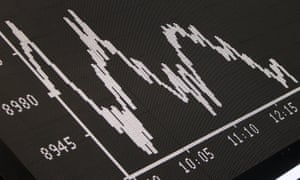
That is why we must all hope that the turmoil of recent days in the financial markets, and the increasingly worrying economic news, will turn out to be a false alarm. It would certainly be ridiculously premature, at this stage, to call a recession, let alone a financial crisis. But at the very least we are seeing a major dose of the “dangerous cocktail of new threats” rightly identified at the turn of the year by George Osborne, a development which will have political repercussions even if the economy eventually muddles through.

Investors in equities, including millions of people with private pensions and Isas, have already lost a fortune; they won’t be too happy when they begin to realise the extent of the damage. Growth is slowing everywhere, and the monetary pump-priming of the past few years is looking increasingly ineffective. Traders believe that interest rates won’t go up in Britain until 2019, and there is increasing talk that negative interest rates could become necessary across the developed world, further crippling savers.

No positive spin can be put on any of the latest developments. Banking shares have taken a beating; China’s slowdown continues; Maersk, the shipping giant, believes that conditions for world trade are worse than in 2008-09; industrial production slumped in December, not just in Britain but more so in France and Germany; energy prices are devastating Middle Eastern and Russian economies; and sterling has tumbled.

It is always a sure sign that panic has broken out when financial markets respond badly to all possible scenarios. The prospect of higher interest rates? Sell, sell, sell. A chance of lower rates? Sell, sell and sell again. A rise in the price of oil is met with as much angst as a decline. The financial markets remain addicted to help from central banks: they are desperate for yet more interventions, regardless of the consequences on the pricing of risk, the allocation of resources or the creation of unsustainable bubbles that only enrich the owners of assets.

This is exactly the tonic that the populists have been waiting for. Despite their dramatic emergence, they have so far failed to make a real breakthrough. The SNP was unable to win the Scottish referendum and the National Front didn’t gain a single region in France. Mariano Rajoy remains Spain’s prime minister, and anti-establishment parties have been thwarted in Germany. Even lighter forms of populism, such as Ed Miliband’s, were rejected. Syriza’s victory in Greece was one of the few genuine populist triumphs; but it was soon crushed by the combined might of Brussels and Frankfurt.


The Republican presidential nominee often proclaims that his presidency will make America a "great" country again

This could be about to change. The fact that Donald Trump and Bernie Sanders both won their respective New Hampshire primaries is certainly one remarkable indication of the state of mind of many US political activists. Any economic relapse would help Marine Le Pen’s chances in next year’s French presidential election, and further undermine Angela Merkel’s sinking popularity in Germany.

But it is in Britain that the immediate impact could be the greatest. The Brexit debate is already being overshadowed by the migration crisis, undermining the Government’s attempts at portraying a Remain vote as a safe, low-risk option; a sustained bout of economic volatility would further ruin the pro-EU case, especially given that the eurozone, rather than the City, is likely to emerge as one of the epicentres of any fresh crisis. It would be hard for bosses of large financial giants to credibly tell the electorate to vote Remain when their own businesses are in crisis.

Britain will noticeably outperform the EU this year: our labour market remains strong and our banks far better capitalised than many of their eurozone competitors, too many of which are still sitting on massive amounts of bad debt. The Chinese slowdown is worse for Germany than for us. But while the Eurosceptic cause to which some of us are partial is likely to benefit from the turmoil, it would be madness for anybody who cares about this country’s future to feel anything but dread towards the economic threats facing the world. The sorry truth is that there is very little that governments can do at this stage, apart from battening down the hatches and hoping that central banks succeed in kicking our problems even further down the road.

Wednesday, 10 February 2016

I’m starting to hate the EU. But I will vote to stay in

George Monbiot in The Guardian

On jobs, health and wildlife, the European Union is often all that stands between us and unfettered corporate power

 
Slurry runoff polluting a river: ‘What Cameron described in parliament as “pettifogging bureaucracy” are the rules that prevent children from being poisoned by exhaust fumes, rivers from being turned into farm sewers.’ Photograph: Alamy


By instinct, like many on the left, I am a European. I recognise that many issues – perhaps most – can no longer be resolved only within our borders. Among them are grave threats to our welfare and our lives: climate change and the collapse of the living world; the spread of epidemics whose vectors are corporations (obesity, diabetes and diseases associated with smoking, alcohol and air pollution); the global wealth-grab by the very rich; antibiotic resistance; terrorism and conflict.

I recognise that the only legitimate corrective to transnational power is transnational democracy. So I want to believe; I want to belong. But it seems to me that all that is good about the European Union is being torn down, and all that is bad enhanced and amplified.

Nowhere is this clearer than in the draft agreement secured by David Cameron. For me, the most disturbing elements are those that have been widely described in the media as “uncontroversial”: the declarations on regulations andcompetitiveness. The draft decisions on these topics are a long series of euphemisms, but they amount to a further dismantling of the safeguards defending people, places and the living world.

What Cameron described in parliament as “pettifogging bureaucracy” is the rules that prevent children from being poisoned by exhaust fumes, rivers from being turned into farm sewers and workers from being exploited by their bosses. What the European commission calls reducing the “regulatory burden for EU business operators” often means increasing the costs the rest of us must carry: costs imposed on our pockets, our health and our quality of life. “Cutting red tape” is everywhere portrayed as a good thing. In reality, it often means releasing business from democracy.

There is nothing rational or proportionate about the deregulation the commission contemplates. When Edmund Stoiber, the conservative former president of Bavaria, reviewed European legislation, he discovered that the combined impact of all seven environmental directives incurred less than 1% of the cost to business caused by European law. But, prodded by governments including ours, the commission threatens them anyway. It is still considering a merger and downgrading of the habitats and birds directives, which are all that impede the destruction of many of our precious places and rare species.

Alongside such specific threats, the EU is engineering treaties that challenge the very principle of parliamentary control of corporations. As well as theTransatlantic Trade and Investment Partnership (TTIP), it has been quietly negotiating something even worse: a Trade in Services Agreement (Tisa). These claim to be trade treaties, but they are nothing of the kind. Their purpose is to place issues in which we have a valid and urgent interest beyond the reach of democratic politics. And the commission defends them against all comers.

Are such tendencies accidental, emergent properties of a highly complex system, or are they hardwired into the structure of the EU? The more I see, the more it seems to me that the EU’s problems are intrinsic and systemic. The organisation that began as an industrial cartel still works at the behest of the forces best equipped to operate across borders: transnational corporations. The commission remains a lobbyists’ paradise: opaque, sometimes corruptible, almost unnavigable by those without vast resources.

People such as the former Labour home secretary Alan Johnson, who claim the EU is a neutral political forum – “simply a place we have built where we can manage our interdependence” – are myth-makers. They are the equivalent of the tabloid fabulists who maintain that European rules will reclassify Kent as part of France, force people to trade in old battery-operated sex toys for new ones, and ensure that dead pets are boiled for half an hour in a pressure cooker before they are buried.

So should those who seek a decent, protective politics vote to stay or vote to leave? If you wish to remain within the EU because you imagine it is a progressive force, I believe you are mistaken. That time, if it ever existed, has passed. The EU is like democracy, diplomacy and old age: there is only one thing to be said for it – it is not as bad as the alternative.

If you are concerned about arbitrary power, and the ability of special interests to capture and co-opt the apparatus of the state, the UK is in an even worse position outside the EU than it is within. Though the EU’s directives are compromised and under threat, they are a lot better than nothing. Without them we can kiss goodbye to the protection of our wildlife, our health, our conditions of employment and, one day perhaps, our fundamental rights. Without a formal constitution, with our antiquated voting arrangements and a corrupt and corrupting party funding system, nothing here is safe.


Though the EU’s directives are compromised and under threat, they are a lot better than nothing


The UK government champs and rears against the European rules that constrain it. It was supposed to have ensured that all our rivers were in good ecological condition by the end of last year: instead, lobbied by Big Farmer and other polluting businesses, it has achieved a grand total of 17%. On behalf of the motor industry, it has sought to undermine new European limits on air pollution, after losing a case in the supreme court over its failure to implement existing laws. Ours is the least regulated labour market in Europe, and workers here would be in an even worse fix without the EU.

On behalf of party donors, old school chums, media proprietors and financial lobbyists, the government is stripping away any protections that European law has not nailed down. The EU’s enthusiasm for treaties such as TTIP is exceeded only by Cameron’s. His defence of national sovereignty, subsidiarity and democracy mysteriously evaporates as soon as they impinge upon corporate power.

I believe that we should remain within the union. But we should do so in the spirit of true scepticism: a refusal to believe anything until we have read the small print; a refusal to suspend our disbelief. Is it possible to be a pro-European Eurosceptic? I hope so, because that is what I am.

Tuesday, 9 February 2016

Global markets are no longer obeying economic common sense

Mark Blyth in The Guardian


The financial markets no longer know what is good for them or what is bad for them – so how can they know who to blame when things go increasingly wrong


‘Financial markets are becoming increasingly odd, wanting more expensive money and oil to restore confidence’ Photograph: Daniel Roland/AFP/Getty Images


One of the oddest things about 2016, so far at least, is how economic “common sense” is being twisted in all sorts of ways to explain what’s going on in the global economy.

By the end of 2015 market “commentators” were clamoring for an interest rate rise from the Federal Reserve to “restore confidence”. Normally, the only reason to raise rates is if there is inflation in the economy and you want to squeeze it out.


Problem: there was no inflation in the US, or almost anywhere else, at the end of 2015.


World markets in turmoil for a second day


So despite that rather obvious fact, the markets got the rise that they wanted and … it helped lower economic activity, precisely as one would expect, which has had a decidedly negative impact on confidence.


Generally speaking, when you make something more expensive – in this case, money – people buy less of it. But in this world, “the markets” were arguing that people would buy more of something if you made it more expensive, and that would produce “confidence”, so they would buy more, which is a bit odd, to say the least.


The next bit of oddness, apparent as we entered into 2016, was that the fall in commodity prices, especially oil, was not good news. Yet falling commodity prices means that everyone who is not a commodity producer or an oil company pays less for their inputs, and can then spend more on other stuff, which has to be good – right?


But “the markets”, once again, figured different. Falling oil prices were now seen as a bad thing, with markets in January having a mini heart attack as oil prices fell below $30 a barrel. When pressed as to why this was a bad thing, no one in these markets seemed to have a clear answer. But the markets freaked out anyway.


A cause for this volatility had to be found, and it was, by the middle of January, in the form of China’s banking sector. And so for the past month the markets have been fretting about the non-performing Loans (NPL’s) in China … and their “dodgy” economic statistics.


But just last year the IMF, who has plenty of data on NPL’s everywhere, brought the yuan into its basket of reserve currencies, which is hardly what you would do if you thought it was all going to pot. After all, China’s statistics and loan book have been questionable for years … but so has Italy’s and Ireland for that matter. And China has literally trillions of dollars (and other currencies) in reserves to throw at the problem – not to mention a decidedly non-democratic state that can, and often does, just make things “go away”.


So why is China now the cause of all ills? Along with China, cheap money, and everything else? Quite possibly because the world has changed, fundamentally, and financial markets are incentivised not to recognise this.

Today there is no inflation anywhere that isn’t due to a currency collapse brought on when the country that issues the currency is heavily dependent on imports, such as Russia and Brazil.


Globalisation, and concerted action for 30 years by the political right, has killed the ability of labour to demand higher wages, hence record inequality and super low inflation. Meanwhile, yields on assets, and interest rates in such a world, will stay “long and low” well beyond 2016 as global savings outpace global investment, and everyone except the US tries to run an export surplus.

This is an ugly world for financial markets, used to delivering the types of returns that people thought normal before the crash: 6 to 8%, liquid, and abundant. That money was made in a period when interest rates and inflation rates across the world fell year on year from abnormally high levels. In that world it was hard not to make money.


But now we find ourselves in a post-crisis world in which the old tricks no longer work despite growth at 1.5%, inflation at 0.5% and interest rates in some places at minus 0.25%.

Rather than face this fact, “the markets” blame China, this week, or it’s the Fed’s rate policy, last month, or its quantitative easing (another bĂȘte noir for markets of long standing).


But here’s the bad news. It’s not their fault. “Long and low as far as you go” driven by ageing populations in developed countries that save more than they spend pushing down interest rates and consumption to the point of deflation as everyone tries to run a surplus is the reality of the world today.


So what will the rest of 2016 look like?


Just like we have seen so far – periodic “inexplicable” and “what the heck” moments as markets everywhere hunt for causes to explain away something very inconvenient. That the game has changed for financial markets – that there is no going back to the boom times – and that the world going forward is a much more boring, and much less “finance friendly” place, than “the markets” want to admit. Most of all to themselves.

The curious case of Julian Assange

Editorial in The Hindu


Personal liberty still eludes WikiLeaks founder and Editor-in-Chief Julian Assange, despite a ruling by a United Nations legal panel that has declared his confinement “arbitrary and illegal”. The ruling of the Working Group on Arbitrary Detention — the authoritative UN body that pronounces on illegal detentions based on binding and legal international instruments — has met with support, but not surprisingly, with a bitter backlash as well, notably from governments that have suffered incalculable damage from WikiLeaks’ relentless exposures. Sweden and Britain have rejected the panel’s findings outright, despite the fact that they are signatories to the International Covenant on Civil and Political Rights, the European Convention on Human Rights and the other treaties upon which the UN legal panel has based its recommendation. The same countries have in the past upheld rulings of the same panel on similar cases such as the ‘arbitrary detention’ of the Myanmar leader Aung San Suu Kyi and former Maldives President Mohamed Nasheed. The British Foreign Secretary, Philip Hammond, has called the ruling “ridiculous”, and dismissed the distinguished panel as comprising “lay people, not lawyers”. As for the Swedish Prosecutor’s Office, it has declared that the UN body’s opinion “has no formal impact on the ongoing investigation, according to Swedish law”. In other words, both countries argue that his confinement is not arbitrary but self-imposed, and he is at ‘liberty’ to step out, be arrested, and face the consequences.

The specific allegation of rape that Mr. Assange faces in Sweden must be seen in the larger international political context of his confinement. He has made it clear he is not fleeing Swedish justice, offering repeatedly to give evidence to the Swedish authorities, with the caveat that he be questioned at his refuge in London, either in person or by webcam. While he will have to prove his innocence, Mr. Assange is not being paranoid when he talks of his fear of extradition to the U.S.: Chelsea Manning, whose damning Iraq revelations were first carried on WikiLeaks, was held in a long pre-trial detention and convicted to 35 years of imprisonment. The U.S. Department of Justice has confirmed on more than one occasion that there is a pending prosecution and Grand Jury against him and WikiLeaks. Mr. Assange’s defence team argues that the Swedish police case is but a smokescreen for a larger political game plan centred on Washington, which is determined to root out whistle-blowers such as Mr. Assange, Edward Snowden and Chelsea Manning for exposing dirty state secrets. It was WikiLeaks that carried the shocking video evidence of the wholesale collateral murder by the U.S.-led forces of civilians in Iraq and Afghanistan, in addition to thousands of pages of evidence of other violations of sovereignty and international law. By defying the UN panel’s carefully considered recommendation that Mr. Assange be freed and awarded compensation, Britain and Sweden are damaging their own international standing. They must reverse their untenable stand and do what law and decency dictate by allowing Mr. Assange an opportunity to prove his innocence without fearing extradition to the United States.

Declare a No Ball when a batsman attempts an early run

Girish Menon from CamKerala CC

David Hopps in his piece, 'Is the game going to the dogs' suggests that Stuart Broad in the forthcoming World T20 should without warning 'mankad' Kohli and Raina off successive balls. This is his way of reminding us of the role of convention and civilised behaviour in cricket and he implies that in its absence anarchy would prevail.

So, I decided to look up the meaning of convention on the omniscient Google and found that one of the meanings of convention is 'a way in which something is done'. I think it is this definition of convention that Hopps uses to criticise Keemo Paul for mankading Richard Ngarava in the U19 World Cup.

----Other pieces by the author

Sreesanth - Another modern day Valmiki?


----

I then asked myself what would be at the other end of the spectrum of convention and I felt the term 'creativity' would fit the bill. Google defines creativity as ' the use of imagination or original ideas to create something'.  When Keemo's act is examined from this perspective it is a creative act, not illegal, and an imaginative way to reach the objectives of his task.

In the history of the world, not just cricket, whenever any creative solution is implemented, affected governments would debate and proscribe such activity if it was not in the 'public' interest. In the case of 'mankading' such an inquiry has been conducted by the ICC and the act has still been deemed legal, hence the furore baffles me.

Hopps felt that it was newcomers who failed fail to honour cricket's conventions. So I asked myself, two questions:

'Is it newcomers to cricket who disrespect its conventions'?

and

 'Are conventions in the best interests of all participants?'

In the case of Keemo Paul, yes he is definitely a newcomer to cricket, so probably was the original sinner Vinoo Mankad and the other mankaders in between. I suppose these guys may have read about the laws of cricket and how the umpire's decision should not be questioned. As they plotted to get the opposing batsmen out, a difficult task at the best of times, they may have noticed this anomaly between the law and its actual practice. Being young and innocent they may have focussed on their objectives and failed to realise the opprobrium that will befall them if they challenged cricket's archaic anomalies.

So who makes conventions? A historical examination of societies will reveal that conventions and practices evolve out of the systems devised by the powerful. A history of cricket also reveals that it's rules and conventions were determined by upper class batsmen epitomised by the roguish W G Grace. The bowlers were the proverbial servants meant to exist for the pleasure of batsmen. It is these servants, like the erstwhile British colonies, who now challenge the prevalent conventions albeit legally in the case of the mankaders.

Hopps then gives an example of queue jumping to illustrate the catastrophe that will befall mankind if any convention is broken. Yes, the effects of queue jumping has created havoc in India and probably other erstwhile British colonies. Yet, as any economics student will tell you the problem with a queue is that it does not ration a scarce resource based on greatest need. If the A&E departments of NHS hospitals worked on the convention of queues then a Friday night over-reveller would have priority over a critical patient and an ambulance would be perennially stuck in traffic.


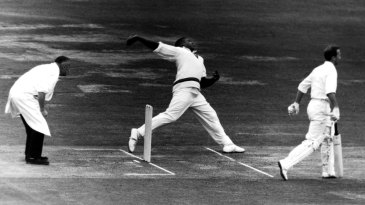
Charlie Griffith bowls
© PA Photos


Returning to mankading, I believe that cricket's current convention enable non striking batsmen to cheat wilfully throughout an innings and it is time for conventions keep in tandem with the laws of the game? I actually even have a solution for the mankading problem. Declare a no ball* and penalise the batting side every time a non striker steps out of the crease illegally. This could be done by the third umpire while the on field umpire focuses on the bowler's actions.


* This no ball means a one run penalty and a ball reduced from the batting side's quota.