Search This Blog

Sunday, 24 May 2015

Arjuna Ranatunga - Large and in charge

Defiant, passionate, cunning - Arjuna Ranatunga was a mighty tough cookie on the field and an unwavering friend off it

MARTIN CROWE in Cricinfo MAY 2015

Truth be known, I love to hate the Australians more than anyone else. And therefore the man who got under their skin the most is my hero. Appearances can be deceiving, and when it comes to Arjuna Ranatunga, the rotund Sri Lankan mastermind, there was nothing soft in his underbelly. He is as tough a cricketer as I have ever come across.

We represented our countries at the same time, both very young, eager allrounders hoping to fit into the cut and thrust of international cricket. Sri Lanka were just beginning their climb, possessing many fine cricketers, if not hardened professionals. New Zealand were a nice mix of amateur and professional, led in example by the pro's pro, Richard Hadlee.

I first spoke to Arjuna while fielding under a helmet at short legin Kandy in 1984. He was defiantly chirpy at the crease, never taking a backward step. His game was a bit limited - the cut and sweep were his release shots. He appeared unfit, yet he never lacked for effort or punch. He quickly became known as "Chef": hungry, dressed in white, and ready to give hell to anyone who didn't conform to the rules of his workspace.

We teased each other a little but deep down we had huge respect for one another, and I loved his smile and zest for life. He had no out-of-control ego, or fear, just a massive heart and a cunning mind. Despite Sri Lanka having no experience as such, Arjuna soaked up all he could. It was as if it was preordained - his apprenticeship was a natural platform for him to learn how to mastermind his team to unprecedented glory.

He quickly became known as "Chef": hungry, dressed in white, and ready to give hell to anyone who didn't conform to the rules of his workspace

I was more comfortable bowling to Arjuna than batting against him. I could swing it away from him, and enjoyed following up my bouncers with a prolonged look to see his response. He was always muttering something and smiling. When he bowled to me, he knew I feared getting out to his miserable deflated wobblies.

Regrettably, he dismissed me too often, notably in Wellington, when I was one short of being the first Kiwi to post a triple-century. I recall the moment when he got to the end of his run-up, beaming ear to ear. He had a gift for me. At that precise moment, up popped the thought that I had already achieved the triple-century. I didn't remove the thought; instead, I hung on to the feeling a bit longer. "Heck, you've done it," I muttered.

Arjuna rolled in and offered up a juicy half-volley wide of off stump. It was a glorious finish to a hard-fought draw, and some history. I never saw the ball leave his hand. My mind was scrambled as I jumped from "Done it", to "Where is it?" Seeing it very late and very wide, I lashed out in desperation, the blade slicing the ball and sending a thick edge into the slip cordon. Hashan Tillakaratne, the wicketkeeper, moved swiftly and calmly to his right and plucked the ball millimetres from the ground.

While Arjuna was upset for me, I was angry and inconsolable. A couple of weeks later, in the Hamilton Test, he dealt it to me again with the same mode of dismissal. Unintentionally, he had got under my skin, in the nicest possible way. I began to hate facing his gentle floating autumn leaves.

By 1996 he was a wise sage. He knew his team and their strengths, and he knew what buttons needed pushing. He saw the Australians as an easy target. He saw how false they could be: loud, lippy banter masking their own fears, often turning into personal abuse when the pressure mounted. He believed the more they resorted to mental disintegration the more they exposed themselves, diverting their attention from their obvious skill and from the job at hand.
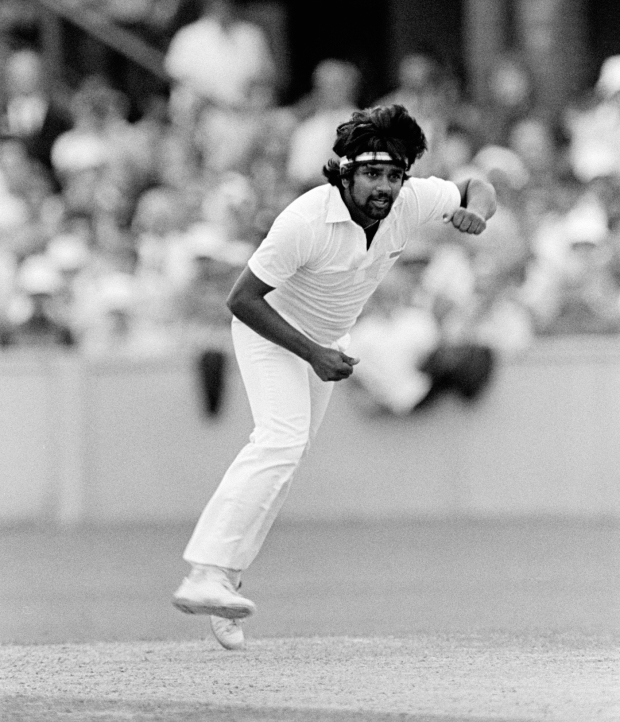


A streamlined Arjuna bowls in the 1983 World Cup © Getty Images

On the eve of the World Cup final he told the many drooling media hounds that Shane Warne was just an average bowler. It caused a violent reaction, more so because "Chef" had been pecking away at the Aussie psyche for a few years and this was the ultimate insult. While Warne tightened with fury, Aravinda de Silva - Arjuna's right-hand man and master batsman - loosened up. Two buttons pressed, both for different purposes, both pushed to achieve one result.

Arjuna dabbed the winning run down to his favourite third-man area. Upon seeing it disappear to the boundary, he reached down and grabbed a stump. It was as if he were picking up the stake he had earlier rammed in the ground upon his arrival. That stake stood for a nation that had cracked the code to win a world title. Ranatunga's name was etched in history forever.

We became close companions off the field. He would take me home to dinner, offering his favourite foods and delights. Not surprisingly, he enjoyed a fine feast, probably more than he did cricket, and I loved hanging out with someone so at ease. He also helped me get expert treatment for my ailing legs, so I could get fit again after developing hamstring problems due to my knee condition. He took me to places I never knew existed, and I felt safer with him in a foreign land than I did in any other.

Arjuna wasn't really an arch-enemy or a player I loved to hate. I loved him, full stop. Mostly I loved the way he stood up to the big boys, the bullies, and bulldozed them back in his unique inspiring way. He represented the underdog.

Arjuna left everything out on the park and, going by his healthy waistline, that was quite a plateful.


Saturday, 23 May 2015

Black academic claims he was denied university job over his plans to 'put white hegemony under the microscope'

Adam Lusher in The Independent


A black academic has claimed he was denied a permanent job at a British university because his plans to “put white hegemony under the microscope” were considered too much of a challenge to white-dominated academia.

Dr Nathaniel Coleman,  who crosses out his surname to “highlight the stigmatising expressive meaning” of the “badge” given to his forebears by slave owners, said his proposals for a new black studies MA were opposed by University College London  colleagues seeking something less critical of the white Establishment. UCL has postponed plans for the new MA and with no course to teach, he will be out of a job when his fixed-term contract at the philosophy department expires in October.

The academic, who has a double first in greats from Oxford University, said that he became just one of five black philosophy academics in UK universities when he joined UCL as Britain’s first research associate in the philosophy of “race” in October 2013.
His new MA, he claimed, would have upset some in white-dominated academia.

“White hegemony was … to be put under the microscope,” he told Times Higher Education. “Turning the spotlight on to the ivory tower, putting the fear of God into many of its scholars – predominantly racialised as white – who had contented themselves hitherto to research and teach in an ‘aracial’ – aka white-dominated – way.”

His claims, which are disputed by UCL, come weeks after the university submitted its application for a Race Equality Charter Mark as part of a pilot scheme running in 30 higher education institutions.

He was initially hired for a year, but had his contract extended for a further 12 months with a view to developing a new MA course.

On the academia.edu website, he called for UCL to face up to “its invention and institutionalisation of national eugenics” under the influence of Sir Francis Galton, the “father” of the discredited pseudoscience of racial purity. In March last year he organised an event at UCL entitled “Why Isn’t My Professor Black?” telling the audience there was a continuing failure to recognise black scholars as philosophers.

The event, which also highlighted the fact that just 85 of the UK’s 18,500 professors were black, was attended by UCL’s provost, Professor Michael Arthur, who wrote: “We cannot suppose unequal treatment stops at our door.”

Friday, 22 May 2015

Seven common myths about meditation


Julia Roberts learns how to meditate in the film Eat, Pray, Love. Photograph: Allstar/COLUMBIA PICTURES/Sportsphoto Ltd./Allstar

Catherine Wikholm in The Guardian

Meditation is becoming increasingly popular, and in recent years there have been calls for mindfulness (a meditative practice with Buddhist roots) to be more widely available on the NHS. Often promoted as a sure-fire way to reduce stress, it’s also being increasingly offered in schools, universities and businesses.

For the secularised mind, meditation fills a spiritual vacuum; it brings the hope of becoming a better, happier individual in a more peaceful world. However, the fact that meditation was primarily designed not to make us happier, but to destroy our sense of individual self – who we feel and think we are most of the time – is often overlooked in the science and media stories about it, which focus almost exclusively on the benefits practitioners can expect.

If you’re considering it, here are seven common beliefs about meditation that are not supported by scientific evidence.

Myth 1: Meditation never has adverse or negative effects. It will change you for the better (and only the better)

Fact 1: It’s easy to see why this myth might spring up. After all, sitting in silence and focusing on your breathing would seem like a fairly innocuous activity with little potential for harm. But when you consider how many of us, when worried or facing difficult circumstances, cope by keeping ourselves very busy and with little time to think, it isn’t that much of a surprise to find that sitting without distractions, with only ourselves, might lead to disturbing emotions rising to the surface.

However, many scientists have turned a blind eye to the potential unexpected or harmful consequences of meditation. With Transcendental Meditation, this is probably because many of those who have researched it have also been personally involved in the movement; with mindfulness, the reasons are less clear, because it is presented as a secular technique. Nevertheless, there is emerging scientific evidence from case studies, surveys of meditators’ experience and historical studies to show that meditation can be associated with stress, negative effectsand mental health problems. For example, one study found that mindfulness meditation led to increased cortisol, a biological marker of stress, despite the fact that participants subjectively reported feeling less stressed.


Myth 2: Meditation can benefit everyone

FacebookTwitterPinterest Photograph: Alamy

Fact 2: The idea that meditation is a cure-all for all lacks scientific basis. “One man’s meat is another man’s poison,” the psychologist Arnold Lazarus reminded us in his writings about meditation. Although there has been relatively little research into how individual circumstances – such as age, gender, or personality type – might play a role in the value of meditation, there is a growing awareness that meditation works differently for each individual.

For example, it may provide an effective stress-relief technique for individuals facing serious problems (such as being unemployed), but have little value for low-stressed individuals. Or it may benefit depressed individuals who suffered trauma and abuse in their childhood, but not other depressed people. There is also some evidence that – along with yoga – it can be of particular use to prisoners, for whom it improves psychological wellbeing and, perhaps more importantly, encourages better control over impulsivity. We shouldn’t be surprised about meditation having variable benefits from person to person. After all, the practice wasn’t intended to make us happier or less stressed, but to assist us in diving deep within and challenging who we believe we are.


Myth 3: If everyone meditated the world would be a much better place

Fact 3: All global religions share the belief that following their particular practices and ideals will make us better individuals. So far, there is no clear scientific evidence that meditation is more effective at making us, for example, more compassionate than other spiritual or psychological practices. Research on this topic has serious methodological and theoretical limitations and biases. Most of the studies have no adequate control groups and generally fail to assess the expectations of participants (ie, if we expect to benefit from something, we may be more likely to report benefits).


Myth 4: If you’re seeking personal change and growth, meditating is as efficient – or more – than having therapy

Fact 4: There is very little evidence that an eight-week mindfulness-based group programme has the same benefits as of being in conventional psychological therapy – most studies compare mindfulness to “treatment as usual” (such as seeing your GP), rather than one-to-one therapy. Although mindfulness interventions are group-based and most psychological therapy is conducted on a one-to-one basis, both approaches involve developing an increased awareness of our thoughts, emotions and way of relating to others. But the levels of awareness probably differ. A therapist can encourage us to examine conscious or unconscious patterns within ourselves, whereas these might be difficult to access in a one-size-fits-all group course, or if we were meditating on our own.


Myth 5: Meditation produces a unique state of consciousness that we can measure scientifically

FacebookTwitterPinterest Teachers and pupils practise meditation techniques at Bethnal Green Academy Photograph: Sean Smith for the Guardian

Fact 5: Meditation produces states of consciousness that we can indeed measure using various scientific instruments. However, the overall evidence is that these states are not physiologically unique. Furthermore, although different kinds of meditation may have diverse effects on consciousness (and on the brain), there is no scientific consensus about what these effects are.

Myth 6: We can practise meditation as a purely scientific technique with no religious or spiritual leanings

Fact 6: In principle, it’s perfectly possible to meditate and be uninterested in the spiritual background to the practice. However, research shows that meditation leads us to become more spiritual, and that this increase in spirituality is partly responsible for the practice’s positive effects. So, even if we set out to ignore meditation’s spiritual roots, those roots may nonetheless envelop us, to a greater or lesser degree. Overall, it is unclear whether secular models of mindfulness meditation are fully secular.

Myth 7: Science has unequivocally shown how meditation can change us and why

Fact 7: Meta-analyses show there is moderate evidence that meditation affects us in various ways, such as increasing positive emotions and reducing anxiety. However, it is less clear how powerful and long-lasting these changes are.

Some studies show that meditating can have a greater impact than physical relaxation, although other research using a placebo meditation contradicts this finding. We need better studies but, perhaps as important, we also need models that explain how meditation works. For example, with mindfulness-based cognitive therapy (MBCT), we still can’t be sure of the “active” ingredient. Is it the meditation itself that causes positive effects, or is it the fact that the participant learns to step back and become aware of his or her thoughts and feelings in a supportive group environment?

There simply is no cohesive, overarching attempt to describe the various psychobiological processes that meditation sets in motion. Unless we can clearly map the effects of meditation – both the positive and the negative – and identify the processes underpinning the practice, our scientific understanding of meditation is precarious and can easily lead to exaggeration and misinterpretation.

Wednesday, 20 May 2015

Record fines for currency market fix

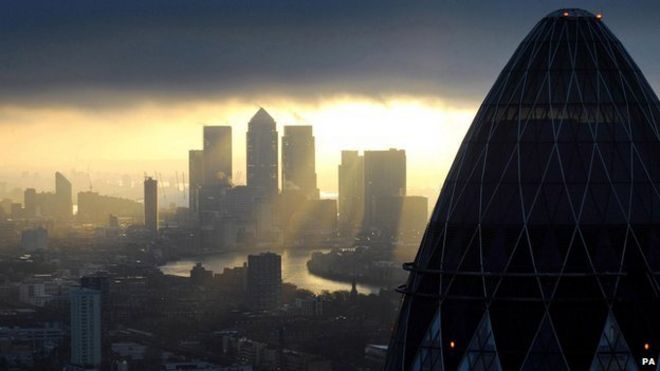
Canary Wharf
Five of the world's largest banks are to pay fines totalling $5.7bn (£3.6bn) for manipulating the foreign exchange market, US officials say.
Four of the banks - JPMorgan, Citigroup, Barclays, RBS - have agreed to plead guilty to US criminal charges.
The fifth, UBS, will plead guilty to rigging benchmark interest rates.
Barclays was fined the most, $2.4bn, as it did not join other banks in November to settle investigations by UK, US and Swiss regulators.
US Attorney General Loretta Lynch said that "almost every day" for five years from 2007, currency traders used a private electronic chat room to manipulate exchange rates.
Their actions harmed "countless consumers, investors and institutions around the world", she said.

Cartel threat

Regulators said that between 2008 and 2012, several traders formed a cartel and used chat rooms to manipulate prices in their favour.
One Barclays trader who was invited to join the cartel was told: "Mess up and sleep with one eye open at night."
Several strategies were used to manipulate prices and a common scheme was to influence prices around the daily fixing of currency levels.
A daily exchange rate fix is held to help businesses and investors value their multi-currency assets and liabilities.

'Building ammo'

Until February, this happened every day in the 30 seconds before and after 16:00 in London and the result is known as the 4pm fix, or just the fix.
In a scheme known as "building ammo", a single trader would amass a large position in a currency and, just before or during the fix, would exit that position.
Other members of the cartel would be aware of the plan and would be able to profit.
"They engaged in a brazen 'heads I win, tails you lose' scheme to rip off their clients," said New York State superintendent of financial services Benjamin Lawsky.

Fables of Modi’s first year in power

Jawed Naqvi in The Dawn

Some left-wing activists these days are worriedly discussing post-16th May India. According to them Narendra Modi’s consummate victory on this day last year marked a paradigm shift in the nation’s politics — for the worse, they assert. Others who shared the traumatic perspective changed their view earlier this year after Arvind Kejriwal emerged as Modi’s unlikely foil and bĂȘte noir.
Before we continue with Kejriwal’s near mythological role in stalling the rightist juggernaut led by Modi, let us briefly look at the prime minister’s Achilles heel, which, ironically, happens to be the clear majority he won exactly a year ago. In other words, a majority in parliament in the Indian system is no assurance of stability, a weakness that was best illustrated by Rajiv Gandhi’s turbulent tenure.
Gandhi’s four-fifths majority in the Lok Sabha remains unmatched to this day. Ideally, it should have given him five years of solid, stable government between 1985 and 1990. Instead, what he got was a crippling defence procurement scandal that haunted him till his death. His own party acolytes deserted him and some even conspired to topple the young prime minister.
Amitabh Bachchan, Arun Singh, Arun Nehru were among the younger lot who had come close to the prime minister after his mother’s assassination. They left him before his term was over. Others from the Gandhi Camelot moved over to the opposition Bharatiya Janata Party (BJP). His trusted aide Vishwanath Pratap Singh subsequently became prime minister in 1990. The BJP and the communists supported him.
Look at the contrast. Indira Gandhi who split her party to be able to become prime minister at the head of a minority government in 1966, ruled with far greater confidence with support from communists and other assorted liberals.

Worried leftists should unequivocally thank Kejriwal for relieving them of their trauma over the Indian PM.


Her legacy still energises Indian politics, its economy and culture too. The banks that were nationalised by her remain state-owned. The two words she added to the preamble of the constitution — secular and socialist — have resisted periodic assaults from the right. The liberal arts and the scientific spirit she gave the academia with no impressive majority in parliament is planted as firmly as a sturdy molar that can only be uprooted by a painful surgery.
Easily the best example of someone without a majority who completed three full terms, first as finance minister and two as prime minister, is Manmohan Singh. He introduced sweeping economic reforms though his government had to bribe a few tribal MPs to stay in majority. He got support from the communists in his first tenure as prime minister and earned enough brownie points to win a second term. He faltered after he evicted the left, not because he did not have a majority in parliament.
Atal Behari Vajpayee was invited to form a bizarre minority government in 1996. It lasted all of 13 days. How could the president invite anyone who did not have the remotest proximity to finding a majority? Indian presidents have not always been transparent. Anyway it was a two-week government that signed the damaging Enron electricity deal, majority or no majority.
My worried leftist friends should unequivocally thank Kejriwal for relieving them of their trauma over Modi. The Aam Aadmi Party he heads has single-handedly changed the contours of possibilities for India’s political cobblers. When I see former BJP minister Arun Shourie laying into Modi on the eve of his completing his first year in office, the criticism reminds me of Rajiv Gandhi’s disloyal friends. However, Shourie could only speak because of Kejriwal’s amazing victory, which took the wind out of the prime minister’s sails.
If Mufti Mohammed Sayeed in Indian Jammu and Kashmir got the BJP MLAs to swear by the Kashmiri constitution they were loath to, he had his way because AAP’s victory in Delhi had emboldened him. Sonia Gandhi, ever so reclusive since the drubbing of her party by Modi, suddenly found spring in her walk. She led the entire opposition, including communist leader Sitaram Yechury, to the presidential palace to protest Modi’s land acquisition bill. Mamata Banerjee in West Bengal and the backward caste satraps in Bihar and Uttar Pradesh have benefited from Kejriwal’s humbling of Modi. Even Modi’s ally the Shiv Sena is now growling thanks to AAP.
Modi’s choreographers, which include the bulk of the media, are projecting his foreign policy in glowing terms not the least to mask his reneging on most domestic promises — rural, urban, rich, poor. With his claims of head transplants in ancient India, the prime minister has also become a caricature of the tough cookie he was thought to be. His gag measures against certain NGOs have boomeranged, inviting an earful from foreign governments.
He might have felt close enough to President Obama to call him by his first name, but it was more gracious for India that Obama called Manmohan Singh his learned guru.
Examples are galore of leaders being spurred by domestic difficulties to make foreign policy choices, and visits. Rajiv Gandhi was laying into Pakistan with Operation Brass Tacks before the Bofors scandal broke. When the scam raged he found himself signing a major agreement with Benazir Bhutto for nuclear safety with Pakistan.
Modi can wear any headgear in China, but he can’t approach the simple handshake between Deng Xiaoping and Rajiv Gandhi nor Narasimha Rao’s game-changing 1993 agreement with premier Li Peng for “peace and tranquillity on the borders”. In Mongolia, as I write, Modi is having a great time. Who showed him the way?
Indira Gandhi got Mongolia to second the resolution for the recognition of Bangladesh at the UN in 1972. The job done, she invited the Mongolian prime minister to Delhi, took him out for a quiet chat under a tree at Teen Murti House. When she offered him a cigarette, the guest hesitated. She lit one herself, helping her friend to pick one from the pack.

Tuesday, 19 May 2015

Abracadabra! Britain’s political elite has fooled us all again

Aditya Chakrabortty in The Guardian
Magicians call it misdirection: directing the attention of a crowd elsewhere so as to distract from the trick happening right in front of it. A bump on the shoulder, a blur of handwaving and – wham! – your wallet’s taken leave of your hip pocket.
Since the crash, British politics has been one epic act of misdirection. Lay off those bankers who shoved the country into penury! Just focus on stripping disabled people of their benefits. Never mind the millionaire bosses squeezing your pay! Spit instead at the minimum-wage migrant cleaners apparently making us poorer. So ingrained is the ritual that when a minister strides into view urging the need for “a grown-up debate”, we brace ourselves for another round of Blame the Victim. The only question is who gets sacrificed next: some ethnic minority, this family on low pay, that middle-aged dad who can’t get a job.
Here is how political misdirection works in real time. Yesterday, Unite’s Len McCluskey came under a barrage of criticism for suggesting that Labour live up to its name and support “ordinary working people”. Evil paymaster! Meanwhile, on the front page of this paper, digger firm JCB called on David Cameron to prepare to take Britain out of the EU – and this was just a company having its say.
I hold no brief for McCluskey – but he is the democratically elected head of a trade union simply seeking to influence the party part-funded by his members. Perhaps this comes as news to some on Fleet Street, but the debate over Labour’s future is not the chew-toy solely of newspaper columnists. Moreover, Unite’s donations to Her Majesty’s Opposition are a matter of easily checkable record. Not so the money poured into Tory coffers by JCB, either as a business or from its owners, the Bamford family. To learn that, we must rely upon forensic researchers such as Stuart Wilks-Heeg at Liverpool University. He calculated this morning that, between 2001-14, the Bamfords and JCB had together given the Conservatives at least £6.7m. One arm of JCB also donated £600,000 last year to Tory campaigns in key marginals, including the all-important battleground of Nuneaton.
So a company that funded David Cameron all the way into Downing Street, and whose chairman was recently made a lord, seeks to influence the government on one of the most fundamental issues in British politics, something that affects all of us – and this is business as usual. Yet a workers’ elected representative adding his voice to the din of an internal party argument somehow represents the biggest political landgrab since a bloke with a goatee popped in to the Winter Palace.
Expect more of this misdirection over the next few weeks. Labour has scheduled the entire summer for its leadership campaign, which could equal months of an entire party sounding like an indecisive satnav: Veer right! Keep left! Meanwhile, in just over a month, George Osborne will lay out an emergency budget to deal with the enormous £90bn deficit that he inherited from himself. Using the traditional lexicon of political hocus-pocus – “hard choices” – he will begin making some of the extra £12bn of welfare cuts the Tories pledged at the last election.
Every feat of misdirection is always intended to distract the audience from a sleight of hand. The same goes in politics – only here it’s aimed at taking our minds off the fact that all this jiggery-pokery is actually making us worse off. Let me show you what I mean, using figures calculated for the Guardian by academics at the Centre for Research on Socio-Cultural Change (Cresc), using official data. When Thatcher moved into No 10, 28% of all working age households took more from the state in cash benefits, in health and education and all the rest of it than they paid back in taxes. In other words, more than one in four employers in Britain were failing to pay their staff’s way.
More than three decades later, through Major and Blair and Brown and Cameron, that proportion has kept on rising. Now 38% of working-age households rely on taxpayers to pay their way. Think about all those tax credits for low-paid work, those exemptions for people earning too little even to be taxed. We have more people in work than ever before – and more households than ever before relying on the state to keep them afloat.
There’s nothing wrong with these people. These are the hard-working families politicians like talking about – the strivers, the squeezed middle, the alarm-clock Britain. But there’s a lot wrong with their employers – because they now rely on taxpayers to top up poverty pay, even while insisting on cuts in corporation tax and grants for investment. Come 8 July, it won’t be those businesses that the chancellor tells to change their ways – it’ll be the people they employ who will see more money taken out of their weekly budget by the cuts. Because the one thing we know about the next round of cuts is that they will hit the working poor all over again, like a hammer to the face.
This is what politics looks like in Britain nowadays, once the newspapers have their japes and the politicians leave the TV studios: it is about justifying an extractive business class that wants to lean on taxpayers to pay their way, even while lecturing the rest of us about welfare dependency. And it doesn’t change all that much whether the Tories or Labour are in Downing Street. The Cresc team looked at who reaped the rewards from growth over the past three decades. Under Thatcher and Major, the top 10% of all working-age households took 29p in every £1 of income growth. Under Blair and Brown, their share actually went up, to 30p in each £1. Cresc found that New Labour bumped up the share of the poorest economically active households from 0.5% to 1.5%. Taxes and benefits evened that up a bit – the same taxes and benefits that are now deemed unaffordable. So much for trickle down.
This is what all the misdirection has been about: taking our minds off the fact that Britain is a soft touch for businesses that want taxpayers to pay their way, and politicians who count on the middle classes to feel richer, not through their wage packets, but by their house prices, their no-frills flights, their luxury buys from Lidl. What a trick has been pulled on Britain by its political and business elite: never have so many people had their pockets picked at the same time.

Why I choose to have less choice

Shopping around is the mantra of the modern era. But who really benefits from our befuddlement?

Tim Lott in The Guardian

Once, when I was suffering a fit of depression, I walked into a supermarket to buy a packet of washing powder. Confronted by a shelf full of different possibilities, I stood there for 15 minutes staring at them, then walked out without buying any washing powder at all.
I still feel echoes of that sensation of helplessness. If I just want to buy one item but discover that if I buy three of the items I will save myself half the item price, I find myself assailed by choice paralysis.
I hate making consumer choices at the best of times, because I have this uncomfortable suspicion that big companies are trying to gull me out of as much money as possible, using sophisticated techniques designed by people who are smarter than I am.
For instance, when I buy an insurance product, how can I decide whether I should just buy the cheapest, or the best? The best is the one most likely to pay out without penalty or fuss, but that information is much harder to find out than factors such as cost, extent of cover, etc. It’s complicated. So I often try not to make choices – by just putting my payments for insurance with my usual insurers on direct debit, for example, which means I don’t have to think about shopping around.
This issue of choice and complexity lies at the heart of the experience of being modern. It penetrates commerce, politics and our personal lives. It may even be connected to the fact that there are higher levels of depression in society than ever before.
This idea was suggested by Barry Schwartz in his book The Paradox of Choice. Choice oppresses us. Why? Because there are too many choices and they are often too complex for us to be confident that we are making the right one.
When you might have 200 potential choices to make of a particular style of camera, it is difficult to feel sure you have chosen the right one – even if you spend an inordinate amount of time trying to make a rational decision. Or you may see the same model two weeks after you’ve bought it being sold more cheaply. When there was less choice and fewer types of camera, this kind of experience was rare. Our capacity for hindsight has become a means of punishing ourselves.
Complexity is not entirely accidental. Late capitalism solves the dilemma of competition (for the producer) through complexity. To try to choose a mortgage, or a pension, or a computer, requires a tremendous amount of application, so we become relatively easy to gull. Whether it is a power company or a loan company, we struggle to understand tariffs, terms and the small print. Exhausted, we just take a stab and hope for the best, or we succumb to inertia; choose what we have always chosen. Consumers are thrown back on simple cues that are advantageous to the producers, such as brand recognition.
Complexity also impacts on politics. Once it was pretty clear who to vote for – your class position, on the whole, made it a simple matter of self-interest for most voters. Now we have become closer to what is ironically the democratic ideal – ie choice-making actors – voting is more of a challenge than it once was. Do you really have a good enough grasp of economic theory to judge whether it is best to spend or save in a recession? Do you understand the complexities of private provision in the NHS enough to rule it out? Do you know enough about international affairs to support a reduction in defence spending, or a retreat from the EU? Most people don’t – so, again, they make snap judgments based on loyalty and sentiment.
This problem of choice and complexity is ubiquitous. It applies in medicine. If I am ill and asked to make a choice about treatment, I would often rather leave the choice to the doctor, if only because if the wrong choice is made, I am not going to feel nearly so bad about it. I had a prostate cancer scare recently, and I just wanted to be told what to do – not decide whether, say, I should choose an operation that would guarantee impotency in order to stave off a 5% chance of cancer. The burden of choice was too big.
In the field of education a similar dilemma applies. Once your child went to the local primary or secondary. Now you have to decide from a bewildering number of types of school. In the personal realm, once, you stayed married for life. Now, if you are in an unhappy marriage you have to decide whether to stay or not. These may be all positive developments, but they come at a cost – the potential for regret.
So how should one react to complexity? Schwartz suggests we should limit choice, not extend it. If you are shopping for food, go to supermarkets that are priced simply with a limited range, such as Aldi and Lidl. Recognise and accept complexity – which means accepting that you can never be sure that you’ve made the right choice.
Above all, don’t fall for the old trope of only wanting “the best”. Schwartz calls such people “maximisers” – people who are never happy, because they have expectations that can never be met, since in a world of complexity and unlimited choice there is always a better option. Be a “satisficer” instead – people who are happy to say “that’s good enough”, or “it’ll do”.
This may not work in politics – saying the Conservatives “will do” when you wanted the Green party is not very satisfactory – but as a consumer, and in life generally, it’s a pretty good formula. It’ll do, anyway.