Search This Blog

Thursday, 6 June 2013

In the digital economy, we'll soon all be working for free – and I refuse


The digital economy operates as a kind of sophisticated 
X Factor: someone will make it, but most won't – and the real loser is society

Mary Portas
Mary Portas, whose company offered a week-long internship at a Westminster school auction. Photograph: Richard Young/Rex Features
Never mind checking your privilege. Flaunting those enviable privileges is where it's at. Go to any of our big cities and cash will be flowing through ponced-up restaurants nestled between Poundland and the nail bars. They even wave it in our faces.
Already at a private school that charges £7,000 a term? Then you must need a hand up the ladder. So let Mater and Pater bid as internships for Mary Portas or FabergĂ© are auctioned off. Not so much getting a foot in the door as crowbarring it in with money. Theirs is a world in which austerity remains an abstract idea.
Meanwhile, we have more than a million Neets in the country – young people not in work, education or training. They could do with a helping hand but they have somehow missed the boat. It hardly matters to them that the boat was the Titanic. Their older brothers and sisters have gone to college but are still in a world of part-time pub jobs. They don't have proper salaries and therefore no chance of mortgages. And, of course, in other European countries the situation is even worse.
At this point it is customary to blame the banksters. Or at least the politicians. But there is another group partly responsible for the parlous state in which we find ourselves: the digi-heads of Silicon Valley who told us everything could be kinda free. And easy. In some virtual paradise.
But it's not lovely being asked to work for free, whether you are 18 or 48. On the popular free app known as Facebook, the great music writer Barney Hoskyns put up a manifestothat struck home: he asked "freelance content providers" – be they actors, writers, musicians or photographers – to withdraw from unpaid labour. (I did that a while back – except, of course, for causes I believe in.)
But this is about more than that. It's about technology taking jobs, about what it can and can't provide. Hoskyns quotes Jaron Lanier's new book Who Owns The Future?, in which he argues: "Capitalism only works if there are enough successful people to be customers." Lanier, a computer scientist and a musician, is rightly called a visionary because he sees what is happening, when everything is live-streamed but no one knows the name of the person who made the music any more. Content is free.
Governments play up the idea that a digital future creates jobs rather than eats them up. Culturally, there is now a fantasy world of start-ups and blogs and YouTube TV where a very few people manage to make money but most work simply for "experience".
In an interview with Scott Timberg for Salon, Lanier gives a potent example: Kodak used to have "140,000 really good middle-class employees. Instagram has 13 employees, period." He describes a winner-takes-all world, with a tiny number of successful people and everyone else living on hope. "There is not a middle-class hump. It's an all-or-nothing society."
We can shrug and say it's just another industrial revolution, a move from formal to informal work, the whole "portfolio" number. But where is the social contract, then, if it "doesn't tide you over when you're sick and it doesn't let you raise kids and it doesn't let you grow old"?
The implosion of the middle class produces instability. We cannot all be freelancers for ever. Freelance work, like interning, is fine if you have the funds to manage without a regular income. That is, if you are already wealthy. But the digital economy operates as a kind of sophisticated X Factor. Someone will make it, sure. For more than 15 seconds even, maybe. But most won't. This is why Lanier says the internet may destroy the middle classes, the people who can't outspend the elite. And without that middle group, we cannot maintain a democracy.
He sees musicians and artists and journalists as canaries in the mineshaft of this new economy. Who will pay them? "Is this the precedent we want to follow for our doctors and lawyers and nurses and everybody else? Because, eventually, technology will get to everybody."
Education and healthcare farmed out to the bright-eyed tech nerds? It's already happening. We are already missing the human touch in our hospitals and schools. Gove'snew iPad-levels still cut out the creative subjects from the core – and just when we need the innovations they bring the most. Growth – the holy grail, with nearly half of all European youth unemployed – is impeded when technology eats into job security and therefore has repercussions for pensions and benefits. Those without salaried work cannot hope to support an older generation.
The creative industries, first music and now journalism, saw these changes coming too late. My children have been brought up in a world where they have to compete with those who will work for free. It is only a matter of time until we will all be asked to do the same. And I refuse.
For what is being eroded is not only actual wages but also the very idea that work must be paid for. Huge profits are being made from these so-called opportunities for our youth. But they are, in fact, the exploitation of insecurity. This is not about being anti-technology. It is about being pro-human. Technology is here and it's often great. But we must find a sustainable way of using it so that the stuff we do or make is paid for in living and not virtual wages.

Wednesday, 5 June 2013

No Place to Hide

Editorial in The Hindu
The tag line for India’s much-acclaimed transparency law could well be: good for others, not for me. The Supreme Court loftily decreed the right to information to be a part of the fundamental right to free expression. It nonetheless resisted the application of the Right to Information Act, 2005, to itself, and went in appeal to a lower court against a decision in this regard by the Central Information Commission. The apex court has since relented somewhat and placed the assets of its judges in the public domain. It might be a harder battle to bring political parties to account judging by early reactions to Monday’s CIC order deeming them to be public authorities under the RTI Act. Foreign Minister Salman Khurshid, for one, was clear that the law could not be allowed to “run riot,” whatever that means. In the past, Prime Minister Manmohan Singh has weighed in on the side of privacy in the RTI debate, arguing that the law in practice had become too intrusive. Significantly, the Association for Democratic Reforms which petitioned the CIC on bringing political parties under the RTI Act, has made the opposite case: that lack of scrutiny had led to parties being able to accumulate unexplained wealth running into hundreds of crores of rupees.
The ADR argued that political parties must be treated as public authorities because they receive substantial government support in the form of free air time on Doordarshan and All India Radio during elections, discounted rents for party offices and large income-tax exemptions. The organisation calculated that government subsidies for the two largest parties, the Congress and the Bharatiya Janata Party, alone amounted to Rs. 255 crore. Despite the official largesse, political parties insisted that they were not public authorities and managed not to reveal the source for a large part of their incomes by showing them as small voluntary donations exempt from disclosure. The CIC accepted the petitioner’s contention, and went on to note that the “nature of duties performed by political parties points towards their public character.” There is a double irony here. The BJP, which has threatened to make repatriation of black money an election issue, refused to entertain ADR’s RTI application seeking details of its wealth and assets. The UPA birthed the RTI Act with much fanfare and the legislation holds pride of place in its list of achievements. Yet, thanks to the RTI being harnessed for unearthing scams, the government has found itself debunking a law that is its own creation. With the CIC’s ruling, the political class is bound to unite against a law that has been hugely empowering for the common person.

Corporate power has turned Britain into a corrupt state


Westminster lobbying is the least of it. Revolving-door colonisation of public life is a corrosive threat to democracy
hector sants
'Hector Sants, head of the Financial Services Authority in charge of regulating banks until last year, who joined Barclays six months later. But he's only one of a stream of regulators who have made similar moves.' Photograph: Micha Theiner/City AM / Rex Features
If you're under attack, create a diversion. David Cameron and Nick Clegg have been floundering as the spectre of Westminster sleaze has returned to haunt them. Four years after the MPs' expenses scandal engulfed British politics, yet another alleged scam has been exposed. First a Tory MP and then a clutch of greedy peers were caught on camera apparently agreeing to take cash from journalists posing as representatives of foreign companies. "Make that £12,000 a month," grinned Jack Cunningham, Tony Blair's former "enforcer".
Cameron and Clegg had promised to deal with parliamentary influence-peddling, and done nothing about it. So on Monday they came up with a plan: to crack down on trade unions. Wrapped in a panic bill to set up a register of lobbyists are to be powers to police union membership lists and cut union spending in election campaigns. The first will make what is already the almost impossible task of holding a legally watertight strike ballot still harder. The second is a direct attack on Labour funding.
The contemptuous class cynicism of the coalition leaders' response takes some beating. Not only are unions the most accountable and only democratic part of the political funding system; but by including anti-union clauses in the new bill, Cameron and Clegg want to ensure Labour's opposition – all the better to change the subject and wrongfoot the opposition in the process.
Even Conservative MPs were embarrassed at the crude chicanery of it. Just as absurd is the fact that the register would have done nothing to prevent the latest lobbying scams – except help the puffed-up parliamentarians avoid getting stung in the first place. And the new law would apply only to lobbying firms, while directly employed corporate lobbyists would be exempt. Add to that the failure to bring elections to the House of Lords, and there will certainly be more jobs-for-life cronies cashing in with corporate clients in the years to come.
The truth is that parliamentary sleaze merchants are small fry in the corporate lobbying game. Before he became prime minister, Cameron predicted that secret corporate lobbying was "the next big scandal waiting to happen", adding: "We all know how it works." As a former lobbyist himself, he certainly did – and still does.
Cameron's own election adviser, the Australian Lynton Crosby, is a lobbyist – for tobacco, alcohol, oil and gas companies. Which is why the prime minister came under attack for dropping curbs on cigarette packaging and alcohol pricing. His party treasurer Peter Cruddas resigned after offering access to Cameron for a £250,000 party donation. His defence secretary, Liam Fox, resigned over his relationship with the lobbyist Adam Werritty.
But lobbying doesn't begin to cover the extent of corporate influence. More than ever the Tory party is in thrall to the City, with over half its income from bankers and hedge fund and private equity financiers. Peers who have made six-figure donations have been rewarded with government jobs.
But the real corruption that has eaten into the heart of British public life is the tightening corporate grip on government and public institutions – not just by lobbyists, but by the politicians, civil servants, bankers and corporate advisers who increasingly swap jobs, favours and insider information, and inevitably come to see their interests as mutual and interchangeable. The doors are no longer just revolving but spinning, and the people charged with protecting the public interest are bought and sold with barely a fig leaf of regulation.
Take David Hartnett, head of tax at HM Revenue & Customs until last year and the man whose "sweetheart deals" allowed Starbucks and Vodafone to avoid paying billions in tax. He now works for the giant City accountancy firm Deloitte, which works for Vodafone. The two-way traffic between the big four auditing firms and government is legendary: staff are sent on secondments to HMRC and the political parties and then return to devise new loopholes for corporate clients.
Then there's Hector Sants, head of the Financial Services Authority in charge of regulating banks until last year, who joined Barclays six months later. But he's only one of a stream of regulators who have made similar moves. The same goes for the 3,500 military officers and defence ministry officials who have taken up jobs in arms companies in the past 16 years – as it does for top civil servants and intelligence officials. The cabinet secretary, Jeremy Heywood, is the living embodiment of the revolving door, having moved effortlessly from the Treasury to Blair's office to the investment bank Morgan Stanley and back to work for Cameron.
That's before you get to the politicians. City directorships in opposition used to be a Tory preserve. But after New Labour embraced corporate power it became a cross-party affair. Blair is in a class of his own, of course, raking in £20m a year from banks and autocratic governments; but he is followed closely by dozens of New Labour ministers who moved out of government into lucrative corporate jobs, often for firms hustling for contracts from their former departments.
It defies rationality to believe that the prospect of far better paid jobs in the private sector doesn't influence the decisions of ministers and officials – or isn't used by corporations to shape policy. Who can seriously doubt that politicians were encouraged to champion light touch regulation before the crash by the lure and lobbying of the banks, as well as by an overweening ideology?
Privatisation has extended the web of lubricated relationships, as a mushrooming £80bn business uses jobs and cash to foist a policy that is less accountable, lowers standards and is routinely more expensive on the public realm. When 142 peers linked to companies involved in private healthcare were able to vote on last year's health bill that opened the way to sweeping outsourcing – and the City consultancy McKinsey helped draw it up – it's not hard to see why.
Britain is now an increasingly corrupt country at its highest levels – not in the sense of directly bribing officials, of course, and it's almost entirely legal. But our public life and democracy is now profoundly compromised by its colonisation. Corporate and financial power have merged into the state.
That vice can be broken, but it demands radical change: closure of the revolving doors; a ban on ministers and civil servants working for regulated private companies; a halt to the corrosive tide of privatisation; and a downward squeeze on boardroom pay to reduce the corporate allure. It's going to need a democratic backlash.

Tuesday, 4 June 2013

Don’t think you have to shout loudest to find happiness in life

TERENCE BLACKER in The Independent


The role models here are ruthless figures like Sir Alan Sugar or the sneering bosses on Dragon's Den. There is, boys and girls, another way - one that shuns the limelight


In pursuit of the great god Growth, the Culture Secretary, Maria Miller, has been urging a new spirit of thrust and entrepreneurial hunger upon girls and young women.
Following the publication of a report by the Women’s Business Council, which estimated that if a million more women become entrepreneurs, the nation’s productivity would increase by 10 per cent in 17 years, the Government is to take action. An advice pack for girls is to be sent to all primary schools.
“A vital part of future career success is the aspirations that girls have early in their lives,” Ms Miller has said, and that sounds sensible enough. Who, after all, would not want members of the next generation to live up to their potential?
If only it were not for the niggling suspicion that the Government has a particular and limited view of what constitutes aspiration. Career success is increasingly perceived in the way it is presented on television – as a matter of power, money and visibility. The aspirational models for schoolchildren are ruthless, kickass bosses like Alan Sugar or Mary Portas or the panel of smug, sneering bullies on Dragons’ Den.
There is, girls and boys, another way. Politicians and other public figures may find it hard to believe, but the greatest achievements are not necessarily those reflected by fame, visibility and power over the lives of others. Some people, women and men, not only derive more satisfaction working away from the limelight but often accomplish more than those who are centre stage.
I’ve been reminded recently of how much can be achieved by a subtle, indirect, collaborative kind of power when reading a newly published memoir, Fiz: and some Theatre Giants, by Eleanor Fazan, a director and choreographer who is something of a legendary figure in the theatre but is relatively – and contentedly – unknown in the wider world. Now in her eighties, “Fiz”, as she is known, has had an extraordinary career working at a high level with an impressive, varied list of brilliantly talented, often difficult men, from the music-hall star George Robey to Herbert von Karajan and including, among others, Lindsay Anderson, Alan Bennett, John Schlesinger , Barry Humphries and Laurence Olivier.
It was Fiz who, in 1961, directed Beyond the Fringe, turning a 55-minute student revue at the Edinburgh Fringe into a full-length show which triumphed in the West End and Broadway. I first met her when I was writing the biography of Willie Donaldson, who produced Beyond the Fringe, and discovered that she had written unpublished essays, now included in Fiz, about working with Jonathan Miller, Peter Cook, Alan Bennett and Dudley Moore, and a portrait of Willie himself.
What was striking about her insights into these complicated men was that they were utterly individual, and often at odds with the accepted view, but always perceptive and interesting.
The extraordinary career described in Eleanor Fazan’s book – a fascinating theatrical memoir in its own right, incidentally – has relevance to Maria Miller’s campaign to raise the aspirations of girls at primary school. Without headlines or shows of aggression and ego, Fiz has clearly contributed more to theatre, dance, opera and cinema than many of the show-boating stars who are now household names. “I have always been drawn towards those who needed to kick up, those who just couldn’t toe the party line,” she writes, and that strength and bloody-mindedness has served her as well as the stars with whom she has worked.
Not everyone finds professional fulfilment being a boss, and pretending that they do, or even that their role is less important than those who get the attention and publicity is misleading and unkind. There is certainly a case for getting primary school-children to aim high when thinking of their futures, but presenting success solely in terms of winning with sharp elbows and competitiveness, as if everyone should aim to be like the deluded, over-ambitious idiots on The Apprentice, is unhelpful.
Girls and boys could learn a more nuanced lesson in career fulfilment: that it is not necessarily those with the loudest voices and on the biggest salaries who achieve most, both for themselves and for the big world beyond.

The shooting of Ibragim Todashev: is the lawlessness of Obama's drone policy coming home?


Once a state gets used to abusing the rights of foreigners in distant lands, it's almost inevitable it will import the habit
Illustration by Daniel Pudles
‘Under the Obama doctrine, innocent until proved guilty has mutated to innocent until proved dead.' Illustration by Daniel Pudles
Did the FBI execute Ibragim Todashev? He appears to have been shot seven times while being interviewed at home in Orlando, Florida, about his connection to one of the Boston bombing suspects. Among the shots was the assassin's hallmark: a bullet to the back of the head. What kind of an interview was it?
An irregular one. There was no lawyer present. It was not recorded. By the time Todashev was shot, he had apparently been interrogated by three agents for five hours. And then? Who knows? First, we were told, he lunged at them with a knife. How he acquired it, five hours into a police interview, was not explained. How he posed such a threat while recovering from a knee operation also remains perplexing.
At first he drew the knife while being interviewed. Then he acquired it during a break from the interviewThen it ceased to be a knife and became a sword, then a pipe, then a metal pole, then a broomstick, then a table, then a chair. In one account all the agents were in the room at the time of the attack; in another, all but one had mysteriously departed, leaving the remaining officer to face his assailant alone.
If – and it remains a big if – this was an extrajudicial execution, it was one of hundreds commissioned by US agencies since Barack Obama first took office. The difference in this case is that it took place on American soil. Elsewhere, suspects are bumped off without even the right to the lawyerless interview Ibragim Todashev was given.
In his speech two days after Todashev was killed, President Obama maintained that "our commitment to constitutional principles has weathered every war". But he failed to explain which constitutional principles permit him to authorise the killing of people in nations with which the US is not at war. When his attorney general, Eric Holder, tried to do so last year, he got himself into a terrible mess, ending with the extraordinary claim that "'due process' and 'judicial process' are not one and the same … the constitution guarantees due process, not judicial process". So what is due process if it doesn't involve the courts? Whatever the president says it is?
Er, yes. In the same speech Obama admitted for the first time that four American citizens have been killed by US drone strikes in other countries. In the next sentence, he said: "I do not believe it would be constitutional for the government to target and kill any US citizen – with a drone, or a shotgun – without due process." This suggests he believes that the legal rights of those four people had been respected before they were killed.
Given that they might not even have known that they were accused of the alleged crimes for which they were executed, that they had no opportunities to contest the charges, let alone be granted judge or jury, this suggests that the former law professor's interpretation of constitutional rights is somewhat elastic. If Obama and his nameless advisers say someone is a terrorist, he stands convicted and can be put to death.
Left hanging in his speech is the implication that non-US citizens may be killed without even the pretence of due process. The many hundreds killed by drone strikes (who, civilian or combatant, retrospectively become terrorists by virtue of having been killed in a US anti-terrorism operation) are afforded no rights even in principle.
As the process of decision-making remains secret, as the US government refuses even to acknowledge – let alone to document or investigate – the killing by its drones of people who patently had nothing to do with terrorism or any other known crime, miscarriages of justice are not just a risk emerging from the deployment of the president's kill list. They are an inevitable outcome. Under the Obama doctrine, innocent until proved guilty has mutated to innocent until proved dead.
The president made his rejection of habeas corpus and his assumption of a godlike capacity for judgment explicit later in the speech, while discussing another matter. How, he wondered, should the US deal with detainees in Guantánamo Bay "who we know have participated in dangerous plots or attacks, but who cannot be prosecuted – for example because the evidence against them has been compromised or is inadmissible in a court of law"? If the evidence has been compromised or is inadmissible, how can he know that they have participated? He can suspect, he can allege, but he cannot know until his suspicion has been tested in a court of law.
Global powers have an antisocial habit of bringing their work back home. The British government imported some of the methods it used against its colonial subjects to suppress domestic protests and strikes. Once an administrative class becomes accustomed to treating foreigners as if they have no rights, and once the domestic population broadly accepts their justifications, it is almost inevitable that the habit migrates from one arena into another. If hundreds of people living abroad can be executed by American agents on no more than suspicion, should we be surprised if residents of the United States began to be treated the same way?

Cricket - On Medium Pace Spin

Amol Rajan in Cricinfo


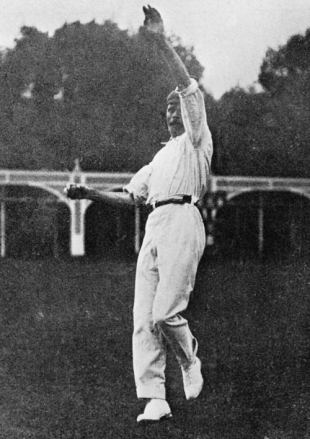
Sydney Barnes shows his bowling action, circa 1910
Sydney Barnes: the most complete bowler that ever lived © Getty Images 
Enlarge
It is a curious fact that when cricket was first becoming popular in England, in the latter half of the 18th century, all bowlers were either spinners or had great ambitions to be. This was because at the time bowling referred to the action we now associate with ten-pin bowling: rolling the ball along the surface of the earth, from bended knee, as if making a proposal of marriage to the distant batsman. A bowler's best hope during this, the dawn of the game, was for a molehill, foxhole, or adder enclave to impart deviation and so befuddle the batsman. When, finally, bowlers were allowed to give the ball air - probably around 1770 - their under-arm actions couldn't generate much pace. So they relied on spin.
All the reports, including those of John Nyren, author of cricket's first notable work of literature The Young Cricketer's Tutor, show that the earliest air bowlers, men such as Edward "Lumpy" Stevens and Lamborn, the "Little Farmer", used "twist" to break the ball from off to leg or, more commonly, leg to off. The round-arm and over-arm revolutions were many decades away alas, so bowling was a twirlyman's task. This pattern continued for so long that, rightly understood, the modern dominance of pace bowling is akin to a decades-long aberration from the norm. The history of mystery didn't leave much space for pace.
On July 15, 1822, a maverick named John Willes, who had been pushing the boundaries of the laws of the game for over a decade, bowled a round-arm delivery for Kent against MCC at Lord's. The umpires called no-ball. Willes threw the ball down in disgust, called for his horse and rode off into the sunset, scarcely playing again, so ostracised was he by cricket's fraternity. Little did he know that he had planted the seeds of a revolution that would catapult the game into modernity. In 1828, MCC moderated Rule 10 to allow the hand as high as the elbow; in 1835 another change allowed the arm up to shoulder height; in 1845 the benefit of the doubt was declared (as usual) against the bowler; and in 1864, the grand overlords of the game finally succumbed and declared over-arm bowling legal.
But then a funny thing happened, and kept happening for years. Rather than open the floodgates to a new breed of super-fast bowling tyrant, the dominant form of bowling right up to the inter-war period became something the like of which we hardly see in today's game, to the detriment of fans and players alike. In the late-Victorian period, all the most successful bowlers in the game were those who, rather than submit to an illusory need for speed, decided they could have the best of both worlds. They bowled spin, but at medium pace.
In England, three dominated: WG Grace, AG Steel, and George Lohmann. In Australia, a further three stood out: FR Spofforth, Monty Noble and Hugh Trumble. Each in turn pre-empted the rise, and extraordinary success, of the most complete bowler that ever lived, that cantankerous English rascal Sydney Barnes. He too was a medium-paced spinner. In fact, if you visit ESPNcricinfo and look to see who has the best career averages andbest strike-rate in Tests, you'll alight on Lohmann (with Barnes not too far behind). All of which rather begs a question: if medium-pace spin was so effective, why on earth did it die out?
Before answering that question, it may be worth establishing the credentials of these bowlers by focusing briefly on Barnes who, understood in the proper context, is really their apogee. The dashing county player Jack Meyer said Barnes was definitely quicker than Alec Bedser, which seems astonishing. My guess is that, depending on the pitch, Barnes would hit around 70 or even 75mph. If you're a club cricketer, that's probably up there with the fastest you've faced. CB Fry said of him that: "in the matter of pace he may be regarded either as a fast or fast-medium bowler. He certainly bowled faster some days than others; and on his fastest day he was distinctly fast."
And yet, as he brought his arm over, Barnes gave the ball an almighty rip. I'm not talking here about using seam and swing to extract cut from the pitch. I'm talking full-on spin, with a couple of special attributes. That is why John Arlott could say of Barnes: "He was a right-arm, fast-medium bowler with the accuracy, spin and resource of a slow bowler." Note that Arlott, who always chose his words carefully, describes Barnes not as medium or even medium-fast, but as fast-medium. And that he was a genuine, even prodigious, spinner of the ball is evidenced by Barnes' account of an extraordinary meeting with Noble.
My guess is that, depending on the pitch, Barnes would hit around 70 or even 75mph. If you're a club cricketer, that's probably up there with the fastest you've faced
Twirlymen constitute a special breed within cricket, a fraternity that bestows special privileges on its members, and through the ages spinners have met with each other to pass on the wisdom they have gleaned. Shane Warne and Abdul Qadir once sat across a Persian carpet from each other in the latter's house in Pakistan, spinning oranges hither and thither. Similarly, Barnes said he once asked Noble: "if he would care to tell me how he managed to bring the ball back against the swerve.
"He said it was possible to put two poles down the wicket, one 10 or 11 yards from the bowling crease and another one five or six yards from the batsman, and to bowl a ball outside the first pole and make it swing to the off-side of the other pole and then nip back and hit the wickets. That's how I learned to spin a ball and make it swing. It is also possible to bowl in between these two poles, pitch the ball outside leg stump and hit the wicket. I spent hours trying all this out in the nets."
For such a fastidious man, Barnes is rather lazy in conflating "swerve" and "swing" here. What he means by both is what we today refer to as "drift": the glorious tendency of a spinning ball to move in the air in the opposite direction to the eventual spin off the wicket. Unlike modern spinners, Barnes' wrist was slightly cocked back at the point of release, as if he was screwing or unscrewing a light bulb above his head (screwing for the offbreak; unscrewing for the legbreak). This, for reasons only a better physicist than I could tell you, compensates in accentuated swerve for what it sacrifices in turn off the wicket.
So the picture we have of the man who took 189 wickets in just 27 Tests at 16.43, with a wicket every seven overs - and a record 49 wickets in four Tests against South Africa in 1913-14 (he refused to play the last Test in a dispute over his wife's hotel fare) - is of genuine pace and genuine spin combined. He was perhaps quicker, and spun the ball more, than the other swift pioneers of the late-Victorian period. But is there any good reason that modern bowlers resolutely refuse to ape Barnes' astonishingly successful method? My answer is emphatically no.
It's true that there has been a conspiracy against spinners throughout the course of the game - shorter boundaries, limited overs, bigger bats, video replays (which cost them dearly until Hawk-Eye) came in and, above all, covered pitches. The last of these may partly explain the dwindling of the art. But there are three other possible reasons too: first, fashion; second, modern coaching; and third, sheer laziness.
None of these are forgivable, of course, particularly the needless and harmful conservatism of coaches who insist young players specialise early. Barnes had only three hours of coaching in his entire life. He would scoff at the refusal of fast bowlers to learn the art of spin, and vice versa; and if there is no good reason to keep the two art forms distinct, there must be hope that some brave young bowler could raise the spirit of medium-pace spin from the sporting grave to which it has prematurely been consigned. If he had the wit just to try, and the talent to come into mild success, lovers of the game the world over would be eternally in his debt for reacquainting cricket with a once great technique.

Indian Cricket - Conflict of Interest Stories?

, TNN | Jun 4, 2013, 01.21 AM IST

It has been an open secret for ever. India captain Mahendra Singh Dhoni maintained a strategic distance but his association with Arun Pandey, the face if not brain behind Rhiti Sports, was well known in top cricket circles.

In 2010, he turned it into a business partnership by signing up with Pandey to market him for a whopping Rs 210 crore-deal over three years. It now transpires that the relationship went much deeper: Dhoni owns a 15 per cent stake in the firm, even if it was only for a brief while, as they are so feebly claiming.

Not surprisingly, Indian cricket has responded angrily, with players and officials crying foul. The company, incidentally, also manages Suresh Raina, Ravindra Jadeja, Pragyan Ojha and RP Singh (who denied being part of Rhiti at the moment), four players who have been almost regular fixtures in all three formats of the game for Team India.

More than that, the preferential treatment that Raina and Jadeja have enjoyed under his dispensation at Chennai Super Kings has always seemed strange. Jadeja, in fact, was acquired for an incredible annual fee of $2 million. One can imagine the killing Rhiti made when the deal was stuck.

TOI spoke to a cross-section of players and BCCI officials and almost all of them conceded that the skipper of the Indian team holding shares in an agency that manages players in his team itself was not an ideal situation. "It should not be allowed because the captain does influence the selection of as team; in fact, overseas, he and the coach have the sole authority on team selection. Now, I can only think of all the instances that looked like 'wrong' selections in recent times," former Board secretary Jayawant Lele said.

"It is better that the BCCI deals with the issue quickly before it gets any bigger," said former India off-spinner Erapalli Prasanna.

Dhoni has shown a preference for certain players in the team, and this revelation has only added fuel to the fire, with many connecting the dots. According to his critics, many talented players have been dumped during his reign without a fair opportunity. Dig deeper into first class cricket and you can cull out those names: batsmen Manoj Tiwary, Saurabh Tiwary, all-rounder Abhishek Nayar, seamer Dhawal Kulkarni, leg-spinner Amit Mishra, wicketkeeper Parthiv Patel, to start with.

"With him, it's a question of like and dislike. If you are disliked by him, good luck to you! You can keep performing in domestic cricket, it doesn't matter" said a player.

Dhoni and N Srinivasan aren't alone in the 'sea of conflict of interest in Indian cricket' though. A Board member pointed out: "Anil Kumble heads the Karnataka State Cricket Association (KSCA) and runs a player management agency (Tenvic). When Dilip Vengsarkar & Co selected Virat Kohli ahead of S Badrinath in the Indian team, Srinivasan was miffed, and got the then Board president, Sharad Pawar, to remove that selection committee on the pretext that those who were office-bearers in the state associations could not be selectors at the same time. Now, the same Board has allowed Roger Binny, who is the vice-president of KSCA, to be a selector. Ratnakar Shetty, till last year, was a vice-president with the Mumbai Cricket association (MCA), while being the CAO of the Board. I can cite ten instances in Indian cricket where there is a conflict of interest. All this works according to people's convenience," he says.

A few voices, though, defended Dhoni's association. "I don't see any conflict of interest here. Unless it is proved that he has been influencing the players to join the company or is pushing the said players' inclusion in the Indian team, it is not proper to make such allegations. He may have a stake in the company but that doesn't mean he is guilty of foul-play. Can't a player invest his money in a business?" questions former India left-arm spinner Venkatapathi Raju. "Dhoni can have stakes in a company and that should not be looked in a different way. Dhoni is a captain and knows what to do. We are unnecessarily making an issue out of it," says Rajasthan batsman Robin Bisht.