Search This Blog

Tuesday, 29 January 2013

It’s time to switch off your mobile and set yourself free


Experts have found an effective new formula for happiness - ditching the smartphone

That's enough mobile phones: 'I found myself paying closer attention to the world around me, and having conversations that felt like real conversations'
That's enough mobile phones: 'I found myself paying closer attention to the world around me, and having conversations that felt like real conversations' Photo: Bloomberg
Will miracles never cease? I learnt yesterday that there is a team of officials in the Cabinet Office known as the Nudge Unit, charged with suggesting “ways people can make small changes to improve their lives”. Naturally, this sent the taxpayer in me into a lather of indignation. No wonder the national debt is so mountainous if crackpot initiatives like this are given the green light in Whitehall.
But then, wonder of wonders, out of the Behavioural Insights Team, as it is formally known, emerged common sense so beautiful and bracing that it was like being nudged by Marilyn Monroe.
Suppose, asks Prof Paul Dolan of the London School of Economics, a former stalwart of the unit, a man who nudges for England, happiness is not owning the latest, smartest mobile phone, but is, in fact, having that phone switched off? Suppose silence truly is golden, a necessary antidote to a shrill, intrusive world?
The problem with smartphones, warns Dolan, an expert on happiness, is that they distract users’ attention from the people around them. “Turning your phone off and enjoying being with your friends is much better for you than constantly checking your phone and emails,” he told an audience at the Hay Festival in Cartagena, Colombia.
What? Enjoy the company of your friends when you could be reading tweets from Wayne Rooney or perusing the weather forecast in New York? The professor is flying so much in the face of fashionable opinion that, the next time he switches on his mobile, he may find he has been denounced as a fascist Luddite by the Twitterati. 
But he is hardly a lone voice. He is only articulating something that millions share: a vague sense that our super-connected world is also dangerously disconnected from things that matter.
Switching off your mobile can improve your emotional health – as I found from personal experience last year. I was travelling in the States, left my mobile phone at the hotel and, for the next two hours, felt anxious and disorientated. Suppose something happened to my loved ones? Suppose so-and-so needed to get hold of me? What was happening at the Oval? All the usual neuroses of the middle-aged male.
But then, as sanity returned, the feelings of anxiety abated. After four hours of being cut off from what I had come to regard as civilisation, I felt as relaxed as if I’d had a particularly good lunch. After six hours, I was in such a happy space that, when I finally got back to the hotel and was reunited with my phone, I felt not relief, but resentment. Did my life have to revolve around that little electronic tyrant? Couldn’t its biddings wait?
The next day, and for the following five days, I left my phone in the hotel and resolved to check my messages no more than once a day. If I was late receiving some genuinely urgent communication, so be it.
The result was as dramatic as it was heartening. Until you sever your links with the people you are in touch with 24/7, you don’t realise quite how stressful those links are; quite how much energy you expend fretting about the contents of emails you have or have not received; quite how many footling demands other people will make on your time, if you are stupid enough to let them.
Liberated from those demands, I found myself paying closer attention to the world around me: enjoying the sights and sounds of America, and having conversations that felt like real conversations, flowing easily and sweetly, at no risk of being interrupted by the beep of a phone. It felt like an epiphany, an unexpected reversion to a better, simpler lifestyle.
Prof Dolan, guru of contentment and distinguished graduate of the Nudge Unit, has clearly had similar epiphanies. His plea for reduced dependency on mobile phones throws down the gauntlet to a generation that, in its fascination with new technology, has got its priorities askew.
One of the defining images of the 21st century is rows of men in suits on aeroplanes switching on their phones within nanoseconds of their planes landing. They have mistaken ergonomic efficiency for coolness: they think they are demonstrating energy and dynamism. They cannot see how pathetic they look, clutching at the umbilical cord that links them to their bosses/girlfriends/bookmakers.
The next time they land at Heathrow, they should try waiting five minutes before switching on their mobiles. Then 10 minutes. Then 20. It could be the saving of them.

Europe is haunted by the myth of the lazy mob


It suits the wealthy to turn the debate about poverty into a morality tale, but the reality is that inequality is structural
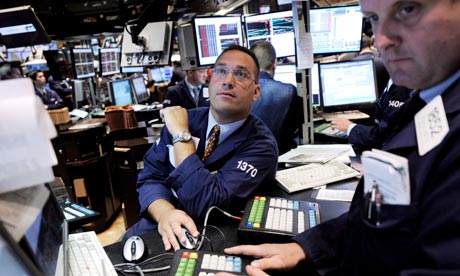
New York Stock Exchange
'Markets are frequently rigged in favour of the rich.' Photograph: Justin Lane/EPA
"A spectre is haunting Europe." Thus began the famous opening passages of The Communist Manifesto by Karl Marx and Friedrich Engels.
Today, once again, Europe is haunted by a spectre. But, unlike back in 1848 when Marx and Engels wrote those passages, it is not communism, but laziness.
Gone are the days when the upper classes were terrified of the angry mob wanting to smash their skulls and confiscate their properties. Now their biggest enemy is the army of lazy bums, whose lifestyle of indolence and hedonism, financed by crippling taxes on the rich, is sucking the lifeblood out of the economy.
In Britain, the coalition government constantly slags off those welfare slobs in the working class suburbs, sleeping off their hard night's slog with Sky Sports and online casino. It is their shameless demand for "something for nothing", pandered to by the previous Labour government, we are told, that has created the huge deficits that the country is struggling to get rid of.
In the eurozone, many believe that its fiscal crisis can be ultimately traced back to those lazy Mediterranean types in Greece and Spain, who had lived off hard-working Germans and Dutch, spending their time sipping espresso and playing card games. Unless those people start working hard, it is said, the eurozone's problems cannot be fixed.
The problem with this story is that it is, well, just a story.
First of all, it is important to reiterate that the fiscal deficits in the European countries, including Britain, are largely due to the fall in tax revenues following the finance-induced recession, rather than to the rise in welfare spending. So, attacking the poor and eviscerating the welfare state is not going to cure the underlying cause of the deficits.
Moreover, on the whole, poorer people typically work harder. They usually work in jobs with longer hours and tougher working conditions. Except for a tiny minority, they are poor despite the welfare state, not because of it.
The point comes into a sharper relief, if we compare nations. According to the Organisation for Economic Co-operation and Development, people in Greece, that famous nation of skivers, worked on average 2,032 hours in 2011 – only a shade less than the supposedly workaholic South Koreans (2,090 hours). In the same year, the Germans worked only 70% as long (1,413 hours), while the Netherlands was officially the "laziest" nation in the world, with only 1,379 hours of work per year. These numbers tell us that, whatever else is wrong with Greece, it is not the laziness of their people.
Now, if the laziness story has such flimsy bases in reality, why is it so widely believed? It is because, in the past three decades of dominance by free-market ideology, many of us have come to believe in the myth of the individual fully in charge of his/her destiny.
Starting from Disney animations we watch as young children telling us that "if you believed in yourself, you can achieve anything", we are bombarded with the message that individuals, and they alone, are responsible for what they get in their lives. This is what I call the L'Oreal principle – if some people are paid tens of millions of pounds a year, it must be because they're "worth it"; if others are poor, it must be because they are either not good enough or not trying hard enough.
Now, it is politically difficult to criticise the poor for their incompetence, so the attack is focused on the mythical lazy slob, who has no moral leg to stand on. But then the end result is the dismantling of a whole set of policies and institutions that help all poor people in the name of punishing the lazy.
The beauty of this worldview – for those who disproportionately benefit from the current system – is that, by reducing everything down to individuals, it draws people's attention away from the structural causes of poverty and inequality.
It is well known that poor childhood nutrition, lack of learning stimulus at deprived homes, and sub-par schools restrict capability developments of poor children, diminishing their future prospects. When they grow up, they have to contend with all sorts of prejudices that constantly discourage and deflate them, especially if they have the wrong gender or the wrong skin colour.
With these sandbags on their legs, the poor find it difficult to win the race even in the fairest market. Markets are frequently rigged in favour of the rich, as we have seen from a series of recent scandals surrounding deliberate mis-selling of financial products, lies told to the regulators, to the rigging of the Libor rate.
More importantly, money gives the super-rich the power even to rewrite the basic rules of the game by – let's not mince our words – buying up politicians and political offices (think of all those former banker-turned-US treasury secretaries). Many deregulations of the financial and the labour market, as well as tax cuts for the rich, in the last three decades are results of such money politics.
By turning the debate into a morality tale of laziness, the rich and powerful can divert people's attention away from all of these structural problems that create more poverty and inequality than is necessary.
All of this is not to say that individual talents and efforts should not be rewarded. Attempts to completely suppress them can create societies that are ostensibly equal but fundamentally unfair, as in the former socialist countries.
However, it is vital to recognise that poverty and inequality also have structural causes and start a real debate on how to change those things. Ridding the debate of the pernicious and baseless myth of the lazy mob is an important first step in that direction.

‘Yes, we spent money on paid news ads’


P. SAINATH
   
Confessions by politicians to EC belie claims of innocence by top newspapers
The political class is more honest than the media when it comes to ‘paid news’ during elections, judging by the fact that several poll candidates have owned up to this corrupt practice. At least, after the Election Commission and the Press Council of India shot off notices to them and held inquiries into the matter. They have acknowledged guilt by belatedly adding their “news” buying expenses to their election statement of accounts. Some candidates have accepted in writing that they bought what are now called, somewhat oxymoronically, “Paid News Advertisements.” But not a single one of the newspapers they say they gave their money to has accepted any wrongdoing. 

These are not just any papers. In readership terms, they include three top-ranked dailies.
In some cases, the battles are still on, involving both the politicians and newspapers concerned. On January 15, the EC found that Madhya Pradesh Cabinet Minister Narottam Mishra “failed to lodge his accounts of his election expenses in the manner prescribed by law.” He faces possible disqualification. The EC’s notice to Dr. Mishra concerns 42 news items on him during the November 2008 state elections. These, it pointed out, “read more like election advertisement(s) in favour of you alone rather than (as) news reports.” The EC names four newspapers in its notice: Dainik Bhaskar, Nai DuniyaAacharan and Dainik Datia Prakash. Dainik Bhaskar is the second most-read daily in the country.
Less than a month earlier, the Press Council of India held quite a few dailies guilty of doing much the same thing during the 2010 Bihar assembly polls. These include Dainik Jagran, the newspaper with the highest readership in the country. The others are Dainik HindustanHindustan TimesDainik Aaj and Purvanchal Ki Raahi. Also, Rashtriya SaharaUdyog Vyapar Times and Prabhat Khabhar.
In many cases, the route to exposure followed the pattern set in the classic case of the former Congress Chief Minister of Maharashtra, Ashok Chavan. His 2009 poll campaign for the State legislature drew scores of full pages of “news.” Not a single one of those pages ever mentioned the name of Madhav Kinhalkar, his rival for the Bhokar seat. In a 2009-10 investigation into paid news, The Hindu found a hagiographical article on Mr. Chavan appear word for word in three major rival publications. In two of them, on the same day, in all of them under different by-lines (The Hindu, Nov. 30, 2009).

The 2010 Bihar polls saw a similar pattern. This time, though, one paper came up with a truly novel defence. Same story in different papers? That’s not paid news, argues Udyog Vyapar Times. It submits that other newspapers “hack their computer site and publish the same news.” So what might look like paid news, contends Udyog Vyapar Times, is merely the outcome of desperate rivals hacking into the internal network of this Aligarh-based daily to steal their national exclusives.

How did the candidates issued ‘Paid News’ notices for the Bihar polls by the EC react? All but one seem to have accepted their guilt. According to the EC, they did so by simply adding “the expenditure included by them on account of these ‘news’ in their accounts of election expenses.” In fact, the District Election Officer of Muzaffarpur in Bihar stated flatly that the dailies had carried “news for payment.” He even had letters from the candidates owning up to buying “news.”

The Press Council of India, acting on the matter referred to it by the EC, issued show cause notices to Dainik JagranDainik HindustanHindustan Times et al, between July and September 2011. On December 21, 2012, the PCI, on the basis of its own inquiry committee’s report, got tough. Of the high-profile line-up, only Prabhat Khabhar escaped “the highest penalty” of the Press Council — censure — under Section 14 (1) of the Press Council Act of 1978. This was the only case where the paper and the candidate both firmly denied the charge. (In all the other cases, the candidates accepted they had purchased “news”.) And Prabhat Khabar’s own record — it has strongly campaigned against paid news — added weight to its defence. The paper offered to apologise if the EC produced proof of any such aberration. It was “cautioned for the future.”

All the other dailies denied the charges, too. But, as the PCI’s inquiry committee puts it, “in all these cases, the candidate in question admitted before the Election Commission of India that he paid for the impugned material.” These dailies were found “guilty of having carried news reports that were in fact self-promotion material provided by the candidate in the fray,” and so faced the highest penalty of censure.

So quite a few politicians seem willing to confess to their paid news sins. They face penalties, too. Just 16 months ago, the EC disqualified Umlesh Yadav, then sitting MLA from Bisauli in Uttar Pradesh, for a period of three years for failing to provide a “true and correct account” of her election expenses. She had skipped any mention of her spending on advertisements dressed up as news during her 2007 poll campaign. She was the first legislator ever to bite the dust on grounds of excessive expenditure (and paid news). Dr. Mishra, Health Minister in the BJP government of Madhya Pradesh, now faces charges of the kind that got her disqualified.

Ashok Chavan case

Oddly enough, the Ashok Chavan case, which triggered off a spate of such cases, is itself bogged down in both the EC and the Supreme Court. The case of former Jharkhand Chief Minister Madhu Koda is likewise held up in the courts. Judicial delays could have a serious and possibly adverse impact in the fight against Paid News in the 2014 general election.

But what action do habitual offenders in the media face? The Paid News Committee constituted by the Election Commission has concluded that those 42 “news items” involving Dr. Mishra “appear to be advertisements in the garb of news” and fall “within the definition of ‘Paid News’.” The Press Council defines Paid News as “any news or analysis appearing in any media (print or electronic) for a price in cash or kind as consideration.” A Press Council team appointed by PCI Chairperson Justice Katju found last month that Paid News had been rampant in Gujarat during the State polls there in December 2012.
So what happens where media outlets concerned are found guilty? Where the “highest penalty” is censure and that draws not even an apology? Of course, Paid News is not only about elections, though that’s where it does greatest damage to the greatest number. It is an everyday activity in much of the media. The cloying coverage that powerful corporations get routinely reeks of it. You can see it in some completely corporate “sporting” events or “partnerships.” Governments, too, buy “news” sometimes. You can see it at work in Davos, too. Who funds journalists and channels from India at that World Economic Forum event each year is worth looking at. But that’s another story. Watch this space.

sainath.p@thehindu.co.in

Monday, 28 January 2013

George Osborne is destined to be remembered as the most inept Chancellor in British history


Endless grim news confirms our worst fears about the man running the Treasury. And until workers see a growth in their real earnings, our economy is go rise?


It wasn’t a great week for the Coalition. First the Prime Minister made hismuch-awaited EU speech, which increased the levels of uncertainty for UK businesses just when they needed it least. Firms are sitting on loads of cash but are not willing to invest it as consumers aren’t spending; they are even less likely to do so now after David Cameron’s intervention.
This may have satisfied his Eurosceptic MPs, but was disastrous in economic terms. Any foreign firm considering setting up business in Britain as a gateway to Europe will inevitably be having second thoughts. The speech was clearly bad for growth and jobs.
Then the IMF lowered its growth forecast for the UK, and its chief economist, Olivier Blanchard, called for a fiscal U-turn. A few weeks earlier Mr Blanchard had argued in an important paper that fiscal multipliers – estimates of the impact of tax hikes and spending cuts on overall GDP – were much larger than the Office for Budget Responsibility had factored in, with the implication that any decline in growth was likely to have been caused by 11 Downing Street.

Debacles, cont'd

Next, the PM was caught out on a party political broadcast where he claimed the Coalition had been reducing the country’s debts even though they have been increasing it. Data on the public finances released last week also confirmed that, far from having cut the deficit by a quarter, it has in fact risen over the last 12 months. Then there was the Pizza¬gate PR disaster, when Dave and Slasher noisily celebrated their apparent success over a deep dish in Davos. Commentators took it to mean that GDP numbers – that the two would have already seen – were going to be positive. Debacle on debacle.
As I had feared, the growth numbers were bad again. The recession deniers had forecast positive growth, of course, but this was just wishful thinking: even the hopeless MPC had predicted a fall in output. A 0.3 per cent contraction means that the economy hasn’t grown for the last year at all. The economy is running on empty. In terms of the speed at which lost output has (not) been restored the economic pygmies in the Coalition are now responsible for a much worse slump than the Great Depression.
The economy was growing nicely when the Coalition took over in the spring of 2010. Indeed over the period Q32009-Q32010 the Labour government under Alastair Darling generated five successive quarters of growth; the economy grew by 2.7 per cent. During the succeeding nine quarters, Q42010-Q42012, under George Osborne the economy has grown by 0.4 per cent, zero over the last year. Four of the last five quarters have been negative.
For comparison purposes over the last five quarters, in contrast to Mr Darling’s growth the economy has shrunk by 0.3 per cent. The economy has still not restored half of the drop in output experienced from 2008Q2-2009Q2 of 6.5 per cent, and there is no chance under current policies that output will be restored before the 2015 election. Our part-time Chancellor will go down in history as the most inept ever; his austerity strategy has failed; borrowing is up, and the economy has been flatlining for two years. Ed Balls can now say he warned us this was going to happen. Told you so. Triple-dip here we come.
Boris Johnson stirred things up at Davos when he said it was “time to junk the language of austerity” and that the language of cuts was “not terribly useful in this sort of climate”. Good for him. He went on to argue for infrastructure spend on housing and transport for starters, and that “the hair-shirt Stafford Cripps agenda is not the way to get Britain moving again”. I couldn’t agree more – at long last someone who is prepared to lift animal spirits. At last someone in the Tory ranks is stirring things up.

One big puzzle

There is one big puzzle; poor growth jars with the recent news on the labour market, which showed some improvement. Of course some of this has to do with workers being hours constrained. The main explanation, though, appears to be that instead of big increases in unemployment, there have been big falls in prices, that is in wages and earnings. The graph above illustrates the movement in real earnings over the last decade; it simply takes annual weekly earnings (AWE) growth and deducts from it from inflation.
So if weekly wages grew by 5 per cent and the consumer prices index rose by 2 per cent real earnings increased by 3 per cent. It is clear that real earnings growth has been negative since the start of the recession – with one brief exception in early 2010 as the economy started growing before the Coalition took office and stopped that. Between March 2008 and November 2012 weekly earnings have risen from £440 a week to £472, or by 7.3 per cent; over the same time period prices have risen by 17.2 per cent, so real earnings are down by a tenth.
Wages have taken the strain. Falling real wages means that people’s living standard are falling, and they aren’t spending. How¬ever, this fall has been mitigated somewhat for people with mortgages by the decline in their mortgage payments due to low interest rates on their trackers. This means that any increase in interest rates would decimate living standards of working people even further, so sorry savers. Falling real wages have prevented unemployment from rising.
Recent work by Paul Gregg and Steve Machin suggests that wages recently have become a lot more responsive to an unemployment shock, that is the wage unemployment elasticity of pay (the “wage curve”) has risen. My own research suggests that hasn’t happened in the United States, which may help to explain why it has had a much bigger rise in unemployment for around half the drop in output the UK had. Until workers start to see a growth in their real earnings, this economy is going nowhere. Maybe those folks in Davos should think about sharing some of their profits with their workers. Hey boss, can I have a pay rise? 

No room for nuance in this fragile republic


By Harsh Sethi
In the rush to condemn Ashis Nandy and demand that he be jailed, no one bothered to understand what exactly he had said about corruption and caste
It is symptomatic of the times we live in, of the climate of political discourse that we have contributed to, that even relatively innocuous statements can get so easily misrepresented and twisted to convey a meaning that is diametrically opposite to what was said and meant. The Jaipur Literature Festival 2013, which until the morning of Republic Day had managed to successfully steer clear of any controversy, was suddenly rocked by angry protests based upon (and this must be stressed) a total misreading of remarks made by Ashis Nandy.
The panel discussion on “The Republic of Ideas,” featuring IBN7 Managing Editor Ashutosh, author and Tehelka editor Tarun Tejpal, historian Patrick French, philosopher Richard Sorabji, and social psychologist Ashis Nandy, was moderated by the author and publisher, Urvashi Butalia. Following a fascinating exchange on the “promise” of the Indian Republic and Constitution, the discussion turned to the theme of corruption and the significance of the anti-corruption protests led by Anna Hazare.
Making a passionate plea to deconstruct the sociology of corruption, Tarun Tejpal argued that we need to understand the “corruption” of the poor and the marginalised as a necessary strategy to break through the stifling nature of our rules, regulations and laws. Characterising Indian society as deeply stratified, hierarchical and oppressive, our laws and rules, he claimed, are mostly designed to “keep out” the erstwhile excluded strata from having their say. The corruption of “people like us” — an elite which has both the resources and power to subvert the system — often goes unnoticed, and if discovered, rarely results in prosecution. The misdemeanours of the “others,” in contrast, not only get caught, but also generate outrage, in part because they do not have the necessary skills to successfully cover up their corruption.
Grounded in earlier remarks
Subsequent remarks made by Ashis Nandy need to be read and understood in the context of what Tarun Tejpal said speaking before Nandy did. Agreeing with Tejpal, Nandy went on to argue that such “corruption” of the excluded — the Dalits, tribals, Other Backward Classes (OBC) and minorities — is inevitable if they are to break out from the bonds of an oppressive web of rules and regulations. He went on to say, referring to both himself and Richard Sorabji, that if they “arranged” to get fellowships for their children at Harvard or Oxford, as part of a trade in mutual and selective favours, none will comment about that, as if it is axiomatic that the fellowship was awarded on the basis of merit. Politicians or leaders of the oppressed strata, being new to the game and relatively untutored in the skills of manipulation, are unlikely to seek academic fellowships as a form of graft, and are more likely to covet and corner licences to operate petrol pumps. These pumps are publicly noticeable and can provoke outrage. Their licensees are linked to their “corrupt” benefactors, who are then condemned by the chattering classes in metropolitan cities.
So far so good. Nandy then went on to more provocatively stretch the argument, asserting that it is precisely this kind of “corruption” that has “saved” the Republic and democracy by enabling a degree of social and economic mobility and pluralising the composition of India’s elite. Furthermore, he argued, that it is most likely the list of “corrupt” could be inordinately dominated by Dalits, tribals, minorities and OBCs. Despite his prefacing his last remarks, saying that what he was about to say may shock many people, and that he nevertheless wished to stress the point about how we understand corruption, many in the audience (and one on the panel) completely missed Nandy’s point, and immediately accused him of casteist bias, calling upon him to withdraw his remarks and tender an apology. Some in the audience demanded that he should be charged under the Protection of Civil Rights Act for hurting the sentiments of the Scheduled Castes and the Scheduled Tribes.
Competitive outrage follows
Nandy’s protestations that what he said and meant was completely the opposite of what he was being charged with were not persuasive once the atmosphere was charged with heightened emotions. Competitive outrage, taking on the familiar form favoured by some overly strident and aggressive TV anchors, evidently gives no quarter to nuanced arguments, any irony, or even black humour. When Nandy characterised the former Chief Minister of Jharkhand, Madhu Koda (now in jail), as India’s first dollar billionaire, he was hardly extolling the virtues of corruption or turning a blind eye to the “perfidies” of upper caste politicians. At best, in an underhand and sly way, he was expressing admiration for the abilities of a tribal leader in matching up to what has hitherto been an exclusive preserve of India’s upper caste elite.
Accusations of Nandy of being anti-Dalit/tribal/minority groups, the calls for registering a FIR against him, and demanding that he should be arrested would, in our better days, have been dismissed as an irrelevant, if not comic, aside. Such innocent days have faded, unfortunately, into a distant past. So quick are we now to take offence and demand immediate retributory action against alleged offenders that we almost never take a moment to pause, to ascertain the facts, understand what was said and meant, in what context, and to what ends. All we want is action, and now!
Signals shrinking discourse
Subsequent demands by the Bahujan Samaj Party leader, Mayawati, by the chairman of the National Commission for Scheduled Castes P.L. Punia, and others, to arrest Ashis Nandy, even though none of them was present during the discussion, illustrates the danger of a growing kind of prickliness and intolerance. Worse still, such occasions are used by politicians to signal their commitment to their constituencies and shore up their images. In the process we are left with a diminished public discourse. Even liberals, usually quick to defend “freedom of speech,” advocate caution and temperance in the expression of reactions to intemperate allegations of the kind made against Nandy. Is this stance, one wonders, a compensatory guilt, marking what is politically correct, an obverse privileging of the erstwhile dispossessed?
Ashis Nandy’s choice of words, phrases, and examples can be questioned. He is not an organised and scintillating public speaker. One can also differ with his argument and analysis, for instance, his failure to distinguish between “corruption of the poor” and the “corruption of their leaders,” whose subversion of rules often results in them robbing the very poor who are also their constituents. Nevertheless, Nandy’s argument that the “rules of the game” have been set by an elite class to which he belongs, which remains a privileged lot, and therefore, that the deliberate subversion of those rules is an inevitable strategy for those striving for survival and upward mobility, certainly has merit. Clamping down on nuanced utterances and elliptical statements of the kind Nandy made will only make us a poorer democracy and Republic.


Padma Awards - Patronage Tools


The Hindu

Can it ever be the case that the Padma awards are announced and there are no accusations and controversy following them? Instituted in 1954 to acknowledge “distinguished and exceptional” individual achievements in various fields, the once prestigious awards have since come into so much bad odour thanks to lobbying and arbitrariness that today the Padma recognition has lost some of the lustre that accompanied it in the early years of the republic. Consequently, it has become something of a pattern for well-regarded individuals to decline the “highest civilian” commendation, the latest to do so being accomplished playback singer S. Janaki who, with four national awards behind her, felt it beneath her dignity to accept a Padma Bhushan at age 74. Ms Janaki’s anguish was all the more for South India not getting recognition commensurate with the region’s abundant talent. The charge is by no means baseless. This year, 20 recipients from Delhi figured among the awards compared to 21 from all the four southern States put together. Is it any wonder then that Padma awards have come to be viewed as payment for services rendered to the government than as an honour conferred for service to the nation?
Indeed, the awards have been used as patronage by successive governments, which have honoured both dubious individuals and men otherwise distinguished but rewarded specifically for a favour done. The Manmohan Singh government awarded the Padma Bhushan to the controversial hotelier Sant Singh Chatwal on the specious plea that he had played a key role in facilitating the India-United States civil nuclear agreement. The Padma Bhushan award for Chittaranjan Singh Ranawat came in the wake of his successful knee surgery on Atal Bihari Vajpayee. This arbitrariness has vested the Padma decision-making process with needless mystique, leading to frustrations and charges of bias. Admittedly there are men and women of great eminence who richly deserve to be honoured, and some of them do make it to the Padma awards. And yet the opaque selection process places them alongside those suspected to have won the awards by means more foul than fair. It is not that there are no selection guidelines. In 1996, a high-level committee headed by K.R. Narayanan, who was Vice-President at the time, set stringent qualifications for the award, stressing the “exceptional” nature of the recipient’s service. Just how well the guidelines were observed can be seen from the fact that in 2004 President Abdul Kalam had to write to Mr. Vajpayee advising caution in the selection of the awardees. The two UPA governments have, unfortunately, continued the tradition, flouting the deadline for receiving recommendations and habitually overruling the Awards Committee.

Sunday, 27 January 2013

Marx takes on Keynes, Friedman and Schumacher


The ultimate Davos debate: 

If you could construct the best panel at a World Economic Forum debate, this would be it. But what would they say about present problems? Read on …
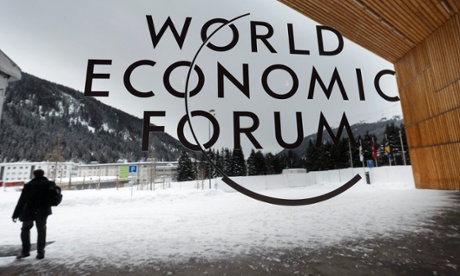
As the cold winds of the recession blow around Europe a man walks outside the main entrance of the Davos congress centre, on the eve of the opening of the 43rd Annual Meeting of the World Economic Forum, WEF, in Switzerland.
What if Karl Marx and Keynes, Friedman and Schumacher were at the 43rd World Economic Forum in Davos, Switzerland? Photograph: Laurent Gillieron/AP
Imagine that you could construct the ultimate Davos panel. From the annals of history you can choose any quartet that could put the world to rights in an hour-long talk, the format beloved of the World Economic Forum.
Klaus Schwab, the man who has been organising the forum since 1971, ensured there were plenty of stellar names strutting their stuff in the high Alps last week. Davos attendees could watch Nouriel "Dr Doom" Roubini cross swords with Adam Posen, recently a member of the Bank of England's monetary policy committee about the merits of quantitative easing. They could listen to Mark Carney, soon to take over from Sir Mervyn King at Threadneedle Street, warn that the global economy is far from out of the woods. George Soros held forth on drugs; Facebook's Sheryl Sandberg spoke passionately about sexual stereotyping; David Cameron called for the G8 to act against tax avoidance and corruption.
But how about this for a panel? Karl Marx, John Maynard Keynes, Milton Friedman and Fritz Schumacher, all no longer with us, kept in line by the IMF's Christine Lagarde, thankfully still alive and kicking, and one of the standout performers last week.
Lagarde kicks off our fantasy discussion with a few words of introduction. She says business leaders have left Davos in a slightly better frame of mind not because of the millions of words spouted in Davos, but because of three little words spoken by the president of the European Central Bank, Mario Draghi, in London in July. Those words were "whatever it takes", a commitment by the ECB to buy up the bonds of troubled eurozone countries in unlimited quantities. That has removed one of the big tail risks to the global economy – a chaotic break-up of the eurozone. But, she adds, any recovery in 2013 will be fragile and timid, and there is a risk of a relapse. "Turning first to you Karl, how do you see things".
Marx: "The capitalist class gathered in Davos has spent the last few days wringing their hands about unemployment and the lack of demand for their goods. What they seem incapable of recognising is that these are inevitable in a globalised economy. There is a tendency towards over-investment, over-production and a falling rate of profit, which, as ever, employers have sought to counter by cutting wages and creating a reserve army of labour. That's why there are more than 200 million people unemployed around the world and there has been a trend towards greater inequality. It is possible that 2013 will be better than 2012 but it will be a brief respite."
Lagarde: "That's a gloomy analysis, Karl. Wages are growing quite fast in some parts of the world, such as China, but I'd agree that inequality is a threat. The IMF's own research shows that inequality is correlated to economic instability."
Marx: "It is true that the emerging market economies are growing rapidly now but in time they too will be affected by the same forces."
Lagarde: "Maynard, do you think things are as bleak as Karl says?
Keynes: "No I don't Christine. I think the problem is serious but soluble. When we last faced a crisis of this magnitude we responded by aggressive loosening of monetary policy – driving down both short-term and long-term interest rates – and by the use of public works to boost aggregate demand. In the US, my friend Franklin Roosevelt supported legislation that allowed workers to organise. After the second world war, the international community created the IMF in order to smooth out balance of payments imbalances, prevent beggar-my-neighbour currency wars and control movements of capital. All these lessons have been forgotten. The balance between fiscal and monetary policy is wrong; currency wars are brewing; the financial sector remains largely unreformed, and aggregate demand is weak because workers are not getting a fair share of their productivity gains. Economics is stuck in the past; it is as if physics had not moved on since Kepler."
Lagarde: "I gather from what you are saying, Maynard, that you do not approve of the way George Osborne is running the UK economy."
Keynes: "The man has taken leave of his senses. Britain has a growth problem, not a deficit problem."
Lagarde: "I daresay Milton that you disagree with everything Maynard has said? You would make the case, presumably, for nature's cure?"
Milton Friedman: "Some of my friends in the Austrian school of economics would certainly favour doing nothing in the hope of a cleansing of the system, but I wouldn't. Unlike Maynard, I wouldn't support measures that would increase the bargaining power of trade unions and I've never been keen on public works as a response to a slump.
"But I would certainly support what Ben Bernanke has been doing with monetary policy in the US and would support even more drastic action if it proved necessary."
Lagarde: "Such as?"
Friedman: "Well, I think monetary policy should be set in order to hit a target for nominal output – the increase in the size of the economy unadjusted for inflation. If that growth is too high, central banks should tighten policy. If it is too low, the trend since the crisis broke, they should loosen it. In extreme circumstances, I'd favour policies that blur the distinction between monetary and fiscal policy. That's what I mean when I talk about helicopter drops of money into the economy."
Lagarde: "Fritz, you have been sitting there patiently listening to Karl, Maynard and Milton. How do you assess the state of the world?
Fritz Schumacher: "I am greatly disturbed by the way the debate is being framed. There is an obsession with growth at all costs regardless of the environmental costs. Climate change was rarely mentioned in Davos: this after a year of extreme weather events. It is frightening that so little attention has been paid to global warming, and almost criminally neglectful of governments not to use ultra-low interest rates to invest in green technologies.
"As has been the case in the past, recessions have pushed green issues down the political agenda. In good times policymakers say they are in favour of sustainable development, but the pledges are forgotten as soon as unemployment starts to rise. Then it is back to business as usual: more roads, expanding airports, tax cuts to encourage consumption. When scientists are warning that global temperatures are on course to rise several degrees above pre-industrial levels on unchanged policies, this is the economics of the madhouse."
Lagarde: "Maynard, what's your response to that?"
Keynes: "I agree with him. If I were advising Roosevelt today I would be calling for a Green New Deal. I find it hard to envisage a world without growth, something that is politically unacceptable in the developing world in any case. But Fritz is right, we need smarter, cleaner growth. As you yourself said last week, Christine, if we carry on as we are the next generation will be 'roasted, toasted, fried and grilled'."
Schumacher: "I couldn't have put it better myself."