Search This Blog

Tuesday, 17 July 2012

Degree classifications are extremely crude - and pretty useless


When they graduate, students should simply be given a transcript of their marks as a record their study, says Jonathan Wolff

Universities themselves do not find the classifications useful.
Universities themselves do not find the classifications useful. Any student applying for further study will be asked for a transcript of all their marks, in addition to their degree result. Photograph: tomas del amo /Alamy
In Geneva a few weeks ago, as the American and European participants were discussing which insect repellent to use on their post-conference hikes, I had to leave in order to attend yet another meeting of an exam board. This year, I've been chair of several of our boards, "faculty observer" on others, and external examiner elsewhere, and so my desk has been littered with exam scripts and spreadsheets. My head is full of rules for dealing with classification and borderline cases. Degree schemes are like snowflakes: no two are alike.
North Americans rarely understand the expression "exam board" unless they have worked or studied in the UK. Of course, they grade their papers, often with substantial help from their teaching assistants. But once the marks are settled, that is it as far as the department is concerned. Marks go off to the university administration, and in due course find their way on to student transcripts.
Here, by contrast, at least two academics assess or moderate each paper. The mark then exists in a form of limbo until ratified by the exam board, the external examiner and the university examinations section. In some cases, a single essay will be read by three different people, and the mark adjusted twice, although this is rare. Marking in the UK is a process of handicraft, not mass production.
And what do we do with these finally tuned judgments? We put them into a computer that weights them for year of study, ignores some of the bad ones, and produces a number through some form of averaging process. That number will assign the candidate either to a clear degree class, or to a twilight borderline zone. If borderline, we then use another set of rules, apparently too complex for any computer, taking account of such things as "exit velocity", "spread of marks" and any extenuating conditions, in turn graded A, B, C, and X. In such discussions a score of academics can spend a couple of happy hours for each degree programme trying to detect whiffs of high-class performance. Inevitably, and tragically, some students will be consigned to a lower classification by a hair's breadth.
And after all of this, what do we end up with? Given that many students now regard a 2:2 as hugely disappointing, the great majority find a way to do what they need to achieve at least an upper second. Some, with talent and hard work, will do even better and will be awarded a first. Those who in the old days would have performed weakly are likely to have failed at an earlier stage, and so just won't be there in the graduating class. I haven't seen a third in years. Averaging between a 2:2 and a fail is a real challenge. Hence after all this work, we assign perhaps 20% of students to the first-class category and most of the rest to the upper second-class group, with a sprinkling of lower seconds.
In other words, the job of an exam board is to spend a huge amount of effort taking a rich profile of information – how students have done over a wide range of assessments – and turn it into extremely crude classification. And it is classification that we find useless for our own purposes. Any student who applies for further study will be asked for a transcript of all their marks, in addition to their degree result. Universities apparently don't think the degree classification conveys very much useful information, and so why should anyone else?
I'm coming to the conclusion that we should simply issue students with transcripts to record their study, and leave it at that. There are proposals to replace degree classifications with grade point averages, as in the US. That's a move in the right direction, but why have a summary measure at all? School achievement isn't summarised into a single number, and why should it be any different at university? If a student on a German and geography degree did brilliantly in German and miserably in geography what purpose is served by reducing it all to a single score? And so my plea: No more classifications. No more algorithms. No more borderlines. And, most heartfelt of all, no more exam boards.
• Jonathan Wolff is professor of philosophy at University College London

Monday, 16 July 2012

Free access to British scientific research within two years


Radical shakeup of academic publishing will allow papers to be put online and be accessed by universities, firms and individuals
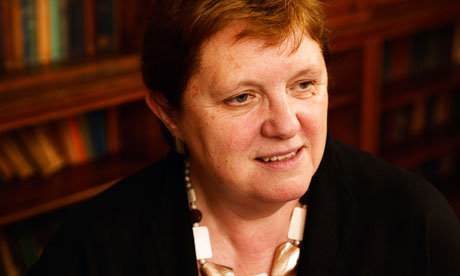
Professor Dame Janet Finch
Professor Dame Janet Finch's recommendations on open access publishing prompted the government's decision.
 
The government is to unveil controversial plans to make publicly funded scientific research immediately available for anyone to read for free by 2014, in the most radical shakeup of academic publishing since the invention of the internet.

Under the scheme, research papers that describe work paid for by the British taxpayer will be free online for universities, companies and individuals to use for any purpose, wherever they are in the world.

In an interview with the Guardian before Monday's announcement David Willetts, the universities and science minister, said he expected a full transformation to the open approach over the next two years.

The move reflects a groundswell of support for "open access" publishing among academics who have long protested that journal publishers make large profits by locking research behind online paywalls. "If the taxpayer has paid for this research to happen, that work shouldn't be put behind a paywall before a British citizen can read it," Willetts said.

"This will take time to build up, but within a couple of years we should see this fully feeding through."

He said he thought there would be "massive" economic benefits to making research open to everyone.
Though many academics will welcome the announcement, some scientists contacted by the Guardian were dismayed that the cost of the transition, which could reach £50m a year, must be covered by the existing science budget and that no new money would be found to fund the process. That could lead to less research and fewer valuable papers being published.

British universities now pay around £200m a year in subscription fees to journal publishers, but under the new scheme, authors will pay "article processing charges" (APCs) to have their papers peer reviewed, edited and made freely available online. The typical APC is around £2,000 per article.

Tensions between academics and the larger publishing companies have risen steeply in recent months as researchers have baulked at journal subscription charges their libraries were asked to pay.

More than 12,000 academics have boycotted the Dutch publisher Elsevier, in part of a broader campaign against the industry that has been called the "academic spring".

The government's decision is outlined in a formal response to recommendations made in a major report into open access publishing led by Professor Dame Janet Finch, a sociologist at Manchester University. Willetts said the government accepted all the proposals, except for a specific point on VAT that was under consideration at the Treasury.

Further impetus to open access is expected in coming days or weeks when the Higher Education Funding Council for England emphasises the need for research articles to be freely available when they are submitted for the Research Excellence Framework, which is used to determine how much research funding universities receive.

The Finch report strongly recommended so-called "gold" open access, which ensures the financial security of the journal publishers by essentially swapping their revenue from library budgets to science budgets. One alternative favoured by many academics, called "green" open access, allows researchers to make their papers freely available online after they have been accepted by journals. It is likely this would be fatal for publishers and also Britain's learned societies, which survive through selling journal subscriptions.

"There is a genuine value in academic publishing which has to be reflected and we think that is the case for gold open access, which includes APCs," Willetts told the Guardian. "There is a transitional cost to go through, but it's overall of benefit to our research community and there's general acceptance it's the right thing to do.

"We accept that some of this cost will fall on the ring-fenced science budget, which is £4.6bn. In Finch's highest estimation that will be 1% of the science budget going to pay for gold open access, at least before we get to a new steady state, when we hope competition will bring down author charges and universities will make savings as they don't have to pay so much in journal subscriptions," he added.

"The real economic impact is we are throwing open, to academics, researchers, businesses and lay people, all the high quality research that is publicly funded. I think there's a massive net economic benefit here way beyond any £50m from the science budget," Willetts said.

In making such a concerted move towards open access before other countries, Britain will be giving its research away free while still paying for access to articles from other countries.

Willetts said he hoped the EU would soon take the same path when it announced the next tranche of Horizon 2020 grants, which are available for projects that run from 2014. The US already makes research funded by its National Institutes of Health open access, and is expected to make more of its publicly funded research freely available online.

Professor Adam Tickell, pro-vice chancellor of research and knowledge transfer at Birmingham University, and a member of the Finch working group, said he was glad the government had endorsed the recommendations, but warned there was a danger of Britain losing research projects in the uncertain transition to open access publishing.

"If the EU and the US go in for open access in a big way, then we'll move into this open access world with no doubt at all, and I strongly believe that in a decade that's where we'll be. But it's the period of transition that's the worry. The UK publishes only 6% of global research, and the rest will remain behind a paywall, so we'll still have to pay for a subscription," Tickell said.

"I am very concerned that there are not any additional funds to pay for the transition, because the costs will fall disproportionately on the research intensive universities. There isn't the fat in the system that we can easily pay for that." The costs would lead to "a reduction in research grants, or an effective charge on our income" he said.

Another consequence of the shift could be a "rationing" of research papers from universities as competition for funds to publish papers intensifies. This could be harmful, Tickell said. For example, a study that finds no beneficial effect of a drug might be seen as negative results and go unpublished, he said.

Stevan Harnad, professor of electronics and computer science at Southampton University, said the government was facing an expensive bill in supporting gold open access over the green open access model.

He said UK universities and research funders had been leading the world in the movement towards "green" open access that requires researchers to self-archive their journal articles on the web, and make them free for all.

"The Finch committee's recommendations look superficially as if they are supporting open access, but in reality they are strongly biased in favour of the interests of the publishing industry over the interests of UK research," he said.

"Instead of recommending that the UK build on its historic lead in providing cost-free green open access, the committee has recommended spending a great deal of extra money — scarce research money — to pay publishers for "gold open access publishing. If the Finch committee recommendations are heeded, as David Willetts now proposes, the UK will lose both its global lead in open access and a great deal of public money — and worldwide open access will be set back at least a decade," he said.

Was the Petrol Price rigged too?


Concerns are growing about the reliability of oil prices, after a report for the G20 found the market is wide open to “manipulation or distortion”.
Traders from banks, oil companies or hedge funds have an “incentive” to distort the market and are likely to try to report false prices, it said.
Politicians and fuel campaigners last night urged the Government to expand its inquiry into the Libor scandal to see whether oil prices have also been falsely pushed up.
They warned any efforts to rig the oil price would affect how much drivers pay at the pump, which soared to a record high of 137p per litre of unleaded earlier this year.
Robert Halfon, who led a group of 100 MPs calling for lower fuel prices, said the matter “needs to be looked at by the Bank of England urgently”
“We need to know whether the oil price has been manipulated in a similar way to Libor,” the MP for Harlow said. “This impacts on millions of people all round the country concerned about the price of petrol at the pumps.”
Petrol retailers use oil price “benchmarks” to decide how much to pay for future supplies.
The rate is calculated by data companies based on submissions from firms which trade oil on a daily basis – such as banks, hedge funds and energy companies.
However, like Libor – the interest rate measure that Barclays was earlier this month found to have rigged – the market is unregulated and relies on the honesty of the firms to submit accurate data about all their trades.
This is one of the major concerns raised in the G20 report, published last month by the International Organisation of Securities Commissions (IOSCO).
In the study for global finance ministers, including George Osborne, the regulator warns that traders have opportunities to influence oil prices for their own profit.
It points out that the whole market is “voluntary”, meaning banks and energy companies can choose which trades to make public.
IOSCO says this “creates opportunity for a trader to submit a partial picture in order to influence the [price] to the trader’s advantage”.
In an earlier report, the regulator concluded: “It is open to companies to report only those deals that are in their own best interests for the rest of the market to see.”
The price reporting agencies, Platts and Argus, argue they employ journalists to weed out false data submitted by oil traders.
IOSCO says reporters are “well-aware that traders have an incentive to push the market one way or another and do not generally believe everything they are told”.
However it points out this system is heavily reliant on the “experience and training” of journalists to make a judgement about what the oil price should be.
Further alarm bells are being sounded by US regulators, who have already pointed out the rate-rigging scandal could spread to the oil market.
Scott O’Malia, a top official at the US Commodities Futures Commission, has drawn attention to the “striking similarity” between the potential for manipulating oil and Libor.
British regulators carrying out the Wheatley Review into the Libor scandal have this week signalled they will look into whether other markets were skewed.
Paul Tucker, the Bank of England’s deputy governor, told MPs that Barclays’ abuse of the Libor system may be only one part of the banks’ dishonesty over crucial financial information.
Politicians last night called on the Bank of England and the Government to take heed of IOSCO’S finding about the oil market to prevent another crisis of confidence in the banks.
Lord Oakeshott, the former Liberal Democrat Treasury spokesman, said the oil price system ought to be examined in the wake of the Libor scandal.
“Clearly it’s right we must shine a light on how other crucial benchmark prices are reported, especially when they affect the cost of living for millions of motorists,” he said.
Brian Madderson, chairman of the Petrol Retailers’ Association, also called for an investigation into the “alarming” conclusions of the G20 report.
“All the petrol retailers buy their products based on Platts prices,” he said. “If IOSCO thinks the price is open to manipulation it could well be and that would affect prices on the forecourts.”
Banks are also calling for reform of the oil price system, amid fears that it is open to abuse by a minority of traders.
Simon Lewis, chief executive of the Global Financial Markets Association, has raised concerns about the “opaque” way the oil price is worked out.
In a letter to IOSCO, he said price reporting agencies may not be as impartial as they claim, because they take fees from banks and oil companies to provide information.
“Incentives may arise to favour those who pay greater subscriber fees or provide greater access to market information,” he said.
Some experts, such as Raymond Learsy, a former commodities trader and author of Oil and Finance, have been warning for years that the oil market is open to corruption.
“Given how important Libor is, if that can be manipulated, then why can’t oil be manipulated?” he said. “The price lends itself to manipulation. The oil price is not a true reflection of supply and demand.”
The reporting agencies have hit back at claims their prices are open to distortion. In a joint statement, Platts and Argus said there are “fundamental differences” in the way Libor and oil prices are reported.
“Independent price reporting organisations are independent of and have no vested interest in the oil and energy markets,” they said. “Their ownership is transparent, and strict internal governance separates editorial and commercial functions. Independent price reporting organisations are not market participants, nor providers of transaction execution, clearing or settlement services.”
Platts added that there are four main differences between oil prices and Libor – the quality of its data, its independence, competition between reporting agencies and the transparency of its methodology.

Saturday, 14 July 2012

Rausing's death shows not how similar, but how different, rich and poor are


Eva Rausing's story is part of the white noise of the age

The law bows to wealth, and is vicious to the ordinary. 
Joe Magee illo for Tanya Gold
'If a drug user from anywhere other than Belgravia were caught with 52g of cocaine, prison would be a likely outcome. But not for ­Rausing.' Illustration: Joe Magee
Eva Rausing, a rich, attractive and insatiable drug addict, died in mysterious circumstances in a wedding cake mansion in Belgravia, like a Tatler story gone wrong. Two things are interesting, beyond the natural cognitive dissonance of a "woman with everything" being exposed, in the end, as having nothing. Her death thwarts the populist fantasy of what great wealth should do – that is, bring joy: those photographs of Rausing in Barbados, haunted in a synthetic paradise, shake the basic assumptions of an acquisitive society. These assumptions are a fiction created by the fiction pedlars of advertising – products bring happiness, therefore the ability to amass them must bring happiness too – and they are all junk.
First were her donations to Mentor, a charity that, among other things, assists the parents of drug addicts in caring for their grandchildren. With her husband and heir to the Tetra Pak packaging fortune, Hans Kristian Rausing, being treated in hospital for alcohol withdrawal following his arrest on suspicion of her murder, this is presumably what will happen to her children, and so it was a gift of extraordinary prescience and wistfulness.
Whether drug charities should accept financial aid from active drug addicts – Rausing was, for a time, on the board of Clouds, a rehabilitation centre in Wiltshire – which may "enable" the fantasy that their lives are purposeful and functional, is a complex question, but it is easily answered by the woeful underfunding of drug treatment in Britain. If I were the chief executive of a drug rehabilitation charity when Eva Rausing walked in with her golden money, I would take it.
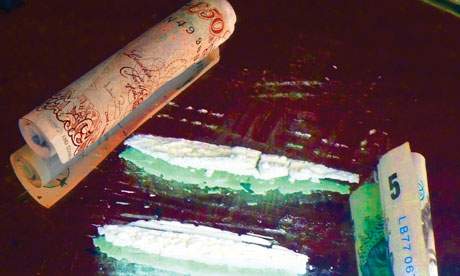
Then there was her arrest, in 2008, for trying to take drugs (10g of crack cocaine; 2.5g of heroin; 2.35g of diethylpropion) into the US embassy in London's Grosvenor Square, where she was going, of all things, to a party. The police then searched her car and mansion, where they found 220mg of diazepam, 5.63g of crack cocaine, 2.9g of heroin and 52g of cocaine. And this, in public terms, is where the narrative of Eva Rausing swerves off into something more tragic and depraved than a solitary death.
If an obsessive drug user from anywhere other than Belgravia – or Knightsbridge, or Mayfair – were caught with 52g of cocaine, prison would be a likely outcome. But not for Rausing. Her lawyer corresponded with the Crown Prosecution Service, and Prince Charles, a global expert in the magical power of prestige to soothe any practical problem, said she deserved a second chance. The judiciary bowed to wealth: no charges were brought against the Rausings. Sir Ian Blair, then the Metropolitan police commissioner, was furious, and said the decision not to prosecute "reminds me of the 19th-century legal comment often attributed to Sir James Mathew: 'In England justice is open to all – just like the Ritz.'"
But compared with the protestations of the Rausings' expensive lawyers and the foolish belief in the inherent goodness of wealth, Blair's complaints were a feather on the wind.
No one should go to prison for drug possession. The criminalisation of drug addiction is infantile and, no matter where you stand on the exhausting weakness v disease debate, it does not work. This month the justice secretary, Kenneth Clarke, told the Commons home affairs select committee that we are losing the "war" on drugs, that we are even going "backwards" – but none of this evidence of 30 years, he says, is an argument to change the law, and he will not, luckily for drug addicts, "despair".
His bouncy politician's optimism aside, he did not address the dramatic cuts in drug and alcohol rehabilitation, and charities' grave doubts over the viability of the government's new total-recovery-or-bust strategy, at all. Drug addiction is a criminal matter (for most) and there it is – more junk.
The government's lack of understanding of the reality of drug addiction, its wonky road of false dawns and thwarted hopes, can be summed up in the following quote from its strategy document. The government seeks a "transformation from a system that has concentrated on engaging and retaining people in treatment to one that is capable of delivering recovery outcomes … we must go further than merely reducing the harms caused by drug misuse, and offer every opportunity for people to choose recovery as a way out of dependency". It is another beard for cuts and privatisation, and another feather on the wind.
So this is the oldest story – of the law's viciousness towards the ordinary, and its polite reticence towards the wealthy, and it feels like the white noise of the age. The dialogue against the poor, the unemployed and recipients of welfare is rising to a scream under this coalition government, and it is producing a criminal justice system to match: with so many feckless you need at least the appearance of muscular punishment.
I read again yesterday of Nicholas Robinson, the student jailed for six months for "looting" a £3.50 bottle of water during the riots last year, and the evening and weekend courts planned for the Olympics, so justice can be swiftly meted out. We are segueing, in all the details, towards a darker age. Eva Rausing was unlucky, but her death tells not how similar the rich and poor are in essence, but how different.

Live-tweeting a very public break-up


by Janey Godley in The Independent

On a train ride from Glasgow to London I was privy to a not-so-private conversation between a couple, let’s call them Jack & Francesca. This entire story happened and was tweeted live by me.
  • Couple on train before it’s even moved and they have fallen out over “her inability to accept the truth”. This will be fun.
  • She just told him “I can accept the truth, you are incapable of speaking it. Now who is Tamera and why did she email you?
The train still hasn’t even moved yet.
  • He said “Tamera isn’t working with us anymore she lives in Rome now” she said “lucky her is she a nun then?” and slammed her bag down.
  • He hissed “Shut up Francesca, we never had anything going on it was when we were staying in Bognor remember?” she says “yes Bognor”.
  • Francesca says “you were impotent in Bognor or were you just exhausted fucking Tamera?”.
He (Jack) is staring at floor. Francesca is eating a sandwich in a furious chompy manner.
  • Francesca is on her text and Jack is pretending to ignore her. Jack: “who are you sending that piece of shit to?” “your mum” she said.
  • Jack just rubbed his eye “Stop grooming me Francesca” he said. She stared and said “did Tamera ‘groom’ you? (She did rabbit fingers).
  • Jack has gone to loo. Francesca just called Kate on mobile “I hate him Kate he never explains his emails or texts that I find”.
Jack is back.
  • “Now tell me everything about Tamera” she hisses and Jack is staring at her I think he is scared.
She just plucked out one of his eyebrows out in the middle of a conversation with her fingers.
Jack tried to hold her hand but Francesca just grabbed his face and snogged him.
  • “I love you Jack” says Francesca.
  • Jack says “I was close to Tamera back in 99 before we met” no JACK don’t tell her! Francesca is smiling, encouraging him to tell.
  • “Tamera and I flat shared in Manchester in late 90s – was wild times” Jack smiled wistfully.
Francesca is actually gnashing her jaw, how can Jack not see this?
  • “Wild how?” she asks.
  • “I told you I was in a band at uni back in late 90s” Jack pleads. Francesca snorts “was it Oasis?” and laughs really loudly at Jack.
  • Jack stupidly explains “We did a few festivals together when I was in the band” Francesca laughs “what BAND? You were in a band?”
Jack has got up and walked off.
  • Francesca is on phone to her pal Kate “did you know he was in a band? Me neither”.
  • “Kate, I’m getting the morning after pill I have six hours left to make sure am not pregnant to this loser” said Francesca.
Jack is back. He is looking at me suspiciously. Hope he can’t see me tweeting.
  • Jack: “Francesca I never loved Tamera – it was 98 last time I saw her, she emailed to say she is in Rome living please stop fighting”.
  • “Am pregnant” Francesca just said to Jack.
Oh My God she isn’t she is going to take morning after pill. Do I step in?
Tunnel.
  • “Are you sure?” he is asking. She is glaring at him “Of course I’m sure I’m a woman, are you calling me a liar?”
Meanwhile I am shaking my head at him mouthing the word LIAR.
  • Francesca just said “well I might not be pregnant but am thinking of not taking the morning after pill which is same thing”.
There is another watcher to this story – just spotted a man watching me watching them. He has raised an eyebrow at me.
  • Jack: “that’s not the same as being pregnant Francesca take the pill I don’t want this anymore” people are staring.
  • Francesca just said: “I love you, don’t leave me, what about Janet?”
Who is Janet?
  • “Janet will be fine, don’t pretend you loved her as well?”  I want to ask who Janet is.
  • Francesca: “Janet needs grooming” please please let Janet be a horse and not a child.
  • “I’m not paying to keep her anymore Jack if you leave me” Francesca says.
Am guessing Janet is a horse.
  • He says “I’m riding Janet this week”.
Phew Janet is a horse/pony/thing.
  • “Look can we stop talking about your horse and explain why you are leaving me?” says Francesca.
  • Jack: “you pretended to be pregnant Francesca”.
  • “I didn’t pretend I said I might be. You always make me the liar Jack” says Francesca “I wish I recorded what you said” says Jack.
I wish Janet was another woman he is riding and I wish I could tell Jack I have recorded what Francesca said.
  • Jack stormed off Francesca is crying into phone “Kate he is being horrible and I think am pregnant if I don’t take morning after”.
  • Jack is back with four cans of beer and has sat at another table.
  • Jack is ignoring Francesca’s attempts to reconcile. Half way down the train a toddler falls.
  • The baby screams – very well timed – Jack is talking to ‘Ruppy’ his pal… wait. Jack just got up and ran off train at Carlisle.
  • Train is moving off now and Francesca is just banging on window.
Even I didn’t expect that! Jack is OFF.
  • Francesca to Kate on phone “He just got off train at Carlisle… Yes he took his bag and ran off. Am taking the pill now he is such a wimp”.
  • “We didn’t really make a go of it he prefers horses and was in Iraq for most of the year” she is saying on the phone.
Am guessing Jack was in army? Why else would you go to Iraq?
  • Jack has called her people, Jack is on the phone.
  • Francesca is shouting at him. “I’m getting off at the next stop. Nick s is coming to get me”.
Who is Nick?
  • Jack hung up by the sounds of it and now Francesca is sitting staring out of the window.
  • Francesca calls Jack. “Go back to Iraq with your mates or whatever they are called …well ..That then …regiment …whatever, I don’t care”.
  • Francesca to Jack on phone: “Am meeting Nick at Oxenhome if you must know”.
  • She is back on the phone to Jack now: “I’m sorry Jack, sorry, please meet me at Oxenholme? I love you”.
  • She got off at Oxenholme and is on phone to Jack – I think they are meeting up. THE END.

Three Days Later…

  • I got an email to my website from Jack or someone claiming to be him. Have asked for a photo as I know what he looks like.
  • Jack is confirmed. Emailed me a photo of him and it’s him! I asked him what happened at Carlisle.
  • Told me briefly in email he is glad he read the thread as he didn’t know Francesca said those things – he didn’t go to Oxenholme.
  • He’s going to Cornwall where he lives & has a horse. He hopes Francesca finds Nick and leaves him alone – he is a bit embarrassed.

Regulatory Capture - The Bank of England knew of LIBOR rigging but did nothing


Ben Chu in The Independent

Regulators on both sides of the Atlantic failed to act on clear warnings that the Libor interest rate was being falsely reported by banks during the financial crisis, it emerged last night. 

A cache of documents released yesterday by the New York Federal Reserve showed that US officials had evidence from April 2008 that Barclays was knowingly posting false reports about the rate at which it could borrow in order to assuage market concerns about its solvency.

An unnamed Barclays employee told a New York Fed analyst, Fabiola Ravazzolo, on 11 April 2008: "So we know that we're not posting, um, an honest Libor." He said Barclays started under-reporting Libor because graphs showing the relatively high rates at which the bank had to borrow attracted "unwanted attention" and the "share price went down".

The verbatim note of the call released by the Fed represents the starkest evidence yet that Libor-fiddling was discussed in high regulatory circles years before Barclays' recent £290m fine.

The New York Fed said that, immediately after the call, Ms Ravazzolo informed her superiors of the information, who then passed on her concerns to Tim Geithner, who was head of the New York Fed at the time. Mr Geithner investigated and drew up a six-point proposal for ensuring the integrity of Libor which he presented to the British Bankers Association, which is responsible for producing the Libor rate daily.
Mr Geithner, who is now US Treasury Secretary, also forwarded the six-point plan to the Governor of the Bank of England, Sir Mervyn King. The Bank pointed out last night that there was no evidence in the Geithner letter of banks actually making false submissions – although then note did allude to "incentives to misreport".

It was unclear last night whether Mr Geithner informed Sir Mervyn about the testimony of the Barclays employee who said that the bank was being dishonest in its submissions.

If it turned out that he did, that would be highly damaging for the Bank since it has always claimed that it never saw or heard any evidence that private banks were deliberately making false reports about their borrowing costs. Sir Mervyn is due to be questioned by the House of Commons Treasury Select Committee next Tuesday, where MPs are likely to put this question to the Governor.

The Bank's Deputy Governor, Paul Tucker, went before the Treasury committee last week to answer allegations that he had put pressure on Barclays to misreport its borrowing rates in 2008 while attempting to promote financial stability. Mr Tucker denied that he had done so and said he only found out that Barclays had been deliberately submitting dishonest Libor submissions recently.

The New York Fed released its cache of documents in response to a request from the chairman of Congress's Committee on Financial Services on Oversight and Investigation, Randy Neugebauer, who has been investigating how much US regulators knew about the rate-fixing scandal, in which 11 other banks around the world have been implicated.

A separate email released by the Bank of England yesterday shows that Mr Tucker forwarded the Geithner email to Angela Knight, the former chief executive of the British Bankers Association. She responded saying that "changes had been made to incorporate the views of the Fed".

While the BBA is understood to have acted on two of Mr Geithner's proposals, the other four were not adopted.

Before hearing from Sir Mervyn on Tuesday, the Treasury Select Committee is set to take evidence on Monday afternoon from Jerry del Missier, the former chief operating officer at Barclays, who gave the green light for traders to submit false Libor submissions during the crisis. He will be asked about whether he thought the order to do so had come down from the Bank of England.

Last month Barclays was fined £290m for rigging Libor between 2005 and 2008. The regulators found that Barclays traders had initially submitted false reports to make profits for its traders, but subsequently to allay concerns about the bank's health. Barclays' chief executive Bob Diamond resigned on 3 July. The Libor rate is used to fix the cost of borrowing on mortgages, loans and derivatives worth more than $450 trillion (£288 trillion) globally.

The missed warnings: ‘So we know that we’re not posting, um an honest Libor

One document released yesterday by the Fed detailed a conversation between staffer Fabiola Ravazzolo and an unnamed Barclays employee in April 2008, including the following edited extract:

Fabiola Ravazzolo: And, and why do you think that there is this, this discrepancy? Is it because banks maybe they are not reporting what they should or is it um…
Barclays employee: Well, let's, let's put it like this and I'm gonna be really frank and honest with you.
FR: No that's why I am asking you [laughter] you know, yeah [inaudible] [laughter]
BE: You know, you know we, we went through a period where we were putting in where we really thought we would be able to borrow cash in the interbank market and it was above where everyone else was publishing rates.
FR: Mm hmm.
BE: And the next thing we knew, there was um, an article in the Financial Times, charting our LIBOR contributions... and inferring that this meant that we had a problem... and um, our share price went down... So it's never supposed to be the prerogative of a, a money market dealer to affect their company share value.
FR: Okay.
BE: And so we just fit in with the rest of the crowd, if you like... So, we know that we're not posting um, an honest LIBOR. And yet and yet we are doing it, because, um, if we didn't do it it draws, um, unwanted attention on ourselves.
FR: Okay, I got you then.
BE: And at a time when the market is so um, gossipy... it was not a useful thing for us as an organization.

Friday, 13 July 2012

Doctors' basic errors are killing 1,000 patients a month


The Independent 13 July 2012

Almost 12,000 patients are dying needlessly in NHS hospitals every year because of basic errors by medical staff, according to the largest and most detailed study into hospital deaths ever performed in the UK.

The researchers from the London School of Hygiene and Tropical Medicine and colleagues found something went wrong with the care of 13 per cent of the patients who died in hospitals. An error only caused death in 5.2 per cent of these – equivalent to 11,859 preventable deaths in hospitals in England.
Helen Hogan, who led the study, said: "We found medical staff were not doing the basics well enough – monitoring blood pressure and kidney function, for example. They were also not assessing patients holistically early enough in their admission so they didn't miss any underlying condition. And they were not checking side-effects... before prescribing drugs."

In one case a middle-aged man who had a cyst on his neck removed developed an infection. He was treated with antibiotics but medical staff did not realise he was not responding until it was too late and he died.

In another case, a 40-year-old obese woman was in hospital for three weeks while doctors investigated symptoms including vomiting and weight loss before discovering she had ovarian cancer. She was never given preventive treatment for blood clots – a risk of prolonged bed rest – and died of a clot on the lung.
The study was based on analysis of 1,000 deaths at 10 NHS trusts during 2009. Previous estimates have suggested up to 40,000 deaths a year are caused by errors in care but these have been based on international studies and have not directly linked the errors with the cause of death.

Dr Hogan added: "Hospitals must learn from careful analysis of preventable deaths and make every effort to avoid [them]."

Most of the patients who died were elderly and frail and suffering from multiple conditions. But some were in their 40s and 30s. More supervision by senior consultants was required to ensure junior doctors carried out proper assessment on admission and liaised with GPs and social services.

International evidence suggests one in 10 hospital patients suffers harm as a result of errors in their care, ranging from short-term effects from a wrong prescription to severe harm resulting from an operation on the wrong limb.

But the new study, published online in BMJ Quality and Safety, found errors of omission were more frequent than active mistakes.

Dr Hogan said: "The NHS in the future is going to have to look after very frail elderly patients as their numbers increase. Our systems are not robust enough to ensure we avoid harming them."

The authors say the quality of hospital care should be assessed on the basis of harm caused by errors, rather than on deaths. "If 95 per cent of deaths in hospital are not due to preventable poor care, the scope for hospitals to demonstrate reduction in their mortality rate is limited," they say.

A Department of Health spokesperson said it was an important study which revealed a picture of preventable deaths.

"Patients have a right to expect the very best care from the NHS. Any preventable death in hospital is unacceptable and we expect the NHS to ensure patients receive high-quality, safe and effective care. We know that data like this can help hospitals to improve services," said the spokesperson.

Man who died of dehydration was killed by hospital neglect

Neglect by medical staff led to a man dying of dehydration in a hospital bed, a coroner has ruled. Medical staff at St George's Hospital in Tooting, south London, did not give Kane Gorny vital medication to help him retain fluids. The 22-year-old, who was a keen sportsman, even phoned police from his hospital bed as he was so desperate for a glass of water, the inquest heard. Deputy Coroner Dr Shirley Radcliffe told the hearing: "A cascade of individual failures has led to an incredibly tragic outcome."

She recorded a narrative verdict at Westminster Coroner's Court and said Mr Gorny had died from dehydration contributed to by neglect. Dr Radcliffe said: "Kane was undoubtedly let down by incompetence of staff, poor communication [and] lack of leadership, both medical and nursing."
James Stevenson, the solicitor for Mr Gorny's family, said they were "devastated by the number of missed opportunities" to prevent his death.