Search This Blog

Monday, 6 July 2020

A 'Mild Attack' of Corona could be Dangerously Misleading

Otherwise healthy people who thought they recovered from coronavirus are reporting persistent and strange symptoms - including strokes writes Adrienne Matei in The Guardian 


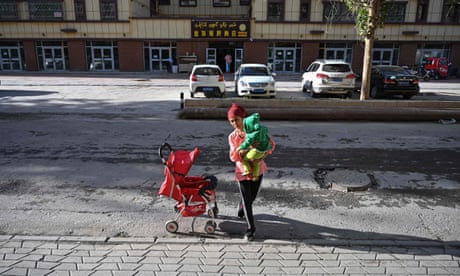
‘It’s important to keep in mind how little we truly know about this vastly complicated disease.’ Photograph: Yara Nardi/Reuters


Conventional wisdom suggests that when a sickness is mild, it’s not too much to worry about. But if you’re taking comfort in World Health Organization reports that over 80% of global Covid-19 cases are mild or asymptomatic, think again. As virologists race to understand the biomechanics of Sars-CoV-2, one thing is becoming increasingly clear: even “mild” cases can be more complicated, dangerous and harder to shake than many first thought.

Throughout the pandemic, a notion has persevered that people who have “mild” cases of Covid-19 and do not require an ICU stay or the use of a ventilator are spared from serious health repercussions. Just last week, Mike Pence, the US vice-president, claimed it’s “a good thing” that nearly half of the new Covid-19 cases surging in 16 states are young Americans, who are at less risk of becoming severely ill than their older counterparts. This kind of rhetoric would lead you to believe that the ordeal of “mildly infected” patients ends within two weeks of becoming ill, at which point they recover and everything goes back to normal.

While that may be the case for some people who get Covid-19, emerging medical research as well as anecdotal evidence from recovery support groups suggest that many survivors of “mild” Covid-19 are not so lucky. They experience lasting side-effects, and doctors are still trying to understand the ramifications.

Some of these side effects can be fatal. According to Dr Christopher Kellner, a professor of neurosurgery at Mount Sinai hospital in New York, “mild” cases of Covid-19 in which the patient was not hospitalized for the virus have been linked to blood clotting and severe strokes in people as young as 30. In May, Keller told Healthline that Mount Sinai had implemented a plan to give anticoagulant drugs to people with Covid-19 to prevent the strokes they were seeing in “younger patients with no or mild symptoms”.

Doctors now know that Covid-19 not only affects the lungs and blood, but kidneys, liver and brain – the latter potentially resulting in chronic fatigue and depression, among other symptoms. Although the virus is not yet old enough for long-term effects on those organs to be well understood, they may manifest regardless of whether a patient ever required hospitalization, hindering their recovery process.

Another troubling phenomenon now coming into focus is that of “long-haul” Covid-19 sufferers – people whose experience of the illness has lasted months. For a Dutch report published earlier this month (an excerpt is translated here) researchers surveyed 1,622 Covid-19 patients with an average age of 53, who reported a number of enduring symptoms, including intense fatigue (88%) persistent shortness of breath (75%) and chest pressure (45%). Ninety-one per cent of the patients weren’t hospitalized, suggesting they suffered these side-effects despite their cases of Covid-19 qualifying as “mild”. While 85% of the surveyed patients considered themselves generally healthy before having Covid-19, only 6% still did so one month or more after getting the virus.

After being diagnosed with Covid-19, 26-year-old Fiona Lowenstein experienced a long, difficult and nonlinear recovery first-hand. Lowenstein became sick on 17 March, and was briefly hospitalized for fever, cough and shortness of breath. Doctors advised she return to the hospital if those symptoms worsened – but something else happened instead. “I experienced this whole slew of new symptoms: sinus pain, sore throat, really severe gastrointestinal issues,” she told me. “I was having diarrhea every time I ate. I lost a lot of weight, which made me weak, a lot of fatigue, headaches, loss of sense of smell …”

By the time she felt mostly better, it was mid-May, although some of her symptoms still routinely re-emerge, she says.

“It’s almost like a blow to your ego to be in your 20s and healthy and active, and get hit with this thing and think you’re going to get better and you’re going to be OK. And then have it really not pan out that way,” says Lowenstein.

Unable to find information about what she was experiencing, and wondering if more people were going through a similarly prolonged recovery, Lowenstein created The Body Politic Slack-channel support group, a forum that now counts more than 5,600 members – most of whom were not hospitalized for their illness, yet have been feeling sick for months after their initial flu-like respiratory symptoms subsided. According to an internal survey within the group, members – the vast majority of whom are under 50 – have experienced symptoms including facial paralysis, seizures, hearing and vision loss, headaches, memory loss, diarrhea, serious weight loss and more.

“To me, and I think most people, the definition of ‘mild’, passed down from the WHO and other authorities, meant any case that didn’t require hospitalization at all, that anyone who wasn’t hospitalized was just going to have a small cold and could take care of it at home,” Hannah Davis, the author of a patient-led survey of Body Politic members, told me. “From my point of view, this has been a really harmful narrative and absolutely has misinformed the public. It both prohibits people from taking relevant information into account when deciding their personal risk levels, and it prevents the long-haulers from getting the help they need.”

At this stage, when medical professionals and the public alike are learning about Covid-19 as the pandemic unfolds, it’s important to keep in mind how little we truly know about this vastly complicated disease – and to listen to the experiences of survivors, especially those whose recoveries have been neither quick nor straightforward.

It may be reassuring to describe the majority of Covid-19 cases as “mild” – but perhaps that term isn’t as accurate as we hoped.
This pandemic has exposed the uselessness of orthodox economics

Post Covid-19, our priority should be to build resilient systems explicitly designed to withstand worst-case scenarios opines Jonathan Aldred in The Guardian 

 
‘Framing the future in terms of probabilities gives us the illusion of knowledge and control, which is extraordinarily tempting, but it’s all hubris.’ Photograph: Daniel Sorabji/AFP via Getty Images


Even before the pandemic came along, the world economy faced a set of deepening crises: a climate emergency, extreme inequality and huge disruption to the world of work, with robots and AI systems replacing humans.

Conventional economic theories have had little to offer. On the contrary, they have acted like a cage around our thinking, vetoing a range of progressive policy ideas as unaffordable, counter-productive, incompatible with free markets, and so on. Worse than that, economics has led us, in a subtle, insidious way, to internalise a set of values and ways of seeing the world that prevents us even imagining various forms of radical change.

Since economic orthodoxy is so completely embedded in our thinking, escape from it demands more than a short-term spending splurge to prevent immediate economic collapse, vital though that is. We must dig deeper to uncover the economic roots of the mess we’re in. Putting it more positively, what do we want from post-coronavirus economics?

Mainstream economics has taught us that the only rational way to deal with an uncertain future is to quantify it, by assigning a probability to every possibility. But even with the best expertise in the world, our knowledge often falls far short. Frequently we struggle to predict which outcomes are more likely. Worse still, there may be outcomes we haven’t even considered, futures that no one had imagined, as the pandemic has so vividly shown.

Framing the future in terms of probabilities gives us the illusion of knowledge and control, which is extraordinarily tempting, but it’s all hubris. In the run-up to the 2007 financial crisis, bankers were proud of their models. Then that August, the Goldman Sachs chief financial officer admitted the bank had spotted huge price moves in some financial markets, several times in one week. Yet according to its models, each of these moves was supposed to be less likely than winning the UK national lottery jackpot 21 times in a row. World events sometimes demand humility.

There are clear lessons here for how to address the climate emergency: rather than focusing on the average climate impacts predicted by mathematical models that depend on probabilistic knowledge that is highly unreliable, we must think seriously about worst-case scenarios, and take steps to avoid them. Yet economic orthodoxy pushes us away from precautionary action. If mainstream economics has a single overarching objective or principle, it is efficiency.

Efficiency means getting the most “bang for your buck”, the most benefit for every pound spent. Any other course of action is wasteful, surely? But eliminating waste implies eliminating excess capacity, and we now see the consequences of that in health systems worldwide. Our obsession with efficiency, if it means failing to plan for a pandemic or a climate emergency, will cost lives.

Our priority should be resilience, not efficiency. We need to build resilient systems and economies that are explicitly designed to withstand worst-case scenarios – and have a fighting chance of coping with unforeseen disasters too.

Ultimately the problem with economic orthodoxy lies in how it frames our values and priorities. Decisions must always be about trade-offs – the weighing up of costs against benefits, ideally measured through prices in markets. If we take our ignorance about the future seriously, this cost-benefit calculus should not even get started. Because costs outweighing benefits is the oldest excuse for not taking precautions – and is a recipe for disaster when the benefits, or the costs of inaction, are vastly undervalued.

Cost-benefit thinking also leads us to assume that all values can be expressed in monetary terms. Many politicians and business leaders fixate on statements such as “a 2°C rise in average global temperature will reduce GDP by up to 2%”, as though a fall in GDP measures the true costs of the climate emergency.

In practice, this thinking means that the value of everything is measured by how much people offer to pay for it. Since the rich can always pay more than the poor, priorities get skewed towards the desires of the rich, away from the needs of the poor. So more money is spent on R&D for anti-wrinkle creams than for malaria treatments. Big Pharma has been relatively uninterested in developing vaccines, because a vaccination programme only works if the poor get vaccinated too, which limits the price manufacturers can charge.

We might seem to be beyond that now: the world has woken up, and rich countries will spend “whatever it takes” to tackle the pandemic. But Covid 19 vaccine research – and countless other fields of medical research with the potential to save as many lives in the long-term – needs continuous, reliable funding over many years. Once the market sees better profit elsewhere, funding will be cut, and the researchers will retire or move on, their experience lost.

Economic orthodoxy supports the narrative that this pandemic is a unique disaster no one could have prepared for, and with no wider lessons for economics and politics. This story suits some of the world’s billionaires, but it’s not true. There is an alternative: the pandemic provides further evidence that to tackle the climate emergency, inequality and any emerging crises, we must re-think our economics from the bottom up.

Sunday, 5 July 2020

The ‘Yes sir!’ society

THERE are two lessons from the tragic PIA crash in Karachi, and if we don’t learn from them, the almost 100 victims would have died in vain writes Irfan Husain in The Dawn.


Firstly — and more easily fixable — is the business about pilots flying on fake licences. There is nothing to suggest that the captain of the ill-fated PIA flight was one of them, but his mishandling of the aircraft is an indicator of the culture of incompetence that rules our skies.

When an Airblue plane crashed a few miles from Islamabad a decade ago, killing all on board, the inquiry report shone a laser on the relationship between the captain and his first officer. Although the latter informed the captain that their approach was too low, and they should pull up, he was ignored because to have agreed would have indicated that his junior knew more than the captain did.

Then there was the near-tragedy at Islamabad airport some 30 years ago when the PIA Jumbo scraped home on its belly. Initially, the pilot was praised for executing a masterful belly landing, saving many lives. It then emerged that he had switched off the sensor that warns pilots they were too close to land without lowering the undercarriage.

I’m sure there are many other examples of why PIA is considered such a dangerous airline to fly on. The powerful pilots union (Palpa) prevents any meaningful punishment for blatantly dangerous manoeuvres.

But fake licences should not surprise us: remember the recent Axact scandal where millions of dollars were coined by the Karachi-based firm selling fake degrees around the world? After a flurry of arrests and court cases, the whole affair seems to have been forgotten.

Perhaps even a dysfunctional country like Pakistan can fix the problem of fake licences. But if this happens, it’ll be due more to foreign pressure and our image abroad than any concern for the lives of Pakistani passengers.

However, it is the second problem that is far more pervasive and deeply entrenched. As the Airblue report highlighted, the rigid hierarchy, even on a three-man flight deck, was such that the first officer could not do more to convince his captain of his dangerous approach than utter emollient words like ‘Sir, are too low’. The captain was apparently too full of his authority to agree, and insisted on maintaining his course: any change would have implied that his junior officer knew more than he did.

Now multiply this attitude across our entire society. When the boss is convinced he (seldom she) knows best, you will never get the optimum outcome. Take Kargil as an example of poor planning resulting from this rigid hierarchical approach.

When Musharraf cursorily ran the broad outline of his madcap adventure past Nawaz Sharif, there were few of the obvious questions that should have been asked. The kitchen cabinet reportedly saw the prime minister’s mild approval, and kept quiet. Musharraf’s team, for their part, only spoke out against the enterprise after they had retired. They, too, were prisoners of the ‘Yes, sir! No, sir!’ syndrome. To this day, the report of the debacle has not been released, even as an internal case study, as far as I know.

But it’s not just the military that operates on this principle. When I was president of a private university, I used to call weekly meetings of the teaching staff. At these sessions, I put forth my ideas for changes, and asked my colleagues to give counter-arguments. Although these were educated, intelligent people, they almost always stayed quiet, or agreed with me.

And when I monitored classes from the back of the room, I noticed that students hardly ever asked questions. Although I hated interfering, I would almost urge them to query or criticise. Again, silence. So clearly, the senior/junior hierarchy was at work. This is why we produce so few inquiring, curious minds.

Sucking up to the boss for promotions is a global malady, but mostly, it ends at the end of work. Here, we live with it each moment of our lives.

Our brainwashing begins earlier than the classroom. Boys are deemed too inexperienced to choose their careers, so their fathers decide. Girls aren’t practical enough to choose their husbands, so their parents use force, if necessary, to select a ‘suitable’ spouse. I know things are changing for the younger generation in a certain class. But for the majority, these major decisions are still made by parents.

Much of Asia is prisoner to this paternalistic approach, and is the poorer for it. Individuality is crushed, and bad decision-making is just one result. When people end up in the wrong career, or a disastrous, abusive marriage, relations between parents and their children can be ruined for life.

I am informed by a friend that Japan Airlines trains its pilots to overcome their childhood conditioning, and stand their ground. But how do we transfer this to our entire society?

Why does the Muslim Ummah and Islamic states stay silent over China’s abuse of the Uighurs? They blame India in the same breath.?

Nations that claim to be defenders of the faith offer no protest to the concentration camps writes Nick Cohen in The Guardian 


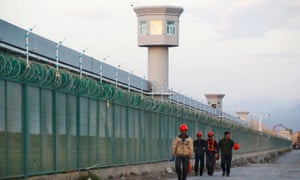
One of China’s ‘re-education’ centres in Dabancheng, Xinjiang Uighur Autonomous Region. Photograph: Thomas Peter/Reuters


When China imposed trade sanctions on Norway in 2010 for honouring the imprisoned dissident Liu Xiaobo with the Nobel peace prize, it spat out a word we weren’t used to hearing from propagandists for an atheist communist regime, but should get used to today. “It’s a blasphemy,” a party mouthpiece said.

Once, blasphemy was damning the faithful’s gods and sacred books. Now, criticism of the world’s largest dictatorship has become sacrilegious. You shouldn’t be surprised. As some of us tried to say in the 1990s and 2000s, the gap between the sacred and the profane was never as wide as religious sentimentalists and liberal multiculturalists believed.

They went along with the argument that it was bad taste at best and racism at worst to offend believers. You were “punching down” at largely poor and largely Muslim communities. We thought they were being wilfully blind. They did not understand how men with real power and malice were manipulating religious outrage to consolidate their rule over their wretched population. Iran issued a death sentence on Salman Rushdie in 1989 for satirising Islam’s foundation myths in The Satanic Verses. Its theocratic dictator, Ayatollah Khomeini, was augmenting his powers by claiming to speak for the Muslim world, as well as taking aim at novelists. When the Danish newspaper Jyllands-Posten published largely innocuous cartoons of Muhammad in 2005, to assert the right to mock religion, the Egyptian and Syrian dictators, Hosni Mubarak and Bashar al-Assad, turned a local argument into a global campaign against Denmark. The cries of rage usefully distracted from their corruption and misrule. I could add further examples but they tell the same story. Authoritarian politics and authoritarian religion are just two sides of the same debased coin.

China has stripped away the religious justifications to reveal what was once half-hidden: unadorned and unstoppable power. In many countries, criticising China is the new blasphemy. Nowhere can you see the power more nakedly displayed than in Muslim-majority regimes. Once, they tried to murder blasphemous novelists and screamed about their desire to defend the prophet from the smallest insult. Today, they bend their knees and bite their tongues as China engages in unspeakable atrocities against the largely Muslim Uighur population of western China.

One of the great crimes of the 21st century is being committed in front of our eyes. We see it, yet we don’t register it. The Chinese Communist party is reverting to type, and reviving the totalitarian fear of the Mao era. To bring down numbers of the largely Muslim Uighurs of Xinjiang, the China scholar Adrian Zenz reports, the Communists are forcing women to be sterilised or fitted with contraceptive devices. If they resist, the state sends them to join the one million Uighur people and other Muslim minorities detained in what the state defines as “re-education” camps. A BBC investigation found that China was separating children from their families so they grew up without understanding Islam.


Countries that could not tolerate Rushdie's magical realist novel can live with the mass sterilisation of Muslim women

It may be a cheap point but it remains true that if a western country were to display one-tenth, one-hundredth or one-thousandth of the brutality that China is inflicting on Muslims, the global left would be burning with outrage. (Editor's note - See the oppobrium heaped on Modi and the BJP in India)

If you want to be charitable, its silence can in part be explained by logistical difficulties. Reporters are free to cover China’s suppression of democracy in Hong Kong, for the time being at any rate, but cannot get near Xinjiang without taking extraordinary risks. With no footage of their suffering, millions can suffer unnoticed in the dark.

But the main reasons why Muslims suffer in silence is that the Muslim-majority countries that raged against Rushdie, Jyllands-Posten and Charlie Hebdo have decided to stay silent. They use the idea of Muslim solidarity only when it suits them.

In July 2019, Pakistan, Saudi Arabia, Egypt, the United Arab Emirates, Algeria and other Muslim-majority states that pose as defenders of the faith helped to block a western motion at the United Nations calling for China to allow “independent international observers” into the Xinjiang region. Iran issues occasional criticisms but wants Chinese support in its struggle against the Trump administration and so keeps its complaints coded. Their hypocrisy is almost funny, if you take your humour black. Iran, Egypt, Syria and dozens of other countries that could not tolerate a magical realist novel can live with the mass sterilisation of Muslim women. They will give concentration camps a conniving wink of approval, but draw the line at cartoons in a Danish newspaper.


China sterilising ethnic minority women in Xinjiang, report says

Many have been bought off. China is now a more active and influential voice at the United Nations because so many countries are benefiting from billions of dollars in Chinese investments through its “Belt and Road” infrastructure programme. As Norway found in 2010, and Australia found this year when it asked for an international inquiry into the origins of Covid-19, those who blaspheme against China face cyber-attacks and sanctions. Better to take the rewards and avoid the punishments.

Following the money, however, can lead you into a dead end. In a survey of China’s growing power, the Economist noted it was making the world safe for autocracy. Recep Tayyip Erdoğan, for example, keeps his conservative base happy in Turkey by posing as an ostentatiously Islamic strongman. But he is not likely to condemn the abuse of Muslims by China when he is just as keen on abusing the rights of his domestic opponents. The Chinese world order appeals to the freemasonry of publicity-shy sadists. You say nothing about what we do to our subject people and we will say nothing about what you do to yours.

“The idea of the sacred is quite simply one of the most conservative notions in any culture, because it seeks to turn other ideas – uncertainty, progress, change – into crimes,” said Salman Rushdie when he was in fear of his life in 1990. He was talking about conservative Islam. China is now turning criticism of its disastrous record on incubating the Covid-19 virus and its atrocities against its Muslim minorities into crimes, and the people who should be shouting the loudest are bowing their heads in reverential silence.

Saturday, 4 July 2020

We can't talk about racism without understanding whiteness

To dismantle racial hierarchy, we need to start by discussing the power it grants those on top writes Priyamvada Gopal in The Guardian


Manchester City and Burnley players - and the referee, Andre Marriner - take a knee before their match at the Etihad Stadium last month. Photograph: Michael Regan/NMC/EPA


When it comes to race and racism, we focus on those at the sharp end of discrimination – from black people routinely subjected to police brutality to people of colour missing from positions of influence. Progressive ideals invoke “inclusion” for ethnic minorities, or special bias training. These measures may be necessary, but they put the focus squarely on those subjected to victimisation – rather than the system that perpetuates racism.

What results is a form of benevolence whereby some people of colour get “included” as part of diversity measures, even as social hierarchies and habits of thought in white-majority societies remain largely unchanged.


There is no point in declaring that race doesn’t make a difference or that equality exists when it clearly doesn’t


The truth is that there is nothing pleasant about confronting the reality of an acute racial hierarchy. If the racial order is really to change – and there are those who don’t want it to – it is not just black lives or racial minorities that should be the topic of discussion, but the racial ideology that currently calls the shots in western societies.

This is what brings us to “whiteness” – which is not a biological category so much as a set of ideas and practices about race that has emerged from a bedrock of white supremacy, itself the legacy of empire and slavery. Confronting the idea of whiteness involves far more uncomfortable discussions than “inclusion”, especially for people deemed white, since it involves self-examination and acknowledging ugly truths, both historical and contemporary. It is simply easier to try to shut it out or down. 

I found this out to my cost last week when I tweeted a response to the racially inflammatory “White Lives Matter” banner flown over the Etihad Stadium after Manchester City and Burnley footballers had “taken the knee” to honour George Floyd. My tweet, deliberately playing with the wording of the banner by qualifying it, made the point that white lives cannot be deemed to matter because they are white, that it should not be whiteness that gives those lives value. In addition to the tsunami of racist sewage that immediately came my way, littered with N-words and P-words along with sexist slurs, rape fantasies, death threats and open declarations that “white lives matter more”, I was repeatedly asked why, if white lives did not matter as white lives, do black lives matter? Was that also not also racist?

No, it is not also racist. White lives already matter more than others so to keep proclaiming they matter is to add excess value to them, tilting us dangerously into white supremacy. This doesn’t mean that all white people in western societies are materially well-off or don’t experience hardship, but that they don’t do so by virtue of the fact that they are white. Black lives remain undervalued and in order for us to get to the desirable point where all lives (really do) matter, they must first achieve parity by mattering. It’s not really that hard to understand unless you choose not to.

Studies of “whiteness” are not new. Respected scholars, such as the late Noel Ignatiev, author of How the Irish Became White, and David Roediger, have studied the history and sociology of whiteness in great detail. Ignatiev, who was Jewish, wrote about the “abolition of whiteness”, not as a call to eliminate white people but a system of racial entitlement that necessarily relied on the exclusion of those deemed to be lesser. For Ignatiev, whiteness was not a biological fact so much as a kind of ideological club where “the members go through life accepting the benefits of membership, without thinking about the cost” to others.
Over time, people have been added to the club and aspire to membership of it, from the Irish and European Jews to many Asians today. One distinctive feature of whiteness as ideology is that it can make itself invisible and thereby make its operations more lethal and harder to challenge. Science and the humanities are largely in accord that “race” is not a biological category, but a way of creating power differentials, which have practical consequences. If that power differential in western societies is to be removed, then the ideology at the top – whiteness – must be abolished. Only then can the abolition of all other racial categories – and the post-racial world we so often claim to espouse – actually follow.

Although in Britain I am racialised as “non-white” or Asian, in my birth country of India I have some experience of what it is like to be a member of a powerful but invisible ruling category. As a Brahmin (the “highest-ranking” tier of the deeply hierarchical Hindu caste system), I belong to a social grouping that operates much like whiteness does. It rules the roost, is not disadvantaged by virtue of caste (though there are those who might suffer from poverty or misogyny), and it treats any challenge to its power as a form of victimisation or “reverse oppression”. For the record, there is no such thing: oppression only operates downwards. This is why, at the same time as I reinforced Ignatiev’s call for the abolition of “whiteness”, I repeated that Brahmin supremacy in India must also be abolished.

One of my less discourteous correspondents last week asked me, using only one expletive, why people “need a manual for race relations” when we could just respect each other. Unfortunately, until we get to a point where all lives really do matter, there is no point in declaring that race doesn’t make a difference or that equality exists, when it clearly doesn’t. “White lives matter” implicitly suggests whites matter more than others. “Black lives matter” is saying those lives need to matter more than they have, that society needs to give them more weight. Until we square up to the ugly realities of how whiteness operates – lethally, invisibly, powerfully – we are doomed to fighting a toxic and pointless culture war, where the only winners are those who want hatred to prevail.

After Wirecard: is it time to audit the auditors?

The industry’s failure to spot holes in the accounts of several collapsed companies has led to clamour for reform writes Jonathan Ford and Tabby Kinder in The FT


At the end of 2003, the Italian dairy company Parmalat descended into bankruptcy in an eye-catchingly abrupt manner. A routine bank reconciliation revealed that €3.9bn of cash which Parmalat was supposed to have at Bank of America did not actually exist.

The scam that emerged duly blew apart one of Italy’s best-known entrepreneurial companies, and sent its founder, Calisto Tanzi, to prison for fraud. Dubbed Europe’s Enron, it humiliated two large auditing firms, Deloitte and Grant Thornton, and ended up costing the former $149m in damages. 

Yet it rested on an apparently simple deception: the reconciliation letter on which the auditors were relying had been forged. 

There were shades of Parmalat’s collapse again last week when, nearly two decades later, another fast-growing European entrepreneurial company blew up in strikingly similar circumstances. 

After years of public questions about the reliability of its accounts, primarily from the FT, the German electronic payments giant, Wirecard, was forced to admit to a massive hole in its balance sheet. 

Rattled by the failure of an independent probe by KPMG to verify transactions underpinning “the lion’s share” of its reported profits between 2016 and 2018, and unable to publish its results due to issues eventually raised by its longstanding auditors EY, Wirecard finally capitulated. It announced that purported €1.9bn cash balances at banks in the Philippines probably did “not exist” and parted company with its chief executive Markus Braun. Evidence relied on by EY had been bogus. 

It remains unclear exactly how the crucial confirmation slipped through the cracks. According to one EY partner: “The general view internally is that confirming historic cash balances is auditing 101, and [that] ordinary auditing processes were followed, including third party verification, in which case the fraud was sophisticated in its use of false documents.” 

Others, however, take a less charitable view of such slip-ups, especially when, as with both Wirecard and Parmalat, they were preceded by so many questions about the reliability of the figures. 

“The integrity of the cash account [which records cash and should reconcile to all the other items in the accounts] is totally central to the whole system of double-entry bookkeeping,” says Karthik Ramanna, professor of business and public policy at Oxford’s Blavatnik School of Government. “If there is no integrity to the cash account, then the whole system is just a joke.” 

Shareholder support 

Wirecard’s collapse is the latest in a wave of accounting scandals that has swept through the corporate world, including UK outsourcing group Carillion and Abu Dhabi-based hospital group NMC Health, as well as alleged frauds at the mini-bond firm London Capital & Finance (LCF) and the café chain Patisserie Valerie. 

Many fear a further surge as the Covid-19 lockdown washes away those companies with weakened balance sheets or business models in the coming months. 

Questions about “softball” auditing have dogged many recent high-profile insolvencies. Carillion’s enthusiasm for buying companies with few tangible assets for high prices led it to build up £1.5bn of goodwill on its balance sheet. Despite vast losses at some of those subsidiaries, it had written down the value of just £134m of that goodwill when the whole edifice caved in. 

Similar questions hang over LCF, where close reading of the notes in the last accounts it published show how the estimated fair value of its liabilities far exceeded that of its assets in 2017, making it technically insolvent roughly 18 months before it collapsed taking with it more than £200m of savers’ cash. Yet EY gave the accounts a clean bill of health. 

Such cases have raised concerns about the independence of auditors, and their willingness to challenge the wishes of management at the client, who are often driven by their own desire for self-enrichment or survival. 

“It’s so important if you want to keep the relationship to have a rapport with the finance director,” says a financier who once worked at a Big Four auditing firm. “It is basically sometimes easier to swallow what you are told.” 

It is a problem that has deepened with the adoption of modern accounting standards. Over the past three decades, these have progressively dismantled the traditional system of historical cost accounting with its emphasis on the verifiability of evidence and using prudent judgment, replacing it with one based on the idea that the primary purpose of accounts is to present information that is “useful to users”. 

This process has allowed managers to pull forward anticipated profits and unrealised gains, and write them up as today’s surpluses. Many company bonus schemes depend on the delivery of the “right” accounting numbers. 

In theory, shareholders are supposed to provide a check on the influence of self-interested bosses. They choose the auditors and set the terms of the engagement. But in practice, investors tend not to assert themselves in the relationship. Scandals rarely lead to the ejection of auditors. 

So after UK telecoms group BT announced a £530m writedown in 2017 because of accounting misstatements at its Italian business, the auditors, PwC, were not sanctioned by investors. Far from it, the firm was reappointed with more than 75 per cent support. And when EY came up for re-election at Wirecard in the summer of 2018, despite rumblings about the numbers, it was voted back by more than 99 per cent. 

Tight budgets and timetables 

 It is not only an auditor’s desire for an easy life that can drain audits of that all important culture of challenge. There are practical issues too. Tight budgets and timetables limit the scope for investigation. 

Audit fees in Europe are far below those in the US. Audits of Russell 3000 index companies in the US cost 0.39 per cent of company turnover on average. Those in Europe average just 0.13 per cent, while for German companies it is a feeble 0.09 per cent. 

With fees low, auditing teams are often stretched thin, with only limited support from a partner out of a desire to limit costs and maximise the number of audits done. Audit is traditionally the junior partner in a big accountancy firm, with around four-fifths of the Big Four’s profits coming from the non-audit consultancy side. 

Take the last audit of BHS under the ownership of Philip Green, who sold the failing UK retailer to a little known entrepreneur, Dominic Chappell, in 2015. The chain subsequently collapsed the following year. 

The PwC partner, Steve Denison, recorded only two hours of work auditing the financial statements. The number two, an auditor with just one year’s post-qualification experience, recorded 29.25 hours, and the more junior team members 114.6 hours. Mr Denison was later fined for misconduct and effectively banned by the audit regulator. 

According to Tim Bush, head of governance and financial analysis at the Pensions & Investment Research Consultants, a shareholder advisory group, this reliance on juniors tends to result in “box checking” rather than an investigative approach to audit processes. “Audit teams are less likely to have a feel for the company’s business model,” he says. 

This in turn can open the door to abuse. Scams often hinge on faith in some implausible business activity. Parmalat’s €3.9bn cash pile, for instance, was supposed to have come from selling milk powder to Cuba. But an analysis of the volumes claimed suggested that if the company’s numbers were accurate, each of the island’s inhabitants would have needed to be consuming 60 gallons a year. 

As the author Richard Brooks noted in his book The Bean Counters: “It shouldn’t have been difficult for a half-competent audit firm to spot.” 

No ‘golden age’ 

The academic Prem Sikka rejects the idea that auditing has gone downhill in the past few decades. “Go back into history and you will find there was never a golden age,” he says. 

He argues that most of the weaknesses are of longstanding vintage, and are down to a lack of accountability. “On the audit side, there is no transparency. You have no idea as a reader of accounts how much time the auditors spent on the task and whether that was reasonable,” says the professor of accounting at the University of Sheffield. 

While there are signs that the UK regulator is getting tougher, it is down to shareholders to provide stronger governance, Prof Sikka says. If they won’t do it, the government should consider setting up a state agency to commission audits of firms and set fees. “It wouldn’t have to be everyone. You could just do large companies and banks.” 

Britain has recently been through a comprehensive review of audit, including how it is regulated and competition in the market, plus a review by the businessman Donald Brydon of its purpose. This devoted many pages to establishing it as a distinct new profession and coming up with new statements to include in already groaning company reports. 

Far from creating new tasks, many observers think that audit should reconnect with its original purpose. This is to assure investors that companies’ capital is not being abused by over-optimistic or fraudulent managers. “At their heart, audits are about protecting capital, and thereby ensuring responsible stewardship of capital,” says Natasha Landell-Mills, head of stewardship at the asset manager Sarasin & Partners. 

Yet modern accounting practice has made audits more complicated while watering down the legal requirement to exercise the judgment needed to ensure the numbers are “true and fair”. Despite the endless mushrooming of numbers, it is no easier to know if the capital is really present and can thus justify the payment of dividends and bonuses. 

Michael Izza, chief executive of the Institute of Chartered Accountants in England and Wales says auditors need a “renewed focus on internal controls, going concern and fraud. The vast majority of business failures are not the fault of the auditor, but when audit quality is a contributory factor, the problem generally involves these three fundamental areas.” 

Mr Bush thinks a radical simplification is in order. “Without clarity there is never going to be proper accountability,” he says. “What we have is a recipe for weak auditing, and ever more Wirecards and Parmalats. In the extreme it facilitates Ponzi schemes. Stay on that route and it won’t be long before you come unstuck.”