Search This Blog

Monday, 11 May 2015

'A bad captain can make a great team look ordinary'

Sambit Bal in Cricinfo

India's youngest and most distinguished captain on the importance of honesty, transparency and inspiration when leading a side

To measure Tiger Pataudi by his captaincy record is to do him no justice. His true contribution lies in his seminal influence on Indian cricket: the manner in which he lifted it from its abyss of diffidence and negativity and instilled a belief to contemplate victory. He took over the reins as a 21-year-old in the fourth Test against West Indies in 1961-62, and went on to lead in all but six of his 46 Tests. He brought to the captaincy a tactical boldness and an originality of thinking rarely seen in India. Long before Clive Lloyd unleashed four fast bowlers on the world, Pataudi employed four spinners, doing away with the tokenism that characterised Indian new-ball bowling back then.
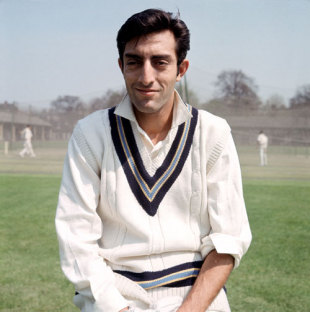


"A captain has to be honest, to the team and to himself. It should be obvious that the best interests of the team should be top of his agenda"© PA Photos

You once famously said that captaincy is all about either pulling from the front or pushing from behind. We could begin with an elaboration.

What I meant was that you had some captains who were great players themselves - [Don] Bradman, [Garry] Sobers, [Richie] Benaud. They led by the sheer force of their performance. Then there were captains like [Mike] Brearley, [Ray] Illingworth, myself to an extent, who were not the best players in their sides. We had to push the team from behind, get the best players to perform to the best of their ability. Bradman and Sobers walked ahead and others followed. Inspiration flowed from their performances. Whereas a captain who is not a terribly inspiring performer himself has to rely on extracting the maximum from his best players.

Would you say a non-performing captain has a much tougher task because of his over-reliance on others?

Brearley may have averaged less than 25 with the bat, but his great success lay in the way he brought out the best in Ian Botham. Brearley didn't lead in the field, he didn't go out and score 190 and say, "Now you follow my example." He coaxed and cajoled the others to perform. Bradman didn't need to do that. He went out and won matches with his own bat. Sobers wasn't the greatest of captains, but he just did everything himself. In my case, I had to get the best out of [Gundappa] Viswanath. He was our best batsman for a long time. I had to push him to give his best.

And how did you do that?


The first and most critical thing is to make a player realise his true worth - sometimes players themselves don't know how good they can be. Then you make him realise his importance to the team, how the team depends on him, and how he will let his side down if he doesn't perform at his very best. It's not very complicated really, but small things do make a big difference. As I said, you either get the team behind you or in front of you.

There is a management principle that a leader needs to be different things to different people. Doesn't captaincy require similar role-playing? Friend to some, guide to some, father figure to some and taskmaster to some? 

First and foremost, a captain has to be honest, to the team and to himself. It should be obvious that the best interests of the team should be top of his agenda. His team-mates must feel in their hearts that the captain's personal interests come below that of the team. We have had one or two captains who were always more concerned with their own performance.

Would you care to name them?

No, I wouldn't want to go into that, but people will know who I am talking about. When you have a captain who is more bothered about his own performance, it's difficult for him to get the loyalty and respect of his team-mates. Particularly in the Indian context, where there are so many internal dynamics operating, the captain has to be absolutely transparent. At no stage should any player feel discriminated against or feel that there is a bias against him. If a captain is honest and transparent, he can take harsh decisions without creating any ill will. The other thing is to always pick your best team. Pick the best batsmen, pick the best bowlers. It doesn't matter who you are playing or where.

So you are saying team selection should not be based on conditions or opposition?


Absolutely. I have never believed in the horses-for-courses theory. Harbhajan [Singh] will get you wickets on a green top and Kapil Dev will get you wickets on a turner, because they are both good bowlers. A bad seamer will not get you wickets on a green top and a bad spinner will not get you wickets on a turner. I played four spinners because they happened to be the best bowlers around. I had no Kapil Dev, so playing a seamer just for the sake of balance was useless.

And you wouldn't be concerned if a couple of them were difficult characters?

That's what a good captain is all about. If he thinks that the player has ability, it's his job to manage his personality. Every team has a couple of difficult characters - in my time there were a few. Salim Durani was one. I felt I couldn't handle him very well.

Why would you say that?

Because I felt I couldn't get the best out of him. He was an extremely talented cricketer who lacked a certain amount of cricketing discipline. We tried to organise it - me and a few other senior players. But we didn't succeed. He did well, but a man of his talent could have been made to perform much better.

Do intuition and instinct play a role in captaincy? Or is it mostly about method and strategy?

To start with, the fundamentals have to be solid. Intuition comes with experience. Over the years you acquire a certain knowledge and hindsight which help you to play to a particular percentage. You instinctively know that certain things will happen in certain situations and you make your moves. But your basic analysis and basic strategy have to be correct. Most of all, you need to be a good student of the game. Many things could go wrong even if you do the right things because a lot depends on how others perform. But if your basics are wrong, you've got no chance.

"A captain can't make a player perform beyond his ability. That's impossible. But very often, players are performing at only 50% of their ability. A good captain lifts that up to 80% and 90%. And I think Brearley got Botham to perform at 100%"

And the captain must seize the moment…

Yes, the sooner you are able to see the moment, the sooner you act. Sometimes moments come and go. Good captains, experienced captains, know to utilise the smallest openings. Sometimes two overs can change a game.

Is this ability to recognise a moment, see an opening, a gift of nature or can it be developed?

You have to be alert and you have to be thinking all the time. And to be a thinker, you must be familiar with cricket history. Reading a bit of cricket literature, knowing about great players of the past helps. Unfortunately, not many modern players read anything.

Do you think that stunts their growth?

I will say reading helps. It broadens your vision. It gives you perspective. Perspective does not come from watching television.

To be fair to them, modern players have very little time.

Oh, they have plenty of time to do ads. If you want to, you can find the time.

Would you say education plays a critical role in making a successful captain? Is it a coincidence that some of the great captains have been well educated? Imran Khan, Richie Benaud, Brearley, yourself...

Education is important, I wouldn't say it is mandatory. Education gives you some kind of depth, an outlook on your own life and life outside.
It makes you less parochial. But there have been exceptions. Lala Amarnath was a good captain and he wasn't highly educated.

But isn't there something called a natural cricket sense, an inborn feel for the game? Most of us thought Tendulkar would be a natural captain.

Great players don't necessarily make great captains. The trouble with natural cricketers is that they never have to think about the game. Everything comes so easily to them. You ask them to coach somebody and they wouldn't know what to do. They have never had to learn, never had to study. Everything is so instinctive for them.

You became captain at 21. How well acquainted were you with the history and traditions of the game?

I had very little idea. I was lucky that the senior players were very supportive. Polly [Umrigar], Jai [ML Jaisimha], they were all very experienced. I borrowed a lot from them. And then I learned. I had captained Sussex previously, but that was a different ball game. Then I captained Delhi. But captaining an Anglo-Saxon side is different from captaining India. The politics here are so convoluted. It takes a little while to get used to.

Captaining India is surely not one of easiest jobs in cricket...

Oh, it's a unique problem in itself. But I was lucky that one or two senior players were retiring at the end of the West Indies tour [1961-62]. And a lot of us were youngsters at the time, going abroad for the first time. Those players stuck with me. Besides, seniors like Vijay Manjrekar, Bapu Nadkarni and others also supported me. There were one or two voices that were sort of unhelpful.

Isn't there a serious case for giving captains and coaches more powers?

Yes, certainly. The captain needs the backing of the board. They should take him into confidence and tell him that we are giving you full charge, get these guys to perform or they are out. I was lucky I got the full backing of the board. But very often captains don't get that kind of backing, and they are hesitant to take strong steps and that hesitancy can be seen very easily in the dressing room. There has to be coordination and cooperation among the captain, board members and selectors.

Did you always get the team you wanted?

Oh, almost always. I got the XI I wanted. You have to make some compromises on the 14 to keep a few people happy. But that was okay. Except when Vijay Merchant was the chairman of selectors. He couldn't even explain why he wanted to change the team. If he had given proper reasons, people would have understood, but he had no reasons.

It was suggested that Merchant's animosity towards you was rooted in his differences with your father, and that he got even by using his casting vote to keep you out of the side in 1971.

I think he found fault with me from the beginning. And a lot of his decisions made no logical sense. I never got the impression it was because of my father; I think it was more personal. The moment I was gone, all the people I wanted in the side were back in the team. All the young fellows he had got when I was captain were gone and the senior players were brought back.

That leads to the question whether the captain should have a greater say in the team selection. Should he have a vote?

The captain's inputs must be seriously considered. And if a captain can have a good understanding with the selectors and reason things out with them, he can have the team he wants. That was true, by and large, in my experience. But no, the captain shouldn't have a vote. It could lead to serious acrimony.

Does a non-performing captain have a place in modern cricket? 

I doubt it very much. Cricket has changed a lot in [recent times]. Not that the quality of cricketers is any better. You would not find an allrounder like Botham today or a fast bowler like [Fred] Trueman. But yes, it has become much more competitive and physically challenging. Not that you could carry a passenger even in those days. You had to contribute something and Brearley did contribute. A lot, in fact. He got Botham's act together. And Botham did play like six players put together in that series [1981 Ashes]. If a captain can do that he certainly deserves a place. So for Brearley to find a place in the side today, you first have to find a Botham.

What do you think Brearley did with Botham?

He talked to him, and he must have talked to him in a way Botham understood.
A captain can't make a player perform beyond his ability. That's impossible. But very often, players are performing at only 50% of their ability. A good captain lifts that up to 80% and 90%. And I think Brearley got Botham to perform at 100%. That's phenomenal. I saw those matches. Botham was an inspired cricketer.
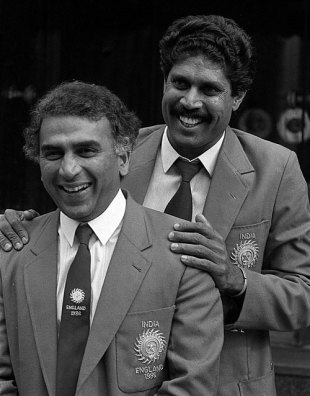


"Gavaskar brought pace bowling back into Indian cricket. Kapil's performance in his first few matches was terrible. But Gavaskar showed faith in him" © PA Photos


Going back to an earlier question: different players need to be handled differently. So obviously a captain has to be different things to different people.

Of course. If a player had the kind of ability Botham had, you had to treat him specially. If you treated him like a mediocre cricketer, his performance would be mediocre. You had to give him a little more freedom.

If you were his captain, would you mind if he went to a nightclub the day before the match and came back at 12?

If he came back at 12, I would be very happy [laughs].

A captain can't create talent. But he can lift the spirit of an ordinary team. Motivation is very important. Without it, a good team can become very ordinary. Richie Benaud was a great motivator. He was a great performer himself, great bowler, brilliant fielder, and he had the team behind him. I got to know him very well because we sometimes shared a flat in London. He was the sort of captain whose very presence lifted the spirit of the team. Even when he was injured and not playing, his presence in the dressing room motivated his players.

What about Clive Lloyd? Some say he wasn't so good tactically.

That's because he didn't have to do any captaincy. But Lloyd's greatest contribution was his vision. He brought about the most radical tactical innovation when he decided to use four fast bowlers. It wasn't conventional thinking in those days. And he was hugely respected by his players.

Who would you rate as the best Indian captain after your era?

[Ajit] Wadekar had the results. But it has to be [Sunil) Gavaskar. He was as talented a player as Tendulkar and he had a very good cricket brain. He brought pace bowling back into Indian cricket.

In a sense, he was lucky to have Kapil Dev around.

He had to encourage Kapil Dev. Kapil's performance in his first few matches was terrible. But Gavaskar showed faith in him. He wanted a good new-ball attack, perhaps because he was an opening batsman. He saw the talent and he nurtured it. Some people call him a defensive captain, but you have to analyse the circumstances in which he led.

A good captain must have a fair idea about the limitations of his side. I know a lot of Tests are ending in results nowadays and plenty of risks are being taken. I have always believed that you should play to win, but the approach varies from individual to individual. In Test cricket, it sometimes makes sense to ensure that you don't lose the match. To me, one of Sunil's greatest contributions was that he brought professionalism to Indian cricket.

Natural leaders are made in retrospect

Ed Smith in Cricinfo

There is no template for the perfect captain. Some of the game's greatest were not identified as such straightaway


It took five years of not winning and patience before success came for Mike Brearley (centre) and Middlesex in 1976 © Getty Images


So England finished a tour of the West Indies with some widespread areas of consensus. The results were disappointing, the immediate future is dodgy, opportunities were missed and the captain - according to many of the loudest voices - is not a natural leader.

The tour, of course, happened in 2008-09. England lost 1-0. But Andrew Strauss, after that tricky start, became one of the most successful England captains of modern times. Now England are turning to Strauss again, this time as director of cricket, because his leadership credentials are, of course, axiomatic. How quickly people forget views they once vehemently held. Memory is not quite the same thing as intelligence, or even judgement, but it is a good first step on the road towards greater scepticism.

The problem with analysing leadership, especially captaincy, is that people forget how rare it is for successful leaders to stand out as "natural leaders" from the very beginning of their tenure. In fact, the idea of "natural" leadership is usually a retrospective trick - or narrative fallacy - used to make sense of events that, at the time, felt far more contingent and unpredictable.

The most iconic example of great captaincy is also the most misused: Mike Brearley. Perception: Brearley could wander into any team, move gully a bit deeper, and, hey presto, you win by an innings. Reality: by the time Brearley did his Ashes conjuring trick in 1981, he had indeed established a reputation for tactical and managerial brilliance. Crucially, however, that reputation was hard-earned over many years at the coalface. Even more pertinently, Brearley's captaincy could easily have been cut short before anyone noticed how good he was.

Brearley took over as captain of Middlesex in 1971. The seasons of 1971, 1972, 1973, 1974 and 1975 slipped by without Middlesex winning the championship. Brearley has privately told me that in those early seasons he often found the job very difficult. Did he have enough support? Results improved, but not always evenly. In that six-year period, Brearley's gift for patience was tested. So was the constancy of Middlesex. As I write this, only one of the 18 captains of England's first-class counties has been leader for six uninterrupted seasons. Clearly there aren't dozens of Brearleys out there, if only clubs would persevere with them. But if Middlesex had been less patient - or, put differently, less anxious to jump at the first convenience - then England could have been deprived of a superb leader.

Which leads to the second problem with analysing captains. Pundits tend to have a fairly fixed idea of what a natural leader looks like, and then judge the incumbent against their own personal template.

To the alpha-male mindset, the captain should be the leader of the pack, the macho hero. To the Machiavellian world view, a captain should be streetwise and opportunistic. To the progressive, leadership relies on novelty and innovation. To the nostalgic, quite the reverse - the answers always reside in the past. To the laissez-faire, he must be relaxed. To the hard man, a captain must rule with fear.

All valid, none essential. There is no one such thing as the ultimate template for a good captain. All good leaders are different. Indeed, a preparedness to be different - rather than copying someone else - is perhaps the only prerequisite for being any good.

In terms of value added, few managers can match Billy Beane of the Oakland Athletics baseball team. His decisions and the wins that followed have earned Oakland hundreds of millions of dollars (as this article on FiveThirtyEight demonstrates). Despite an emotional temperament, Beane has tried to remove the cult of personality from his decision-making. This is leadership by methodology - thinking, or more accurately calculating, your way to victory.

At the other end of the spectrum stands Sir Alex Ferguson. Anyone who has read Ferguson's autobiography knows that the idea of "copying" Ferguson is inconceivable. His management was founded on the controlling and coercive nature of his personality. Some players seethe with violence. Very occasionally, that survives the transition into management. No leader achieves greatness by punching people. Some, however, clearly benefit from the impression that it would be a grave error for anyone to entirely rule out the possibility of the direct approach. Ferguson ran a pub before becoming a manager. "Sometimes I would come home with a split head or black eye. That was pub life. When fights broke out, it was necessary to jump in to restore order."

Now imagine hearing Pep Guardiola, Roberto Martinez or Arsene Wenger saying that. Inconceivable. Yet all are fine managers.


Despite England's poor finish in the West Indies, there has been no outward sign that Alastair Cook is wilting © Getty Images

Which leads us back to Alastair Cook. It is clear that Cook does not fit some preconceptions of cricketing leadership. He is not restless and ingenious, as Michael Vaughan was. He does not cast a magnetic and charismatic presence over the whole arena, as MS Dhoni does. And yet there have been fine captains who possessed neither of those assets.

Last week, after discussing captaincy in the commentary box, the brilliant statistician Andrew Samson passed me two pieces of paper about the records of two captains, each after 31 Tests in charge. The first read:

Runs: 2478
Average: 45.88
Hundreds: 8
Wins: 13
Losses: 9
Draws: 9

The second read:

Runs: 2792
Average: 60.69
Hundreds: 10
Wins: 6
Losses: 9
Draws: 15
Tied: 1

The first is Cook, the second Allan Border, the man who turned around Australian cricket in the 1980s. (Although, of course, the nature of the opposition should always be taken into account with comparative stats.)

Border had also faced criticism about his manner and tactics. But eventually his resilience and run-scoring provided such an inspiring example that his team fell in step
. The two men, so different on the surface - Border was known as Captain Grumpy, where Cook is courteous and self-deprecating - share an epic capacity for endurance. Border outlasted many bowling attacks and, eventually, his critics.

The case against Cook tends to rest on the conviction that he is about to crack, that he can't take much more. This theory is conveniently self-perpetuating because it encourages his detractors to press on with their endeavours. They look eagerly for signs that the strain is becoming too great. This type of thinking contributed to his sacking as ODI captain ridiculously close to the World Cup.

Yet in the West Indies - a patchy tour for England with some poor selection errors - there was no outward sign at all that Cook was wilting. Quite the reverse. His hundred in the third Test was almost faultless.

Many bowling attacks have pinned their hopes on Cook cracking, only to find the wait inconveniently lengthy. I wonder if the detractors of Cook's captaincy will experience a similar story.

Friday, 8 May 2015

The inequity of UK's election results 2015

By Girish Menon

Party
Seats
Gain
Loss
Net
Vote (%)
Change (points)
Total Votes

Conservative
331
38
10
28
36.9
0.5
11.3 ml
Labour
232
23
48
-25
30.4
1.5
9.3 ml
Scottish National Party
56
50
0
50
4.7
3.1
1.4 ml
Lib Dems
8
0
49
-49
7.9
-15.2
2.4 ml
DUP
8
1
1
0
0.6
0
.18 ml
Sinn Fein
4
0
1
-1
0.6
0
.17 ml
Plaid Cymru
3
0
0
0
0.6
0
.18 ml
SDLP
3
0
0
0
0.3
-0.1
.09 ml
UUP
2
2
0
2
0.4
n/a
.11 ml
UKIP
1
0
1
-1
12.6
9.6
3.9 ml
Green
1
0
0
0
3.8
2.8
1.1 ml

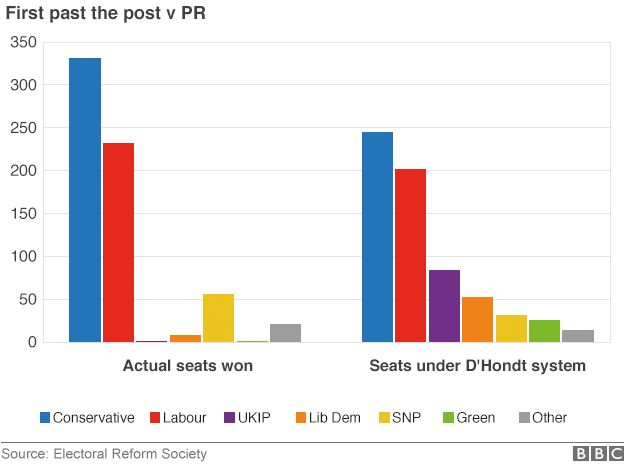
The Electoral Reform Society, a campaign group, has modelled what would have happened
 under a proportional voting system that makes use of the D'Hondt method of converting votes to seats.


FPTP v PR


Thursday, 7 May 2015

How friendship became a tool of the powerful

William Davies in The Guardian

Imagine walking into a coffee shop, ordering a cappuccino, and then, to your surprise, being informed that it has already been paid for. Where did this unexpected gift come from? It transpires that it was left by the previous customer. The only snag, if indeed it is a snag, is that you now have to do the same for the next customer who walks in.

This is known as a “pay-it-forward” pricing scheme. It is something that has been practised by a number of small businesses in California, such as the Karma Kitchen in Berkeley and, in some cases, customers have introduced it spontaneously. On the face of it, it would seem to defy the logic of free-market economics. Markets, surely, are places where we are allowed, even expected, to behave selfishly. With its hippy idealism, pay-it-forward would appear to go against the core tenets of economic calculation.

But there is more to it than this. Researchers from the decision science research group at the University of California, Berkeley have looked closely at pay-it-forward pricing and discovered something with profound implications for how markets and businesses work. It transpires that people will generally pay more under the pay-it-forward model than under a conventional pricing system. As the study’s lead author, Minah Jung, puts it: “People don’t want to look cheap. They want to be fair, but they also want to fit in with the social norms.” Contrary to what economists have long assumed, altruism can often exert a far stronger influence over our decision-making than calculation.

Such findings are typical of the field of behavioural economics, which emerged in the late 1970s. Like regular economists, behavioural economists assume that individuals are usually motivated to maximise their own benefit – but not always. In certain circumstances, they are social and moral animals, even when this appears to undermine their economic interests. They follow the herd and act according to certain rules of thumb. They have some principles that they will not sacrifice for money at all.

It seems that this undermines the cynical, individualist theory of human psychology, which lies at the heart of orthodox economics. Could it be that we are decent, social creatures after all? A great deal of neuroscientific research into the roots of sympathy and reciprocity supports this. Optimists might view this as the basis for a new political hope, of a society in which sharing and gift-giving offer a serious challenge to the power of monetary accumulation and privatisation.

But there is also a more disturbing possibility: that the critique of individualism and monetary calculation is now being incorporated into the armoury of utilitarian policy and management. One of the key insights of behavioural economics is that, if one wants to control other human beings, it is often far more effective to appeal to their sense of morality and social identity than to their self-interest.

This is symptomatic of a more general shift in policy and business practices today. Across various fields of expertise, from healthcare to marketing, from military training to finance, there is rising hope that strategic goals can be achieved through harnessing the power of the “social”. But what exactly does this mean? As the era of social democracy recedes further into the past, the meaning of the term is undergoing a profound transformation. Where once the term implied something concerning society or the common good, increasingly it refers to a technique of psychological intervention on the individual. Informal social connections and friendships are being rendered more visible and measurable. In the process, they are being turned into possible instruments of power.

Using the social to make money


Over recent years, generosity has become big business. In 2009, Chris Anderson, former editor of Wired magazine, published Free: The Future of a Radical Price. Anderson argued that there was now a strong business case for giving products and services away for free, in order to forge better relationships with customers. Giving things away for free becomes a means of holding an audience captive or building a reputation, which can then be exploited with future sales or advertising. Michael O’Leary, boss of Ryanair, has even suggested that airline tickets might one day be priced at zero, with all costs recovered through additional charges for luggage, using the bathroom, skipping queues, and so on.

What Anderson was highlighting was the potential of non-monetary relationships to increase profits. And just as corporate giving can be used as a way of boosting revenue, so can the magic words that are used in return. Marketing specialists now analyse the optimal way of saying the words “thank you” to a customer, so as to deepen the social relationship with them.

The language of gratitude has infiltrated a number of high-profile advertising campaigns. Around Christmas 2013, Lloyds TSB, one of the British banks to bemost embarrassed by the 2008 financial crisis, launched a campaign consisting entirely of cutesy images of childhood friends enjoying happy moments together, concluding with the words “thank you”, written in party balloons. There was no mention of money. More bizarrely, Tesco, whose brand has suffered in recent years, released a series of YouTube videos in 2013 with men in Christmas jumpers singing “thank you” to everyone from the person who cooks Christmas dinner, to those driving safely, to other companies such as Instagram and so on. Tesco, it was implied, sprays gratitude in all directions, regardless of its own private interests.

There is inevitably a limit to how much of a social bond an individual can have with a multinational company. Businesses today are obsessed with being social, but what they typically mean by this is that they are able to permeate peer-to-peer social networks as effectively as possible. Brands hope to play a role in cementing friendships, as a guarantee that they will not be abandoned for more narrowly calculated reasons. So, for example, Coca-Cola has tried a number of somewhat twee marketing campaigns, such as putting individual names (“Sue”, “Tom”, etc) on their bottles as a way to encourage gift-giving. Managers hope that their employees will also act as “brand ambassadors” in their everyday social lives. Meanwhile, neuromarketers have begun studying how successfully images and advertisements trigger common neural responses in groups, rather than in isolated individuals. This, it seems, is a far better indication of how larger populations will respond to advertising.

All this – along with the rise of the “sharing economy”, exemplified by Airbnb and Uber, offers a simple lesson to big business. People will take more pleasure in buying things if the experience can be blended with something that feels like friendship and gift-exchange. The role of money must be airbrushed out of the picture wherever possible. As marketers see it, payment is one of the unfortunate “pain points” in any relationship with a customer, which requires anaesthetising with some form of more social experience. The market must be represented as something else entirely.

Digitising the social

Yet the greatest catalyst for the new business interest in being social is, unsurprisingly, the rise of social media. At the same time that behavioural economics has been highlighting the various ways in which we are altruistic creatures, social media offers businesses an opportunity to analyse and target that social behaviour. It allows advertising to be tailored to specific individuals, on the basis of who they know, and what those other people like and purchase. These practices, which are collectively referred to as “social analytics”, mean that tastes and behaviours can be traced in unprecedented detail. The end goal is no different from what it was at the dawn of marketing and management in the late 19th century: making money. What has changed is that each one of us is now viewed as an instrument through which to alter the attitudes and behaviours of our friends and contacts. Behaviours and ideas can be released like “contagions”, in the hope of infecting much larger networks.


FacebookTwitterPinterest Illustration by Pete Gamlen

The most valuable trick, from a marketing perspective, is how to induce individuals to share positive brand messages and adverts with each other, almost as if there were no public advertising campaign at all. The business practice known as “friendvertising” involves creating images and video clips that social media users are likely to share with others, for no conscious commercial purpose of their own. The science of viral marketing, or the creation of buzz, has led marketers to seek lessons from social psychology, social anthropology and social network analysis.

Businesses have long worried about their public reputations and the commitment of their employees. It also goes without saying that informal social networks themselves are as old as humanity. Despite the countercultural rhetoric of the “sharing economy”, what has changed is not the role of the social in capitalism, but the capacity to subject it to a detailed, quantitative, economic analysis, thanks primarily to the digitisation of social relationships.

In the longer term, the most profound cultural and ethical implications of this may be how we come to view ourselves and those around us. As data about social ties becomes easier to collect and access, and as concepts of duty and altruism become increasingly understood by economists (as the pay-it-forward study exemplifies), the temptation to ask self-interested, strategic questions about one’s own social circle will arise. Applying the mentality of cost-benefit analysis beyond the realms of the market is often controversial to start with, but can quickly become normal. Government economists today have no problem calculating the price of human life or the natural environment, if it is useful for purposes of policy appraisal.

Could we come to view our own personal acts of generosity and friendship in a similarly utilitarian sense? The evidence to support such an egocentric logic is growing rapidly. The area where there could be most to gain from such calculations is in the domain of health: social contact is good for us, in both body and mind. Just be sure that it is contact with the right people.

Using the social to improve health

In February 2010, I found myself sitting in a large hall, with a huge golden throne on my left, and the future leader of the Labour party, Ed Miliband, to my right. We were watching images on a screen that reminded me of the fractal videos that used to be sold by “herbal remedy” salesmen on Camden market in London in the early 1990s. Also present were a number of government policy advisers, all straining to appear as relaxed as possible – a status game that goes on in the corridors of power, played to indicate that one is at home there. (The game was won under the coalition government by David Cameron’s former adviser, Steve Hilton, who was notorious for wandering into meetings barefoot.)

There were about 10 of us in the room, one of the more baroque offices in the Cabinet Office, and we were all staring at the screen, transfixed by the movement of individual lines and dots that were being displayed. Standing next to the screen, clearly enjoying the impact that his video was having on this influential audience, was the American medical sociologist Nicholas Christakis. Christakis was on a speaking tour, promoting his book Connected, and had been invited to present some of his findings to British policymakers during the dying days of Gordon Brown’s government. As a sociologist with an interest in policy, I had been invited along.

Christakis is an unusual sociologist. Not only is he far more mathematically adept than most, but he has also published a number of articles in respected medical journals. The images we were watching on the screen that day represented social networks in a Baltimore neighbourhood, within which particular “behaviours” and medical symptoms were moving around. Christakis’s message to the assembled policymakers was a powerful one. Problems such as obesity, poverty and depression, which so often coincide, locking people into chronic conditions of inactivity, are contagious. They move around like viruses in social networks, creating risks to individuals purely by virtue of the people they happen to hang out with.


FacebookTwitterPinterest Illustration by Pete Gamlen

Christakis is part of a growing movement within the policy world. While marketers desperately seek to penetrate our social networks in order to alter our tastes and desires, policymakers have come to view social networks as means of improving our health and wellbeing. The “social neuroscience” pioneered by John Cacioppo of the University of Chicago suggests that the human brain has evolved in such a way as to depend on social relationships. Cacioppo’s research suggests that loneliness is an even greater health risk than smoking. Practices such as “social prescribing”, in which doctors recommend that individuals join a choir or voluntary organisation, are aimed at combating isolation and its tendency to lead to depression and chronic illness.

Driven particularly by neuroscience, the expert understanding of social life and morality is rapidly merging into the study of the body. One social neuroscientist, Matt Lieberman, has shown how pains that we have traditionally treated as emotional (such as separating from a lover) involve the same neurochemical processes as those we typically view as physical (such as breaking an arm). Social science and physiology are converging into a new discipline, in which human bodies are studied for the ways they respond to one another physically.

At the Cabinet Office presentation, there was something mesmeric and seductive about Christakis’s images. Could entrenched social problems really be represented by graphics of this sort? Christakis’s technical prowess was certainly alluring. In the grand tradition of American GIs bringing chewing gum and nylon stockings to the British during the second world war, his hi-tech social network analysis seemed novel and irresistible.

But what I found slightly surreal that day, aside from the gold throne, was the freakish view of this particular inner-city US community that we were privy to. Like the social analytics companies, which try to spot consumer behaviour as it emerges and spreads, there we were in London observing how the dietary habits and health problems of a few thousand relatively deprived Baltimore residents were moving around, like a disease. It felt as if we were viewing an ant colony from above. The fact that these flickering images represented human beings, with relationships, histories and agendas, was almost incidental.

It would seem a little perverse to suggest that policymakers ignore this evidence of the impact of social networks and altruism on health. If medical practitioners can change the behaviour of just a few influential people in a network for the better, they can potentially spread a more positive “contagion”. Yet there is a danger lurking in this worldview, which is the same problem that afflicts all forms of social network analysis. In reducing the social world to a set of mechanisms and resources, the question repeatedly arises as to whether social networks might be redesigned in ways to suit the already privileged. Networks have a tendency towards what are called power laws, whereby those with influence are able to harness that power to win even greater influence.

One example of this is known as “emotional contagion”. Psychologists working with social analytics can now track the spread of positive and negative emotions, as they travel through social networks. This was the topic of Facebook’s controversial experiment using newsfeed manipulation, the results of which were published last summer. Different moods, including anger and depression, are now recognised to be more socially contagious than others. But what will we do with this knowledge? The anxiety, as social life becomes swept up by quantitative analysis, is that happy, healthy individuals might tailor their social relationships in ways that protect them against the “risk” of unhappiness. Guy Winch, an American psychologist who has studied this phenomenon, advises happy people to be on their guard. “If you find yourself living with or around people with negative outlooks,” he wrote on the website Psychology Today, “consider balancing out your friend roster.” The impact of this rebalancing on those unfortunate friends with the “negative outlooks” is all too easy to imagine.

The fabric of social life is now a problem that is addressed within the rubric of health policy, and there is something a little sad about that. Loneliness now appears as an objective problem, but only because it shows up in the physical brain and body, with calculable costs for governments and health insurers. Generosity and gratitude are urged upon people by positive psychologists, but mainly to alleviate their own mental health problems and private misery. And friendship ties within poor inner-city neighbourhoods have become a topic of government concern, but only to the extent that they mediate epidemics of bad nutrition and costly inactivity.

The irony is that, for all the talk of giving and sharing, this is potentially an even more egocentric worldview than that associated with the market. The cornerstone of orthodox economics, dating back to Adam Smith, is that self-interest in the marketplace is ultimately beneficial for society. The era of social optimisation looks set to stand this claim upside down: being social in your everyday life is worth it, because it will ultimately deliver benefits back to you. The trouble is that our appetites for this new commodity can spiral out of control.

Addicted to contact

Over the past decade, the ubiquity of digital media – and social media in particular – has become a lightning rod for media hysteria. The internet or Facebook can be blamed for the fact that young people are increasingly narcissistic, unable to make commitments to one another or concentrate on anything that is not interactive, and so on. There is indeed some evidence to suggest that individuals who use social media compulsively are more egocentric, prone to exhibitionism and grandiose behaviour. But rather than treat the technology as some virus that has corrupted people psychologically and neurologically, it is worth standing back and reflecting on the broader cultural logic at work here.

What makes social media so compulsive, even addictive? It is the experience of social life, stripped of all its frustrations and obligations. People who cannot put down their smartphones are not engaging with images or gadgetry for the sake of it: they are desperately seeking some form of human interaction, but of a kind that does nothing to limit their personal, private autonomy.


 FacebookTwitterPinterest Illustration by Pete Gamlen

What we witness, in the case of a social media addict, is only the more pathological element of a society that cannot conceive of relationships except in terms of the psychological pleasures that they produce. The person whose fingers twitch to check their Facebook page when they are supposed to be listening to their friend over a meal is a victim of a philosophy in which other people are only there to please, satisfy and affirm an individual ego from one moment to the next. This inevitably leads to vicious circles: once a social bond is stripped down to this impoverished psychological level, it becomes harder and harder to find the satisfaction that one wants. Viewing other people as instruments for one’s own pleasure represents a denial of the core ethical and emotional truths of friendship, love and generosity.

One grave shortcoming of this egocentric idea of the social is that none (or at least, vanishingly few) of us can ever constantly be the centre of attention, receiving praise. And so it also proves with Facebook. As an endless stream of exaggerated displays of positivity or success, Facebook often serves to make people feel worse about themselves and their own lives. The mathematics of networks means that most people will have fewer friends than average, while a small number of people will have far more than average. The tonic to this sense of inferiority is to make one’s own exaggerated displays of positivity or success, to seek the gaze of the other, thereby reinforcing a collective vicious circle. As positive psychologists are keen to stress, this inability to listen or empathise is a significant contributor to depression.

If wellbeing resides in discovering relationships that are less ego-oriented, less purely hedonistic, than those an individualistic society offers, then Facebook and similar forms of social media are rarely a recipe for happiness. It is true that there are specific uses of social media that lend themselves towards stronger, more fulfilling social relations. One group of positive psychologists has drawn on its own evidence of what types of social relations lead to greater happiness, to create a new social media platform, Happier, designed around expressions of gratitude and generosity, which are recognised to be critical ingredients of mental wellbeing.

What remains unquestioned by such efforts to redesign social networks for greater wellbeing is the underlying logic, which implies that relationships are there to be created, invested in and – potentially – abandoned, in pursuit of individual optimisation. The darker implication of strategically pursuing positive emotion via relationships is that the relationship is only as good as the psychic value that it delivers. “Friend rosters” may need to be “balanced”, if it turns out that one’s friends are not spreading enough pleasure or happiness.

Neoliberal socialism

Our society is excessively individualistic. Markets reduce everything to a question of individual calculation and selfishness. Unless we can recover the values associated with friendship and altruism, we will descend into a state of ennui.

These types of claims have animated various critiques of capitalism and markets for centuries. They have often provided the basis of arguments for reform, whether moderate attempts to restrain the reach of markets, or more wholesale demands to overhaul the capitalist system. Today, the same types of lament can be heard, but from some very different sources. Now, the gurus of marketing, behavioural economics, social media and management are first in line to attack the individualistic and materialist assumptions of the marketplace. But what they are offering instead is a marginally different theory of individual psychology and behaviour, in which the social is primarily an instrument for one’s own medical, emotional or monetary gain.

What we encounter in the current business, media and policy euphoria for being social is what might be called “neoliberal socialism”. Sharing is preferable to selling, so long as it does not interfere with the financial interests of dominant corporations. Appealing to people’s moral and altruistic sense becomes the best way of nudging them into line with agendas that they had no say over. Brands and behaviours can be unleashed as social contagions, without money ever changing hands. Empathy and relationships are celebrated, but only as particular habits that happy individuals have learned to practise. Everything that was once external to economic logic, such as friendship, is quietly brought within it.

How would one break out of this trap? The example of “social prescribing” by doctors is an enticing one. While it starts from a utilitarian premise, that individuals can improve their wellbeing through joining associations and working collaboratively, it also points towards the institutions to make this happen, and not simply more cognitive or behavioural tips. If people have become locked in themselves, gazing enviously at others, this poses questions that need institutional, political, collective answers. It cannot be alleviated simply with psychological appeals to the social, which can exacerbate the very problems they aim to alleviate, once combined with digital media and the egocentric model of connectivity those media facilitate. There is a crucial question of how businesses, markets, policies, laws and political participation might be designed differently to sustain meaningful social relationships, but it is virtually never confronted by the doyens of social capitalism.

It is not very long since the internet offered hope for different forms of organisation altogether. As the cultural and political theorist Jeremy Gilbert has argued, we should remember that it was only a few years ago that Rupert Murdoch’s media empire was completely defeated in its efforts to turn Myspace into a profitable entity. The tension between the logic of the open network and the logic of private investment could not be resolved, and Murdoch lost half a billion dollars. Facebook has had to go to great lengths to ensure that the same mistakes are not made – particularly by anchoring online identities in “real” offline identities, and tailoring its design around the interests of marketers and market researchers. Perhaps it is too early to say that it has succeeded.

The reduction of social life to psychology, or to physiology as achieved by social neuroscience, is not necessarily irreversible. Karl Marx believed that by bringing workers together in the factory and forcing them to work together, capitalism was creating the very class formation that would eventually overwhelm it. This was despite the “bourgeois ideology” that stressed the primacy of individuals transacting in a marketplace. Similarly, individuals today may be brought together for their own mental and physical health, or for their own private hedonistic kicks; but social congregations can develop their own logic, which is not reducible to that of individual wellbeing or pleasure. This is the hope that currently lies dormant in this new, neoliberal socialism.