Search This Blog

Saturday, 6 June 2020

Scientific or Pseudo Knowledge? How Lancet's reputation was destroyed

The now retracted paper halted hydroxychloroquine trials. Studies like this determine how people live or die tomorrow writes James Heathers in The Guardian


‘At its best, peer review is a slow and careful evaluation of new research by appropriate experts. ... At its worst, it is merely window dressing that gives the unwarranted appearance of authority’. Photograph: George Frey/AFP/Getty Images


The Lancet is one of the oldest and most respected medical journals in the world. Recently, they published an article on Covid patients receiving hydroxychloroquine with a dire conclusion: the drug increases heartbeat irregularities and decreases hospital survival rates. This result was treated as authoritative, and major drug trials were immediately halted – because why treat anyone with an unsafe drug?

Now, that Lancet study has been retracted, withdrawn from the literature entirely, at the request of three of its authors who “can no longer vouch for the veracity of the primary data sources”. Given the seriousness of the topic and the consequences of the paper, this is one of the most consequential retractions in modern history.

---Also watch

---

It is natural to ask how this is possible. How did a paper of such consequence get discarded like a used tissue by some of its authors only days after publication? If the authors don’t trust it now, how did it get published in the first place?

The answer is quite simple. It happened because peer review, the formal process of reviewing scientific work before it is accepted for publication, is not designed to detect anomalous data. It makes no difference if the anomalies are due to inaccuracies, miscalculations, or outright fraud. This is not what peer review is for. While it is the internationally recognised badge of “settled science”, its value is far more complicated.

At its best, peer review is a slow and careful evaluation of new research by appropriate experts. It involves multiple rounds of revision that removes errors, strengthens analyses, and noticeably improves manuscripts.

At its worst, it is merely window dressing that gives the unwarranted appearance of authority, a cursory process which confers no real value, enforces orthodoxy, and overlooks both obvious analytical problems and outright fraud entirely.

Regardless of how any individual paper is reviewed – and the experience is usually somewhere between the above extremes – the sad truth is peer review in its entirety is struggling, and retractions like this drag its flaws into an incredibly bright spotlight.

The ballistics of this problem are well known. To start with, peer review is entirely unrewarded. The internal currency of science consists entirely of producing new papers, which form the cornerstone of your scientific reputation. There is no emphasis on reviewing the work of others. If you spend several days in a continuous back-and-forth technical exchange with authors, trying to improve their manuscript, adding new analyses, shoring up conclusions, no one will ever know your name. Neither are you paid. Peer review originally fitted under an amorphous idea of academic “service” – the tasks that scientists were supposed to perform as members of their community. This is a nice idea, but is almost invariably maintained by researchers with excellent job security. Some senior scientists are notorious for peer reviewing manuscripts rarely or even never – because it interferes with the task of producing more of their own research.

However, even if reliable volunteers for peer review can be found, it is increasingly clear that it is insufficient. The vast majority of peer-reviewed articles are never checked for any form of analytical consistency, nor can they be – journals do not require manuscripts to have accompanying data or analytical code and often will not help you obtain them from authors if you wish to see them. Authors usually have zero formal, moral, or legal requirements to share the data and analytical methods behind their experiments. Finally, if you locate a problem in a published paper and bring it to either of these parties, often the median response is no response at all – silence.

This is usually not because authors or editors are negligent or uncaring. Usually, it is because they are trying to keep up with the component difficulties of keeping their scientific careers and journals respectively afloat. Unfortunately, those goals are directly in opposition – authors publishing as much as possible means back-breaking amounts of submissions for journals. Increasingly time-poor researchers, busy with their own publications, often decline invitations to review. Subsequently, peer review is then cursory or non-analytical.

And even still, we often muddle through. Until we encounter extraordinary circumstances.


Peer review during a pandemic faces a brutal dilemma – the moral importance of releasing important information with planetary consequences quickly, versus the scientific importance of evaluating the presented work fully – while trying to recruit scientists, already busier than usual due to their disrupted lives, to review work for free. And, after this process is complete, publications face immediate scrutiny by a much larger group of engaged scientific readers than usual, who treat publications which affect the health of every living human being with the scrutiny they deserve.

The consequences are extreme. The consequences for any of us, on discovering a persistent cough and respiratory difficulties, are directly determined by this research. Papers like today’s retraction determine how people live or die tomorrow. They affect what drugs are recommended, what treatments are available, and how we get them sooner.

The immediate solution to this problem of extreme opacity, which allows flawed papers to hide in plain sight, has been advocated for years: require more transparency, mandate more scrutiny. Prioritise publishing papers which present data and analytical code alongside a manuscript. Re-analyse papers for their accuracy before publication, instead of just assessing their potential importance. Engage expert statistical reviewers where necessary, pay them if you must. Be immediately responsive to criticism, and enforce this same standard on authors. The alternative is more retractions, more missteps, more wasted time, more loss of public trust … and more death.
Friday, 5 June 2020

What's wrong with Indian NRIs?


Hysteresis means we will have scars after Covid-19

Tim Harford in The Financial Times 

In the middle of a crisis, it is not always easy to work out what has changed forever, and what will soon fade into history. Has the coronavirus pandemic ushered in the end of the office, the end of the city, the end of air travel, the end of retail and the end of theatre? Or has it merely ruined a lovely spring? 


Stretch a rubber band, and you can expect it to snap back when released. Stretch a sheet of plastic wrapping and it will stay stretched. In economics, we borrow the term “hysteresis” to refer to systems that, like the plastic wrap, do not automatically return to the status quo. 

The effects can be grim. A recession can leave scars that last, even once growth resumes. Good businesses disappear; people who lose jobs can then lose skills, contacts and confidence. But it is surprising how often, for better or worse, things snap back to normal, like the rubber band. 

The murderous destruction of the World Trade Center in 2001, for example, had a lasting impact on airport security screening, but Manhattan is widely regarded to have bounced back quickly. There was a fear, at the time, that people would shun dense cities and tall buildings, but little evidence that they really did. 

What, then, will the virus change permanently? Start with the most obvious impact: the people who have died will not be coming back. Most were elderly but not necessarily at death’s door, and some were young. More than one study has estimated that, on average, victims of Covid-19 could have expected to live for more than a decade. 

But some of the economic damage will also be irreversible. The safest prediction is that activities which were already marginal will struggle to return. 

After the devastating Kobe earthquake in Japan in 1995, economic recovery was impressive but partial. For a cluster of businesses making plastic shoes, already under pressure from Chinese competition, the earthquake turned a slow decline into an abrupt one. 

Ask, “If we were starting from scratch, would we do it like this again?” If the answer is No, do not expect a post-coronavirus rebound. Drab high streets are in trouble. 

But there is not necessarily a correlation between the hardest blow and the most lingering bruise. 

Consider live music: it is devastated right now — it is hard to conceive of a packed concert hall or dance floor any time soon. 

Yet live music is much loved and hard to replace. When Covid-19 has been tamed — whether by a vaccine, better treatments or familiarity breeding indifference — the demand will be back. Musicians and music businesses will have suffered hardship, but many of the venues will be untouched. The live experience has survived decades of competition from vinyl to Spotify. It will return. 

Air travel is another example. We’ve had phone calls for a very long time, and they have always been much easier than getting on an aeroplane. They can replace face-to-face meetings, but they can also spark demand for further meetings. Alas for the planet, much of the travel that felt indispensable before the pandemic will feel indispensable again. 

And for all the costs and indignities of a modern aeroplane, tourism depends on travel. It is hard to imagine people submitting to a swab test in order to go to the cinema, but if that becomes part of the rigmarole of flying, many people will comply. 

No, the lingering changes may be more subtle. Richard Baldwin, author of The Globotics Upheaval, argues that the world has just run a massive set of experiments in telecommuting. Some have been failures, but the landscape of possibilities has changed. 

If people can successfully work from home in the suburbs, how long before companies decide they can work from low-wage economies in another timezone? 

The crisis will also spur automation. Robots do not catch coronavirus and are unlikely to spread it; the pandemic will not conjure robot barbers from thin air, but it has pushed companies into automating where they can. Once automated, those jobs will not be coming back. 

Some changes will be welcome — a shock can jolt us out of a rut. I hope that we will strive to retain the pleasures of quiet streets, clean air and communities looking out for each other. 

But there will be scars that last, especially for the young. People who graduate during a recession are at a measurable disadvantage relative to those who are slightly older or younger. The harm is larger for those in disadvantaged groups, such as racial minorities, and it persists for many years. 

And children can suffer long-term harm when they miss school. Those who lack computers, books, quiet space and parents with the time and confidence to help them study are most vulnerable. Good-quality schooling is supposed to last a lifetime; its absence may be felt for a lifetime, too. 

This crisis will not last for decades, but some of its effects will.

Thursday, 4 June 2020

Genetics is not why more BAME people die of coronavirus: structural racism is

Yes, more people of black, Latin and south Asian origin are dying, but there is no genetic ‘susceptibility’ behind it writes Winston Morgan in The Guardian 


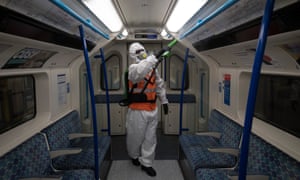
A TfL worker sprays antiviral solution inside a tube train. Photograph: Kirsty O’Connor/PA


From the start of the coronavirus pandemic, there has been an attempt to use science to explain the disproportionate impact of Covid-19 on different groups through the prism of race. Data from the UK and the US suggests that people categorised as black, Hispanic (Latino) and south Asian are more likely to die from the disease.

The way this issue is often discussed, but also the response of some scientists, would suggest that there might be some biological reason for the higher death rates based on genetic differences between these groups and their white counterparts. But the reality is there is no evidence that the genes used to divide people into races are linked to how our immune system responds to viral infections.

There are certain genetic mutations that can be found among specific ethnic groups that can play a role in the body’s immune response. But because of the loose definition of race (primarily based on genes for skin colour) and recent population movements, these should be seen as unreliable indicators when it comes to susceptibility to viral infections. 

Indeed, race is a social construct with no scientific basis. However, there are clear links between people’s racial groups, their socioeconomic status, what happens to them once they are infected, and the outcome of their infection. And focusing on the idea of a genetic link merely serves to distract from this.

You only have to look at how the statistics are gathered to understand how these issues are confused. Data from the UK’s Office for National Statistics that has been used to highlight the disparate death rates separates Indians from Pakistanis and Bangladeshis, and yet groups together all Africans (including black Caribbeans). This makes no sense in terms of race, ethnicity or genetics.

The data shows that those males categorised as black are more than 4.6 times more likely to die than their white counterparts from the virus. They are followed by Pakistanis/Bangladeshis (just over four times more likely to die), and then Chinese and Indians (just over 2.5 times).

Most genome-wide association studies group all south Asians. Yet, at least in the UK, Covid-19 can apparently separate Indians and Pakistanis, suggesting genetics have little to do with it. The categories used to collect government data for the pandemic are far more suited to social outcomes such as employment or education.

This problem arises even with a recent analysis that purportedly shows people from ethnic minorities are no more likely to die, once you take into account the effects of other illnesses and deprivation. The main analysis only compares whites to everybody else, masking the data for specific groups, while the headline of the newspaper article about the study refers only to black people.

Meanwhile, in the US the groups most disproportionately affected are African Americans and Hispanics/Latinos. All these groups come from very different population groups. We’ve also seen high death rates in Brazil, China and Italy, all of which have very different populations using the classical definition of race.

The idea that Covid-19 discriminates along traditional racial lines is created by these statistics and fails to adequately portray what’s really going on. These kinds of assumptions ignore the fact that there is as much genetic variation within racialised groups as there is between the whole human population.
There are some medical conditions with a higher prevalence in some racialised groups, such as sickle cell anaemia, and differences in how some groups respond to certain drugs. But these are traits linked to single genes and all transcend the traditional definitions of race. Such “monogenic” traits affect a very small subset of many populations, such as some southern Europeans and south Asians who also have a predisposition to sickle cell anaemia.

Death from Covid-19 is also linked to pre-existing conditions that appear in higher levels in black and south Asian groups, such as diabetes. The argument that this may provide a genetic underpinning is only partly supported by the limited evidence that links genetics to diabetes.

However, the ONS figures confirm that genes predisposing people to diabetes cannot be the same as those that predispose to Covid-19. Otherwise, Indians would be affected as much as Pakistanis and Bangladeshis, who belong to the same genome-wide association group.

Any genetic differences that may predispose you to diabetes are heavily influenced by environmental factors. There isn’t a “diabetes gene” linking the varying groups that are affected by Covid-19. But the prevalence of these so-called “lifestyle” diseases in racialised groups is strongly linked to social factors.

Another target that has come in for speculation is vitamin D deficiency. People with darker skin who do not get enough exposure to direct sunlight may produce less vitamin D, which is essential for many bodily functions, including the immune system. In terms of a link to susceptibility to Covid-19, this has not been proven. But very little work on this has been done and the pandemic should prompt more research on the medical consequences of vitamin D deficiency generally.

Other evidence suggests higher death rates from Covid-19 including among racialised groups might be linked to higher levels of a cell surface receptor molecule known as ACE2. But this can result from taking drugs for diabetes and hypertension, which takes us back to the point about the social causes of such diseases.

In the absence of any genetic link between racial groups and susceptibility to the virus, we are left with the reality, which seems more difficult to accept: that these groups are suffering more from how our societies are organised. There is no clear evidence that higher levels of conditions such as type-2 diabetes, cardiovascular disease and weakened immune systems in disadvantaged communities are because of inherent genetic predispositions.

But there is evidence they are the result of structural racism. All these underlying problems can be directly connected to the food and exercise you have access to, the level of education, employment, housing, healthcare, economic and political power within these communities.

The evidence suggests that this coronavirus does not discriminate, but highlights existing discriminations. The continued prevalence of ideas about race today – despite the lack of any scientific basis – shows how these ideas can mutate to provide justification for the power structures that have ordered our society since the 18th century.

It’s time for white people to step up for black colleagues

 The protests in the US are a pivotal moment and people of colour need active allyship  writes Nicola Rollock in The Financial Times  

A very privileged white man recently told me with an indulgent chuckle how much he enjoyed his privilege. I was not amused. For people of colour, white privilege and power shape our lives, restrict our success and, as we were starkly reminded in recent weeks, can even kill. No matter how well-crafted an organisation’s equality and diversity policy, the claims of “tolerance” or the apparent commitment to “embracing diversity”, whiteness can crush them all — and often does. 

People of colour know this. We do not need the empirical evidence to tell us that black women are more likely to die in childbirth or that black boys are more likely to be excluded from school even when engaging in the same disruptive behaviour as their white counterparts. We did not need to wait for a study to tell us that people with “foreign sounding names” have to send 74 per cent more applications than their white counterparts before being called for an interview — even when the qualifications and experience are the same.  

Or that young people of colour, in the UK, are more likely to be sentenced to custody than their white peers. We do not need more reviews to tell us we are not progressing in workplaces at the same rate as our white colleagues. We already know. Many of us spend an inordinate amount of time and energy trying to work out how to survive the rules that white people make and benefit from.  

While many white people seem to have discovered the horrors of racism as a result of George Floyd’s murder, it would be a mistake to overlook the pervasive racism happening around us every day. For the truth is Floyd’s murder sits at the chilling end of a continuum of racism that many of us have been talking about, shouting and protesting about for decades. 

Whiteness — specifically white power — sits at the heart of racism. This is why white people are described as privileged. Privilege does not simply refer to financial or socio-economic status. It means living without the consequences of racism. Stating this is to risk the ire of most white people. They tend to become defensive, angry or deny that racism is a problem, despite the fact they have not experienced an entire life subjected to it.  

Then there are the liberal intellectuals who believe they have demonstrated sufficient markers of their anti-racist credentials because they have read a bit of KimberlĂ© Crenshaw — the academic who coined the term “intersectionality” to describe how different forms of oppression intersect. Or, as we have seen on Twitter, there are those who quote a few lines from Martin Luther King.  

Liberal intellectuals will happily make decisions about race in the workplace, argue with people of colour about race, sit on boards or committees or even become race sponsors without doing any work to understand their whiteness and how it has an impact on their assumptions and treatment of racially minoritised groups.  

There are, of course, white people who imagine themselves anti-racist while doing little if anything to impact positively on the experiences of people of colour. As the author Marlon James and others have stated, being anti-racist requires action: it is not a passive state of existence. 

Becoming aware of whiteness and challenging passivity or denial is an essential component of becoming a white ally. Being an ally means being willing to become the antithesis of everything white people have learnt about being white. Being humble and learning to listen actively are crucial, as a useful short video from the National Union of Students points out. This, and other videos, are easily found on YouTube and are a very accessible way for individuals and teams to go about educating themselves about allyship.  

White allies do not pretend the world is living in perfect harmony, nor do they ignore or trivialise race. If the only senior Asian woman is about to leave an organisation where Asian women are under-represented and she is good at her job, white allies will flag these points to senior management and be keen to check whether there is anything that can be done to keep her. White allies are not quiet bystanders to potential or actual racial injustice.  

Allyship also means letting go of the assumption that white people get to determine what constitutes racism. This is highlighted by the black lesbian feminist writer and journalist Kesiena Boom, who has written a 100-point guide to how white people can make life less frustrating for people of colour. (Sample point: “Avoid phrases like “But I have a Black friend! I can’t be racist!” You know that’s BS, as well as we do.”) 

Active allyship takes effort 

Being an ally means seeing race and acknowledging that white people have a racial identity. In practical terms, it means when we talk about gender, acknowledging that white women’s experiences overlap with but are different to those of women of colour. White women may be disadvantaged because of their gender, but they are privileged because of their racial identity. When we talk about social mobility, employment, education, health, policing and even which news is reported and how, race plays a role. Usually it is white people who are shaping the discourse and white people who are making the decisions. 

This is evident even when white people promise commitment to racial justice in the workplace. It is usually white people who make the decision about who to appoint, the resources they will be given, what they can say and do. In their book Acting white? Rethinking race in post-racial America, US scholars Devon W Carbado and Mitu Gulati argue that white institutions tend to favour and progress people of colour who are “racially palatable” and who will do little to disrupt organisational norms. Those who are more closely aligned to their racial identity are unlikely to be seen as a fit and are, consequently, less likely to succeed.  

Being a white ally takes work. It is a constant process, not a static point one arrives at and can say the job is complete. It is why despite equalities legislation, there remains a need for organisations — many of them small charities operating on tight budgets — such as the Runnymede Trust, StopWatch, InQuest, Race on the Agenda, brap and Equally Ours. Their publications offer useful resources and information about racial justice in the workplace as well as in other sectors.  

There is, of course, a dark perversity to white allyship that is not often mentioned in most debates about racial justice. White allyship means divesting from the very histories, structures, systems, assumptions and behaviours that keep white people in positions of power. And, generally, power is to be maintained, not relinquished.

Un-clouding Cyber Security for Common Man (in Malayalam)


Wednesday, 3 June 2020

Making GDP the focus of a post-coronavirus economy would be a mistake

Growth often doesn’t benefit the people who need it – a green economy could create 1 million jobs writes Carys Roberts in The Guardian

 
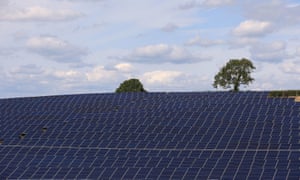
‘A green recovery does not mean adding on a few green job programmes to a larger, fossil-fuelled stimulus.’ Low Bentham Solar Park, North Yorkshire. Photograph: Peter Byrne/PA


The UK lockdown might be easing, but the path ahead for the economy will be long and difficult. Unemployment this quarter is likely to rise twice as fast as it did following the global financial crisis. Almost half of businesses that have taken up one of the government’s bounce-back loans do not expect to be able to pay it back.

It’s tempting in a crisis to want to do whatever it takes to get economic activity – measured by GDP – back to where it was before. But an overwhelming and singular focus on increasing GDP would be a mistake. GDP figures do not tell us who is benefitting from growth. GDP does not tell us whether environmental resources – and nature – are being dangerously depleted, and does not reflect the value of caring, much of which is performed by women.

Boris Johnson has called for the UK to “build back better”, but to use government resources and capacity most effectively and – more fundamentally – to take the opportunity to build a better kind of economy and society, we need to know what it is we want to rebuild. This is precisely the moment to think beyond a blind pursuit of GDP, about what kind of economic activity to bring back and prioritise, and what we could do without. Any stimulus package must be tailored to create not just any economic activity, but that which will serve society best. As a result, any recovery or spending plan should be scrutinised not just on its size, but what it is spent on.
This must be a green recovery. That does not mean adding on a few green job programmes to a larger, fossil-fuelled stimulus: the whole recovery package must accelerate the UK’s path to net-zero carbon and restore our natural environment, which is in crisis. Anything else risks emerging from one disaster only to accelerate headlong into another. As the government turns on the taps to boost the economy, there is a huge opportunity to fill the £30bn per year funding gap for green investment. 

The recovery must target well-paid, high-quality jobs, spread around the country. These must provide good work for those who have lost it as a result of Covid-19, as well as people previously locked out of the jobs market or at risk of being left behind on the journey to net zero. This is a more profound shift than it appears. Currently, stimulus packages aim to boost GDP, and jobs are a way to get there. But what matters is that ordinary people have access to secure incomes – both for themselves, and because this will ensure spending in the economy (people who need money are more likely to spend it) and a sustainable tax base. An alternative approach, for example, of loosening lending restrictions for mortgages, might boost GDP but would do so by increasing debt and raising house prices, benefitting the already wealthy while hurting people without wealth.

The recovery must involve a reconsideration of what is valuable in society. The pandemic has put into stark relief the extraordinary contribution of health and care workers, many of whom are women and migrants, and the essential support of key workers across the economy. The recovery must recognise that contribution in higher pay and better working conditions. So, too, the pandemic has caused conversations up and down the country about unpaid care work and who performs it. But the easing of lockdown has prioritised marketised activity over human relationships, which don’t require cash. You can visit your parents at home, but only if you want to purchase their house or clean it. The recovery should recognise and reflect what is important to people and valuable – not just economic activity.


Britons want quality of life indicators to take priority over economy

 These goals are not in conflict but instead are inextricably linked. Achieving them requires and provides an opportunity to rethink an economy that doesn’t work for so many across the country or for future generations. We estimate that close to a million good jobs could be created in this new, green economy, with many more if we choose to invest in our social care system.

Talking about and targeting the “economy” as an abstraction masks the underlying shape and nature of the activity taking place underneath. It means we miss people: who loses out, and who benefits from the status quo being restored. Lockdown has found us in a collective moment of reimagining, but this will not last for ever: we should use it to ask what economic activity we want to rebuild, and what we could do without.