Search This Blog

Sunday, 8 September 2013

Modi's Gujarat - No model state


In Gujarat, growth relies on indebtedness. And relegates development.
The Gujarat pattern of development has often been arraigned from the left because of its social deficits. Indeed, the state's social indicators do not match its economic performance. With 23 per cent of its citizens living below the poverty line in 2010, Gujarat does better than the Indian average — 29.8 per cent — but it reduced this proportion by less than 10 percentage points in five years. This poverty reduction rate has something to do with the wages of casual workers. According to the 68th round (2011-12) of the National Sample Survey Organisation (NSSO), Gujarat has among the lowest average daily wages for casual labour (other than in public works) in urban areas: Rs 144.52, when the national urban average is Rs 170.10. This kind of poverty goes with malnourishment. One of the social indicators where Gujarat shows the most dramatic lag is the hunger index — only about 43 per cent of children under ICDS in the state are the normal weight, according to an Indian Institute of Public Administration report.

These indicators are aggregates. Their break up is particularly enlightening. The urban/rural divide is pronounced in Gujarat. This is evident from NSSO data, including estimates of the average monthly per capita expenditures (MPCE). The urban MPCE was 49 per cent higher in towns and cities than in villages in 1993-94. Fourteen years later, the urban MPCE was 68 per cent higher. In 2011-12, the difference stabilised at 68.1 per cent. Certainly, the operationalisation of the Narmada dam has improved circumstances for some people living in rural areas, but only in part, because the canals have not reached the fields, especially in Saurashtra. This has happened not only because of bad planning, but also because the supply of water to cities (including industry) was prioritised. Second, cash crop farmers have been affected by the low level of agricultural prices. Cotton is a case in point: prices did not go up, whereas inputs became costly because of inflation. Third, prime agricultural land has been given to industry and the latter's activities have affected the natural environment. In Mahua, where the Nirma group had been given 3,000 hectares for mining activities and a cement factory, BJP MLA Kanubhai Kalsaria objected that the water tank the villagers depended on would be badly damaged. He was sidelined and subsequently, he resigned from the party to fight the government's policy.

Among the rural groups that suffered from the state's policy, Adivasis are a case in point. According to a World Bank report, between 1993-94 and 2004-05, the share of those who lived below the poverty line increased from 30.9 per cent to 33.1 per cent — 10 percentage points below the national average. The Modi government has been criticised for not allocating to Adivasis and Dalits funds in proportion to their population. While the former represent almost 18 per cent of the state population, they were allocated 11.01 per cent of the total outlay in 2007-08, 14.06 per cent in 2008-09, 13.14 per cent in 2010-11 and 16.48 per cent in 2011-12. Moreover, actual expenditures were even lower. The same was true of the Dalits, who represent 7.1 per cent of the state population and who were allotted 1.41 per cent of the total outlay in 2007-08, 3.93 per cent in 2008-09, 4.51 per cent in 2009-10, 3.65 per cent in 2010-11 and 3.20 per cent in 2011-12.

Generally speaking, Gujarat has not spent as much as other states on the social sector. In a report, the Reserve Bank of India showed that Gujarat spends less than several other states in this area. Take education — in 2010-11, Gujarat spent 15.9 per cent of its budget in education, when Bihar, Chhattisgarh, Haryana, Kerala, Maharashtra, Orissa, Rajasthan, Uttar Pradesh and West Bengal spent between 16 and 20.8 per cent. The national average was 16.6 per cent.

While these criticisms from the left are well known, those on the right, especially the liberals, could also have indicted the Modi government for its lack of financial discipline. The Gujarat growth pattern relies on indebtedness. The state's debt increased from Rs 45,301 crore in 2002 to Rs. 1,38,978 crore in 2013, not far behind the usual suspects, Uttar Pradesh (Rs 1,58,400 crore) and West Bengal (Rs 1,92,100). In terms of per capita indebtedness, the situation is even more worrying, given the size of the state: each Gujarati carries a debt of Rs 23,163 if the population is taken to be 60 million. In 2013-14, the government plans to raise fresh loans to the tune of Rs 26,009 crore. Of this amount, Rs 19,877 crore, that is 76 per cent, will be used to pay the principal and the interests of the existing debts. Gujarat would fall into the debt trap the day this figure reaches 100 per cent.

This fiscal crisis has been caused by several factors. First, many Gujaratis who are supposed to pay taxes don't, whether they are at the helm of companies or ordinary citizens. In 2010, the total amount from taxpayers in Ahmedabad, Surat, Baroda and Rajkot alone was Rs 7,555 crore. This was more than the annual tax collection of Bihar at the time.

Second, the exchequer has been directly affected by the business-friendly attitude of the Modi government. To woo investors, it has indulged in tax deductions and low interest rates, and sold land at throwaway prices. Take the example of the Nano factory. If K. Nag's biography of Modi is to be believed, the Gujarat government made unprecedented concessions to Tata Motors, including the sale of 1,100 acres of land at Rs 900 per square metre, when its market rate was around Rs 10,000 per square metre, a Rs 20 crore exemption on stamp duty levied on the sale of land, a 20-year deferral in the payment of value added tax on the sale, and loans amounting to Rs 9,570 crore against an investment of Rs 2,900 crore (330 per cent of the investment) at 0.1 per cent interest rate over 20 years. Most of the big companies investing in Gujarat — Adani, Essar, Reliance, Ford, Maruti, L&T and others — have been offered special conditions, especially under the SEZ framework.

Certainly, to attract investors is a good way to prepare for the future and heavy debts are not a problem if these investments generate tax revenue. But how productive these investments will be remains to be seen. Many of them are at least partly speculative. The SEZ Act allows the owners of large SEZs (above 1,000 hectares) to use 75 per cent of their superficy for non-industrial purposes (for the smaller ones, up to 50 per cent of an SEZ can be devoted to non-processing areas). SEZ owners have been quick to indulge in real estate speculation and to lease at market price land that they've bought at throwaway prices. Interestingly, the corporate sector is not covered by the RTI. We wonder why.

Those on the right, who overlook the fact that the Modi government is more business-friendly than market-friendly (surprisingly, for liberals), claim that the way Gujarat is attracting investors is good for development. But it is only good for growth. For development, investing in education would make much more sense.

The writer is senior research fellow at CERI-Sciences Po/CNRS, Paris, professor of Indian Politics and Sociology at King's India Institute, London, and non-resident scholar at the Carnegie Endowment for International Peace express@expressindia.com

Top Lib Dem Sarah Teather to step down in despair at Nick Clegg's policies


Sarah Teather says party is not fighting for justice and describes how immigration policy left her 'desolate'
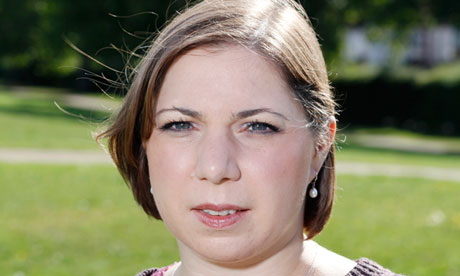
Sarah Teather
Sarah Teather says 'something broke' in her when the Lib Dems responded to public concern about the cost of welfare by backing a government cap on benefits. Photograph: Katherine Rose for the Observer
The prominent Liberal Democrat MP Sarah Teather – who shot to fame when she became the youngest member of parliament a decade ago – has announced that she is to quit the House of Commons because she no longer feels that Nick Clegg's party fights sufficiently for social justice and liberal values on immigration.
In a blow to Clegg a week before his party gathers for its annual conference in Glasgow, Teather said his tougher approach to immigration – including a plan for some immigrants to pay a £1,000 deposit when applying for visas – left her feeling so "desolate" and "catastrophically depressed" that she was unable even to confront him over the issue. "It was an absolutely black moment. I couldn't even move from my seat when I read it. I was so depressed I couldn't even be angry. I was utterly desolate," she says.
Announcing her decision to turn her back on frontline politics in an interview with the Observer, she adds that "something broke" in her when the Lib Dems responded to public concern about the cost of welfare by backing a government cap on benefits.
Teather believes the £26,000-a-year limit is a political stunt that will not work, and complains that it will force many of her constituents in the ethnically diverse constituency of Brent Central, in north London, to leave their homes and seek work in cheaper areas where fewer jobs would be available.
"It was the moment of realising that my own party was just as afraid of public opinion as the Labour party," she says. "Something did break for me that was never ever repaired."
While she insists that she still has a lot of respect for Clegg, whom she regards as a "decent bloke", she says that too often he seems to lead a party that no longer appears passionate about the values that attracted her to it as a teenager.
"When I joined the party I had this really strong instinct that it was the party of social justice and liberalism. It was the only party that operated in that space." But now, with the pressure of coalition bearing down on him, Teather, 39, says Clegg and his team react too easily to immediate pressure to appease public opinion. "It is about the reactive pursuit of the latest poll irrespective of what is right and wrong.
"What really gets me is that we remove ourselves from any responsibility for forming public opinion … You achieve change not just through policy but by presenting arguments and having debate and leading debate, and using all the platforms you have in television, parliament, the media. All of those things form and respond to public opinion."
The former charity worker, who served as minister for children in the coalition until 2012, shot to prominence when she won the safe Labour seat of Brent East in September 2003, overturning a 13,047 Labour majority.
While insisting her decade in parliament has been "wonderful" in many ways, she says she no longer feels able to operate within the Liberal Democrat parliamentary party while disagreeing with its approach on fundamental issues. She will remain in parliament until the 2015 general election, and continue as a member of the party, but says she has "no idea" what she will do after that.
Her announcement creates an unfortunate backdrop to the Lib Dem meeting in Glasgow, where the party will try to present itself as distinct from the Tories as it prepares to put together a radical manifesto for 2015. The party faces a series of awkward debates on the economy, tuition fees, green policy and taxation, among other things, as it wrestles with how to present a strikingly distinct policy offering that can still be moderated in potential future coalitions with the Tories or Labour.
The Lib Dems' period in government has coincided with sharp falls not only in the opinion polls but also in party membership and income. The latest figures show it now has a membership of just 42,501. This represents a 35% drop since the height of "Cleggmania" in 2010. The fall in membership fees has also contributed to an operating deficit of £410,000 in the latest annual accounts.
The latest Opinium/Observer poll puts the Lib Dems down percentage point on a fortnight ago, at just 7%. This compares with a vote share of 23% at the 2010 general election and scores of more than 30% in some polls in the runup to polling day. Opinium has Labour on 35% (done one percentage point compared to a fortnight ago), the Tories up one at 30% and Ukip down one on 17%.
Teather says she was dismayed to be told by her party to back the recent motion paving the way for military action in Syria because it was an issue of "loyalty". "If it was a minor aspect of administrative policy then fine – talk to me about loyalty. But if they are wanting to launch military action on another country you can't tell me I need to give permission on the basis of loyalty," she says. She voted no.
A Liberal Democrat spokesman said: "Of course we are disappointed by Sarah's decision.
"The Liberal Democrats have a proud record in government, including cutting taxes for working people by £700 and lifting the poorest paid out of tax altogether; helping businesses create a million jobs; investing billions more in schools to help the poorest children and introducing radical plans for shared parental leave.
"Sarah was a part of this when she served as a minister in the coalition, as well as playing a key role in ending Labour's disgraceful policy of locking up children for immigration purposes."

Saturday, 7 September 2013

Real men take responsibility

Friday 6 September 2013

Memo to our leaders: real men take responsibility

The people of Britain are heartily sick of macho posturing on the part of public figures


It is more electrifying and unedifying than really mean reality TV. The departed BBC Director-General Mark Thompson and current Trust chairChris Patten could be kids in Channel4’s fly-on-the-wall series Educating Yorkshire.  Come on you two, fess up. Stop this fighting AT ONCE. Oi, you, Markie – stop pulling Christopher’s nose. And you Christopher, don’t provoke him. You’re acting like big babies. Right, on Monday, to the head’s office, both of you. 
Real men, we are told, take it on the chin, do not shuffle off responsibility when bad things happen. Truth is they do.  The more powerful they are, the more likely they are to do a runner or impugn others without a smidgen of shame. Some masters of the universe, eh? 
Chris Patten, grandee and last colonial governor of Hong Kong, reproached everyone else but himself over the Newsnight Jimmy Savile debacle. He hired and fast fired George Entwhistle, a decent man and talented journalist who, new into the job, couldn’t handle the explosive revelations and failures of the corporation. Not the fault of the Guv, none of it.
This July, Patrician Patten insouciantly told the Public Accounts Committee (PAC) that he was kept in the dark by D-G Thompson about the immoral and unjustifiably high-pay offs to senior BBC executives. The Trust, he said, “would be as interested as you are about why we didn’t know”. Thompson, now the chief executive of the New York Times and a man not to be messed with,  has responded furiously in a detailed, long document.
He rebuffs Patten’s insinuations and accusations, claims the Trust was in on the deals, says he has emails to prove what really happened, and suggests the PAC has been misled by chairman Chris and some trustees. Patten calls Thompson’s assertions “bizarre” and denies any part in the huge payment made to Mark Byford, deputy D-G. Before his time, all that. The impression given is it was not his business. On Monday the two massive, combative male egos will be interrogated by the PAC again.
Other top dogs in our country are scrapping and rowing over the Syrian crisis, instead of coming together to help end one of the worst human disasters ever in modern history. Our Parliament was given the right to vote, a virtuous move by Cameron, whose own instincts have always been to go for military intervention. Parliament voted against such involvement. For being a good democrat and responding to public opinion, the PM was leapt upon by snarling party insiders and the implacable right-wing commentariat.
On cue, up popped warmonger Tony bloody Blair, looking for a fight with Ed Miliband for not backing action. Within days Cameron had turned on the Labour leader and his party and those dissenters or abstainers  in his own ranks – among them the erudite and personable Jesse Norman. The disgrace for Britain is not that we didn’t go for violence to quell violence, but that after the civilised process of sombre parliamentary debating and considered voting, our manly leaders can’t stop bickering.
The same male squabbles broke out in Iain Duncan Smith’s Department of Work and Pensions. His much heralded “welfare reforms” which promised to save millions of taxpayers’ pounds are badly managed, wasteful and thus far a chaotic mess. So says the National Audit Office (NAO). Does the Secretary of State accept the criticisms or apologise for personal or departmental failures? Is this a serious question?
When he talks incessantly like a manic preacher about the importance of taking responsibility, he means the little people, not the ruling elite. IDS, ex-soldier in Rhodesia and Northern Ireland, is never wrong, never weakened by self-doubts, never admits mistakes. His response to the NAO report is to dump on his officials, and in particular, Robert Devereux, the department’s most senior servant. Liam Byrne, his shadow, then lays into IDS with unseemly relish. The poor people squeezed to strangulation by benefit cuts must watch these combating gladiators and wonder how it helps them. 
It’s the same story with tax evasion, financial regulation, policing, risky banking, major failures in public services and government policies. The men in charge pass the buck, make fantabulous excuses, deny wrong doing, argue disagreeably, feel unappreciated and terribly let down by others, act up and never back down. Masculine success means never having to say sorry. (To be fair, a small number of women with power are just the same.) More serious perhaps is the predisposition of leading men to senseless rancour and aggression, even in our House of Commons, which should be a place of dignity, respect  and rational discourse.
On Monday, when Patten and Thompson face MPs, both sides need to think about their behaviour and responsibilities as public figures. The people of Britain – to whom they are all answerable – are heartily sick of their macho posturing and lack of humility. The PAC’s chair, tough and effective Margaret Hodge, knows that. Do the BBC bigwigs summoned by her committee begin to understand what the public now expects? We shall see. 

Friday, 6 September 2013

The left's irrational fear of American intervention

In Syria, as elsewhere, US military might is the best available means of preventing crimes against humanity
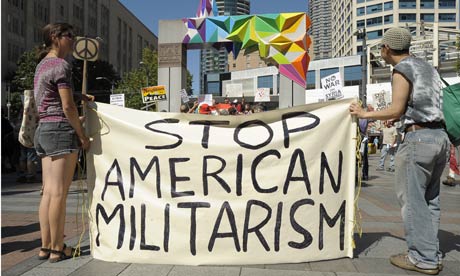
Protesters in Seattle rally and march against possible war with Syria
Protesters in Seattle pictured during a march against US intervention in Syria. Photograph: Rick Barry/Demotix/Corbis
Not for the first time, human rights violations by a Middle Eastern tyrant pose a dilemma for leftists on both sides of the Atlantic. (Editor's comment - not true the right is divided on this issue). On the one hand, they don't like reading about people being gassed. On the other, they are deeply reluctant to will the means to end the killing, for fear of acknowledging that western – meaning, in practice, American – military power can be a force for good. (For Ferguson it is an act of faith - Editor)

-----
Also read


------
Ever since the 1990s, when the United States finally bestirred itself to end the post-Yugoslav violence in the Balkans, I have made three arguments that the left cannot abide. The first is that American military power is the best available means of preventing crimes against humanity. The second is that, unfortunately, the US is a reluctant "liberal empire" because of three deficits: of manpower, money and attention. And the third is that, when it retreats from global hegemony, we shall see more not less violence (yes due to the power vacuum created but did the hegemon maintains its power by non violent means?).
More recently, almost exactly year ago, I was lambasted for arguing that Barack Obama's principal weaknesses were a tendency to defer difficult decisions to Congress and a lack of coherent strategy in the Middle East. Events have confirmed the predictive power of all this analysis.
To the isolationists on both left and right, Obama's addiction to half- and quarter-measures is just fine – anything rather than risk "another Iraq". But such complacency (not to say callousness) understates the danger of the dynamics at work in the Middle East today. Just because the US is being led by the geopolitical equivalent of Hamlet doesn't mean stasis on the global stage. On the contrary, the less the US does, the more rapidly the region changes, as the various actors jostle for position in a post-American Middle East.
Syria today is in the process of being partitioned. Note that something similar has already happened in Iraq (How did this happen Niall?). What we are witnessing is not just the end of the Middle East of the 1970s. This could be the end of the Middle East of the 1920s. The borders of today, as is well known, can be traced back to the work of British and French diplomats during the first world war. The infamous Sykes-Picot agreement of 1916 was the first of a series of steps that led to the breakup of the Ottoman empire and the creation of the states we know today as Syria and Iraq, as well as Jordan, Lebanon and Israel.
As we approach the centenary of the outbreak of the first world war, there is no obvious reason why these states should all survive in their present form.
It is tempting to think of this as a re-Ottomanisation process, as the region reverts to its pre-1914 borders. But it may be more accurate to see this as a second Yugoslavia, with sectarian conflict leading to "ethnic cleansing" and a permanent redrawing of the maps. In the case of Bosnia and Kosovo, it took another Democrat US president an agonisingly long time to face up to the need for intervention. But he eventually did. I would not be surprised to see a repeat performance if that president's wife should end up succeeding Obama in the White House. After all, there is strong evidence to suggest Obama agreed to the original chemical weapons "red line" only under pressure from Hillary Clinton's state department.
Yet the president may not be able to sustain his brand of minimalist interventionism until 2016. While all eyes are focused on chemical weapons in Syria, the mullahs in Iran continue with their efforts to acquire nuclear weapons. The latest IAEA report on this subject makes for disturbing reading. I find it hard to believe that even the pusillanimous Obama would be able to ignore evidence that Tehran had crossed that red line, even if it was drawn by the Israeli prime minister rather than by him.
The Iranian factor is one of a number of key differences between the break up of Yugoslavia and the breakup of countries like Syria and Iraq.
The Middle East is not the Balkans. The population is larger, younger, poorer and less educated. The forces of radical Islam are far more powerful. It is impossible to identify a single "bad guy" in the way that Slobodan Milosevic became the west's bete noire. And there are multiple regional players – Iran, Turkey, the Saudis, as well as the Russians – with deep pockets and serious military capabilities. All in all, the end of pan-Arabism is a much scarier process than the end of pan-Slavism. And the longer the US dithers, the bigger the sectarian conflicts in the region are likely to become.
The proponents of non-intervention – or, indeed, of ineffectual intervention – need to face a simple reality. Inaction is a policy that also has consequences measurable in terms of human life. The assumption that there is nothing worse in the world than American empire is an article of leftwing faith (I agree and the left has to overcome this bias). It is not supported by the historical record.

Religion for Atheists

Alain de Botton for Atheism 2.0

Those guilty of malpractice or wasting public money must not escape punishment.

From the BBC to RBS, we have to find a way to stop this injustice

Those guilty of malpractice or wasting public money must not escape punishment, even if criminality can't be proved
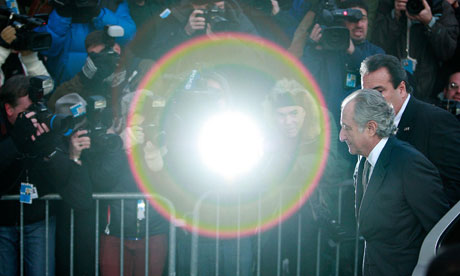
Disgraced financier Bernie Madoff
'Occasionally businessmen are punished – think Bernie Madoff – but his case is totemic because it is so rare.' Photograph: Mario Tama/Getty Images
What do the following recent news stories have in common? IT failings over the introduction of new welfare payments; the never-ending saga of BBC executives paying each other silly money; defence procurements coming in billions of pounds over budget; the recklessness of the bankers? Throw in dozens of other cases from the private and public sectors and there emerges a clear pattern: of decisions taken by individuals or groups that constitute failure or dereliction of duty but which go unpunished.
The word "punishment" is enticingly loaded. In international relations it is in vogue. Should Bashar al-Assad be punished if it is clear his government used chemical weapons? From the former Yugoslavia to Rwanda, attempts are made to punish world leaders and their henchmen. Occasionally, businessmen are punished too – think Bernie Madoff and his Ponzi schemes. He received 150 years in jail. But his case is totemic because it is so rare.
Where there is incontrovertible evidence of fraud, courts usually convict. The individual has a criminal record. It is hard, although not impossible, for that person's career and reputation to recover. Justice is done.
But far more difficult are the many cases in which senior public figures are culpable in decisions that have led to huge financial loss, in some cases ruining peoples' lives, but criminality cannot be proven. The bar for a trial is necessarily set high and can be insurmountable.
So what possible punishments are left? Summary dismissal is used against a shopfloor worker for nicking a few products from the assembly line, or a middle manager for sexual harassment. The weapon is almost never deployed against top executives. Part of the reason is financial – companies would rather pay them off than endure the publicity of a tribunal. The more pernicious reason is cultural: as a member of the board or senior executive you never know when you might bump into that person. Why leave yourself susceptible to a quiet act of revenge in the future when you don't have to?
It is only when the public bays for blood that extra measures are taken. The story of plain Fred Goodwin is brilliantly told in Iain Martin's new book, Making it Happen: Fred Goodwin, RBS and the Men Who Blew Up the British Economy. Aggressive, obsessed by the baubles of wealth, Fred the Shred is so determined for RBS to take over the banking world that he omits to find out what his wheeler-dealer teams are up to. At least as culpable are the board members who are quite happy to take the money for their non-exec non-labours and forget to ask questions.
Goodwin – friend of the royal family, prime ministers, chancellors and the Scottish political class – is stripped of his knighthood. He retains an enormous pension and is to be found polishing his vintage cars, the pantomime villain. It makes us feel better and the corporate and political worlds can "move on".
But the odd case of ritual humiliation is no substitute for better governance. That will not improve until proper systems of accountability for failure are introduced. In the private sector, when shareholders incur losses, it is up to them to complain – but almost invariably they don't, as institutional investors account for most holdings. Why would they want to rock the boat?
When public money is spent, the case for action is even clearer. It beggars belief that during the bank bailouts of 2007 to 2008, ministers did not – even as they took urgent decisions – do more to punish those whose hubristic decisions led to the crisis.
At the BBC, although the money lost has been tiny in comparison to the banks, the sense of injustice at the largesse shown by management towards its own is felt just as strongly. A few dozen people paid each other ridiculous sums as they moved from one job to another or began to enjoy lucrative early retirement. They did so believing (correctly) that they would get away with it, and convinced themselves they deserved it.
After inquiries by a Tory MP, the Crown Prosecution Service probed whether crimes had been committed and concluded that they hadn't. To prove criminal intent, if there had been, would have been too hard. To prove malpractice might have been easier, but there is no effective mechanism.
We need to devise a process whereby serious action can be taken against egregious acts of back-scratching, waste and lack of rigour in governance. It is surely a win-win for any political party with the courage and tenacity to introduce such a system. Some models already exist. Professional bodies for doctors, lawyers and accountants serve this purpose. Are they robust enough? A new public body could be created, perhaps including representatives of the CBI and TUC. Or if that's too cumbersome, maybe the Commons public accounts committee – which is good at haranguing and exposing but has little powers besides – could play a part.
Transparency is key. Legislation must be introduced to override confidentiality and data protection clauses in specific cases under investigation. Checks and balances would be needed to protect those who feel wrongfully accused. Those found to have played fast and loose with others' money could be put on a blacklist of public appointments for a specified number of years. There may be other ways too; but this is a debate which needs to be started.
Responsible executives, non-executives and civil servants have nothing to fear in exposing and punishing the bad apples. Bringing out the stocks serves little purpose. But, in order to begin the herculean task of improving confidence in public life, we need far smarter forms of redress.

Thursday, 5 September 2013

LSD may not be bad for you, says study


The late acid guru Dr Timothy Leary would doubtless have claimed to have known it all along, but after conducting an exhaustive study on tens of thousands of Americans, a team of Norwegian scientists has concluded that LSD may actually be good for you.


Researchers Pal-Orjan Johansen and Teri Krebs from Norway’s University of Science and Technology in Trondheim examined American drug-use surveys carried out between 2001 and 2004 on over 130,000 US citizens, of which 22,000 had used a psychedelic drug such as LSD at least once in their lives.

The results may not amount to an appeal to “turn on, tune in and drop out”, but they appear to overturn the opinion long-held in parts of the medical establishment that LSD and other “mind-enhancing” drugs automatically result in debilitating flashbacks, uncontrollable paranoia attacks and a desire to leap off buildings.

In the science journal PLOS One, Mr Johansen and Mrs Krebs wrote: “There were no significant associations between lifetime use of any psychedelics, or use of LSD in the past year, and an increased rate of mental health problems. Rather, in several cases psychedelic use was associated with a lower rate of mental health problems.”

In an interview with Norway’s English-language news website, The Local, Mr Johansen said that expert studies which attempt to discover whether psychedelic drugs such as LSD, mescaline and the “magic mushroom” drug psilocybin are harmful had not demonstrated that they caused chronic health problems.

“Everything has some risk; psychedelics can elicit temporary feelings of anxiety and confusion, but accidents leading to serious injury are extremely rare,” Mrs Krebs told the website. “Over the past 50 years, tens of millions of people have used psychedelics and there is just not much evidence of long-term problems,” she added.

The scientists claimed the notion that LSD and other psychedelic substances damaged mental health stemmed from a small number of case reports on patients who were already suffering from some form of mental illness.

They added that both psychedelic drug use and the onset of mental illness tended to occur in late adolescence, which in the past had led researchers to wrongly attribute mental problems to LSD.
“Both mental illness and psychedelic drug use are prevalent in the population, which likely leads to many chance associations,” Mr Johansen said.

Both scientists concluded in a report published last year in the British Journal of Psychopharmacology that a single dose of LSD was a highly effective treatment for alcoholism. They recommended that the drug be used more often to help patients with a drink problem and argued that it was probably just as effective as current medications used to treat alcohol addiction.
Dr Leary – a champion of LSD who was simultaneously a cult figure for the late 1960s Hippie movement and branded the “most dangerous man in America” by President Nixon – came to similar conclusions in the 1950s while researching the drug at Harvard. He died in 1995.

The Trondheim researchers said their conclusions about LSD and alcoholism were based on surveys carried out in the 1950s, 1960s and 1970s. They said they had come across a total of six studies which met contemporary scientific standards. They established that 59 per cent of patients who had been given a dose of LSD had either stopped drinking completely or were drinking less than they were before taking the drug.

Strange trip: The acid story
 
1943 World’s first “acid trip” taken by Swiss chemist Dr Albert Hofmann who stumbled on LSD almost by accident while trying to discover beneficial properties of the ergot fungus, commonly found on rye plants, for the Sandoz chemical company. Hoffman’s first trip lasted two hours. His second last six hours and he reported experiencing “Alice in Wonderland” (pictured) fantasies.

 
1950s-1960s Harvard University psychology lecturer Dr Timothy Leary (above) carries out research on psylocybin from “magic mushrooms”. His findings are labelled subversive and he is expelled from Harvard. Branded “the most dangerous man in America” by Richard Nixon, Leary praises LSD (“turn on, tune in, drop out”) and becomes a founding father of the hippie movement. (Picture credit: Getty Images)

 
1960s-1970s By the late Sixties LSD, along with marijuana, has become a popular recreational drug for the anti-Vietnam war, counter-culture and flower power movements. LSD is referenced in songs such as “Lucy in the Sky with Diamonds” by the Beatles and “Purple Haze” by Jimi Hendrix (above, credit: Getty).

 
1980s-present LSD experiences something of a revival in the Rave scene where it continues to be taken along with Ecstasy and a battery of newer but still illegal mind-altering substances.