Search This Blog

Thursday, 4 April 2013

The extraordinary range of people using offshore tax evasion hideaways


Records represent the biggest stockpile of inside information about the offshore system ever obtained by a media organisation
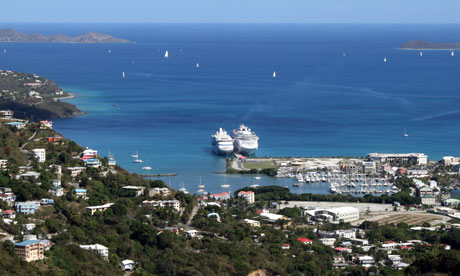
The British Virgin Islan
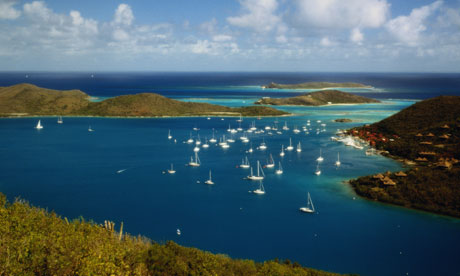
The British Virgin Islands, the world's leading offshore haven. Photograph: Lars Ruecker/Getty Images/Flickr RF
The secret records obtained by ICIJ lay bare an extraordinary range of people using offshore hideaways.
They include US dentists and middle-class Greek villagers as well as families of despots, Wall Street swindlers, eastern European and Indonesian billionaires, Russian executives, international arms dealers and a company alleged to be a front for Iran's nuclear-development programme.
The leaks illustrate how offshore financial secrecy has aggressively spread around the globe. The records detail offshore holdings in more than 170 territories; this represents the biggest stockpile of inside information about the offshore system ever obtained by a media organisation.
To analyse it, ICIJ collaborated with reporters from the Guardian and the BBC in the UK, Le Monde in France, Süddeutsche Zeitung and Norddeutscher Rundfunk in Germany, The Washington Post, the Canadian Broadcasting Corporation (CBC) and 31 other international media partners.
Eighty-six journalists from 46 countries used both hi-tech data crunching and traditional reporting to sift through emails and account ledgers covering nearly 30 years.
"I've never seen anything like this. This secret world has finally been revealed," said Arthur Cockfield, a law professor at Queen's University in Canada, during an interview with CBC.
Offshore's defenders say that most users are legitimate. Offshore centres, they say, allow people to diversify investments, create international ventures and do business in entrepreneur-friendly zones without red tape.
"Everything is much more geared toward business," David Marchant, publisher of OffshoreAlert, an online journal, said. "If you're dishonest, you can take advantage of that in a bad way. But if you're honest you can take advantage of that in a good way"
The vast tide of offshore money can disrupt economies. Greece's fiscal disaster was exacerbated by offshore tax cheating and in the Cyprus crisis, local banks' assets were inflated by waves of cash from Russia.
ICIJ's 15-month investigation found that, alongside perfectly legal transactions, the secrecy and lax oversight offered by the offshore world appears to allow fraud, tax-dodging and political corruption to thrive.
Anti-corruption campaigners argue that offshore secrecy forces citizens to pay higher taxes to make up for vanishing revenues, while anonymity makes it difficult to track the flow of money. A study by James S Henry, former chief economist at McKinsey & Company, estimates that wealthy individuals have $21-$32tn tucked away in offshore havens – roughly equivalent to the size of the US and Japanese economies combined. The offshore world is growing, said Henry, who is a board member of the Tax Justice Network, an advocacy group critical of offshore havens.
Much of ICIJ's analysis focused on the work of two major offshore incorporation firms, Portcullis TrustNet and Commonwealth Trust Limited (CTL). Trustnet was founded by Mike Mitchell, a New Zealand lawyer who worked as the Cook Islands' solicitor general in the early 1980s, built up offshore business in Hong Kong, and sold out in 2004 to Singapore lawyer David Chong, as Singapore became a favoured financial hideaway for clients from Asia.
Canadian businessman Tom Ward and Texan Scott Wilson set up CTL in 1994 in the British Virgin Islands. They specialised in attracting Russian and east European money. Regulators found that CTL repeatedly violated the islands' anti-money-laundering laws between 2003 and 2008 by failing to check out its clients. "This particular firm had systemic money-laundering issues," a BVI financial services commission official said last year.
Ward said CTL's vetting procedures had been consistent with local standards, but that no amount of screening could ensure that firms won't be "duped by dishonest clients".
In relation to the second firm, Trustnet, ICIJ identified 30 of their US clients accused in lawsuits or criminal cases of fraud, money laundering or other serious financial misconduct. TrustNet declined to answer our questions.
In the 1990s, the Organisation for Economic Cooperation and Development began pressuring offshore centres to reduce secrecy, but the effort ebbed in the 2000s as the Bush administration withdrew support, according to Robert Goulder, former editor-in-chief of Tax Notes International. A second "great crusade", Goulder writes, began when US authorities took on UBS, forcing the Swiss bank to pay $780m in 2009 to settle allegations that it had helped Americans dodge taxes. David Cameron has now vowed to use his leadership of the G8 to help crack down on tax evasion.
But despite the new efforts, offshore remains a "zone of impunity", says Jack Blum, a specialist lawyer and former US Senate investigator: "There's been some progress, but there's a bloody long way to go."
Gerard Ryle is director of the ICIJ, a Washington-based independent network of reporters. See icij.org
------

 How many UK companies are run from overseas havens?

More than 175,000 UK companies have been controlled from countries linked by campaigners to offshore secrecy – but where has the most?
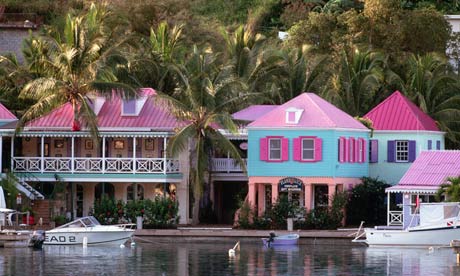
Tortola capital of the British Virgin Islands
Tortola, the capital of the British Virgin Islands, sometimes referred to as the offshore capital of the world. 17,000 UK companies have been controlled from the BVI. Photograph: Neil Rabinowitz/Neil Rabinowitz/CORBIS
Among the latest revelations from the Guardian's Offshore Secrets series is a sense of how many of the three million companies registered at Companies House are controlled from offshore territories.
A first sense of the scale of such offshore control of British businesses is given in the Guardian's new story today:
More than 175,000 UK-registered companies have used directors giving addresses in offshore jurisdictions, the Guardian has established. This raises fresh concerns about the scale of Britain's involvement in offshore secrecy arrangements.
Data obtained from the corporate information service Duedil reveals 177,020 companies have listed directors in jurisdictions such as the Channel Islands, British Virgin Islands, Cyprus, Dubai and the Seychelles.
More than 60,000 of those companies are listed as currently active on Companies House, the official register of UK businesses.
Having directors in offshore jurisdictions does not indicate a company is doing anything illegal, or that a director is necessarily a sham. British expats who retain directorships of their business would feature in this data, as do "personal services companies" based in the Isle of Man, which help self-employed people incorporate themselves as a limited company.
What's also telling, however, is breakdown of which territories have the most directors of UK companies, posted below.
The scale of company ownership in some of these territories is huge: in the British Virgin Islands there are three UK companies for every four citizens. In the Isle of Man there is a UK company registration for every two people.
In Sark the situation is still more stark: counting now defunct companies, there are 24 UK companies registered on the island for every person there.
Below, using data gathered for the Guardian by DueDil, we've listed the number of companies registered in 13 different territories.
We've split the list in two different ways: companies listed as 'active' on Companies House (the official UK register) versus 'inactive', and also split between directorships which are still current and ones which have been resigned.
If you've got any comments or thoughts on these activities, leave a comment on our main news story today, or (if you'd prefer to comment confidentially), email me at james.ball@guardian.co.uk.

UK companies with offshore directors

Territory
Active companies
Inactive companies
Current directorships
Former directorships
Isle of Man22366247951375733973
Guernsey1202411588679917079
Cyprus760918836408222484
Jersey868510818310816560
Dubai4937616426118573
BVI532912630194316169
Seychelles2693432217735258
St Kitts and Nevis170044608325343
Mauritius7159804451260
Cayman Islands558414330644
Sark18511292320914632
Vanuatu13624692292
Turks and Caicos5518627214
Total6865810836236008142481

Quantitative Easing will never be reversed


Helicopter QE will never be reversed

Readers of the Daily Telegraph were right all along. Quantitative easing will never be reversed. It is not liquidity management as claimed so vehemently at the outset. It really is the same as printing money.

A worker checks sheets of uncut 5 notes for printing faults
It would be better for central banks to put the money into railways, bridges, clean energy, smart grids, or whatever does most to regenerate the economy Photo: Alamy
Columbia Professor Michael Woodford, the world's most closely followed monetary theorist, says it is time to come clean and state openly that bond purchases are forever, and the sooner people understand this the better.
"All this talk of exit strategies is deeply negative," he told a London Business School seminar on the merits of Helicopter money, or "overt monetary financing".
He said the Bank of Japan made the mistake of reversing all its money creation from 2001 to 2006 once it thought the economy was safely out of the woods. But Japan crashed back into deeper deflation as soon the Lehman crisis hit.
"If we are going to scare the horses, let's scare them properly. Let's go further and eliminate government debt on the bloated balance sheet of central banks," he said. This could done with a flick of the fingers. The debt would vanish.
Lord Turner, head of the now defunct Financial Services Authority, made the point more delicately. "We must tell people that if necessary, QE will turn out to be permanent." 
The write-off should cover "previous fiscal deficits", the stock of public debt. It should be "post-facto monetary finance".
The policy is elastic, for Lord Turner went on to argue that central banks in the US, Japan and Europe should stand ready to finance current spending as well, if push comes to shove. At least the money would go straight into the veins of the economy, rather than leaking out into asset bubbles.
Today's QE relies on pushing down borrowing costs. It is "creditism". That is a very blunt tool in a deleveraging bust when nobody wants to borrow.
Lord Turner says the current policy has become dangerous, yielding ever less returns, with ever worsening side-effects. It would be better for central banks to put the money into railways, bridges, clean energy, smart grids, or whatever does most to regenerate the economy.
The policy can be "wrapped" in such a way as to preserve central bank independence. The Fed or the Bank of England would decide when enough is enough, or what the proper pace should be, just as they calibrate every tool. That at least is the argument. I merely report it.
Lord Turner knows this breaks the ultimate taboo, and that taboos evolve for sound anthropological reasons, but he invokes the doctrine of the lesser evil. "The danger in this environment is that if we deny ourselves this option, people will find other ways of dealing with deflation, and that would be worse."
A breakdown of the global trading system might be one, armed conquest or Fascism may be others - or all together, as in the 1930s.
There were two extreme episodes of money printing in the inter-war years. The Reichsbank's financing of Weimar deficits from 1922 to 1924 - like lesser variants in France, Belgium and Poland - is well known. The result was hyperinflation. Clever people made hay. The slow-witted - or the patriotic - lost their savings. It was a poisonous dichotomy.
Less known is the spectacular success of Takahashi Korekiyo in Japan in the very different circumstances of the early 1930s. He fired a double-barreled blast of monetary and fiscal stimulus together, helped greatly by a 40pc fall in the yen.
The Bank of Japan was ordered to fund the public works programme of the government. Within two years, Japan was booming again, the first major country to break free of the Great Depression. Within three years, surging tax revenues allowed Mr Korekiyo to balance the budget. It was magic.
This is more or less the essence of "Abenomics", the three-pronged attack on deflation by Japan's new premier and Great Power revivalist Shinzo Abe.
Stephen Jen from SLJ Macro Partners says Western analysts have been strangely slow to understand the breathtaking scale of what is under way. The Bank of Japan is already committed to bond purchases of $140bn a month in 2014. This is almost double the US Federal Reserve's net purchases (around $75bn a month), and five times as much as a share of GDP.
Prof Woodford and Lord Turner both think the Fed has already begun to monetise America's deficits, though Ben Bernanke has been studiously vague whenever pressed in testimony on Capitol Hill. These are early days. It is tentative and deniable.
The great hope is that this weird episode will soon be behind us, and that such shock therapy will never be needed in the end. If stock markets tell the truth, the world economy is already healing itself. Another full cycle of global growth is safely under way.
But stock markets are a bad barometer at the onset of every crisis, not least the blistering rally of late 1929, a full year after the world economy had tipped into commodity deflation.
The Reuters CRB commodity index has been falling steadily for the past six months. Copper futures have dropped 10pc since mid-February. This is nothing like the early months of the great global boom a decade ago.
The bull case rests on US recovery, a seductive story as the housing market comes back to life and the shale boom revives the US chemical industry.
Yet the US money supply figures are no longer flashing buy signals. The M2 money stock has contracted over the past three months, and M2 velocity has dropped to the lowest ever recorded at 1.54.
The country must navigate a fiscal squeeze worth 2.5pc of GDP over the rest of the year, arguably the biggest fiscal shock in half a century. Five key indicators have been soft over the past week, with the ADP jobs index coming in much weaker than expected on Wednesday. Growth is below the Fed's "stall speed" indicator, an annualized two-quarter rate of 2pc.
The buoyancy over the past quarter has been flattered by a collapse in the US savings rate to pre-Lehman depths of 2.6pc, and while falling saving is what the world needs, it is not what America needs. Thrifty Asians are the people who must spend if we are to right the collosal imbalances in the global system.
The world savings rate is still climbing to fresh records above 25pc. For all the talk of change in China, Beijing is still pursuing a mercantilist policy. It is still flooding the world with excess goods. It is still shoveling cheap credit into its shipbuilding industry, adding to the glut. It is still keeping its solar industry on life-support.
China remains chronically reliant on global markets. Given that its trade surplus is rising again, it is questionable whether China is adding any net demand to the world.
The eurozone, Britain and an ever widening circle of countries in Eastern Europe and the Balkans are mired in recession. Growth is expected to be just 2pc in Russia and 3pc in Brazil this year.
My fear - hopefully wrong - is that recovery will falter over the second half, leaving the developed world trapped in a quasi-slump, a sort of grey zone of zero growth that goes on and on, with debt trajectories ratcheting up.
The Dallas Fed's PCE index of core inflation has already dropped to 1.1pc over the past six months. The eurozone's core gauge has fallen to 1.5pc. A dozen EMU countries already have one foot in deflation with flat or contracting nominal GDP. Another shock will tip them over the edge into a deflationary slide.
If Lord Turner's helicopters are ever needed, we can be sure that the Anglo-Saxons and the Japanese will steal a march, while Europe will be the last to move. The European Central Bank will resist monetary financing of deficits until the bitter end, knowing that such action risks destroying German political consent for the euro project.
By holding the line on orthodoxy, the ECB will guarantee that Euroland continues to suffer the deepest depression. Once the dirty game begins, you stand aside at your peril.
A great many readers in Britain and the US will be horrified that this helicopter debate is taking place at all, as if the QE virus is mutating into ever more deadly strains.
Bondholders across the world may suspect that Britain, the US and other deadbeat states are engineering a stealth default on sovereign debts, and they may be right in a sense. But they are warned. This is the next shoe to drop in the temples of central banking.

Leaks reveal secrets of the rich who hide cash offshore


Exclusive: Offshore financial industry leak exposes identities of 1,000s of holders of anonymous wealth from around the world
British Virgin Islands
The British Virgin Islands, the world's leading offshore haven used by an array of government officials and rich families to hide their wealth. Photograph: Duncan Mcnicol/Getty Images
Millions of internal records have leaked from Britain's offshore financial industry, exposing for the first time the identities of thousands of holders of anonymous wealth from around the world, from presidents to plutocrats, the daughter of a notorious dictator and a British millionaire accused of concealing assets from his ex-wife.
The leak of 2m emails and other documents, mainly from the offshore haven of the British Virgin Islands (BVI), has the potential to cause a seismic shock worldwide to the booming offshore trade, with a former chief economist at McKinsey estimating that wealthy individuals may have as much as $32tn (£21tn) stashed in overseas havens.
In France, Jean-Jacques Augier, President François Hollande's campaign co-treasurer and close friend, has been forced to publicly identify his Chinese business partner. It emerges as Hollande is mired in financial scandal because his former budget minister concealed a Swiss bank account for 20 years and repeatedly lied about it.
In Mongolia, the country's former finance minister and deputy speaker of its parliament says he may have to resign from politics as a result of this investigation.
But the two can now be named for the first time because of their use of companies in offshore havens, particularly in the British Virgin Islands, where owners' identities normally remain secret.
The names have been unearthed in a novel project by the Washington-based International Consortium of Investigative Journalists [ICIJ], in collaboration with the Guardian and other international media, who are jointly publishing their research results this week.
The naming project may be extremely damaging for confidence among the world's wealthiest people, no longer certain that the size of their fortunes remains hidden from governments and from their neighbours.
BVI's clients include Scot Young, a millionaire associate of deceased oligarch Boris Berezovsky. Dundee-born Young is in jail for contempt of court for concealing assets from his ex-wife.
Young's lawyer, to whom he signed over power of attorney, appears to control interests in a BVI company that owns a potentially lucrative Moscow development with a value estimated at $100m.
Another is jailed fraudster Achilleas Kallakis. He used fake BVI companies to obtain a record-breaking £750m in property loans from reckless British and Irish banks.
As well as Britons hiding wealth offshore, an extraordinary array of government officials and rich families across the world are identified, from Canada, the US, India, Pakistan, Indonesia, Iran, China, Thailand and former communist states.
The data seen by the Guardian shows that their secret companies are based mainly in the British Virgin Islands.
Sample offshore owners named in the leaked files include:
• Jean-Jacques Augier, François Hollande's 2012 election campaign co-treasurer, launched a Caymans-based distributor in China with a 25% partner in a BVI company. Augier says his partner was Xi Shu, a Chinese businessman.
• Mongolia's former finance minister. Bayartsogt Sangajav set up "Legend Plus Capital Ltd" with a Swiss bank account, while he served as finance minister of the impoverished state from 2008 to 2012. He says it was "a mistake" not to declare it, and says "I probably should consider resigning from my position".
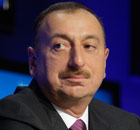
• The president of Azerbaijan and his family. A local construction magnate, Hassan Gozal, controls entities set up in the names of President Ilham Aliyev's two daughters.
• The wife of Russia's deputy prime minister. Olga Shuvalova's husband, businessman and politician Igor Shuvalov, has denied allegations of wrongdoing about her offshore interests.
•A senator's husband in Canada. Lawyer Tony Merchant deposited more than US$800,000 into an offshore trust.
He paid fees in cash and ordered written communication to be "kept to a minimum".
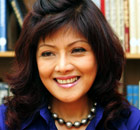
• A dictator's child in the Philippines: Maria Imelda Marcos Manotoc, a provincial governor, is the eldest daughter of former President Ferdinand Marcos, notorious for corruption.
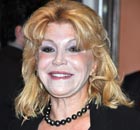
• Spain's wealthiest art collector, Baroness Carmen Thyssen-Bornemisza, a former beauty queen and widow of a Thyssen steel billionaire, who uses offshore entities to buy pictures.
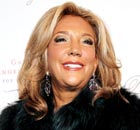
• US: Offshore clients include Denise Rich, ex-wife of notorious oil trader Marc Rich, who was controversially pardoned by President Clinton on tax evasion charges. She put $144m into the Dry Trust, set up in the Cook Islands.
It is estimated that more than $20tn acquired by wealthy individuals could lie in offshore accounts. The UK-controlled BVI has been the most successful among the mushrooming secrecy havens that cater for them.
The Caribbean micro-state has incorporated more than a million such offshore entitiessince it began marketing itself worldwide in the 1980s. Owners' true identities are never revealed.
Even the island's official financial regulators normally have no idea who is behind them.
The British Foreign Office depends on the BVI's company licensing revenue to subsidise this residual outpost of empire, while lawyers and accountants in the City of London benefit from a lucrative trade as intermediaries.
They claim the tax-free offshore companies provide legitimate privacy. Neil Smith, the financial secretary of the autonomous local administration in the BVI's capital Tortola, told the Guardian it was very inaccurate to claim the island "harbours the ethically challenged".
He said: "Our legislation provides a more hostile environment for illegality than most jurisdictions".
Smith added that in "rare instances …where the BVI was implicated in illegal activity by association or otherwise, we responded swiftly and decisively".
The Guardian and ICIJ's Offshore Secrets series last year exposed how UK property empires have been built up by, among others, Russian oligarchs, fraudsters and tax avoiders, using BVI companies behind a screen of sham directors.
Such so-called "nominees", Britons giving far-flung addresses on Nevis in the Caribbean, Dubai or the Seychelles, are simply renting out their names for the real owners to hide behind.
The whistleblowing group WikiLeaks caused a storm of controversy in 2010 when it was able to download almost two gigabytes of leaked US military and diplomatic files.
The new BVI data, by contrast, contains more than 200 gigabytes, covering more than a decade of financial information about the global transactions of BVI private incorporation agencies. It also includes data on their offshoots in Singapore, Hong Kong and the Cook Islands in the Pacific.

-----


Profiles of leading secret account holders

Leading figures across the globe with secret overseas entities

Mongolia

Name: Bayartsogt Sangajav

Offshore company:
 Legend Plus Capital Limited
Bayartsogt Sangajav
One of Mongolia's most senior politicians says he is considering resigning from office after being confronted with evidence of his offshore entity and secret Swiss bank account.
"I shouldn't have opened that account. I should have included the company in my declarations," Bayartsogt Sangajav told the International Consortium of Investigative Journalists (ICIJ). "I don't worry about my reputation. I worry about my family. I probably should consider resigning from my position."
Bayartsogt, who says his account at one point contained more than $1 million, became his country's finance minister in September 2008, a position he held until a cabinet reshuffle in August 2012. He is now the deputy speaker of Parliament.
During those years he attended international meetings and served as governor of the Asian Development Bank and the European Bank of Reconstruction, pushing the case for his poor nation to receive foreign development assistance and investment.

Canada

Name: Tony Merchant

Offshore Company:
 Merchant (2000) US Inc Trust
Tony Merchant
Colourful lawyer and former politician, married to Liberal party senator Pana Merchant. Known for challenges to the Canadian revenue agency over his tax payments . He has also been disciplined by the Law Society for "conduct unbecoming ." In 1998, launched Cook Islands trust with deposit of more than US$800,000 as settlor and initially as beneficiary. Sent fee payments in cash envelopes: the agents noted "All communications regarding this trust is to be kept to a minimum…Do not ever send faxes cos he will have a stroke about it"
Comment: Declines to comment

France

Name: Jean-Jacques Augier

Offshore company:
 International Bookstores Ltd [IBL]
Jean-Jacques Augier
Publisher and Sinologist. Campaign treasurer of François Hollande for the 2012 presidential elections. They studied together at the prestigious National School of Management (ENA). Chief Executive of Eurane SA. Made large publishing investment in China 2005. Caymans-registered entity IBL, set up with 25% shareholding granted to BVI company Sinolinks Transworld Investment Consultancy, and 2.5% shareholding to a Hong Kong entity Capital Concord Developments Ltd.
Comment: He says partner in the offshore firm was Xi Shu, a businessman and a member of the Chinese People's Political Consultative Conference, a political advisory body.

Russia

Name: Olga Shuvalova
Offshore companies: Plato Management & other BVI companies owned by Severin Enterprises Inc
Wife of Igor Shuvalov, a businessman and politician close to Putin , first deputy prime minister since 2008. In 2007, she is recorded as owning Severin Enterprises , set up via Moscow agency Amond & Smith. The dealings of another of its subsidiaries, Bahamas-registered Sevenkey Ltd, were detailed in a 2011 investigative article in Barron's, which tied the company to her husband, who has denied wrongdoing.
Comment: declines to comment

US

Name: Denise Rich
Offshore company: The Dry Trust
Denise Rich
Among nearly 4,000 American names is Denise Rich, a songwriter whose ex-husband, the oil trader Marc Rich, was pardoned by President Clinton as he left office in 2001, over tax evasion and racketeering charges. A Congressional investigation found that Rich, who raised millions of dollars for Democratic politicians, helped promote the pardon. She had $144 million in April 2006 in the trust in the Cook Islands plus a yacht called the Lady Joy, where Rich often entertained celebrities and raised money for charity.
Comment: Rich, who gave up her U.S. citizenship in 2011 and now maintains citizenship in Austria, did not reply to questions about her offshore trust

Azerbaijan

Name: President Ilham Aliyev and family

Offshore Companies: 
Arbor Investments; LaBelleza Holdings; Harvard Management; Rosamund International
Ilham Aliyev
Three BVI entities set up in 2008 in the names of the president's daughters, Arzu and Leyla,. They list as a director wealthy local businessman, Hassan Gozal. His construction company has won major contracts in Azerbaijan. Another BVI entity set up in 2003, lists the president and his wife Mehriban as owners.
Comment: Those involved decline to comment

Spain


Name: 
Baroness Carmen Thyssen-Bornemisza
Offshore Companies: Sargasso Trustees Ltd (1996-2004) and Nautilus Ltd (1994), both registered in the Cook Is. Her son, Borja, also has some of the shares
Baroness Carmen Thyssen-Bornemisza
Former beauty queen, Spanish-based art collector and widow of a billionaire Thyssen steel heir, she used the offshore vehicles to buy art, including Van Gogh's "Watermill at Gennep" from Sotheby and Christies in London.
Her lawyer acknowledged that she gains tax benefits by holding ownership of her art offshore, but stressed that she primarily seeks "maximum flexibility" to move art from country to country
Comment: Her lawyer acknowledged tax benefits from owning art offshore, but stressed that she primarily seeks "maximum flexibility" to move art from country to country

Philippines

Name: Maria Imelda Marcos Manotoc
Offshore company: Sintra Trust [BVI]
Maria Imelda Marcos Manotoc
Late president Marcos' eldest daughter, now a provincial governor, is listed in 2005 in the BVI as the "investment advisor" and beneficiary of the Sintra Trust, set up by her associate, businessman Mark Chua of Singapore. She does not mention the trust in her Philippines declarations of financial interests
Comment: She declined to answer a series of questions from local journalists about the trust
• It is not suggested that any of those listed here have behaved unlawfully. Offshore entities can be held legitimately: the only aspect those listed below have in common is that they have used a jurisdiction which provides them with secrecy. This list is compiled from ICIJ data in the interests of accountability and transparency: any inaccuracies will be corrected promptly if brought to our attention.

Related Articles:
1. £13tn: hoard hidden from taxman by global elite

Wednesday, 3 April 2013

The middle class loves the welfare state – but the poor hate it, Why?


job centre

Comfortably off liberals are always bemused to discover that the working classes and poor do not share their love of the welfare state. Where impeccably middle-class students will bravely spend bitterly cold evenings defending NHS hospitals threatened with closure, and highly paid columnists will devote an entire afternoon to writing tear-drenched articles about the beggary the poor will be plunged into if they lose their benefits, the less well off themselves are decidedly sniffy about the welfare state. Some even seem to hate it. According to recent opinion polls, 64 per cent of Brits think the benefits system "doesn't work"; 78 per cent think that if an unemployed person turns down a job, his benefits should be trimmed; and 84 per cent believe there should be tougher work-capability tests for disabled people. Apparently such views are more entrenched among the poor than among the comfortable.
From these findings, we might deduce that many of the unmoneyed will have given an approving nod to the changes made to the welfare system by Iain Duncan Smith yesterday. And this drives pro-welfare writers and activists absolutely nuts. Why, they wail, are those on the breadline so down about glorious postwar welfarism? In yesterday's Guardian, a columnist did some very public handwringing over the weird fact that anti-welfare "noise" always gets louder "as you head into the most disadvantaged parts of society". This echoes a recent Guardian editorial which bemoaned the way ordinary Brits have become "more Scrooge-like" towards welfare claimants. Or behold the poor, bamboozled Joseph Rowntree researcher who was horrified to discover recently that the less well-off are not "pro-welfare".
Pity the poor, unthanked middle-class warrior for welfare rights! Why is it always his kind alone that must attend demos defending jobseekers' allowance while the fat, fickle jobseekers themselves stay at home, probably watching Jeremy Kyle? Why is it always left to the well-educated activist to adorn her Twitter page with banners saying "I heart the NHS" while the poorest beneficiaries of the NHS fill their Twitterfeeds with tripe about Kim Kardashian's baby bump? These unloved fighters for the right of poor folk to receive money and comfort from the state have come up with all sorts of theories to explain the poor's failure to get off their lardy derrières and defend welfarism. Their favourite is the idea that poor folk, being a bit dim and all, have been brainwashed by "scrounger"-hating tabloid newspapers. As a result of political-class diktat and media messaging, these dimwits have apparently "internalised a Thatcherite every-man-for-himself mentality".
In truth, the real dimwittery in this debate is among the confused and angry middle-class warriors for welfarism. They have simply failed, and failed miserably, to reckon with one of the iron laws of modern politics – which is that the more reliant you are on the welfare state, the more experience you have of it, the less you love it. And by extension, the further removed you are from the welfare state, the less experience you have of it, then the more you can fantasise about its virtues and grow to love it – or at least to love an imaginary version of it derived from watching Casualty and reading Polly Toynbee columns.
If the less well-off really are more hostile to welfarism than the bien-pensant classes, that's perfectly logical. It's because they know the soul-deadening and community-dividing impact that blanket welfarism can have (Editor's comment - Not Sure if this is true). It's because they know that being sustained by the state is a miserable existence compared with being busy, independent, self-reliant. It's because they know that NHS hospitals, especially in the poorer parts of Britain, are far from the greatest human creations since the pyramids, but rather are soulless institutions in which families are relentlessly hectored about their lifestyle choices and eating habits, and the old are treated like animals. It's because they know that the offering of "incapacity" benefits to the long-term unemployed encourages these people to see themselves as sick rather than as having been let down by society. It's because they know that workless communities propped up by ceaseless welfare-state intervention tend to become ghost towns, bereft of individual initiative and lacking in social solidarity. After all, if an individual's or family's every financial and therapeutic need is being met by faraway faceless bureaucrats, what earthly need is there for them to strike up relationships within their own communities, to get together with others in the pursuit of daily happiness or a better future? Welfarism, by coaxing the poor man into the all-encompassing bosom of the state, alienates him from his neighbour. Who could love such a system, save those cushioned sections of society that are lucky enough never to have been mangled by it?
So, all you well-to-do campaigners for the protection or expansion of the welfare state, there is no need to be bemused by the poor's indifference to your battle. For what you love about welfarism – that it insulates the so-called "vulnerable" from the chaotic, often unfair world of the market and struggle and work is precisely what the poor hate about it (Editor's comment - Am not sure of this conclusion about the poor).

Tuesday, 2 April 2013

Communism, welfare state – what's the next big idea?


Any attempt to challenge the elite needs courage, inspiration and a truly ground breaking proposal. Here are two to set us off
emergency food bank coventry
Maria Bgor and her daughter wait for emergency food supplies at the Mosaic church food bank in Hillfields, Coventry. Photograph: Christopher Thomond for the Guardian
Most of the world's people are decent, honest and kind. Most of those who dominate us are inveterate bastards. This is the conclusion I've reached after many years of journalism. Writing on Black Monday, as the British government's full-spectrum attack on the lives of the poor commences, the thought keeps returning to me.
"With a most inhuman cruelty, they who have put out the people's eyes reproach them of their blindness." This government, whose mismanagement of the economy has forced so many into the arms of the state, blames the sick, the unemployed, the underpaid for a crisis caused by the feral elite – and punishes them accordingly. Most of those affected by the bedroom tax, introduced today, are disabled. Thousands will be driven from their homes, and many more pushed towards destitution. Relief for the poor from council tax will be clipped; legal aid for civil cases cut off. Yet at the end of this week those making more than £150,000 a year will have their income tax cut.
Two days later, benefit payments for the poorest will be cut in real terms. A week after that, thousands of families who live in towns and boroughs where property prices are high will be forced out of their homes by the total benefits cap. What we are witnessing is raw economic warfare by the rich against the poor.
So the age-old question comes knocking: why does the decent majority allow itself to be governed by a brutal, antisocial minority? Part of the reason is that the minority controls the story. As John Harris explained in the Guardian, large numbers (including many who depend on it) have been persuaded that most recipients of social security are feckless, profligate fraudsters. Despite everything that has happened over the last two years, Rupert Murdoch, Lord Rothermere and the other media barons still seem to be running the country. Their relentless propaganda, using exceptional and shocking cases to characterise an entire social class, remains highly effective. Divide and rule is as potent as it has ever been.
But I've come to believe that there's also something deeper at work: that most of the world's people live with the legacy of slavery. Even in a nominal democracy like the United Kingdom, most people were more or less in bondage until little more than a century ago: on near-starvation wages, fired at will, threatened with extreme punishment if they dissented, forbidden to vote. They lived in great and justified fear of authority, and the fear has persisted, passed down across the five or six generations that separate us and reinforced now by renewed insecurity, snowballing inequality, partisan policing.
Any movement that seeks to challenge the power of the elite needs to ask itself what it takes to shake people out of this state. And the answer seems inescapable – hope. Those who govern on behalf of billionaires are threatened only when confronted by the power of a transformative idea.
A century and more ago the idea was communism. Even in the form in which Marx and Engels presented it, its problems are evident: the simplistic binary system into which they tried to force society; their brutal dismissal of anyone who did not fit this dialectic ("social scum", "bribed tool[s] of reactionary intrigue"); their reinvention of Plato's guardian-philosophers, who would "represent and take care of the future" of the proletariat; the unprecedented power over human life they granted to the state; the millenarian myth of a final resolution to the struggle for power. But their promise of another world electrified people who had, until then, believed that there was no alternative.
Seventy years ago, in the UK, the transformative idea was freedom from want and fear through the creation of a social security system and a National Health Service. It swept a Labour government to power which was able, despite far tougher economic circumstances than today's, to create a fair society from a smashed, divided nation. This is the achievement which – through a series of sudden, spectacular and unmandated strikes – Cameron's government is now demolishing.
So where do we look for the idea that can make hope more powerful than fear? Not to the Labour party. If Ed Miliband cannot bring himself even to oppose a bill which retrospectively denies compensation to cheated jobseekers, the most we can expect from him is a low-alcohol conservatism of the kind that doused all aspiration under Tony Blair.
Last week I ran a small online poll, asking people to nominate inspiring, transfiguring ideas. The two mentioned most often were land value taxation and a basic income. As it happens, both are championed by the Green party. On this and other measures, its policies are by a long way more progressive than Labour's.
I discussed land value taxation in a recent column. A basic income (also known as a citizen's income) gives everyone, rich and poor, without means-testing or conditions, a guaranteed sum every week. It replaces some but not all benefits (there would, for instance, be extra payments for pensioners and people with disabilities). It banishes the fear and insecurity now stalking the poorer half of the population. Economic survival becomes a right, not a privilege.
A basic income removes the stigma of benefits while also breaking open what politicians call the welfare trap. Because taking work would not reduce your entitlement to social security, there would be no disincentive to find a job – all the money you earn is extra income. The poor are not forced by desperation into the arms of unscrupulous employers: people will work if conditions are good and pay fair, but will refuse to be treated like mules. It redresses the wild imbalance in bargaining power that the current system exacerbates. It could do more than any other measure to dislodge the emotional legacy of serfdom. It would be financed by progressive taxation – in fact it meshes well with land value tax.
These ideas require courage: the courage to confront the government, the opposition, the plutocrats, the media, the suspicions of a wary electorate. But without proposals on this scale, progressive politics is dead. They strike that precious spark, so seldom kindled in this age of triangulation and timidity – the spark of hope.