Indira Gandhi "The Indian Army wanted to finish off West Pakistan after the fall of East Pakistan"
Sunday, 25 June 2023
Saturday, 24 June 2023
Economics Explained: Business Failure and Entrepreneurs
The survival and success rates of new businesses can vary significantly depending on various factors such as industry, location, market conditions, management, and more. While I don't have access to real-time data, I can provide you with some general information based on historical trends and studies conducted prior to my knowledge cutoff in September 2021. It's important to note that these figures are approximate and can vary over time.
Survival Rates:
- According to the U.S. Bureau of Labor Statistics, about 20% of new businesses fail within their first year of operation.
- By the end of their fifth year, roughly 50% of new businesses no longer exist.
- After ten years, around 70% of new businesses have closed down.
Success Rates:
- Determining the success of a business can be subjective and depends on various factors, such as profitability, growth, market share, and individual goals.
- Studies suggest that a significant percentage of new businesses may struggle to achieve sustainable profitability and long-term success.
- Factors that contribute to successful businesses include a strong business plan, market demand for the product or service, effective marketing and sales strategies, financial management, and adaptability to changing market conditions.
It's important to remember that these statistics are generalizations and do not guarantee individual outcomes. The success of a new business depends on a multitude of factors, including the specific circumstances surrounding each venture. Entrepreneurship requires careful planning, market research, a solid business model, and continuous adaptation to improve the chances of survival and success.
--
Despite the challenges and risks associated with starting a new business, many people still choose to pursue entrepreneurship for several reasons. Here are a few factors that motivate individuals to start their own businesses:
Pursuing Passion and Independence: Many entrepreneurs are driven by their passion for a particular product, service, or industry. They desire the freedom to work on something they love and have control over their professional lives.
Financial Opportunities: Starting a business can provide potential financial rewards. Entrepreneurs may see an opportunity to create wealth, generate income, or achieve financial independence by owning a successful business.
Flexibility and Work-Life Balance: Some individuals start businesses to gain greater control over their schedules and achieve a better work-life balance. Entrepreneurship can offer the flexibility to set one's own hours, work from anywhere, and spend more time with family and pursuing personal interests.
Innovation and Creativity: Starting a business allows individuals to bring their innovative ideas and solutions to life. They may want to introduce new products or services, disrupt existing industries, or solve specific problems they are passionate about.
Personal Growth and Challenge: Entrepreneurship is a journey that provides opportunities for personal growth and development. Overcoming challenges, acquiring new skills, and taking on leadership roles can be highly rewarding and fulfilling for many entrepreneurs.
Autonomy and Decision-Making: Some individuals prefer to be their own boss and make independent decisions. Entrepreneurship offers the autonomy to shape the direction of the business, implement strategies, and build a company culture according to their vision.
Job Security and Control: In an uncertain job market, starting a business can provide a sense of security and control over one's professional future. Rather than relying on a single employer, entrepreneurs create their own opportunities and have a certain level of control over their destiny.
It's important to note that while starting a business can be appealing for these reasons, success is not guaranteed, as it requires careful planning, hard work, resilience, and adaptability. Each individual's motivations for starting a business can vary, and the decision to become an entrepreneur involves a unique blend of personal, professional, and financial considerations.
--
While starting a new business involves risks and uncertainties, it is not entirely comparable to buying a lottery ticket. Here are some key differences:
Control and Influence: When starting a business, individuals have a considerable degree of control and influence over the outcome. They can shape the business strategy, make decisions, and take actions that impact its success. In contrast, buying a lottery ticket is purely based on chance, with no control or influence over the outcome.
Effort and Skill: Starting a business requires significant effort, planning, and the application of skills and knowledge. Entrepreneurs must invest time, resources, and expertise to develop their business, whereas buying a lottery ticket requires no effort or skill beyond the act of purchasing the ticket.
Probabilities and Factors: The success of a business is influenced by various factors such as market demand, competition, industry knowledge, marketing strategies, financial management, and more. While the odds of success may vary, they are not entirely random like the odds of winning a lottery, which are typically extremely low.
Learning and Adaptation: Entrepreneurs have the opportunity to learn from their experiences, adapt their strategies, and improve their chances of success over time. They can acquire knowledge, seek guidance, and make adjustments based on market feedback. In contrast, winning the lottery is based purely on luck and does not offer the opportunity for personal growth or development.
Long-Term Potential: Starting a business has the potential for long-term sustainability, profitability, and growth. A successful business can provide a stable income and create value for its owners, employees, and customers over an extended period. In contrast, winning the lottery is typically a one-time event with no guarantee of long-term financial stability.
Success in business is influenced by a multitude of factors, including strategic planning, effective execution, market understanding, adaptability, innovation, customer satisfaction, financial management, leadership skills, team building, and more. While there are external factors and market forces that are beyond an individual's control, entrepreneurs have the ability to actively shape and influence many aspects of their business, increasing the likelihood of success through informed decision-making, hard work, continuous learning, and a willingness to adapt to changing circumstances.
Friday, 23 June 2023
Attacking Modi in US shows IAMC using Indian Muslims as pawns
Narratives propagated by the likes of IAMC often rely on select stories, and it is concerning that the Western media accepts them without delving into the ground realities writes AMANA BEGAM in The Print
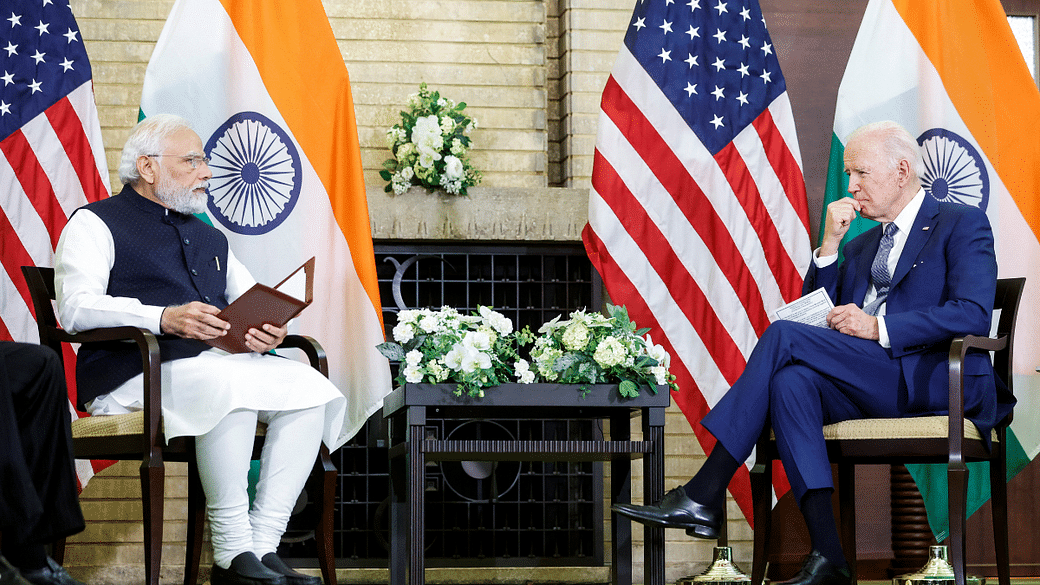
While PM Modi’s state visit to the US is being noticed across world capitals, his opponents in the US are busy doing what they love most — criticising him for his human rights record and accusing his government of suppressing dissent and implementing discriminatory policies against Muslims and other minority groups.
It is not uncommon to witness certain groups initiating campaigns on foreign soil, portraying a narrative of persecution of Indian Muslims. Raising one’s voice for human rights is indeed a crucial and meaningful endeavour. However, challenges arise when human rights issues are exploited as a tool for propaganda, distorting and manipulating the truth about a nation.
Being an Indian Pasmanda Muslim, I frequently witness the propagation of these false narratives against my homeland. Hence it is my sincere duty to raise my voice against them. India, as a nation, not only embraces the homeland of over one billion Hindus but also stands as a diverse abode for 200 million Muslims, 28 million Christians, 21 million Sikhs, 12 million Buddhists, 4.45 million Jains, and countless others.
It is truly disheartening to witness the portrayal of a nation with such a rich and inclusive history as a place where Muslims are purportedly on the verge of facing genocide. Such narratives often rely on select stories, and it is concerning that the Western media often accepts them without delving into the ground realities and comprehending the policies implemented by the Indian State. It is important for such storytellers to seek a more nuanced understanding by examining the comprehensive picture and taking into account the complexities and intricacies.
To begin with, organisations like the Indian American Muslim Council (IAMC) claim to represent the voice of Indian Muslims. However, they frequently disseminate false and misleading information through their tweets. Moreover, there have been instances where their tweets have been provocative and inflammatory. For instance, they tweeted an unsubstantiated claim stating that all victims in the Delhi riots were Muslims. This organisation has scheduled a protest outside the White House, which raises legitimate questions about their true intentions– do they genuinely prioritise the welfare of Indian Muslims or have ulterior motives and agendas at play?
Indian Muslims, stop being a pawn of anti-India forces
It is high time the Western media and geopolitical interest groups refrain from exploiting the term “Indian Muslims” for their own agendas. As for Indian Muslims, it is important that they themselves comprehend how they are being manipulated as pawns on the global stage, working against their own nation’s interests. It is imperative for them to speak out against these false narratives. We lead peaceful lives, enjoy equal rights and opportunities, have the freedom to practise our religion and make choices, and receive our fair share of benefits from welfare schemes run by the government. Our future is intertwined with our nation’s interests, and anything that generates an anti-India narrative ultimately goes against our own well-being.
Organisations like IAMC, which have no genuine connection with Indian Muslims, falsely claim to represent us while using us as pawns to further their own agendas. It is essential for Muslim intellectuals to see through these manipulations. First, the Muslim community was exploited as a mere vote bank. Now there is a risk of them being used as tools to perpetuate an anti-India narrative.
Examine Western media bias
The Western media has consistently portrayed a negative image of India since its Independence. Interestingly, failed states and countries in the middle of civil wars receive minimal attention.
PM Modi, during a national executive meeting of the BJP, clearly expressed a desire for outreach to the Muslim community, acknowledging that many within the community wish to connect with the party. He emphasised the importance of engaging with not only the economically disadvantaged Pasmanda and Bora Muslims but also educated Muslims. Previously, Modi has highlighted the integration of Pasmanda Muslims with the BJP, urging positive programmes to attract their support.
When BJP leaders have made objectionable statements about Muslims, leading to a tense atmosphere in the country, the party has taken disciplinary action against them too. Under the Modi government, a significant number of minority students have received education scholarships, surpassing previous administrations. Muslim women beneficiaries have expressed their gratitude for various government schemes, such as free ration, the abolition of instant divorce practices, free Covid vaccinations, Ujjawala cooking gas connections, and free housing, which have improved their lives. These initiatives demonstrate efforts to ensure the inclusion and well-being of Muslim communities in India.
It is important to address how Western media and human rights organisations often depict Indian Muslims as ostracised and living in a genocidal environment. For instance, the IAMC played a significant role in lobbying against India in 2019, leading to US Commission on International Religious Freedom recommending India to be blacklisted. For four consecutive years, the USCIRF has advised the US administration to designate India as a “Country of Particular Concern.” Ironically, in their assessments, they did not take into account the reality experienced by Indian Muslims. According to Pew Research, 98 per cent of Indian Muslims are free to practise their religion without hindrance. This stark contrast highlights the disconnect between the exaggerated narratives and the ground realities of religious freedom for Indian Muslims.
Don’t weaponise discourse
In their commentary, Western media and human rights organisations fail to carry voices of ordinary Indian Muslims. Providing a comprehensive and accurate understanding, based on data, helps avoid weaponisation of narratives that serve geopolitical interests.
Data often highlights the disparities in perceptions of discrimination among different communities. According to the Pew study, 80 per cent of African-Americans, 46 per cent of Hispanic Americans, and 42 per cent of Asian Americans stated they experience “a lot of discrimination” in the US. In comparison, 24 per cent of Indian Muslims say that there is widespread discrimination against them in India. Furthermore, the majority of Indian Muslims expressed pride in their Indian identity.
These statistics challenge the narrative of widespread persecution of Indian Muslims within their own nation. It raises the question of whether the same level of scrutiny should be applied to the United States, considering the reported discrimination experienced by minority communities there. It prompts us to reflect on whether the labelling of human rights violations should be applied selectively. And what explains the timing of such mongering — just before a State head is about to visit the country.
While PM Modi’s state visit to the US is being noticed across world capitals, his opponents in the US are busy doing what they love most — criticising him for his human rights record and accusing his government of suppressing dissent and implementing discriminatory policies against Muslims and other minority groups.
It is not uncommon to witness certain groups initiating campaigns on foreign soil, portraying a narrative of persecution of Indian Muslims. Raising one’s voice for human rights is indeed a crucial and meaningful endeavour. However, challenges arise when human rights issues are exploited as a tool for propaganda, distorting and manipulating the truth about a nation.
Being an Indian Pasmanda Muslim, I frequently witness the propagation of these false narratives against my homeland. Hence it is my sincere duty to raise my voice against them. India, as a nation, not only embraces the homeland of over one billion Hindus but also stands as a diverse abode for 200 million Muslims, 28 million Christians, 21 million Sikhs, 12 million Buddhists, 4.45 million Jains, and countless others.
It is truly disheartening to witness the portrayal of a nation with such a rich and inclusive history as a place where Muslims are purportedly on the verge of facing genocide. Such narratives often rely on select stories, and it is concerning that the Western media often accepts them without delving into the ground realities and comprehending the policies implemented by the Indian State. It is important for such storytellers to seek a more nuanced understanding by examining the comprehensive picture and taking into account the complexities and intricacies.
To begin with, organisations like the Indian American Muslim Council (IAMC) claim to represent the voice of Indian Muslims. However, they frequently disseminate false and misleading information through their tweets. Moreover, there have been instances where their tweets have been provocative and inflammatory. For instance, they tweeted an unsubstantiated claim stating that all victims in the Delhi riots were Muslims. This organisation has scheduled a protest outside the White House, which raises legitimate questions about their true intentions– do they genuinely prioritise the welfare of Indian Muslims or have ulterior motives and agendas at play?
Indian Muslims, stop being a pawn of anti-India forces
It is high time the Western media and geopolitical interest groups refrain from exploiting the term “Indian Muslims” for their own agendas. As for Indian Muslims, it is important that they themselves comprehend how they are being manipulated as pawns on the global stage, working against their own nation’s interests. It is imperative for them to speak out against these false narratives. We lead peaceful lives, enjoy equal rights and opportunities, have the freedom to practise our religion and make choices, and receive our fair share of benefits from welfare schemes run by the government. Our future is intertwined with our nation’s interests, and anything that generates an anti-India narrative ultimately goes against our own well-being.
Organisations like IAMC, which have no genuine connection with Indian Muslims, falsely claim to represent us while using us as pawns to further their own agendas. It is essential for Muslim intellectuals to see through these manipulations. First, the Muslim community was exploited as a mere vote bank. Now there is a risk of them being used as tools to perpetuate an anti-India narrative.
Examine Western media bias
The Western media has consistently portrayed a negative image of India since its Independence. Interestingly, failed states and countries in the middle of civil wars receive minimal attention.
PM Modi, during a national executive meeting of the BJP, clearly expressed a desire for outreach to the Muslim community, acknowledging that many within the community wish to connect with the party. He emphasised the importance of engaging with not only the economically disadvantaged Pasmanda and Bora Muslims but also educated Muslims. Previously, Modi has highlighted the integration of Pasmanda Muslims with the BJP, urging positive programmes to attract their support.
When BJP leaders have made objectionable statements about Muslims, leading to a tense atmosphere in the country, the party has taken disciplinary action against them too. Under the Modi government, a significant number of minority students have received education scholarships, surpassing previous administrations. Muslim women beneficiaries have expressed their gratitude for various government schemes, such as free ration, the abolition of instant divorce practices, free Covid vaccinations, Ujjawala cooking gas connections, and free housing, which have improved their lives. These initiatives demonstrate efforts to ensure the inclusion and well-being of Muslim communities in India.
It is important to address how Western media and human rights organisations often depict Indian Muslims as ostracised and living in a genocidal environment. For instance, the IAMC played a significant role in lobbying against India in 2019, leading to US Commission on International Religious Freedom recommending India to be blacklisted. For four consecutive years, the USCIRF has advised the US administration to designate India as a “Country of Particular Concern.” Ironically, in their assessments, they did not take into account the reality experienced by Indian Muslims. According to Pew Research, 98 per cent of Indian Muslims are free to practise their religion without hindrance. This stark contrast highlights the disconnect between the exaggerated narratives and the ground realities of religious freedom for Indian Muslims.
Don’t weaponise discourse
In their commentary, Western media and human rights organisations fail to carry voices of ordinary Indian Muslims. Providing a comprehensive and accurate understanding, based on data, helps avoid weaponisation of narratives that serve geopolitical interests.
Data often highlights the disparities in perceptions of discrimination among different communities. According to the Pew study, 80 per cent of African-Americans, 46 per cent of Hispanic Americans, and 42 per cent of Asian Americans stated they experience “a lot of discrimination” in the US. In comparison, 24 per cent of Indian Muslims say that there is widespread discrimination against them in India. Furthermore, the majority of Indian Muslims expressed pride in their Indian identity.
These statistics challenge the narrative of widespread persecution of Indian Muslims within their own nation. It raises the question of whether the same level of scrutiny should be applied to the United States, considering the reported discrimination experienced by minority communities there. It prompts us to reflect on whether the labelling of human rights violations should be applied selectively. And what explains the timing of such mongering — just before a State head is about to visit the country.
Fallacies of Capitalism 15: The Voluntary Transactions of Actors in an Economy
A voluntary transaction refers to an economic exchange between two or more parties where each party willingly participates without coercion or external pressure. In a voluntary transaction, individuals are assumed to engage in the exchange because they perceive it to be mutually beneficial, based on their own preferences and subjective judgements of value.
However, the "voluntary transactions" fallacy arises when this concept is applied without considering the power imbalances and information asymmetries that can exist in real-world market transactions. While voluntary transactions are a foundational concept in market economics, it is important to recognise that not all transactions occur under ideal conditions of equal power and perfect information. Here are some additional points to consider:
Power imbalances: In many transactions, there can be significant disparities in bargaining power between the parties involved. For example, in labour markets, workers may face limited employment options and economic pressures, while employers may have more leverage in determining wages and working conditions. These power imbalances can influence the outcomes of the transaction, potentially leading to exploitation or unfair terms.
Information asymmetry: In voluntary transactions, it is assumed that both parties have access to complete and accurate information about the goods, services, or conditions involved. However, in reality, information can be unevenly distributed between buyers and sellers. Sellers may possess superior knowledge about the product, its quality, or potential risks, while buyers may lack access to the same information. This information asymmetry can undermine the notion of fully informed and voluntary choices.
Coercive pressures: While voluntary transactions should be free from coercion, individuals can face external pressures that limit their choices and compromise their ability to make truly voluntary decisions. These pressures can include economic necessity, social or cultural expectations, or systemic inequalities. For example, individuals may accept low-paying jobs or unfavourable contracts due to limited alternatives or the need to meet basic needs.
Market failures: The assumption of voluntary transactions fails to account for market failures, such as externalities or the undersupply of public goods. Externalities occur when the actions of one party impose costs or benefits on others who are not involved in the transaction. Market failures can result in suboptimal outcomes, where voluntary transactions do not account for the broader social or environmental impacts.
By considering these factors, it becomes clear that the "voluntary transactions" fallacy oversimplifies the complexities of real-world market interactions. Recognising the existence of power imbalances, information asymmetries, and other limitations is crucial for understanding the potential consequences of market transactions and designing policies that promote fair and equitable outcomes.
Fallacies of Capitalism 14: Capitalism is Synonymous with Democracy
The "capitalism is synonymous with democracy" fallacy assumes a direct and harmonious relationship between capitalism, an economic system based on private ownership and market competition, and democracy, a political system characterised by representative government and citizen participation. However, this fallacy overlooks the potential conflicts that can arise between economic interests and democratic decision-making processes in several ways:
Power imbalances: Capitalism can lead to the concentration of economic power in the hands of a few wealthy individuals or corporations. These entities may exert disproportionate influence over political processes, such as lobbying or campaign financing, which can undermine the principles of equal representation and fair democratic decision-making. The resulting power imbalances can distort policy outcomes and compromise the interests of the broader population.
Influence of money in politics: Capitalist systems often allow for the infusion of large sums of money into political campaigns and lobbying efforts. This financial influence can create an uneven playing field, where economic elites can exert significant control over political agendas and policy outcomes. Democratic decision-making should ideally be based on the will of the people, but when economic interests heavily influence political processes, the voices and concerns of marginalised or less affluent citizens may be marginalised or ignored.
Regulatory capture: In capitalist systems, regulatory agencies are responsible for overseeing various sectors and industries to ensure fair competition and protect public interests. However, there is a risk of regulatory capture, whereby the regulated industries exert significant influence over the regulators. This can result in policies that favour the interests of powerful economic actors rather than promoting the broader welfare or democratic principles. Regulatory capture undermines the accountability and responsiveness of democratic institutions.
Inequality and political participation: Capitalism can exacerbate economic inequalities, which, in turn, can influence political participation. When wealth and income disparities are significant, certain groups may have greater resources and access to political power, while others may face barriers to participation. This can undermine the democratic ideal of equal political voice and representation, as marginalised groups or those with limited economic resources may be less able to engage meaningfully in democratic processes.
Conflicts of interest: Capitalist economies rely on profit-maximising behaviour, which may run counter to certain democratic goals. For instance, economic actors may prioritise short-term profits over long-term societal or environmental well-being. Democratic decision-making often requires considering broader societal interests, including sustainability, social justice, and the needs of future generations. Conflicts can arise when economic interests clash with democratic principles, potentially undermining the pursuit of collective well-being and the long-term interests of society.
Recognising the potential conflicts between economic interests and democratic decision-making processes is essential for maintaining a healthy balance between capitalism and democracy. It underscores the importance of robust institutions, transparency, campaign finance reform, and mechanisms to mitigate undue influence and power imbalances. By addressing these conflicts, societies can strive for a more equitable and inclusive democratic system that ensures broad representation and safeguards against the dominance of narrow economic interests.
Fallacies of Capitalism 13: The Market as the Sole Arbiter of Value
Here are examples that illustrate how the "market as the sole arbiter of value" fallacy fails to account for the social, cultural, and non-monetary dimensions of human well-being and progress:
Environmental degradation: The market's reliance on monetary transactions often undervalues the importance of environmental sustainability. For instance, the extraction of natural resources like forests or minerals may generate profits in the short term, but the long-term ecological consequences, such as deforestation or habitat destruction, are not adequately factored into market prices. This disregard for environmental costs can lead to irreversible damage to ecosystems and undermine the well-being of future generations.
Inequality and social justice: The market's emphasis on monetary outcomes can exacerbate social inequalities. For example, in education, market-driven systems that rely heavily on private funding and tuition fees may limit access to quality education for low-income individuals, perpetuating educational disparities and social inequality. The market's narrow focus on financial value fails to account for the importance of equal opportunities and social justice in promoting overall well-being and societal progress.
Non-monetary aspects of well-being: The market often overlooks the value of non-monetary aspects of well-being. Consider the work of caregivers, such as stay-at-home parents or individuals caring for elderly family members. Their contributions to society, while not monetarily compensated, are vital for the well-being of families and communities. However, the market's narrow focus on monetary transactions does not adequately recognise or compensate these essential caregiving roles.
Cultural diversity and preservation: The market's emphasis on profitability may undervalue cultural diversity and heritage. For instance, traditional arts and crafts, indigenous practices, or endangered languages may not have immediate market demand or generate significant financial returns. Consequently, these cultural elements might be neglected or disappear due to insufficient support or funding. The market's failure to account for the intrinsic value of cultural diversity can lead to the erosion of rich cultural traditions and the loss of unique identities within societies.
Public goods and collective action: Public goods, such as public parks, infrastructure, or scientific research, provide widespread benefits but are often undersupplied by the market. For example, the market may not efficiently allocate resources for basic scientific research that does not have immediate commercial applications. Neglecting such investments can hinder long-term progress, innovation, and societal well-being. The market's focus on profitability may limit the provision of public goods that are essential for collective well-being and social advancement.
By recognising these examples, it becomes evident that relying solely on the market as the sole arbiter of value neglects crucial aspects of human well-being and progress. Policymakers and societies need to consider a broader range of factors, including social, cultural, and non-monetary dimensions, to foster sustainable development, reduce inequalities, and promote a more comprehensive understanding of human welfare.
Subscribe to:
Comments (Atom)