Search This Blog

Thursday, 11 August 2016

Why does love hurt?

Linda Blair in The Guardian

When we think about love, most of us imagine candlelit dinners, wine and roses. Why, then, did the poet Kahlil Gibran describe love like this?

“When love beckons to you, follow him,
Though his ways are hard and steep.
And when his wings enfold you yield to him,
Though the sword hidden among his pinions may wound you.
And when he speaks to you believe in him,
Though his voice may shatter your dreams as the north wind lays waste the garden.” 

At first glance, it feels as if he must have got it wrong. After all, we’re far more accustomed to thinking of love as an overwhelmingly positive experience, something that happens to us rather than something we have to make happen.

The reason is that Gibran understood the difference between love and lust. Lust is what romantic stories and fairytale endings describe: an intense, overwhelming, all-consuming desire, an inability to think about anything other than how to capture the heart (and more to the point, the body) of the object of our desire. That’s lust. That is not love.

Lust is a purely sexual response. It’s all (and only) about the need to procreate, and although it’s most often described in terms of visual attributes, in fact when we’re “in lust”, we’re responding more to scent than to sight. We lust after a person if our senses inform us (generally without our conscious awareness) that this individual possesses an immune system that is maximally different from our own. If we conceive a child with this person, our scent is telling us, we’ll produce the healthiest, most disease-resistant child possible.

Lust idealises and projects. It makes it possible for us to see only what we want to see and what we hope to see in the other person. At the same time, it allows us to overlook any of their faults or defects. When we’re in lust, we see the other person as perfect, as someone who is utterly desirable. 

Lust is more or less an instantaneous response. “Their eyes met, and the feeling was electric” – this describes lust, not love. It is a primitive bodily response, the aim of which is to ensure the survival of our DNA. It hits our senses and stimulates the production of the same neurochemicals – dopamine in particular – that are awakened when we become addicted to narcotics. Sadly, however, this overwhelmingly pleasurable experience is only temporary. Within weeks – months if we’re lucky – we fall out of lust.

Love, real love for another person, is best defined by the psychiatrist and writer M Scott Peck. He describes it as the will to extend yourself – at whatever personal cost – to nurture the growth of another person. Love, in other words, is about overlooking your own needs and pleasures in the service of allowing the person you love to seek their potential, to be the best they can possibly be.

Love isn’t about our own need to procreate, or about any other need of our own for that matter. When we truly love someone, our primary focus is on their self-expression, not on our own. Of course, as Peck cautions, the other person won’t experience this in a positive way if we don’t also first love ourselves.

Those who purport to “love” someone because they’re hoping to fill the void of emptiness within themselves will only cause that person to feel smothered and resentful. Nor is love about evening up a “score”. It doesn’t expect anything in return. Love simply flows outwards. As Gibran says, “Love possesses not nor would it be possessed. For love is sufficient unto love.”

When we really love someone, we’re willing to accept that person as they truly are. There will be no attempt to idealise them or to make them over in any way. We’ll try as hard as we can to understand how the other person hopes to reach their potential, to become everything they can be. This requires patience, vast amounts of time, and lots of hard work – not least because quite often, the other person isn’t even clear themselves about what will fulfil them most.

Love also hurts when we discover something about the other person that will result in a loss to us. All parents must experience this when their adorable, dependent little baby becomes an adolescent, then a young adult. To allow them to fulfil their potential, parents must show their love by giving up the delicious sense of being needed, and encourage their child to do for themselves, because only that way can the child become fully independent. Love hurts because there are times when we have to let go of what we’ve loved most.

Finally, love hurts because when we truly love, we must do so honestly. No secrets, no avoidance, no kidding ourselves, no ulterior motives. When we truly love, what we discover about the other person inevitably demands that we confront our own beliefs and desires. Loving another person means, therefore, that both individuals will grow and change – and change, even when it’s for the best, is a painful process.

Is it worth all this pain to love, really to love?

It is. To love is to live fully, to have a purpose that makes life worth living. Once again, it is Gibran who explains most eloquently what happens when you truly love another person:

“All these things shall love do unto you
that you may know the secrets of your heart,
and in that knowledge become a fragment of Life’s heart.”
Muziris or Kodungallur: Did black pepper cause the demise of India's ancient port?

In the first century BC it was one of India’s most important trading ports, whose exports – especially black pepper – kept even mighty Rome in debt. But have archaeologists really found the site of Muziris, and why did it drop off the map?

By Srinath Perur in The Guardian


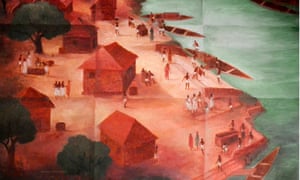
A painting of Muziris by the artist Ajit Kumar. In 2004, excavations in Kerala sparked new interest in this lost port. Illustration: KCHR


Around 2,000 years ago, Muziris was one of India’s most important trading ports. According to the Akananuru, a collection of Tamil poetry from the period, it was “the city where the beautiful vessels, the masterpieces of the Yavanas [Westerners], stir white foam on the Periyar, river of Kerala, arriving with gold and departing with pepper.”

Another poem speaks of Muziris (also known as Muciripattanam or Muciri) as “the city where liquor abounds”, which “bestows wealth to its visitors indiscriminately” with “gold deliveries, carried by the ocean-going ships and brought to the river bank by local boats”.

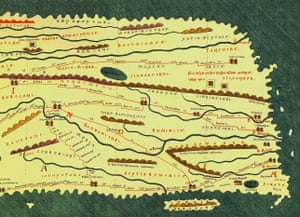
The Roman author Pliny, in his Natural History, called Muziris “the first emporium of India”. The city appears prominently on the Tabula Peutingeriana, a fifth-century map of the world as seen from Rome. But from thereon, the story of this great Indian port becomes hazy. As reports of its location grow more sporadic, it literally drops off the map.

In modern-day India, Muziris was much more of a legend than a real city – until archaeological excavations in the southern state of Kerala, starting in 2004,sparked reports of a mysterious lost port. Though the archaeologists cannot be certain, they – and, with some exceptions, historians too – now believe they have located the site of Muziris.


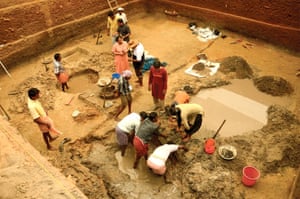
Excavations in the village of Pattanam, Kerala, have raised questions about whether the site is ‘urban’ enough to be Muziris. Photograph: KCHR

“This was a centre of paramount importance for Roman trade,” says Federico De Romanis, associate professor of Roman history at the University of Rome Tor Vergata. “What made it absolutely unique was the considerable amounts of black pepper exported from Muziris. We are talking about thousands of tons.”

In addition to pepper, De Romanis says, exports included both local products – ivory, pearls, spices such as malabathron – and those from other parts of India, including semi-precious stones, silks and the aromatic root nard. “These attest to commercial relationships nurtured with the Gangetic valley and east Himalayan regions.”

In the other direction, ships arrived with gold, coral, fine glassware, amphorae of wine, olive oil and the fermented fish sauce called garum. But the value of this trade was lopsided: De Romanis says Pliny the Elder estimated Rome’s annual deficit caused by imbalanced trade with India at 50m sesterces (500,000 gold coins of a little less than eight grammes), with “Muziris representing the lion’s share of it”.

Maritime trade between Muziris and Rome started in the first century BC, when it became known that sailing through the Red Sea to the horn of Africa, then due east along the 12th latitude, led to the Kerala coast. “Muziris was entirely dependent on foreign, especially Roman, demand for pepper,” De Romanis says. So when the Roman empire’s economy began to struggle in the third century AD, he believes the trade in pepper reconfigured itself, and Muziris lost its importance.


Muziris pictured (bottom right) in the Tabula Peutingeriana, a fifth-century map of the world as seen from Rome

Dr PJ Cherian, director of the Kerala Council for Historical Research, confirms there are few references to Muziris after the fifth century AD. It had been generally assumed that Muziris referred to the port of Kodungallur, which had been put out of commission by devastating floods in 1341 – but excavations there did not turn up anything older than the 13th century.

Travel 11 kilometres by road from Kodungallur, however, and you reach the village of Pattanam. For years, children there had been collecting beads that would rise to the surface during the monsoon season. After an initial dig in 2004,systematic excavations by Cherian and his colleagues began in 2007. Soon, he says, it was clear they had discovered a major archaeological site.

Over nine seasons of excavations, they have found Roman amphorae (for the first time on the Keralan coast), a wharf-like structure, a dug-out canoe that is approximately 2,000 years old – plus foundations, bricks and tiles, tools and artefacts made of iron, lead and copper, glass beads, gold ornaments and semi-precious stones clearly meant for export.

So, is Pattanam the site of fabled Muziris? There isn’t clinching evidence yet, but Cherian thinks it’s likely. He is also tired of questions about the Roman connection, asking: “When they excavate a Roman site in Europe, do they obsess similarly about whether it traded with India?” To him, an integral part of the excavation is what it reveals about the people who actually lived there.

Tathagata Neogi, of the Indian Institute of Archaeology, explains the stages of occupation in Pattanam using a large photograph of an excavated trench’s cross-section. Human habitation began there around 1000BC, marked by characteristic Iron Age black and redware pottery, while the period between 500 and 300BC marks a mixed phase.

“We think this is when Pattanam began making the transition from a village to a trade hub,” Neogi says. The period from 300BC to AD500 is densely packed with evidence for trade both within and outside India. Burnt bricks and tiles, terracotta ring wells and coins suggest a thriving settlement. Small amounts of west Asian pottery in the earlier portions of this segment provide evidence for pre-Roman maritime trade. After AD500 the record thins out – until AD1500, when Chinese and European ceramics are found.
Is Pattanam ‘urban’?

Today, Pattanam is a village situated four kilometres from the sea. The vegetation is typical of the region: tall arcing palms, squat plantains, vines and creepers, near-flourescent monsoon grass. There are sporadic houses, a temple, a village office and sudden channels of water.

The archaeological mound at Pattanam is around 70 hectares; atop it sits a museum displaying finds from the excavations. It is curious, Cherian notes, that a village should be named Pattanam, a word that means market-town or trading port across south India.

Some historians – such as Rajan Gurukkal, author of Rethinking Classical Indo-Roman Trade – have argued that Pattanam (which he believes is the location of Muziris) was likely nothing more elaborate than a colony of Mediterranean merchants, plus the inland traders and artisans who dealt with them. Gurukkal’s theory is based on the apparent absence of permanent structures, and the seeming disconnect of the materials and skills found at Pattanam with those of the wider region. He suggests the colony might even have been seasonal, inhabited only when ships arrived for trade.

Such a debate comes down to what is meant by a city or urban settlement. According to Cherian, “Urban is a complicated word – to me, it means ‘organised’, ‘thought out’, ‘planned’.” And he sees evidence of this in Pattanam: “It was certainly a city, but of its time.”

The excavations have revealed what appear to be toilets, drains and terracotta ring wells, and these – along with raised foundations aligned in one direction – suggest a planned settlement.


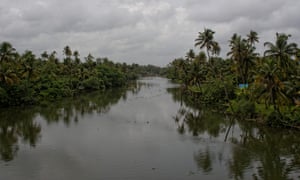
A channel of the Periyar river near Pattanam. Photograph: Srinath Perur

Cherian also thinks the level of technological accomplishment – the quality of mortar in a wharf structure; evidence of intricate glass and stone work – and the high density of potsherds (some 4.5 million have been recovered so far) all point to a settlement that was urban in character. The local coins suggest a monetised economy and a degree of political organisation.

“We now recognise that ancient cities could look very different from their modern counterparts, even as they had the same functions of trade and economic integration,” says Monica Smith, professor of anthropology at UCLA, who studies newly emergent urbanism in the Indian subcontinent.

“It used to be felt, by 20th-century archaeologists such as V Gordon Childe, that monumental architecture was required before a site could be defined as a ‘city’. In addition, there was often a sense that a city should have a high density of concentrated populations at their core, in which that density was focused on a particular religious or administrative purpose such as a palace or temple.”

But Smith offers an example for a more spread-out idea of a city: the large Kumbh Mela camps in India, which come up only for the duration of the congregation, are well-planned, possess infrastructure, and have an “urban atmosphere”. She adds: “We can envision that temporary or sequential occupations could have been the case in ancient cities as well.” 

Smith suggests such sites can grow in extent very quickly, especially when demand for a new commodity is high (black pepper, in the case of Pattanam). “This is why research of the kind done at Pattanam is particularly important. It can help us understand the dynamic changes over time, and evaluate the extent to which investments in features such as wharves and ring wells signalled a ‘core’ location around which surrounding suburbs grew.”

A more complete understanding of the Pattanam site – and its flavour of urbanism – will take a while yet, however. According to Cherian: “Less than one percent of the site has been excavated. We have only touched the tip of the iceberg.”

The quest for Muziris may or may not be over. But as De Romanis says: “Pattanam is the closest thing to Muziris we have got so far. Whatever it was, it should be treasured and taken care of.”

Jeremy Corbyn’s Labour opponents should accept that their failures created him

Owen Jones in The Guardian

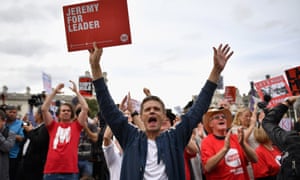
Unless there is a dramatic and unlikely political upset, Jeremy Corbyn will again win the Labour leadership contest. It will be a victory gifted by his opponents. Last year, his triumph was dismissed as a combination of madness, petulance and zealotry. But many commentators lack any understanding or curiosity about political movements outside their comfort zone. Political analysts who scramble over one another to understand, say, the rise of Ukip have precious little interest in a similar treatment of Corbynism, abandoning scholarship for sneers. The likes of Ukip or Donald Trump or the French Front National are understood as manifestations, however unfortunate, of genuine grievances: the movements behind Bernie Sanders, Podemos and Jeremy Corbyn are dismissed as armies of the self-indulgent and the deluded.

A few days ago, I wrote a piece about the Labour leadership’s desperate need to get a handle on strategy, vision and competence, and reach beyond its comfort zone. A failure to do so could mean not just its own eventual demise, but that of Labour and the left for a generation or more. Among some, this piece provoked dismay and even fury. Yet Corbyn’s victory is all but assured, and if the left wishes to govern and transform the country as well as a political party, these are questions that have to be addressed – and a leadership contest that may be swiftly followed by a potentially disastrous snap election is exactly the right time. But that is of limited comfort to Corbyn’s opponents – some of whom are now dragging their own party’s membership through the courts. They often seem incapable of soul-searching or reflection.
Corbyn originally stood not to become leader, but to shift the terms of debate. His leadership campaign believed it was charging at a door made of reinforced steel. It turned out to be made of paper. Corbyn’s rise was facilitated by the abolition of Labour’s electoral college and the introduction of a registered supporters scheme. The biggest cheerleaders included Blairites; much of the left was opposed, regarding it – quite legitimately – as an attempt to dilute Labour’s trade union link. When the reform package was introduced, Tony Blair called it “bold and strong”, adding that he probably “should have done it when I was leader”. Two years ago, arch-Blairite columnist John Rentoul applauded the reforms, believing they helped guarantee Ed Miliband would be succeeded by a Blairite. Whoops.

Here was a semi-open primary in which candidates had an opportunity to enthuse the wider public: Corbyn’s opponents failed to do so. The French Socialists managed to attract 2.5 million people to select their presidential candidate in 2011; a similar number voted in the Italian Democratic party’s primary in 2013. In the early stages of last year’s leadership contest, members of Liz Kendall’s team were briefing that she could end up with a million votes. The hubris. The candidates preaching electability had the least traction with a wider electorate. There are many decent Labour MPs, but it is difficult to think of any with the stature of the party’s past giants: Barbara Castle, Nye Bevan, Ernie Bevin, Herbert Morrison, Margaret Bondfield, Harold Wilson, Stafford Cripps, Ellen Wilkinson. Machine politics hollowed out the party, and at great long-term cost. If, last year, there had been a Labour leadership candidate with a clear shot at winning a general election, Labour members might have compromised on their beliefs: there wasn’t, and so they didn’t.

When a political party faces a catastrophic election defeat, a protracted period of reflection and self-criticism is normally expected. Why were we rejected, and how do we win people back? But in Labour’s internal battle, there has been precious little soul-searching by the defeated. Mirroring those on the left who blame media brainwashing for the Tories’ electoral victories, they simply believe they have been invaded by hordes of far-left zombies assembled by Momentum. The membership are reduced to, at best, petulant children; at worst, sinister hate-filled mobs. Some of those now mustering outrage at Corbynistas for smearing Labour critics as Tories were the same people who applied “Trot” as a blanket term for leftwingers in the Blair era. Although Tom Watson (no Blairite) accepts there are Momentum members “deeply interested in political change”, he has raised the spectre of the shrivelled remnants of British Trotskyism manipulating younger members; but surely he accepts they have agency and are capable of thinking for themselves? Arch critics reduce Corbynism to a personality cult, which is wrong. In any case, when Blair was leader, I recall his staunchest devotees behaving like boy-band groupies. I remember Blair’s final speech to party conference – delegates produced supposedly homemade placards declaring“TB 4 eva” and “We love you Tony”.

Corbynism is assailed for having an authoritarian grip on the party, mostly because it wins victories through internal elections and court judgments: ironic, given that Blairism used to be a byword for “control freakery”. Corbyn’s harshest critics claimed superior political nous, judgment and strategy, then launched a disastrously incompetent coup in the midst of a post-Brexit national crisis, deflecting attention from the Tories, sending Labour’s polling position hurtling from poor to calamitous, and provoking almost all-out war between Labour’s membership and the parliamentary party: all for the sake of possibly gifting their enemy an even greater personal mandate. They denounce Corbyn’s foreign associations, but have little to say about former leader Blair literally having been in the pay of Kazakhstan’s dictator Nursultan Nazarbayev, whose regime stands accused of torture and the killing of opponents. Corbyn’s bitterest enemies preach the need to win over middle-class voters, then sneer at Corbynistas for being too middle class (even though, as a point of fact, polling last year found that Corbyn’s voters were the least middle class). They dismiss Corbynistas as entryists lacking loyalty to the Labour party, then leak plans to the Telegraph – the Tories’ in-house paper – to split the party.

It is the absence of any compelling vision that, above all else, created the vacuum Corbyn filled. Despite New Labour’s many limitations and failings, in its heyday it offered something: a minimum wage, a windfall tax on privatised utilities, LGBT rights, tax credits, devolution, public investment. What do Corbyn’s staunchest opponents within Labour actually stand for? Vision was abandoned in favour of finger-wagging about electability with no evidence to back it up. Owen Smith offers no shortage of policies: but it is last summer’s political insurgency within Labour’s ranks one must thank for putting them on the agenda. Some MPs now back him not because they believe in these policies – they certainly do not, and follow Blair’s line that he would prefer a party on a clearly leftwing programme to lose – but because they believe he is a stop-gap.

Anything other than gratitude for New Labour’s record is regarded as unforgivable self-indulgence. The Iraq war – which took the lives of countless civilians and soldiers, plunged the region into chaos and helped spawn Islamic State – is regarded as a freakish, irrational, leftwing obsession. The left defended New Labour against the monstrously untruthful charge that overspending caused the crash, but the failure to properly regulate the banks (yes, the Tories wanted even less regulation) certainly made it far worse, with dire consequences. On these, two of the biggest judgment calls of our time, the left was right and still seethes with resentment that it wasn’t listened to.

The problems go much deeper, of course. Social democracy is in crisis across Europe: there are many factors responsible, from the changing nature of the modern workforce to the current model of globalisation, to the financial crash, to its support for cuts and privatisation. Still, that is no excuse for a failure to reflect. Corbyn’s opponents have long lacked a compelling vision, a significant support base and a strategy to win. When Labour fails at the ballot box, its cheerleaders are often accused of blaming their opponents rather than examining their own failures.

The same accusation can be levelled now at Corbyn’s opponents. They are, by turns, bewildered, infuriated, aghast, miserable about the rise of Corbynism. But they should take ownership of it, because it is their creation. Unless they reflect on their own failures – rather than spit fury at the success of others – they have no future. Deep down, they know it themselves.

Wednesday, 10 August 2016

Legal aid is a national institution like the NHS, so why is it not properly funded?

John Briant in The Guardian


The media jump on high-profile cases of criminals like Ben Butler and Jennie Gray receiving huge amounts in legal aid. The real outrage is successive governments’ policy to limit access to it


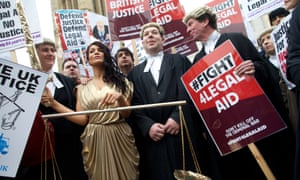
‘Even if we have done something wrong, or criminal, or stupid, we should still have someone who understands the law fighting on our behalf.’ Photograph: Andrew Cowie/AFP/Getty Images


It is with a mixture of intense frustration and sadness that I read the reports about the amount of legal aid that Ben Butler, convicted of murdering his six-year-old daughter, and his partner Jennie Gray, guilty of child cruelty, received. The figure is quoted at approximately £1.5m over a 15-year period, with £1.2m in civil legal aid.


Legal aid cuts have led to surge in DIY defence, says charity


It’s frustrating for a number of reasons. Of the £1.5m, approximately £300,000 went towards legal aid for criminal proceedings, and accounted for a month-long trial involving complex medical evidence for an original child cruelty and GBH trial, Gray’s case involving perverting the course of justice, and Butler’s murder trial. One would hope that in all of these cases, the legal aid lawyers were working to the best of their ability using the highest quality lawyers willing to conduct work at legal aid rates.

What is also true, is that the lawyers involved will have undertaken an immense amount of work that they weren’t paid for. Had they been privately funded, the fees would have been many multiples higher.

As a criminal practitioner of more than 20 years, I know the workloads that are undertaken daily by legal aid lawyers. In London, the going yearly salary for a duty solicitor is about £30,000 but may reach £40,000 with experience. Barristers’ chambers are paid £50 for sending a barrister to a hearing. This covers travelling time, the two hours waiting to get into court and the actual time spent representing a client in court – and the barristers will only get a cut of that money.

If you attend the police station, the firm is paid £150-£250 per case, which includes the initial attendance, plus any further bails to return to the station on other days – which might include ID parades or second or third interviews. Those who freelance at the police station are paid less than £100 per visit, which can mean a couple of hours travelling as well as up to 12 hours of waiting and advising. Police station advisers’ fees therefore range from an hourly rate of £30 down to £7 – it doesn’t vary with bank holidays or the fact that most of this advising occurs at ungodly hours of the night or weekends.

Legal aid solicitors have similar qualification periods to doctors: after completing a first degree they undergo a year of practical qualifications, then two years of on-the-job training. The qualification for barristers is a year shorter – but the cost of this in London has been estimated by the Bar Council as more than £120,000. Graduate salaries in legal aid firms are usually at the Law Society’s minimum of £18,590 pa for London. Of the respondents surveyed by Young Legal Aid Lawyers(whose membership consists of those within 10 years of qualification), 50% had salaries under £20,000 in 2013.

A well-known London plumbing firm is delighted to share its call-out rates with the public – they are “100% transparent charges and we have a clear, upfront, open and honest pricing system”. These charges range from a weekday daytime rate of £95 per hour at a minimum of one-hour call-out and 15 minute increments after this, to a 12am-7am rate of £200 per hour. Trust me – legal aid firms would kill for these rates.

Legal aid is a national institution, like the NHS. We all hope that we will never need it, that we won’t have unfounded rumours triggering a social services investigation or family proceedings; that we won’t be falsely accused of a crime. Even if we have done something wrong, or criminal or stupid, we should still have someone who understands the law fighting on our behalf to put our side of the story and explain our circumstances. This is part of what has separated us as a “civilised society”, these rights and freedoms and the privilege to be served by those who choose to sacrifice massive incomes to do relatively poorly paid legal aid work.

The unfortunate thing is that it is the abnormal cases like this (which are often the only things that allow a legal aid practice to survive the otherwise dreadful legal aid rates), and the abnormal earnings of barristers with huge experience dealing with the most serious cases and working insane hours, that get reported. Legal aid is not a vote winner; it doesn’t fall into the category of being tough on crime, and it always seems to be paid to people we like to blame – immigrants, good-for-nothings, so-called scroungers. It’s just your money being spent on someone else.

The difficulty comes when that someone else is you. Teacher, doctor, police officer, journalist, city trader, engineer, labourer, English, Scottish, white, black, depressed, addicted, sober: I have represented all of you, without judgment, to the best of my abilities, 24 hours a day for over 20 years.


Ellie Butler's grandfather: 'The devastation is complete and utter'

 re

What makes me sad is this. Ellie Butler’s grandparents were not entitled to legal aid. Despite spending their life savings and working extra jobs, they could not fight for custody of their grandchild, whom they were concerned may be at risk. They couldn’t afford to pay their private legal fees and had to represent themselves and lost. This is the tragedy: not that £1.5m went on legal aid, but that Neal and Linda Gray didn’t get any help to fight for their granddaughter.

Corbyn supporters are not delusional Leninists but ordinary, fed-up voters

Ellie Mae O'Hagan in The Guardian


‘Members of Momentum feel as though the Labour coup is as much an attack on their right to participate in public discourse as it is on Jeremy Corbyn.’ Photograph: Jeff J Mitchell/Getty Images

Lock up your children, for there is a sinister force taking root in modern Britain. It is a cult, with followers like those of mass murderer Charles Manson, shrouded in a cloud of spite and acrimony. The worst thing about this terrifying insurgency? My mum is part of it.


'We're not cult members': Labour supporters at Corbyn rallies


I am, of course, talking about the people who support Jeremy Corbyn – 12,000 of whom have joined Momentum, the activist movement that propelled Corbyn to power. And after Monday’s high court win and a clean sweep in the elections to Labour’s national executive committee, support for Corbyn shows no signs of abating – despite continued suggestions that those supporters are nothing more than an abusive rabble. How many of the journalists writing panicked screeds about these awful people have actually met any of them, do you think? I ask because writing about the Corbyn phenomenon over the last year means I’ve met probably hundreds of his supporters and to be honest, I find dealing with them the most pleasant element of writing about Corbyn.

A couple of months ago, I went to a political event that included a branch of Momentum. All young women; they were energetic, funny and very friendly. Two weeks ago, I had a debate with a Momentum member about Corbyn’s media strategy. Of the two of us, it was me who was the ruder, more impatient one. When Corbyn ran for leadership last year, I visited phone banks for him dozens of times, and spent hours in the company of the very people who went on to found Momentum. I told myself I was researching a piece; actually I think I just liked talking to them.

Sure, my experiences of these Corbyn supporters might not be representative. But they do suggest that the depiction of them as a madcap bunch of deluded cultists is not representative either. Broadly speaking, the media has failed to understand the political moment in the Labour party; it has shown a damning lack of interest in the fact that people who had previously written off party politics are now flocking towards it in their hundreds of thousands – preferring instead to dismiss them as an angry mob.

One half of that description is accurate, however. Corbyn supporters may not be a mob, but they are angry. And to understand why, it is useful to consider the words of the academic Jeremy Gilbert, a longstanding Labour member and activist who has joined Momentum: “Momentum is simply trying to give a voice to a body of opinion which has been widespread throughout the country for many years, but has been denied any kind of place in our public life since the early days of New Labour. It is a body of opinion which believes, with good reason, that the embrace of neoliberal economics and neoconservative foreign policy under Blair was a disaster … Naturally some of those voices, suppressed for so long, sound raucous, aggressive and uncouth.”

The anger that commentators detect in the Corbyn movement, in my experience, is not a symptom of the fact that it has been infiltrated by bullies – but that its members feel as though the Labour coup is as much an attack on their right to participate in public discourse as it is on Corbyn. 

Everything the left traditionally stands for – from human rights and socialism to a foreign policy driven by diplomacy – has been, at best, marginalised and, at worst, actively mocked in mainstream political discourse since the 1970s. And nowhere is this more apparent than in the depiction of the trade unions, the last bastions of organised British socialism, as insidious barons intent on wrecking British life (a claim that sounds particularly ludicrous when made by newspapers who supported the Conservatives at the last election – a party consisting of members of the actual landed gentry).

I am yet to meet a single Corbynite who is naive about Corbyn’s failings as a leader, the great challenges he faces, or who does not want to win a general election. But the reason so many have coalesced around him anyway is because they view his leadership as the only opportunity they have had in at least 30 years to see their views finally represented in public life. The Labour rebels’ attempt to unseat him is, in their minds, as much an attempt to excommunicate the wider left as it is to get rid of Corbyn himself. Perhaps the most salient evidence of this is the decision to charge affiliate members £25 to vote in the leadership election, and ban outright members who joined fewer than six months ago – a decision that has now been overturned in court.

Worse still for Corbyn supporters, the policy positions they have taken over the last 30 years have often been proven right. Lack of social housing has led to a spiralling housing crisis; the deregulation of the financial industry would have caused economic collapse had it not been for state intervention; queasiness around public ownership has caused escalating transport costs and arguably the shambles that is Southern Railway; inequality is the UK’s most pressing social issue; a reluctance to rein in fossil fuel companies has led to a climate emergency; and even Tony Blair accepts that the Iraq war may have led to the rise of Isis. This is why so many Corbyn supporters are upset by the coup, and why they have decided to back him unequivocally, in spite of the incompetence that has at times been part of his leadership.

I have a lot of sympathy with Owen Smith supporters who are horrified by Labour’s poll ratings. But I have zero sympathy with those in the party who have been utterly unwilling to engage with Corbyn supporters, and who have not reflected on why they lost control of their party to someone they so clearly regard as useless. There are simply not enough delusional Leninists in Britain to make up the entirety of Corbyn’s support – these are ordinary British voters who want radical solutions to a growing number of crises. And until they are listened to and taken seriously, Corbyn and the movement keeping him in power is not going anywhere.

I’ve converted to veganism to reduce my impacts on the living world

George Monbiot in The Guardian

Nothing hits the planet as hard as rearing animals. Caring for it means cutting out meat, dairy and eggs.


Illustration by Nate Kitch


The world can cope with 7 or even 10 billion people. But only if we stop eating meat. Livestock farming is the most potent means by which we amplify our presence on the planet. It is the amount of land an animal-based diet needs that makes it so destructive.

An analysis by the farmer and scholar Simon Fairlie suggests that Britain could easily feed itself within its own borders. But while a diet containing a moderate amount of meat, dairy and eggs would require the use of 11m hectares of land (4m of which would be arable), a vegan diet would demand a total of just 3m. Not only do humans need no pasture, but we use grains and pulses more efficiently when we eat them ourselves, rather than feed them to cows and chickens.

This would enable 15m hectares of the land now used for farming in Britain to be set aside for nature. Alternatively, on a vegan planet, Britain could feed 200 million people. Extending this thought experiment to the rest of the world, it’s not hard to see how gently we could tread if we stopped keeping animals. Rainforests, savannahs, wetlands, magnificent wildlife can live alongside us, but not alongside our current diet.

Because we have failed to understand this in terms of space, we believe we can solve the ethical problems caused by eating animals by switching from indoor production to free-range meat and eggs. Nothing could be further from the truth. Free-range farming is kinder to livestock but crueller to the rest of the living world.

When people criticise farming, they usually preface it with the word intensive. But extensive farming, almost by definition, does greater harm to the planet: more land is needed to rear the same amount of food. Keeping cattle or sheep on ranches, whether in the Amazon, the US, Australia or the hills of Britain, is even more of a planet-busting indulgence than beef feed-lots and hog cities, cruel and hideous as these are.

Over several years, as I became more aware of these inconvenient truths, I gradually dropped farmed meat from my diet. But I still consumed milk and eggs. I knew the dire environmental impacts of the crops(such as maize and soya) that dairy cows and chickens are fed. I knew about the waste, the climate change, the air pollution. But greed got the better of me. Cheese, yoghurt, butter, eggs – I loved them all.

Then something happened that broke down the wall of denial. Last September I arranged to spend a day beside the River Culm in Devon, renowned for its wildlife and beauty. However, the stretch I intended to explore had been reduced to a stinking ditch, almost lifeless except for some sewage fungus. I traced the pollution back to a dairy farm. A local man told me the disaster had been developing for months. But his efforts to persuade the Environment Agency (the government regulator) to take action had been fruitless.


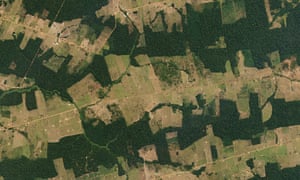
Farms and pastureland carve their way into tropical forestland in the Brazilian state of RondĂ´nia, one of the Amazon’s most deforested regions. Photograph: Planet

I published the photos I had taken in the Guardian, and they caused a stir. Yet the Environment Agency still refused to take action. Its excuses were so preposterous that I realised this was more than simple incompetence. After publishing another article about this farce, I was contacted separately by two staff members at the agency. They told me they had been instructed to disregard all incidents of this kind. The cause, they believed, was political pressure from the government.

That did it. Why, I reasoned, should I support an industry the government refuses to regulate? Since then, I have cut almost all animal products from my diet. I’m not religious about it. If I’m at a friend’s house I might revert to vegetarianism. If I’m away from home, I will take a drop of milk in my tea. About once a fortnight I have an egg for my breakfast, perhaps once a month a fish I catch, or a herring or some anchovies (if you eat fish, take them from the bottom of the food chain). Perhaps three or four times a year, on special occasions, I will eat farmed meat: partly out of greed, partly because I don’t want to be even more of a spectre at the feast than I am already. This slight adaptation, I feel, also reduces the chances of a relapse.

I still eat roadkill when I can find it, and animals killed as agricultural pests whose bodies might otherwise be dumped. At the moment, while pigeons, deer, rabbits and squirrels are so abundant in this country and are being killed for purposes other than meat production, eating the carcasses seems to be without ecological consequence. Perhaps you could call me a pestitarian.

Even so, such meals are rare. My rough calculation suggests that 97% of my diet now consists of plants. I eat plenty of pulses, seeds and nuts and heaps of vegetables. That almost allows me to join the 500,000 people in Britain who are full vegans – but not quite. Of course, these choices also have impacts, but they are generally far lower than those of meat, dairy and eggs. Paradoxically, if you want to eat less soya, eat soya directly: eating animal products tends to mean consuming far more of this crop, albeit indirectly. Almost all the soya grown where rainforests once stood is used to feed animals. Replacing meat with soya reduces the clearance of natural vegetation, per kilogram of protein, by 96%.

After almost a year on this diet, I have dropped from 12 stone to 11. I feel better than I’ve done for years, and my craving for fat has all but disappeared. Cheese is no more appealing to me now than a lump of lard. My asthma has almost gone. There are a number of possible explanations, but I wouldn’t be surprised if it had something to do with cutting out milk. I have to think harder about what I cook, but that is no bad thing.

Meat eating is strongly associated with conventional images of masculinity, and some people appear to feel threatened by those who give up animal products. An Italian politician this week proposed jailing parents who impose a vegan diet on their children, in case it leaves them malnourished. Curiously, he failed to recommend the same sanction for rearing them on chips and sausages.

By chance, at a festival this summer, I again met the man from Devon who had tried to persuade the Environment Agency to take action on the River Culm. He told me that nothing has changed. When there’s a choice between protecting the living world and appeasing powerful lobby groups, most governments will take the second option. But we can withdraw our consent from this corruption. If you exercise that choice, I doubt you will regret it.

Tuesday, 9 August 2016

The perils of ‘flying while Muslim’

Homa Khaleeli in The Guardian

On March 26 this year, Hasan Aldewachi was on his way back from a science conference in Vienna, and looking forward to seeing his family. As he took his seat on the flight to Gatwick, he sent his wife a text message to let her know the plane was delayed. A woman sitting across the aisle got up and left her seat. Moments later the police arrived.

The Iraqi-born Sheffield Hallam student was asked to leave the plane and held for four hours. After his phone was confiscated, he was left at the airport with no onward ticket or refund. The reason? His message was in Arabic.

Aldewachi’s story is just one example of the dangers of what has become known as “flying while Muslim”; the tongue-in-cheek term for the discrimination many Muslim passengers feel they have faced at airports since 9/11. It can range from extra questions from airport staff, to formal searches by police, to secondary security screenings and visa problems when visiting America. Sometimes it feels like every Muslim has a tale to tell.


Faizah Shaheen … reading about Syria. Photograph: Twitter

Two weeks ago, a Muslim couple celebrating their wedding anniversary were removed from a flight from France to the US. A crew member allegedly complained that Nazia Ali, 34, who wears a headscarf, was using her phone, and her husband Faisal was sweating. The flight attendant allegedly also complained that the couple used the word “Allah”. The airline in question subsequently said it was “deeply committed to treating all of our customers with respect”.

Other examples this summer include NHS mental-health worker Faizah Shaheen who was on her way back from her honeymoon when she was detained and questioned by police under schedule 7 of the Terrorism Act. Cabin crew on her outbound flight said they had spotted her reading a book about Syria. Shaheen said she was left in tears by the experience. Thomson airlines said: “Our crew are trained to report any concerns they may have as a precaution.” 

The stories that hit the headlines are often those similar to Aldewachi’s or Shaheen’s – where normal behaviour by Muslim passengers is seen as suspicious. More prevalent, but less reported, are the day-to-day stories of innocent passengers who feel they are under suspicion solely because of their religion.

Equality and civil liberties groups warn that the net is now being thrown so wide that it is stigmatising and alienating thousands of Muslims. This, many argue, could make our time in the air less safe by sowing seeds of division. Even high-profile Muslims cannot escape. England cricketer Moeen Ali, Cat Stevens, music producer Naughty Boyand comedian Adil Ray have all complained of discriminatory treatment at airports. This month, Four Lions actor and rapper Riz Ahmed released a single called T5, about the problems he faces on flights.

Aldewachi, who has lived in the UK since 2010, is still shaken by his experience. “Everyone was looking at me and assuming I had done something wrong. This is not vigilance. This is stereotyping,” he says.

He has received no apology from the Austrian police – and says that apart from being told that a female passenger had reported seeing “something related to Isis” – he was given no further explanation. The biomedical scientist finally received an apology and refund from easyJet after his story was reported in a newspaper.

Aldewachi thinks the focus on terrorism in the media hasn’t helped. “People who know me are astonished. I am calm and quiet – they can’t understand why anyone would look at me and be afraid.

“To compare it to something in my field, it’s like swine flu. Everyone thought they had it because they heard so much about it.”

Khairuldeen Makhzoomi can sympathise. In April, the 26-year-old was on his way back to his university in California when he phoned his uncle in Iraq to tell him he had been invited to a formal dinner at which Ban Ki-moon would be present – he even asked the UN secretary general a question. A woman in front of him reported him and Makhzoomi was asked to leave the plane, confronted by police officers, and had his bag searched in front of other passengers. The politics student says the airline manager told him he should have known it was a security risk to “speak that language”. However, the airline, Southwest, released a statement saying it was the content of his words that was “perceived to be threatening,” not his use of Arabic.
In March, a London DJ, Mehary Yemane-Tesfagiorgis, was removed from a flight from Rome because a passenger said they didn’t feel safe travelling with him. Yemane-Tesfagiorgis, who is black, said he was a victim of racial profiling.

Fellow Londoner, Laolu Opebiyi, a Nigerian-born Christian, was asked to leave a plane after another passenger saw a prayer group message on his phone, labelled “Isi” (an acronym for “iron sharpens iron”, a Biblical quotation). Earlier this month Guido Menzio, a University of Pennsylvania economics professor who has “curly, dark hair”, was expelled from a plane in the US after the equations he was writing alarmed a female passenger.

In the US, so many Sikhs have been subjected to extra screening because of their clothing that the Sikh Coalition has launched an app to highlight cases of discrimination. Katy Sian, a lecturer at the University of York who has been researching the problems faced by Sikhs at airports, says the issue highlights “how brown, male bodies are caught up in the war on terror”.

When I asked family and friends for their experiences of “flying while Muslim” the stories came thick and fast. A friend recounted being prevented from boarding and questioned by secruity officials. A Guardian editor was stopped and questioned four out of the seven times he travelled to the US, including being asked about attending training camps in the Middle East.

A relative of mine, who lives in the UK, and has both US and UK passports, is stopped on “80% of my trips to, or within, the US – and I travel there about five or six times a year”.

It began soon after 9/11 on a layover in Minnesota. A police officer asked him to confirm his name and then to accompany him for questioning.

“When I asked him what it was about, he said the pilot had said I had been belligerent on the flight. I immediately switched to being as American as possible. I said something like, ‘Yo, dude, that’s totally ridiculous. I didn’t speak to anyone.’ I said he seemed like a nice guy, but this was racist profiling. When I said that, he apologised and said his boss had told him to check me out.”

Now he arrives early for flights in the US to factor in the extra security screening. “Once, they told me it was a ‘random’ selection and when I asked what it was based on, they said: ‘Name, age, ethnicity.’


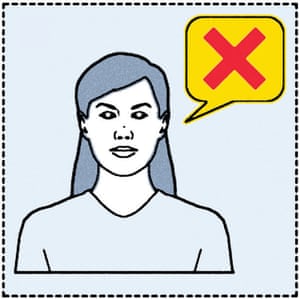
 2. ‘Do not speak foreign.’ Illustration: Son of Alan/Folio

“In Turkey, I was told I had the same name as a terrorist’s son, and that the US shares their watchlist with them.

“I always put up a fight because the way they treat you is terrible. My view is that I am practically a boy scout. If I don’t say something, who will?”

Hugh Handeyside, from the American Civil Liberties Union [ACLU], explains that repeatedly having “SSSS” (secondary security screening selection) printed on your boarding pass is a “strong indication” your name has made it to a subset of the US government’s sprawling terrorism watchlist. Sometimes it is enough to have a name similar to someone who is on the list.

The database is believed to contain hundreds of thousands of names, and the secrecy surrounding it is intensely controversial. In April the Council of American Islamic Relations’ [Cair] Michigan branch launched a class action on behalf of the “thousands of innocent Americans who were wrongfully designated as ‘known or suspected terrorists’ without due process”, and another lawsuit seeking a “declaration that the watchlist is unconstitutional”.

Handeyside says that lawsuits by the ACLU have revealed that travel to a particular country in a particular year have been given as reasons for inclusion on a different subset of the watchlist – the no-fly list.

In 2014, leaked details showed that those of Muslim descent were disproportionately represented on the list; while New York had the most watchlisted people, the second was Dearborne, a small city in Michigan. As Handeyside points out, Dearborne is “the centre of the highest concentration of people of Arab descent outside the Middle East”. The use of algorithms to determine who required extra screening renders the system even more opaque.

The attorney, who spent two years working for the CIA, says the huge numbers involved mean the watchlists are not making us safer. “It increases the size of the haystack – if there is a needle in there it is so much harder to find … it immeasurably increases the white noise.”

For cases of mistaken identity, there is a redress system. Cair says even this is wrapped in secrecy and the only way to find out if you have been successful is by flying again.

Campaigners say few Muslims are willing to complain officially about their treatment at airports. The stigma of being accused of being a terrorist, even if the accusations are unwarranted, can be enough to silence many. Others fear a backlash from the authorities.

Handeyside says those who easily dismiss such experiences don’t always realise the toll it can take. “We can’t underestimate how stigmatising and unpleasant it is to have to go through this every single time – to have everyone looking at you and thinking you are a terrorist.”

Imam Ajmal Masroor, was so incensed by his own treatment at an airport that he set up a website to collate other people’s stories. Having travelling to and from the States several times in 2015, he was stopped by US Embassy officials at the airport in December and abruptly told his business visa had been revoked.

Masroor, 44, who says he has received death threats for speaking out against terrorism in the past, explains he was eventually told the problem was someone on his Facebook page, “but I have 30,000 followers so I don’t know who that is”. And despite a letter from the State Department saying the revocation was an error, he says visits to the US embassy have not rectified the situation.

One politician trying to discover the scale of the problem is the MP Stella Creasy. She has been asking questions about US Homeland Security issues after a family of 11 from her Walthamstow constituency were stopped at the airport as they made their way to Disneyland. The family lost $13,340 by missing their flights, which they were told would not be refunded. The trauma is, of course, impossible to quantify. “Their Esta visa was revoked. The kids were crying. They had to give back everything they had bought from duty free – it was horrible. Why not tell them before they get to the airport?”


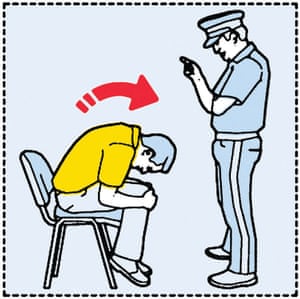
  3. ‘Allow extra time to clear security.’ Illustration: Son of Alan/Folio

When she heard similar stories from other constituents she asked questions in parliament, but was told no figures about how many UK citizens are barred from visiting the US are kept. While UK authorities publish stop-and-search data, broken down by ethnicity, the US is less transparent.

“There is confirmation that Homeland Security officials are working out of Manchester, Gatwick and Heathrow airports, but under what auspices is unclear,” she says. “If we have the data, we can either allay fears or do something about it. But the government doesn’t know, and that should worry us.”

Now she is hoping to launch a legal case challenging the government over the lack of figuresm, insisting it is a failure of their public sector equality duty.

“No one is suggesting that there should not be checks. It’s the lack of information and scrutiny that is the problem.”

A US embassy spokesperson stressed that religion, faith, or spiritual beliefs were not determining factors about admissibility into the US. US Customs and Border Protection confirmed it did not disclose the percentage of travellers selected for secondary inspection or breakdown their figures by ethnicity. However, a spokesperson said the numbers were “almost insignificant” compared with the volume of travellers arriving from the UK every day.

 
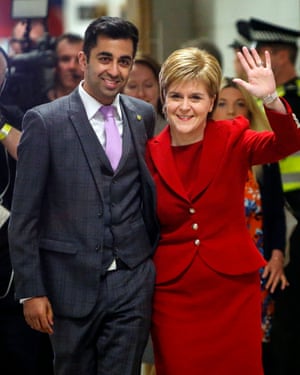
SNP MSP Humza Yousaf with party leader Nicola Sturgeon Photograph: Danny Lawson/PA

While the UK may keep figures for stop and searches at airports, that doesn’t mean there are no problems. In 2012 Glasgow airport faced a boycott from Muslim passengers, who said they were fed up with being harassed by counter-terrorism officers. A year earlier, the Scottish MSP Humza Yousaf revealed he had been been stopped under schedule 7 of the Terrorism Act 2000. It wasn’t the first time he was stopped.

Under the original legislation of this stop-and-search law act, anyone entering or leaving the UK could be held for up to nine hours with no grounds for suspicion needed. At its peak in 2009/10, 85,000 travellers a year were stopped and ethnic minorities were 42 times more likely to be stopped than white passengers.

Yousaf said his frequent stops illustrated that they were based on skin colour, not intelligence information.

In 2014, after strong criticism, there was a change in the law referring to schedule 7 stops. The presence of a solicitor was required and the maximum detention time was reduced to six hours. It led to a dramatic drop in those stopped. The latest available data shows a considerably lower number – in 2015, a fall of 21% on the previous year. David Anderson, the Independent Reviewer of Terrorism Legislation, says this, in part, is down to an increased focus on data and behavioural analysis and a “reduced reliance on intuitive stops”. Anderson does not believe the statistics show schedule 7 powers are being used in a racially discriminatory manner, although he acknowledges the stops cause “considerable irritation for travellers of all ethnicities” while “arrest rates remain very low indeed by the standards of stop and search”. Five supreme court judges reviewed his analysis and while four agreed, one believed “schedule 7 not only permits direct discrimination; it is entirely at odds with the notion of an enlightened pluralistic society”.


  4. ‘Text with care.’ Illustration: Son of Alan/Folio

This year, the government published new guidance pointing out that the decision to stop someone should not be arbitrary, and ethnicity and religion should only be considered significant in association with “factors which show a connection with the threat from terrorism”. According to analysis of the 2015 figures by Faith Matters, a community-cohesion organisation, “non-whites are at least 37 times as likely as a white person to be detained at a port or airport. Asians are almost 80 times as likely as a white person to be detained at an airport or port.” Along with anecdotal evidence, this, they say, shows a “significant level of profiling that demands urgent action to ensure that British citizens and non-UK nationals visiting Britain are treated equally.”

Stefano Bonino, a criminologist at Northumbria University recently, interviewed 39 Scottish Muslims. He found while most had positive stories of “relative local harmony”, his interviewees’ experience of airports created real feelings of alienation, social inequality, “anger and humiliation”.

Philip Baum, author of Violence in the Skies, says racial profiling is unhelpful, but says there should be more behavioural analysis at airports than we have currently. “Even if an attack is being carried out under Isis or al-Qaeda that doesn’t mean it will be someone carrying it out who ‘looks’ Muslim. The classic case was the Anne Marie Murphy case in 1986, who was stopped from boarding a flight to Tel Aviv – of 1986. She was white, female and pregnant – not a stereotypical image of a terrorist.” Murphy was found to be unwittingly carrying explosives in her luggage – placed there by her Jordanian fiancĂ©, Nezar Hindawi, who was jailed for 45 years.

Baum suggests that the widespread belief that Muslims will be targeted could in turn change their behaviour. “There is a lot of paranoia and sometimes people can be affected by that – they act suspiciously because they think they will be picked on.”

While the fear of terrorism at airports means that many people are willing to put up with more intrusive security procedures, the discriminatory experiences at airports that many Muslims recount risks creating divisions and resentment.

For Bonino the consequences are clear. “Grievance based jihadi propaganda can use things like this. When you want Muslims to work with the authorities to counter violent extremism on the ground, it’s not helpful for people to think they are targeted by the authorities themselves.”
Know your rights


The Council of American Islamic Relations guide to your rights

• A customs agent has the right to stop, detain and search every person and item.

• Screeners have the authority to conduct a further search of you or your bags.

• A pilot has the right to refuse to fly a passenger they believe is a threat to the safety of the flight. The pilot’s decision must be reasonable and based on observations, not stereotypes.


If you believe you have been treated in a discriminatory manner:

• Note the names and IDs of those involved.

• Ask to speak to a supervisor.

• Politely ask if you have been singled out because of your name, looks, dress, race, ethnicity, faith or national origin.

• Politely ask witnesses to give you their names and contact information.

• Write a statement of facts immediately after the incident. Include the flight number, the flight date and the name of the airline.

No-fly list and selectee list

You may be on the selectee list if you are unable to use the internet or the airport kiosks for automated check-in. You should eventually be permitted to fly. The no-fly list prohibits individuals from flying at all. If you are able to board an airplane, regardless of the amount of questioning or screening, then you are not on the no-fly list.

Schedule 7 guide by Faith Matters

• Under schedule 7 you can be searched, examined and detained by a police officer at a port or airport.

• If you are stopped, your person and your property may be searched, but you can request that the search of your person be conducted by someone of the same gender.

• You do not have to answer questions about other individuals or agree to snoop on any other individuals.

• You have the right to speak to a solicitor.

• If you are detained, the police are expected to take you to a police station as soon as is reasonably possible. You can be detained only up to six hours (unless you are arrested or charged). You have the right to inform “one named person” of your detention.