Search This Blog

Tuesday, 24 November 2015

There’s a population crisis all right. But probably not the one you think

While all eyes are on human numbers, it’s the rise in farm animals that is laying the planet waste

 
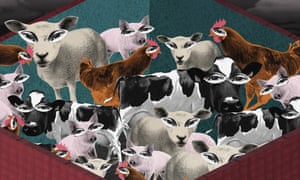
‘By 2050 the world’s living systems will have to support about 120m tonnes of extra humans, and 400m tonnes of extra farm animals.’ Illustration by Nate Kitch


GeorgeMonbiot
 in The Guardian


This column is about the population crisis. About the breeding that’s laying waste the world’s living systems. But it’s probably not the population crisis you’re thinking of. This is about another one, that we seem to find almost impossible to discuss.

You’ll hear a lot about population in the next three weeks, as the Paris climate summit approaches. Across the airwaves and on the comment threads it will invariably be described as “the elephant in the room”. When people are not using their own words, it means that they are not thinking their own thoughts. Ten thousand voices each ask why no one is talking about it. The growth in human numbers, they say, is our foremost environmental threat.

At their best, population campaigners seek to extend women’s reproductive choices. Some 225 million women have an unmet need for contraception. If this need were answered, the impact on population growth would be significant, though not decisive: the annual growth rate of 83 million would be reduced to 62 million. But contraception is rarely limited only by the physical availability of contraceptives. In most cases it’s about power: women are denied control of their wombs. The social transformations that they need are wider and deeper than donations from the other side of the world are likely to achieve.

At their worst, population campaigners seek to shift the blame from their own environmental impacts. Perhaps it’s no coincidence that so many post-reproductive white men are obsessed with human population growth, as it’s about the only environmental problem of which they can wash their hands. Nor, I believe, is it a coincidence that of all such topics this is the least tractable. When there is almost nothing to be done, there is no requirement to act.

Such is the momentum behind population growth, an analysis in the Proceedings of the National Academy of Sciences discovered, that were every government to adopt the one-child policy China has just abandoned, there would still be as many people on Earth at the end of this century as there are today. If 2 billion people were wiped out by a catastrophe mid-century, the planet would still hold a billion more by 2100 than it does now.

If we want to reduce our impacts this century, the paper concludes, it is consumption we must address. Population growth is outpaced by the growth in our consumption of almost all resources. There is enough to meet everyone’s need, even in a world of 10 billion people. There is not enough to meet everyone’s greed, even in a world of 2 billion people.

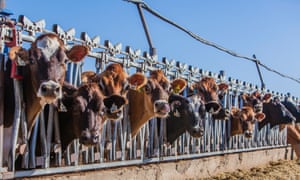
So let’s turn to a population crisis over which we do have some influence. I’m talking about the growth in livestock numbers. Human numbers are rising at roughly 1.2% a year, while livestock numbers are rising at around 2.4% a year. By 2050 the world’s living systems will have to support about 120m tonnes of extra humans, and 400m tonnes of extra farm animals.

Raising these animals already uses three-quarters of the world’s agricultural land.A third of our cereal crops are used to feed livestock: this may rise to roughly half by 2050. More people will starve as a result, because the poor rely mainly on grain for their subsistence, and diverting it to livestock raises the price. And now the grain that farm animals consume is being supplemented by oil crops, particularly soya, for which the forests and savannahs of South America are being cleared at shocking rates.

This might seem counter-intuitive, but were we to eat soya rather than meat, the clearance of natural vegetation required to supply us with the same amount of protein would decline by 94%. Producing protein from chickens requires three times as much land as protein from soybeans. Pork needs nine times, beef 32 times.

A recent paper in the journal Science of the Total Environment suggests that our consumption of meat is likely to be “the leading cause of modern species extinctions”. Not only is livestock farming the major reason for habitat destruction and the killing of predators, but its waste products are overwhelming the world’s capacity to absorb them. Factory farms in the US generate 13 times as much sewage as the human population does. The dairy farms in Tulare County, California, produce five times as much as New York City.

Freshwater life is being wiped out across the world by farm manure. In England the system designed to protect us from the tide of slurry has comprehensively broken down. Dead zones now extend from many coasts, as farm sewage erases ocean life across thousands of square kilometres.

Livestock farming creates around 14% of the world’s greenhouse gas emissions: slightly more than the output of the world’s cars, lorries, buses, trains, ships and planes. If you eat soya, your emissions per unit of protein are 20 times lower than eating pork or chicken, and 150 times lower than eating beef.

So why is hardly anyone talking about the cow, pig, sheep and chicken in the room? Why are there no government campaigns to reduce the consumption of animal products, just as they sometimes discourage our excessive use of electricity?
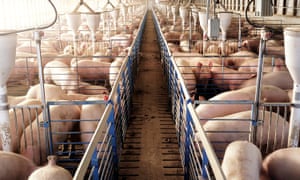
A factory farm in Missouri, USA. ‘Why is hardly anyone talking about the cow, pig, sheep and chicken in the room?’ Photograph: Daniel Pepper/Getty Images

A survey by the Royal Institute of International Affairs found that people are not unwilling to change diets once they become aware of the problem, but that many have no idea that livestock farming damages the living world.

It’s not as if eating less meat and dairy will harm us. If we did as our doctors advise, our environmental impacts would decline in step with heart disease, strokes, diabetes and cancer. British people eat, on average, slightly more than their bodyweight in meat every year, while Americans consume another 50%: wildly more, in both cases, than is good for us or the rest of life on Earth.

But while plenty in the rich world are happy to discuss the dangers of brown people reproducing, the other population crisis scarcely crosses the threshold of perception. Livestock numbers present a direct moral challenge, as in this case we have agency. Hence the pregnant silence.
Road to Islamic State was paved by America’s Faustian bargain with Saudi Wahhabism

Sameer Arshad in Times of India

In the aftermath of the Paris carnage, US president Barack Obama led the usual counterproductive finger-pointing telling Muslims to ask themselves how extremist ideologies took root. Obama’s point is perhaps valid, but that is only a part of the problem. The West needs to answer far more serious questions. Besides waging destabilising, unjust wars and propping up despotic regimes in the Muslim world, it bears responsibility for planting cancer, which Daesh or the so-called Islamic State (IS) is a symptom of, in the process.
It is unfair to collectively blame Muslims for IS since they are and have been the worst victims of the mindless violence of the creed it represents for three centuries. Daesh has its roots in 18th century preacher Abd-al-Wahhab’s doctrine, which rejected Islamic pluralism enshrined in the Quran and declared war on Muslims other than Salafis.
The Ottoman Empire, which represented contemporary mainstream Muslims, resisted this challenge tooth and nail. It in fact coined the term Wahhabism to describe Wahhab’s creed and to underline it fell outside Islam’s pale. Thanks to the West’s myopic foreign policy goals and lust for oil, the creed has come a long way since the 18th century when even Wahhab’s brother and father rejected his doctrine. The creed has been defined mainly by hostility towards Islamic mysticism and seeking death for ‘deviant’ Muslims.
Beyond his family, Wahhab’s teaching found few takers. The vandalism inspired by him infuriated neighbouring tribes, who forced Wahhab to take refuge in Dariyya after threatening to kill him. Wahhab’s flight proved the turning point in his career as Dariyya chieftain Muhammad ibn Saud got into an irrevocable alliance with the preacher in 1747, under which he pledged his family would promote Wahhabism. It laid the foundation for Saudi Arabia on the ruins of the Ottoman Empire in 1932.
By the time Wahhab died in 1792 his followers had become lethal. They declared a war on mainstream Islamic sects by branding them polytheists. Taking ‘deviant’ Muslim lives was justified along with seizure of their properties and enslaving their women and children. This prompted the Mecca qadi to denounce Wahhabis as non-Muslims and bar them from entering Islam’s holiest city. The Ottomans condemned Wahhabis as Kharjites (defectors) and banned them from performing Hajj.
But the Saudis have honoured their pact with Wahhab by using petrodollars to export his creed through a cultural offensive which has undermined Islamic pluralism, triggered fratricidal sectarian conflict and birthed terrorist groups like al-Qaida and IS. The US has been complicit as the principal backer of Saudi Arabia.
This has helped America satiate its thirst for oil and use Wahhabi doctrine for short term goals like defeating USSR in Afghanistan. In the 1970s, the US used the Saudi alliance to counter Egyptian pan-Arab socialist Gamal Abdel Nasser and post-revolution Iran. In the process it often patronised the nihilistic forces that have now turned their guns on the West.

Eating less meat key to curbing climate change


People are more likely to back policies to curb meat eating for health and climate reasons, Chatham House survey suggests


Meat production produces 15% of all greenhouse gases. Photograph: Alamy


Damian Carrington in The Guardian


Taxing meat to simultaneously tackle climate change and improve global health would be far less unpalatable than governments think, according to new research.

Meat production produces 15% of all greenhouse gases – more than all cars, trains, planes and ships combined – and halting global warming appears near impossible unless the world’s fast growing appetite for meat is addressed.

The new analysis says this could be done through taxes, increasing vegetarian food in schools, hospitals and the armed forces and cutting subsidies to livestock farmers, all supported by public information campaigns.

The research, from the international affairs thinktank Chatham House and Glasgow University, involved surveys and focus groups in 12 countries and found that even measures restricting peoples’ behaviour could be accepted if seen as in the public interest, as was seen with smoking bans.

“Governments are ignoring what should be a hugely appealing, win-win policy,” said lead author Laura Wellesley, at Chatham House.

“The idea that interventions like this are too politically sensitive and too difficult to implement is unjustified. Our focus groups show people expect governments to lead action on issues that are for the global good. Our research indicates any backlash to unpopular policies would likely be short-lived as long as the rationale for action was strong.”

Increasing appetite for meat and population growth in developing countries mean global meat consumption is on track to increase 75% by 2050, which would make it virtually impossible to keep global warming below the internationally-agreed limit of 2C.

Meat consumption is already well above healthy levels in developed nations and growing fast in other countries, and is linked to rising rates of heart disease and cancer. To get to healthy levels, US citizens would need to cut the meat they eat by two-thirds, those in the UK by a half and those in China by a third.

If the world’s population cuts to healthy levels of meat consumption – about 70g per day – it would reduce carbon emissions by an amount equivalent to annual output of the US, the world’s second biggest polluter.

The UN climate change summit begins in Paris on 30 November, where the world’s nations aim to seal a deal to tackle climate change.

Most countries have already submitted pledges to cut their emissions, but they are not enough to keep warming below dangerous levels. Cutting meat eating to healthy levels would make up a quarter of that shortfall and is very low cost way of curbing emissions, according to the report, but action to achieve this is non-existent.

Previous calls to cut meat consumption, from the chief of the UN’s climate science panel and the economist Lord Stern, or to tax it, have been both rare and controversial.

“We are not in any way advocating for global vegetarianism,” said Wellesley. “We can see massive changes [to emissions] from just converging around healthy levels of meat eating.” She said raising awareness of the impact on the climate from meat production was the first step, but was unlikely to shift diets by itself.

“The level of awareness is very low, indeed in China it is almost non-existent,” said Catherine Happer, at Glasgow University. She said people in the 36 focus groups viewed meat taxes as the most effective, if unpopular, but that cutting subsidies for meat production was seen as both effective and popular.

“An awful lot of people were surprised that there were subsidies at all,” she said. “They felt, particularly in the US, that governments had propped up a very unhealthy food market.” Livestock subsidies in the 34 OECD nations alone were $53bn in 2013, including an average of $190 per cow. People also said any government action must avoid disadvantaging poorer citizens.

Prof Greg Philo, also at Glasgow University, said the key was “creating a new public understanding that industrial production of meat is not only dangerous to your own health but to human ecology as a whole.”


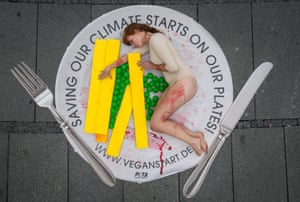
Animal rights organisation Peta’s climate message in Munich, Germany, aims to raise awareness of the link between climate change and the consumption of meat. Photograph: Mathias Balk/Alamy Stock Photo


Clare Oxborrow, a campaigner at Friends of the Earth, said: “Meat consumption can no longer be ignored in the climate debate – shifting diets to less meat and more plant proteins will be crucial. The government must stop using consumer backlash as an excuse for inaction”.

The reductions mapped out by the report would not reduce the size of the global meat industry, the researchers said, because rising population is pushing up demand, but it would significantly slow its growth.

They also said efforts to make meat production greener could cut emissions by up to a third, but that this would be swamped by growing demand if action was not taken. Meat eating has plateaued in recent years in richer nations, but is growing fast in developing countries.

Previous studies have calculated that, on current trends, agricultural emissions will take up the entire world’s carbon budget by 2050, meaning every other sector, including energy, industry and transport, would have to be zero carbon, a scenario described as “impossible”.

Meat production produces greenhouse gases via the methane emitted by livestock, the cutting down of forests for pasture, the production of fertiliser for feed crops and the energy and transport used by farmers. Beef is responsible for far higher emissions than chicken or pork.

None of the report’s authors are vegetarians, but Rob Bailey, from Chatham House, said: “Having worked on this project, I have drastically reduced my meat consumption – I now eat it once a month.”

Monday, 23 November 2015

Freemasons from throughout history to be revealed

The list is being published online by the genealogy company, Ancestry

Ian Johnston in The Independent


A once highly secret list containing the identities of two million Freemasons throughout history is to be published online, revealing the extent of the organisation’s influence in the upper echelons of society.

Everyone from Oscar Wilde and Rudyard Kipling to the Duke of Wellington and Lord Kitchener were members, The Daily Telegraph reported.

There are even claims that a singer suspected of being Jack the Ripper was protected from prosecution because he was a mason.

Other members include Sir Winston Churchill, Edward VII, George VI, Edward VIII, explorers Ernest Shackleton and Captain Robert Falcon Scott, scientists Edward Jenner and Sir Alexander Fleming, engineer Thomas Telford, businessman Harry Selfridge and social reformer Thomas Barnardo, as well as both Gilbert and Sullivan.

The list is being published online by the genealogy company, Ancestry.

Miriam Silverman, senior UK content manager at Ancestry, told the Telegraph: “We’re delighted to be able to offer people an online window into a relatively unknown organisation.”

Meanwhile a new book by the director and screenwriter of the film Withnail and I, Bruce Robinson, claims that Jack the Ripper was a singer called Michael Maybrick.

The book, The All Love Jack: Busting the Ripper, claims that all the murders had elements of masonic ritual. The symbol of a pair of compasses, for example, was carved into the face of one victim.

Maybrick and his brother James, also a suspect, were both masons, as were two senior police officers, three police doctors and two coroners involved in the case. Maybrick was a member of the “Supreme Grand Council of Freemasons”.

Robinson told the Telegraph: “It was endemic in the way England ran itself. At the time of Jack the Ripper, there were something like 360 Tory MPs, 330 of which I can identify as Masons.

“The whole of the ruling class was Masonic, from the heir to the throne down. It was part of being in the club.

Part of the whole ethic of Freemasonry is whatever it is, however it’s done, you protect the brotherhood – and that’s what happened.

“They weren’t protecting Jack the Ripper, they were protecting the system that Jack the Ripper was threatening. And to protect the system, they had to protect him. And the Ripper knew it.”


Sunday, 22 November 2015

Why job interviews are pointless


Richard Nisbett in The Guardian


Hard taskmaster: Ricky Gervais as David Brent in The Office. Photograph: Adrian Rogers/BBC


Statistics often sounds like a dry subject, but many judgments and decisions in everyday life would be improved by an application of statistical principles. Take the following scenario: a football scout hears of a player who has powered his team to a good win-loss record. His coaches think he’s one of the most talented players they’ve seen. But the scout is unimpressed by the one practice game he sees him in; he tells his manager it’s not worth trying to recruit the player. 

Most sports fans would think that was a pretty foolish call, right? Athletic performance is much too variable to base an important judgment on such a small sample. It’s not necessary to take a statistics course to get the correct answer to this problem.

But consider this problem: an employer gets an application from a junior executive with an excellent college record and strong references from his current employer. The employer interviews the applicant and is unimpressed. The employer tells his colleagues that it’s not worthwhile recruiting him.

Most people regard this as a reasonable sort of decision. But it isn’t. Countless studies show that the unstructured 30-minute interview is virtually worthless as a predictor of long-term performance by any criteria that have been examined. You have only slightly more chance of choosing the better of two employees after a half-hour interview as you would by flipping a coin.

In both of these cases, predictions based on references – school reports, prior performance, letters of recommendation – give a 65-75% chance of choosing the better of the two.

Why do we get the athletic problem right and the employment problem wrong? Because in the case of the job, unlike for athletic performance, we haven’t seen hundreds of candidates in interviews of a particular type and seen how well performance in the interview corresponds to ultimate performance in the setting we’re concerned about. We haven’t seen that the guy who looks like a dunce in the interview turns out to be a whiz on the job and the guy who aced the interview turns out to be a dud. The only way to see that the interview isn’t going to be worth much is to be able to apply the “law of large numbers”, which prompts the recognition that an interview represents a very small sample of behaviour, whereas the references summarise a lot of behaviour.

The bottom line: there’s safety in numbers. The more recommendations a person has, the more positive the outcome is likely to be for the employer. Consider the job interview: it’s not only a tiny sample, it’s not even a sample of job behaviour but of something else entirely. Extroverts in general do better in interviews than introverts, but for many if not most jobs, extroversion is not what we’re looking for. Psychological theory and data show that we are incapable of treating the interview data as little more than unreliable gossip. It’s just too compelling that we’ve learned a lot from those 30 minutes.

My recommendation is not to interview at all unless you’re going to develop an interview protocol, with the help of a professional, which is based on careful analysis of what you are looking for in a job candidate. And then ask exactly the same questions of every candidate. It’s harder to develop such a protocol than you might guess. But it can really pay off.

What if I fail?

Tom Hodkinson in The Guardian

 
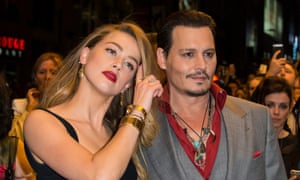
Yes, even Johnny Depp (pictured with his wife, Amber Heard) feels like a failure sometimes. Photograph: Warren Toda/EPA


We are all failures. Every one of us.

That’s not always how it looks, of course. Other people seem so successful. Their own PR machines paint a positive picture. They are perpetually “excited” on Twitter about their new project. Their photos on Facebook show them looking happy and smiley.

Seen from the outside, our friends always seem to be earning more money than us. They have bigger houses and go on sunnier holidays. And we are surrounded by images of wealth. All I see when I walk the streets of London are fleets of black jeep-like cars everywhere, which has the effect of making me feel like a failure because I am skint.


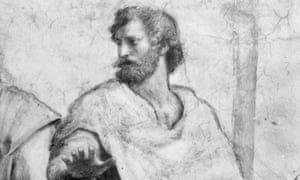
  Aristotle felt we needed to make space for quiet study. Photograph: Hulton Getty

Add to that the sense that my contemporaries all seem to be writing best-selling novels or acting in Hollywood films or making tons of money somehow or other, and the sense of failure can easily creep up on you.

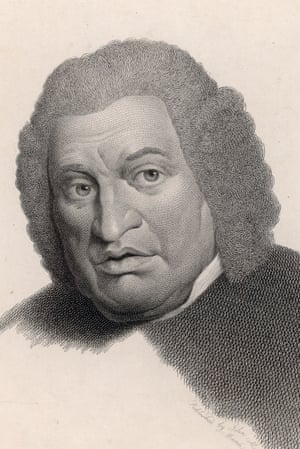
But if only we knew what failures other people felt, then we would not feel like failures. As Dr Johnson wrote in the mid-18th century: “All envy would be extinguished, if it were universally known that there are none to be envied, and surely none can much be envied who are not pleased with themselves.” Yes, and that even includes Johnny Depp. Can you imagine being an actor? Blimey, the insecurity of it.

Johnson’s advice was simple: drink, forget and take a nap. Sip the nectar of oblivion and conjure up happy fantasies while in a state of semi-slumber.

And what about the home lives of the rich and successful? Any amount of fame and money cannot compensate for bad relationships. Every life is full of joy and woe, probably in equal measure, so envy makes no sense whatsoever. In fact, to be envious at all shows a stunning lack of empathy, an inability to put yourself in another person’s shoes. Everyone suffers.


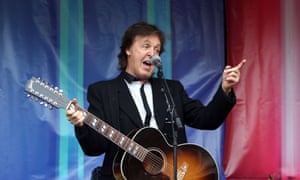
Sir Paul McCartney said no matter how far you get, you feel everyone is doing better than you. Photograph: Steve Parsons/PA

Even the most successful man in the world doesn’t feel successful. Who has done better than Paul McCartney? But he said in a 2013 interview: “No matter how accomplished you get – and I know a lot of people who are very accomplished – you feel that everyone is doing better than you, that it’s easier for them. You’ve got to the top of your profession – you’re now prime minister – but you still get shit off everyone.”

Successful people are failures because they have dozens of failed projects behind them. We tend only to see the successes. I’ve been reading a lot of business books recently, and if there is one thing that all entrepreneurs have in common, it’s a stunning track record of colossal disasters. Failure and success, then, are the same thing. Two sides of the same coin.

It is said that all political careers end in failure. And the merchants, the city traders – they can lose fortunes as well as make them.

So how can we answer the question: what if I fail?


‘Dr Johnson’s advice was simple: drink, forget and take a nap.’ Photograph: Alamy

The only real answer is that we need to cultivate wisdom and to do that, we need to make space for quiet study. That, anyway, was the view of Aristotle. Like most of the ancient Greek philosophers, he believed that the answer to life was to “know thyself”; in other words, not to push yourself in the wrong direction, or to chase money or fame. He said that the life of a merchant was full of worry, and that the glories of a political life were brief and fleeting. The happy life, he wrote, was the contemplative life. If you can read books and enjoy doing nothing, you can always be happy.

Another great Greek philosopher was Zeno of Citium, the founder of the Stoic school. The Stoics were so called because they taught in the Stoa, the marketplace. They did not believe in getting away from it all like the Epicureans. They reckoned that you should put up with the slings and arrows of outrageous fortune, and develop a detached attitude. Their trick was to imagine that you were flying into space and looking down on the world. From that distance, our little problems and issues seem like nothing more than vanity.

Failure is polite. To be imperfect is an act of courtesy to your fellow humans. In the same way, to appear to be hugely successful is an act of extreme rudeness, simply because it excites envy and jealousy in others. A friend of mine took to calling the glossy mag World of Interiors World of Inferiors because it made people feel bad. And this truth is admirably expressed in the title of Marge Simpson’s favourite magazine: Better Homes Than Yours.

Failures are lovable. Who is more popular: Homer Simpson or Donald Trump?

The writers of comedy can make us feel a whole lot better. They are almost the heirs to the Stoics. Comedy is all about disaster and failure and anxiety, and has a great healing power, by making us realise that we are not alone.


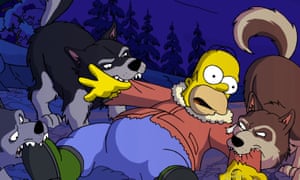
‘Failures are lovable. Who is more popular: Homer Simpson or Donald Trump?’ Photograph: Matt Groening/AP

We’d also do well to remember that the admen out there try to make us feel like failures because it’s good for business. The world of trade, exciting though it is, thrives on negative emotion. It identifies problems in your life and then offers to fix them. Lonely? Go on Facebook. Afraid of missing the moment? Photograph it and put it on Instagram. Sexless? Try Ashley Madison. Anxious? Drink beer. Onion breath? Chew gum. The business owners have a vested interest in making you feel like a failure. Poor? Join my get-rich-quick scheme.

This is not necessarily an evil process. In fact, it is completely natural. After all, if it is dark, you can light a candle. Human life is all about the light and shade. I just think it helps to understand that advertisers deliberately appeal to our sense of failure in order to sell stuff.


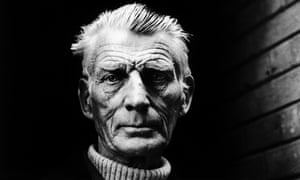
‘What did Samuel Beckett say? Fail again.’ Photograph: Jane Bown/Observer

What if I fail? It doesn’t matter. Who cares? Keep failing. It’s good for society, it’s good for you and it makes your friends feel better. What did Samuel Beckett say? “Ever tried. Ever failed. No matter. Fail again. Fail better.”

Everything we hold dear is being cut to the bone. Weep for our country

Will Hutton in The Guardian


Last Thursday, my wife was readmitted to hospital nearly two years after her first admission for treatment for acute lymphoblastic leukemia. She is very ill, but the nursing, always humane and in sufficient numbers two years ago, is reduced to a heroic but hard-pressed minimum. She has been left untended for hours at a stretch, reduced to tearful desperation at her neglect. The NHS, allegedly a “protected” public service, is beginning to show the signs of five years of real spending cumulatively not matching the growth of health need. Between 2010 and 2015, health spending grew at the slowest (0.7% a year) over a five-year period since the NHS’s foundation. As the Health Foundation observed last week, continuation of these trends is impossible: health spending must rise, funded if necessary by raising the standard rate of income tax.

There will be tens of thousands of patients suffering in the same way this weekend. Yet my protest on their behalf is purposeless. It will cut no ice with either the chancellor or his vicar on earth, Nick Macpherson, permanent secretary at the Treasury. Their twin drive to reduce public spending to just over 36% of GDP in the last year of this parliament is because, as Macpherson declares more fervently than any Tory politician, the budget must be in surplus and raising tax rates is impossible. Necessarily there will be collateral damage. It is obviously regrettable that there are too few nurses on a ward, too few police, too few teachers and too little of every public service. but this is necessary to serve the greater cause of debt reduction.

To reduce the stock of the public debt to below 80% of GDP and not pay a penny more in income or property tax, let alone higher taxes on pollution, sugar, petrol or alcohol, is now our collective national purpose. Everything – from the courts to local authority swimming pools – is subordinate to that aim.

Not every judgment George Osborne makes is wrong. He is right to advocate the northern powerhouse, to spend on infrastructure, to stay in the EU, radically to devolve control of public spending to city regions in return for the creation of coherent city governance and to sustain spending on aid and development. It is hard to fault raising the minimum wage or to try to spare science spending from the worst of the cuts.

But the big call he is making is entirely misconceived. There is no economic or social argument to justify these arbitrary targets for spending and debt, especially when the cost of debt service, given low interest rates and the average 14-year term of our government debt, has rarely been lower over the past 300 years.

This is not to contest the need to balance current public spending and current revenues over the economic cycle. As I wrote in my first book, The Revolution That Never Was, completed 30 years ago this month, Keynes was no deficit denier. But governments have choices about how they arrive at this outcome.

The Conservatives’ choice is driven by a refusal to see any merit in public activity: in their worldview, the point of life and the purpose of civilisation is to celebrate and protect the private individual, the private firm and private property. The state should be as small as possible. It has no role, say, in owning Channel 4 to secure public service broadcasting; it will be privatised with scant care about its ultimate owner. Equally, there was no point in holding the 40% stake in Eurostar, forecast to generate more than £700m in dividends over the next decade and a good payback for £3bn of public investment. Thus it was sold for £757m in March, the government concerned to get the sale through before the general election. You could only proclaim a £2.25bn loss on the public balance sheet and the surrender of £700m of dividends as a “fantastic deal for UK taxpayers”, as Osborne did, if you see zero value in public activity.

It is this philosophy that will drive the choices to be laid out on Wednesday. The spending of the so-called protected departments – the £189bn spent this year on the NHS, schools for five- to 16-year-olds, aid and defence – will rise in cash terms in line with inflation, but only to buy the same in 2019-20 as it does today, an unprecedented decade-long freeze in real terms. The block grants to Scotland, Wales and Northern Ireland will be hit slightly harder, protected only in cash terms, implying, after adjusting for inflation, a small real fall. The axe therefore has to fall on what is left – £77bn of spending by 15 departments along with non-school spending.

So if we take the summer budget and Office of Budget Responsibility economic forecasts as the baseline (both may change) – and there are no new tax increases – to meet his target, the chancellor has to find £22bn of cuts from this £77bn, crucial areas of our national life that have already cumulatively been cut by 30% since 2010.

As the Resolution Trust points out, seven of the smaller departments have settled for 21% cuts, which leaves the big five – Business, Communities and Local Government, Justice, the Home Office and non-schools education – to bear the brunt. This can only mean the de facto wind-up of the Department for Business as a pro-active department, further shrinkage of the criminal justice system (mitigated by prison sell-offs), local government reduced to a husk and the knell of further education. Meanwhile, the cuts in welfare will hit the wellbeing of millions, including their children. Expect on top a firesale of government assets – from housing associations to Channel 4.

Is this wanted, necessary or appropriate for these profoundly troubled times? I think it’s a first-order category error and that in 2015 the need – whether protection from terrorism or the promotion of innovation and investment – is for complex collaborative action between a properly resourced, agile public sector and a private sector in desperate need of remoralising and repurposing. There is no magic in a 36% state. But as Osborne knows, he is politically free to do what he wants. The leadership of the Labour party offers no substantive intellectual or political opposition, nor represents a potential governing coalition, nor, wedded to a bankrupt simplistic top-down statism, understands the complexities of these new times. Rarely has the principal opposition party been so irrelevant at a time of national need. All that is left is noises off – the odd newspaper editorial or column and civil society and business beginning to stir as they experience the impact. Weep for our country.