Search This Blog

Thursday, 26 June 2014

Cricket - Let's hear it for the unorthodox spinner


V Ramnarayan in Cricinfo


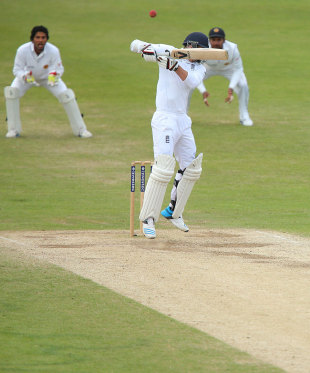
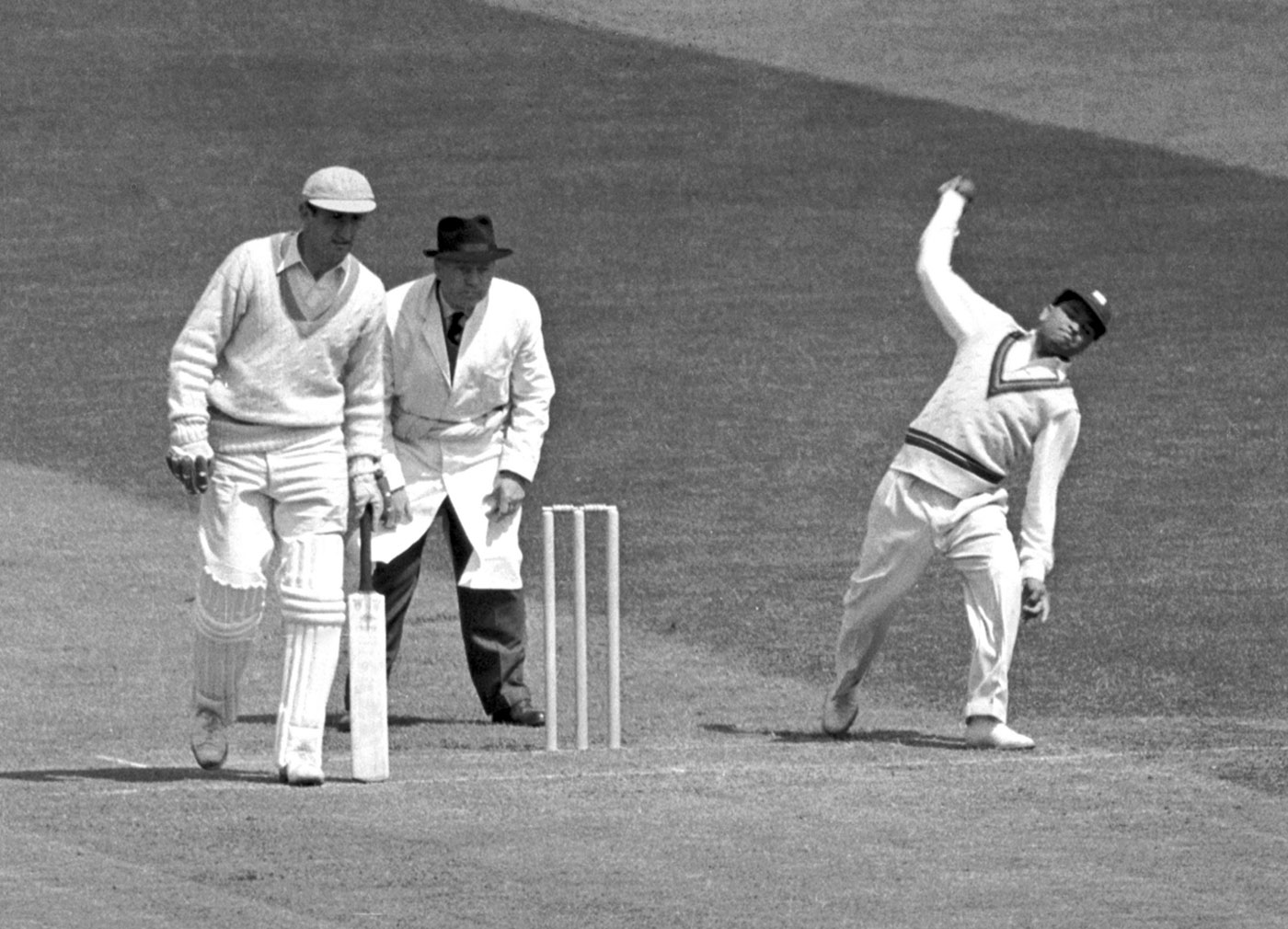
Sonny Ramadhin troubled England with his variations in 1950 but lost his edge on the next tour, and later confessed to having chucked during his career  © PA Photos
Enlarge

Back in the 1960s, my college team had a "legspinner" - for want of a better description - PS Ramesh, who bowled legbreaks, offbreaks and straight ones, all with identical actions and no obvious change of grip. We played all our cricket on matting, and while Ramesh bamboozled most batsmen at that level, we did not find out how he would have fared on turf, as the selectors never fancied him beyond college cricket. These days he would probably have been taken much more seriously, and have played representative cricket, for his armoury certainly included the carrom ball, if not the doosra.
More than a decade earlier, West Indian crowds had first chanted the calypso about "those little pals of mine", Ramadhin and Valentine when the spin twins decimated England at Lord's to earn West Indies their first Test win in England. Bespectacled, nerdy-looking Alf Valentine was an orthodox left-arm spinner, but short and squat Sonny Ramadhin had a whole box of tricks that batsmen found hard to unravel. Bowling in long sleeves, he made the ball go this way or that at will, giving no hint of the deviation with his action. 
Ramadhin's spirit was broken seven years later, when Peter May (285 not out) and Colin Cowdrey (154) put on 411 for the fourth wicket in the second innings of the first Test at Edgbaston. While May counterattacked, Cowdrey showed he was a master of pad-play in an ultra-defensive display of attrition. Ramadhin never recovered.
Cowdrey's padathon probably played a role in the introduction of the new lbw rule that enabled the umpire to rule a batsman out to balls pitching outside the off stump if he offered no stroke and the umpire believed the ball would have gone on to hit the stumps. In 1999, Ramadhin sensationally confessed in the wake of widespread arguments over the legality of the doosra that he threw the odd ball in his time.
Were he playing today, Cowdrey could not have got away with the generous forward thrust of his leg in front of his bat to demolish the Ajantha Mendises and Sunil Narines of world cricket, considering umpires are ever so willing to give lbw decisions, unlike their 20th-century counterparts, many of whom had their hands firmly in their pockets except when the batsman was palpably in front - while playing fully back!
Perhaps the first freak spinner in Test cricket history was Australia's Jack Iverson, who gripped the ball between thumb and middle finger and bowled a bewildering array of offspin, legspin and googlies. The mystery of his bowling was, however, short-lived. He barely lasted five Tests.
I had the pleasure of watching a mystery spinner at close quarters. My Hyderabad team-mate, the left-arm spinner Mumtaz Hussain bowled Osmania University to a Rohinton Baria Trophy triumph in 1966-67. No batsman at that level had an answer to his wiles, as he sent down orthodox left-arm spin, the chinaman and the googly with no perceptible difference in the action. His prize scalp of the tournament was Sunil Gavaskar, who says in his autobiographical book Sunny Days:
"Their (Osmania's) left-arm spinner Mumtaz Hussain, the hero of the tournament, proved deadly with his disguised chinaman and regular orthodox spin. In the second innings, Ramesh Nagdev and I were going strong after Naik's cheap dismissal. But Nagdev was not able to fathom Mumtaz Hussain's spin when he bowled the chinaman. I thought I knew, so in a purely psychological move I called out loud to Nagdev at the non-striker's end: 'Don't worry, Ramesh, I know when he bowls that one.' When Mumtaz heard this, he smiled mysteriously and tossed the ball up to me for the next few deliveries. I came down the wicket, but managed to hit only one four while the others went straight to the fielder. Mumtaz tossed up the last ball of the over slightly outside the off-stump. Too late I realized that he had bowled a googly and was stranded down the track, to be easily stumped."
Mumtaz was tragically converted to an orthodox spinner in first-class cricket, and though he had a very respectable career, he was never again the wonder bowler of his youth - at least not until he unfurled his magical wares again in his last two Ranji Trophy matches. Legspinner BS Chandrasekhar was luckier. In a land notorious for coaches who would try to fit every spinner into a single mould, it was a miracle that allowed him to continue to deliver lightning-quick missiles all his life, with no concession to orthodoxy.
A story similar to Gavaskar's, but probably apocryphal, involves Geoffrey Boycott and legspinner John Gleeson, who posed quite a few problems for English batsmen during the 1970-71 series in Australia. When one of his batting partners told him he was now able to distinguish Gleeson's googly from his legbreak, Sir Geoffrey allegedly whispered to him, "Don't tell anyone. I could always read him."
V Ramnarayan is an author, translator and teacher. He bowled offspin for Hyderabad and South Zone in the 1970s

Wednesday, 25 June 2014

On Sri Lankan cricket test win -The pearl and the bank clerk

Jarrod Kimber in Cricinfo

Sri Lanka's GDP ranking in 2013 was 112, the UK were 21. They have a very small population compared to the other subcontinent cricket nations. Transparency International ranks them as the 91st least-corrupt nation on earth. They have only one really big modern city. Their cricket is mismanaged by selfish inept politicians. The team is signed off by the government. They don't always pay their cricketers.
But this year they have beaten the world. And now they've beaten England with men who have lost their houses in tsunamis, been shot at by terrorists, competition winners and a tubby man who works at a bank.
Sri Lanka is a special place.
---
At the Sampath Bank headquarters in Colombo there is a round-faced man smiling happily wearing a polo shirt with the bank's logo on it. He is being felicitated. He is a finger-spinning maestro. He is a World T20 winner. And this man, Rangana Herath, is also an employee at the bank.
Not in a ceremonial way. Not just to beef up their cricket team. But Herath works at the bank. Doing things that people do in banks. He probably has his own coffee mug there. When Herath sees the Sri Lanka cricket schedule, one of his first calls is to his bank manager. To ask for leave to travel to the tour.
Herath worked there when he made his comeback to Test cricket in 2009. Herath worked there this while he took more Test wickets than any other bowler in 2012. Herath worked there even while he was ranked the second-best Test bowler on earth.
Twenty-four days before his felicitation, Herath took 1-23 in four overs. Sri Lanka won the World T20 that day.
---
Sri Lanka Cricket is currently in debt. An exact amount is unknown. It was at one stage supposed to be US$70m. That is to pay for new stadiums that replaced the old stadiums that were in some cases not that old. This led them to not pay their players.
According to Forbes, MS Dhoni was worth US$30m last year. He captained the side that Sri Lanka beat in the World T20 final. In sport, money does buy wins. Internationally, less so. But Sri Lanka are playing cricket off the field in a way that the other countries haven't done for decades. Their support staff is understaffed, undertrained, and at times seemingly not able to do their own research. They rely on the touring journalists for a lot that cricket board staff would usually do. They are comically unprofessional.
This is the first Test series that Sri Lanka had sent players over early to properly acclimatise before the tour. Herath and Shaminda Eranga both came over. It was a step towards professionalism in a sport that has been professional for years.
---
North of Colombo there is a town called Chilaw. There is an ancient Hindu temple in Chilaw that was once visited by Gandhi. Every year they have the Munneswaram festival. It was once famous for pearls. And they have a first-class cricket team the Chilaw Marians Cricket Club.
Shaminda Eranga comes from Chilaw.
Like many in Sri Lanka, the cricketers from Chilaw are largely invisible inside the system. There are Test-quality cricketers playing on the streets of the Hikkaduwa right now that will never play with a hard cricket ball in their life.
Eranga was not playing first-class cricket. He was not in the system. He shouldn't have made it at all. But like his seam-bowling partner Nuwan Pradeep, he made his way to a fast-bowling competition. He bowled fast. But five guys bowled faster. Somehow the sixth-fastest bowler in that completion was picked for Chilaw Marians Cricket Club. Five years later he would clean bowl Brad Haddin with his second ball in international cricket.
Eranga is the closest thing Chilaw has produced to a pearl in a very long time.
 
 
Sri Lanka played gritty, tough, bits-and-pieces cricket that mostly was just keeping them in touch of England, nothing more. They just refused to be beaten. They just refused to go away
 
---
Herath has been in Test cricket since 1999. He invented a carom ball. He disappeared back into first-class cricket and the bank, and was in club cricket in England when he was picked for his comeback.
There are no billboards in Sri Lanka with his face on them. He's not famous like Kumar, Mahela, Lasith or Angelo. Even Ajantha Mendis is sponsored by chicken sausages. Herath may be a Test bowler with over 200 wickets who has carried a poor attack for years, but he's just a really good player, not a star or legend.
Against Stuart Broad, Herath had bowled around the wicket with a low arm action. Broad takes a big step forward when he defends spinners. Herath bowled the ball exactly from the right angle, with the right amount of turn, to ensure that Broad would miss one.
Against James Anderson, he bowled over the wicket with a high arm action. Anderson gets right over the ball when it's full, and can dangle his bat when it's slightly shorter. Herath was trying to find either of these two dismissals.
Broad missed his, Anderson survived.
---
Eranga spent most of the first innings not getting anywhere. There was some swing, but not enough. He bowled a great line and length to Sam Robson, but couldn't get the edge. England just moved further and further away with the game. Even the second new ball did nothing for him. Sri Lanka were all but gone. But then they got the wicket of Ian Bell. It was Eranga's wicket. He added Moeen Ali's wicket to it. The next morning he had Chris Jordan and Anderson as well. They were still behind, but they were within some kind of touch.
In the second innings, Eranga bowled the worst he had in the series. At Lord's he was the pick of the bowling, in the first innings at Headingley he inspired the comeback. But when his team really needed him to help win the game in this innings, he couldn't get it right. He lost his line and length. He didn't make people play. He was too short. The only time he looked good was when he just tried to knock Joe Root's mouth off. That didn't work either. Then when he took a wicket, that of Jordan, he also overstepped.
Eranga's first 23.4 overs were just not great.
It was probably mostly luck that he received the last over. Dhammika Prasad had bowled the second last over. Herath could not outfox Anderson. Pradeep looked spent. And Angelo Mathews had lost his first innings magic.
Eranga was just the man who was left.
---
Sri Lanka feel like they don't get the credit they deserve. They feel that when they win, it is Yuvraj's (or whoever else that game) fault. Or the home conditions helped them. Or the other team was just useless. On Monday at Headingley, they started one of the great comebacks in modern Test cricket. Their captain played one of the great knocks of modern Test cricket. They were on the verge of their first ever series win in England. Their first major series win outside Asia for almost 20 years.
And the next day the cricket world talked about the other captain who had a shocker.
Before the tour they lost their coach to the opposition. While here they have been accused of breaking the spirit of cricket. Their spinner was accused of breaking the laws of cricket. Their bowlers were pop gun and a glorified county attack. Their batmen were suspect against the moving and short ball. They would be bombed by the short ball. They were sent in to be annihilated here. They felt under siege.
At Lord's it got even worse when Broad and Anderson attacked them with the ball, and the English players, lead by the extremely mouthy Root, came at them very hard. Pradeep was almost beheaded. After that they were upset by Cook's comments about Sachithra Senanayake's action. And England had dominated them for eight straight days of cricket.
They were sick and tired of being plucky cheerful losers. They wanted a win. They saw one. And they became very vocal. Root's ears will be ringing from his entire innings. Broad's unscheduled toilet break 20 minutes into his innings probably got more of the same.
---

The penultimate ball of the Test flies off James Anderson's bat, England v Sri Lanka, 2nd Investec Test, Headingley, 5th day, June 24, 2014
The decisive moment, James Anderson's 55th ball faced © Getty Images 
Enlarge
This is not the strongest team Sri Lanka have brought to England. They've had Murali, Dilshan, Jayasuriya and Vaas to bring before. This team has two all-time greats, one potential great, and the second-best spinner they have ever had.
It also has Nuwan Pradeep and his bowling average of 72.78. It has Dimuth Karunaratne, who is immune to going out early, or making runs from his starts. Lahiru Thirimanne, who stopped believing runs existed. And Prasanna Jayawardene, who looked a spent force with bat and gloves.
Mahela Jayawardene never made a hundred. Herath never took a five-for. Nuwan Kulasekera was dropped after the first Test. But people kept stepping up. They had batted an entire fifth day to save an overseas Test only once before. But they all chipped in and did it with one of the worst batsmen in world cricket somehow surviving. Their bowling could never compete with England's, so their fielders took many more of their chances. Their middle order slipped up in the third innings at Headingley, so their tail made runs.
It was gritty, tough, bits-and-pieces cricket that mostly was just keeping them in touch of England, nothing more. They just refused to be beaten. They just refused to go away. They didn't smile, or play nice. They clawed and screamed.
On paper this Sri Lanka should never beat England. They should have been outgunned in almost every way. In preparation. Financial. Backroom. Coaching. Facilities. And even in the players who were involved. Virtually every single thing about England should have been better than Sri Lanka.
---
Anderson was playing for England by the time he was 21. He's the embodiment of a professional cricketer. You can see his face on the back of buses in London. He has won games with the ball all round the world. He's saved games with the bat. Today he faced 54 balls with the knowledge that any mistake and his team would lose a Test, a series, become a joke. Yet he played almost every ball well. Stoically. Until Sri Lanka very nearly gave up.
On the 55th ball, a world-class professional sportsman was bounced by the sixth-fastest bowler from the North Western Province and caught by a chubby slow guy from Kurunegala.
The pearl and the bank clerk. Sri Lanka is a special place.

Tuesday, 24 June 2014

What makes a slut? The only rule, it seems, is being female


It's a warning more than a word: a reminder to women to adhere to sexual norms or be punished
slutwalk
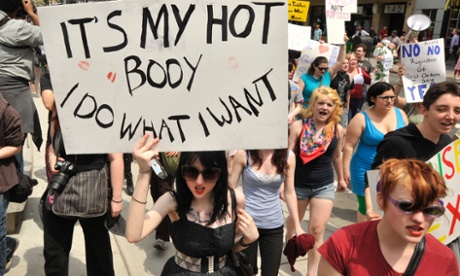
Being called promiscuous is sometimes just a way to excuse the behavior of others. Photograph: Josh Reynolds / AP

Sandra Fluke heard it when she talked about insurance coverage for birth control. Sara Brown from Boston told me she was first called it at a pool party in the fifth grade because she was wearing a bikini. Courtney Caldwell in Dallas said she was tagged with it after being sexually assaulted as a freshman in high school.
Many women I asked even said that it was not having sex that inspired a young man to start rumors that they were one.
And this is what is so confounding about the word "slut": it's arguably the most ubiquitous slur used against women, and yet it's nearly impossible to define.
The one thing we do know about "slut" is that it's the last thing a woman should want to be. Society is so concerned over women and girls' potential for promiscuity that we create dress codesschool curriculaeven legislation around protecting women'ssupposed purity. Conservative columnists opine that women having sex is tantamount to a "mental health crisis", and magazine stories wonder if we're raising a generation of "prosti-tots".
Leora Tanenbaum, the author of SLUT! Growing Up Female with a Bad Reputation, told me that "a 'slut' is a girl or woman who deviates from norms of femininity. The 'slut' is not necessarily sexually active – she just doesn't follow the gender script."
This nebulous, unquantifiable quality of the slur is what makes it so distressing – there's no way to disprove something that has no conclusive boundaries to begin with. And because it's meant to be more of an identity than a label, it's a term not easily shaken off. "Slut" sticks to a person in a way that "asshole" never will.
So what makes you a slut? It seems the the only hard and fast rule is that you have to be a woman.
Men, of course, are immune – absent, really – from the frenzy of concern. For instance, a new study out of the University of Michigan showed that teen girls who "sext" are called sluts while boys who do the same remain free-from judgement. In another example, the American Medical Association breathlessly released a study in 2006 with the headline "Sex and Intoxication More Common Among Women on Spring Break", intended to warn women about their "risky" behavior while on break – but there was nothing about the men the majority of these young women would supposedly be having all this drunken sex with.
As always, women are sluts and men are, well, men.
For those who haven't had the pleasure of being called promiscuous, it may be hard to understand just how profound an impact it can have. Women's value and morality are closely – though wrongly – tied to their sexuality. So "slut" (or any of its variations) is an accusation with power behind it.
When multiple attackers videotaped themselves brutally raping an unconscious teen girl in California, for example – stopping to take dance breaks and find new objects to penetrate the young woman with – the first trial resulted in a hung jury because the defense argued she was promiscuous. "The things she wanted done were done", argued one lawyer. Another asked the jury: "Why was her vagina and anus completely shaved? Sex! She's a sexual person!"
The accusation doesn't have to be that explicit to have real power. Cherice Moralez –raped by her 49 year-old teacher when she was just 14 – was called "older than her chronological age" by the judge in the trial – a more diplomatic way of saying she had it coming. Her attacker was sentenced to 30 days in jail. Moralez later took her own life.
Multiple girls have taken their own lives of late after being "slut-shamed" – an indication that the slur shows little sign of waning in the damage it does personally.
Tanenbaum, whose forthcoming book is I Am Not a Slut: Slut-Shaming in the Age of the Internet, said that many of the girls she interviewed "had intentionally embraced the 'slut' label as a badge of honor to advertise their sexual empowerment."
But, she added, "they ended up losing control of the label when their peers turned it against them".
Broader efforts to "reclaim" the word – via marches like SlutWalks, for instance – have largely failed. While the anti-rape protests that spread across the country a few years ago were popular in terms of attendance and media coverage, and I was an early supporter, many women felt the word "slut" was irredeemable - especially women of color, for whom racist stereotypes about their supposed innate promiscuity always presented a unique danger.
The "slut" idea hurts women politically as well. A safe contraceptive and a cancer vaccinewere both held up for years because of fears they would make women "slutty", and anti-choice legislators and activists insist that that abortion providers are in the "business" of promiscuity – and use that accusation as a way to defund critical health care providers like Planned Parenthood.
So, what's a "slut", then? It's any of us, and all of us – especially those of us who step out of line in some way real or imaginary. It has little to do with the number of our sexual partners, or the way we dress or flirt, or if we take birth control or not.
It's a warning more than a word – a reminder to women that we must adhere to the narrow standards of femininity and sexuality set out for us, or be punished accordingly. And in that way, the real meaning of "slut" is terrifyingly clear.

Monday, 23 June 2014

Nation states are too small to fix global problems


We need a debate about tackling international problems, rather than hankering for some mystic past in which country was king
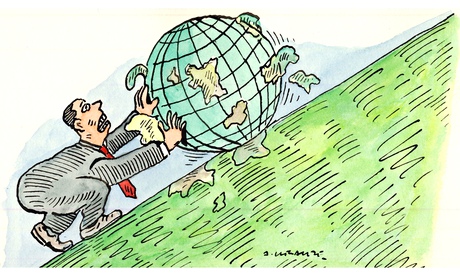
Andrzej Krauze: an uphill struggle for supranationalism
‘The greatest democratic problem today is the weakening power of the nation state faced by threats stretching beyond its borders.' Illustration: Andrzej Krauze

Jean-Claude Juncker may not be the right answer, but his candidacy for the presidency of the European commission is at least a response to the right question. The process by which he rose to lead the European People's party list – which then emerged as the largest group in the European parliament – was an attempt to engage voters in the European decisions taken in their name. As such, it confronted the central political issue of our times.
We live in a world of increasingly global problems, ineffective national solutions, and consequent disillusion with democratic politics. These tensions will ultimately prove as great a threat to our democracy and our values as the totalitarian regimes of the 20th century. Who cares about pretentious, powerless politicians? Powerlessness is stealthy, insidious and corrosive to our belief that politics matters. At least Europe has attempted to respond by electing its supranational legislators.
It is, though, a work in progress. Europe is full of talk of the "democratic deficit", even though EU institutions are the only transnational bodies with any elected component. Nor are the voters impressed. Even in Europe, there is scant understanding of the new transnational realities. The European parliament elections showed a yearning for simple, nationalist solutions.
Nigel FarageGeert Wilders and Marine Le Pen are tribunes of nostalgia for national certainties. Yet scarcely any problem that people care about passionately is any longer susceptible to a purely national solution, even by a country as big, powerful and besotted with the perfume of sovereignty as the US. Yesterday's American hubris is today's Iraqi disaster.
Conflict resolution? Most recent conflicts have begun within societies, not between them. Last week's UN report noted that there are now 51 million refugees and internally displaced people across the world, half of them children. This was the highest level since the second world war, and mainly due to internal conflict in Syria, South Sudan and the Central African Republic.
Yet the UN is no nearer to developing a legitimate template that can impose order in the increasingly common phenomenon of the failed state. Afghanistan, Yemen and Sudan have all been horrible warnings of what can follow from internal collapse, all with consequences far beyond their own frontiers. Ominously, Pakistan is on many experts' danger list, and it is a nuclear weapons state.
Even an issue like wealth and income inequality, once the meat and drink of class-based national politics in the old democracies, is not immune. Inequality is likely to grow, as Thomas Piketty has argued. National solutions will not work. High tax rates in one country are liable to be undercut by competitor countries, sometimes gleefully and deliberately, as in the case of George Osborne's explicit decision to cut corporation tax rates. The only solution is international agreement on tax avoidance, evasion and minimum tax rates. Goodbye nation state.
Take the prosperity brought by large-scale mass production. The US is so rich in part because of its huge domestic market. If we want our European companies to produce at scale, they have to be able to make the same product for the whole European market. For such a single market to work, every national market has to have similar consumer safety, health and environmental standards. That means at least Europe-wide – and maybe soon transatlantic – rule-setting. Goodbye nation state.
Then there is clean water and unpolluted air. Climate change alone makes the case for international action: without it, we are heading inexorably for such extreme weather events that our prosperity will be cataclysmically undermined. Ask the insurers: one group of private companies only too aware of the rising costs and damage of climate change.
Take even an area traditionally central to the nation state, such as crime. The European arrest warrant and speedy extradition are responses to the easyJet age. Cybercrime disrespects frontiers as readily as air or sea pollution. Fraud in London may begin in Singapore, and involve counterparties in Zurich. Policing is international, or it is flat-footed.
If we cannot grasp these global issues – fundamental to our future prosperity and to our belief in the efficacy of the public realm – the disillusion with national politics will fester. When problems are global, solutions must match. Power is increasingly going to be wielded supranationally. That, in turn, brings the challenge of how to make politics work across language and cultural barriers.
This is not a counsel of despair. We have solved global problems such as the hole in the ozone layer. There are also examples of successful, multilingual democracies that provide a model for the public accountability of international power: India, Switzerland and Canada. (I could add Belgium and Luxembourg, but that is more contentious.) Language barriers may even melt as voice-recognition technology gives everyone a hand-held interpreter.
But we need a public debate about where the real problems in our democracy lie, rather than hankering for some mystic past in which powerful nations resolved simple problems with the smack of firm government. David Cameron needs to spell out some home truths to his own party, and start to provide some answers himself.
The greatest democratic problem today is the weakening power of the nation state faced by threats stretching beyond its borders. The nation's weakness is fatally wounding the prestige of its political elites. Pity the mediocre Juncker, for he carries all the expectations of this new and frightening world.

Loneliness is one thing. A happy loner quite another


Britain may well be 'Europe's loneliness capital', but being happily alone by choice is quite another matter
Isolated… or just enjoying her own company?
Isolated… or just enjoying her own company? Photograph: Pierre Desrosiers/Getty Images
There used to be a fashion for scaremongering surveys about single women, saying things like: "Eight out of 10 women are going to die alone, surrounded by 17 cats." But to that I would mentally add: "Or it could all go horribly wrong." To my mind, aloneness never necessarily equated with loneliness. It wasn't a negative, something to be avoided, feared or endured.
Now a survey from the Office for National Statistics says that "Britain is the loneliness capital of Europe". Overall, Britons are less likely to have people they can turn to in a crisis or to feel close to neighbours. On this last point, we came 26th out of 28 European countries – beating Denmark and France (but they scored higher in other areas).
However, Britain was better than average in areas such as feeling that life was generally worthwhile. And though we did come near bottom on having people to turn to in a crisis, there were still 88.7% who could turn to someone. Slovakia's score was nearly 100%, but that's just showing off. Joking apart, if the truly lonely in Britain are to be identified and helped, then the first step would be to stop lazily lumping them in with the contented-alone.
I sometimes think of myself as a natural loner, though, in my case, this could just be a cover for being a sullen, unsociable, misanthropic cow who was warped by reading too much as a child. The upshot is that "alone" doesn't bother me much. But, then, there are two types of solitude – voluntary and enforced, the latter being a killer.
Past studies have reported the debilitating impact of loneliness, one stating that, for older people, it could be more deadly a factor than obesity. Such loneliness is caused by myriad factors – disability, unemployment, economic stress, mental illness, family breakdown, relocation and so on. Few would want to suffer it.
Then there is the other type of "alone". This study could just as well be interpreted as saying that many Britons are self-reliant problem-solvers, respectful of others people's privacy – and what's wrong with that? Isn't this the modern British definition of neighbourliness: not over-chummy and intrusive, but friendly, considerate and, most importantly, happy to sign for your Amazon parcels?
Now I'm being flippant. Of course you'd hope that people would help each other out in a crisis. However, generally, things such as "neighbourliness" seem defined by personality types. That's why some people go to London, are shocked by its standoffish ways and leave, while others like myself (escapees from villages) relish the freeing anonymity.
Likewise, while these days social media et al provides a sense of ersatz "community" without human interaction for those who want it (the equivalent of the television left on "for company"?), some people don't even want or need this.
Odd, then, that it's usually loners who are viewed with pity, condescension or suspicion. But why? Britain is an overstuffed, teeming little rock. It makes sense that, just as some people will be sociable, others will adopt the "island mentality" of standing alone and neither is right or wrong.
Still, the feeling persists that sociability is a skill, while the opposite casts a person as a loser or a weirdo – someone who's going to end up walking down a high street wearing a bandana, firing guns at those who've "wronged" them.
Personally, I'd be more likely to distrust people who can't bear time with themselves. What's wrong with them that they can't abide their own company – what are they trying to hide in the crowd?
This is what I take from these kinds of surveys – that there are the lonely, and there are the alone. Seemingly the trick is to reach out to the group who truly need help, rather than getting them mixed up. 

Cricket to become a private club

Daniel Brettig in Cricinfo

Melbourne is something of a Mecca for private members clubs. From the Melbourne Club and the Australian Club to the Kelvin Club and the Melbourne Cricket Club itself, the private meetings of well-heeled businessmen in wood-panelled dining rooms by open fires, all members by invitation only, are part of the fabric of the city. On Albert Street in East Melbourne the United Grand Lodge of Victoria stares forbiddingly down towards the MCG - who can forget that Sir Donald Bradman was himself a Freemason?
So it is entirely fitting that international cricket's redefinition as a private club, with the BCCI's banned board president N Srinivasan crowned as its omnipotent chairman, will take place in the MCC Members Dining Room this week. Since 1877 the MCG has hosted all manner of cricketing feats, but not since that first Test match between Australia and England has it been the scene of a more significant moment than this.
A re-shaping of the international game that began more or less in secret, during meetings between Srinivasan, the ECB chairman Giles Clarke and the Cricket Australia chairman Wally Edwards over the past two years, will reach fruition at the ICC's annual conference. While the broad resolutions for the new landscape have been known since January, their inking into law will be the point of completion, and some contemplation. There can be no going back from here.
After Thursday's centrepiece conference meeting the ICC's constitution will be changed drastically, setting up the boards of the "big three" nations as commercially-motivated navigators for cricket, and abandoning much of the expansionist vision favoured by ICC management in recent years. Instead the game's current balance of power will be definitively entrenched, as India, England and Australia take a larger slice of revenue from ICC events in addition to their existing windfalls from bilateral tours.
The game's most influential decision-making will no longer take place at the executive board table but at the more exclusive meetings of ExCo, the five-member working group that will have UN security council-styled permanent membership for the BCCI, ECB and CA. Edwards will chair ExCo for one year and his CA successor David Peever, the next. Clarke is already head of the ICC's finance committee, and Srinivasan's coronation will complete the triumvirate.
Srinivasan's ascension will take place despite the reservations of many. The Supreme Court of India has barred Srinivasan from his duties as BCCI president while the investigation into corrupt activities around the IPL and Chennai Super Kings is ongoing: members of the ICC's executive board have personally expressed to him their preference for Srinivasan to refrain from taking the international post until it has concluded. The conflict of interest inherent in Srinivasan's ownership of Super Kings alongside his cricket administration has also been mentioned, but always excused by the fact the BCCI allowed it.
Chief among those expressing caution has been Edwards, an architect of vast governance change at CA but compelled to work more pragmatically at the ICC. Earlier this month he reportedly called Srinivasan to discuss the implications of his appointment as chairman while still under investigation, and to seek reassurance that there would be no surprises later on if he did take up the post this week. The image of President Nixon's second inauguration playing on a newsroom television at the Washington Post while Woodward and Bernstein tap out the stories that will lead to his resignation spring to mind.
"We respect the right of each nation to nominate their representative on the ICC," Edwards said ahead of the conference. "With that comes great responsibility to ensure representatives comply with the standards required to govern the game. I have been assured by Mr Srinivasan, legally and by ICC management that there is nothing preventing the BCCI putting him forward as a candidate for chairman. I accept that and am confident that Mr Srinivasan can play an important role in strengthening world cricket."
Edwards is well aware of said standards as the primary author of a new ethics code for the ICC board and administration, a document broader in some senses but more restrictive in others. Accusations against members can now only be made by fellow signatories of the code, a change that underlines the shift to private membership values as much as anything else. The responsibilities of members to act in the best interests of the ICC itself have been stripped away, instead they will be freed up to do whatever their own countries would best prefer, formalising a mindset of self-interest that has long existed. Should Srinivasan be removed in the future, it will be under the terms of this code.
But Srinivasan is nothing if not determined, and in repeatedly asserting his innocence of any wrongdoing has persuaded the executive board, the BCCI and the Supreme Court that allegations of major impropriety should not stop him from taking the role. India's administrators seem largely content to allow Srinivasan to represent them overseas, while there appears to be little will to prevent his coronation in Melbourne - a repeat of the John Howard coup de'tat at the 2010 conference in Singapore looks unlikely.
As significant as the unveiling of the new chairman will be the long-delayed and much debated signing of the Members Participation Agreement for ICC events. This document, and the BCCI's refusal to sign it until the shape of the game was changed to reflect its view of the world and financial contribution to it, was the catalyst for cricket's current direction. There will be little fanfare around the boards putting pen to paper, but the gravity of the moment will not be lost on those in the room.
Elsewhere the game's Associate and Affiliate members will be forced to swallow numerous changes, including a raising of the bar in terms of membership criteria, and the loss of the revenue they will gain from ICC events relative to the old structure. The carrot of Test match participation will be dangled, but only over the course of an eight-year cycle. World Cup participation is also set to be restricted, as the tournament reverts to a 10-team model after next year's edition in Australia and New Zealand.
Other vestiges of earlier attempts by ICC management to broaden the game will be removed. A report into the possibility of cricket at the Olympics will be tabled, confirming why it will never happen so long as India and England have anything to do with the decision. The ACSU, cricket's independent watchdog for corruption, will soon be asked to report not to the ICC chief executive but to ExCo and the executive board. Whatever the current chairman Sir Ronnie Flanagan has said about preserving the unit's independence, the new model cannot be said to have done so.
Finally, after the conference concludes, members will sit down to the serious business of their first committee and board meetings under the new structure. Friday and Saturday will be taken up by the first acts of the new order, as Srinivasan, Edwards and Clarke chair the meetings of the private members club they have created. There will be no funny hats or ancient robes, but the tone, form and function of cricket's governance will reflect nothing so much as the clubs of Melbourne and beyond. The words of the Stonecutters' anthem immortalised by The Simpsons will seem a fitting accompaniment:
Who controls the British crown? Who keeps the metric system down? We do, we do!
Who keeps Atlantis off the maps? Who keeps the Martians under wraps? We do, we do!

Sunday, 22 June 2014

Why we prefer our immigrants to be invisible


The treatment of cleaners at the University of London highlights our shameful treatment of immigrants
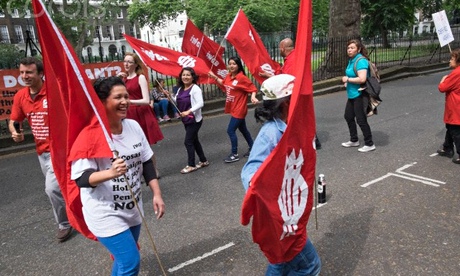
London Uni workers strike, picket at University Hall of Residence
Independent Workers of Great Britain pickets outside the University of London Commonwealth Hall. Photograph: Peter Marshall/Demotix/Corbis
The story of the University of London's cleaners ought to be a modern Made in Dagenham. Immigrant women were scraping a living on a poverty wage from an employer who wanted them to clean up other people's mess and get out of sight when they'd finished. They fought back and, in a rare uplifting moment in these dismal times, won. They forced the university to raise their pay from £6.15 to £8.80 an hour and give them decent holidays and sickness leave.
But no one will make a film about the university cleaners because it lacks the prime ingredient for a feelgood story: a happy ending. Instead, their experience tells a more hypocritical tale about the British attitude to immigrants. Public opinion is set against them. But for all the outrage, Britain still wants foreigners' money, and employers and the middle and upper classes still want foreigners' labour – as long as it is cheap and as long as the workers do as they are told and do not make a fuss.
In 2011, no one noticed the University of London's Latin American cleaners. They travelled on the early-morning buses or trains, when most of London was still in bed, and spent their days doing shifts for two or three different employers. To the academics and students they served they were next to invisible: seen but not noticed; essential but neglected. On the surface, the cleaners, porters, caterers and other contract workers must have looked easy to intimidate. I met Sonia Chura, their leader, and two of her comrades last week. They were all barely five feet tall and couldn't speak English. They were in a strange land that cared nothing for them. "What can they do to us?" their masters must have thought.
As it turned out, they could organise an unofficial strike, get back pay they were owed, attract the attention of the radical press and go on to win better pay and terms and conditions. Their achievement is all the more remarkable because their own union, Unison, did not support them.
Anyone who hopes for a stronger labour movement knows that trade unions must start recruiting the cleaners, shop workers, security guards, carers, maids, nannies and cooks who make up the new working class. By necessity, they must appeal to women and tackle the admittedly formidable task of organising new immigrants. Yet Unison turned on the cleaners.
It found technicalities that allowed it to declare an election in which immigrants ran for union positions invalid. When cleaners protested outside Unison headquarters, its officials locked the doors and called the police. If you want to understand why the British trade union movement is dying faster than grass in a heat wave, the vignette of Unison demanding that the cops control its members tells you all you need to know.
The cleaners did not give up. They joined and helped develop a tiny new union – theIndependent Workers of Great Britain. It is run by Jason Moyer-Lee, another figure who might have stepped out of an inspirational film. He was an American graduate student in London who was appalled by the way employers treated foreign workers and devoted his time to helping them, first in Unison and then in the new union
Now he must help save their jobs. The halls of residence the women cleaned will be closed. The contractors refused to say if they would move the activists to new work. Nor would the University of London, the umbrella body that comprises the London School of Economics, University College London and many another fine liberal institution. I asked its spokesman if the university would guarantee that the women would not be punished for asking for £8.80 an hour. That was a matter for the contractors, he replied. I pointed out that the university paid the contractors. If it said they must keep the activists, the contractors would obey.
"Of course," he said in a sing-song voice, "we absolutely believe in workers' right to peacefully protest." He made the University of London sound like a noble place, while avoiding a promise to ensure that the women were kept on. I later found he had dodged the question for a good reason. As the wretched man was speaking to me, the contractors were telling the activists that not one woman who organised a protest would get a permanent job. I hope they drag them and the university through every employment tribunal they can find.
But even if they lose a tribunal case, the Home Office will not be able to drive them out of Britain. Like so many of the Latin Americans here, they originally moved to Spain. The Spaniards gave them citizenship that allows them to work in any European country. They fled north to avoid the depression the euro crisis brought. As long as Britain stays in the EU, they are safe. They will find other work, too, if they abandon any thought of campaigning for decent treatment. Employers want compliant labour, whether immigrant or native. As immigrants are the easiest to exploit, they will always be popular
It is a nice coincidence that their struggle is taking place in a university. Foreign students are in the opposite position to contract workers. They have money; cleaners do not. Britain wants their cash, but it also wants to get rid of them as quickly as possible. Universities depend on foreigners to subsidise British students – nearly 20% of the output generated by universities comes from non-EU students. Theresa May, however, has driven down the immigration figures by ending the old system that allowed foreign students to pay off debts by working for two years in any job they could find after graduating. The number of foreign students keeping the academic "business" rolling in grew at 5% a year in the last decade but is falling now. I wouldn't be surprised if it fell much further. "We want your money, but we don't want you," isn't the most enticing sales pitch.
The richer parts of London have become creepy places. The streets are deserted and the houses dark. Foreign oligarchs have bought up homes as an investment, thus fuelling the Osborne housing bubble, which provides us with what growth we have, but they don't live in them. What a metaphor for how Cameron's Britain wants its immigrants. If they are poor, it wants them to be invisible, flitting uncomplainingly from one menial job to the next. If they are rich, it wants them to hand over their money and leave. Either way, it doesn't want to see them.