Search This Blog

Saturday, 27 July 2013

Thank God we have an archbishop who views Wonga's loans as modern slavery


Justin Welby is keen to recover the economic meaning of salvation as redemption. We are lucky to have him
Welby condemns attacks on Muslims
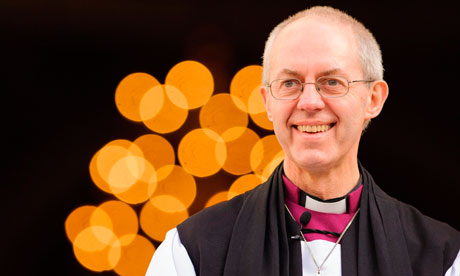
The archbishop of Canterbury, Justin Welby, wants the Church of England to expand credit unions as an alternative to payday lenders. Photograph: Dominic Lipinski/PA
"Forgive us our sins, as we forgive those who have sinned against us." The familiar words of the Lord's prayer, right? Except, in the earliest Greek manuscripts, the word isn't sins, it's debts. "Forgive us our debts as we forgive our debtors." That is how the King James Bible renders the Lord's prayer, though it still feels clunky when used in church.
But it feels even more clunky in the context of the whole Jesus v Wonga debate. The archbishop may want the church to have a greater role in supporting credit unions. But what sort of a lending model can be sustained when the mission statement of that organisation has the forgiveness of debts at its heart?
OK, to be fair, it's not the church that will be doing the lending on the Welby plan. The idea is for the churches (who have more outlets that the banks) to offer their facilities and human resources in support of credit unions. And it is credit unions that will be doing the lending. But even so, the church does have serious historic issues with money and the advent of a capitalist archbishop serves to bring these to the surface.
Though lots of Christians talk about sin (often translated in the mind as sexual misadventure), debt is the more basic theological category. Redemption, for instance, is a word that the church has borrowed from the ancient financial services industry. It is the recovery of something pawned or mortgaged. In a world of slavery, that something can be one's very life. And so it is today. Those who are trapped in Wonga's wicked 5,000% APR, often borrowing money to pay off other loans, thus deepening the crisis, have their lives owned by other people – by those, in this instance, making £50m a year profit off their misery. This is modern slavery.
Those who argue that it is not the church's business to get involved in this have little knowledge of the Bible. Redemption is absolutely what the church is for. And it is something supremely practical. Of course, when the church itself was subject to a successful takeover bid by the Roman Empire, all this forgiving debts stuff had to be re-imagined (as did all the anti-war stuff too). And what better way for the marketing department of the Caesars to do this than to turn its newfound religion into something spiritual. Better "blessed are the poor in heart" (St Matthew) than "blessed are the poor" (St Luke). And in this process of ideological rebranding, sin becomes a more convenient category than debt.
But if the debt and slavery idea was conveniently re-thought, the church retained a peculiar and eventually poisonous doublethink about money. Lending money at interest was deemed a sin for centuries. And this meant that Christians ended up forcing Jews to do it for them, and then hating them for doing it, thus generating the conditions for European antisemitism. It took Calvin to argue that usury was not lending money at interest but lending money at excessive interest. As Max Weber famously explained, this was the point at which capitalism was given moral sanction by the church. Even so, Calvin would have been perfectly comfortable with the idea of legislating against Wonga's 5,000% APR – ie a cap on interest rates – rather than having to out-compete them through credit unions, which is the Welby caring-capitalism plan.
And however much I am with Calvin on this one, the C of E is lucky to have found an archbishop who is keen to recover the economic meaning of salvation as redemption (listen up, church commissioners). In Liverpool and Durham, he recognised the existence of modern slavery. And thank God he is pressing the church to do something about it.

Friday, 26 July 2013

The DRS problem: it's not the humans stupid


Kartikeya Date 

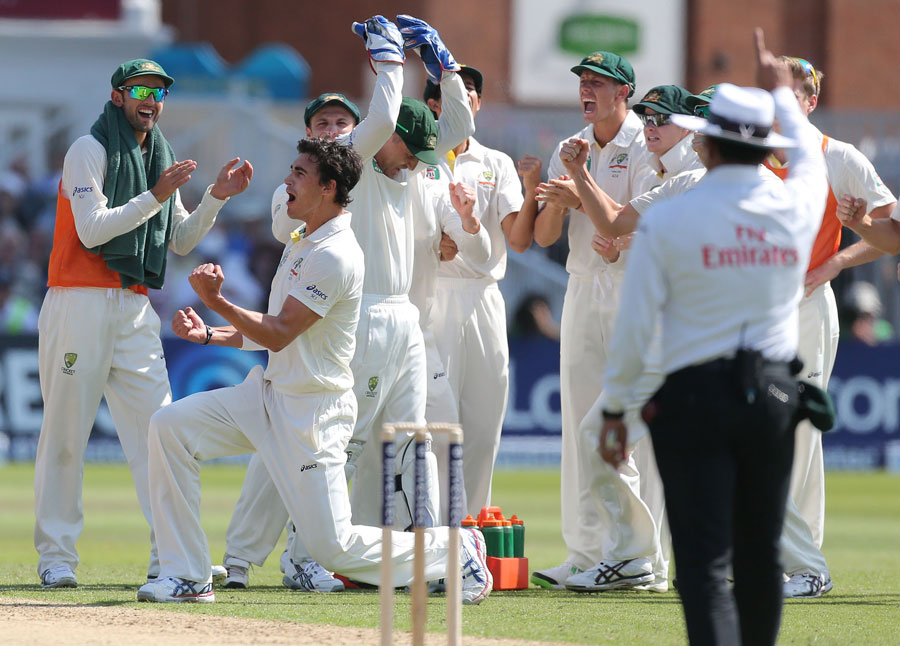
The controversial Trott decision: what many observers don't get is that it wasn't actually the third umpire who made the final call  © PA Photos
Enlarge

The DRS is a system in which umpiring decisions can be reviewed by players. Events on the field can also be reviewed by umpires in some circumstances before a decision is made. A widely held view about recent problems with the system is that while the DRS is fine, the way it is used by players, and on occasion by umpires, has caused difficulties.
I hold the view that the problem, if there is one, is with the system, not with the way it is used. The way the system is defined strictly determines the way it is used.
The DRS system I refer to is described in detail by the ICC in its Playing Handbook (pdf). It is worth clearing up a few misconceptions at the outset.
The TV umpire does not overturn a decision under the DRS. The TV umpire is explicitly prohibited from discussing whether or not a particular appeal should result in an out or a not out. Further, there is no standard in the DRS requiring "conclusive evidence to the contrary" to overturn a decision, as many commentators are fond of telling us.
The rules make only three points. First, the TV umpire must limit himself to the facts. Second, if some of the evidence requested by the umpire on the field does not permit a conclusion with "a high degree of confidence", the TV umpire should convey to the umpire on the field that a conclusive answer is not possible (the conclusion in this case is not the decision itself but about individual points of fact potentially influencing it). Finally, if some information is not available to the TV umpire, he is required to report this to the on-field umpire. He is also required to provide all other evidence requested by the on-field umpire. If we go by the ICC's DRS rules, at no point in the review process is the TV umpire required to provide a definitive conclusion by putting together all the evidence.
The Guardian reported that the ICC did admit to a protocol error in the way the umpires addressed Australia's review in Jonathan Trott's first-ball lbw dismissal in the second innings at Trent Bridge. The ICC has declined to say what the protocol error was, citing a long-standing policy of not revealing communication between umpires. A number of observers think that the absence of one Hot Spot camera angle should have automatically meant that the outcome of the review should have been inconclusive, allowing Dar's original not-out decision to stand. I think this is a misreading of the ICC's DRS rules.
Let's reconstruct the case of Trott. Umpire Erasmus in the TV umpire's box would not be asked "Is Trott LBW?", or even "Did Trott hit the ball with the bat?" Going by the ICC's rules, he would be asked a different series of questions. Does Hot Spot show a touch? No. Does the replay show a touch?Inconclusive. No clear evidence of a deviation. (Some people have argued that there was evidence of deviation on the replay. I disagree. As did Michael Atherton on live commentary.) Does the square-of-the-wicket Hot Spot show a touch? This angle is unavailable. Can you hear any relevant sound on the stump microphone? Inconclusive. Did the ball pitch in line? Yes. Did it hit the pads in line? Yes. Does the ball-track predict that it would have hit the stumps?Yes.
According to the rules, Erasmus would be prevented from providing probabilities or maybes. It would have to be yes, no, or can't say. After getting all these factual responses from Erasmus, Dar would have to make up his mind. Did what he heard from Erasmus merit reversal? As we know, he decided that it did. The protocol error could have been that Erasmus neglected to mention that one of the Hot Spot angles was unavailable. It could also have been that Dar weighed all the facts Erasmus provided to him incorrectly and reached the wrong conclusion, though it is difficult to construe this last possibility as a protocol error, since the protocol explicitly requires the on-field umpire to exercise judgement, which is what Dar did. "The on-field umpire must then make his decision based on those factual questions that were answered by the third umpire, any other factual information offered by the third umpire and his recollection and opinion of the original incident" (See 3.3[k] of Appendix 2 of the Standard Test Match Playing Conditions, ICC Playing Handbook 2012-13).
This is the central faultline in the understanding of the DRS. To some technophiles, it promises an end to interpretation; that, with the DRS, there is to be no more "in the opinion of the umpire". Technology will show everything clearly - make every decision self-evident.
Not so. Under the DRS, a judgement has to be made about whether or not evidence is conclusive. A judgement also has to be made about whether all the evidence (often conflicting, due to the limitations of the technologies involved), taken together, merits a reversal. There have been instances where outside edges have been ruled to have occurred, though there was no heat signature on the bat.
The ICC has consistently insisted that the idea is not to render umpires obsolete. It is right, but in a convoluted way. What the DRS does is allow umpires a limited, strictly defined second look at an event. But it does so on the players' terms. Umpires are currently not allowed to review a decision after it has been made on the field. The "umpire review" element of the DRS takes place before the decision is made on the field in the first instance. Simon Taufel, who has wide experience of both DRS and non-DRS international matches, has questioned whether this is reasonable.
So far, the DRS has been badly burnt in the ongoing Ashes, and has received criticism from some unexpected quarters. Add to this a recent report that a few boards other than India's also oppose it. I suspect that the DRS will not survive in its present form for long.
The ICC is experimenting with real-time replays, which it says will allow TV umpires to initiate reviews. The ICC has long claimed that this is currently not done because it will waste time. The ICC's statistics suggest that in an average DRS Test match, 49 umpiring decisions are made (a decision is said to be made when an appeal from the fielding side is answered). Let's say an average Test lasts 12 sessions. This suggests that on average about four appeals are made per session of Test cricket when the DRS is employed. These numbers don't suggest that allowing umpires to initiate reviews will result in too much extra wasted time, do they? It should be kept in mind, though, that the ICC assesses time wasted relative to the progress of the game, and not simply as a measure in seconds or minutes.
The most damaging consequence of the DRS is off the field. It has now become a point of debate among professional observers of cricket about whether dismissals are determined by the umpire. The idea that the umpire is an expert whose role it is to exercise judgement, and whose judgement is to be respected, is now only superficially true. Time and again, eminently reasonable lbw decisions are reversed for fractions, and as a result are considered clear mistakes. Cricket has lost the ability to appreciate the close decision, the marginal event. It has lost the essential sporting capacity to concede that an event on the field is so close that perhaps a decision in favour of the opposition is reasonable.

Cricket - Private Schools England, Public Schools Australia

Steve Canane in Cricinfo 26/7/2013

In cricketing terms Ed Cowan comes from a disadvantaged background. Australia's top-order batsman was educated at Cranbrook, an elite private school well known for producing accumulators of wealth (James Packer, James Fairfax) as well as a few de-accumulators (Jodee Rich, Rodney Adler), but not so many accumulators of runs and wickets.
But Cranbrook is not alone. Despite having access to the best facilities and good coaches, cricketers from elite private schools across Sydney are up against it when it comes to making it into the Test arena.
When Jackson Bird made his debut in last year's Boxing Day Test, veteran sports journalist David Lord pointed out that he was just the fifth Sydney GPS old boy to play Test cricket for Australia in 80 years. (The others are Stan McCabe, Jimmy Burke, Jack Moroney, and Phil Emery - Cowan's old school is part of the Associated Schools competition). By Lord's calculation, Sydney GPS schools have produced 132 Wallabies but just ten Test cricketers since 1877.
So why the imbalance?
One of the reasons is that cricket, unlike rugby, is a game in which 15-year-old boys can compete against men. If you attend a state school or a non-elite private school, you don't have to play for your school on a Saturday. A teenage boy playing grade or district cricket early has his temperament and skills tested against men. As a result, his development is accelerated.
"Historically yes, not being able to play against men regularly between those formative years of 15-18, particularly in New South Wales, is a bit of a disadvantage," Cowan told me in the lead-up to this Ashes series. "Playing on good wickets you get mollycoddled a little bit in the private school system, and you're not playing against great cricketers."
--------
Also Read

Youth cricket in Cambridge - A structured middle class affair.


-------
Cowan was lucky his headmaster at Cranbrook, Dr Bruce Carter, was a cricket fan. Carter released him from school first XI duties so he could play first grade for Sydney University in his final year of school. Cowan was able to test himself against first-class bowlers and has no doubt it made him a better cricketer.
"I definitely think that last year, if I had to play school cricket, that would have been a bit of a handbrake on my development."
Former Australia captain Greg Chappell is adamant that quality young cricketers need to test themselves against men. When I was researching my book on the formative years of Australia's best cricketers, he told me attitudes needed to change in the private-school system.
"This whole idea of holding kids back in their age group is one of the greatest impediments to their development."
Chappell was one of three brothers who played Test cricket for Australia. All attended Adelaide's Prince Alfred College. But when Greg and Ian went to school, the first XI played in the men's District B Grade competition. At the age of 14 they were facing bowlers who had played, or would soon play, first-class cricket.
By the time younger brother Trevor attended Prince Alfred College, the first XI team was only playing against other school teams. Trevor dominated schoolboy attacks but never dominated Test attacks like his older brothers. Both Ian and Greg believe the school's withdrawal from the men's competition was detrimental to their young brother's development.
"I believe," Ian wrote, "playing against grown men at a young age gave Greg and me a huge advantage over Trevor."
When Ashton Agar made his extraordinary debut at Trent Bridge, cricket fans were struck by his maturity and unflappable nature. Playing in his first Test at the age of 19, he broke two significant records: the highest ever Test score by a No. 11 batsman (98) and the highest partnership for the last wicket (163 with Phil Hughes).
Agar is only 18 months out of school. Would he have been able to show such maturity if he hadn't been playing against men from an early age? Agar's old school, De La Salle College in Melbourne, plays their first XI cricket on a Wednesday. This allowed Agar to play district cricket for Richmond on weekends. He made the club's first-grade team when he was in year 11.
Agar's school coach Marty Rhoden, a former first-grade legspinner, has seen other young boys stagnate after winning sporting scholarships to elite private schools.
"I've witnessed several cases of students who would have benefited if they stayed at their schools, where they could keep playing club cricket on Saturdays. I'd argue it had a direct effect on their development."
Of course there are exceptions. Shane Warne won a sporting scholarship to Mentone Grammar, as did current fast bowler James Pattinson at Haileybury. Pattinson's school coach Andrew Lynch, now Victoria's chairman of selectors, believes it benefits good cricketers to keep playing for their school.
"They get an opportunity to dominate, which is important, and the competition only goes for ten weeks, so if they're good enough they can still go and play for their clubs."
****
 
 
Of the 12 players chosen for the Australia Test team of the 20th century, eight went to state schools
 
Cricket is a game of statistics as well as stories. So let's lay out some numbers. If we take the NSW squad as an example, of the 19 players contracted last season, 14 went to state schools, four went to religious private schools, and one went to both. None of the squad attended an elite private school in Sydney.
If we look at the Australian team at Trent Bridge, the figures are closer. Six went to state schools: Michael Clarke (Westfields Sports High); Phillip Hughes (Macksville High/Homebush Boys High); Steve Smith (Menai High); Brad Haddin (Karabar High); Mitchell Starc (Homebush Boys High); and Peter Siddle (Kurnai College).
Agar, as discussed earlier, went to a Catholic college that allowed him to play cricket for his club. Four went to elite private schools: Shane Watson (Ipswich Grammar); Chris Rogers (Wesley College in Perth); Pattinson (Haileybury in Victoria); and Cowan (Cranbrook).
But if we split it up into those who grew up in NSW, it becomes five state school boys, and one private school boy, who was released from school duties to play club cricket in year 12.
If we look at how elite private schools in other states go about their business, there may be some clues. Watson played grade cricket in Brisbane for Easts/Redlands while still at school. According to Ipswich Grammar's cricket coach Aaron Moore, in Brisbane's GPS competition they play only eight games, kicking off the season in February, and encouraging their boys to play senior cricket up until then.
In Tasmania it's similar. Launceston Grammar, which produced David Boon and current Ashes squad member James Faulkner, only plays six to eight games, freeing up their boys to play for their club sides more often than their Sydney counterparts.
In Western Australia, the private school system seems to be working. In recent decades, the Darlot Cup has fostered Test players such as Justin Langer, Stuart MacGill, Chris Rogers, Simon Katich, Geoff Marsh, Shaun Marsh, Tom Moody, Terry Alderman, Brad Hogg, and Brendon Julian. Seven private schools play each other in a competition that lasts seven weeks, with each game played over two days - Friday afternoon and all day Saturday. While the schools are considered elite, they are more accessible and affordable than those in the eastern states.
According to John Rogers, a former NSW Sheffield Shield cricketer, and father of the current Australian opener, the Darlot Cup was where his son first found his feet.
"I had no prospect or intention of sending my sons to GPS schools in Sydney. I was astonished to find I could in Perth and the facilities were superb and the competition played with intensity. Darlot Cup is a long, tiring exhausting battle and the boys love its drawn-out, competitive nature. Perth is quite different from Sydney and Melbourne. What Greg Chappell says has always been the case in Sydney - but in my view it doesn't apply to Perth."
Having scored several hundreds in the Darlot Cup, on wickets as good as the WACA, Chris Rogers made a seamless transition to club cricket with Melville in his last term at school, making 70 in his second first-grade game against a trio of two-metre tall Test bowers - Jo Angel, Brendon Julian and Tom Moody.
"At the same time," Rogers says, "Michael and David Hussey were making their way through the grade system. WA has the advantage that both systems have been shown to work well."
Despite the productivity of Perth's private schools, graduates of state schools have tended to dominate the ranks of Australian Test teams. If we look at the top tier of Australian cricketers, they tend to have been exposed to men's cricket from an early age.
Of the 12 players chosen for the Australia Test team of the 20th century, eight went to state schools: Bill Ponsford (Alfred Crescent School); Arthur Morris (Newcastle Boys High and Canterbury Boys High); Don Bradman (Bowral Public School); Neil Harvey (Falconer St School); Keith Miller (Melbourne High); Ian Healy (Brisbane State High); Dennis Lillee (Belmont High); and Allan Border (North Sydney Boys High). Two went to private schools: Greg Chappell (Prince Alfred College); and Ray Lindwall (Marist Brothers, Darlinghurst). The remaining two players went to both state and private, the rogue legspinners Shane Warne (Hampton High and Mentone Grammar) and Bill O'Reilly (Goulburn High and St Patrick's College, Goulburn). Of the 12, only Warne did not play regular club cricket against adults in his final years in school.
If we analyse Australia's team in the first Ashes Test 12 years ago, when they put one of their best ever teams on the field, it's an almost identical story. Eight of the 11 went to state schools: Michael Slater (Wagga Wagga High); Ricky Ponting (Brooks Senior High); Mark and Steve Waugh (East Hills Boys High); Damien Martyn (Girrawheen Senior High); Adam Gilchrist (Kadina High); Brett Lee (Oak Flats High); and Glenn McGrath (Narromine High). Two went to private Catholic schools: Jason Gillespie (Cabra Dominican College); and Matthew Hayden (Marist College, Ashgrove). Shane Warne went to both state and private schools, as mentioned, and once again was the outlier, being the only one in the team who did not play regular club cricket against adults in his final years at school.
In 1998, fast bowler Matthew Nicholson was picked to play against England in the Boxing Day Test match. A former student at Knox Grammar, Nicholson was the last graduate of Sydney's elite private schools to make it to Test cricket before Cowan and Bird were selected. He is now the director of cricket at Newington College.

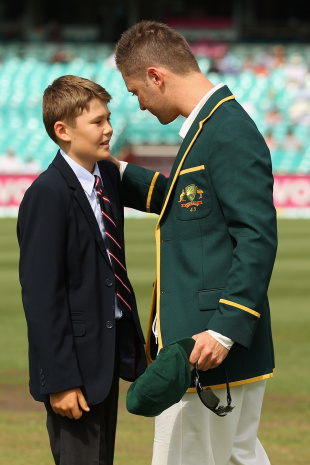
Tony Greig's ten-year-old son Tom talks to Michael Clarke, Australia v Sri Lanka, 3rd Test, Sydney, 1st day, January 3, 2013
Michael Clarke, who went to a sports high school, had the time, the inclination and the facilities to hit balls for hours on end © Getty Images 
Enlarge
Nicholson doesn't feel that attending a private school held back his development: "I don't think so. I captained my side and was able to develop in other ways. I learnt how to be a leader and learnt about myself, and I was still able to play for my grade side, Gordon, for eight weeks in the school holidays."
Nicholson makes a valid point that in private schools, boys have to juggle a range of activities that might put them behind cricket-obsessed boys in state schools: "A lot of our boys are pulled in different directions - school commitments, drama, music and academic. For many of them cricket is a small part of their life, for other boys it can be almost everything; all they do is hit balls."
You can't imagine a 16-year-old Michael Clarke having to miss a net session to rehearse for The Mikado, or make sure he did his euphonium practice. Clarke went to a sports high school and his parents ran an indoor cricket centre. He had the time, the inclination and the facilities to hit balls for hours on end.
If neuroscientists like Daniel Levitin are right when they say that it takes 10,000 hours of practice to master any skill, then Clarke had a big advantage over his private school contemporaries. Private school students in Sydney often spend hours commuting to and from school. State school students and private school boys in smaller cities can spend more time in the nets and less time stuck on the bus in traffic.
In an interesting aside, in England it is an advantage to go to a private school. Writing in History Today, former English Test cricketer Ed Smith points out that having a private school background is an advantage in England: "Simply, if you want to play for England, first attend a private school."
Smith claims over two-thirds of England's 2012 team were privately educated, an extraordinary figure when you consider around 7% of English children go to private schools. In Australia, it's a different tale. Around 35% of Australian children go to private schools, or five times the number in England, and yet the majority of our Test team continues to come from the state-school system.
So what are the lessons from all of this? Should private schools in Sydney look at the Perth and Brisbane models? Should they be more willing to release their best players to play grade cricket?
Nicholson says the most important thing is the development of the boys: "If they feel like they are being held back, then we should let them go."
Maybe the private schools should be asked to move their first XI cricket to Wednesdays or Sundays so all the boys get a chance to play against men from an early age on. But there's little chance of that happening. In elite private schools, tradition is everything.
As one coach told me, "We had enough troubles changing the start time by half an hour, let alone changing the days!" 

On Cricket - Hawk-Eye is cockeyed, says Bishan Singh Bedi

Former Indian captain Bishan Singh Bedi, one of the finest left-arm spinners the world has seen, shared his views on contentious issues surrounding the game in an exclusive chat with TOI 26 July 2013. Excerpts...

The first two Ashes Tests have put a big question mark over the reliability of the Decision Review System. Are you for doing away with DRS?

Look, the whole idea behind allowing players to review umpiring decisions was to eliminate human errors with the help of technology. Nothing is wrong with that. The problem lies with the technology itself. I have never been a big fan of the Hawk-Eye and now it seems the Hot Spot too has gone cold. I completely endorse Ian Chappell's view that DRS should be taken out of the players' hands and handed over to the on-field umpires, who should be able to get technology-based inputs from the third umpire.

------------
Also Read

Cricket and DRS - The Best is not the Enemy of the Good


----------

But, as you said, the technology is still not foolproof...

It is not. There are inherent flaws in Hawk-Eye that in my opinion makes it cockeyed. What I particularly don't like about this technology is its standard approach to deviations. All bowlers know that very often balls deviate - more or less - without any particular reason. It may also depend on whether the bowler is bowling into the wind or against it. So these decisions are best left to on-field umpires, for they are in the best position to adjudicate.

Do you agree with the basic premise for a decision review in case of LBW appeals - that the ball should have pitched in line with the stumps?

The key to an LBW decision, in my opinion, should be not where the ball pitches but whether it would go on to hit the stumps if the batsman's did not come in the way. Let me point out that Mike Gatting would have been declared not out (on an LBW appeal) had Shane Warne's much-hyped 'Ball of the (last) Century' struck him on his back foot instead of sneaking in between his legs to hit the stumps! After all, Warne's big leg-break had pitched way outside the batsman's leg stump!

So how does one factor in the deviation?

It is a tough one. That is why I maintain that umpires should be very skeptical while ruling in bowlers' favour on front-foot LBW appeals. Look, the depth of the crease is four feet, and assuming that an average six-foot batsman would cover another four feet while playing forward means the ball would strike the pad some 8-9 feet from the stumps. The challenge before an umpire is that he not only has to read the line correctly but also factor in the trajectory of the delivery and possible deviations before deciding whether the ball would have gone on to hit the stumps.

So you are not in favour of umpires giving LBW decisions when batsmen are playing well forward?

Umpires should be more than 100% sure before upholding such appeals. All batsmen are not six-footers, so the umpires have to use their discretion.

Isn't it a pity that during your playing days batsmen got away by simply padding up?

Not only me, all four of us (Prasanna, Venkataraghavan and Chandrasekhar included) too missed out on a bagful of wickets because of this. Each one of us would have ended up with at least 200 more victims had umpires in our era given batsmen out when struck on the front pad.

Don't you think that umpires are under too much pressure because of DRS?

The umpire's job is an unenviable one. It is up to the governing body to make life easier for them. The players are not making it easier by appealing for everything. Umpires are human and are bound to succumb to pressures.

Why blame the players for this? They are, after all, playing within the rules...

The history of the game tells us that new rules had to be introduced because players pushed the parameters too far. 'Bodyline' bowling was possible because there was no restriction on the number of fielders on the leg side at that time. Fast bowlers used bouncers, a legitimate weapon in their armoury, to intimidate batsmen rather than trying to get them out. Ball-tampering became an issue. Match referees had to be introduced to make sure that there was no hanky-panky at the toss and to curb sledging. 

There seems to be a dearth of umpiring talent in the world...

You know why the English umpires used to be the best in our time? It was because they were mostly first-class cricketers for whom umpiring was a logical career option.

Is that the reason why it is not fair to compare players from different eras?

Just look at the bare facts. Together the four of us played 231 Tests, picked up 853 wickets but only 12.5 per cent of them (107) were LBW dismissals. Of my 266 Test wickets, only 16 came from LBWs (Prasanna 189/25, Venkataraghavan 156/24, Chandrasekhar 242/42). Muralitharan alone has 150 LBW victims, Shane Warne 138, Kumble 156, Vettori 74, Harbhajan 68 and Swann 68.

Thursday, 25 July 2013

Is Islamism Anti Imperialism


Amartya Sen and the ayatollahs of secularism

by Minhaz Merchant in the Times of India
Dr. Amartya Sen compels me to return to a subject India should have long buried: secularism. Dr. Sen’s definition of secularism is as misty-eyed as that purveyed increasingly by secular liberals who – in the classical sense of those terms – are neither. 
As I wrote in The Ayatollahs of secularism - part 2, Indians six decades ago had to make a choice between a theocratic Pakistan and a secular India: “On a cool spring day in 1950 at a California college campus, Zulfikar Ali Bhutto, a tall, angular man of 22, was in a garrulous mood. He told my father: ‘Ah, Pakistan. See what we will do with my wonderful new country.’ My father, like young Bhutto, a student at the University of California, Berkeley, was unimpressed. ‘A country founded on theocracy,’ he told Bhutto, ‘will never work.’ Bhutto walked away in a huff.” 
Sixty-three years later, has India lived up to its secular promise? The short answer: yes. The larger question: why is India secular? The answer: because the majority community is intrinsically secular. If it wasn’t, India would have been, in Shashi Tharoor’s words, a “Hindu Pakistan”: the kind Bhutto would have understood. 
So what is Amartya Sen’s definition of secularism? 
In his 2005 book, The Argumentative IndianDr. Sen devoted 23 pages to explaining his views on secularism – without coming to a definitive conclusion. This is what he wrote in one passage: 
“Secularism in the political – as opposed to ecclesiastical – sense requires the separation of the state from any particular religious order. This can be interpreted in at least two different ways. The first view argues that secularism demands that the state be equidistant from all religions – refusing to take sides and having a neutral attitude towards them. The second – more severe – view insists that the state must not have any relation at all with any religion. The equidistance must take the form, then, of being altogether removed from each. 
“In both interpretations, secularism goes against giving any religion a privileged position in the activities of the state. In the broader interpretation (the first view), however there is no demand that the state must stay clear of any association with any religious matter whatsoever. Rather what is needed is to make sure that in so far as the state has to deal with different religions and members of different religious communities, there must be a basic symmetry of treatment.”  
Symmetry of treatment is crucial: What does symmetry imply? Clearly, equality for all, special privileges on the basis of religion to none. That is not Dr. Sen’s conclusion at the end of his 23-page chapter on secularism. And it is certainly not the secularism that – for example – the Congress practises today.
In an interview with The Economic Times, on July 22, 2013, Dr. Sen said he would like a “secular person to be prime minister” and added: “I would not like to see Narendra Modi as India’s prime minister and I’m speaking as a citizen of India.” 
Dr. Sen, on being probed further, clarified why not: “(He) generates concern and fear on the part of minorities.” 
But surely it is parties which preach secularism but practise an insidious form of communal separateness which feed a false fear among Muslim voters? 
Such “secular” parties don’t care for Muslims. They care for Muslim votes. If they had “real concern” for Muslims – a key quality in a prime minister according to Dr. Sen – Muslims would not be as poor, as deprived, as backward, as alienated and as stigmatised as they are today. 
After 54 years of Congress governments, each preaching secularism but practising the opposite, the appalling state of Muslims is a telling indictment of faux secular governance.
                                             * * *
Dr. Sen is surprisingly coy about Rahul Gandhi. When The Economic Times asked him what he thought of Rahul, Dr. Sen parried the question instead of taking it head on as would be expected of an independent mind. 
Here’s what he said: “I haven’t assessed him in that way. I know him as a different figure (not a politician). I know him as a likeable young man who was a student in Trinity College (Cambridge). We have met when I was Master of Trinity. We spent a pleasant day together. I did ask him then if he was interested in politics or not. At that time he wasn’t. However, I haven’t assessed him as a politician or a potential prime minister.” 
That’s an extraordinary answer. Rahul, the Congress vice-president, has been in electoral politics for over nine years and Dr. Sen, so knowledgeable and outspoken otherwise about Indian politics and economics, hasn’t “assessed him” yet as a politician or a potential prime minister? Surely, Rahul deserves more of Dr. Sen’s attention. 
Dr. Sen’s kerfuffle with Professors Jagdish Bhagwati and Arvind Panagariya of Columbia University over growth vs. inclusion is meanwhile a red herring. Good governance is the real answer: both economic growth and inclusion are intrinsic to it. 
The real issue is entitlement vs. empowerment. Profs Bhagwati and Panagariya rightly argue that economic growth, allied with welfare schemes which build productive capital assets (rather than the NAC-Sen-Dreze formula of handouts which create dependencies) is the most efficient development model for India. 
Who can best create that model? Certainly not those who advocate a policy of entitlement with its attendant fiscal profligacy that has so severely damaged India’s economy. 

---------

Earlier article

On a cool spring day over 60 years ago in California, Zulfikar Ali Bhutto, a tall, angular man of 22, was in a garrulous mood. He told my father: “Ah, Pakistan. See what we will do with my wonderful new country.” 
My father, like young Bhutto, a student at the University of California, Berkeley, was unimpressed. “A country founded on theocracy,” he told Bhutto, “will never work.” My mother, among the first Indian women-students on the Berkeley campus, agreed. Bhutto walked away in a huff.
Those were heady days after independence. Bhutto went on to become Pakistan’s youngest Cabinet Minister, at 30, in 1958. My parents returned to India after four years at Berkeley and got married. My father took charge of the family’s petrochemicals business which, thankfully, he was later liberal enough never to coerce me to join.
The difference between Pakistan and India today is the story of how a great religion, Islam, has been distorted by those entrusted to protect its liberal ethos. Pakistan and several countries in the Middle-East have used Islam not to liberate but imprison their people. But it is in “secular” India that the damage has been most insidious.
Jawaharlal Nehru was a secular man. He would have been mortified at what passes off as secularism in modern India. In its purest, most classical sense, secularism requires treating religion as a private matter. It must not enter the public domain. Pray in public or pray in private. But keep your faith at home.
Politicians who have little to offer by way of development – 24-hour electricity, water, housing, sanitation, roads, infrastructure, jobs – will use religion to divert the attention of the common man. According to the latest National Sample Survey Organisation (NSSO), over 60% of Indians consume less than Rs. 66 a day in cities and less than Rs. 25 a day in villages.
These form the poor whose grandparents were promised Garibi Hatao by Indira Gandhi during her victorious 1971 Lok Sabha election campaign. It should shame the Congress that, 41 years later, the constituency Feroze Gandhi – Indira’s husband – first entered the Lok Sabha from in 1952, Rae Bareli, and from where succeeding generations of Gandhis, including Indira and Sonia, have been elected, is one of the most backward in India. Over 70% of children below the age of 5 in Rae Bareli, for example, are moderately or severely stunted due to malnutrition (The Ayatollahs of secularism – part 1).
But secularism, not development, has been an article of faith for the Gandhis. The poor and the Muslims – the Muslims in particular – have been entrapped into a fear psychosis that warns them: vote for “the other” and you will not be safe.
The riots in Gujarat on February 28, March 1 and March 2, 2002 following the burning of kar sevaks on February 27, 2002, have come especially handy in deepening this paranoia.
Muslims from Uttar Pradesh and Bihar, from Maharashtra and Andhra Pradesh, are in effect given this false choice: do you want to be with a “secular” party like the Congress that can guarantee your physical safety but not one square meal a day? Or do you want to be with a party where you must forever live in fear though you will have 24-hour electricity, good housing, roads, jobs and a reasonable standard of living? 
Rich electoral dividends have flowed from such fear mongering. In the process, over the decades, regional parties have grasped the fraudulent secular baton from the Congress: the Samajwadi Party (SP) may be the most notorious of these but others like the Telegu Desam Party (TDP) and the Nationalist Congress Party (NCP) have all dealt the duplicitous Muslim card.
Just as they eagerly copied Indira Gandhi’s destructive dynastic politics to enrich their future generations while impoverishing India’s, regional parties have effortlessly morphed into “secular” family firms engaged in exploiting Muslims by cocooning them.
                                                  *     *     *
My daughter, a budding designer, often visits areas in Mumbai to source raw materials for her work and commission artisans. Most of these artisans are Muslims. Most are very poor. Most live in buildings which could collapse any moment. She asked me: “Why doesn’t the Congress-NCP government in Maharashtra, which wins elections based on votes from poor Muslims, do anything to improve their lives?”
The answer: because poor Muslims who have no time to think beyond the next meal will not have time to think of governance and development and how both have been sacrificed at the altar of secularism.
But then of course this isn’t secularism. It’s communalism, masquerading as secularism. What really can be more communal than keeping nearly an entire community of 175 million people in poverty for over six decades?
Theocratic countries like Pakistan have more liberal laws for their Muslim citizens than India has for its Muslims. Turkey, Malaysia and Indonesia have also reformed medieval Islamic canons.
Why not India? Because the Congress and its regional copycats fear the true liberation of the Muslim mind. That liberation could set off unintended consequences.
Electoral defeat haunts the Congress and its allies more than issues of governance and development – or even justice. That is why it has moved glacially to deliver justice to the victims of the 1984 Sikh pogrom in which over 3,000 Sikhs were killed by Congress-led hooligan-politicians.
At the same time, po-faced, it uses the 750-plus Muslims killed in Gujarat in 2002 in a riot (not a one-sided pogrom), where over 250 of the dead were Hindus, to extract cynical political advantage with the help of its NGO cottage industry.
Muslim leaders have been willing accomplices in this tragedy. Mullahs issue regressive fatwas against Muslim women and edicts against sensible civil laws. Instead of condemning such fatwas, the government maintains a studied silence, tacitly encouraging extremism and keeping ordinary Muslims stuck in a time warp.
The two real enemies of the Muslim – communal politicians masquerading as secular politicians to win votes and Mullahs deliberately misinterpreting the holy book to retain power over their flock – form a natural alliance. Together they have enriched themselves but impoverished India’s Muslims, materially and intellectually, in the name of secularism. These are the Ayatollahs of secularism.
                                                  *     *     *
That brings us to the third angle in this infamous triangle: the liberal, secular Hindu. Where does he stand in all this? He is naturally secular in the truest sense of the word: religion is a private matter, he rightly believes. It has no place in politics.
But he is also swayed by the plight of his fellow-Indians who happen to be Muslims: impoverished, illiterate, ghettoized, discriminated against. For every Azim Premji and Aamir Khan there are millions of weavers in UP and spot boys in Mumbai who have no place in corporate India’s organized labour force.
Liberal, well-meaning Hindus ask why. And the answer they come up with is: communal discrimination. Yet the liberal Hindu doesn’t dig deeper. The more politicians sequester Muslims into vote silos, the more the middle-class Hindu (not the liberal, well-meaning, Stephanian Hindu) resents them. Discrimination, petty or large, mounts.
The real culprits – communal politicians dressed up as secular politicians – get away scot-free in this narrative. The liberal, secular Hindu’s anger against anti-Muslim communalism is therefore misdirected – far away from these real culprits.
The liberal, secular Hindu meanwhile points to “Hindutva” as the real fount of communalism. Is he right? This is how the Supreme Court defined Hindutva when specifically asked to do so in December 1995:
Considering the terms Hinduism or Hindutva per se as depicting hostility, enmity or intolerance towards other religious faiths or professing communalism, proceeds from an improper appreciation and perception of the true meaning of these expressions. These terms (Hinduism or Hindutva) are indicative more of a way of life of the Indian people and are not confined merely to describe persons practicing the Hindu religion as a faith.”
                                                 *     *     *
Today it costs a candidate between Rs. 10 crore and Rs. 50 crore to fight a Lok Sabha election. Over the next 18 months, political parties will need to raise over Rs. 20,000 crore to contest 543 Lok Sabha seats. The potential from future scams has shrunk. Corporate cash donations have been hit – ironically – by the government’s own economic paralysis. Team Anna's decision to fight elections has introduced a new political calculus.
For "secular" parties, 2014 is an election in which they will now have to rely more than ever on raising a fear psychosis against leaders like Narendra Modi who threaten their hold on power – and the financial pipeline that accompanies it but never finds its way into developmental projects, especially for Muslims. After all, they matter only once every five years.
                                               *     *     *
Influential sections of especially the electronic media, suffused with hearts bleeding from the wrong ventricle, are part of this great fraud played on India’s poor Muslims: communalism dressed up as secularism. The token Muslim is lionized – from business to literature – but the common Muslim languishes in his 65-year-old ghetto. It is from such ghettos that raw recruits to SIMI and IM are most easily found.
Sixty years ago on that Berkeley campus my father told Zulfikar Ali Bhutto why Pakistan would fail as a state. Today, my daughter, as she visits Muslim-dominated ghettos for sourcing her raw materials, sees how Muslim India too has failed. The single biggest cause: communalism – but in quite the opposite way the Congress, SP and other “secular” parties define it.
----------
Earlier Article

Indira Gandhi introduced the term secularism in the preamble to the Constitution with the 42nd Constitution Amendment Act, 1976, during the draconian Emergency.
Twenty-six years earlier, in 1950, the framers of our Constitution, led by Babasaheb Ambedkar, had not felt it necessary to include the word – despite the recent horrors of communal riots following Partition.
Ever since, the Congress has used secularism and socialism (a term also introduced into the Constitution by Mrs. Gandhi during the Emergency) to define itself as the party of the aam admi.  
So how has the aam admi fared in over 53 years of Congress governments, 36 of them under Indira and Rajiv Gandhi and their appointed CEO-Prime Ministers, P.V.Narasimha Rao and Manmohan Singh?
Badly. Poverty remains endemic. India is placed 134th on the Human Development Index (HDI). Over 14,000 farmers across India commited suicide in 2011. Malnutrition persists. The Naandi Foundation released a report in January this year – at the hands of Prime Minister Manmohan Singh – on widespread child malnutrition (http://www.naandi.org/)
In an edit page piece in The Economic Times (Rich MPs, Poor Voters)I wrote how, even as children and farmers die, politicians have become ever-wealthier. 
Who is to blame? Obviously, the Congress. It has run India for roughly 81% of independent India’s history. The Opposition, especially in the states, must share some responsibility for the Congress’ failure. But make no mistake: the responsibility for the poverty and malnutrition India suffers from 65 years after independence lies squarely at the doorstep of the Congress.
It has misused the term socialism to enshrine poverty, not eradicate it. The poorer the voter, the easier it is to win his vote without bothering about real development issues.
The second Emergency-origin term the Congress has misused is secularism. The word for “secular” in Hindi is panthnirpeksha. In 1977, when Mrs. Gandhi’s government was voted out soon after the Emergency was revoked, the new Janata Party government introduced a Constitutional Amendment Bill. The word “secular” was sought to be defined in the Constitution as “equal respect for all religions”.
The Bill was passed in the Lok Sabha where the Janata Party held a majority. But it was defeated in the Rajya Sabha where the Congress had a majority. Why did the Congress reject 35 years ago the 1977-79 Lok Sabha’s definition of secularism – “equal respect for all religions”?
Consider now what UPA Chairperson Sonia Gandhi said during a lecture at the Nexus Institute in the Hague on June 9, 2007: “India is a secular country. The term means equal respect for all religions.”
How does Sonia’s definition of secularism differ from Narendra Modi’s? Who is really more secular? Modi? Or Sonia? Or Nitish, Digvijay, Lalu, Paswan, Mulayam, Karunanidhi, Omar Abdullah and Owaisi? 

"Belief"

by John Mayer

Is there anyone who
Ever remembers changing there mind from
The paint on a sign?
Is there anyone who really recalls
Ever breaking rank at all
For something someone yelled real loud one time

Everyone believes
In how they think it ought to be
Everyone believes
And they're not going easily

Belief is a beautiful armor
But makes for the heaviest sword
Like punching under water
You never can hit who you're trying for

Some need the exhibition
And some have to know they tried
It's the chemical weapon
For the war that's raging on inside

Everyone believes
From emptiness to everything
Everyone believes
And no ones going quietly

We're never gonna win the world
We're never gonna stop the war
We're never gonna beat this
If belief is what we're fighting for

What puts a hundred thousand children in the sand
Belief can
Belief can
What puts the folded flag inside his mother's hand
Belief can
Belief can