Search This Blog

Sunday, 29 October 2017

How Joseph Conrad foresaw the dark heart of Brexit Britain

From financial crises to the threat of terrorism, the works of the Polish-British author display remarkable insight into an era, like ours, of elemental change in a globalised world


Maya Jasanoff in The Guardian


A terrorist bombing in London, a shipping accident in southeast Asia, political unrest in a South American republic and mass violence in central Africa: each of these topics has made headlines in the past few months. But these “news” stories have also been in circulation for more than a century, as plotlines in the novels of Joseph Conrad, one of the greatest and most controversial modern English writers.

Conrad is known to most readers as the author of Heart of Darkness, about a British sea captain’s journey up an unnamed African river. And Heart of Darknessis known to many as the object of a blistering critique by the late Nigerian novelist Chinua Achebe, who condemned Conrad as “a bloody racist” for his degrading portrayal of Africans. It is right to call out the racism – and, for that matter, the orientalism, antisemitism and androcentrism – in Conrad’s work. But his dated prejudices, abhorrent though they are to readers today, coexist in his work with elements of exceptional clairvoyance.
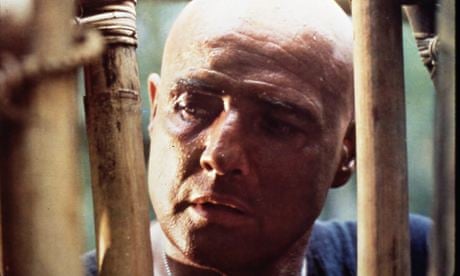


The 100 best novels: No 32 – Heart of Darkness by Joseph Conrad (1899)


Today, more than ever, Conrad demands our attention for his insight into the moral challenges of a globalised world. In an age of Islamist terrorism, it is striking to note that the same author who condemned imperialism in Heart of Darkness(1899) also wrote The Secret Agent (1907), which centres around a conspiracy of foreign terrorists in London. In the wake of the 2008 financial crisis, it is uncanny to read Conrad in Nostromo (1904) portraying multinational capitalism as a maker and breaker of states. As the digital revolution gathers momentum, one finds Conrad writing movingly, in Lord Jim (1900) and many other works set at sea, about the consequences of technological disruption. As debates about immigration unsettle Europe and the US, one can only marvel afresh at how Conrad produced any of these books in English – his third language, which he learned only as an adult.

Conrad was born Józef Teodor Konrad Korzeniowski in 1857 to Polish nationalist parents in the Russian empire. He came of age in the shadow of imperial oppression; his parents were exiled for political activism. Both of them died under the stress, leaving Conrad an orphan at 11. For the rest of his life, he carried the scars of a youth traumatised by punishing authoritarianism, as well as what he considered a fatal, useless idealism.


 John Malkovich and Iman in the 1993 film adaptation of Heart of Darkness. The book has been criticised for its degrading portrayal of Africans. Photograph: Allstar

He travelled to France aged 16 to train as a sailor. For the next 20 years, he worked as a professional mariner, sailing to the Caribbean, Africa, southeast Asia and Australia. From the deck of a ship, he witnessed a transformation in the intensity of global interconnections. Conrad docked alongside oceangoing steamers that transported immigrants from Europe and Asia on a scale never seen before or since. He cruised over the transoceanic telegraph cables that moved news, for the first time in history, faster than people. Between voyages, he made his home in London, the centre of a global financial market that was more integrated during his lifetime than it would be again until the 1980s.

Based in England from 1878, Conrad learned English from scratch, became a proud naturalised British citizen and moved up the ranks of the merchant marine – an all-round immigrant success story. But he also witnessed the rise of xenophobia and nativism. A string of anarchist bombings and assassinations on the continent stoked suspicions of young foreign men – even though what terrorist bombings there were in 1880s Britain were committed by Fenians. Paranoia about anarchism, combined with antisemitism and fears about immigrants stealing British jobs, led to the passing of the 1905 Aliens Act, the first peacetime immigration restriction in British history.

By then, Conrad had left the sea and become a published author and a married father, living in Kent. He channelled his international perspective into a body of writing based overwhelmingly on personal experience and real incidents. A map of Conrad’s fiction looks strikingly different from that of his contemporary Rudyard Kipling, the informal poet laureate of the British empire. Conrad roamed across Asia, Africa, Europe and South America without setting a single novel in a British colony. Although he was a fervent British patriot – he believed that, of all the empires, Britain’s was the best – Conrad was acutely aware of the limits of British power. Nostromo predicts American ascendancy with chilling clarity. In the novel, a San Francisco mining magnate declares: “We shall run the world’s business whether the world likes it or not.”
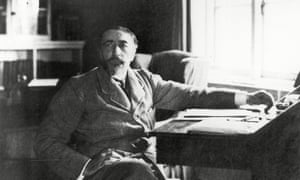

‘It almost seems as if he wrote his fiction through a zoom lens pointed at the future’... Joseph Conrad. Photograph: Granger/REX/Shutterstock

Across his writing, Conrad grappled with the ethical ramifications of living in a globalised world: the effects of dislocation, the tension and opportunity of multiethnic societies, the disruption wrought by technological change. He understood acutely the way that individuals move within systems larger than themselves, that even the freest will can be constrained by what he would have called fate. Conrad’s moral universe revolved around a critique of the European notion of civilisation, which for Conrad generally spelled selfishness and greed in place of honour and a sense of the greater good. He mocks its bourgeois pieties in The Secret Agent; in Heart of Darkness, he tears off its hypocritical mask. In Lord Jim, he offers a compelling portrait of a flawed person stumbling to chart an honourable course when the world’s moral compass has lost its poles.

Conrad, a lifelong depressive, excelled at the art of the unhappy ending. Yet the essential ethical question of his work – how can one do good in a bad world? – transcends any character or plot. His novels stand as invitations for readers to seek happier answers for themselves.

While the British empire is gone and Kipling’s relevance has receded, Conrad’s realms shimmer beneath the surface of our own. Internet cables run along the sea floor beside the old telegraph wires. Conrad’s characters whisper in the ears of new generations of antiglobalisation protesters and champions of free trade, liberal interventionists and radical terrorists, social justice activists and xenophobic nativists. Ninety per cent of world trade travels by sea, which makes ships and sailors more important to the world economy than ever before.

Conrad brought to all his work the sensibility of a “homo duplex”, as he once called himself – a man of multiple identities. This gives his fiction a particular power for those of us trying to reconcile competing scales of value and beliefs. That Conrad failed to measure up to our moral standards of racial tolerance is a humbling reminder of how our own practices might be judged wanting in future.

It is especially poignant to read Conrad in the context of a post-Brexit Britain. One of Conrad’s most moving short stories, “Amy Foster”, describes the fate of an eastern European man named Yanko, who is shipwrecked on the shores of Kent. In the rural community into which he stumbles, he is rejected as an outlandish stranger by everyone except Amy, a simple farm girl. They fall in love, get married and have a baby boy – but when Yanko cradles his son with an eastern lullaby, his wife snatches the infant away. He falls ill, slips into his native language and dies of a broken heart. “His foreignness had a peculiar and indelible stamp,” wrote Conrad. “At last people became used to see him. But they never became used to him.”

In Lowestoft, where Conrad landed in Britain in 1878, there is a pub opposite the railway station called the Joseph Conrad – which is fitting, since Conrad recalled learning English by poring over newspapers in Lowestoft pubs. He would have been astonished to learn that Poles are now by far the largest foreign-born population in Britain. But Lowestoft voted heavily for Brexit and the Joseph Conrad is part of the pub chain JD Wetherspoon, whose chairman, Tim Martin, was a staunch supporter of leave. One can only wonder what reception a freshly arrived Konrad Korzeniowski would get there today.


Saturday, 28 October 2017

‘Modi Doesn’t Talk of Achche Din Now Because He Knows People Will Laugh’

P Chidambaram

Yes, we must decolonise: our teaching has to go beyond elite white men

Something is very wrong when a simple request from a large number of students, that their reading lists be broadened slightly to include some black and minority ethnic writers, becomes the basis of a manufactured racial “row”.

Priyamvada Gopal in The Guardian

Something is very wrong when a simple request from a large number of students, that their reading lists be broadened slightly to include some black and minority ethnic writers, becomes the basis of a manufactured racial “row”.

Rather than acknowledge that a major university was right to be responsive to student concerns, two British newspapers saw fit to turn an open letter from Cambridge English students into a trumped-up existential crisis for white male writers. By “decolonising” the curriculum this endangered species would now be sacrificed, apparently, like so many hapless Guys on bonfire night, to the burning fires of black and minority ethnic special interest. Nice dramatic scenario, pity about the truth content. 

The real danger is that the substantive issues at stake that concern us all, not just ethnic minorities, become obscured in this facile attempt at stoking a keyboard race war with real-life consequences at a time when hate crimes are on the rise. The young people who wrote this letter, however, have an admirable clarity of vision and a robust faith in knowledge that is inspiring. They are interested in asking challenging questions about themselves and others, and how we see ourselves in relation to each other.

Decolonising the curriculum is, first of all, the acceptance that education, literary or otherwise, needs to enable self-understanding. This is particularly important to people not used to seeing themselves reflected in the mirror of conventional learning – whether women, gay people, disabled people, the working classes or ethnic minorities. Knowledge and culture is collectively produced and these groups, which intersect in different ways, have as much right as elite white men to understand what their own role has been in forging artistic and intellectual achievements.

However, it is not only about admiring yourself in the mirror – a fact that eludes those shrieking about the nonexistent elimination of straight white men from the curriculum. Real knowledge is not self-puffery, the repeated validation of oneself. In English literature, it involves learning about the lives of others, whether these be Robert Wedderburn, the fiery black Scottish working-class preacher who believed in self-emancipation; the working-class poet Robert Bloomfield; or Una Marson, the suffragist and broadcaster who wrote eloquently about race and the colour-bar in Britain as well as resonant poetry about her native Jamaica.


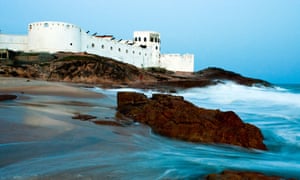
 Cape Coast Castle, Ghana: ‘Our students have rightly asked to know more about the colonial context in which much English literature was produced.’ Photograph: Alamy

Surely, Sultana’s Dream, the early 20th-century fantasy story by Rokeya Sakhawat Hossain – where men stayed home while only women went out – has a relevance for our understanding of Muslim women’s long and rich history of writing and debate. (Yes, it exists.)

To decolonise and not just diversify curriculums is to recognise that knowledge is inevitably marked by power relations. In a society still shaped by a long colonial history in which straight white upper-class men are at the top of the social order, most disciplines give disproportionate prominence to the experiences, concerns and achievements of this one group. In my native India, upper-caste Hindu men have long held sway over learning and efforts are being made, in the face of predictable resistance, to dislodge that supremacy.


Britain has a long history of black and Asian communities that contributed significantly to its wealth and heritage

A decolonised curriculum would bring questions of class, caste, race, gender, ability and sexuality into dialogue with each other, instead of pretending that there is some kind of generic identity we all share.

It is telling that efforts to inject some breadth and variety into teaching are being dismissed as “artificial balance”.
The assumption here is precisely the problem – that the best of all that has been thought and said just happens to have been produced in the west by white upper-class people, largely men.

Scholars such as Peter Fryer and Rozina Visram have shown that black and Asian people have a history in Britain that stretches back nearly 500 years, and that these communities contributed significantly to its wealth and heritage. In fact, the very idea of what it meant to be “white” or “English” relied on the presence of those, including the Irish, who could be marked as neither.

Yet decolonisation is not just about bringing in minority texts but also how we read “traditional” texts. Our students have rightly asked to know more about the colonial context in which much English literature was produced – indeed, in which the very idea of “English” literature came to be.

The British empire, love it or loathe it, paradoxically provides the common ground upon which our histories and identities were forged, whether those be of a white Etonian with Sandhurst military training or a queer British Asian female social worker. Between total denial of imperial history and mindless celebration of it comes actual knowledge of what happened. British literature has a great dissident tradition which acknowledges this. Barry Unsworth’s magisterial 1992 Booker prizewinner, Sacred Hunger, a powerful novel set in the context of the triangular slave trade of the 18th century, shows how the emergence of capitalist greed, the “sacred” unquestionable value, inflicted suffering on black men and women, and on working-class Britons, in different ways.

Ultimately, to decolonise is to ask difficult questions of ourselves. The Antiguan author Jamaica Kincaid puts it thus: “And might not knowing why they are the way they are, why they do the things they do, why they live the way they live, why the things that happened to them happened, lead … people to a different relationship with the world, a more demanding relationship?” Our students have chosen the demanding way.

Friday, 27 October 2017

My fantasy Corbyn speech: ‘I can no longer go along with a ruinous Brexit’

Alastair Campbell in The Guardian


Last week I wrote a speech for Theresa May, which concluded with an announcement that she had decided Brexit was impossible to deliver. Sadly she didn’t listen, and so onwards she leads us towards the cliff edge. I am hoping for better luck with Jeremy Corbyn, fantasising that he delivers this speech to a rally of his faithful Momentum followers …

“Thank you for that wonderful reception. Yes, yes, I know my name. ‘Oh Jeremy Corbyn’. Yes, that’s me. Now please stop singing and sit down. Please.

“I will be honest with you. I didn’t want the job. I didn’t think I would get the job. I wasn’t sure I could do the job. But thanks to you I got it. Thanks to you I now have the confidence to do it. I approach the challenge of being prime minister not with fear or trepidation but with confidence that our time is coming. That it is our duty now to serve. Protest is one thing. Government is another. And we must now prepare, genuinely prepare, as a government in waiting.

“If I become prime minister it is Brexit that will define my leadership. As a result of what happened on 23 June 2016 I have no choice in the matter. The people’s choice dictates that it is so.


I have concluded that rejecting this vision of Brexit is the only route to the vision of the world that drives us


“It is clear to me the constructive ambiguity of our position on Brexit is no longer tenable. It is fine for a party of protest. It is not good enough for a party one step away from government.

“Let’s imagine this entirely credible scenario. As the current chaos inside the government continues, Mrs May falls. The Tories try to foist another prime minister on us, chosen by their ageing membership. But we and the public won’t wear it. We force an election. We win an election. I am prime minister. Now the hard part begins.

“What does our ‘jobs-first’ Brexit mean then, in power? What is a jobs-first Brexit if our leaving the single market hurts growth, as every analysis in the world says it will? What is a jobs-first Brexit dependent on trade if trade slows and even grinds to a halt with the absence of a proper customs infrastructure at our ports, the absence of good trade deals not just with the EU but with the 66 countries with whom we have deals as part of the EU? What is a jobs-first Brexit if firms decide that if the UK leaves the EU, they leave the UK, and take their jobs and their tax take with them? 

“And how can we fund all the things in our election manifesto that we need and want to fund in the future if our economy tanks?


“At Labour’s party conference, I said that our continued membership of the EU would prevent us from implementing many of the plans in our manifesto. I am grateful to the New European, which sought legal advice in Brussels and established this was not the case. So the question becomes, not ‘What do we lose by staying in?’, but ‘What do we lose by coming out?’

“The dominance of the hard right is clear in their pressing Mrs May to walk away from the negotiations, crash out of the EU, into the World Trade Organisation. I am of the internationalist left. We exist to fight the nationalist right, not to dance to its tune. We believe in support for the many, not the prosperity of the few. It is the nationalist right that is leading the Brexit Mrs May is pursuing, whatever the cost. It is their only route to the vision of the world that drives them. And, today I want to tell you – I have concluded that rejecting this vision of Brexit is the only route to the vision of the world that drives us. In this debate, they are the reactionaries, we and the Europeans the progressives.

“Take back control, they said. But what kind of control? Their control. Their right to dump decades of law with their ‘great repeal bill’, and bring about their vision of a low-tax, low-regulation economy, public services there for profit not public, employment and environmental rights shredded, one of the great powers of the world reduced to a gigantic Cayman Islands. That is their dream. And many of those who voted for Brexit, in the poorest areas, the places we represent, they will be the hardest hit. As the reality of power nears, I must tell you, candidly, that I can no longer go along with it. Not now. Not in two years. Not ever.

“No deal, I must warn you, would be a catastrophe. So if Mrs May is still prime minister, and presents the no-deal option to parliament, be in no doubt – we will vote against it. We will press for a deal with keeps us in the single market and the customs union, to protect trade and avoid chaos.

“But today I want to go further. The referendum was close. It was not, contrary to the claims of the Brextremists, ‘clear’, let alone ‘overwhelming’. Millions are deeply concerned about what is happening to our country. I believe people have a right to change their minds as this all unfolds. And politicians have a duty to reflect that, and to give proper vent to the debate it represents.

“Democracy is a process, not a moment in time. If the government falls, and we win an election, then we can put a different vision of Brexit to the country, and we will. If we can bring about a fresh election, this is the Brexit policy you will be voting for.

“We will take over the negotiations from Mrs May and her hapless, hopeless team. We will review what progress has been made and assess whether Brexit can be delivered on the timescale set out under the article 50 process she triggered.

“If we conclude, as on any current assessment seems likely, that Brexit cannot be delivered without real damage to our economy, that a jobs-first Brexit is impossible, that it will mean lower growth, higher prices, higher unemployment, more austerity, cuts to public services, customs chaos, the return of a hard border in Ireland and the potential undoing of the Good Friday agreement, the loss of security cooperation with our partners, then I will revoke article 50.
“I am clear that a referendum decision can only be overturned by another one, and so we will legislate for a new referendum, and the choice we will put before the British people is between staying in, or leaving on the terms then on offer.

“If, as I believe they will, the British people opt to reverse their decision of last June, that will put us in a strong position then to succeed where David Cameron failed, and win the argument for a reformed EU that works for all.

“Comrades, this has been a lot to take in. But I believe it is the right course for our party, for our movement, and most important of all, for the country.

“This is our country too. This is our time. Let’s take back control of our destiny, and build a country future generations will be proud to call home. Thank you.”