Nagraj Gollapudi in Cricinfo
Rajinder Goel, Padmakar Shivalkar and V V Kumar, three spinners who traumatised batsmen from the 1960s to the late-1980s, will be honoured by the BCCI on March 8 for their services to Indian cricket. Goel and Shivalkar, both left-arm spinners, will be given the CK Nayudu Lifetime Achievement Award. Kumar, a legspinner who played two Tests for India, will be given a special award for his "yeoman" service
In the following interview, the three talk about learning the basics of spin, their favourite practitioners of the art, and what has changed since their time.
What makes a good spinner?
Rajinder Goel - Hard work, practice, and some intellect on how to play the batsman - these are mandatory. Without practice you will not be able to master line and length, which are key to defeat the batsman.
Padmakar Shivalkar - Your basics of line and length need to be in place. The delivery needs to have a loop. This loop, which we used to call flight, needs to be a constant. Over the years, you increase this loop, adjust it. You lock the batsman first and then spread the web - he gets trapped steadily. But these things are not learned easily. It takes years and years of work before you reach the top level.
VV Kumar - There are many components involved. A spinner has to spend a lot of time in the nets. You can possibly become a spinner by participating in a practice session for a couple of hours. But you cannot become a real good spinner. A spinner must first understand what exactly is spinning the ball. A real spinner should possess the following qualities, otherwise he can only be termed a roller.
The number one thing is to have revolutions on the ball. Then you overspin your off- or legbreaks. There are two types when it comes to imparting spin: overspin and sidespin. A ball that is sidespun is mostly delivered with an improper action and is against the fundamentals of spin bowling. A real spinner will overspin his off- or legbreak, which, when it hits the ground, will have bounce, a lot of drift and turn. A sidespun delivery will only break - it will take a deviation. An overspun delivery will spin, bounce and then turn in or away sharply.
Then we come to control. The spinner needs to have control over the flight, the parabola. Flight does not mean just throwing the ball in the air. Flight means you spin the ball in such a way that you impart revolutions to the ball with the idea of breaking the ball to exhibit the parabola or dip. By doing that you put the batsman in two minds - whether he should come forward or stay back. But if the flight does not land properly, it can end up in a full toss.
The concept of a good spinner also includes bowling from over the wicket to both the right- and left-handed batsman. The present trend is for spinners to come round the wicket, which is negative and indicates you do not want to get punished. A spin bowler will have to give runs to get a wicket, but he should not gift it.
A spinner is not complete without mastering line and length. He must utilise the field to make the batsman play such strokes that will end up in a catch. That depends on the line he is bowling, his ability to flight the ball, to make the batsman come forward, or spin the ball to such an extent that the batsman probably tries to cut, pull, drive or edge. That is the culmination of a spinner planning and executing the downfall of a good batsman. For all this to happen, all the above fundamentals are compulsory. Turn, flight and parabola separate a genuine spinner from an ordinary spinner.
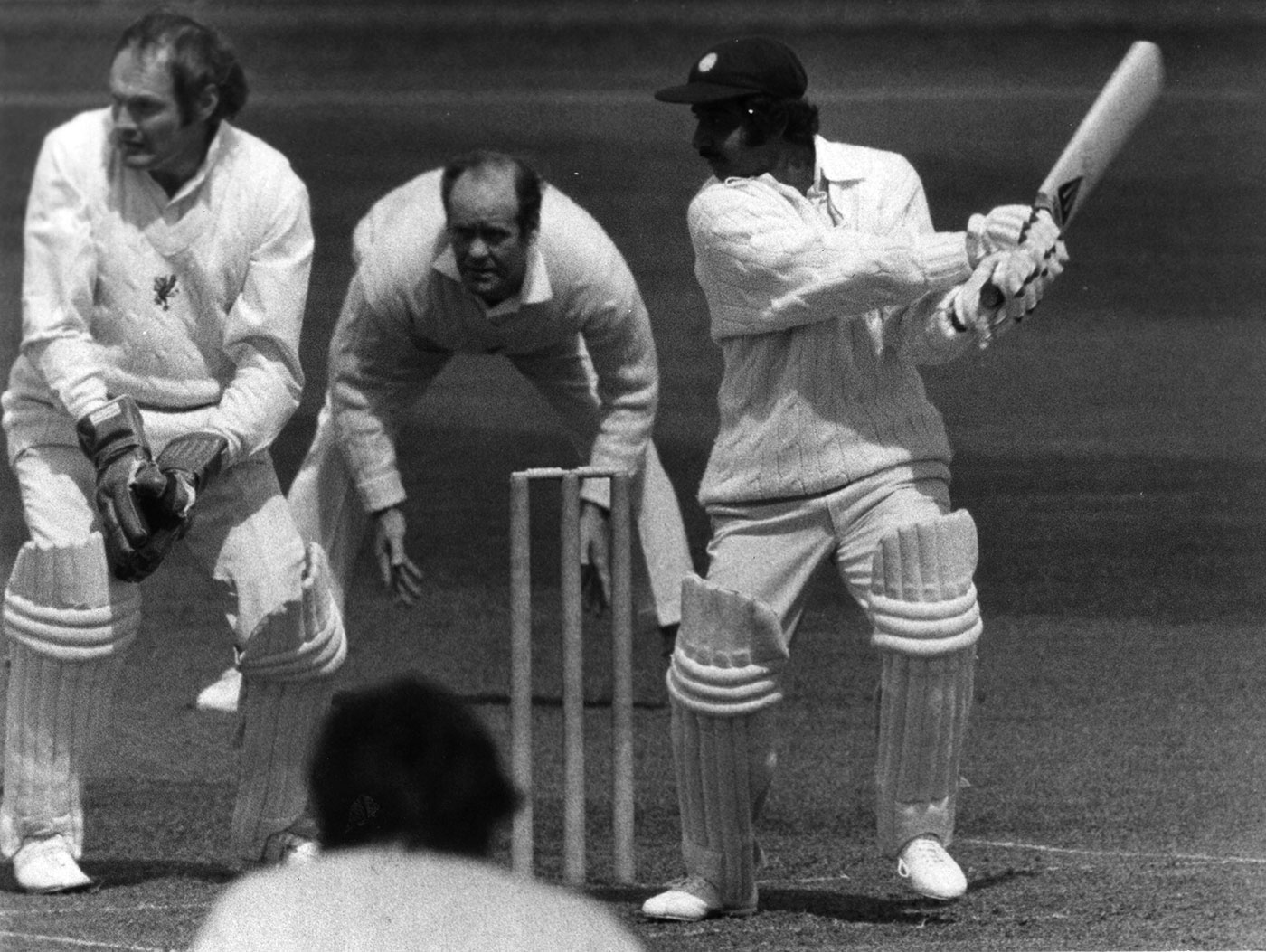 Shivalkar: "Vishy had amazing bat speed... he had a sharp eye. [Vijay] Manjrkear called him an artist" © Getty Images
Did you have a mentor who helped you become a good spinner?
Goel - Lala Amarnath. It was 1957. I was in grade ten. I was part of the all-India schools camp in Chail in Himachal Pradesh. He taught me the basics of spin bowling. The most important thing he taught me was to come across the umpire and bowl from close to the stumps. He said with that kind of action I would be able to use the crease well and could play with the angles and the length easily.
Kumar - I am self-taught, and I say that without any arrogance. I started practising by spinning a golf ball against the wall. It would come back in a different direction. The ten-year-old in me got curious from that day about how that happened. I started reading good books by former players, like Eric Hollies, Clarrie Grimmett and Bill O' Reilly. Of course, my first book was The Art of Cricket by Don Bradman. That is how I equipped myself with the knowledge and put it in practice with a ball in hand.
Shivalkar - It was my whole team at Shivaji Park Gymkhana who made me what I became. If there was a bad ball, and there were many when I was a youngster in 1960-61, I learned a lot from what senior players said, their gestures, their body language. [Vijay] Manjrekar, [Manohar] Hardikar, [Chandrakant] Patankar would tell me: "Shivalkar, watch how he [the batsman] is playing. Tie him up." "Kay kartos? Changli bowling tak [What are you doing? Bowl well]," they would say, at times widening their eyes, at times raising their voice. I would obey that, but I would tell them I was trying to get the batsman out. You cannot always prevail over the batsman, but I cannot ever give up, I would tell myself.
What was your favourite mode of dismissal?
Goel - My strength was to attack the pads. I would maintain the leg-and-middle line. Batsmen who attempted to sweep or tried to play against the spin, I had a good chance of getting them caught in the close-in positions, or even get them bowled. I used to get bat-pad catches frequently, so I would call that my favourite.
"Flight means you spin the ball in such a way that you impart revolutions to the ball with the idea of the breaking the ball to exhibit the dip. By doing that you put the batsman in two minds - whether he should come forward or stay back"
VV KUMAR
Kumar - My best way of getting a batsman out was to make him play forward and lure him to drive. Whether it was a quicker, flighted or flat delivery, I always tried to get the batsman on the front foot. Plenty of my wickets were caught at short leg, fine leg and short extra cover - that shows the batsman was going for the drives. I would not allow him to cut or pull. I would get these wickets through well-spun legbreaks, googlies, offspinners. You have to be very clear about your control and accuracy, otherwise you will be hit all over the place. You should always dominate the batsman. You have to play on his mind. Make him think it is a legbreak and instead he is beaten by flight and dip.
Shivalkar - I used to enjoy getting the batsman stumped. With my command over the loop, batsmen would step out of the crease and get trapped, beaten and stumped.
Tell us about one of your most prized wickets.
Goel - I was playing for State Bank of India against ACC (Associated Cement Companies) in the Moin-ud-Dowlah Gold Cup semi-finals in 1965 in Hyderabad. Polly saab [Polly Umrigar] was playing for ACC. He was a very good player of spin. He was playing well till our captain [Sharad] Diwadkar threw the second new ball to me. I got it to spin immediately and rapped Polly saab on the pads as he attempted to play me on the back foot. It was difficult to force a batsman like him to miss a ball, so it was a wicket I enjoyed taking.
Kumar - Let me talk about the wicket I did not get but one I cherish to this day. I was part of the South Zone team playing against the West Indians in January 1959 at Central College Ground in Bangalore. Garry Sobers came in to bat after I had got Conrad Hunte. I was thrilled and nervous to bowl to the best batsman. Gopi [CD Gopinath] told me to bowl as if I was bowling in any domestic match and not get bothered by the gifted fellow called Sobers.
The first ball was a legbreak, pitched outside off stump. Sobers moved across to pull me. Second ball was a topspinner, a full-length ball on the off stump. He went on the leg side and pushed it past point for four. The third ball was quickish, which he defended. Next, I delivered a googly on the middle stump. Garry came outside to drive, but the ball took the parabola and dipped. He checked his stroke and in the process sent me a simple, straightforward return catch. The ball jumped out of my hands. I put my hands on my head.
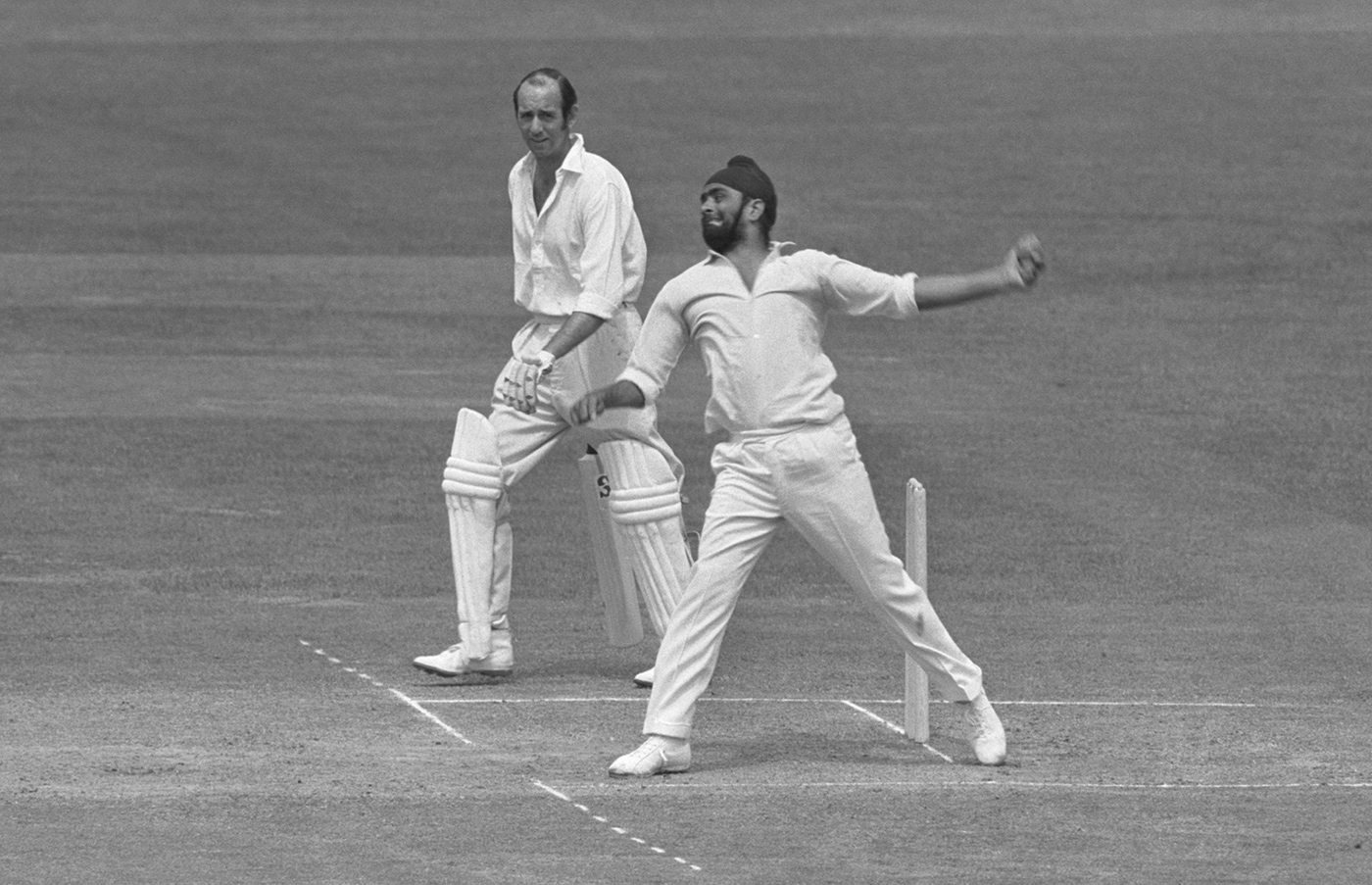 Goel: "There is no better spinner than Bishan Singh Bedi [in photo]. I was in awe of the flight he could impart on the ball. In contrast, I was rapid. Bedi was good on good pitches" © PA Photos
Who was the best spinner you saw bowl?
Goel - There is no better spinner than Bishan Singh Bedi. His high-arm action, the control he had over the ball, the way he would outguess a batsman - I loved Bedi's bowling. I was in awe of the flight he could impart on the ball. In contrast, I was rapid. Bedi was good on good pitches.
Kumar- I will call him my idol. I have not seen anybody else like Subhash Gupte, a brilliant legspinner. I have never seen anybody else reach his standards, including Shane Warne. Sobers himself said he was the best spinner he had ever played. In those days he operated on pitches that were absolutely dead tracks. It was Gupte's ability to adjust and adapt on any kind of surface, his perseverance and the variety he had - my goodness, no one came near to him! That is why he is the greatest spinner I have seen.
Who was the best player of spin you bowled against?
Goel - Ramesh Saxena [Delhi and Bihar] and Vijay Bhosle [Bombay] were two good players of spin. Saxena would never allow the ball to spin. He would reach out to kill the spin. Bhosle was similar, and used to be aggressive against spin.
Kumar - Vijay Manjrekar was probably the best player of spin I encountered. What made him great was the time he had at his disposal to play the ball so late. And by doing that he made the spinner look mediocre.
"No one offers the loop anymore. A consistent loop will always check the batsmen, in T20 too, and also get them out. But you have to be deceptive"
PADMAKAR SHIVALKAR
Shivalkar - [Gundappa] Viswanath. He could change his shot at the last moment. Once, I remember I thought I had him. He was getting ready to cut me on the off stump, but the ball dipped and turned into him. I nearly said "Oooh", thinking he would be either lbw or bowled. But Vishy had amazing bat speed and he managed to get the bat down and the edge whisked past fine leg. He ran two and then looked at me and smiled. He had a sharp eye. [Vijay] Manjrekar called him an artist. Vishy was a jaadugar [magician].
What has changed in spin bowling since the emergence of T20?
Goel - Earlier, we would flight the ball and not get bothered even if we got hit for four. We used to think of getting the batsman out. Now spinners think about arresting the runs. That is one big difference, which is an influence of T20.
Kumar - The three fundamentals I mentioned earlier do not exist in T20 cricket. Spinners are trying to bowl quick and waiting for the batsman to make the mistake. The spinner is not trying to make the batsman commit a mistake by sticking to the fundamentals. In four overs you cannot plan and execute.
Shivalkar - They have become defensive. No one offers the loop anymore. The difference has been brought upon by the bowlers themselves. A consistent loop will always check the batsmen, in T20 too, and also get them out. But you have to be deceptive. At times you should deliver from behind the popping crease, but you cannot allow the batsmen to guess that. That allows you more time for the delivery to land, for your flight to dip. The batsman is put in a fix. I have trapped batsmen that way.
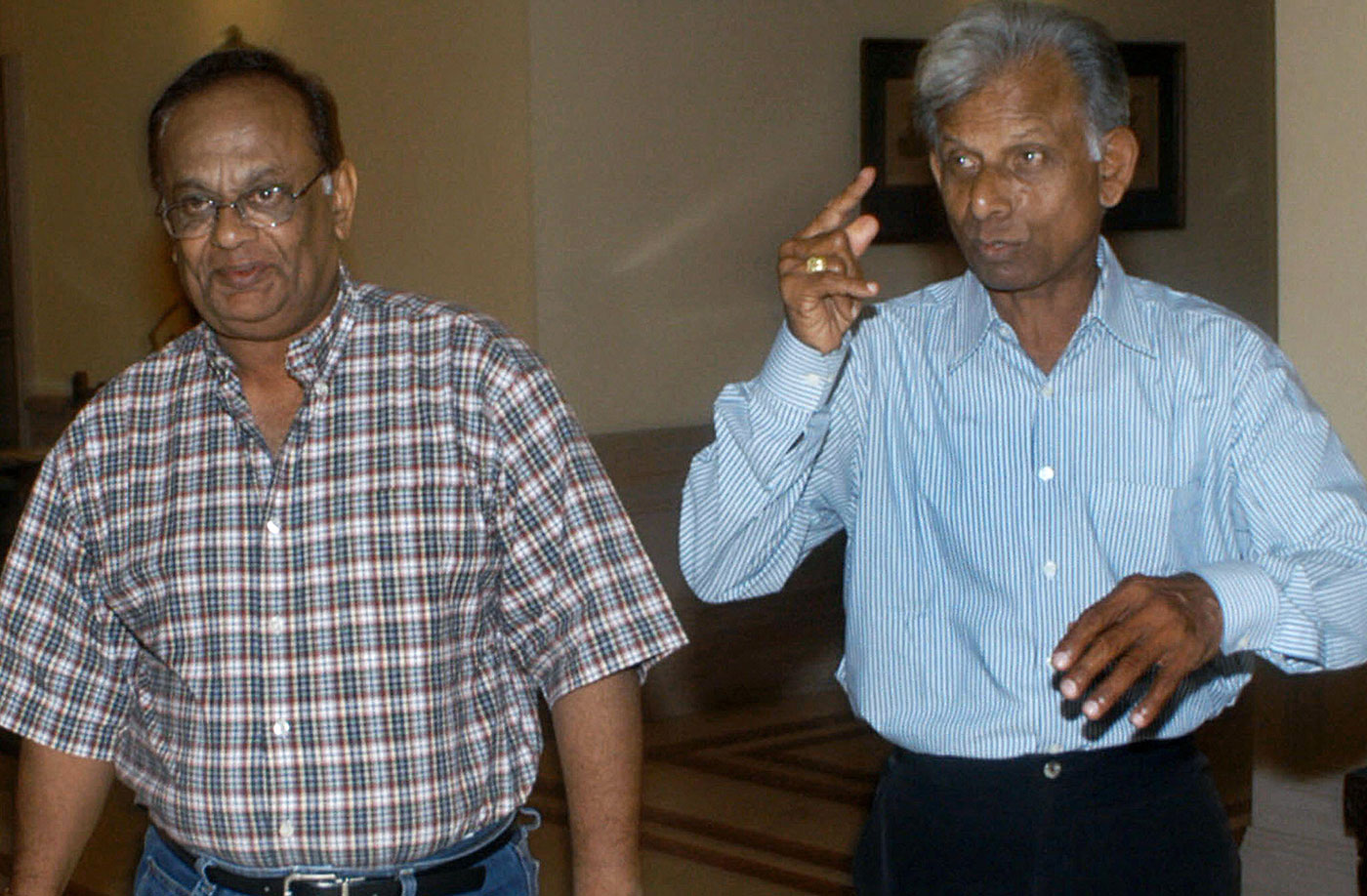 Erapalli Prasanna (left), one of India's famed spin quartet, with Padmakar Shivalkar, who took 580 first-class wickets at 19.69 but never played a Test © AFP
We were playing for Tatas against Indian Oil [Corporation] in the Times Shield. Dilip Vengsarkar was standing at short extra cover. One batsman stepped out, trying to drive me, but Dilip took an easy catch. A couple of overs later he took another catch at the same spot. A third batsman departed in similar fashion in quick succession. Then a lower-order batsman played straight to Dilip, who dropped the catch as he was laughing at the ease with which I was getting the wickets. "Paddy, in my life I have never taken such easy catches," Dilip said, chuckling. The batsmen were not aware I was bowling from behind the crease. If they had noticed, they might have blocked it.
What is the one thing you cannot teach a spinner?
Goel- Practice. Line, length and control can only be gained through a lot of hard practice. No one can teach that. Spin bowling is a natural talent. Every ball you have to think as a spinner - what you bowl, how you try and counter the strength or weakness of a batsman, read his reactions, whether he plays flight well and then I need to increase my pace, and such things. All these subtle things only come through practice.
Kumar - There is no such thing that cannot be taught.
Shivalkar - This game is a play of andaaz [style]. That andaaz can only be learned with experience.
What are the things that every spinner needs to have in his toolkit?
Goel - Firstly, you have to check where the batsman plays well, so you don't pitch it in his area. Don't feed to his strengths. You have to guess this quickly.
"It was Subhash Gupte's ability to adjust and adapt on any kind of surface, his perseverance and the variety he had - my goodness, no one came near to him!"
VV KUMAR
Kumar - A spinner should understand what line and length is before going into a match.
Shivalkar- You have to decide that on your own. What I have, what can I do are things only a spinner needs to understand on his own. For example, a batsman cuts me. Next time he tries, I push the ball in fast, getting him caught at the wicket or bowled.
What is beautiful about spin bowling?
Goel - When the ball takes a lot of turn and then goes on to beat the bat - it is beautiful.
Kumar - A spinner has a lot of tools to befuddle the batsman with and be a nuisance to him at all times. He has plenty in his repertoire, which make him satisfying to watch as well as make spin bowling a spectacle.
Shivalkar - When you get your loop right, the best batsman gets trapped. You take satisfaction from the fact that the ball might have dipped, pitched, taken the turn, and then, probably, turned in or out to beat the batsman. You can then say "Wah". You have Vishy facing you. You assess what he is doing and accordingly set the trap.