Wednesday, 21 December 2016
Celebrity isn’t just harmless fun – it’s the smiling face of the corporate machine
Our failure to understand the link between fame and big business made the rise of Trump inevitable
George Monbiot in The Guardian
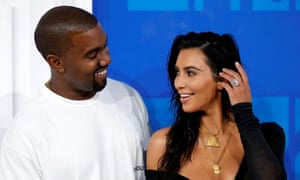 ‘It is pointless to ask what Kim Kardashian does to earn her living: her role is to exist in our minds’. Photograph: Eduardo Munoz/Reuters
George Monbiot in The Guardian
‘It is pointless to ask what Kim Kardashian does to earn her living: her role is to exist in our minds’. Photograph: Eduardo Munoz/Reuters
Now that a reality TV star is preparing to become president of the United States, can we agree that celebrity culture is more than just harmless fun – that it might, in fact, be an essential component of the systems that govern our lives?
The rise of celebrity culture did not happen by itself. It has long been cultivated by advertisers, marketers and the media. And it has a function. The more distant and impersonal corporations become, the more they rely on other people’s faces to connect them to their customers.
Corporation means body; capital means head. But corporate capital has neither head nor body. It is hard for people to attach themselves to a homogenised franchise owned by a hedge fund whose corporate identity consists of a filing cabinet in Panama City. So the machine needs a mask. It must wear the face of someone we see as often as we see our next-door neighbours. It is pointless to ask what Kim Kardashian does to earn her living: her role is to exist in our minds. By playing our virtual neighbour, she induces a click of recognition on behalf of whatever grey monolith sits behind her this week.
An obsession with celebrity does not lie quietly beside the other things we value; it takes their place. A study published in the journal Cyberpsychology reveals that an extraordinary shift appears to have taken place between 1997 and 2007 in the US. In 1997, the dominant values (as judged by an adult audience) expressed by the shows most popular among nine- to 11 year-olds were community feeling, followed by benevolence. Fame came 15th out of the 16 values tested. By 2007, when shows such as Hannah Montana prevailed, fame came first, followed by achievement, image, popularity and financial success. Community feeling had fallen to 11th, benevolence to 12th.
A paper in the International Journal of Cultural Studies found that, among the people it surveyed in the UK, those who follow celebrity gossip most closely are three times less likely than people interested in other forms of news to be involved in local organisations, and half as likely to volunteer. Virtual neighbours replace real ones.
The blander and more homogenised the product, the more distinctive the mask it needs to wear. This is why Iggy Pop was used to promote motor insurance and Benicio del Toro is used to sell Heineken. The role of such people is to suggest that there is something more exciting behind the logo than office blocks and spreadsheets. They transfer their edginess to the company they represent. As soon they take the cheque that buys their identity, they become as processed and meaningless as the item they are promoting.
The celebrities you see most often are the most lucrative products, extruded through a willing media by a marketing industry whose power no one seeks to check. This is why actors and models now receive such disproportionate attention, capturing much of the space once occupied by people with their own ideas: their expertise lies in channelling other people’s visions.
A database search by the anthropologist Grant McCracken reveals that in the US actors received 17% of the cultural attention accorded to famous people between 1900 and 1910: slightly less than physicists, chemists and biologists combined. Film directors received 6% and writers 11%. Between 1900 and 1950, actors had 24% of the coverage, and writers 9%. By 2010, actors accounted for 37% (over four times the attention natural scientists received), while the proportion allocated to both film directors and writers fell to 3%.
You don’t have to read or watch many interviews to see that the principal qualities now sought in a celebrity are vapidity, vacuity and physical beauty. They can be used as a blank screen on to which anything can be projected. With a few exceptions, those who have least to say are granted the greatest number of platforms on which to say it.
This helps to explain the mass delusion among young people that they have a reasonable chance of becoming famous. A survey of 16-year-olds in the UKrevealed that 54% of them intend to become celebrities.
As soon as celebrities forget their allotted role, the hounds of hell are let loose upon them. Lily Allen was the media’s darling when she was advertising John Lewis. Gary Lineker couldn’t put a foot wrong when he stuck to selling junk food to children. But when they expressed sympathy for refugees, they were torn to shreds. When you take the corporate shilling, you are supposed to stop thinking for yourself.
Celebrity has a second major role: as a weapon of mass distraction. The survey published in the IJCS I mentioned earlier also reveals that people who are the most interested in celebrity are the least engaged in politics, the least likely to protest and the least likely to vote. This appears to shatter the media’s frequent, self-justifying claim that celebrities connect us to public life.
The survey found that people fixated by celebrity watch the news on average as much as others do, but they appear to exist in a state of permanent diversion. If you want people to remain quiescent and unengaged, show them the faces of Taylor Swift, Shia LaBeouf and Cara Delevingne several times a day.
In Trump we see a perfect fusion of the two main uses of celebrity culture: corporate personification and mass distraction. His celebrity became a mask for his own chaotic, outsourced and unscrupulous business empire. His public image was the perfect inversion of everything he and his companies represent. As presenter of the US version of The Apprentice, this spoilt heir to humongous wealth became the face of enterprise and social mobility. During the presidential elections, his noisy persona distracted people from the intellectual void behind the mask, a void now filled by more lucid representatives of global capital.
Celebrities might inhabit your life, but they are not your friends. Regardless of the intentions of those on whom it is bequeathed, celebrity is the lieutenant of exploitation. Let’s turn our neighbours back into our neighbours, and turn our backs on those who impersonate them.
The rise of celebrity culture did not happen by itself. It has long been cultivated by advertisers, marketers and the media. And it has a function. The more distant and impersonal corporations become, the more they rely on other people’s faces to connect them to their customers.
Corporation means body; capital means head. But corporate capital has neither head nor body. It is hard for people to attach themselves to a homogenised franchise owned by a hedge fund whose corporate identity consists of a filing cabinet in Panama City. So the machine needs a mask. It must wear the face of someone we see as often as we see our next-door neighbours. It is pointless to ask what Kim Kardashian does to earn her living: her role is to exist in our minds. By playing our virtual neighbour, she induces a click of recognition on behalf of whatever grey monolith sits behind her this week.
An obsession with celebrity does not lie quietly beside the other things we value; it takes their place. A study published in the journal Cyberpsychology reveals that an extraordinary shift appears to have taken place between 1997 and 2007 in the US. In 1997, the dominant values (as judged by an adult audience) expressed by the shows most popular among nine- to 11 year-olds were community feeling, followed by benevolence. Fame came 15th out of the 16 values tested. By 2007, when shows such as Hannah Montana prevailed, fame came first, followed by achievement, image, popularity and financial success. Community feeling had fallen to 11th, benevolence to 12th.
A paper in the International Journal of Cultural Studies found that, among the people it surveyed in the UK, those who follow celebrity gossip most closely are three times less likely than people interested in other forms of news to be involved in local organisations, and half as likely to volunteer. Virtual neighbours replace real ones.
The blander and more homogenised the product, the more distinctive the mask it needs to wear. This is why Iggy Pop was used to promote motor insurance and Benicio del Toro is used to sell Heineken. The role of such people is to suggest that there is something more exciting behind the logo than office blocks and spreadsheets. They transfer their edginess to the company they represent. As soon they take the cheque that buys their identity, they become as processed and meaningless as the item they are promoting.
The celebrities you see most often are the most lucrative products, extruded through a willing media by a marketing industry whose power no one seeks to check. This is why actors and models now receive such disproportionate attention, capturing much of the space once occupied by people with their own ideas: their expertise lies in channelling other people’s visions.
A database search by the anthropologist Grant McCracken reveals that in the US actors received 17% of the cultural attention accorded to famous people between 1900 and 1910: slightly less than physicists, chemists and biologists combined. Film directors received 6% and writers 11%. Between 1900 and 1950, actors had 24% of the coverage, and writers 9%. By 2010, actors accounted for 37% (over four times the attention natural scientists received), while the proportion allocated to both film directors and writers fell to 3%.
You don’t have to read or watch many interviews to see that the principal qualities now sought in a celebrity are vapidity, vacuity and physical beauty. They can be used as a blank screen on to which anything can be projected. With a few exceptions, those who have least to say are granted the greatest number of platforms on which to say it.
This helps to explain the mass delusion among young people that they have a reasonable chance of becoming famous. A survey of 16-year-olds in the UKrevealed that 54% of them intend to become celebrities.
As soon as celebrities forget their allotted role, the hounds of hell are let loose upon them. Lily Allen was the media’s darling when she was advertising John Lewis. Gary Lineker couldn’t put a foot wrong when he stuck to selling junk food to children. But when they expressed sympathy for refugees, they were torn to shreds. When you take the corporate shilling, you are supposed to stop thinking for yourself.
Celebrity has a second major role: as a weapon of mass distraction. The survey published in the IJCS I mentioned earlier also reveals that people who are the most interested in celebrity are the least engaged in politics, the least likely to protest and the least likely to vote. This appears to shatter the media’s frequent, self-justifying claim that celebrities connect us to public life.
The survey found that people fixated by celebrity watch the news on average as much as others do, but they appear to exist in a state of permanent diversion. If you want people to remain quiescent and unengaged, show them the faces of Taylor Swift, Shia LaBeouf and Cara Delevingne several times a day.
In Trump we see a perfect fusion of the two main uses of celebrity culture: corporate personification and mass distraction. His celebrity became a mask for his own chaotic, outsourced and unscrupulous business empire. His public image was the perfect inversion of everything he and his companies represent. As presenter of the US version of The Apprentice, this spoilt heir to humongous wealth became the face of enterprise and social mobility. During the presidential elections, his noisy persona distracted people from the intellectual void behind the mask, a void now filled by more lucid representatives of global capital.
Celebrities might inhabit your life, but they are not your friends. Regardless of the intentions of those on whom it is bequeathed, celebrity is the lieutenant of exploitation. Let’s turn our neighbours back into our neighbours, and turn our backs on those who impersonate them.
Some of Your Favourite Foods are probably Fake
Karishma Gander in The Independent
Fish, beef, and coffee are among the staple foods of many people’s diets – but they are also the most likely to be counterfeited, an expert has told The Independent.
US-based food writer Larry Olmsted spent four years investigating the world of falsely sold and packaged food, travelling across the world from Japan to South Africa. His results were compiled in his bestselling book Real Food, Fake Food.
“Seafood would be the worst category overall,” Olmsted told The Independent, with sushi at the top of the list. “When you order the priciest most desirable white fish, such as red snapper, grouper, and the like, most of the time you are just not going to get them. Species substitution, with a cheap fish swapped for a desirable one, is commonplace." Ground “lobster” in ravioli and caviar, he adds, are also prone to being faked.
“With the exception of the most expensive and elite sushi eateries that fly in their own fish, the failure rate of restaurants having at least one fake on the menu when tested approaches 100 per cent.”
Other foods that are easily counterfeited include extra virgin olive oil - with several heists in France and Italy in 2016 - higher-end cheeses and honey, while Japanese wagyu and Kobe beef are “plagued with fraud”.
Olmsted’s message is that if a food seems too good to be true in terms of price, it probably is.
As for drinks, ground coffee is widely subjected to adulteration, while “you can never tell what animal’s milk cheese is made from by looking at it, so cheap cow’s milk is sold as pricier goat or sheep milk cheese," he added.
Readers heading to restaurants are advised to beware of what he calls “menu hyperbole.”
"Beware of any adjectives that appear to add value, such as 'grass fed' or 'dry aged' beef, 'wild caught' fish, 'humanly raised' poultry and even 'organic'' as well as geographic claims like 'Alaskan' salmon," he said, as such terms can be vague and meaningless. As for supermarket packaging, he adds, buzzwords should be red flags, most notably: “natural,” “pure,” and “real".
The UK in particular has a manuka honey problem, he added, with one study showing that most brands shelves were not real, while similar issues were found in with substitution in premium goat and sheep cheeses.
But Olmsted stressed that he doesn’t want to frighten people. Not all food is fake. Ordering products close to their form – such as a whole lobster or fish – can prevent trickery.
“Scotch whisky is the single most reliable and protected foodstuff on earth," he said, adding that the PDO seal, which appears of food and drink including Parmigiano-Reggiano cheese and Champagne, guarantees it is real.
“Ironically cheaper foods are usually more authentic - if you see a menu or store selling farmed salmon it will be true because there is no cheaper substitute. I recommend buying from producers, like a farmer or rancher you know."
“I don't want people to be scared to eat,” he added, “I want them to eat better and enjoy delicious food. Be adventurous, be hungry, but be informed.”
Fish, beef, and coffee are among the staple foods of many people’s diets – but they are also the most likely to be counterfeited, an expert has told The Independent.
US-based food writer Larry Olmsted spent four years investigating the world of falsely sold and packaged food, travelling across the world from Japan to South Africa. His results were compiled in his bestselling book Real Food, Fake Food.
“Seafood would be the worst category overall,” Olmsted told The Independent, with sushi at the top of the list. “When you order the priciest most desirable white fish, such as red snapper, grouper, and the like, most of the time you are just not going to get them. Species substitution, with a cheap fish swapped for a desirable one, is commonplace." Ground “lobster” in ravioli and caviar, he adds, are also prone to being faked.
“With the exception of the most expensive and elite sushi eateries that fly in their own fish, the failure rate of restaurants having at least one fake on the menu when tested approaches 100 per cent.”
Other foods that are easily counterfeited include extra virgin olive oil - with several heists in France and Italy in 2016 - higher-end cheeses and honey, while Japanese wagyu and Kobe beef are “plagued with fraud”.
Olmsted’s message is that if a food seems too good to be true in terms of price, it probably is.
As for drinks, ground coffee is widely subjected to adulteration, while “you can never tell what animal’s milk cheese is made from by looking at it, so cheap cow’s milk is sold as pricier goat or sheep milk cheese," he added.
Readers heading to restaurants are advised to beware of what he calls “menu hyperbole.”
"Beware of any adjectives that appear to add value, such as 'grass fed' or 'dry aged' beef, 'wild caught' fish, 'humanly raised' poultry and even 'organic'' as well as geographic claims like 'Alaskan' salmon," he said, as such terms can be vague and meaningless. As for supermarket packaging, he adds, buzzwords should be red flags, most notably: “natural,” “pure,” and “real".
The UK in particular has a manuka honey problem, he added, with one study showing that most brands shelves were not real, while similar issues were found in with substitution in premium goat and sheep cheeses.
But Olmsted stressed that he doesn’t want to frighten people. Not all food is fake. Ordering products close to their form – such as a whole lobster or fish – can prevent trickery.
“Scotch whisky is the single most reliable and protected foodstuff on earth," he said, adding that the PDO seal, which appears of food and drink including Parmigiano-Reggiano cheese and Champagne, guarantees it is real.
“Ironically cheaper foods are usually more authentic - if you see a menu or store selling farmed salmon it will be true because there is no cheaper substitute. I recommend buying from producers, like a farmer or rancher you know."
“I don't want people to be scared to eat,” he added, “I want them to eat better and enjoy delicious food. Be adventurous, be hungry, but be informed.”
India's small businesses facing 'apocalypse' amid biggest financial experiment in history
Michael Safi in The Guardian
Down one of the hundreds of dusty lanes that make up Gandhi Nagar market, Delhi’s largest textile bazaar, the small factory where Neeraj Sharma produces girls’ jeans is quiet.
“Normally you couldn’t walk in here,” he says, ambling across the concrete shop floor, past dormant sowing machines and piles of unfinished denim.
Sharma estimates around 80% of his workforce have left Delhi for their villages in the past month. “It’s good that they left,” he adds. “Because of this demonetisation problem, there’s no work for us either.”
India’s vast informal economy has been reeling since 8 November, the morning after India’s prime minister, Narendra Modi, announced the sudden voiding of the country’s two most-used cash bills.
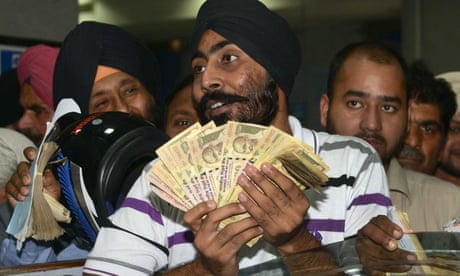
Your money's no good: rupee note cancellation plunges India into panic
It is the largest-scale financial experiment in Indian history: gutting 14 trillion rupees – 86% of the currency in circulation – from the most cash-dependent major economy in the world.
More than a month on, India’s Reserve Bank has issued around 1.7 billion new notes, with less than one-third the value of what was removed. The sixth-largest economy in the world is running on 60% less currency than before. Lines outside banks continue to stretch, and India’s small business lobby says its members are facing an “apocalypse”. But Modi insists he isn’t done.
Initially intended to flush out the “black money” said to be hoarded by elites and criminals, the government now frames demonetisation as the first step in a “cashless” revolution to shift the billions of transactions undertaken each day in India online – and onto the radar of tax authorities.
This week, labour minister Bandaru Dattatreya announced it would soon be mandatory for employers to pay their staff into bank accounts, a hugely ambitious step in a country where as many as 90% of workers are paid in cash.
Already struggling, businessmen such as Sharma are dreading the prospect of more enforced digital migration.
“How do you think I can pay the workers with a cheque if they don’t have a bank account?” he asks, in a tiny office thick with incense smoke. “And it takes three days to clear a cheque. What will they eat during those days?”
His reasons are not just altruistic. Apart from potentially raising his tax bill – in a country where just 1% pay income tax – paying salaries electronically would mean giving staff Delhi’s mandated minimum wage, currently 9,724 rupees (£114) per month for unskilled workers.
“Right now no one pays the minimum wage that the government decides,” Sharma says. “It will only make things expensive: we will charge the customer.”
Outside his workers’ earshot, he adds: “If someone is doing the work of Rs.2000, why should we pay them Rs.15,000?”
But workers too are wary of the big push online. Tens of millions of Indians have been given zero-deposit bank accounts in the past two years under a government scheme to boost financial inclusion. But even after demonetisation prompted a rush of new deposits, 23% of the accounts still lie empty.
Asha Devi sits spread-legged on the Sharma factory’s floor, using fine scissors to cut loose threads from piles of jeans. A migrant labourer from Bihar state, she has a bank account, but has not been able to access her money since early November.
“I’ve been standing in [bank] queues from 7am until 5.30 in the evening,” she says. “I still cannot withdraw money, and I lose a day of work each time.”
The experience has heightened her scepticism about being paid online. “I am a daily wage worker and I’m not sure if I’ll have a job tomorrow,” she says. “If I get [the cash] in hand, I know I have the money.”
Cash has a cold, hard certainty that still matters to itinerant workers. “There are many factory owners who will make these daily wage workers into fools,” Devi adds. “They’ll tell them they have deposited the money when they haven’t.”
“In theory, it’s a great idea to actually ensure that workers actually get the wage they’ve been promised,” says Aparna, the president of the Indian Federation of Trade Unions, who like many Indians uses only one name.
“The downside is: we can’t do it. It’s a bit like say the government has announced the end to all poverty by tomorrow. It’s not taking into account any of the obvious constraints that even a child in India could see.”
Around one in three Indians still don’t have bank accounts, she says, many of them put off by the need to navigate banking bureaucracy. “For people who don’t have matching identity cards – say, if somebody made a mistake typing their name – then it’s a nightmare,” she says.
Nagendra Sarkar, another of Sharma’s employees, has been trying to open an account in Delhi, but keeps running into an obstacle: he has no fixed address. “The bank people are asking for papers to prove that it’s my account,” he says.
It is one of many points at which the digital salary plan, and the entire “cashless” vision, butt up against the stubborn reality of Indian working life.
“Take an example of rickshaw puller who transfers goods from my shop to the factories,” says Pyarlal, a lace factory owner in Gandhi Nagar.
“For one trip I pay him 100 rupees. Does the government expect me to give him a cheque? I mean, how do I pay him?”
Such a major reform, even one that might benefit workers, can’t be enforced overnight, Aparna says. “You have to do it gradually, let the system be put in place, create the infrastructure first.”
Mihir Sharma, a senior fellow at the Delhi-based Observer Research Foundation, agrees. “The law might well be passed,” he says. “But it would likely be widely ignored, which is the fare of most labour regulation in India.”
Digital payments might be novel, but the ambitious plan is “an old Indian pathology”, he says. “The belief that if you legislate something, it happens.”
Down one of the hundreds of dusty lanes that make up Gandhi Nagar market, Delhi’s largest textile bazaar, the small factory where Neeraj Sharma produces girls’ jeans is quiet.
“Normally you couldn’t walk in here,” he says, ambling across the concrete shop floor, past dormant sowing machines and piles of unfinished denim.
Sharma estimates around 80% of his workforce have left Delhi for their villages in the past month. “It’s good that they left,” he adds. “Because of this demonetisation problem, there’s no work for us either.”
India’s vast informal economy has been reeling since 8 November, the morning after India’s prime minister, Narendra Modi, announced the sudden voiding of the country’s two most-used cash bills.
Your money's no good: rupee note cancellation plunges India into panic
It is the largest-scale financial experiment in Indian history: gutting 14 trillion rupees – 86% of the currency in circulation – from the most cash-dependent major economy in the world.
More than a month on, India’s Reserve Bank has issued around 1.7 billion new notes, with less than one-third the value of what was removed. The sixth-largest economy in the world is running on 60% less currency than before. Lines outside banks continue to stretch, and India’s small business lobby says its members are facing an “apocalypse”. But Modi insists he isn’t done.
Initially intended to flush out the “black money” said to be hoarded by elites and criminals, the government now frames demonetisation as the first step in a “cashless” revolution to shift the billions of transactions undertaken each day in India online – and onto the radar of tax authorities.
This week, labour minister Bandaru Dattatreya announced it would soon be mandatory for employers to pay their staff into bank accounts, a hugely ambitious step in a country where as many as 90% of workers are paid in cash.
Already struggling, businessmen such as Sharma are dreading the prospect of more enforced digital migration.
“How do you think I can pay the workers with a cheque if they don’t have a bank account?” he asks, in a tiny office thick with incense smoke. “And it takes three days to clear a cheque. What will they eat during those days?”
His reasons are not just altruistic. Apart from potentially raising his tax bill – in a country where just 1% pay income tax – paying salaries electronically would mean giving staff Delhi’s mandated minimum wage, currently 9,724 rupees (£114) per month for unskilled workers.
“Right now no one pays the minimum wage that the government decides,” Sharma says. “It will only make things expensive: we will charge the customer.”
Outside his workers’ earshot, he adds: “If someone is doing the work of Rs.2000, why should we pay them Rs.15,000?”
But workers too are wary of the big push online. Tens of millions of Indians have been given zero-deposit bank accounts in the past two years under a government scheme to boost financial inclusion. But even after demonetisation prompted a rush of new deposits, 23% of the accounts still lie empty.
Asha Devi sits spread-legged on the Sharma factory’s floor, using fine scissors to cut loose threads from piles of jeans. A migrant labourer from Bihar state, she has a bank account, but has not been able to access her money since early November.
“I’ve been standing in [bank] queues from 7am until 5.30 in the evening,” she says. “I still cannot withdraw money, and I lose a day of work each time.”
The experience has heightened her scepticism about being paid online. “I am a daily wage worker and I’m not sure if I’ll have a job tomorrow,” she says. “If I get [the cash] in hand, I know I have the money.”
Cash has a cold, hard certainty that still matters to itinerant workers. “There are many factory owners who will make these daily wage workers into fools,” Devi adds. “They’ll tell them they have deposited the money when they haven’t.”
“In theory, it’s a great idea to actually ensure that workers actually get the wage they’ve been promised,” says Aparna, the president of the Indian Federation of Trade Unions, who like many Indians uses only one name.
“The downside is: we can’t do it. It’s a bit like say the government has announced the end to all poverty by tomorrow. It’s not taking into account any of the obvious constraints that even a child in India could see.”
Around one in three Indians still don’t have bank accounts, she says, many of them put off by the need to navigate banking bureaucracy. “For people who don’t have matching identity cards – say, if somebody made a mistake typing their name – then it’s a nightmare,” she says.
Nagendra Sarkar, another of Sharma’s employees, has been trying to open an account in Delhi, but keeps running into an obstacle: he has no fixed address. “The bank people are asking for papers to prove that it’s my account,” he says.
It is one of many points at which the digital salary plan, and the entire “cashless” vision, butt up against the stubborn reality of Indian working life.
“Take an example of rickshaw puller who transfers goods from my shop to the factories,” says Pyarlal, a lace factory owner in Gandhi Nagar.
“For one trip I pay him 100 rupees. Does the government expect me to give him a cheque? I mean, how do I pay him?”
Such a major reform, even one that might benefit workers, can’t be enforced overnight, Aparna says. “You have to do it gradually, let the system be put in place, create the infrastructure first.”
Mihir Sharma, a senior fellow at the Delhi-based Observer Research Foundation, agrees. “The law might well be passed,” he says. “But it would likely be widely ignored, which is the fare of most labour regulation in India.”
Digital payments might be novel, but the ambitious plan is “an old Indian pathology”, he says. “The belief that if you legislate something, it happens.”
Subscribe to:
Comments (Atom)