Search This Blog

Tuesday, 19 January 2016

People judge you based on 2 criteria when they first meet you

Jenna Goudreau in The Independent


People size you up in seconds, but what exactly are they evaluating?

Harvard Business School professor Amy Cuddy has been studying first impressions alongside fellow psychologists Susan Fiske and Peter Glick for more than 15 years, and has discovered patterns in these interactions.

In her new book, "Presence," Cuddy says people quickly answer two questions when they first meet you:

Can I trust this person?
Can I respect this person?


Psychologists refer to these dimensions as warmth and competence respectively, and ideally you want to be perceived as having both.
Interestingly, Cuddy says that most people, especially in a professional context, believe that competence is the more important factor. After all, they want to prove that they are smart and talented enough to handle your business.

But in fact warmth, or trustworthiness, is the most important factor in how people evaluate you. "From an evolutionary perspective," Cuddy says, "it is more crucial to our survival to know whether a person deserves our trust."

It makes sense when you consider that in cavemen days it was more important to figure out if your fellow man was going to kill you and steal all your possessions than if he was competent enough to build a good fire.

While competence is highly valued, Cuddy says it is evaluated only after trust is established. And focusing too much on displaying your strength can backfire.

Cuddy says MBA interns are often so concerned about coming across as smart and competent that it can lead them to skip social events, not ask for help, and generally come off as unapproachable. 

These overachievers are in for a rude awakening when they don't get the job offer because nobody got to know and trust them as people.

"If someone you're trying to influence doesn't trust you, you're not going to get very far; in fact, you might even elicit suspicion because you come across as manipulative," Cuddy says.

"A warm, trustworthy person who is also strong elicits admiration, but only after you've established trust does your strength become a gift rather than a threat." 

We’ve been conned by the rich predators of Davos

Aditya Chakrabortty in The Guardian
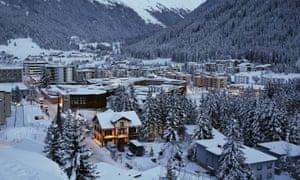


Davos: ‘This week, some of the richest people on Earth will gather high up a snowy mountain in the world’s biggest tax haven.’ Photograph: Ruben Sprich/Reuters


As metaphors go, this one takes some beating. This week, some of the richest people on Earth will gather high up a snowy mountain in the world’s biggest tax haven. Most will have paid big money to attend the three-day meeting in Davos: the most exclusive memberships cost somewhere in the region of £100,000 each. From there, they will relay thoughts on global risks and opportunities to the ski-jacketed press corps. They will talk about gender inequality and technological innovation. The message will go out: however turbulent the global economy, it is being capably stewarded.

These are our economic elites as they want the rest of us stuck on the flatlands below to see them: big-thinking, well-intentioned, hard-working – and thoroughly meritocratic. This is also how they justify the mammoth rewards they enjoy: we sweat for it; we’re worth it. The follow-up is usually only implied, but it is the one that underpins the entire system: put in enough hours and this could be you. 

Set against that promise the finding from Oxfam that 62 billionaires have more wealth than half the world’s population – 3.5 billion people – share between them.

Ponder those numbers for a moment because they make up possibly the most grotesque ratio in the world economy today. Go through the 62 richest people and plenty of names jump out to show that any notions of meritocracy are a big fat lie. None of those 3.5 billion men, women, boys or girls will be born into a fortune such as that enjoyed by the Waltons of Walmart fame, in which just six people own $149bn. Nor will they ever get to be a Saudi royal such as Prince Alwaleed bin Talal, worth $26bn.

I could pull out plenty of other names giving the lie to the complacent notion that this is the era of the self-made plutocrat. The top of the money tree is still festooned with inheritances. Just look at the widow of chocolatier Michele Ferrero, Maria Franca Fissolo, who at 98 is the fifth wealthiest woman on the planet; the offspring of the Lidl and Aldi dynasties and the three Mars siblings who are worth $80bn. One doesn’t need to be a Bolshevik to see that many of the world’s super-rich are recipients of dumb luck, born into the right family at the right time.

But that grotesque index tells us that something else has gone badly wrong. At the start of this decade, 388 billionaires owned as much as half the world. By 2011, that number had plunged to 117. Last year, it had fallen to 80. In other words, in the five years since the world recession, the very richest have grown inexorably wealthier. And that’s not because the global economy is booming, as every worker on a pay freeze and every family seeing their benefits cut knows. It’s because we are living in a period of trickle-up economics, in which the middle- and working-classes have handed over money to those right at the very top.

The 80s were the decade of trickle-down economics, with Thatcher and Reagan cutting taxes for the richest and promising that everyone else – from Easington to Port Talbot, Pittsburgh to Milwaukee – would soon feel the benefits. By contrast the past half-decade has been about trickle-up economics, in which the world’s most powerful central bankers have launched policies that have been explicitly about boosting the fortunes of the richest. The disbursement of thousands of billions in quantitative easing both in the US and the UK from 2009 onwards was meant to raise asset prices – and assets are by definition in the hands of the wealthy.

No wonder the Bank of England admitted that 40% of the gains from its £375bn QE programme went to the top 5% of British households. No wonder Stanley Druckenmiller, the billionaire hedge fund manager, labelled QE: “The biggest redistribution of wealth from the middle-class and the poor to the rich ever.”

The figures prove him right. According to the Berkeley economist Emmanuel Saez, between 2009 and 2012 the top 1% of American households took 91 cents out of each extra dollar that the country earned. The other 99% of Americans had to share the remaining 9 cents between them.

This didn’t happen in a fit of absent-mindedness. Rather, decades of burgeoning inequality – of the Davos set scooping more and more of the gains from growth – have enabled the super-rich to pretend that their narrow sectional interests are what’s good for the world economy. Policies as manifestly unfair as QE would never have happened in a fairer economy – the UK and US would have relied instead on public investment and government programmes.

Massive inequality has allowed the 1% to buy political influence as never before in postwar history. Indeed, the super-rich now practically write their own tax laws – such as the way senior executives of Britain’s biggest businesses were invited by George Osborne to advise on overhauling corporation taxes. They get to ensure that tax havens are treated with due leniency, all the better to hide their trillions in them. They buy their own politicians, as with the shadow-bankers who funded the Conservative election campaign or the billionaire Koch brothers using their fortune to tip the US presidential contest. Indeed, the more ambitious decide to become politicians. Think not just of Donald Trump but former bond trader turned media mogul turned mayor of New York Michael Bloomberg.

The great mistake made by the mainstream left and right, even by NGOs such as Oxfam, is in imagining that the super-rich, now enjoying such massive riches, are somehow playing by the same rules as the rest of us. That they are “wealth creators” providing jobs and investment for the rest of us, or that they might give up their tax havens. If that ever were the case, it isn’t now. A tiny minority has gained from massive tax cuts and legislative leniency about where they shove their money. They have siphoned off gains in salaries and profits wherever possible and enjoyed hundreds of billions flowing into their asset markets. Meanwhile, the rest of us who provide the feedstock for their revenues see our welfare states hollowed out, our wages frozen and our employers failing to invest. But none of that matters very much in Davos.

Monday, 18 January 2016

Are modern cricketers more open to experimentation?

V Ramnarayan in Cricinfo


It was a cool December evening in the early 1980s. Flute maestro Hariprasad Chourasia was about to enter the iconic Kalakshetra auditorium in Chennai to perform in a concert when a young enthusiast asked him, "Will you please play the raga Hemant for me?" His reply was quick - and surprising, coming as it did from a leading classical musician of several years' standing. He said, "Sorry, I haven't learnt the raga yet." Some years later, I had a similar conversation with TV Vasan, a percussionist who played the mridangam, a south Indian drum. He spoke about a conversation he once had with the doyen of Carnatic music, Ariyakudi Ramanuja Iyengar. Vasan, who had watched Iyengar practise a particular song some 500 times during the month, was eager to hear it in concert on the morrow. That was not to be. "I haven't mastered it," said the singer.

More recently I read about another old master's advice to young musicians. Semmangudi Srinivasier, grand old patriarch of Carnatic music, said to his disciples: "Practise every song at least a thousand times before you take it to the concert platform." MS Subbulakshmi, perhaps the best known south Indian voice, was famous for doing just that. She knew every lyric of every song backwards, regardless of language or complexity, and still had butterflies in her stomach before every concert. The rigour extended even to studio recordings, where she could well have resorted to external aids with nobody the wiser for it.

The situation is different today. Without criticising or condemning modern musicians, it can be said truthfully of most that they do not match the older generation in their preparation for performances. Many look into their iPads or cell phones while performing on stage, possibly because their song repertoires are far larger than those of their gurus were. It is not unusual for a song learnt in the morning to debut in the evening.

What has all this to do with cricket? It is that I find some parallels between the two. For instance, I remember watching Erapalli Prasanna, during his last Ranji Trophy match, I think, bowl in the nets a delivery that looked similar to the doosra of a later era. Bowling in an adjacent net, and fascinated by the new variation, I asked him how come I never saw the delivery in a match. "Haven't mastered it," was his reply.

In my experience, experiments were frowned upon in matches. You were sure to get a tongue-lashing from your seniors if you tried something novel in a game. Mumtaz Hussain, a successful left-arm spinner in first-class cricket, might have been even more successful if he had continued to bowl the chinaman and the googly as he had done in his university days, instead of turning into an orthodox spinner and serving his side in a risk-free manner. Though Bhagwath Chandrasekhar and Anil Kumble were unorthodox wrist spinners, much quicker than the norm, neither added variations - like a slower ball - to his armoury before he was well into his career. Similarly, most international bowlers were reluctant to try reverse swing until long after the Pakistanis unfurled it.

The second decade of this century has been a watershed in this regard, with both bowlers and batsmen increasingly ready to take risks. To the reverse sweep has been added the switch hit, and the likes of offspinner R Ashwin (among those whose actions have not been questioned) have been attempting numerous variations, including the legbreak, whose destructive potential is as yet unknown.

I shudder to think what choice French my captain might have resorted to had I resorted to such experimentation in my day. As a result of such a mindset - which most of my contemporaries shared - I was so cautious that once, after hitting Tamil Nadu batsman P Mukund's off stump in a Ranji Trophy match (by sheer fluke) with a delivery I bowled from round the wicket, gripping the ball with my palm, I never tried the variation in all 15 years of cricket that followed. However, lest I be misunderstood to be an advocate of the current trend of launching untested or insufficiently tested products, let me stress that I am indeed an admirer of the perfectionism of the old guard.

Sunday, 17 January 2016

Britain Stronger In Europe


Extracts from a pro EU campaign


Stronger Economy

Being part of Europe makes our economy stronger, helping British businesses small and large, creating jobs for British people, and delivering lower prices for British families.

Half of everything we sell to the rest of the world we sell to Europe - and we get an average of £26.5 billion of investment into Britain per year from Europe.

That's why the Confederation of British Industry (CBI) estimates that 3 million jobs in Britain are linked to trade with the rest of Europe.

Being part of Europe also means cheaper prices in our supermarkets, cheaper flights to Europe and lower phone charges when traveling.

The average person in Britain saves around £450 every year because trading with Europe drives down the price of goods and services.

And we get out more than we put in. Our annual contribution is equivalent to £340 for each household and yet the CBI says that all the trade, investment, jobs and lower prices that come from our economic partnership with Europe is worth £3000 per year to every household.

That’s a return on investment of almost ten to one. British families are better off being in Europe.

Negotiating as part of a 500 million-strong economy also gives us clout we could never have on our own. Thanks to our membership of the European Union, we benefit from free trade agreements with 50 countries around the world.

So why would we risk our economic security by turning our backs on Europe? There will be no going back if we vote to leave. And if we do leave, we will be cut off from automatic access to the economic benefits that the EU brings – hitting businesses, risking jobs and threatening families’ financial security.