Friday, 28 January 2022
Wednesday, 26 January 2022
Highly structured coaching dehumanises cricket
Greg Chappell in Cricinfo
I believe that cricket coaches should have an oath not dissimilar to that laid down by Hippocrates in Of the Epidemics: "first do no harm".
At a time when the head coaching role with Australian cricket is in the spotlight, it is worth looking at the role of coaching in the game more broadly.
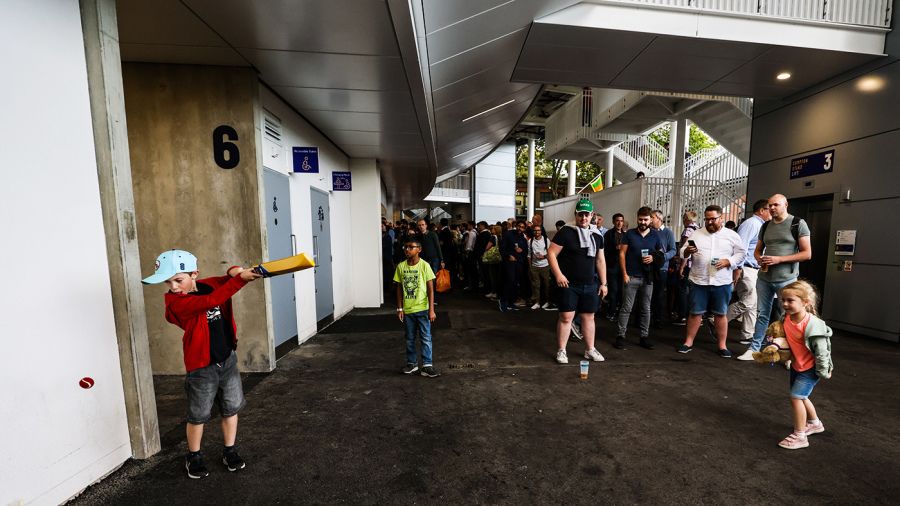
The developed cricket countries have lost the natural environments that were a big part of their development structure in bygone eras. In those environments, young cricketers learned from watching good players and then emulating them in pick-up matches with family and friends.
Usually any instruction that was received was rudimentary, and interference from adults generally was minimal. In these unstructured settings, players developed a natural style while learning to compete against older players, during which they learned critical coping and survival skills.
The Indian subcontinent still has many towns where coaching facilities are rare and youngsters play in streets and on vacant land without the interference of formal coaching. This is where many of their current stars have learned the game.
MS Dhoni, with whom I worked in India, is a good example of a batter who developed his talent and learned to play in this fashion. By competing against more experienced individuals on a variety of surfaces early in his development, Dhoni developed the decision-making and strategic skills that have set him apart from many of his peers. His is one of the sharpest cricket minds I have encountered.
England, on the other hand, have very few of these natural environments and their players are produced in a narrow band of public schools, with an emphasis on the coaching manual. This is why their batting has lost much of its flair and resilience.
The games that young people make up and play are dynamic and foster creativity, joy, flexibility in technical execution, tactical understanding and decision-making, which are often missing in batting at the highest levels.
Invariably, when an adult gets involved with kids playing cricket, they break up the game and kill its energy by emphasising correct technique. This reduces a dynamic, engaging environment that promotes learning to a flat and lifeless set of drills that do little to improve batting in games.
The growth in structured training in the preparation of batters has not only failed to take batting forward, it has actually resulted in a decline in batting. Highly structured environments, and an excessive focus on teaching players to perform "correct" technique, dehumanise cricket.
The environments that attempt to reduce batting to mastery of technique, and to break it up into a number of distinct components, reflect a misunderstanding of how complex batting is. Quality batting requires good imagination, creativity, and the ability to identify and respond to challenges in matches.
In response to this problem, we must change the education of coaches. From training them to be the font of all wisdom, we must instead enable them to become managers of creative learning environments in which young cricketers learn the game with minimal invasion and interference from adults.
In this approach the coaches' work involves setting up conditions for learning through engagement with the physical learning environment - which involves some degree of awareness and decision-making.
There are a couple of significant challenges to the status quo of coaching involved here. One is the shift from the idea of the coach as having all the knowledge that he hands down to the players as passive receivers, to one of the coach facilitating and guiding players in constructing their own knowledge as active learners.
I can hear those who believe batting is all about technique asking how these "free-range" cricketers will become technically adept, but I would remind them that for the first 100 years of Test cricket, that is how the very best were bred.
In his wonderful book The Art of Cricket published 64 years ago, Don Bradman wrote: "I would prefer to tell a young player what to do than how to do it." I would take this further by suggesting that good coaches should also help them learn when and why.
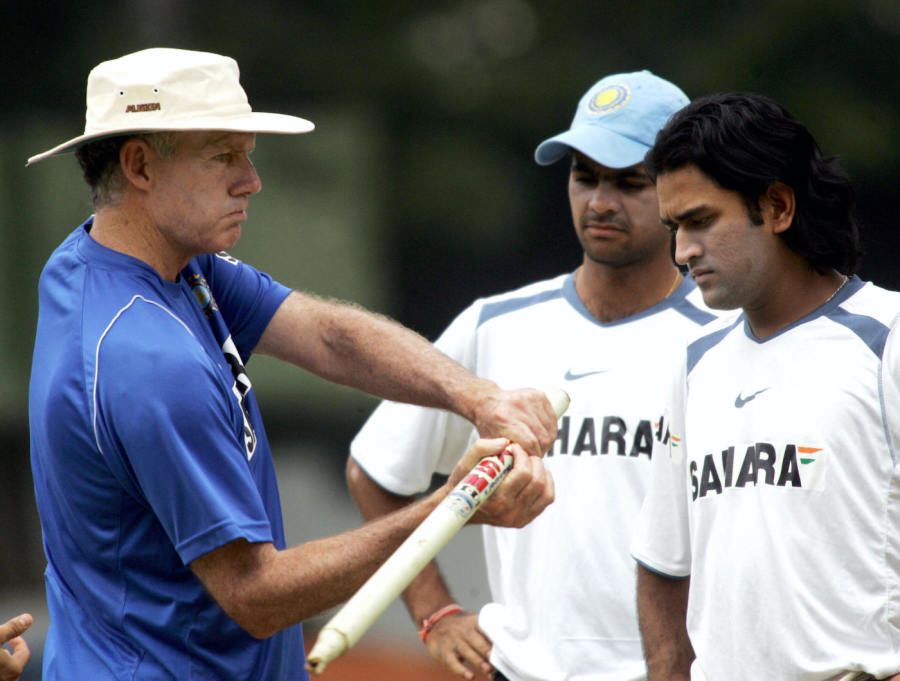 The author with MS Dhoni in 2006, whom he describes as "one of the sharpest cricket minds I have encountered" Dibyangshu Sarkar / AFP/Getty Images
Training must be focused on improving game play by locating learning in contexts that, to different degrees, replicate game conditions, so that improvements in practice sessions lead to improvements in matches.
This does not mean just playing cricket instead of practising. It means designing and managing modified games and activities aimed at particular outcomes that suit the skills, attitudes and motivations of the players and the preferred learning outcomes - whether for children learning to play or for batters at the highest levels.
The best coaches ask questions to get players thinking and working together to solve problems. The questions are aimed at drawing players out to come up with solutions to the problems presented to them.This does not neglect technique but, instead, develops it by having players learn and improve the execution of technique in the context of a match. This develops decision-making, flexibility of execution, awareness, and the ability to adapt to the range of challenges that batters face.
The greatest batters developed their talent over long periods of time by playing and learning in creative, informal learning environments from young ages without an excessive focus on perfecting someone else's idea of what an ideal technique should look like.
England would do well to look at their coaching methods and how the best batters develop their skills as part of any review that they initiate on the back of another resounding defeat in Australia. The England batting was bereft of class, short on imagination, and lacked resilience throughout this tour. If I was in charge of English cricket, I know what I would do first - but I won't be giving that information away for free!
If they don't do something drastic, they will be accused of behaving as in the aphorism that has often been misattributed to Albert Einstein: Insanity is doing the same thing over and over again and expecting different results.
I believe that cricket coaches should have an oath not dissimilar to that laid down by Hippocrates in Of the Epidemics: "first do no harm".
At a time when the head coaching role with Australian cricket is in the spotlight, it is worth looking at the role of coaching in the game more broadly.
The developed cricket countries have lost the natural environments that were a big part of their development structure in bygone eras. In those environments, young cricketers learned from watching good players and then emulating them in pick-up matches with family and friends.
Usually any instruction that was received was rudimentary, and interference from adults generally was minimal. In these unstructured settings, players developed a natural style while learning to compete against older players, during which they learned critical coping and survival skills.
The Indian subcontinent still has many towns where coaching facilities are rare and youngsters play in streets and on vacant land without the interference of formal coaching. This is where many of their current stars have learned the game.
MS Dhoni, with whom I worked in India, is a good example of a batter who developed his talent and learned to play in this fashion. By competing against more experienced individuals on a variety of surfaces early in his development, Dhoni developed the decision-making and strategic skills that have set him apart from many of his peers. His is one of the sharpest cricket minds I have encountered.
England, on the other hand, have very few of these natural environments and their players are produced in a narrow band of public schools, with an emphasis on the coaching manual. This is why their batting has lost much of its flair and resilience.
The games that young people make up and play are dynamic and foster creativity, joy, flexibility in technical execution, tactical understanding and decision-making, which are often missing in batting at the highest levels.
Invariably, when an adult gets involved with kids playing cricket, they break up the game and kill its energy by emphasising correct technique. This reduces a dynamic, engaging environment that promotes learning to a flat and lifeless set of drills that do little to improve batting in games.
The growth in structured training in the preparation of batters has not only failed to take batting forward, it has actually resulted in a decline in batting. Highly structured environments, and an excessive focus on teaching players to perform "correct" technique, dehumanise cricket.
The environments that attempt to reduce batting to mastery of technique, and to break it up into a number of distinct components, reflect a misunderstanding of how complex batting is. Quality batting requires good imagination, creativity, and the ability to identify and respond to challenges in matches.
In response to this problem, we must change the education of coaches. From training them to be the font of all wisdom, we must instead enable them to become managers of creative learning environments in which young cricketers learn the game with minimal invasion and interference from adults.
In this approach the coaches' work involves setting up conditions for learning through engagement with the physical learning environment - which involves some degree of awareness and decision-making.
There are a couple of significant challenges to the status quo of coaching involved here. One is the shift from the idea of the coach as having all the knowledge that he hands down to the players as passive receivers, to one of the coach facilitating and guiding players in constructing their own knowledge as active learners.
I can hear those who believe batting is all about technique asking how these "free-range" cricketers will become technically adept, but I would remind them that for the first 100 years of Test cricket, that is how the very best were bred.
In his wonderful book The Art of Cricket published 64 years ago, Don Bradman wrote: "I would prefer to tell a young player what to do than how to do it." I would take this further by suggesting that good coaches should also help them learn when and why.
The author with MS Dhoni in 2006, whom he describes as "one of the sharpest cricket minds I have encountered" Dibyangshu Sarkar / AFP/Getty ImagesTraining must be focused on improving game play by locating learning in contexts that, to different degrees, replicate game conditions, so that improvements in practice sessions lead to improvements in matches.
This does not mean just playing cricket instead of practising. It means designing and managing modified games and activities aimed at particular outcomes that suit the skills, attitudes and motivations of the players and the preferred learning outcomes - whether for children learning to play or for batters at the highest levels.
The best coaches ask questions to get players thinking and working together to solve problems. The questions are aimed at drawing players out to come up with solutions to the problems presented to them.This does not neglect technique but, instead, develops it by having players learn and improve the execution of technique in the context of a match. This develops decision-making, flexibility of execution, awareness, and the ability to adapt to the range of challenges that batters face.
The greatest batters developed their talent over long periods of time by playing and learning in creative, informal learning environments from young ages without an excessive focus on perfecting someone else's idea of what an ideal technique should look like.
England would do well to look at their coaching methods and how the best batters develop their skills as part of any review that they initiate on the back of another resounding defeat in Australia. The England batting was bereft of class, short on imagination, and lacked resilience throughout this tour. If I was in charge of English cricket, I know what I would do first - but I won't be giving that information away for free!
If they don't do something drastic, they will be accused of behaving as in the aphorism that has often been misattributed to Albert Einstein: Insanity is doing the same thing over and over again and expecting different results.
Monday, 24 January 2022
Saturday, 22 January 2022
Reservations for OBCs - The latest SC judgement
Bhadra Sinha in The Print
Reservation is not at odds with merit, but furthers proper distribution of opportunities, the Supreme Court said Thursday in a detailed judgment that revealed the reasons for its 7 January interim order upholding 27 per cent quota for Other Backward Classes (OBC) in the All India Quota (AIQ) for undergraduate and postgraduate medical admissions.
Merit, a bench of justices D.Y. Chandrachud and A.S. Bopanna held, should be “socially contextualised and reconceptualised as an instrument” to advance “social goods like equality” and not just be “reduced to narrow definitions of performance in an open competitive examination”.
“High scores in an examination are not a proxy for merit,” the bench said.
“Competitive examinations assess basic current competency to allocate educational resources but are not reflective of excellence, capabilities and potential of an individual which are also shaped by lived experiences, subsequent training and individual character,” the court said. They “do not reflect the social, economic and cultural advantage that accrues to certain classes and contributes to their success in such examinations”.
With its order on 7 January, the bench had given a green signal to counselling for medical courses that got delayed on account of the hearing in SC challenging OBC quota and reservation for the Economically Weaker Sections (EWS) in AIQ for medical admissions.
While it had declared OBC reservation as valid, it did not pronounce any opinion on the EWS quota. The court had doubts over the eligibility criterion, fixed at Rs 8 lakh annual income limit, to determine an EWS candidate. The top court is expected to hear detailed arguments on the EWS issue in March this year. However, as an interim arrangement, it had allowed EWS admissions on the basis of the existing threshold.
‘No prohibition for OBC reservation in PG courses’
Thursday’s judgment — authored by Justice Chandrachud — specifically ruled that there was no prohibition on introducing reservation for OBCs in postgraduate courses, negating the argument that the impact of backwardness simply disappears because a candidate has a graduate qualification.
A graduate qualification, in the court’s opinion, may provide certain social and economic mobility, but that by itself does not create parity between forward and backward classes.
The court declined to accept the argument that undeserving candidates benefitted from reservation. It pointed out that OBC candidates who fall in the creamy layer are excluded from taking this benefit.
Reservations ensure distribution of opportunity in such a way that backward classes are equally able to benefit from them, since opportunities “evade them because of structural barriers”, the court said. This is the only way merit can be a “democratising force that equalises inherited disadvantages and privileges”.
“Otherwise claims of individual merit are nothing but tools of obscuring inheritances that underlie achievements,” added the court.
Interpreting Articles 15(4), 15(5)
The bench interpreted Articles 15 (4) and 15 (5) of the Constitution to hold that the two are not exceptions to Article 15 (1). Rather, they become a restatement of a particular facet of the rule of substantive equality that has been set out in Article 15 (1).
Article 15 (1) prohibits discrimination on grounds of religion, sex, or place of birth, Article 15 (4) capacitates the state to create special arrangements for promoting the interest and welfare of socially and educationally backward classes, and Article 15 (5) provides for reservation for socially and educationally backward classes in educational institutions.
The court held that Article 15 (5) does not make any distinction between UG and PG medical courses. It said although it has been held that there should be no reservation in super-speciality courses, it was never ruled that reservations in medical PG courses are impermissible.
Articles 15 (4) and 15 (5) employ group identification methods to achieve substantive equality. The court admitted that this could lead to an incongruity where individual members of an identified group receiving the benefit of reservation may not be backward, or individuals of a non-identified group may share certain characteristics of backwardness with members of an identified group.
“The individual difference may be a result of privilege, fortune, or circumstances but it cannot be used to negate the role of reservation in remedying the structural disadvantage that certain groups suffer,” the order added.
In the judges’ opinion, open competitive exams can be termed an equal opportunity if there is equality in the availability and access to educational facilities. Inequalities in this segment have deprived certain classes of people from participating effectively in competitions.
Therefore, according to the court, “special provisions (like reservation) enable such disadvantaged classes to overcome the barriers they face in effectively competing with forward classes and thus ensuring substantive equality”.
‘Privileges of social network, cultural capital’
The judge spoke at length about the “privileges” available to the forward classes, not just in terms of schooling and coaching centres, but also social networks and cultural capital (communication skills, accent or academic accomplishments), most of which is inherited.
Cultural capital ensures the child is trained unconsciously by the familial environment and gives an edge to such children over individuals who do not have the benefit of such facilities.
“They (OBC) have to put in surplus effort to compete with their peers from the forward communities,” the verdict said.
But for the forward classes, a combination of family habitus, community linkages and inherited skills work to the advantage of individuals belonging to certain classes, which is then classified as merit, reproducing and reaffirming social hierarchies, the ruling said.
Taking reference from an earlier judgment in the case of B.K. Pavithra versus the Union of India, which said apparent neutral systems of examination perpetuate social inequalities, the court observed “it is necessary to understand that merit is not solely of one’s own making”.
The “exclusionary standard of merit serves to denigrate the dignity of those who face barriers in their advancement which are not of their own making”, the court said, advocating a deeper scrutiny of the “idea of merit based on scores in an exam”.
Standardised measures such as examination results are not the most accurate assessment of the qualitative difference between candidates.
“At the best, an examination can only reflect the current competence of an individual but not the gamut of their potential, capabilities or excellence, which are also shaped by lived experiences, subsequent training and individual character. The meaning of merit itself cannot be reduced to marks even if it is a convenient way of distributing educational resources,” the court said, adding that the meaning of merit must be reconceptualised.
Reservation is not at odds with merit, but furthers proper distribution of opportunities, the Supreme Court said Thursday in a detailed judgment that revealed the reasons for its 7 January interim order upholding 27 per cent quota for Other Backward Classes (OBC) in the All India Quota (AIQ) for undergraduate and postgraduate medical admissions.
Merit, a bench of justices D.Y. Chandrachud and A.S. Bopanna held, should be “socially contextualised and reconceptualised as an instrument” to advance “social goods like equality” and not just be “reduced to narrow definitions of performance in an open competitive examination”.
“High scores in an examination are not a proxy for merit,” the bench said.
“Competitive examinations assess basic current competency to allocate educational resources but are not reflective of excellence, capabilities and potential of an individual which are also shaped by lived experiences, subsequent training and individual character,” the court said. They “do not reflect the social, economic and cultural advantage that accrues to certain classes and contributes to their success in such examinations”.
With its order on 7 January, the bench had given a green signal to counselling for medical courses that got delayed on account of the hearing in SC challenging OBC quota and reservation for the Economically Weaker Sections (EWS) in AIQ for medical admissions.
While it had declared OBC reservation as valid, it did not pronounce any opinion on the EWS quota. The court had doubts over the eligibility criterion, fixed at Rs 8 lakh annual income limit, to determine an EWS candidate. The top court is expected to hear detailed arguments on the EWS issue in March this year. However, as an interim arrangement, it had allowed EWS admissions on the basis of the existing threshold.
‘No prohibition for OBC reservation in PG courses’
Thursday’s judgment — authored by Justice Chandrachud — specifically ruled that there was no prohibition on introducing reservation for OBCs in postgraduate courses, negating the argument that the impact of backwardness simply disappears because a candidate has a graduate qualification.
A graduate qualification, in the court’s opinion, may provide certain social and economic mobility, but that by itself does not create parity between forward and backward classes.
The court declined to accept the argument that undeserving candidates benefitted from reservation. It pointed out that OBC candidates who fall in the creamy layer are excluded from taking this benefit.
Reservations ensure distribution of opportunity in such a way that backward classes are equally able to benefit from them, since opportunities “evade them because of structural barriers”, the court said. This is the only way merit can be a “democratising force that equalises inherited disadvantages and privileges”.
“Otherwise claims of individual merit are nothing but tools of obscuring inheritances that underlie achievements,” added the court.
Interpreting Articles 15(4), 15(5)
The bench interpreted Articles 15 (4) and 15 (5) of the Constitution to hold that the two are not exceptions to Article 15 (1). Rather, they become a restatement of a particular facet of the rule of substantive equality that has been set out in Article 15 (1).
Article 15 (1) prohibits discrimination on grounds of religion, sex, or place of birth, Article 15 (4) capacitates the state to create special arrangements for promoting the interest and welfare of socially and educationally backward classes, and Article 15 (5) provides for reservation for socially and educationally backward classes in educational institutions.
The court held that Article 15 (5) does not make any distinction between UG and PG medical courses. It said although it has been held that there should be no reservation in super-speciality courses, it was never ruled that reservations in medical PG courses are impermissible.
Articles 15 (4) and 15 (5) employ group identification methods to achieve substantive equality. The court admitted that this could lead to an incongruity where individual members of an identified group receiving the benefit of reservation may not be backward, or individuals of a non-identified group may share certain characteristics of backwardness with members of an identified group.
“The individual difference may be a result of privilege, fortune, or circumstances but it cannot be used to negate the role of reservation in remedying the structural disadvantage that certain groups suffer,” the order added.
In the judges’ opinion, open competitive exams can be termed an equal opportunity if there is equality in the availability and access to educational facilities. Inequalities in this segment have deprived certain classes of people from participating effectively in competitions.
Therefore, according to the court, “special provisions (like reservation) enable such disadvantaged classes to overcome the barriers they face in effectively competing with forward classes and thus ensuring substantive equality”.
‘Privileges of social network, cultural capital’
The judge spoke at length about the “privileges” available to the forward classes, not just in terms of schooling and coaching centres, but also social networks and cultural capital (communication skills, accent or academic accomplishments), most of which is inherited.
Cultural capital ensures the child is trained unconsciously by the familial environment and gives an edge to such children over individuals who do not have the benefit of such facilities.
“They (OBC) have to put in surplus effort to compete with their peers from the forward communities,” the verdict said.
But for the forward classes, a combination of family habitus, community linkages and inherited skills work to the advantage of individuals belonging to certain classes, which is then classified as merit, reproducing and reaffirming social hierarchies, the ruling said.
Taking reference from an earlier judgment in the case of B.K. Pavithra versus the Union of India, which said apparent neutral systems of examination perpetuate social inequalities, the court observed “it is necessary to understand that merit is not solely of one’s own making”.
The “exclusionary standard of merit serves to denigrate the dignity of those who face barriers in their advancement which are not of their own making”, the court said, advocating a deeper scrutiny of the “idea of merit based on scores in an exam”.
Standardised measures such as examination results are not the most accurate assessment of the qualitative difference between candidates.
“At the best, an examination can only reflect the current competence of an individual but not the gamut of their potential, capabilities or excellence, which are also shaped by lived experiences, subsequent training and individual character. The meaning of merit itself cannot be reduced to marks even if it is a convenient way of distributing educational resources,” the court said, adding that the meaning of merit must be reconceptualised.
Friday, 21 January 2022
Subscribe to:
Comments (Atom)