Francesca Melandri in The Guardian tell us what to expect during a lockdown
I am writing to you from Italy, which means I am writing from your future. We are now where you will be in a few days. The epidemic’s charts show us all entwined in a parallel dance.
We are but a few steps ahead of you in the path of time, just like Wuhan was a few weeks ahead of us. We watch you as you behave just as we did. You hold the same arguments we did until a short time ago, between those who still say “it’s only a flu, why all the fuss?” and those who have already understood.
As we watch you from here, from your future, we know that many of you, as you were told to lock yourselves up into your homes, quoted Orwell, some even Hobbes. But soon you’ll be too busy for that.
First of all, you’ll eat. Not just because it will be one of the few last things that you can still do.
You’ll find dozens of social networking groups with tutorials on how to spend your free time in fruitful ways. You will join them all, then ignore them completely after a few days.
You’ll pull apocalyptic literature out of your bookshelves, but will soon find you don’t really feel like reading any of it.
You’ll eat again. You will not sleep well. You will ask yourselves what is happening to democracy.
You’ll have an unstoppable online social life – on Messenger, WhatsApp, Skype, Zoom…
You will miss your adult children like you never have before; the realisation that you have no idea when you will ever see them again will hit you like a punch in the chest.
Old resentments and falling-outs will seem irrelevant. You will call people you had sworn never to talk to ever again, so as to ask them: “How are you doing?” Many women will be beaten in their homes.
You will wonder what is happening to all those who can’t stay home because they don’t have one. You will feel vulnerable when going out shopping in the deserted streets, especially if you are a woman. You will ask yourselves if this is how societies collapse. Does it really happen so fast? You’ll block out these thoughts and when you get back home you’ll eat again.
You will put on weight. You’ll look for online fitness training.
You’ll laugh. You’ll laugh a lot. You’ll flaunt a gallows humour you never had before. Even people who’ve always taken everything dead seriously will contemplate the absurdity of life, of the universe and of it all.
You will make appointments in the supermarket queues with your friends and lovers, so as to briefly see them in person, all the while abiding by the social distancing rules.
You will count all the things you do not need.
The true nature of the people around you will be revealed with total clarity. You will have confirmations and surprises.
Literati who had been omnipresent in the news will disappear, their opinions suddenly irrelevant; some will take refuge in rationalisations which will be so totally lacking in empathy that people will stop listening to them. People whom you had overlooked, instead, will turn out to be reassuring, generous, reliable, pragmatic and clairvoyant.
Those who invite you to see all this mess as an opportunity for planetary renewal will help you to put things in a larger perspective. You will also find them terribly annoying: nice, the planet is breathing better because of the halved CO2 emissions, but how will you pay your bills next month?
You will not understand if witnessing the birth of a new world is more a grandiose or a miserable affair.
You will play music from your windows and lawns. When you saw us singing opera from our balconies, you thought “ah, those Italians”. But we know you will sing uplifting songs to each other too. And when you blast I Will Survive from your windows, we’ll watch you and nod just like the people of Wuhan, who sung from their windows in February, nodded while watching us.
Many of you will fall asleep vowing that the very first thing you’ll do as soon as lockdown is over is file for divorce.
Many children will be conceived.
Your children will be schooled online. They’ll be horrible nuisances; they’ll give you joy.
Elderly people will disobey you like rowdy teenagers: you’ll have to fight with them in order to forbid them from going out, to get infected and die.
You will try not to think about the lonely deaths inside the ICU.
You’ll want to cover with rose petals all medical workers’ steps.
You will be told that society is united in a communal effort, that you are all in the same boat. It will be true. This experience will change for good how you perceive yourself as an individual part of a larger whole.
Class, however, will make all the difference. Being locked up in a house with a pretty garden or in an overcrowded housing project will not be the same. Nor is being able to keep on working from home or seeing your job disappear. That boat in which you’ll be sailing in order to defeat the epidemic will not look the same to everyone nor is it actually the same for everyone: it never was.
At some point, you will realise it’s tough. You will be afraid. You will share your fear with your dear ones, or you will keep it to yourselves so as not to burden them with it too.
You will eat again.
We’re in Italy, and this is what we know about your future. But it’s just small-scale fortune-telling. We are very low-key seers.
If we turn our gaze to the more distant future, the future which is unknown both to you and to us too, we can only tell you this: when all of this is over, the world won’t be the same.
Saturday, 28 March 2020
Dickens and Orwell — the choice for capitalism
When this is all over, there is likely to be a new social contract. Which way will we go? asks JANAN GANESH in The FT
This year is the 70th anniversary of George Orwell’s death and the 150th of Charles Dickens’s. Never spellbound by either (“The man can’t write worth a damn,” said the young Martin Amis, after one page of 1984), I was inclined to sit out all the commemorative rereading. And I did. But then the crisis of the day took me back to what one man wrote about the other.
More on that in a minute. First, you will notice the pandemic is putting large corporations through a sort of moral invigilation. Ones that rejig their factories to make hand sanitiser (LVMH) or donate their knowhow (IBM) are hailed. Ones that behave like skinflints (JD Wetherspoon, Britannia Hotels) are tarred and feathered.
Companies have to weigh how much discretionary help to give without flunking their narrow duty to survive and profit.
This is the stuff of Stakeholder Capitalism or Corporate Social Responsibility.The topic has been in the air all of my career. It has been given new urgency by events. It is the subject of much FT treatment.
And Orwell, I suspect, would see through it like glass.
In a 1940 essay (how spoilt we are for round-number anniversaries) he politely explodes the idea of Dickens as a radical, or even as a social reformer. His case is that, for Dickens, nothing is wrong with the world that cannot be fixed through individual conscience.
If only Murdstone were kinder to David Copperfield. If only all bosses were as nice as Fezziwig. That no one should have such awesome power over others in the first place goes unsaid by Dickens, and presumably unthought. And so his worldview, says Orwell, is “almost exclusively moral”.
Dickens wants a “change of spirit rather than a change of structure”. He has no sense that a free market is “wrong as a system”. The French Revolution could have been averted had the Second Estate just “turned over a new leaf, like Scrooge”.
And so we have “that recurrent Dickens figure, the Good Rich Man”, whose arbitrary might is used to help out the odd grateful urchin or debtor. What we do not have is the Good Trade Unionist pushing for structural change. What we do not have is the Good Finance Minister redistributing wealth. There is something feudal about Dickens. The rich man in his castle should be nicer to the poor man at his gate, but each is in his rightful station.
You need not share Orwell’s ascetic socialism (I write this next to a 2010 Meursault) to see his point. And to see that it applies just as much to today’s economy.
Some companies are open to any and all options to serve the general good — except higher taxes and regulation. “I feel like I’m at a firefighters’ conference,” said the writer Rutger Bregman, at a Davos event about inequality that did not mention tax. “And no one is allowed to speak about water.”
What Orwell would hate about Stakeholder Capitalism is not just that it might achieve patchier results than the universal state. It is not even that it accords the powerful yet more power — at times, as we are seeing, over life and death. Under-resourced governments counting on private whim for basic things: it is a spectacle that should both warm the heart and utterly chill it.
No, what Orwell would resent, I think, is the unearned smugness. The halo of “conscience”, when more systemic answers are available via government. The halo that Dickens still wears. You can see it in the world of philanthropy summits and impact investment funds.
The double-anniversary of England’s most famous writers since Shakespeare meant little to me until the virus broke. All of a sudden, they serve as a neat contrast of worldviews. Dickens would look at the crisis and shame the corporates who fail to tap into their inner Fezziwig. Orwell would wonder how on earth it is left to their caprice in the first place.
The difference matters because, when all this is over, there is likely to be a new social contract. The mystery is whether it will be more Dickensian (in the best sense) or Orwellian (also in the best sense). That is, will it pressure the rich to give more to the commons or will it absolutely oblige them?
This year is the 70th anniversary of George Orwell’s death and the 150th of Charles Dickens’s. Never spellbound by either (“The man can’t write worth a damn,” said the young Martin Amis, after one page of 1984), I was inclined to sit out all the commemorative rereading. And I did. But then the crisis of the day took me back to what one man wrote about the other.
More on that in a minute. First, you will notice the pandemic is putting large corporations through a sort of moral invigilation. Ones that rejig their factories to make hand sanitiser (LVMH) or donate their knowhow (IBM) are hailed. Ones that behave like skinflints (JD Wetherspoon, Britannia Hotels) are tarred and feathered.
Companies have to weigh how much discretionary help to give without flunking their narrow duty to survive and profit.
This is the stuff of Stakeholder Capitalism or Corporate Social Responsibility.The topic has been in the air all of my career. It has been given new urgency by events. It is the subject of much FT treatment.
And Orwell, I suspect, would see through it like glass.
In a 1940 essay (how spoilt we are for round-number anniversaries) he politely explodes the idea of Dickens as a radical, or even as a social reformer. His case is that, for Dickens, nothing is wrong with the world that cannot be fixed through individual conscience.
If only Murdstone were kinder to David Copperfield. If only all bosses were as nice as Fezziwig. That no one should have such awesome power over others in the first place goes unsaid by Dickens, and presumably unthought. And so his worldview, says Orwell, is “almost exclusively moral”.
Dickens wants a “change of spirit rather than a change of structure”. He has no sense that a free market is “wrong as a system”. The French Revolution could have been averted had the Second Estate just “turned over a new leaf, like Scrooge”.
And so we have “that recurrent Dickens figure, the Good Rich Man”, whose arbitrary might is used to help out the odd grateful urchin or debtor. What we do not have is the Good Trade Unionist pushing for structural change. What we do not have is the Good Finance Minister redistributing wealth. There is something feudal about Dickens. The rich man in his castle should be nicer to the poor man at his gate, but each is in his rightful station.
You need not share Orwell’s ascetic socialism (I write this next to a 2010 Meursault) to see his point. And to see that it applies just as much to today’s economy.
Some companies are open to any and all options to serve the general good — except higher taxes and regulation. “I feel like I’m at a firefighters’ conference,” said the writer Rutger Bregman, at a Davos event about inequality that did not mention tax. “And no one is allowed to speak about water.”
What Orwell would hate about Stakeholder Capitalism is not just that it might achieve patchier results than the universal state. It is not even that it accords the powerful yet more power — at times, as we are seeing, over life and death. Under-resourced governments counting on private whim for basic things: it is a spectacle that should both warm the heart and utterly chill it.
No, what Orwell would resent, I think, is the unearned smugness. The halo of “conscience”, when more systemic answers are available via government. The halo that Dickens still wears. You can see it in the world of philanthropy summits and impact investment funds.
The double-anniversary of England’s most famous writers since Shakespeare meant little to me until the virus broke. All of a sudden, they serve as a neat contrast of worldviews. Dickens would look at the crisis and shame the corporates who fail to tap into their inner Fezziwig. Orwell would wonder how on earth it is left to their caprice in the first place.
The difference matters because, when all this is over, there is likely to be a new social contract. The mystery is whether it will be more Dickensian (in the best sense) or Orwellian (also in the best sense). That is, will it pressure the rich to give more to the commons or will it absolutely oblige them?
How to get refunds for school fees, season tickets and much more
Lindsay Cook and Lucy Warwick-Ching in The FT
Coronavirus disruption has changed our day-to-day lives beyond all recognition. Millions of households face difficult choices about their personal finances as they seek to rebalance their budgets and manage the cash flow crunch.
Many will seek refunds on services they have committed to pay for, ranging from education to commuting costs and membership of gyms and clubs, which cannot be provided during the shutdown. Others are seeking refunds or insurance payouts on holidays and flights they had booked.
In such unprecedented times, it pays to know your consumer rights, but these must be weighed against warnings from smaller businesses that failure to pay for services could result in their financial collapse.
Private school fees
The final bell rang on Friday March 20, when the government announced it was closing schools to tackle the coronavirus pandemic. Experts say it is unlikely pupils will return before the end of the summer term and parents with children at fee-paying schools are asking whether they still have to pay.
Some 615,000 children attend independent schools in the UK, with annual fees as high as £45,000 for boarding schools and £25,000 a year for some London day schools.
Under normal circumstances, the next payment date would be for the summer term due at the end of the Easter holidays in April. So will they be expected to pay?
“This is a hugely difficult time for everyone,” says Julie Robinson, chief executive of the Independent Schools Council. “Schools are under immense pressures and this is one of the issues that will be dealt with at school level, depending on their individual policies and contracts with parents.
“We hope parents will bear with schools who need time to clarify government support measures and take stock of their situation and ongoing operations. They are focused on the welfare of their school communities and ensuring continuation of teaching and learning.
“Independent schools are fortunate to have access to effective online learning resources, enabling them to continue education remotely using technological solutions.”
Parents facing financial difficulties should contact their school as soon as possible, says Neil Roskilly, chief executive of the Independent Schools Association. All independent schools offer financial help to families, and while it is usually offered when a child enters a school, it can be extended to those families whose financial circumstances change.
Most private schools have funds available for this situation and can also defer fees if there is the prospect of future employment. This should be over a costed and reasonable timescale, usually is up to 12 months. Schools rarely charge interest.
To help bridge the gap between parental incomes and fees, more than £1bn a year is now provided in fee assistance to over 175,000 students, with about half allocated through means-testing.
“Schools are trying their best to maintain a ‘continuity of education’ via online technology and most parents we have spoken to understand that, and are choosing not to withhold fees,” says Mr Roskilly. “But in some cases, where schools have money in reserves, they are considering returning some of those fees to parents.”
Ellie Spencer, associate solicitor in the commercial dispute resolution team at law firm Goodman Derrick, says: “Parents are paying for a service and they might be able to argue that the school is not providing that service. Even if the school is providing online teaching, this is not the whole service, so parents might be entitled to a discount.”
Private nurseries
Parents of children at private nurseries in the UK can pay about £1,000 a month for 50 hours a week for a child under two, but in London, the average Ofsted-rated facility charges between £70 and £85 a day.
Parents typically pay monthly for nurseries so most are receiving bills for April now when children are already at home.
Nurseries are reacting to the closures in different ways. While some are charging full fees, others are offering discounts for all and some cutting costs specifically for families who have suffered a severe loss of income.
Nurseries have contracts with parents that are entered into when the child starts and the terms and conditions tend to require parents to give a month’s notice. They also usually require parents to continue paying fees during an emergency closure, but previously these have tended to be for a few days because of problems with the building.
Purnima Tanuku, chief executive of National Day Nurseries Association, says: “Whether parents continue to pay fees when a closure is outside of a nursery’s control will depend on the agreements between individual nurseries and their parents. We’re pushing the government hard to offer sufficient financial support so nursery businesses can remain sustainable.”
One parent with two children under five at nursery contacted FT Money to say: “I've just received my monthly £2,000 bill with no offer of a discount. It seems that parents — many of whom can now not go to work — are expected to keep the nurseries going without receiving a service.”
Lawyers say parents should negotiate. Edward Macey-Dare, a litigation and employment partner at Lee Bolton Monier-Williams, says: “Remember, nurseries are going to be under severe pressure as a result of the coronavirus situation and, if they play hardball, they are likely to face numerous parents giving notice to withdraw their children. It seems to me, therefore, that parents have the upper hand in this situation when it comes to negotiating a reduction in fees or more favourable payment terms.”
But others warn that without the financial support, private nurseries could collapse. “Some childminders and nurseries have asked parents to continue to pay their fees to retain their children’s places, even if they are not permitted to offer them childcare services,” says Lynne Rowland, a tax partner at Moore Kingston Smith.
“This is perhaps understandable in the absence of clarity over how the special financial measures apply. But the government should consider offering families full tax relief for these costs, which for many families are as essential as their mortgage or rent payments.”
The government has said that funding for early years entitlements covering up to 30 hours of childcare will continue during any periods of nursery closures. Some nurseries are encouraging key workers to continue sending their children into nursery so they can continue to access this government funding.
Rail season tickets
For many commuters the cost of their annual season ticket is their second biggest monthly bill after their mortgage. To get the best deal, many pay upfront for the year, possibly with an interest-free loan from their employers.
Train companies say annual season tickets will be refunded pro-rata, but to get any money back commuters must have 12 weeks remaining on them. This is because they effectively get 12 weeks of free travel on an annual season ticket. Monthly season tickets need at least six days remaining and weekly ones at least two days. The £10 administrative fee will be waived. S
Someone who bought an annual season ticket for £4,980 at the beginning of the year should be able to get a refund for six months’ travel or £2,490. Refunds should be paid within 28 days. Full refunds can also be claimed for advance and off-peak tickets booked but not used — apply via train company websites.
Transport for London is slightly more generous. It requires six weeks to remain on annual season tickets, seven days on a monthly ticket and three days on a seven-day ticket, and does not charge an administrative fee. Apply for a refund via its website.
Many commuters pay to guarantee a place in their station car park by buying an annual season ticket. A typical permit costs over £1,000. Apply online for refunds to the company that runs the car park.
Sports subscriptions
With no live football likely until June at the earliest and many other major sporting events cancelled or postponed, subscribers to Sky Sports can pause their sports subscription online and it will automatically resume when live football and other major sporting events return.
A message on Sky’s website reads: “While we expect that many of the recently postponed sports events will eventually go ahead, if you wish to pause your sports subscription in the meantime you will not be charged a fee to do so or be held to any notice period.”
BT Sport says that customers on its new “flexible TV” package can pause their subscription and make other changes by logging on to bt.com/tv.
BT says: “For now, we have been busy working on a revised schedule for BT Sport which will include variations of popular shows such as Premier League Tonight, live WWE, Rugby Tonight, BT Sport Films and ESPN Films, recent boxing events and classic football, rugby and other sport fixtures from across the years.
“We understand that this is a difficult time for customers and if they wish to discuss their BT Sport contract or other options, would ask they give us a call.”
When it comes to live sporting events, season ticket holders should check the terms and conditions of their clubs. Tickets for postponed games are usually valid when the game is finally played.
For example, Arsenal’s terms and conditions read: “The club reserves the right to reschedule any match or, if necessary, play the match out of view of the public, without notice and without any liability whatsoever.”
Manchester United’s say: “Where any match is cancelled, abandoned or postponed the club shall have no liability whatsoever to ticket holders,” although ticket holders would be entitled to attend rearranged matches.
Live events
People who had secured Glastonbury tickets have been told that their £50 deposits will be rolled over to next year, after this year’s festival was cancelled.
People with tickets for shows and gigs that have been postponed may find they can only get refunds if they cannot attend the new date. For example, tickets for Trevor Noah at the O2 centre at the beginning of April can be used at the rescheduled shows in September.
Gym membership
Gym members who may have found it difficult to end membership contracts in the past could find that their fees stop automatically.
Virgin Active is automatically freezing all memberships at its clubs with no fees to pay until they reopen. It is crediting members with any fees that have already been paid for April and will also credit for March 21 to 31. Its social channels @VirginActiveUK remain open with advice on workouts to do at home.
Gymbox says that for as long as its clubs are closed there will be a freeze on monthly memberships. No payments will be taken for April and any future months it is closed, and fees for time lost in March will also be credited.
Competition in the gym market means many clubs charge on a month-to-month basis, but fixed memberships could prove trickier to cancel — check the terms of your contract to see if a percentage of your fees could be refunded.
University costs
The Student Loans Company says that university students will still receive their loans for living costs at the beginning of the summer term as scheduled, and their tuition fees will be paid directly — regardless of whether their university or provider has made alternative arrangements for teaching.
Universities UK says that while it understands that missed teaching time was “unsettling” for students, universities moving teaching online “does not amount to a closure”. However, many students will have left their campus and student accommodation and returned home to their parents.
This week, Unite, the UK’s largest student accommodation provider, said it would allow students to leave their tenancies early. They will not have to pay their rent for the final term if they tell Unite that they have left or are leaving by 5pm on April 10.
Unite charges an average weekly rent for en suite accommodation of £138 outside London and £221 in the capital.
Unite says: “We are also very conscious that some students may need to extend their stay with us, for example, international students who may not be able to return home due to travel restrictions or those estranged from family without the traditional support network in place. For these students, we will do everything we can to support them beyond their tenancy period at no extra charge.”
University-owned halls of residence may be more willing to issue a partial refund if students have moved out, but private student landlords are less likely to offer any leniency. Many parents will be obliged to keep paying if they offered to act as rental guarantors.
Flights and holidays
If your flight or package holiday was scheduled before April 16 and is cancelled, you do not have to accept a voucher or credit note or be forced to rebook. You are legally entitled to a refund.
The advice not to travel abroad from the Foreign and Commonwealth Office (FCO) also means you should be able to claim from your travel insurer for consequential losses, such as booked hotel rooms or car hire.
When flights and holidays are cancelled, airlines and travel agents are obliged to issue refunds or allow you to rebook for a future date. Under the Package Holiday and Linked Travel Regulations 2018, holidaymakers are also due a full refund.
However, consumer group Which? has found that many companies are ignoring this requirement and are only offering consumers credit vouchers or the chance to reschedule.
Martyn James of Resolver, a free online complaints company, says: “If the hotel, holiday pr flight has been cancelled then you should get a refund as it’s not you, it’s them.”
If firms insist on providing vouchers instead of refunding, he says: “Ask the firm to send you the terms and conditions where it says they can do this. If you don’t think it’s fair, make a complaint.”
British Airways says it will rebook or refund for tickets under its “Manage My Booking” facility. Ryanair has removed its flight change fees on all bookings next month.
Airlines are experiencing an extremely high volume of calls. BA, easyJet, Ryanair and Virgin Atlantic are asking that only passengers who were due to travel in the next 72 hours call or message, so they can help those needing urgent rebooking.
Most travel insurers will ask you to seek a refund from the travel firm first, but if your policy covers you for cancellation, then you can make a claim.
Airbnb says that reservations for stays and experiences made on or before March 14 with a check-in date between then and April 14 will be eligible for a full refund. If a hotel has closed, you are also due a full refund.
If airlines or holiday companies will not pay for cancelled flights or holidays, those who paid by credit card should be able to get compensation under Section 75 of the Consumer Credit Act. But if the hotel is still able to offer the accommodation you are unlikely to get a refund because the provider has not broken their agreement with you.
For bookings after April 16, the situation is less clear. Holidaymakers will have to wait to find out if their flights are affected and what the FCO advice is on travel at that time.
Coronavirus disruption has changed our day-to-day lives beyond all recognition. Millions of households face difficult choices about their personal finances as they seek to rebalance their budgets and manage the cash flow crunch.
Many will seek refunds on services they have committed to pay for, ranging from education to commuting costs and membership of gyms and clubs, which cannot be provided during the shutdown. Others are seeking refunds or insurance payouts on holidays and flights they had booked.
In such unprecedented times, it pays to know your consumer rights, but these must be weighed against warnings from smaller businesses that failure to pay for services could result in their financial collapse.
Private school fees
The final bell rang on Friday March 20, when the government announced it was closing schools to tackle the coronavirus pandemic. Experts say it is unlikely pupils will return before the end of the summer term and parents with children at fee-paying schools are asking whether they still have to pay.
Some 615,000 children attend independent schools in the UK, with annual fees as high as £45,000 for boarding schools and £25,000 a year for some London day schools.
Under normal circumstances, the next payment date would be for the summer term due at the end of the Easter holidays in April. So will they be expected to pay?
“This is a hugely difficult time for everyone,” says Julie Robinson, chief executive of the Independent Schools Council. “Schools are under immense pressures and this is one of the issues that will be dealt with at school level, depending on their individual policies and contracts with parents.
“We hope parents will bear with schools who need time to clarify government support measures and take stock of their situation and ongoing operations. They are focused on the welfare of their school communities and ensuring continuation of teaching and learning.
“Independent schools are fortunate to have access to effective online learning resources, enabling them to continue education remotely using technological solutions.”
Parents facing financial difficulties should contact their school as soon as possible, says Neil Roskilly, chief executive of the Independent Schools Association. All independent schools offer financial help to families, and while it is usually offered when a child enters a school, it can be extended to those families whose financial circumstances change.
Most private schools have funds available for this situation and can also defer fees if there is the prospect of future employment. This should be over a costed and reasonable timescale, usually is up to 12 months. Schools rarely charge interest.
To help bridge the gap between parental incomes and fees, more than £1bn a year is now provided in fee assistance to over 175,000 students, with about half allocated through means-testing.
“Schools are trying their best to maintain a ‘continuity of education’ via online technology and most parents we have spoken to understand that, and are choosing not to withhold fees,” says Mr Roskilly. “But in some cases, where schools have money in reserves, they are considering returning some of those fees to parents.”
Ellie Spencer, associate solicitor in the commercial dispute resolution team at law firm Goodman Derrick, says: “Parents are paying for a service and they might be able to argue that the school is not providing that service. Even if the school is providing online teaching, this is not the whole service, so parents might be entitled to a discount.”
Private nurseries
Parents of children at private nurseries in the UK can pay about £1,000 a month for 50 hours a week for a child under two, but in London, the average Ofsted-rated facility charges between £70 and £85 a day.
Parents typically pay monthly for nurseries so most are receiving bills for April now when children are already at home.
Nurseries are reacting to the closures in different ways. While some are charging full fees, others are offering discounts for all and some cutting costs specifically for families who have suffered a severe loss of income.
Nurseries have contracts with parents that are entered into when the child starts and the terms and conditions tend to require parents to give a month’s notice. They also usually require parents to continue paying fees during an emergency closure, but previously these have tended to be for a few days because of problems with the building.
Purnima Tanuku, chief executive of National Day Nurseries Association, says: “Whether parents continue to pay fees when a closure is outside of a nursery’s control will depend on the agreements between individual nurseries and their parents. We’re pushing the government hard to offer sufficient financial support so nursery businesses can remain sustainable.”
One parent with two children under five at nursery contacted FT Money to say: “I've just received my monthly £2,000 bill with no offer of a discount. It seems that parents — many of whom can now not go to work — are expected to keep the nurseries going without receiving a service.”
Lawyers say parents should negotiate. Edward Macey-Dare, a litigation and employment partner at Lee Bolton Monier-Williams, says: “Remember, nurseries are going to be under severe pressure as a result of the coronavirus situation and, if they play hardball, they are likely to face numerous parents giving notice to withdraw their children. It seems to me, therefore, that parents have the upper hand in this situation when it comes to negotiating a reduction in fees or more favourable payment terms.”
But others warn that without the financial support, private nurseries could collapse. “Some childminders and nurseries have asked parents to continue to pay their fees to retain their children’s places, even if they are not permitted to offer them childcare services,” says Lynne Rowland, a tax partner at Moore Kingston Smith.
“This is perhaps understandable in the absence of clarity over how the special financial measures apply. But the government should consider offering families full tax relief for these costs, which for many families are as essential as their mortgage or rent payments.”
The government has said that funding for early years entitlements covering up to 30 hours of childcare will continue during any periods of nursery closures. Some nurseries are encouraging key workers to continue sending their children into nursery so they can continue to access this government funding.
Rail season tickets
For many commuters the cost of their annual season ticket is their second biggest monthly bill after their mortgage. To get the best deal, many pay upfront for the year, possibly with an interest-free loan from their employers.
Train companies say annual season tickets will be refunded pro-rata, but to get any money back commuters must have 12 weeks remaining on them. This is because they effectively get 12 weeks of free travel on an annual season ticket. Monthly season tickets need at least six days remaining and weekly ones at least two days. The £10 administrative fee will be waived. S
Someone who bought an annual season ticket for £4,980 at the beginning of the year should be able to get a refund for six months’ travel or £2,490. Refunds should be paid within 28 days. Full refunds can also be claimed for advance and off-peak tickets booked but not used — apply via train company websites.
Transport for London is slightly more generous. It requires six weeks to remain on annual season tickets, seven days on a monthly ticket and three days on a seven-day ticket, and does not charge an administrative fee. Apply for a refund via its website.
Many commuters pay to guarantee a place in their station car park by buying an annual season ticket. A typical permit costs over £1,000. Apply online for refunds to the company that runs the car park.
Sports subscriptions
With no live football likely until June at the earliest and many other major sporting events cancelled or postponed, subscribers to Sky Sports can pause their sports subscription online and it will automatically resume when live football and other major sporting events return.
A message on Sky’s website reads: “While we expect that many of the recently postponed sports events will eventually go ahead, if you wish to pause your sports subscription in the meantime you will not be charged a fee to do so or be held to any notice period.”
BT Sport says that customers on its new “flexible TV” package can pause their subscription and make other changes by logging on to bt.com/tv.
BT says: “For now, we have been busy working on a revised schedule for BT Sport which will include variations of popular shows such as Premier League Tonight, live WWE, Rugby Tonight, BT Sport Films and ESPN Films, recent boxing events and classic football, rugby and other sport fixtures from across the years.
“We understand that this is a difficult time for customers and if they wish to discuss their BT Sport contract or other options, would ask they give us a call.”
When it comes to live sporting events, season ticket holders should check the terms and conditions of their clubs. Tickets for postponed games are usually valid when the game is finally played.
For example, Arsenal’s terms and conditions read: “The club reserves the right to reschedule any match or, if necessary, play the match out of view of the public, without notice and without any liability whatsoever.”
Manchester United’s say: “Where any match is cancelled, abandoned or postponed the club shall have no liability whatsoever to ticket holders,” although ticket holders would be entitled to attend rearranged matches.
Live events
People who had secured Glastonbury tickets have been told that their £50 deposits will be rolled over to next year, after this year’s festival was cancelled.
People with tickets for shows and gigs that have been postponed may find they can only get refunds if they cannot attend the new date. For example, tickets for Trevor Noah at the O2 centre at the beginning of April can be used at the rescheduled shows in September.
Gym membership
Gym members who may have found it difficult to end membership contracts in the past could find that their fees stop automatically.
Virgin Active is automatically freezing all memberships at its clubs with no fees to pay until they reopen. It is crediting members with any fees that have already been paid for April and will also credit for March 21 to 31. Its social channels @VirginActiveUK remain open with advice on workouts to do at home.
Gymbox says that for as long as its clubs are closed there will be a freeze on monthly memberships. No payments will be taken for April and any future months it is closed, and fees for time lost in March will also be credited.
Competition in the gym market means many clubs charge on a month-to-month basis, but fixed memberships could prove trickier to cancel — check the terms of your contract to see if a percentage of your fees could be refunded.
University costs
The Student Loans Company says that university students will still receive their loans for living costs at the beginning of the summer term as scheduled, and their tuition fees will be paid directly — regardless of whether their university or provider has made alternative arrangements for teaching.
Universities UK says that while it understands that missed teaching time was “unsettling” for students, universities moving teaching online “does not amount to a closure”. However, many students will have left their campus and student accommodation and returned home to their parents.
This week, Unite, the UK’s largest student accommodation provider, said it would allow students to leave their tenancies early. They will not have to pay their rent for the final term if they tell Unite that they have left or are leaving by 5pm on April 10.
Unite charges an average weekly rent for en suite accommodation of £138 outside London and £221 in the capital.
Unite says: “We are also very conscious that some students may need to extend their stay with us, for example, international students who may not be able to return home due to travel restrictions or those estranged from family without the traditional support network in place. For these students, we will do everything we can to support them beyond their tenancy period at no extra charge.”
University-owned halls of residence may be more willing to issue a partial refund if students have moved out, but private student landlords are less likely to offer any leniency. Many parents will be obliged to keep paying if they offered to act as rental guarantors.
Flights and holidays
If your flight or package holiday was scheduled before April 16 and is cancelled, you do not have to accept a voucher or credit note or be forced to rebook. You are legally entitled to a refund.
The advice not to travel abroad from the Foreign and Commonwealth Office (FCO) also means you should be able to claim from your travel insurer for consequential losses, such as booked hotel rooms or car hire.
When flights and holidays are cancelled, airlines and travel agents are obliged to issue refunds or allow you to rebook for a future date. Under the Package Holiday and Linked Travel Regulations 2018, holidaymakers are also due a full refund.
However, consumer group Which? has found that many companies are ignoring this requirement and are only offering consumers credit vouchers or the chance to reschedule.
Martyn James of Resolver, a free online complaints company, says: “If the hotel, holiday pr flight has been cancelled then you should get a refund as it’s not you, it’s them.”
If firms insist on providing vouchers instead of refunding, he says: “Ask the firm to send you the terms and conditions where it says they can do this. If you don’t think it’s fair, make a complaint.”
British Airways says it will rebook or refund for tickets under its “Manage My Booking” facility. Ryanair has removed its flight change fees on all bookings next month.
Airlines are experiencing an extremely high volume of calls. BA, easyJet, Ryanair and Virgin Atlantic are asking that only passengers who were due to travel in the next 72 hours call or message, so they can help those needing urgent rebooking.
Most travel insurers will ask you to seek a refund from the travel firm first, but if your policy covers you for cancellation, then you can make a claim.
Airbnb says that reservations for stays and experiences made on or before March 14 with a check-in date between then and April 14 will be eligible for a full refund. If a hotel has closed, you are also due a full refund.
If airlines or holiday companies will not pay for cancelled flights or holidays, those who paid by credit card should be able to get compensation under Section 75 of the Consumer Credit Act. But if the hotel is still able to offer the accommodation you are unlikely to get a refund because the provider has not broken their agreement with you.
For bookings after April 16, the situation is less clear. Holidaymakers will have to wait to find out if their flights are affected and what the FCO advice is on travel at that time.
Tuesday, 24 March 2020
The middle class are about to discover the cruelty of Britain's benefits system
A decade of cuts has ripped apart the safety net. People on decent salaries hit by the Covid-19 fallout are in for a shock writes Polly Toynbee
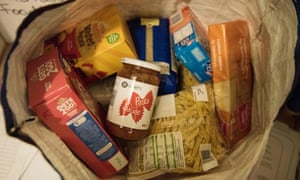
‘People confronting universal credit’s obstacles may join the half who find themselves propelled to local food banks.’ Photograph: Oli Scarff/AFP/Getty Images
Millions of people are about to discover something they didn’t know about British life. There is no longer a safety net. People who have paid tax and national insurance for years and never been near the social security system will be turning to it in their hour of need; yet far too late, like trapeze artists falling through the air, they will find that the net beneath them has been lowered dangerously close to the ground and is badly torn.
If these people once believed relentlessly misleading tabloid tales of benefit scroungers, they will have a rude awakening. They will find that when Iain Duncan Smith turned the screw on social security in 2012, he was right to warn claimants: “This is not an easy life any more, chum.” As if it ever was.
The chancellor, Rishi Sunak, has done well to honour 80% of wages for those “furloughed” from shut-down businesses – up to £2,500 a month. No one knows how many that covers and at what cost, but it was a macroeconomic necessity. One worry is the incapacity of the HMRC workforce, with 15,600 staff cut and 157 local offices with local knowledge closed: can they pay the wage subsidy to companies in time to save them? Many firms could still close, sending millions into unemployment.
The 15% self-employed are urgently seeking a matching plan, with the Treasury under intense pressure for a rapid response. Most of the self-employed are low-paid: their median income is just £10,000, according to Paul Johnson of the Institute for Fiscal Studies. Some won’t qualify, if they have earning partners. But many will have been forced into sham “self-employment” by tax-cheating companies. They will be desperate – and angry. The Resolution Foundation wants them paid 80% of average earnings over the past three years – or they will work through illness, rather than starve on £94 a week sickness benefit, says the RSA Populus poll.
Let’s hope that injustice is fixed. But even then, watch the shock as millions fall on the untender mercies of the Department for Work and Pensions, to discover what happened to benefits in the past decade. While never over-generous, by 2010 Labour had greatly lifted living standards for low earners, especially for children: Gordon Brown’s tax credits raised a million children and a million pensioners out of poverty. Since 2010, according to new research by Kerris Cooper and John Hills, a professor at the London School of Economics, children have lost a quarter of the support they had; chancellor George Osborne and his successors took out a staggering nearly £40bn from benefits. Never “all in this together”, Osborne justified it by raining down abuse on low-paid families. The hypocrisy: as the current editor of the London Evening Standard, he ran Christmas collections for poor families! The Resolution Foundation predicts a third of children falling into poverty by 2023.
Some cuts were secretive, uprating benefits by a meaner CPI not RPI inflation rate, a four-year freeze, and axing council tax support. Some made a noise – such as the bedroom tax, costing some families £14 week for a spare room. An early case was a Hartlepool family whose empty room belonged to their recently deceased 10-year-old. Housing benefit for renters was cut brutally. Introducing the two-child limit was exceptionally unjust.
New claimants confronting universal credit’s obstacles may join the half who find themselves propelled to food banks. Many new arrivals will join the 60% of claimants falling into debt and rent arrears while waiting at least five weeks for first payments. As with HMRC, a stripped-down DWP workforce is at risk of being overwhelmed. Some talking to the Treasury are shocked to find its staff clueless about the meanness of a benefits system they have cut and cut again. That explains Sunak’s sudden extra £20 a week and slight easing of housing benefit: they had no idea.
Torsten Bell, head of the Resolution Foundation, says people on £50,000 salaries have been anxiously asking him about benefits rates. They’re in for a shock, he says. Unlike the previous tax credit system, universal credit only allows savings of £6,000 (it takes steep deductions from savings up to £16,000). People hoping this is only temporary will be distraught at having to use up their rainy-day funds, often saved for years for a deposit on a home. The foundation is lobbying urgently to have this savings means-test dropped.
Hills says a couple with two children will get £266 a week. And take from that £115 – the average amount that housing benefit falls short of rental payments. Many new claimants will run up rent arrears. Expect them to plunge immediately into poverty, miles below the £384 minimum income standard for a family of four, says Hills.
Some singles will get a shock too. Under-35s will be living on £73, and only funded for a room in a shared flat, in the cheapest third of rentals in the area.
Many who see themselves as middle class will confront the reality of Britain’s nonexistent safety net. It is, says the IFS’s Paul Johnson, “extraordinarily low”. One piece of advice from all these experts I’ve talked to: apply immediately, to limit these delays and debts. “Too many will wait, borrow from family, deny it’s happening to them, feeling the stigma. Apply at once,” says Torsten Bell.
These millions discovering DWP brutality at first hand will no longer be deceived by the old poison shaming those on benefits as loafers, frauds and “not people like us”. Benefits offer penury, not a life of Riley. Rishi Sunak has been lavishly praised, not least for his empathic language: “We will be judged by our capacity for compassion”. But his compassion will be judged by how far he keeps benefit rates below the most basic poverty line.
Millions of people are about to discover something they didn’t know about British life. There is no longer a safety net. People who have paid tax and national insurance for years and never been near the social security system will be turning to it in their hour of need; yet far too late, like trapeze artists falling through the air, they will find that the net beneath them has been lowered dangerously close to the ground and is badly torn.
If these people once believed relentlessly misleading tabloid tales of benefit scroungers, they will have a rude awakening. They will find that when Iain Duncan Smith turned the screw on social security in 2012, he was right to warn claimants: “This is not an easy life any more, chum.” As if it ever was.
The chancellor, Rishi Sunak, has done well to honour 80% of wages for those “furloughed” from shut-down businesses – up to £2,500 a month. No one knows how many that covers and at what cost, but it was a macroeconomic necessity. One worry is the incapacity of the HMRC workforce, with 15,600 staff cut and 157 local offices with local knowledge closed: can they pay the wage subsidy to companies in time to save them? Many firms could still close, sending millions into unemployment.
The 15% self-employed are urgently seeking a matching plan, with the Treasury under intense pressure for a rapid response. Most of the self-employed are low-paid: their median income is just £10,000, according to Paul Johnson of the Institute for Fiscal Studies. Some won’t qualify, if they have earning partners. But many will have been forced into sham “self-employment” by tax-cheating companies. They will be desperate – and angry. The Resolution Foundation wants them paid 80% of average earnings over the past three years – or they will work through illness, rather than starve on £94 a week sickness benefit, says the RSA Populus poll.
Let’s hope that injustice is fixed. But even then, watch the shock as millions fall on the untender mercies of the Department for Work and Pensions, to discover what happened to benefits in the past decade. While never over-generous, by 2010 Labour had greatly lifted living standards for low earners, especially for children: Gordon Brown’s tax credits raised a million children and a million pensioners out of poverty. Since 2010, according to new research by Kerris Cooper and John Hills, a professor at the London School of Economics, children have lost a quarter of the support they had; chancellor George Osborne and his successors took out a staggering nearly £40bn from benefits. Never “all in this together”, Osborne justified it by raining down abuse on low-paid families. The hypocrisy: as the current editor of the London Evening Standard, he ran Christmas collections for poor families! The Resolution Foundation predicts a third of children falling into poverty by 2023.
Some cuts were secretive, uprating benefits by a meaner CPI not RPI inflation rate, a four-year freeze, and axing council tax support. Some made a noise – such as the bedroom tax, costing some families £14 week for a spare room. An early case was a Hartlepool family whose empty room belonged to their recently deceased 10-year-old. Housing benefit for renters was cut brutally. Introducing the two-child limit was exceptionally unjust.
New claimants confronting universal credit’s obstacles may join the half who find themselves propelled to food banks. Many new arrivals will join the 60% of claimants falling into debt and rent arrears while waiting at least five weeks for first payments. As with HMRC, a stripped-down DWP workforce is at risk of being overwhelmed. Some talking to the Treasury are shocked to find its staff clueless about the meanness of a benefits system they have cut and cut again. That explains Sunak’s sudden extra £20 a week and slight easing of housing benefit: they had no idea.
Torsten Bell, head of the Resolution Foundation, says people on £50,000 salaries have been anxiously asking him about benefits rates. They’re in for a shock, he says. Unlike the previous tax credit system, universal credit only allows savings of £6,000 (it takes steep deductions from savings up to £16,000). People hoping this is only temporary will be distraught at having to use up their rainy-day funds, often saved for years for a deposit on a home. The foundation is lobbying urgently to have this savings means-test dropped.
Hills says a couple with two children will get £266 a week. And take from that £115 – the average amount that housing benefit falls short of rental payments. Many new claimants will run up rent arrears. Expect them to plunge immediately into poverty, miles below the £384 minimum income standard for a family of four, says Hills.
Some singles will get a shock too. Under-35s will be living on £73, and only funded for a room in a shared flat, in the cheapest third of rentals in the area.
Many who see themselves as middle class will confront the reality of Britain’s nonexistent safety net. It is, says the IFS’s Paul Johnson, “extraordinarily low”. One piece of advice from all these experts I’ve talked to: apply immediately, to limit these delays and debts. “Too many will wait, borrow from family, deny it’s happening to them, feeling the stigma. Apply at once,” says Torsten Bell.
These millions discovering DWP brutality at first hand will no longer be deceived by the old poison shaming those on benefits as loafers, frauds and “not people like us”. Benefits offer penury, not a life of Riley. Rishi Sunak has been lavishly praised, not least for his empathic language: “We will be judged by our capacity for compassion”. But his compassion will be judged by how far he keeps benefit rates below the most basic poverty line.
Monday, 23 March 2020
This virus is ravaging rich countries. What happens when it hits the poor ones?
Horror over the west’s failure to contain Covid-19 will pale by comparison if it sweeps the developing world asks Nesrine Malik in The Guardian
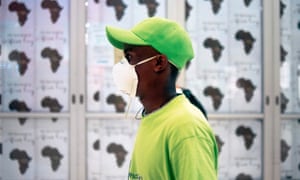
‘The ebola epidemic of 2014 is still fresh in the mind in sub-Saharan African countries.’ A man wears a mask while shopping in Johannesburg. Photograph: Luca Sola/AFP via Getty Images
Though Africa has fewer coronavirus cases and a slower rate of infection than the UK, many countries in the continent have passed dramatically more extreme measures to prevent its spread than Britain has. In my birth country of Sudan, after only one case and one death was registered, all schools and universities were shut down. Several other nations, such as Egypt, have taken the ultimate precaution and closed their airports.
There is no denial here, no mixed messaging, and no unfounded promise of how soon we will send the virus packing.
The tough and timely action is borne less out of political maturity than it is bitter experience, and an awareness that already overburdened public healthcare systems cannot sustain an onslaught. The ebola epidemic of 2014 is still fresh in the mind in sub-Saharan African countries; it was an experience that showed prevention and containment are the only hope of fending off thousands of deaths.
If we are concerned about the failure to contain the virus in western Europe and the US, multiples of that horror await in the developing world. With few means of medical intervention, and several other risk factors such as malnutrition, high population densities, communal living and lack of access to water and washing facilities, the rates of mortality could dwarf what has been seen so far in the west. And economically, the virus risks ushering in an ice age. There are no war chests, no stimulus packages, no insurance payouts.
There is little data about the impact in Africa of previous pandemics such as the 1918-19 Spanish flu (except from South Africa where, because of troop movements, 6% of the population perished). But we do have the experience of economically similar south Asian countries to go by. It is estimated that up to 30% of the entire fatal toll of the Spanish flu came from a single country, India. And in Africa it appears that the countries that suffered the highest casualties were those most exposed to global flows of people and capital – the ports or thoroughfares for troops on the move, and for sea and land labour.
There is something painfully predictable about how coronavirus was introduced to the continent. Well-off travellers to the rest of the world returned from holidays and business trips carrying the virus, as did infected tourists. In Egypt, the first cases of Covid-19 appear to be linked to one cruise ship, where locals who served the tourists contracted the disease.
The spread of the virus on the continent sits in the crosscurrents of travel and financial flows that expose African countries to the sharp end of globalisation – one where the flow of people is encouraged into the continent for business and tourism, and severely restricted out of the continent even for the wealthy and well connected.
It is the recurring theme of how the pandemic has played out so far. The poor, the uninsured, the disenfranchised, the information-poor and the less mobile are sitting ducks. Many western economies, including the US and the UK, have slowly pushed these people to the margins, while restricting employment benefits such as holiday pay, sick leave, and private insurance to an increasingly exclusive class. One of the reasons the British and US governments have been so slow to provide free testing, medical care and bailouts for those who’ve lost work is that these inequalities are now hardwired into the system. They cannot be undone overnight even when lives depend on it.
The global economy is set up in much the same way, with winners who hoard the spoils, and losers who scratch around for the leftovers. If wealthy single countries cannot scramble to save their own people, there is no hope for any effort to extend help to countries with a fraction of the resources.
But here is the tragic catch for those who think that this structural imbalance is not our problem. In this instance, national and international inequalities cannot persist without everyone losing. The realisation is just beginning to dawn upon lawmakers that the rich cannot be barricaded against the poor, no matter how high the barriers to the fortress are. Limiting the spread of the virus entails ensuring that everyone in the pool, be it local or global, is given the ability to test, self-isolate if need be, and receive treatment.
Yes, to some extent this is a utopian aspiration. But it is also essentially pragmatic. We cannot extol the virtues of small government and global societies without grasping that the risk to the majority cannot be halted from spreading: viruses do not distinguish between classes and nationalities.
Just as work and public life cannot be shuttered for ever, borders cannot be closed indefinitely. African countries are moving fast against coronavirus, well aware that they are on their own. But barring a miracle, or a pandemic Marshall plan by wealthier countries, if the virus explodes in poorer countries, the cataclysm will engulf everyone.
Though Africa has fewer coronavirus cases and a slower rate of infection than the UK, many countries in the continent have passed dramatically more extreme measures to prevent its spread than Britain has. In my birth country of Sudan, after only one case and one death was registered, all schools and universities were shut down. Several other nations, such as Egypt, have taken the ultimate precaution and closed their airports.
There is no denial here, no mixed messaging, and no unfounded promise of how soon we will send the virus packing.
The tough and timely action is borne less out of political maturity than it is bitter experience, and an awareness that already overburdened public healthcare systems cannot sustain an onslaught. The ebola epidemic of 2014 is still fresh in the mind in sub-Saharan African countries; it was an experience that showed prevention and containment are the only hope of fending off thousands of deaths.
If we are concerned about the failure to contain the virus in western Europe and the US, multiples of that horror await in the developing world. With few means of medical intervention, and several other risk factors such as malnutrition, high population densities, communal living and lack of access to water and washing facilities, the rates of mortality could dwarf what has been seen so far in the west. And economically, the virus risks ushering in an ice age. There are no war chests, no stimulus packages, no insurance payouts.
There is little data about the impact in Africa of previous pandemics such as the 1918-19 Spanish flu (except from South Africa where, because of troop movements, 6% of the population perished). But we do have the experience of economically similar south Asian countries to go by. It is estimated that up to 30% of the entire fatal toll of the Spanish flu came from a single country, India. And in Africa it appears that the countries that suffered the highest casualties were those most exposed to global flows of people and capital – the ports or thoroughfares for troops on the move, and for sea and land labour.
There is something painfully predictable about how coronavirus was introduced to the continent. Well-off travellers to the rest of the world returned from holidays and business trips carrying the virus, as did infected tourists. In Egypt, the first cases of Covid-19 appear to be linked to one cruise ship, where locals who served the tourists contracted the disease.
The spread of the virus on the continent sits in the crosscurrents of travel and financial flows that expose African countries to the sharp end of globalisation – one where the flow of people is encouraged into the continent for business and tourism, and severely restricted out of the continent even for the wealthy and well connected.
It is the recurring theme of how the pandemic has played out so far. The poor, the uninsured, the disenfranchised, the information-poor and the less mobile are sitting ducks. Many western economies, including the US and the UK, have slowly pushed these people to the margins, while restricting employment benefits such as holiday pay, sick leave, and private insurance to an increasingly exclusive class. One of the reasons the British and US governments have been so slow to provide free testing, medical care and bailouts for those who’ve lost work is that these inequalities are now hardwired into the system. They cannot be undone overnight even when lives depend on it.
The global economy is set up in much the same way, with winners who hoard the spoils, and losers who scratch around for the leftovers. If wealthy single countries cannot scramble to save their own people, there is no hope for any effort to extend help to countries with a fraction of the resources.
But here is the tragic catch for those who think that this structural imbalance is not our problem. In this instance, national and international inequalities cannot persist without everyone losing. The realisation is just beginning to dawn upon lawmakers that the rich cannot be barricaded against the poor, no matter how high the barriers to the fortress are. Limiting the spread of the virus entails ensuring that everyone in the pool, be it local or global, is given the ability to test, self-isolate if need be, and receive treatment.
Yes, to some extent this is a utopian aspiration. But it is also essentially pragmatic. We cannot extol the virtues of small government and global societies without grasping that the risk to the majority cannot be halted from spreading: viruses do not distinguish between classes and nationalities.
Just as work and public life cannot be shuttered for ever, borders cannot be closed indefinitely. African countries are moving fast against coronavirus, well aware that they are on their own. But barring a miracle, or a pandemic Marshall plan by wealthier countries, if the virus explodes in poorer countries, the cataclysm will engulf everyone.
Sunday, 22 March 2020
Wartime finance fit for wartime economic conditions. Sunak as British Prime Minister?
Rishi Sunak’s coronavirus rescue package is crucial for a collapsing economy. Social partnership is back writes Will Hutton in The Guardian
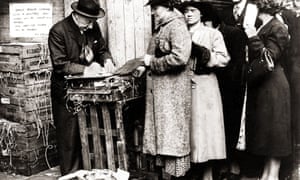
Food queues at Covent Garden market in London during the Second World War. Photograph: Trinity Mirror/Mirrorpix/Alamy Stock Photo
Last week, the British economic and financial system came very close to breakdown. An extraordinary number of companies were, and are, in acute financial distress, threatening mass lay-offs and the cessation of swathes of economic activity. There was an almost complete collapse in investor confidence, with attempts to sell every financial asset – even high-quality government bonds – in a desperate quest to hold cash. Such was the loss of generalised faith in the integrity of the system that the governor of the Bank of England, Andrew Bailey, came close to shutting the financial markets.
The scale of the incredible drama – much more acute than the financial crisis of September 2008 and still unfolding – only commanded half our attention. Most eyes understandably were focused on the march of the coronavirus and the missteps and miscommunications of a prime minister unsuited for the leadership demands of high office.
The confusion and growing public panic at the uncertain response was amplified manyfold in the financial markets, matched by fear and uncertainty in the real economy that produces the goods and services we want and need. The Treasury and the Bank of England stared into an abyss. Thankfully their officials, derided by the cabal of second-rate ideologue advisers at Number 10, were up to the task.
Here Boris Johnson – and the country – got lucky. The Conservative party, broken by the triumph of anti-EU ideology and the wilful disregard for fact that is the hallmark of the Brexiter mindset, now offers the weakest talent pool in its long history. But the chancellor, Rishi Sunak, is an unexpected outlier. Officials report that he is proving highly intelligent, economically literate, agile and with acutely sensitive political antennae. Thus the unprecedented interventions last week – with much more to come in the weeks ahead.
Even as I write, the Treasury and the Bank are in urgent talks to organise bailout packages for a number of top companies (including, but not only, airlines), sometimes taking government share stakes along the lines of the bailout of RBS in 2008.
But it was only last Monday that the government genuinely thought that if it stood behind business with a massive programme of soft loans, with grants for hard-hit sectors, it might escape without having to go much further. It did not need to sully its hands with un-Tory propositions – underwriting worker incomes together with improved benefits for those thrown out of work.
However, the crisis of confidence in the financial markets and intense lobbying by the CBI and the TUC soon changed minds, none faster than the initially sceptical Sunak. After all, business cannot prosper without buyers for its products: the good health and predictable incomes of the working population are vital. The last vestiges of Thatcherite individualism are being torched. Social partnership is back with a vengeance
Meanwhile, the top echelons of the Bank of England witnessed the consequences of the outbreak as mounting panic in global trading hit British markets badly, all magnified by Johnson’s bumbles. The sterling crisis expected with a no-deal Brexit was brought forward: a currency dependent on the “kindness of strangers”, given the scale of Britain’s monumental international balance of payments deficit, was in near freefall. There had to be a twin response: a fiscal one that “would blow the bloody wall down” and a shock-and-awe monetary intervention to try to steady shattered bond markets.
The Bank moved first, committing to a £200bn programme of printing money to buy bonds (quantitative easing) and cutting interest rates to a symbolic 0.1%. For the moment, the markets have steadied. Then came Sunak’s measures, the centrepiece of which was the commitment to pay 80% of the wages (up to £2,500 a month) of workers threatened by lay-off. He also ratcheted up support for renters and those on universal credit.
Two million people working in the now shut hospitality sector will be immediately eligible, along with up to five million more as the economy contracts by at least one fifth in the months ahead, with the expected package for the self-employed adding yet more. At its peak, the cost per month will exceed £25bn and the scheme will plainly need extending. The budget deficit in 2020-21 will comfortably exceed £200bn, to be financed, if necessary, by the Bank of England printing money. There are no other options. One privy to the policy told me that even at the last they were unsure whether Sunak “had the balls”. He did. It is what had to be done – and is being reproduced across Europe and North America.
It is wartime finance for wartime economic conditions. Over and above the multiple bailout packages currently being negotiated will come state direction and manufacture of vaccines, key medical products, respirators, and the takeover of private hospitals. Key workers – in the NHS, police, transport and food supply chain – will have to be marshalled in their millions and their wellbeing and health protected. Rationing of key foodstuffs will need to be imposed. The only way to head off a full-scale collapse of sterling and protracted economic depression will be to defer Brexit for at least a year or, as one source told me, five years. Government communications will have to be infinitely more sure-footed. The government itself has to be 100% trusted.
The open question is whether Johnson’s government, with its “frighteningly weak” core at Number 10, as one insider reported to me, can do what is necessary. If not there will, as in wartime, have to be a national government (headed by Sunak with Keir Starmer as his deputy). Johnson is too divisive a figure, too thin-skinned, too unserious in his messaging and with too divisive a history, to lead.
Sunak and Starmer offer competence and humanity above ideology. Whether through the deferral of Brexit or smart and well-thought-through state direction of the economy, they will do what is needed to get us through. In the meantime, take social distancing seriously. Be one of those who put society and social obligations first. And stay safe.
Last week, the British economic and financial system came very close to breakdown. An extraordinary number of companies were, and are, in acute financial distress, threatening mass lay-offs and the cessation of swathes of economic activity. There was an almost complete collapse in investor confidence, with attempts to sell every financial asset – even high-quality government bonds – in a desperate quest to hold cash. Such was the loss of generalised faith in the integrity of the system that the governor of the Bank of England, Andrew Bailey, came close to shutting the financial markets.
The scale of the incredible drama – much more acute than the financial crisis of September 2008 and still unfolding – only commanded half our attention. Most eyes understandably were focused on the march of the coronavirus and the missteps and miscommunications of a prime minister unsuited for the leadership demands of high office.
The confusion and growing public panic at the uncertain response was amplified manyfold in the financial markets, matched by fear and uncertainty in the real economy that produces the goods and services we want and need. The Treasury and the Bank of England stared into an abyss. Thankfully their officials, derided by the cabal of second-rate ideologue advisers at Number 10, were up to the task.
Here Boris Johnson – and the country – got lucky. The Conservative party, broken by the triumph of anti-EU ideology and the wilful disregard for fact that is the hallmark of the Brexiter mindset, now offers the weakest talent pool in its long history. But the chancellor, Rishi Sunak, is an unexpected outlier. Officials report that he is proving highly intelligent, economically literate, agile and with acutely sensitive political antennae. Thus the unprecedented interventions last week – with much more to come in the weeks ahead.
Even as I write, the Treasury and the Bank are in urgent talks to organise bailout packages for a number of top companies (including, but not only, airlines), sometimes taking government share stakes along the lines of the bailout of RBS in 2008.
But it was only last Monday that the government genuinely thought that if it stood behind business with a massive programme of soft loans, with grants for hard-hit sectors, it might escape without having to go much further. It did not need to sully its hands with un-Tory propositions – underwriting worker incomes together with improved benefits for those thrown out of work.
However, the crisis of confidence in the financial markets and intense lobbying by the CBI and the TUC soon changed minds, none faster than the initially sceptical Sunak. After all, business cannot prosper without buyers for its products: the good health and predictable incomes of the working population are vital. The last vestiges of Thatcherite individualism are being torched. Social partnership is back with a vengeance
Meanwhile, the top echelons of the Bank of England witnessed the consequences of the outbreak as mounting panic in global trading hit British markets badly, all magnified by Johnson’s bumbles. The sterling crisis expected with a no-deal Brexit was brought forward: a currency dependent on the “kindness of strangers”, given the scale of Britain’s monumental international balance of payments deficit, was in near freefall. There had to be a twin response: a fiscal one that “would blow the bloody wall down” and a shock-and-awe monetary intervention to try to steady shattered bond markets.
The Bank moved first, committing to a £200bn programme of printing money to buy bonds (quantitative easing) and cutting interest rates to a symbolic 0.1%. For the moment, the markets have steadied. Then came Sunak’s measures, the centrepiece of which was the commitment to pay 80% of the wages (up to £2,500 a month) of workers threatened by lay-off. He also ratcheted up support for renters and those on universal credit.
Two million people working in the now shut hospitality sector will be immediately eligible, along with up to five million more as the economy contracts by at least one fifth in the months ahead, with the expected package for the self-employed adding yet more. At its peak, the cost per month will exceed £25bn and the scheme will plainly need extending. The budget deficit in 2020-21 will comfortably exceed £200bn, to be financed, if necessary, by the Bank of England printing money. There are no other options. One privy to the policy told me that even at the last they were unsure whether Sunak “had the balls”. He did. It is what had to be done – and is being reproduced across Europe and North America.
It is wartime finance for wartime economic conditions. Over and above the multiple bailout packages currently being negotiated will come state direction and manufacture of vaccines, key medical products, respirators, and the takeover of private hospitals. Key workers – in the NHS, police, transport and food supply chain – will have to be marshalled in their millions and their wellbeing and health protected. Rationing of key foodstuffs will need to be imposed. The only way to head off a full-scale collapse of sterling and protracted economic depression will be to defer Brexit for at least a year or, as one source told me, five years. Government communications will have to be infinitely more sure-footed. The government itself has to be 100% trusted.
The open question is whether Johnson’s government, with its “frighteningly weak” core at Number 10, as one insider reported to me, can do what is necessary. If not there will, as in wartime, have to be a national government (headed by Sunak with Keir Starmer as his deputy). Johnson is too divisive a figure, too thin-skinned, too unserious in his messaging and with too divisive a history, to lead.
Sunak and Starmer offer competence and humanity above ideology. Whether through the deferral of Brexit or smart and well-thought-through state direction of the economy, they will do what is needed to get us through. In the meantime, take social distancing seriously. Be one of those who put society and social obligations first. And stay safe.
Subscribe to:
Comments (Atom)