Search This Blog

Saturday, 11 November 2017

The magic money tree does exist, according to modern monetary theory

Youssef El-Gingihy in The Independent


After seven years of austerity, we are accustomed to thinking of the economy as a household with the nation’s credit card maxed out, to paraphrase David Cameron. The fetishisation of debt translated into massive cuts to UK spending on public services. At the same time, there remains widespread public anger that the big banks continued to make record profits and bonuses in spite of George Osborne’s assurances that we would all be in it together.

That was then though. Both Cameron and Osborne have since departed. This year, the political climate turned on its axis. The Conservative majority of 2015 gave way to a hung parliament with 40 per cent of voters opting for Corbyn’s Labour. The electorate’s acceptance of austerity mantras had evidently reached its limit.

Against this backdrop, the publication of Reclaiming the State: A Progressive Vision of Sovereignty for a Post-Neoliberal Worldcould not be more timely. It is written by 65-year-old Australian heterodox economist William Mitchell and the journalist and author Thomas Fazi. The book’s introduction is topically titled “Make the Left Great Again”; a sentiment that will no doubt chime with many progressives.

It diagnoses that neoliberalism was not just a right-wing Thatcherite-Reaganite prospectus. The centre-left, as embodied by Mitterrand’s socialists in France, Blair’s New Labour and the Democratic Party in the US, was complicit in its imposition. This consensus culminated in the decimation of manufacturing, decline of union membership, the expansion of financial services, wage flattening, falling living standards and the privatisation of public services. At the heart of neoliberalism was the assertion that the free market is the supreme arbiter with the economy managed by technocratic expertise. The flip side of this depoliticisation resulted in ordinary people becoming alienated and disillusioned with the social democratic parties that formerly represented them. Instead they turned to anti-establishment (usually hard right) parties.
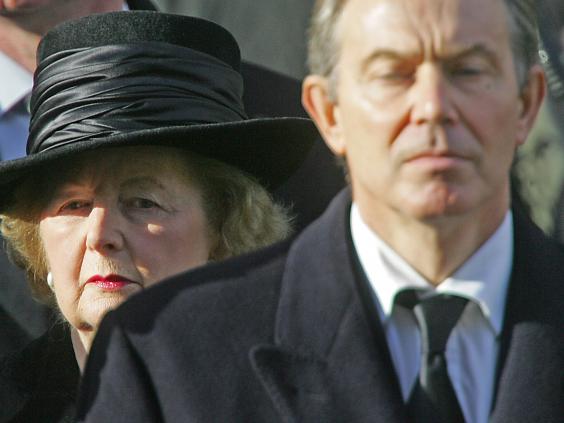


Margaret Thatcher and Tony Blair both knelt at the altar of neoliberalism (AFP/Getty)

Furthermore, Mitchell and Fazi point out that the notion that neoliberalism is anti-state is a misconception. In fact, the state has been essential to the neoliberal project as became evident in the aftermath of the 2008 financial crisis. The state is not only required to bail out corporations and banks but to create new markets and in an authoritarian mould to police its citizens. However, Mitchell and Fazi intend to reclaim national sovereignty as part of a 21st century progressive vision. This is where modern monetary theory (MMT) comes in.

Bill Mitchell is one of its key proponents. MMT is one of those Alice in Wonderland, down the wormhole kind of concepts that neutralises every received wisdom – from that childhood conversation when your father sat you down to explain banks using saving deposits to invest in other businesses right up to politicians telling us that the UK is broke. In other words, prepare to be blown away and forget what you think you knew about money.

MMT essentially proposes that money is created ex nihilo or out of nothing. Whether it is private banks, central banks or governments, money is an abstract concept of ones and zeros. Thus, when your bank lends you a mortgage, it essentially creates money by typing it up on a computer. Similarly, the government has the power to create “fiat money” – that is money established by government regulation or law as opposed to currencies with intrinsic value, such as gold.

In effect, the usual dictum of “tax and spend” is inverted to “spend and tax” with spending stimulating jobs and growth, which can later be taxed. Taxation is not therefore a way of raising revenue but a tool for either controlling the money supply or shaping policy through incentives. Of course, it is much more complicated than that as certain conditions must be met. Public spending cannot be unlimited and must be commensurate to the capacity of the economy amongst other things in order to avoid hyper-inflation.



Ecomomist William Mitchell argues that the notion that neoliberalism is anti-state is a misconception

Both authors have been on a global book tour taking in the US and Europe. In London, Mitchell and Fazi gave their talk at the Newington Green Unitarian Church – one of Britain’s oldest nonconformist churches. Mary Wollstonecraft was the most famous member of its congregation and was inspired by the sermons of the radical minister Dr Richard Price in her thinking on the new French republic and the rights of women.

The setting is certainly suitable for the preaching of a heretical doctrine. In fact, I am reminded that it is the 500th anniversary of Martin Luther pinning his 95 theses to the door of a Wittgenstein church. The parallels are hard to overlook; then as now Europe was in crisis with Britain exiting the established order.

Huddled on a church pew for the interview, I ask Mitchell what exactly is MMT? He answers that it is “a lens through which we can understand the monetary system”. Remarkably, the elemental question – where does money come from? – does not have a settled answer amongst economists, experts and policy makers. Organisations such as Positive Money have already embarked on the process of demystifying money creation. I am reminded of the chapter “The Great Money Trick” in Robert Tressell’s The Ragged-Trousered Philanthropists in which loaves of bread are used to illustrate how the concept of money and surplus value (profit) guarantees perpetual penury for the working class and concentration of wealth for the ruling class.

So how might all of this play out post-Brexit? Mitchell and Fazi seem to be making the progressive argument for Brexit (nicknamed Lexit). This is in keeping with the old-left position that the EU does not represent genuine international solidarity. They acknowledge that it is difficult to make progressive arguments for sovereignty as nationalism has been condemned to a default reactionary position.
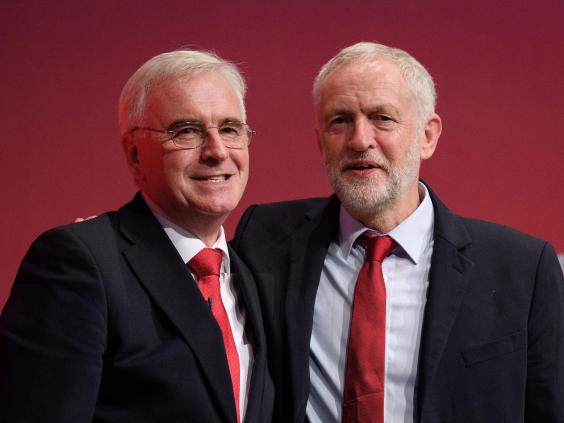


John McDonnell and Jeremy Corbyn have pledged to take private finance initiative contracts back into public hands, but how would financing of infrastructure work under a Corbyn government? (Getty)

Yet polling demonstrates that sovereignty was the most common reason for people voting Brexit. Mitchell and Fazi reformulate a progressive definition of sovereignty as having democratic control over the economy rather than simply within ethno-nationalist parameters. According to Mitchell, sovereignty is absolutely fundamental in order for countries to exercise power over their money creation. As long as a country has its own central bank and currency then it is free to spend. While Greece, bound by the constraints of the European Central Bank and the euro, does not have this freedom. After the talk, Mitchell tells me that sovereignty entails having a currency issuing monopoly: “The reality is that national governments are the monopoly issuers of their own currency.”

Mitchell also debunks the idea that governments borrow money from international markets and with it the notion that they are hostage to the market. He has recently written a blog on how Corbyn should not be afraid of global markets. Mitchell cites the 2001 Argentinian debt default as demonstrating that a country can get away with it and recover. Similarly, Iceland imposed capital controls (measures to regulate capital flows in and out of a country) in order to steer the economy through rough waters after its banking system crashed.

In the same vein, Mitchell proposes that governments do not use bonds and gilts to raise revenue. He cites a previous Australian Conservative administration issuing debt when they were running surpluses as an example of the use of bonds as corporate welfare thus “exposing the game”.

At the recent Labour conference, Shadow Chancellor John McDonnell stated that Labour would take private finance initiative (PFI) contracts back into public hands. So how would financing of infrastructure work under a Corbyn government? At the start of the year, this question might have appeared absurd yet only this month The New York Times published an op-ed piece titled “Get ready for Prime Minister Corbyn”.
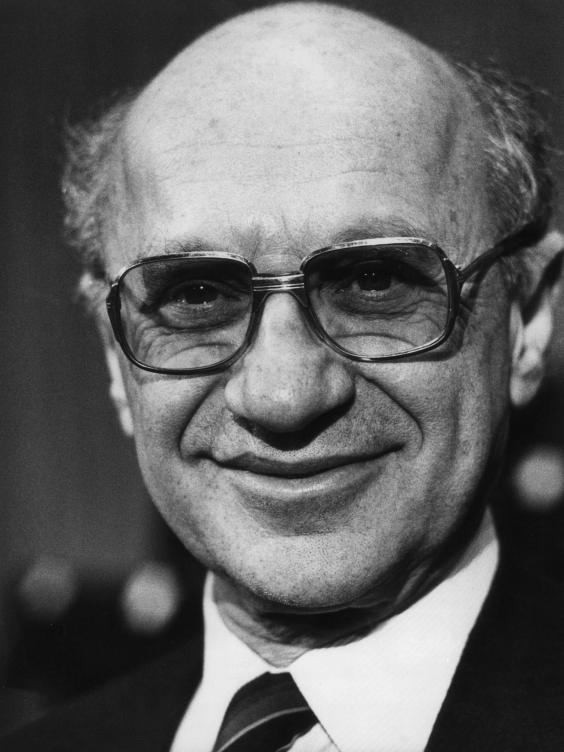


Milton Friedman said money supply must be controlled in order to limit inflation, so government debt must be prioritised

Here is where quantitative easing (QE) comes in. QE was intended to stimulate bank lending in the aftermath of the financial crisis. However, growth levels have remained stagnant in Britain and Europe. In reality, the banks simply said thank you for the free lunch and used QE to restore their balance sheets. Studies have shown that much of QE ended up contributing to stock market and property bubbles.

Economist Richard Murphy – whose work has focused on tax avoidance and the offshore world – proposed what came to be termed “people’s QE”. For a while, this was a central tenet of the Corbynomics programme. Murphy’s basic idea was that if QE could be used for the banking system, then why not use it to build new homes or create climate jobs? As long as sufficient value was created then the nemesis of hyper-inflation could be avoided.

It therefore appears that Theresa May’s oft-repeated refrain attacking Corbyn on the grounds that there is no such thing as a magic money tree is not exactly true. So if money can basically be created with the press of a button, then suddenly our world appears to be (pacePanglossian disciples) the craziest of all possible worlds.

At this point, you might understandably be asking why on earth we do not just spend our way out of the current mess. And while we are it – give the NHS more money, shelter the homeless and feed the poor of the world. This is where we come up against the ideological edifice of neoliberalism.

Monetarist doctrine states – as per the Chicago School’s Milton Friedman – that the money supply must be controlled in order to limit inflation. Thus, government debt must be prioritised. The Maastricht treaty, which founded the EU, stipulated limits on public spending. Greece is the textbook example of austerity in which debt repayments are prioritised in order to appease creditors (mainly banking institutions).
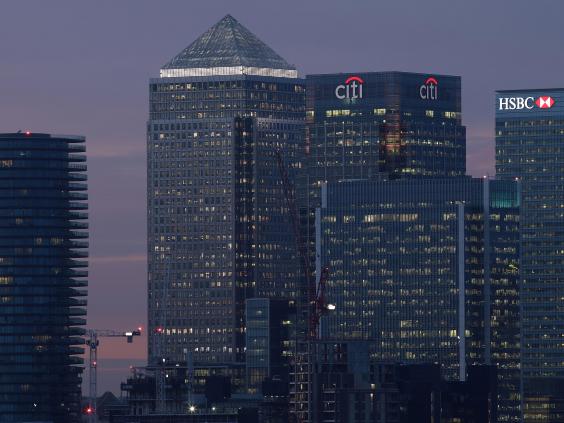


Banks used quantitative easing to restore their balance sheets (Getty)

However, even mainstream economists feel that the logic of austerity is somewhat fallacious. Keynesian economics posits that public spending stimulates growth with debt as a secondary consideration. As the New Economics Foundation think tank points out, Britain has historically seen much higher levels of public debt. The debt/GDP ratio was higher during a whole century between 1750 and 1850 (at the time of the Napoleonic wars and the height of Britain’s imperial glory) as well as in the aftermath of the Second World War when the welfare state was created.

While a landmark 2014 study demonstrated that the UK coalition government’s welfare changes enabled tax cuts for the wealthiest thus cancelling out any impact on the deficit. Former Greek finance minister Yanis Varoufakis has also argued that the austerity strategy applied to Greek debt has been extremely counterproductive. The combination of bailouts with cuts has depressed the economy resulting in an increase of the debt (as a percentage of GDP).

The ascendancy of neoliberalism was such that its ideology became an all-pervasive atmosphere. During the event, Mitchell asks how many in the audience have heard of the Powell memorandum. Only a couple of hands go up. Lewis Powell was an American lawyer – later appointed as a Supreme Court justice by Richard Nixon – now indelibly associated with his eponymous 1971 memorandum. This outlined a blueprint for the American conservative movement and the network of think tanks funded by business interests. It recommended that the business class should close ranks in order to present a united front. It also stipulated that lobbyists would be needed to influence policy makers and legislators. And it suggested that infiltration of the media and academia would be necessary in order to achieve the goals of unshackling free enterprise from government interference.

So what would happen if governments followed through on the logic of MMT? Well for a start the Goldman Sachs, JPMorgans and HSBCs of this world would not be as rich or powerful and in the worst-case scenario they might even cease to have any purpose. A recent comprehensive survey from the pro-market Legatum Institute confirms that significant majorities of the British public are in favour of renationalisation of utilities and railways. The public is equally split on nationalisation of the banks with 50 per cent in favour. Corbyn and McDonnell have proposed a national investment bank with a network of regional banks in order to help rebalance the economy and encourage lending.

Whether or not one accepts MMT, it is increasingly apparent that public and democratic oversight of finance and money is becoming a central pillar of progressive postcapitalism alongside public control of public services, a green economy, full automation and the four-day week.

Wednesday, 8 November 2017

Farook And The Art of Selectivity

Anand Ranganathan in News Laundry


You believe what you see, but unfortunately what you see is written by those who see what they believe.

A recent article by columnist Sadanand Dhume is proof if ever it was needed, that Objectivity is a metallic object that must be left behind before the writer passes through the op-ed threshold. All good now. Next!

Biases don’t beep.

The present article is not a rebuttal but, rather, an attempt to understand, using Dhume’s column, our fascination – both as writers and readers – with selectivity. To be sure, Dhume has written what needs to be read. He has highlighted the gross fraud perpetrated by the present Bharatiya Janata Party government, on freedom of speech, on the right to life, on the rule of law, and, to an exaggerated extent, on what all of us think India should be or become.

So where has he erred? To put it simply, here: Dhume has hidden more than he has revealed. He has indulged in selectivity, an attribute none other than BR Ambedkar warned us of 75 years ago. Explaining why selectivity is damaging, he wrote:

"The social evils which characterize the Hindu Society, have been well known. The publication of 'Mother India' by Miss Mayo gave these evils the widest publicity. But while 'Mother India' served the purpose of exposing the evils and calling their authors at the bar of the world to answer for their sins, it created the unfortunate impression throughout the world that while the Hindus were grovelling in the mud of these social evils and were conservative, the Muslims in India were free from them, and as compared to the Hindus, were a progressive people. That, such an impression should prevail, is surprising to those who know the Muslim Society in India at close quarters."

Ambedkar detested the evil orthodoxy of the Hindu society, exposed the casteist and bigoted nature of many ancient Hindu texts, spoke authoritatively on Hinduism, brought to light its numerous ills, left its fold to become a Buddhist; and yet, here was the same man warning us of being selective against Hinduism and Hindu society. Such was his greatness and unshakable belief to 'Do the Right Thing'.

It is astonishing how prescient, and relevant, Ambedkar’s words are even today; not at all astonishing that we discard them with the chirpy tediousness of a CISF body-frisker. Subjectivity brings us eyeballs; Objectivity brings us calm and rational thinking. Precisely the reason why hunched-over emotional beings hunting for fist-sized stones to pelt prefer the former.

Dhume writes with the immediacy of a columnist who understands, like all good columnists do, that his writings would the day after be used to wrap kachoris by the neighbourhood halwai. He is what one would call a modern writer – aware, alert, and receptive to criticism; a social media animal who tries to learn from his trolls and critics, knowing well the worth of this engagement as a self-correcting measure. A Twitter handle laden with followers bends.

Occasionally, though, Dhume gives in to a closed set of arty dunderheads who stand in the middle of summer braving scalding loo to admire the coming of age of a frangipani in a TV studio carpark. These would be the seers who think the world sucks on their analysis and interpretation like an emaciated leech. They drench the newspaper centrespreads and seal the primetime debates at will. Their word makes no sense but it is final. Subjectivity and selectivity are their calling cards. Dhume's last column suggests he was in their company.

Dhume claims personal liberties are shrinking under the present government, coming to this generalised conclusion from his wholly justified condemnation of the religious zealots who go by the moniker, Gau Rakshaks. These criminals are seemingly running amok, doubtless comforted by an overseeing government that is, outwardly at least, non-violently fanatical about saving cows. The almost complete lack of law enforcement resulting from fear of political masters, coupled with the cushion the overseers provide through their obsession with saving the Gau, is precisely the deadly combination the extremists cherish and take comfort in. This author had written previously on their barbarity and criminality. Many other have, too.

The Gau Rakshak menace is not a recent phenomena but one that is increasingly in the news. That said, an objective reading is the need of the hour, especially when it comes to sweeping psychoanalysis.

While Dhume rightly criticises the BJP and the Rashtriya Swayamsevak Sangh for zealously promoting the idea of a cow-slaughter ban, he should have mentioned that in doing so, these organisations are only following the ardent views of none other than Mahatma Gandhi and Vinobha Bhave, who incidentally went on a fast unto death unless his call for a pan-India cow slaughter ban was acceded to. Dhume should also have mentioned that the ban on cow slaughter was first implemented, and rigorously imposed in most Indian states, by the Congress party, so much so that as recently as 2015 Harish Rawat, a sitting Congress Chief Minister of Uttarakhand thundered. “Anyone who kills cows, no matter which community he belongs to is India's biggest enemy and has no right to live in the country.”

That is correct. India's biggest enemy. Not Pakistan or China but a cow-slaughterer.

The fools of the BJP are following the fools of the Congress, only more stridently because this is what fools do. To miss this facet of our daily political drudgery is to give the impression that things are happening for the first time, that the phrase déjà vu is Martian gobbledygook and not something invented by earthlings.

Dhume then talks of a deeper malaise, suggesting that under the present government, personal liberties are shrinking. Again, while Dhume rightly criticises the BJP for contributing to this, what undoubtedly is a malaise, he is silent on the fact that most of our personal liberties have been shrunk already, and to the extent they don't fit our bloated bodies anymore.

Tellingly, much of the shrinking has been carried out by the Congress. One doesn't need to go as far back as Nehru, who jailed the famous poet Majrooh for composing a song lampooning him, and amended the Article 19 (1) to steal more of the freedom away from the speech; one only needs to look at Congress' recent history. From banning films to censoring them heavily, from banning books that offended dynasty sycophants, from bringingin the draconian 66A; from making it mandatory for people to stand up in cinema halls during the playing of the national anthem; from coming up with the aesthetically revolting idea of erecting world’s tallest flag-posts; from demanding an apology from the magazine that published the Danish cartoons – this from the Prime Minister of India, on the floor of the house; from staying silent when 8,000 activists were booked under the draconian sedition law by the Tamil Nadu police; from partaking in every possible chance our great democracy afforded to stifle free speech and expression; from ignoring every possible chance to repeal evil laws on sedition and free speech, the present government’s predecessors have been there, done that. The list of crimes and silences is endless. But Dhume doesn’t mention even a single intransigence. He fails to bemoan the fact that, far from providing liberties some breathing room, the Congress made things even more claustrophobic. Again, he is right in criticising the BJP, but he is wrong in giving his audience an impression that all this is happening for the first time, and that the BJP is responsible for it.

Dhume is not the first to have done this and he won’t be the last. In such a scenario, one may be entitled to ask: Are subjectivity and selectivity really all that harmful? Was Ambedkar wrong? What damage, after all, could selective outrage inflict on the reader and the running discourse?

Well, it can be devastating. Recall the early months of the Modi government and the media blitzkrieg over Church-attacks; the banner headlines screaming enough is enough, let Christians live in peace; the op-eds warning of creeping fascism and growing intolerance. What came of it? This, that three weeks of relentless boil and outrage later, the nation came to know that these attacks were nothing more than burglaries or accidents, that the perpetrators of the most heinous crime of sexual assault on a Bengal nun, one that quickly snowballedinto ‘Hindus are coming to get us, even the pious and the elderly won’t be spared’, were not Hindus; that as many churches were “attacked” under the UPA as they were under the present NDA.

We can outrage only on the news that we receive; and that which we don’t, it glides through the system unseen.

Under President Obama, during his first term in office, there occurred 1.1 million hate-crimes. 263,540 violent hate crimes were reported in 2012, just one year – 30 violent hate-crimes every hour. Of every day. 365 days. How many of these came to the reader’s notice? How many times was the Obama administration hauled over blazing coals for this? How many op-eds accused him of twiddling his thumbs while 30 minorities were attacked every hour of every day of every year?

Under Prime Minister Manmohan Singh, during his second term in office, there occurred 172,837 crimes against the Dalits. 2,073 rapes against Dalits were reported in 2013, just one year – a 31 per cent jump over the 2012 number. Five Dalit women were raped every single day in 2013.

The eye decides; the eye selects; the eye omits. Creeping fascism and growing intolerance become house lizards at will, scampering for cover under the shoe rack, leaving not even their writhing tails behind.

One may ask: why is it important to divulge previous occurrences – is that not Whataboutery? Why does a reader need to know that churches were also being “attacked” and robbed under the UPA, that 30 violent hate-crimes were happening every hour under Obama, that five Dalits were being sexually assaulted every day under Manmohan Singh? Why? Because outraging on any new occurrence with incomplete information is like fencing the adversary blind-folded; your every jab is in anger and desperation.

The solution to any problem is inextricably linked with its identification first as endemic or spontaneous. Rest is clickbait.

India is intolerant. Intolerant towards gays, towards Dalits, towards minorities (and majorities that become regional minorities), towards just and conscientious laws, towards free speech, towards freedom of expression. India has always been intolerant because we have laws, and Constitutional amendments, that protect Intolerance. The problem is endemic; it is not going to go away when the BJP goes away. But to realise this one has to forsake belief in one’s preferred ideology, preferred historians, preferred newspaper; preferred news channel; one has to forsake belief in selectivity. Easier said.

When it suits us, we become a nation of selective cacophony and silence.

The Left is silent when SFI goons go on a rampage; the Right is silent when ABVP goons indulge in the same. The Left is silent over one kind of bounty; the Right is silent over the other. The Left is silent when Muslims demand punishment for Kamlesh Tewari; The Right is silent when Hindus demand punishment for Prashant Bhushan. The Left is silent when a Muslim interprets Islam and his shop is burnt to the ground; the Right is silent when a film director interprets history and his set is burnt to the ground. The Left is silent when Yatra app is down-voted; the Right is silent when Snapdeal app is down-voted. The Left is silent when the communists rewrite our textbooks; the Right is silent when the nationalists rewrite our textbooks. The Left is silent when communists murder RSS workers; the Right is silent when RSS workers murder communists.

When it comes to selectivity, the Left and the Right are two sides of the same coin – emotional, impulsive, hypocritical, entrenched.

For the uninitiated, it takes some time to realise that this here is a game being played. The Great Indian Intolerance Chess Clock. Every single time there is intolerance that shames the Right, there follows intolerance that shames the Left. And vice versa. The Left outrages on one kind of intolerance, and the Right does the same for the opposite kind. The Left spots an atrocity that would shame the Right and slaps the intolerance chess clock; the Right spots an atrocity that would shame the Left and does the exact same after a while.

If I can shame you more than you can shame me, I believe that I can reduce my shame, disregard it even.

This constant jabbing at the other, while blind-folded, is what keeps the fire burning. Indian media discourse is this chalice runneth over with hundreds of stories that suit any one particular narrative. Take a sip, pass the cup along.

That selectivity can be immensely damaging to a nation's psyche is not quite apparent at first glance. This is because highlighting an atrocity devoid of its previous histories is in itself an important undertaking. To draw the reader's attention over any atrocity is essential in a democracy, to outrage over it equally so. No rational person can deny that even in isolation – i.e. devoid of previous history or knowledge an atrocity must be condemned and acted upon.

Why, then, did Ambedkar worry about selectivity? Why was he not satisfied with the selective outing of Hindu evils? It is because he was looking for solutions, and reforms – not just for one problem, not just for one community, but for the nation as a whole. He worried that conscientious Hindus shamed by their religion's evils would try and reform, but that conscientious Muslims not shamed by their religion's evils wouldn't. Reform is possible only when mistakes are identified, spoken of, written about, and the conscientious shamed. Shaming is good, shaming is essential, shaming is catharsis, but what good is shaming if it deepens further the chasms in our society, reforms only one community, is selective.

The writer Aatish Taseer has written an impassioned essay on the lynching of the Muslim Pehlu Khan at the hands of the Gau Rakshaks. It is an important read; it shames us as it should any conscientious Indian. Taseer talks of the murder of a Muslim at the hands of Hindu extremists; the outrage is real and affecting. At the end, Taseer holds India complicit in the murder: "...a whole nation, through its silence, is complicit," he writes.

If one has to hold the whole nation, including Taseer himself, complicit in the murder of a Muslim, why, then, would have asked Ambedkar, should that man not also be Farook, the Muslim lynched by Muslim extremists?

Farook, who, you ask. Farook, who, asks India. Farook, who, asks even Taseer.

Farook, a Muslim-turned-atheist, was lynched by Muslim extremists around the same time as Pehlu was by Hindu extremists. Pehlu is remembered, as he must be; but Farook is forgotten. Why? Why has Farook been forgotten? Is it because he was lynched by Muslims and not Hindus?

Who decides who is to be remembered and who forgotten? Who learns, who is shamed, who believes, who sees?

We do. Our selectivity does.

Holding India complicit for the murder of Pehlu will shame us into making sure such atrocities never happen again. But not holding India complicit for the murder of Farook, not shaming us for this atrocity, means that many more Farooks would meet the same fate. This, in summation, was what Ambedkar had warned us of.

But where is Objectivity; where do I find it?

Listen, Red. Far away there is an oak tree beneath whose tired, protruding roots is a biscuit tin containing a note that says, Don't just worship Ambedkar, follow him. Slither out that sewer pipe using your elbows and stand up on your legs and look up to face the heavens and let that rain wash away all the shit and the filth and give you the strength to find that tin. Find that tin, Red. It is your only hope.

Ambedkar on Islam: Ramachandra Guha, Arundhati Roy you have ignored these views.


Anand Ranganathan in News Laundry


From the Aryans to Aurangzeb, from St Xavier to Shivaji, our historians have chosen what to hide, what to invent, and what to disclose. The singular reason for this is the craving for patronage – of an ideology, a government, an ecosystem, or a clique. And once our historians are done with their contortions, we the readers sit back and enjoy the inevitable fallout – the outing of Hypocrisy.

The Left outs the hypocrisy of the Right and the Right outs the hypocrisy of the Left and great column-yards are churned out as a result of such skirmishes. But we forget – outing of hypocrisy is a virtue so long as it doesn’t turn one into a hypocrite. Well, it does; every single time. Villains are made into heroes and heroes into villains. We like it this way. Gandhi, Nehru, Savarkar, Patel – they are to be worshipped; they are to be made into Gods, into Atlases who carry the weight of our ideologies and our biases on the nape of their necks.

History as myth; myth as History. It conforms to what we really are – unsure of our present, fearful of our future. The Right wing doesn’t want to hear anything about Savarkar or Golwalkar that might put them in bad light; the Left-wing doesn’t want to hear anything about Nehru or Namboodiripad that might put them in bad light; and the Velcro Historians don’t want to write anything about anyone that might put them in solitary confinement, away from all light.

Fear and trembling, that is what this is, and the whole nation chugs along on this dead yet simmering coal. A journey to nowhere; slow, halting, tiring; until you realise what the grand plan always is – to appropriate. And of all the great men and women we have had the honour to call our own, no one has been more appropriated than Bhimrao Ramji Ambedkar.

Ambedkar. A hero for all, the Left and the Right – out of genuine admiration, out of genuine fear. This is to be expected, for here was a man like no other in modern world history, one who shone like a star with his intellect and understanding. The most un-Indian Indian. Wisdom so frightening and yet so rooted, that it appealed to all. Where he was allowed to, he never put a foot wrong. His writings have that rare quality of timelessness, and his quotes, if quoted anonymously, can be mistaken as comments on contemporary India. Ambedkar has aged well. In this, he stands alone, afar, above. But there is a side to Ambedkar that is not known, spoken, or written, out of fear by those who have appropriated him.

Ambedkar's criticism of Hinduism, as a religion, as a way of life – call it what you will, everyone is aware of. From his umpteen speeches and numerous scholarly works, we know Ambedkar as someone who fought and exposed the terrible ills of Hinduism, and we applaud him for it. That Ambedkar left Hinduism and converted to Buddhism is in itself a stinging appraisal of the former. Knowing him, nothing more needs to be said as a critique of Hinduism. Such is the trust one can put in the man.

What we don’t know, however, is what he thought of the other great religion of the world – Islam. Because this facet of Ambedkar has been hidden from our general discourse and textbooks, it may come as a surprise to most that Ambedkar thought frequently of Islam and spoke frequently on it. The cold and cruel India of the young Ambedkar, that shaped his views on Hinduism and Hindus – and of which this author has writtenpreviously – soon became the cold and cruel India of the old Ambedkar, allowing him, through a study of Islam and Muslims, to make sense of a nation hurtling towards a painful and bloody partition.

A distillate of Ambedkar's thoughts on Islam and Muslims can be found in Pakistan Or The Partition Of India, a collection of his writings and speeches, first published in 1940, with subsequent editions in 1945 and 1946. It is an astonishing book in its scope and acuity, and reading it one realises why no one talks of it, possessing as it does the potential to turn Ambedkar into an Islamophobic bigot for his worshippers on the Left.

Here, then, is Ambedkar on Islam:

"Hinduism is said to divide people and in contrast Islam is said to bind people together. This is only a half-truth. For Islam divides as inexorably as it binds. Islam is a close corporation and the distinction that it makes between Muslims and non-Muslims is a very real, very positive and very alienating distinction. The brotherhood of Islam is not the universal brotherhood of man. It is brotherhood of Muslims for Muslims only. There is a fraternity, but its benefit is confined to those within that corporation. For those who are outside the corporation, there is nothing but contempt and enmity. The second defect of Islam is that it is a system of social self-government and is incompatible with local self-government, because the allegiance of a Muslim does not rest on his domicile in the country which is his but on the faith to which he belongs. To the Muslim ibi bene ibi patria [Where it is well with me, there is my country] is unthinkable. Wherever there is the rule of Islam, there is his own country. In other words, Islam can never allow a true Muslim to adopt India as his motherland and regard a Hindu as his kith and kin."

This scathing indictment by Ambedkar of Islam never finds a mention in our history books. (Indeed, even in Ambedkar.org, a primary resource site for Ambedkar, the chapter that contains this explosive passage is hyperlinked and, unlike other preceding chapters, not easily visible as a continuation under the sub-heading Part IV. The idea is to skip it, not click it.

But then this is India – a Hero must not be perceived as a Villain even though the misperception is entirely of our making. Well, we know better; he didn’t mean to say those things about Islam; perhaps he was misguided; let us look at the context; damn, no, that's not of any help here; tell you what, let us gag him; for the greater good; for communal harmony; for the sake of IPC Section 295A and our peaceful future.

Selective reading of Ambedkar, by which it is meant reading only his damning (and entirely justified) criticism of Hinduism, has led to a prevalent view that only Hinduism is laden with cultural and religious ills. One can see this even today, when the Left and its ideologues point selectively to the social and religious evils pertaining to Hinduism. As a result, someone who isn’t well-versed with India may get the impression that it is only Hinduism and Hindus who are to blame for every ill and intolerance that plagues us. The reality, of course, is that social and religious intolerance runs in our veins, it always has and it always will, for none other than the holy scriptures of all religions have mainstreamed it. It is Ambedkar himself who, presciently and fiercely, points to this hypocrisy.

"The social evils which characterize the Hindu Society, have been well known. The publication of 'Mother India' by Miss Mayo gave these evils the widest publicity. But while 'Mother India' served the purpose of exposing the evils and calling their authors at the bar of the world to answer for their sins, it created the unfortunate impression throughout the world that while the Hindus were grovelling in the mud of these social evils and were conservative, the Muslims in India were free from them, and as compared to the Hindus, were a progressive people. That, such an impression should prevail, is surprising to those who know the Muslim Society in India at close quarters."

Ambedkar then proceeds to talk in scathing terms of child-marriage, intolerance, fanatical adherence to faith, the position of women, polygamy, and other such practices prevalent among believers of Islam. On the subject of caste, Ambedkar goes into great detail, and no punches are pulled.

"Take the caste system. Islam speaks of brotherhood. Everybody infers that Islam must be free from slavery and caste. Regarding slavery nothing needs to be said. It stands abolished now by law. But while it existed much of its support was derived from Islam and Islamic countries. But if slavery has gone, caste among Musalmans has remained. There can thus be no manner of doubt that the Muslim Society in India is afflicted by the same social evils as afflict the Hindu Society. Indeed, the Muslims have all the social evils of the Hindus and something more. That something more is the compulsory system of purdah for Muslim women."

Those who rightly commend Ambedkar for leaving the fold of Hinduism, never ask why he converted to Buddhism and not Islam. It is because he viewed Islam as no better than Hinduism. And keeping the political and cultural aspects in mind, he had this to say:

"Conversion to Islam or Christianity will denationalise the Depressed Classes. If they go to Islam the number of Muslims will be doubled and the danger of Muslim domination also becomes real."

On Muslim politics, Ambedkar is caustic, even scornful.

"There is thus a stagnation not only in the social life but also in the political life of the Muslim community of India. The Muslims have no interest in politics as such. Their predominant interest is religion. This can be easily seen by the terms and conditions that a Muslim constituency makes for its support to a candidate fighting for a seat. The Muslim constituency does not care to examine the programme of the candidate. All that the constituency wants from the candidate is that he should agree to replace the old lamps of the masjid by supplying new ones at his cost, to provide a new carpet for the masjid because the old one is torn, or to repair the masjid because it has become dilapidated. In some places a Muslim constituency is quite satisfied if the candidate agrees to give a sumptuous feast and in other if he agrees to buy votes for so much a piece. With the Muslims, election is a mere matter of money and is very seldom a matter of social programme of general improvement. Muslim politics takes no note of purely secular categories of life, namely, the differences between rich and poor, capital and labour, landlord and tenant, priest and layman, reason and superstition. Muslim politics is essentially clerical and recognizes only one difference, namely, that existing between Hindus and Muslims. None of the secular categories of life have any place in the politics of the Muslim community and if they do find a place—and they must because they are irrepressible—they are subordinated to one and the only governing principle of the Muslim political universe, namely, religion."

The psychoanalysis of the Indian Muslim by Ambedkar is unquestionably deeply hurtful to those on the Left who have appropriated him. How they wish he had never written such things. They try their best to dismiss his writings on Islam and Muslims by taking refuge in the time-tested excuse of "context". That's right. Whenever text troubles you, rake up its context.

Except that in the case of Ambedkar, this excuse falls flat. Ambedkar's views on Islam – in a book with fourteen chapters that deal almost entirely with Muslims, the Muslim psyche, and the Muslim Condition – are stand-alone statements robustly supported with quotes and teachings of scholars, Muslim leaders, and academics. To him these are maxims. He isn’t writing fiction. The context is superfluous; in fact, it is non-existent. Read the following statements:

The brotherhood of Islam is not the universal brotherhood of man. It is brotherhood of Muslims for Muslims only.

There is a fraternity, but its benefit is confined to those within that corporation. For those who are outside the corporation, there is nothing but contempt and enmity.

The second defect of Islam is that it is a system of social self-government and is incompatible with local self-government, because the allegiance of a Muslim does not rest on his domicile in the country which is his but on the faith to which he belongs.

Wherever there is the rule of Islam, there is his own country. In other words, Islam can never allow a true Muslim to adopt India as his motherland and regard a Hindu as his kith and kin.

If you are hunting for a context to the above statements, you have just outed yourself as a hopeless apologist. Well, you are not alone. Some of India’s most celebrated hagiographers, commentators, writers, and columnists, that include Ramachandra Guha and Arundhati Roy – both of whom have written copiously on Ambedkar, through stand-alone chapters or books (The Doctor and the Saint; India after Gandhi; Democrats and Dissenters; Makers of Modern India) – are conspicuously silent on Ambedkar’s views on Islam and the Muslim psyche. Clearly, this is a story the apologists do not want to tell.

The one thing Ambedkar was not, was an apologist. He spares no one, not even Mahatma Gandhi, who he blasts for giving into the selective bias, of the type one finds ubiquitous today.

"He [Gandhi] has never called the Muslims to account even when they have been guilty of gross crimes against Hindus."

Ambedkar then goes on to list a few Hindu leaders who were killed by Muslims, one among them being Rajpal, the publisher of Rangeela Rasool, the ‘Satanic Verses’ equivalent of pre-Independence India. We all know what happened to Rushdie. As for Rajpal, he met a fate worse than the celebrated Indian author. Rajpal was brutally stabbed in broad daylight. Again, not many know the assassination of Rajpal by Ilm-ud-din was celebrated by all prominent Muslims leaders of the day.

Ilm-ud-din was defended in the court by none other than Jinnah, and the man who rendered a eulogy at his funeral (that was attended by tens of thousands of mourners) was none other than the famous poet Allama Iqbal, who cried as the assassin's coffin was lowered: "We sat idle while this carpenter's son took the lead." Iqbal is revered in India; Mamata Banerjee, the Chief Minister of West Bengal, recently conferred on him the title of Tarana-E-Hind. “Nation will never forget Iqbal,” she said.

Ambedkar writes: "Mr. Gandhi has been very punctilious in the matter of condemning any and every act of violence and has forced the Congress, much against its will to condemn it. But Mr Gandhi has never protested against such murders [of Hindus]. Not only have the Musalmans not condemned these outrages, but even Mr Gandhi has never called upon the leading Muslims to condemn them. He has kept silent over them. Such an attitude can be explained only on the ground that Mr Gandhi was anxious to preserve Hindu-Moslem unity and did not mind the murders of a few Hindus, if it could be achieved by sacrificing their lives...This attitude to excuse the Muslims any wrong, lest it should injure the cause of unity, is well illustrated by what Mr Gandhi had to say in the matter of the Mopla riots. The blood-curdling atrocities committed by the Moplas in Malabar against the Hindus were indescribable. All over Southern India, a wave of horrified feeling had spread among the Hindus of every shade of opinion, which was intensified when certain Khilafat leaders were so misguided as to pass resolutions of "congratulations to the Moplas on the brave fight they were conducting for the sake of religion". Any person could have said that this was too heavy a price for Hindu-Moslem unity. But Mr Gandhi was so much obsessed by the necessity of establishing Hindu-Moslem unity that he was prepared to make light of the doings of the Moplas and the Khilafats who were congratulating them. He spoke of the Moplas as the "brave God-fearing Moplas who were fighting for what they consider as religion and in a manner which they consider as religious ".

As usual, Mr Gandhi failed to produce any satisfactory response to Ambedkar's serious charge. Mahatmas never do. The conduct of Gandhi during the Mopla riots, and his views on them once the carnage had subsided, remain a blot on the Mahatma. Again, they never form part of our history books.

On the allegiance of a Muslim to his motherland [India], Ambedkar writes:

"Among the tenets one that calls for notice is the tenet of Islam which says that in a country which is not under Muslim rule, wherever there is a conflict between Muslim law and the law of the land, the former must prevail over the latter, and a Muslim will be justified in obeying the Muslim law and defying the law of the land."

Quoting the following: "The only allegiance a Musalman, whether civilian or soldier, whether living under a Muslim or under a non-Muslim administration, is commanded by the Koran to acknowledge is his allegiance to God, to his Prophet and to those in authority from among the Musalmans…" Ambedkar adds: "This must make anyone wishing for a stable government very apprehensive. But this is nothing to the Muslim tenets which prescribe when a country is a motherland to the Muslim and when it is not…According to Muslim Canon Law the world is divided into two camps, Dar-ul-lslam (abode of Islam), and Dar-ul-Harb (abode of war). A country is Dar-ul-lslam when it is ruled by Muslims. A country is Dar-ul-Harb when Muslims only reside in it but are not rulers of it. That being the Canon Law of the Muslims, India cannot be the common motherland of the Hindus and the Musalmans. It can be the land of the Musalmans—but it cannot be the land of the 'Hindus and the Musalmans living as equals.' Further, it can be the land of the Musalmans only when it is governed by the Muslims. The moment the land becomes subject to the authority of a non-Muslim power, it ceases to be the land of the Muslims. Instead of being Dar-ul-lslam it becomes Dar-ul-Harb.

"It must not be supposed that this view is only of academic interest. For it is capable of becoming an active force capable of influencing the conduct of the Muslims…It might also be mentioned that Hijrat [emigration] is not the only way of escape to Muslims who find themselves in a Dar-ul-Harb. There is another injunction of Muslim Canon Law called Jihad (crusade) by which it becomes "incumbent on a Muslim ruler to extend the rule of Islam until the whole world shall have been brought under its sway. The world, being divided into two camps, Dar-ul-lslam (abode of Islam), Dar-ul-Harb (abode of war), all countries come under one category or the other. Technically, it is the duty of the Muslim ruler, who is capable of doing so, to transform Dar-ul-Harb into Dar-ul-lslam." And just as there are instances of the Muslims in India resorting to Hijrat, there are instances showing that they have not hesitated to proclaim Jihad.”


On a Muslim respecting authority of an elected government, Ambedkar writes:

"Willingness to render obedience to the authority of the government is as essential for the stability of government as the unity of political parties on the fundamentals of the state. It is impossible for any sane person to question the importance of obedience in the maintenance of the state. To believe in civil disobedience is to believe in anarchy…How far will Muslims obey the authority of a government manned and controlled by the Hindus? The answer to this question need not call for much inquiry."

This view isn't much different from the views of Jinnah and the Muslim League. Indeed, in the then prevailing climate, engineered or otherwise, these views could be seen as legitimate from the point of view of an anxious minority. However, the reason that Ambedkar gives for this predilection is not at all political but, rather startlingly, religious. He writes:

"To the Muslims a Hindu is a Kaffir. A Kaffir is not worthy of respect. He is low-born and without status. That is why a country which is ruled by a Kaffir is Dar-ul-Harb to a Musalman. Given this, no further evidence seems to be necessary to prove that the Muslims will not obey a Hindu government. The basic feelings of deference and sympathy, which predispose persons to obey the authority of government, do not simply exist. But if proof is wanted, there is no dearth of it. It is so abundant that the problem is what to tender and what to omit…In the midst of the Khilafat agitation, when the Hindus were doing so much to help the Musalmans, the Muslims did not forget that as compared with them the Hindus were a low and an inferior race.”

Ambedkar isn’t done yet. On the lack of reforms in the Muslim community, he writes:

"What can that special reason be? It seems to me that the reason for the absence of the spirit of change in the Indian Musalman is to be sought in the peculiar position he occupies in India. He is placed in a social environment which is predominantly Hindu. That Hindu environment is always silently but surely encroaching upon him. He feels that it is de-musalmanazing him. As a protection against this gradual weaning away he is led to insist on preserving everything that is Islamic without caring to examine whether it is helpful or harmful to his society. Secondly, the Muslims in India are placed in a political environment which is also predominantly Hindu. He feels that he will be suppressed and that political suppression will make the Muslims a depressed class. It is this consciousness that he has to save himself from being submerged by the Hindus socially and-politically, which to my mind is the primary cause why the Indian Muslims as compared with their fellows outside are backward in the matter of social reform.

"Their energies are directed to maintaining a constant struggle against the Hindus for seats and posts in which there is no time, no thought and no room for questions relating to social reform. And if there is any, it is all overweighed and suppressed by the desire, generated by pressure of communal tension, to close the ranks and offer a united front to the menace of the Hindus and Hinduism by maintaining their socio-religious unity at any cost. The same is the explanation of the political stagnation in the Muslim community of India.

"Muslim politicians do not recognize secular categories of life as the basis of their politics because to them it means the weakening of the community in its fight against the Hindus. The poor Muslims will not join the poor Hindus to get justice from the rich. Muslim tenants will not join Hindu tenants to prevent the tyranny of the landlord. Muslim labourers will not join Hindu labourers in the fight of labour against capital. Why? The answer is simple. The poor Muslim sees that if he joins in the fight of the poor against the rich, he may be fighting against a rich Muslim. The Muslim tenant feels that if he joins in the campaign against the landlord, he may have to fight against a Muslim landlord. A Muslim labourer feels that if he joins in the onslaught of labour against capital, he will be injuring a Muslim mill-owner. He is conscious that any injury to a rich Muslim, to a Muslim landlord or to a Muslim mill-owner, is a disservice to the Muslim community, for it is thereby weakened in its struggle against the Hindu community."


Then, Ambedkar writes something that would surely confirm him as a certified Islamophobe and a bigot in the jaundiced eyes of those who have appropriated him.

"How Muslim politics has become perverted is shown by the attitude of the Muslim leaders to the political reforms in the Indian States. The Muslims and their leaders carried on a great agitation for the introduction of representative government in the Hindu State of Kashmir. The same Muslims and their leaders are deadly opposed to the introduction of representative governments in other Muslim States. The reason for this strange attitude is quite simple. In all matters, the determining question with the Muslims is how it will affect the Muslims vis-a-vis the Hindus. If representative government can help the Muslims, they will demand it, and fight for it. In the State of Kashmir the ruler is a Hindu, but the majority of the subjects are Muslims. The Muslims fought for representative government in Kashmir, because representative government in Kashmir meant the transfer of power from a Hindu king to the Muslim masses. In other Muslim States, the ruler is a Muslim but the majority of his subjects are Hindus. In such States representative government means the transfer of power from a Muslim ruler to the Hindu masses, and that is why the Muslims support the introduction of representative government in one case and oppose it in the other. The dominating consideration with the Muslims is not democracy. The dominating consideration is how democracy with majority rule will affect the Muslims in their struggle against the Hindus. Will it strengthen them or will it weaken them? If democracy weakens them, they will not have democracy. They will prefer the rotten state to continue in the Muslim States rather than weaken the Muslim ruler in his hold upon his Hindu subjects. The political and social stagnation in the Muslim community can be explained by one and only one reason. The Muslims think that the Hindus and Muslims must perpetually struggle; the Hindus to establish their dominance over the Muslims and the Muslims to establish their historical position as the ruling community—that in this struggle the strong will win, and to ensure strength they must suppress or put in cold storage everything which causes dissension in their ranks. If the Muslims in other countries have undertaken the task of reforming their society and the Muslims of India have refused to do so, it is because the former are free from communal and political clashes with rival communities, while the latter are not."


History for us is either to be hidden or invented. We tell and retell what we like of it, and of what we don’t, we scrunch it up and slip it under the mattress, and then perch ourselves cross-legged over it to retell a little more. We are born storytellers. A lap and a head is all we need. As for truth? Well, it is not there; it vanished from view; and so it never happened.

But it did happen. Ambedkar did say these things on Islam and Indian Muslims. In doing so, he gave a choice to us, for he knew us only too well. We could either discuss his views on Islam openly like we do his views on Hinduism, or we could scrunch them up like a plastic bag and slip it under our mattress. He did not live long enough to witness the option that we chose but being the seer that he was he had an inkling. As a preface to his book, he wrote:

"I am not sorry for this reception given to my book. That it is disowned by the Hindus and unowned by the Muslims is to me the best evidence that it has the vices of neither, and that from the point of view of independence of thought and fearless presentation of facts the book is not a party production. Some people are sore because what I have said has hurt them. I have not, I confess, allowed myself to be influenced by fears of wounding either individuals or classes, or shocking opinions however respectable they may be. I have often felt regret in pursuing this course, but remorse never.

“It might be said that in tendering advice to both sides, I have used terms more passionate than they need have been. If I have done so it is because I felt that the manner of the physician who tries to surprise the vital principle in each paralyzed organ in order to goad it to action was best suited to stir up the average Indian who is complacent if not somnolent, who is unsuspecting if not ill-informed, to realize what is happening. I hope my effort will have the desired effect."


What words. What beautiful, forceful, tender words. Here was Ambedkar, trying to goad us as a physician would paralysed organs. But he misjudged us. We remain fearful, indifferent, paralysed.

Nations that fear their past fear their future, and fearful nations worship, never follow its great men and women. Ambedkar is no exception.