Search This Blog

Friday, 11 August 2017

The west is gripped by Venezuela’s problems. Why does it ignore Brazil’s?

Reporters ask Jeremy Corbyn if he will condemn Nicolás Maduro. But the undemocratic abuses of Michel Temer aren’t flashy enough for the news cycle

Julia Blunck in The Guardian
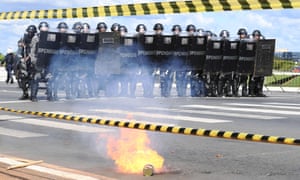

 
‘Brazil has carried on as most stories about Latin America do: unnoticed and uncommented on.’ Riot police monitor protests against the government of Michel Temer in Brasilia, May 2017. Photograph: Evaristo Sa/AFP/Getty Images


Venezuela is the question on everyone’s lips. Rather, Venezuela is the question on reporters’ lips whenever they see Jeremy Corbyn: will he condemn the president, Nicolás Maduro? What is his position on Venezuela, and how does it affect his plans for Britain? The actual problems of Venezuela – a complex country with a long history that does not start with the previous president Hugo Chávez and certainly not with Jeremy Corbyn – are largely ignored or pushed aside. This is nothing new: most of the time, Latin America’s debates are seen through western lenses.

Of course, the situation in Venezuela is deplorable and worrying. But it’s easy to see that concern about Maduro’s undemocratic abuses don’t necessarily come from actual concern for the welfare of Venezuelan people.

Nearby neighbour Brazil has not been analysed or debated at length, even as it demonstrates similar problems. The country’s president, Michel Temer, recently escaped measures that would see him put to trial in the supreme court by getting congress to vote them down. The case against Temer was not a flimsy or partisan one: there was a mountain of evidence, including recordings of him openly debating kickbacks with corrupt businessman Joesley Batista. That a president put into power under circumstances that could be, at best, described as dodgy, manages to remain in power by buying favours from Congress, even as he passes the harshest austerity measures in the world should be enough to raise a few eyebrows internationally. But that has not happened, and Brazil has carried on as most stories about Latin America do: unnoticed and uncommented on.

Part of this discrepancy is of course the bias toward what is flashy. Stories about sordid Congress deals are not that interesting to foreign audiences, and even many exhausted and demoralised Brazilians felt this was simply another addition to a long list of humiliations that began in 2015 when the economy started to sink.

Meanwhile, Venezuela has human conflict, the thing that produces exciting photography and think-pieces, sparks debate and crucially, draws clicks. There’s only so much attention to be gained talking about Temer’s undermining of democracy as it happens without noise, through chicanery and articulation by Brazil’s traditional power: the “Bible, beef and bullets” caucuses in Congress. Venezuela’s situation, however, is urgent, with tanks on the streets and opposition arrests.

Yet there is a subtext to why Brazil’s democracy is not as interesting, and why even Temer’s introduction of the military on to Rio de Janeiro’s streets to address a crime wave has prompted little response. Temer’s rule is one of hard capitalism and an ever-shrinking state. He has established a ceiling on public spending, slashed workers rights, and imposed a hard reform of retirement age.

Temer’s rise to power came as it became clear to big business that his predecessor, Dilma Rousseff, would not go far with austerity. They financed and stimulated protests – largely by rightly angry middle-class Brazilians at what they saw as widespread corruption – while Congress blocked Rousseff’s bills or sabotaged her agenda in other ways.


Latin American suffering is being played out as a proxy for debates in the UK

While Temer did not seize power through a violent coup, and the alliance between Rousseff’s Workers’ party and his notoriously dishonest and chronically double-crossing party was a largely self-inflicted wound, it bears remembering that Rousseff was ousted on a technicality so that Temer could solve the economy’s woes by making “difficult decisions”, a platform for which he had no electoral mandate.

And yet the economy continues to sink, as the unemployment rate soars to 13%. That narrative isn’t very convenient, though, and nobody is interested in making Brazil the representative case of how capitalism is an undemocratic system doomed to fail. And that is quite right: capitalism cannot be exclusively defined by Brazilian failures. The same should be true of socialism in Venezuela.

Somehow, though, the conversation about Venezuela is actually a conversation about something else. Latin American suffering is being played out as a proxy for debates in the UK. As the rightwing media claim, Jeremy Corbyn might not care very much about the thousands going hungry by Maduro’s hand – maybe he too thinks it is simply a consequence of American meddling – but it’s hard to believe that the British right is sincerely committed to the region’s stability and democracy. There has been very little said about Temer.

The failures of Temer do not, and should not be used to, excuse Maduro’s. Nor should we equate the two men in brutality. Yet, if you live in Brazil where public servants are teargassed for not being paid for five months, where indigenous rights activists and others are killed by rich farmers in unprecedented numbers, where several states declare bankruptcy because of a crash in oil prices, where the army is called upon to tackle protesters, you may wonder when your situation will be worth debating.


The answer is whenever it becomes politically convenient. In the end, British commentators and politicians on both the left and right aren’t just opportunistic when it comes to Latin American suffering, they are glad when it happens: it proves their point, whatever that may be. Our lives are just a detail.


Thursday, 10 August 2017

Prime Minister Corbyn would face his own very British coup

The left underestimates the establishment backlash there would be if Corbyn were to reach No 10. They need to be ready


Owen Jones in The Guardian


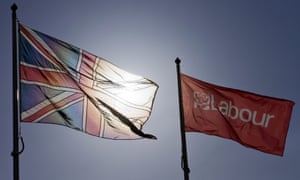
‘The British establishment has no interest in allowing a government that challenges its very existence to prove a success.’ Photograph: Justin Tallis/AFP/Getty Images


‘Do you really think the British state would just stand back and let Jeremy Corbyn be prime minister?”
This was recently put to me by a prominent Labour figure, and must now be considered. Happily for me – as a Corbyn supporter who ended up fearing the project faced doom – this long-marginalised backbencher has a solid chance of entering No 10. If he makes it – and yes, the Tories are determined to cling on indefinitely to prevent it from happening – the establishment will wage a war of attrition in a determined effort to subvert his policy agenda and bring his government down.

You are probably imagining me hunched over my computer with a tinfoil hat. So consider this: there is a precedent for conspiracies against an elected British government, it is not so long ago, and it was waged against an administration that represented a significantly smaller threat to the existing order than that offered by Jeremy Corbyn’s Labour.

In the 1970s, plots against Harold Wilson’s Labour government abounded. The likes of Sir James Goldsmith and Lord Lucan believed Britain was in the grip of a leftwing conspiracy; while General Sir Walter Walker, the former commander of allied forces in northern Europe, was among those wanting to form anti-communist private armies. A plot, in which it is likely former intelligence officers and serving military officers were involved, went like this: Heathrow, the BBC and Buckingham Palace would be seized, Lord Mountbatten would be made interim prime minister, and the crown would publicly back such a regime to restore order. At the time, Wilson and his own private secretary were convinced about such a plot culminating in their arrest along with the rest of the cabinet. In Spycatcher, ex-MI5 assistant director Peter Wright openly wrote about a MI5-CIA plot against Wilson.

No, I do not believe a military coup against a Corbyn is plausible, although in 2015, a senior serving general did suggest “people would use whatever means possible, fair or foul”, including a “mutiny”, to block his defence plans. But there will be a determined operation to stop Corbyn ever becoming prime minister. The plots against Wilson were intertwined with cold war politics, and an establishment fear that Britain could defect from the western alliance. In the 1980s, the former Labour minister Chris Mullin wrote the novel A Very British Coup, inspired by the plots against Wilson, which explored an establishment campaign of destabilisation against a leftwing government. Mullin believes “MI5 has been cleared of dead wood” who would drive such plots. Maybe.

There is currently a plot to create a new “centrist” party that would secure a derisory vote share but potentially split the vote enough to keep the Tories in power. In an election campaign, the Tories will struggle with attack lines: “coalition of chaos” is now null and void, and the vitriol of the “get Corbyn” onslaught backfired. But expect a hysterical campaign of fear centred around warnings of economic Armageddon and corporate titans threatening to flee Britain’s shores.

‘In the 1970s, plots against Harold Wilson’s Labour government abounded.’ Photograph: Popperfoto/Getty Images

As the Sunday Times political editor Tim Shipman put it to me, Theresa May is clinging on “because the Tories are genuinely fearful of a Corbyn government to a degree that goes far beyond usual opposition to Labour”. This panic is shared by other centres of economic and media power. It’s not simply Labour’s policy prospectus they fear. Three decades of neoliberalism – which promotes lower taxes on top earners and big business, privatisation, deregulation and weakened unions – has left them high on triumphalism. They find the prospect of even the most modest challenge to this order intolerable.

And unlike, say, the Attlee government, Labour’s leaders believe that political and social change cannot simply happen in parliament: people must be mobilised in their communities and workplaces to transform the social order. That, frankly, terrifies elite circles. Labour’s opposition to US dominance and a reorientation of Britain’s foreign policy is also viewed as simply unacceptable.

Here are threats to a Labour government to consider. First, undercover police officers. I’ve interviewed women who had relationships with undercover police officers with fake identities. They were climate change activists: the police had recruited individuals willing to sacrifice years of their lives and violate women to keep tabs on the environmental and direct action movements. If they were keeping tabs on small groups of activists, what of a movement with a genuine chance of assuming political power? Then there is the role of the civil service. Thatcherism transformed the attitudes of Britain’s state bureaucracy, particularly in the Treasury: the principles of free-market economics are treated by many senior civil servants as objective facts of life. One former Labour minister told me how, in the late 1990s, civil servants “informed” them that the Human Rights Act forbade controls on private rents. Those officials went on to propose benefit cuts that the Tories would later implement.


Every drop in the pound, every fall in the stock exchange will be hailed as a sign of economic chaos and ruin

Civil servants will tell Labour ministers that their policies are unworkable and must be watered down or discarded. Rather than blocking proposals, they will simply try to postpone them, hold never-ending reviews, call for limited trials – and then hope they are forgotten about. It will require savvy, streetfighting ministers to drive their agenda through.

Finally, those media outlets that cheered on Brexit and accused remainers of hysteria about the consequences, from day one of a Labour government will portray Britain as being in a state of chaos. Every drop in the pound, every fall in the stock exchange will be hailed as a sign of economic chaos and ruin. Demands for U-turns and a moderated agenda will become increasingly vociferous and backed by certain Labour MPs. The hope will be to disorientate, disillusion and divide Labour’s base.

All of these challenges can be overcome, but only by a formidable and permanently mobilised movement. An enthusiastic and inspired grassroots has already succeeded in depriving the Tories of their majority. It will play a critical role if Labour wins. International solidarity – particularly with the US and European left – will prove essential. Such a government will depend on a movement that constantly campaigns in local communities and workplaces. And yes, this is a column that will be dismissed as a tinfoil hat conspiracy. The British establishment has no interest in allowing a government that challenges its very existence to prove a success. These are the people in power whoever is in office, and they will bitterly resist any attempt to redistribute their wealth and influence. Better prepare, then – because an epic struggle for Britain’s future beckons.

Tuesday, 8 August 2017

Only governments can stem the tide of tourism sweeping the globe

Elizabeth Becker in The Guardian


In Barcelona this summer, I was shown a protest sign written in English that said: “Why call it tourism season if we can’t kill them?” Anger over unhampered tourism is getting ugly, even in Barcelona, where the mayor, Ada Colau, is one of the few politicians dedicated to reining in the industry. Residents told me they have had it with skyrocketing rents, thousands of tourists from cruise ships swamping the city’s historic centre and partygoers keeping families up into the night. And they are increasingly sceptical about the economic benefits for the average citizen.

Every time I find myself smirking at another photograph of drunken tourists crowding a gracious town square, I think of Venice. The annual tourist traffic of more than 20 million visitors to La Serenissima has impoverished, rather than enriched, most Venetians. They have been pushed out, the population cut in half to fewer than 60,000 people. The survivors continue to protest and vote against giant cruise ships and mindless tourism. But the powers that be have done little. Even the United Nations has warned that the genius of Venice, its culture, art and way of life are being drowned by tourism.
 
The anger isn’t limited to Europe. In Cambodia, citizens were evicted from their fishing villages so that foreign-built resorts could rise on the pristine beaches. With record crowds and mounds of litter, the once romantic Ipanema beach in Rio de Janiero now features drunk tourists infuriating the locals. Cities across North America, from New Orleans to Vancouver, have issued regulations on Airbnb rentals after citizen complaints that their neighbourhoods were being overwhelmed by unruly tourists and rising rents.

It is no longer possible to dismiss criticism of exploding tourism as elite snobbery, of high-end cultural tourism versus T-shirt-clad visitors squeezed on a tour bus. Or a question of who has the right to travel and who doesn’t.

The dimensions of the industry have grown so vast so quickly that it has become a serious issue of globalisation, as pertinent to the communities at risk as shuttered factories have been to the American and British rust belts.

Few industries were better positioned to take advantage of the 21st century than tourism. Open borders for the first time in modern history, leaps in technology from aeroplanes to the internet and the rise of the global middle class (think China) meant travel moved from a pastime to an economic engine. In less than two decades, travel doubled from 536m trips abroad in 1995 to 1bn in 2012. When the Cold War closed off much of the world to tourism, that figure was only 25m.

Travel and tourism has become a behemoth, capable of doing great good and great damage. It is an $8tn industry. It is the largest employer on Earth: one in 11 people works in tourism and travel.

The appeal of travel is a given. Leisure, excitement, education, adventure. Nothing seems to put a damper on travel. Not the 2008 great recession. Not terrorism, including attacks on tourist resorts. Not even war. Tourists still show up in Afghanistan and North Korea. A tourist was released last week after six years held hostage in Mali by al-Qaida.


 The Thai government has banned tourists from Koh Tachai island. Photograph: Alamy

Travel is already up 6% this year, according the UN ’s World Tourism Organisation, with a 10% increase in the Middle East, the centre of the world’s most deadly conflicts, and up 6% in Europe, despite a string of terrorist attacks, particularly in France and England.

This boom has translated into crowds of tourists in every corner of the globe and, in a new rite of summer, stories of tourists behaving badly. Hong Kong protests against loud, impolite tourists urinating in the street sound a lot like the complaints I heard in Thailand about Chinese tourists desecrating Buddhist temples. An internet search of “tourists behaving badly” can keep you entertained for hours.

Many of us hear these stories and congratulate ourselves for being thoughtful travellers. We avoid the nasty crowds. We seek the out-of-the-way destinations where we enjoy the best in local food and culture. Some plant trees to offset their carbon footprints. But this problem can’t be remedied by good consumer behaviour. Appealing to the industry to refrain from packing their planes and adding new cruise destinations isn’t going to work either.

Only governments can handle runaway tourism. Few major industries fall so squarely into their hands – local, regional and national. Governments decide who is eligible for visas: how many cruise ships, airlines and trains can bring in visitors, how many hotels receive building permits, how many beaches are open to development, how many museums and concert halls are open, even how many farmers receive subsidies to raise food for the restaurants and cafes that tourists frequent.

After years spent tracking the explosion of tourism, I came to the obvious conclusion that without serious and difficult government co-ordination, mayhem can follow. The current biggest disrupters are short-term rental companies, such as Airbnb, and cruise ships.

Most governments still measure tourism success simply by the number of visitors. The more, the better. For the moment, officials have been reluctant to regulate tourism to the benefit, first of all, of their own citizens. Instead, tourism is seen as an easy moneymaker and a short cut to economic development. The exceptions are standouts. France, Bhutan, Costa Rica and Canada are among the few countries with governments willing to co-ordinate policies of sustainable tourism and they haven’t suffered: they are among the most popular destinations in the world.

Promoting tourism by the numbers works both ways. The Chinese were only allowed to travel abroad 20 years ago, after generations of forced isolation. The travel bug hit big. Now the Chinese as a nationality are ranked as the greatest number of travellers in the world and the biggest spenders. President Xi Jinping negotiates favours with other countries in return for more tourist visas for his people.

There is hope. Tourists and governments accept that too much tourism can have a deadly effect on the environment and nature. “Eco-tourism” has been popular for years, whether practised in good faith or not. Slowly, governments are adapting, sometimes in the extreme. Last year, Thailand banned all tourists from Koh Tachai as the only way to save that exquisite island.

Cities and societies can be just as vulnerable to runaway tourism as ocean beaches and forest habitats and governments need to do the hard work of taming tourism for them as well.

Letting go of instant triple talaq

A. Faizur Rahman in The Hindu


There are enough legal devices within India’s dominant Hanafi school jurisprudence to invalidate it


About two months ago, the All India Muslim Personal Law Board (AIMPLB), through its counsel Kapil Sibal, informed the Supreme Court that it was considering reforms and the gradual giving up of instant talaq but wanted time for it. One of the “reforms” mentioned was a circular from the board asking all qazis to advise the husbands, while finalising the marriage contract, not to resort to instant divorce (talaq-e-bid’a) unless under compelling circumstances. The “compelling circumstances”, however, were not defined.

This is not the first time the AIMPLB has tried to illude Muslim women with the talk of reforms. In July 2004, in its executive committee meeting in Kanpur, the board was widely expected to outlaw instant talaq. But nothing came of it. Muslim women were let down once again in May 2005 when the board’s much-hyped ‘model nikahnama’ released in Bhopal turned out to be a damp squib. All that it contained against talaq-e-bid’a was a casual, non-binding advice to the groom in Section 5 (vii) saying: “Jahan tak mumkin ho ek waqt mein teen talaq dene se bachna (to the extent possible, avoid pronouncing three divorces in one sitting).” 

Reasons for rigidity

This sort of dilly-dallying on reforms renders the assurances given by the AIMPLB to the Constitution Bench unreliable. But what makes the board so unyielding? The rigidity stems from two concepts namely taqleed (uncritical acceptance of a school) and tamazzhub (idealisation of a school) wherein precedence is given to one legal school (mazhab) over the rest.

The four major schools of Sunni law — Hanafi, Maliki, Shafi’i and Hanbali — differ from one another on the basis of the interpretive methodology they adopt to derive law from the Koran and the Prophet’s sayings. And the belief that only the interpretation of their school is correct makes followers exalt the totality of juristic pronouncements of the school (the doctrine of tamazzhub). In taqleed, the adherents just follow their school uncritically even if they don’t elevate it above others.

A subdued emphasis on tamazzhub, and an overt expression of taqleed, is clearly visible in the 30-page “Note on arguments of Mr. Kapil Sibal” submitted to the Supreme Court wherein the issue of instant talaq is reduced to a question of whether or not it is a part of the Hanafi faith because more than 90% of Indian Muslims are Hanafis. 

Such an argument is unacceptable as it is based on the presumption that by mere accident of birth, Indian Muslims are forever obliged to follow the Hanafi mazhab. Nevertheless, the AIMPLB seems to have overlooked the fact that tamazzhub or taqleed cannot be easily invoked in the case of talaq-e-bid’a. In the aforementioned “Note”, the board admits that Imam Abu Hanifa (d.767) “did not record his own understanding of what the Prophet said in writing”; however, his two disciples — Imam Abu Yusuf (d. 798) and Imam Muhammad (d. 805) — immediately upon his death recorded in writing what Imam Abu Hanifa had said about triple talaq.

In other words, Hanafi theologians do not possess any direct statement from the founder-jurist of the Hanafi school that upholds the validity of talaq-e-bid’a.

Case for invalidation

If the definition of tamazzhub were to be stretched to also include the statements of Imam Abu Hanifa’s students, as is being done now by the AIMPLB, would it indicate the inconceivability of reforming the Muslim personal law in India? Certainly not. There are enough reasons and legal devices within Hanafi jurisprudence to outlaw instant talaq.

It can be shown that Imam Abu Hanifa’s own students did not indulge in blind taqleed or tamazzhub. They boldly differed with him on several issues. Imam Abu Yusuf’s Kitab al kharaj, that records the fatwas of Imam Abu Hanifa on financial matters, also contains Abu Yusuf’s opinions that are at odds with his teacher’s. In his research paper, “The Authenticity of Two 2nd /8th Century Hanafi Legal Texts: the Kitāb al-āthār and al-Muwatta' of Muhammad b. al-Hasan al-Shaybāni”, scholar Behnam Sadeghi states that he counted 27 cases in Kitāb al-āthār in which Imam Muhammad disagreed with Imam Abu Hanifa.

The ulama within the AIMPLB will only be following this liberal Hanafi tradition if they abandon, in the interest of Muslim women, juristic opinions that justify the validity of talaq-e-bid’a. After all, the “Note” admits that the nomenclature talaq-e-bid’a is not referred to in the Koran or the Hadees. It is “categorised and interpreted by Islamic scholars”.

It should not be difficult for the AIMPLB to give up anachronistic interpretations of earlier scholars especially when they contradict the Koran. Indeed, Hanafi jurists in the 10th century had abandoned, using exegetic rationales, even authoritative Prophetic hadeeses such as those that allowed women to join congregational prayers in mosques. The reasons cited were taghayyur al-zamaan (change of times) and fasaad al-zamaan (corruption of the times).

Hanafi jurists also resorted to legal stratagems called hiyal (sing. heela) to circumvent or overcome the rigidity of law. Heela is based on a doctrine called tahayyul under which a jurist, if circumstances so warrant, finds a way to legalise what is otherwise prohibited by law. Jurists also had recourse to takhayyur (selecting the most suitable among available legal opinions in a given school of law) and talfiq al mazaahib (derivation of rules from material of various schools of Islamic law).

These instruments were utilised to give effect to the Islamic legal maxim “laa yunkar taghayyur al-ahkaam bi taghayyur al-zamaan wa al-ahwaal”, which means “there is no denying that laws will change with the change of time and circumstances”.

Therefore, if the AIMPLB is really serious about reforms, there are enough legal devices within the Hanafi denominational faith system to invalidate instant triple talaq.

The way forward

For this to happen, the AIMPLB must be willing to reassess its raison d’être and model itself on Koranic universalism rather than legal conformism. It must be open to the idea of its certitudes being challenged, especially in the light of the fact that the founder of the Hanafi school, Imam Abu Hanifa, was himself a model of independent reasoning (ijtihad) and flexibility. He introduced the concept of istihsan, which helps jurists depart from the existing precedent by taking decisions different from those of similar cases, for reasons stronger than those obtained in the past cases.

Applying istihsan, and devices mentioned above, the AIMPLB can easily overhaul the legal methodology that validates talaq-e-bid’a and harmonise it with the intent of the Koran and Prophetic teachings. In pursuance of this, the board may immediately declare talaq-e-bid’a invalid as the first step towards reform. This, of course, entails a difficult shift from rigid tamazzhub and taqleed to adaptable ijtihad. But the benefits are huge.

It would open up Islam to modern interpretations within the framework of its original sources, and in the long run inculcate a sense of tolerance among Muslims for different points of view and equip them to respond positively to the requirements of a multicultural society like India. The question is: does AIMPLB realise the momentousness of giving up its obsessive denominationalism?