Jasper Jackson in the Guardian
Director Ken Loach has taken aim at the BBC, describing its news coverage as “manipulative and deeply political” and saying it is a “rotten place for a director”.
Prominent leftwinger Loach, who is promoting his Palme d’Or-winning film about a man’s struggle with the UK benefits system, I, Daniel Blake, said there was a need to “democratise” the corporation.
“Diversify it so that different regions can make their own dramas. And its notion of news has got to be challenged,” he told the Radio Times.
“The BBC is very aware of its role in shaping people’s consciousness; this is the story you should hear about, these are the people worth listening to. It’s manipulative and deeply political.”
In response to the comments, a BBC spokeswoman said: “BBC News is independent and adheres to clear published editorial guidelines including on impartiality. The BBC is consistently rated the most trusted and accurate news provider by the majority of people in the UK.”
It is not the first time Loach, who has been vocal in his support of Jeremy Corbyn, has criticised the BBC’s news coverage.
Last month, he told an audience at University College London to complain to the corporation when they thought coverage was biased against Corbyn, and labelled the corporation a “propaganda” arm of the state adopting a “pretense of objectivity”. “The BBC is not some objective chronicler of our time – it is an arm of the state,” he said.
Loach has had a long and fruitful relationship with the BBC, which 50 years ago broadcast his influential film Cathy Come Home charting a family’s descent into poverty and homelessness. I, Daniel Blake was made in partnership with BBC Films
However, Loach implied that the BBC had lost its appetite for socially conscious TV drama.
“Even then, people overstated how much of it there was. Anyway, now the drama is produced by outside production companies and horribly micro-managed. The directors I know in television say it’s a nightmare. That’s true for all the broadcasters,” he concedes, “but the BBC is a rotten place for a director.”
He also criticised the broader TV industry for choosing shows such as Downton Abbey which present a “rosy vision of the past”.
“It says, ‘Don’t bother your heads with what’s going on now, just wallow in fake nostalgia’,” he said.
“It’s bad history, bad drama. It puts your brain to sleep. It’s the opposite of what a good broadcaster should do, which is stimulate and invigorate. You might as well take a Mogadon as watch it. TV drama is like the picture on the Quality Street tin, but with with less quality and nothing of the street.”
Despite his dislike of nostalgia, Loach told the Guardian in an interview earlier this week that in some respects he preferred the society of the 60s in which Cathy Come Home was set.
“When she was shown as homeless, people were angry about it. Now society is nowhere near as cohesive. The consequences of Thatcher and Blair have eroded the sense that we are responsible for each other, that we are our brothers’ and sisters’ keeper. So in that sense, I prefer the days of Cathy.”
A spokeswoman for BBC Drama cited shows such as Peaky Blinders and Poldark as examples of production made across the UK’s regions.
She added: “The quality, range and ambition of BBC Drama is evidence of an organisation in top creative form that supports both the directors voice and reflects the whole of the UK.
“From world-class British directors like Peter Kosminsky redefining period drama with Wolf Hall, or Julian Farino’s Bafta winning Marvellous, visionary directors have a home on the BBC and this means we also attract directors from across the world like the Emmy winning Susanne Bier on The Night Manager to Oscar winner Jane Campion.”
Tuesday, 18 October 2016
Sunday, 16 October 2016
Who will save us from Silicon Valley?
Evgeny Morozov in The Guardian

Mark Zuckerberg and Priscilla Chan have given $3bn to help cure all disease. Photograph: Jeff Chiu/AP
A world where billionaires were blunt and forthright, where they preferred pillaging the world to saving it, was far less confusing. The robber barons of the industrial era – from Carnegie to Ford to Rockefeller – did eventually commit some of their riches to charity but there was no mistaking one for the other. Oil and steel brought in the cash; education and arts helped to spend it.
Of course, the eponymous foundations were neither neutral nor apolitical. They pursued projects that were rarely at odds with US foreign policy and often shared many of its key ideological biases and presuppositions. From modernisation theory to democracy promotion, the civilising imperative behind them was not so hard to discern. Some of these foundations have eventually come to regret many of their dubious advocacy campaigns; the Rockefeller Foundation’s imprudent support for population control in India is just one example.
Today, when five of the world’s most valuable companies are technology firms, it’s very hard to see where their businesses end and their charity efforts begin. As digital platforms, they power diverse industries and sectors from education to health to transport and thus have an option that was not available to the oil and steel magnates of yesteryear: they can simply continue selling their core product – mostly hope, albeit wrapped up in infinite layers of data, screens and sensors – without having to divert their funds into any nonproductive activities.
The Chan Zuckerberg initiative, a limited liability company (a somewhat unusual format for a charity), was set up by Mark Zuckerberg and his wife, Priscilla Chan, in December 2015, ostensibly to share their wealth with the rest of us. It has recently been in the news thanks to its founders’ ambitious commitment – to the tune of $3bn – to cure all disease.
Zuckerberg can surely afford this, given how little tax his company is paying: in the UK, its tax filings for 2015 show revenues of £210.7m, on which the company paid just £4.17m of taxes – an effective rate of 2% (itself a 1,000-fold increase on what it paid in 2014). Facebook, however, also managed to generate a tax credit of £11m, which it can use to reduce its future tax burden. The disease of tax avoidance is unlikely to be cured by the Chan Zuckerberg initiative.
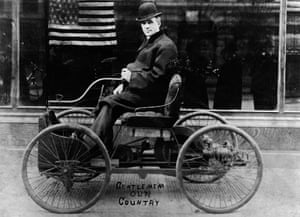
Henry Ford in his first car, built in 1896. Photograph: Library of Congress/Getty Images
To speak of “philanthrocapitalism” here – as many have done, either to praise or bury it – seems misguided, if only because such projects bear so little resemblance to philanthropy proper. One doesn’t have to admire Ford or Rockefeller to notice that their philanthropic endeavours, whatever their real political goals, were not supposed to make extra cash. But is it really so with our new tech barons?
While Zuckerberg’s commitments in the health sector are still too recent and ambiguous to judge, he has a more extensive history in education. Following Zuckerberg’s personal commitment of $100m dollars to schools in New Jersey – an investment that is yet to bring the desired results – the Chan Zuckerberg initiative has invested in companies that supposedly help expand educational opportunities in the developing world.
Thus, it has poured money into Andela, a Lagos-based startup that trains coders, joining the likes of Google (via GV, its venture fund) and Omidyar Network, a similar philanthropic investment firm belonging to another tech billionaire. A few weeks later, one of Andela’s co-founders left to found a payments startup: apparently, there are a lot of arbitrage opportunities in saving the world.
That one can never fully understand what drives these investments, a profit motive or a genuine desire to help out, is a feature, not a bug. If the logic driving the Fords and the Carnegies was to atone for the sins of rapacious capitalism, the logic of the Zuckerbergs and the Omidyars is to convince us that rapacious capitalism, fully unleashed on society, will do lots of good.
The Chan Zuckerberg initiative also invested in BYJU, an Indian company that has developed an app that teaches students science and maths. A noble endeavour, but what attracted Zuckerberg to the firm was, by his own admission, its heavy reliance on personalised learning, which, of course, is only possible when large troves of user data are recorded and analysed. Does that remind you of any giant tech company?
This celebration of personalisation is also present in another educational project supported by Zuckerberg – a learning software made by a company called Summit Basecamp. The company has the luxury of having 20 Facebook staffers, from engineers to product managers, helping it with growth and expansion – the result of Zuckerberg touring one of its schools in 2013. And expand it did: according to the Washington Post, its software is now used by 20,000 students in more than 100 schools.
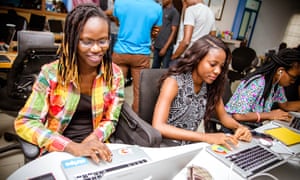
The Chan Zuckerberg initiative has poured money into Andela, a Lagos-based startup that trains coders. Photograph: Mohini Ufeli/Andela
Parents of these students can hope that Summit Basecamp will keep its word and that no personal data will ever leave the company. Such promises won’t be any more reassuring than those of the founders of WhatsApp, who, on being acquired by Facebook, promised to defend their users’ personal data, only to announce, a few months ago, that it will be shared with Facebook.
Zuckerberg also joined the rest of the Silicon Valley elite, from Bill Gates to Laurene Powell Jobs, the widow of Steve Jobs, in investing in AltSchool, a startup founded by a former Google executive, which takes personalised learning to a whole new level. In a good Taylorist fashion, its classrooms feature cameras and microphones so that any glitches inherent in the learning process can be analysed and engineered away. AltSchool now wants to expand by selling licences to its software to other schools.
What passes for philanthropy these days is often just a sophisticated effort to make money on engineering the kinds of rational, entrepreneurial and quantitative souls that would delight at other types of personalisation. Such learning is, of course, well suited to the needs of consulting firms and technology giants. A recent profile of AltSchool in the New Yorker mentioned that its students read the Iliad armed with a spreadsheet where they mark how many times the theme of “rage” occurs in the text. Such schools can produce excellent auditors; poets, however, might need an alternative, to, well, the AltSchool.
The very same technology elites are also backing the charter school movement – a longrunning effort to bring more competition to the educational sector by supporting privately run but publicly funded educational initiatives. From Gates to Zuckerberg, technology billionaires are vocal defenders of this movement. It won’t be surprising if they deploy their big data weapons to advance the argument that the traditional educational system must be completely overhauled.
We should be careful not to fall victim to a perverse form of Stockholm syndrome, coming to sympathise with the corporate kidnappers of our democracy. On the one hand, given that the new tech billionaires pay very little tax, it’s not surprising that the public sector would fail to innovate as quickly. On the other, by constantly giving the private sector a head start through technologies that they own and develop, the new tech elites all but ensure that the public would rather choose slick but privatised technological solutions over quaint, but public, political ones.
That we can no longer differentiate between philanthropy and speculation is an occasion to worry, not celebrate. With Silicon Valley elites so keen on saving the world, shouldn’t we also ask who will eventually save us from Silicon Valley?
Mark Zuckerberg and Priscilla Chan have given $3bn to help cure all disease. Photograph: Jeff Chiu/AP
A world where billionaires were blunt and forthright, where they preferred pillaging the world to saving it, was far less confusing. The robber barons of the industrial era – from Carnegie to Ford to Rockefeller – did eventually commit some of their riches to charity but there was no mistaking one for the other. Oil and steel brought in the cash; education and arts helped to spend it.
Of course, the eponymous foundations were neither neutral nor apolitical. They pursued projects that were rarely at odds with US foreign policy and often shared many of its key ideological biases and presuppositions. From modernisation theory to democracy promotion, the civilising imperative behind them was not so hard to discern. Some of these foundations have eventually come to regret many of their dubious advocacy campaigns; the Rockefeller Foundation’s imprudent support for population control in India is just one example.
Today, when five of the world’s most valuable companies are technology firms, it’s very hard to see where their businesses end and their charity efforts begin. As digital platforms, they power diverse industries and sectors from education to health to transport and thus have an option that was not available to the oil and steel magnates of yesteryear: they can simply continue selling their core product – mostly hope, albeit wrapped up in infinite layers of data, screens and sensors – without having to divert their funds into any nonproductive activities.
The Chan Zuckerberg initiative, a limited liability company (a somewhat unusual format for a charity), was set up by Mark Zuckerberg and his wife, Priscilla Chan, in December 2015, ostensibly to share their wealth with the rest of us. It has recently been in the news thanks to its founders’ ambitious commitment – to the tune of $3bn – to cure all disease.
Zuckerberg can surely afford this, given how little tax his company is paying: in the UK, its tax filings for 2015 show revenues of £210.7m, on which the company paid just £4.17m of taxes – an effective rate of 2% (itself a 1,000-fold increase on what it paid in 2014). Facebook, however, also managed to generate a tax credit of £11m, which it can use to reduce its future tax burden. The disease of tax avoidance is unlikely to be cured by the Chan Zuckerberg initiative.
Henry Ford in his first car, built in 1896. Photograph: Library of Congress/Getty Images
To speak of “philanthrocapitalism” here – as many have done, either to praise or bury it – seems misguided, if only because such projects bear so little resemblance to philanthropy proper. One doesn’t have to admire Ford or Rockefeller to notice that their philanthropic endeavours, whatever their real political goals, were not supposed to make extra cash. But is it really so with our new tech barons?
While Zuckerberg’s commitments in the health sector are still too recent and ambiguous to judge, he has a more extensive history in education. Following Zuckerberg’s personal commitment of $100m dollars to schools in New Jersey – an investment that is yet to bring the desired results – the Chan Zuckerberg initiative has invested in companies that supposedly help expand educational opportunities in the developing world.
Thus, it has poured money into Andela, a Lagos-based startup that trains coders, joining the likes of Google (via GV, its venture fund) and Omidyar Network, a similar philanthropic investment firm belonging to another tech billionaire. A few weeks later, one of Andela’s co-founders left to found a payments startup: apparently, there are a lot of arbitrage opportunities in saving the world.
That one can never fully understand what drives these investments, a profit motive or a genuine desire to help out, is a feature, not a bug. If the logic driving the Fords and the Carnegies was to atone for the sins of rapacious capitalism, the logic of the Zuckerbergs and the Omidyars is to convince us that rapacious capitalism, fully unleashed on society, will do lots of good.
The Chan Zuckerberg initiative also invested in BYJU, an Indian company that has developed an app that teaches students science and maths. A noble endeavour, but what attracted Zuckerberg to the firm was, by his own admission, its heavy reliance on personalised learning, which, of course, is only possible when large troves of user data are recorded and analysed. Does that remind you of any giant tech company?
This celebration of personalisation is also present in another educational project supported by Zuckerberg – a learning software made by a company called Summit Basecamp. The company has the luxury of having 20 Facebook staffers, from engineers to product managers, helping it with growth and expansion – the result of Zuckerberg touring one of its schools in 2013. And expand it did: according to the Washington Post, its software is now used by 20,000 students in more than 100 schools.
The Chan Zuckerberg initiative has poured money into Andela, a Lagos-based startup that trains coders. Photograph: Mohini Ufeli/Andela
Parents of these students can hope that Summit Basecamp will keep its word and that no personal data will ever leave the company. Such promises won’t be any more reassuring than those of the founders of WhatsApp, who, on being acquired by Facebook, promised to defend their users’ personal data, only to announce, a few months ago, that it will be shared with Facebook.
Zuckerberg also joined the rest of the Silicon Valley elite, from Bill Gates to Laurene Powell Jobs, the widow of Steve Jobs, in investing in AltSchool, a startup founded by a former Google executive, which takes personalised learning to a whole new level. In a good Taylorist fashion, its classrooms feature cameras and microphones so that any glitches inherent in the learning process can be analysed and engineered away. AltSchool now wants to expand by selling licences to its software to other schools.
What passes for philanthropy these days is often just a sophisticated effort to make money on engineering the kinds of rational, entrepreneurial and quantitative souls that would delight at other types of personalisation. Such learning is, of course, well suited to the needs of consulting firms and technology giants. A recent profile of AltSchool in the New Yorker mentioned that its students read the Iliad armed with a spreadsheet where they mark how many times the theme of “rage” occurs in the text. Such schools can produce excellent auditors; poets, however, might need an alternative, to, well, the AltSchool.
The very same technology elites are also backing the charter school movement – a longrunning effort to bring more competition to the educational sector by supporting privately run but publicly funded educational initiatives. From Gates to Zuckerberg, technology billionaires are vocal defenders of this movement. It won’t be surprising if they deploy their big data weapons to advance the argument that the traditional educational system must be completely overhauled.
We should be careful not to fall victim to a perverse form of Stockholm syndrome, coming to sympathise with the corporate kidnappers of our democracy. On the one hand, given that the new tech billionaires pay very little tax, it’s not surprising that the public sector would fail to innovate as quickly. On the other, by constantly giving the private sector a head start through technologies that they own and develop, the new tech elites all but ensure that the public would rather choose slick but privatised technological solutions over quaint, but public, political ones.
That we can no longer differentiate between philanthropy and speculation is an occasion to worry, not celebrate. With Silicon Valley elites so keen on saving the world, shouldn’t we also ask who will eventually save us from Silicon Valley?
Just 2.6% of grammar school pupils are from poor backgrounds
Daniel Boffey in The Guardian
Just 3,100 of the 117,000 pupils who currently attend grammar schools come from families poor enough to be eligible for free school meals.
The proportion of students (2.6%) is lower than previously reported, and was last night seized upon by critics of the government’s plans for more selection in the state system.
The average proportion of pupils entitled to free school meals in areas that currently select on academic ability is thought to be around 18%.
Lucy Powell, the former shadow education secretary, said the figures, compiled by the House of Commons library from Department for Education records from January this year, illustrated how selection was failing those from the least affluent backgrounds.
“Grammar schools have a shamefully low record when it comes to the number of children from poor backgrounds attending them,” said Powell.
Ofsted chief slams Theresa May’s ‘obsession’ with grammar schools
The government’s green paper on education reform proposes that existing grammar schools should be allowed to expand and new ones be allowed to open, while existing comprehensives could opt to be selective. It also proposes encouraging multi-academy trusts to select within their family of schools, in order to set up “centres of excellence” for their most able students.
But Powell said there were now 23 Tory MPs who supported her campaign to force a government U-turn on their plans to introduce more selection. “All the evidence shows that selective education creates barriers for disadvantaged children rather than breaking them down,” she said. “These figures tell the real story. A minuscule number of children on free school meals pass the 11-plus.
“That these tiny, tiny few do well is no measure. The measure should be how can we ensure that every child gets an excellent academic education.
“Rather than serving a privileged few, ministers should focus on tackling real disadvantage and ensure that all schools have enough teachers and resources to deliver a world class education for all – things that are in serious trouble right now.”
The government’s policy was nevertheless given a boost last week when new “value-added figures” suggested that the 163 grammar schools in England had better progress scores across all attainment levels than the other 2,800 state secondaries, achieving about a third of a GCSE grade higher than pupils with the same prior results at other schools. The new “Progress 8 measures” record pupils’ progress across eight subjects from age 11 to 16.
Education secretary Justine Greening said the statistics gave the government “even more reason to make more of these good school places available in more areas”.
Rebecca Allen, director of Education Datalab and an expert in the analysis of large scale administrative and survey datasets, warned that ministers should be cautious in latching on to “crude” performance tests. Allen said that the Key Stage 2 scores used to test the progress of pupils in the years up to their GCSEs was a poor indicator of academic potential, as indicated by the fact that many with low scores passed the 11-plus.
She said that it would be better to examine progress across the board in local authorities that are selective. Those results show a marginally positive set of results in terms of progress of all pupils.
However, Allen said that even then the potential of a cohort of pupils in areas where grammars exist may well be higher in the first place because pupils could have been drawn from outside the area, distorting any analysis on a local authority by local authority basis.
Allen added that the statistics also did not take into account the distorting effect on the figures produced by those who would have otherwise stayed in private education who have moved into state grammar schools where they are available.
“These calculations are made only for those in the state sector, yet the presence of grammar schools changes the type of pupils in private schools,” she said. “About 12 per cent of those in grammars were in the private sector at age 10 and may well have stayed there had state-selection not been available.
“Moreover, large numbers who fail the 11-plus exit the state sector for non-elite private schools. It is very hard to assess how these private sector transfers affect local authority Progress 8 figures, so we must be cautious before using crude performance table measures to make claims about policy effectiveness.”
Just 3,100 of the 117,000 pupils who currently attend grammar schools come from families poor enough to be eligible for free school meals.
----Also read
-----
The proportion of students (2.6%) is lower than previously reported, and was last night seized upon by critics of the government’s plans for more selection in the state system.
The average proportion of pupils entitled to free school meals in areas that currently select on academic ability is thought to be around 18%.
Lucy Powell, the former shadow education secretary, said the figures, compiled by the House of Commons library from Department for Education records from January this year, illustrated how selection was failing those from the least affluent backgrounds.
“Grammar schools have a shamefully low record when it comes to the number of children from poor backgrounds attending them,” said Powell.
Ofsted chief slams Theresa May’s ‘obsession’ with grammar schools
The government’s green paper on education reform proposes that existing grammar schools should be allowed to expand and new ones be allowed to open, while existing comprehensives could opt to be selective. It also proposes encouraging multi-academy trusts to select within their family of schools, in order to set up “centres of excellence” for their most able students.
But Powell said there were now 23 Tory MPs who supported her campaign to force a government U-turn on their plans to introduce more selection. “All the evidence shows that selective education creates barriers for disadvantaged children rather than breaking them down,” she said. “These figures tell the real story. A minuscule number of children on free school meals pass the 11-plus.
“That these tiny, tiny few do well is no measure. The measure should be how can we ensure that every child gets an excellent academic education.
“Rather than serving a privileged few, ministers should focus on tackling real disadvantage and ensure that all schools have enough teachers and resources to deliver a world class education for all – things that are in serious trouble right now.”
The government’s policy was nevertheless given a boost last week when new “value-added figures” suggested that the 163 grammar schools in England had better progress scores across all attainment levels than the other 2,800 state secondaries, achieving about a third of a GCSE grade higher than pupils with the same prior results at other schools. The new “Progress 8 measures” record pupils’ progress across eight subjects from age 11 to 16.
Education secretary Justine Greening said the statistics gave the government “even more reason to make more of these good school places available in more areas”.
Rebecca Allen, director of Education Datalab and an expert in the analysis of large scale administrative and survey datasets, warned that ministers should be cautious in latching on to “crude” performance tests. Allen said that the Key Stage 2 scores used to test the progress of pupils in the years up to their GCSEs was a poor indicator of academic potential, as indicated by the fact that many with low scores passed the 11-plus.
She said that it would be better to examine progress across the board in local authorities that are selective. Those results show a marginally positive set of results in terms of progress of all pupils.
However, Allen said that even then the potential of a cohort of pupils in areas where grammars exist may well be higher in the first place because pupils could have been drawn from outside the area, distorting any analysis on a local authority by local authority basis.
Allen added that the statistics also did not take into account the distorting effect on the figures produced by those who would have otherwise stayed in private education who have moved into state grammar schools where they are available.
“These calculations are made only for those in the state sector, yet the presence of grammar schools changes the type of pupils in private schools,” she said. “About 12 per cent of those in grammars were in the private sector at age 10 and may well have stayed there had state-selection not been available.
“Moreover, large numbers who fail the 11-plus exit the state sector for non-elite private schools. It is very hard to assess how these private sector transfers affect local authority Progress 8 figures, so we must be cautious before using crude performance table measures to make claims about policy effectiveness.”
One way to check if your news headline is factually correct?
Dan Swing in The Independent
Internet search giant Google has introduced a new fact-checking feature in its new section to allow readers to determine whether or not a story is true.
“In the seven years since we started labeling types of articles in Google News (e.g., In-Depth, Opinion, Wikipedia), we’ve heard that many readers enjoy having easy access to a diverse range of content types,” the company said in an announcement.
“Today, we’re adding another new tag, “Fact check,” to help readers find fact checking in large news stories.”
Through an algorithmic process from schema.org known asClaimReview, live stories will be linked to fact checking articles and websites. This will allow readers to quickly validate or debunk stories they read online.
Related fact-checking stories will appear onscreen underneath the main headline. The example Google uses shows a headline over passport checks for pregnant women, with a link to Full Fact’s analysis of the issue.
Readers will be able to see if stories are fake or if claims in the headline are false or being exaggerated.
Fact check will initially be available in the UK and US through the Google News site as well as the News & Weather apps for both Android and iOS. Publishers who wish to become part of the new service can apply to have their sites included.
“We’re excited to see the growth of the Fact Check community and to shine a light on its efforts to divine fact from fiction, wisdom from spin,” the company said.
Fact checking has become increasingly common for online publishers. Organizations such as the International Fact-Checking Network, PolitFact and FullFact analyse claims by politicians and other public speakers to determine if they are true or not.
Facebook has struggled to prevent fake headlines appearing in its own trending news feature. After the company swapped human curators for an algorithm, a fake story about Fox News anchor Megyn Kelly being fired over allegiances to Hilary Clinton caused controversy.
While Google doesn’t name Donald Trump or Brexit explicitly, authors such as Ralph Keyes claim we now live in a “post-truth” era, where debates rarely focus on facts or policy but instead on emotion and wild claims.
Republican Presidential candidate Donald Trump has often been found to make false or misleading statements. Politifact has rated 71% of his statements as false. This week he wrongly advised his supports to go out and vote on 28 November, 20 days after the US elections actually being held on 8 November.
Subscribe to:
Comments (Atom)