Suhrith Parthasarathy in The Hindu
The Board of Control for Cricket in India’s decision last week to appoint a former Supreme Court judge, Justice Markandey Katju, to “interact with the Justice Lodha Committee” and to “advise and guide” the BCCI on its affairs is, at best, an effort at prevarication, and, at worst, a subversion of the Supreme Court’s authority. Exacerbating the tension, following his appointment, Justice Katju, rather indecorously given his stature as a retired judge, on August 6 released what he termed as a “first report,” with “more reports to follow,” in which he declared the Supreme Court’s judgment appointing the Lodha Committee as illegal and unconstitutional.
It is one thing to critique the court’s judgment as an outsider; for instance, it is plausible to argue, even if incorrectly, that the court ought to have exercised greater restraint in interfering with the board’s affairs. But to do as Justice Katju has, to advise a party to openly disregard the Supreme Court’s verdict, presents a dangerous proposition, one that is far more threatening than any act of judicial overreach. What’s more, in any event, given the peculiar facts and circumstances surrounding the BCCI’s structure, Justice Katju’s assertion that the court has exceeded its brief also fails to pass muster. If anything, these developments exemplify precisely why the Supreme Court’s intervention in this case was justified.
Why we play sport
To understand why the Supreme Court thought it fit to appoint the committee presided by the former Chief Justice of India, R.M. Lodha, to inquire into, and to recommend changes, to the BCCI’s organisation, we must confront a few fundamental questions. Too often, amid the chaotic world of modern sport, we tend to lose track of why we play sport, why we watch games, why we revel in them, and why we invest so much of our emotions into seemingly pointless pursuits. We must first ask ourselves, therefore, what the abiding purpose of cricket is. What do we want from it? Is the sport meant for pure entertainment? Can it be commercially exploited by a band of the elite owing no responsibility to the public? Or do we want the sport to represent a higher, more virtuous purpose? If so, how are we to achieve these ends?
To take any sport seriously, and to ask such questions, seems to represent, in some ways, an incongruity in terms. In fact, many commentators considered the adjudication of the dispute concerning the BCCI and allegations of spot-fixing as a waste of the Supreme Court’s precious time. The public, they warned, was according more importance to cricket than it really deserved. But the danger, contrary to such counsel, is not that we are taking sport too seriously. It is that we are not taking sport seriously enough.
As the American academic, Jan Boxill, has argued, sport serves to establish a moral function for society. It is “an unalienated activity which is required for self-development, self-expression, and self-respect”; or, put differently, it is morally important because it is “the art of the people,” one that ought to be included in what Marx termed as the “realm of freedom”. In India, where cricket plays such a pervasive role, the sport would therefore have to necessarily be seen as a primary cultural good, one which, to borrow from another American, the philosopher John Rawls, is critical to the fulfilment of a person’s conception of a good life. In that sense, access to cricket has to be considered as an end in and of itself, and as not in any manner subservient to some other veiled purpose, especially entertainment or business. In his marvellous epic, Beyond a Boundary, C.L.R. James argued that cricket allows us a grasp of a more complete human existence, where social justice is a legitimate aim. To seize ownership of the game we must, therefore, hold cricket’s administrators answerable to standards of public law, a check that would help in bringing about within cricket’s province a more equal distribution of resources.
When it sat in judgment over the various shenanigans of the BCCI and its management of the Indian Premier League (IPL), the Supreme Court recognised some of these values inherent in cricket. For years, ever since its inception, the BCCI had functioned as its own master, as a sovereign whose diktats were decisive and unquestionable. As this dominion began to extend beyond India into a global clout, the inability to hold the board publicly accountable became graver still. Governments came and went, but legislative intervention has never been on the horizon.
A private society?
Until the Supreme Court intervened last year, every time the courts were approached, judges too vacillated, as the board bandied about its customary defence, one that Justice Katju has also invoked in his report: that the board is merely a private society, to which conventional standards of public law are simply inapplicable. Indeed, the BCCI, which was originally formed in 1928 as an unregistered association of persons, is now enrolled as a private body, under the Tamil Nadu Societies Registration Act of 1975. Today, more than 30 members, including public sector undertakings such as the Railways and the Services, subscribe to the board’s Memorandum of Association, which includes, among its objects, the promotion and control of the game of cricket in India, the encouragement of the formation of State and regional cricket associations, and, most significantly, the selection of the Indian national cricket team.
At first blush, the BCCI’s argument might appear to make sense. Traditionally, private societies are responsible only to their members, and it is for these clubs to determine for themselves what best represent the interest of their associates. Therefore, for any of the board’s decisions to stand the law’s scruples, all that is required is the concurrence of its members, which is to be secured through a procedure that the memorandum provides. When people outside the BCCI’s membership enter into independent relationships with the board — such as employment contracts or purchase of TV rights — those relationships would also, according to the board, remain purely in the realm of private law.
Yet, before the Supreme Court intervened last year, the BCCI, emboldened by this status as a supposed private body, consistently diluted the underlying values in cricket, viewing these as somehow inferior to the board’s grand project of commercially exploiting the sport. When, for instance, incidents of conflicts of interest within the board have been questioned, the board’s arguments proceeded on these lines: if the BCCI’s members are satisfied that a person who owned an IPL team could also contest and hold office as the board’s president, the courts, including the Supreme Court, simply lacked the authority to judicially review such decisions.
But in its judgment, delivered on January 22, 2015, which resonated amongst cricket fans around the world, the Supreme Court rebuffed these arguments. Not only did it haul up the BCCI and question the body’s standards of governance but it also explicitly ruled that the board was amenable to public scrutiny. “Such is the passion for this game in this country that cricketers are seen as icons by youngsters, middle aged and the old alike,” wrote Justice T.S. Thakur (now Chief Justice of India) on behalf of the court. “Any organisation or entity that has such pervasive control over the game and its affairs and such powers as can make dreams end up in smoke or come true cannot be said to be undertaking any private activity.”
A clear purpose
Or in other words, what the court was really telling us is this: that cricket is a basic good, the access to which is critical to the fulfilment of a good life. When the court appointed the Lodha Committee, its intention, therefore, was to create a structure through which the sport can be made more accessible and more equal. The committee’s report, which was released on January 4, 2016, seeks to do just this. It recommends, among other things, that each Indian State would only be entitled to a single vote within the BCCI, a mandate that is likely to damage a coterie of power held by Maharashtra and Gujarat that have three associations each. What’s more, it directs the establishment of an apex council of nine members, overseen by a reputable chief executive officer, comprising three independent persons, with two from a newly constituted “players’ association”, and at least one woman, to conduct the day-to-day administration of the sport in the country; the institution of lucid norms within the BCCI’s constitution to regulate conflicts of interest, including the reduction in involvement from politicians; and, most critically, a more reasonable division, if not a complete separation, between the BCCI and the IPL.
The argument today, made in Justice Katju’s report, is that any change to the BCCI’s structure must come either from within or through legislative intervention. But neither of these, as history tells us, is conceivable. In bringing about a change in the board’s structure through the Lodha Committee’s recommendations, the Supreme Court isn’t making law. It is merely making accountable a body that enjoys a virtually state-sanctioned monopoly, which allows it to alter the fundamental nature of a property that it holds in trust for the public. It is astounding that the board would object to these recommendations, for all they do is establish a basic framework for good governance.
In the final analysis, we must ask ourselves this: do we want to see cricket as constituting an end by itself, as a sport that is both ethically and morally significant? If the answer to this question is yes, we must not only cause the BCCI to embrace the Lodha Committee’s recommendations but also push towards an even more revolutionary process of reform; one through which the game can eventually be brought closer to the common Indian public, where the sport’s ownership is reclaimed from those who have tarnished it beyond recognition.
Saturday, 13 August 2016
Poor little rich kids – the perils of inheriting vast wealth
Emine Saner in The Guardian
It is reported that when the 6th Duke of Westminster, who died this week, realised at the age of 15 that he was heir to his family’s immense fortune, he dreaded it – the responsibility, the knowledge that he hadn’t earned it, the isolation it would bring him. He would have prepared his son for the eventuality of becoming duke, although neither would have wanted to think it would happen as early as it did. On Tuesday, Gerald Grosvenor died suddenly at the age of 64; his son Hugh, now the 7th Duke of Westminster, is just 25 and inherits the family’s £9.3bn fortune.
Aside from the trauma of losing a parent – having money does not ease the pain of bereavement – the 25-year-old finds himself in both an enviable, and unenviable, position. On the one hand, he becomes one of the richest men in the world; on the other, money didn’t bring happiness to his father, who appeared to find his title and wealth a burden. “Given the choice I would rather not have been born wealthy, but I never think of giving it up,” he said once. “I can’t sell it. It doesn’t belong to me.”

The Duke of Westminster
It is, however, very difficult to feel sorry for the rich, which is, in itself, a problem for many of them. “They know that others have no sympathy for them, and no understanding of the situation they’re in,” says Thayer Willis, author of Navigating the Dark Side of Wealth: A Life Guide for Inheritors, who runs a counselling business helping the rich deal with the psychological challenges of wealth. “They know not to go around whining and expecting people to feel sorry for them.”
But there are serious challenges that come from inheriting vast fortunes, she says, particularly at a young age. Willis knows many of them herself – she was born into the family that started the Georgia-Pacific Corporation, a timber company worth billions. “I stumbled through my 20s and made a lot of mistakes,” she says.
“For all of us, our 20s and 30s are the ‘building years’, when we’re meant to get out in the world, figure out who we are, what we like to do, who we like, who we like to date,” she says. “Having a tremendous amount of financial wealth come into your life at that point really messes with motivation. All of a sudden the question becomes: ‘What do I need to do to manage this wealth?’ instead of: ‘How do I identify and clarify who I really am?’ People’s motivation to be around you becomes questionable. Are they attracted to me or to this wealth?” These are “definitely first-world problems, but it certainly messes with the psychological development of that young adult”. In her 30s, Willis settled down, trained as a psychotherapist and became a wealth counsellor.
If it’s so awful – an obvious question – why not give the money away? “Some people think of that, usually to the horror of the family. Older family members understand what this money can do in terms of providing a resource for any kind of emergency, or starting a business, or philanthropy.”
For inheritors of wealth going back generations, there is a sense, as Grosvenor said, that they are mere custodians and the money isn’t theirs to give away or lose. “I’ve seen some quite young heirs who really understand the dynastic vision of a family from a pretty early age,” says Julian Washington, head of intermediary relationship management at RBC Wealth Management. “They don’t want to be the weak link in the chain when the family story is told. In my experience, when you deal with old-money families, if you want to call them that, they tend to be pretty good at educating their next generation, because typically they’ve been doing it for centuries.” And when someone – a male member of the family, thanks to outrageous primogeniture – comes to inherit, “more often than not they’re in a pretty good place because they come to it with all that tradition and they understand the nature of the shoes they’re stepping into”.

Mark Zuckerberg and Priscilla Chan Zuckerberg have decided to give away 99% of their fortune – but their daughter, Max, could still inherit $450m. Photograph: AP
Plenty of members of the super-rich have already decided not to burden their children with vast, unearned fortunes in the first place – it is enough that they have had expensive educations and all the opportunities of a privileged start in life. Warren Buffett’s famous take on inheritance is to leave his children “enough money so that they would feel they could do anything, but not so much that they could do nothing”. It has been reported, though not confirmed, that Bill Gates plans to leave his children a meagre $10m (£7.7m) each from his $76bn fortune. Mark and Priscilla Zuckerberg have pledged to give away 99% of their $45bn pile(although it’s all relative – this still leaves them, and their daughter, with $450m). Not quite on the same financial scale, Nigella Lawson has said she isn’t planning to leave her children anything: “It ruins people not having to earn money.”
Sam Roddick, the daughter of the Body Shop founder Anita Roddick, didn’t know that her mother, who died in 2007, had planned to give away her entire £51m fortune. “We found out when it was published in a Daily Mail article,” she laughs. It wasn’t entirely a surprise – her parents were socialists, rather than socialites, and their business was famous for its fair-trade principles. And it wasn’t personal. Cutting one’s child out of your will can, to some, seem like “a deep act of abandonment. I never had that abandonment because I had a healthy relationship with her. I know other people who haven’t been given money and it has been a huge act of aggression.”
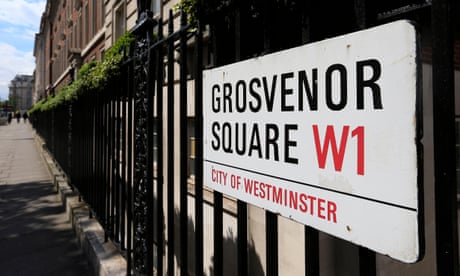
Duke's £9bn inheritance prompts call for tax overhaul
Roddick was also unusual among the children of the rich in that she hadn’t grown up surrounded by wealth. She was largely brought up by her working-class grandmother, “and working-class values – you work hard, you earn your keep and you contribute to society. Entitled people from inherited wealth are all about other people being in service to them.”
She has observed the very wealthy people she has met over the years. “They are isolated from normal society,” she says. With the extremely wealthy, “relationships become transactional, and that is something that is extraordinarily emotionally damaging. A lot of very wealthy people are not accountable to their community, they’re not accountable to the people they love, they show their power and control through transaction and they are unhappy, from what I can tell. The people I know who are very wealthy and are happy are all contributing something to society.” Until we sort out the rules that allow vast fortunes held in trusts, as the Grosvenor estate is, to avoid hefty death duties and be passed down the generations, it’s something for the new Duke of Westminster and his future male heirs to bear in mind.
It is reported that when the 6th Duke of Westminster, who died this week, realised at the age of 15 that he was heir to his family’s immense fortune, he dreaded it – the responsibility, the knowledge that he hadn’t earned it, the isolation it would bring him. He would have prepared his son for the eventuality of becoming duke, although neither would have wanted to think it would happen as early as it did. On Tuesday, Gerald Grosvenor died suddenly at the age of 64; his son Hugh, now the 7th Duke of Westminster, is just 25 and inherits the family’s £9.3bn fortune.
Aside from the trauma of losing a parent – having money does not ease the pain of bereavement – the 25-year-old finds himself in both an enviable, and unenviable, position. On the one hand, he becomes one of the richest men in the world; on the other, money didn’t bring happiness to his father, who appeared to find his title and wealth a burden. “Given the choice I would rather not have been born wealthy, but I never think of giving it up,” he said once. “I can’t sell it. It doesn’t belong to me.”
The Duke of Westminster
It is, however, very difficult to feel sorry for the rich, which is, in itself, a problem for many of them. “They know that others have no sympathy for them, and no understanding of the situation they’re in,” says Thayer Willis, author of Navigating the Dark Side of Wealth: A Life Guide for Inheritors, who runs a counselling business helping the rich deal with the psychological challenges of wealth. “They know not to go around whining and expecting people to feel sorry for them.”
But there are serious challenges that come from inheriting vast fortunes, she says, particularly at a young age. Willis knows many of them herself – she was born into the family that started the Georgia-Pacific Corporation, a timber company worth billions. “I stumbled through my 20s and made a lot of mistakes,” she says.
“For all of us, our 20s and 30s are the ‘building years’, when we’re meant to get out in the world, figure out who we are, what we like to do, who we like, who we like to date,” she says. “Having a tremendous amount of financial wealth come into your life at that point really messes with motivation. All of a sudden the question becomes: ‘What do I need to do to manage this wealth?’ instead of: ‘How do I identify and clarify who I really am?’ People’s motivation to be around you becomes questionable. Are they attracted to me or to this wealth?” These are “definitely first-world problems, but it certainly messes with the psychological development of that young adult”. In her 30s, Willis settled down, trained as a psychotherapist and became a wealth counsellor.
If it’s so awful – an obvious question – why not give the money away? “Some people think of that, usually to the horror of the family. Older family members understand what this money can do in terms of providing a resource for any kind of emergency, or starting a business, or philanthropy.”
For inheritors of wealth going back generations, there is a sense, as Grosvenor said, that they are mere custodians and the money isn’t theirs to give away or lose. “I’ve seen some quite young heirs who really understand the dynastic vision of a family from a pretty early age,” says Julian Washington, head of intermediary relationship management at RBC Wealth Management. “They don’t want to be the weak link in the chain when the family story is told. In my experience, when you deal with old-money families, if you want to call them that, they tend to be pretty good at educating their next generation, because typically they’ve been doing it for centuries.” And when someone – a male member of the family, thanks to outrageous primogeniture – comes to inherit, “more often than not they’re in a pretty good place because they come to it with all that tradition and they understand the nature of the shoes they’re stepping into”.
Mark Zuckerberg and Priscilla Chan Zuckerberg have decided to give away 99% of their fortune – but their daughter, Max, could still inherit $450m. Photograph: AP
Plenty of members of the super-rich have already decided not to burden their children with vast, unearned fortunes in the first place – it is enough that they have had expensive educations and all the opportunities of a privileged start in life. Warren Buffett’s famous take on inheritance is to leave his children “enough money so that they would feel they could do anything, but not so much that they could do nothing”. It has been reported, though not confirmed, that Bill Gates plans to leave his children a meagre $10m (£7.7m) each from his $76bn fortune. Mark and Priscilla Zuckerberg have pledged to give away 99% of their $45bn pile(although it’s all relative – this still leaves them, and their daughter, with $450m). Not quite on the same financial scale, Nigella Lawson has said she isn’t planning to leave her children anything: “It ruins people not having to earn money.”
Sam Roddick, the daughter of the Body Shop founder Anita Roddick, didn’t know that her mother, who died in 2007, had planned to give away her entire £51m fortune. “We found out when it was published in a Daily Mail article,” she laughs. It wasn’t entirely a surprise – her parents were socialists, rather than socialites, and their business was famous for its fair-trade principles. And it wasn’t personal. Cutting one’s child out of your will can, to some, seem like “a deep act of abandonment. I never had that abandonment because I had a healthy relationship with her. I know other people who haven’t been given money and it has been a huge act of aggression.”
Duke's £9bn inheritance prompts call for tax overhaul
Roddick was also unusual among the children of the rich in that she hadn’t grown up surrounded by wealth. She was largely brought up by her working-class grandmother, “and working-class values – you work hard, you earn your keep and you contribute to society. Entitled people from inherited wealth are all about other people being in service to them.”
She has observed the very wealthy people she has met over the years. “They are isolated from normal society,” she says. With the extremely wealthy, “relationships become transactional, and that is something that is extraordinarily emotionally damaging. A lot of very wealthy people are not accountable to their community, they’re not accountable to the people they love, they show their power and control through transaction and they are unhappy, from what I can tell. The people I know who are very wealthy and are happy are all contributing something to society.” Until we sort out the rules that allow vast fortunes held in trusts, as the Grosvenor estate is, to avoid hefty death duties and be passed down the generations, it’s something for the new Duke of Westminster and his future male heirs to bear in mind.
Friday, 12 August 2016
Trusts keep wealth in the hands of the few. It’s time to stop this tax abuse
Richard Murphy in The Guardian
If there is a name that is synonymous with tax avoidance in the UK, it is that of the Duke of Westminster. The duke in question was, admittedly, the second duke, who in 1936 won an infamous tax case that permitted him to pay his gardeners in a way that avoided a tax liability. He achieved abiding fame as a consequence of the opinion of Lord Tomlin, who in his judgment on that case said: “Every man is entitled if he can to order his affairs so that the tax attracted under the appropriate act is less than it otherwise would be. If he succeeds in ordering them so as to secure this result, then, however unappreciative the commissioners of Inland Revenue or his fellow taxpayers may be of his ingenuity, he cannot be compelled to pay an increased tax.”
That statement has, to a large degree, been both the foundation of and justification for all tax avoidance activity in the UK since. That this activity continues is evidenced by the fact that the sixth duke is said to have left an estate worth £9.9bn upon his death this week to his son and yet, despite the fact that inheritance tax is supposedly payable on all estates on death worth more than £325,000, it has been widely reported that very little tax will be due in this case. It seems that the sixth duke has put the second to shame: his forebear saved a few pounds on his wages bill while the sixth has avoided something approaching £4bn. He may in the process have even outdone the fifth duke, who argued the fourth duke died of a war wound 232 years after he suffered it to escape all charges on the estate in the 1960s.
His likely motives for doing so can be easily summarised: there may be greed involved; a belief that the duke’s heirs are better entitled to this property than anyone else; and a hostility to any claim that the state might make on property that has been apparent in the UK aristocracy since the time of the Crusades.
The English legal concept of a trust is believed to have been developed during that era, when knights departing the country with no certainty of returning wanted to ensure that their land passed to those who they thought to be their rightful heirs without interference from the Crown. Trusts achieved that goal and the concept has remained in existence ever since, representing the continual struggle of those with wealth to subvert the rule of law that may apply to others but that they believe should not apply to them.
Recent political challenges have not ended the resulting abuse. Labour tried to introduce effective tax charges on inheritance in the 1970s, the Conservatives undermined them a decade later, and every subsequent attempt to tackle tax abuse using trusts (and Gordon Brown made many), has by and large left existing arrangements intact, only seeking to prevent abuse in new arrangements. As if to add insult to injury, the 2013 general anti-abuse rule, which was introduced by the coalition government and supposedly negated the decision by Lord Tomlin noted above, cannot be applied retrospectively: anything done by a duke before that date is outside of its scope.
So why has this tax avoidance been allowed to continue? First, it’s because no one in the UK has, since 1980, had the political will to tackle the use and abuse of trusts – even though continental Europe has shown it is perfectly possible to run an economy without them. Second, it’s down to the continuing power of the aristocracy and their chosen professional agents (lawyers, accountants, bankers and wealth managers) who have been willing to compromise themselves in exchange for fees to perpetuate the situation. And third, it’s because the Conservatives, in particular, have been keen to let the situation continue unchanged as they support the largely unfettered inheritance of substantial wealth.
Another issue is that we know so little about trusts even when they are at least as powerful as companies and are even more commonly used for tax abuse. This is because of a mistaken perception of privacy, which should only be due to individuals and not artificial arrangements created by law, which trusts are. This can be corrected: we need transparency and that means a full register of trusts and their accounts on public record above modest financial limited, as for companies.
What can be done about this? In addition to the points already noted, the obvious solution is to abolish the inheritance tax reliefs that permit this tax avoidance, whether that be for trusts themselves or for those who own private companies and agricultural land. Inheritance tax assumes that the children of the wealthy are the rightful best next generation of managers of these assets and so lets them be passed on to them tax free, perpetuating wealth concentration in the process.
To put it another way, 800 years of claims by an elite to be above the law applicable to everyone else so that wealth can remain in the hands of the few has to be brought to an end. And if now is not the time to do it, I am really not sure when it will be.
If there is a name that is synonymous with tax avoidance in the UK, it is that of the Duke of Westminster. The duke in question was, admittedly, the second duke, who in 1936 won an infamous tax case that permitted him to pay his gardeners in a way that avoided a tax liability. He achieved abiding fame as a consequence of the opinion of Lord Tomlin, who in his judgment on that case said: “Every man is entitled if he can to order his affairs so that the tax attracted under the appropriate act is less than it otherwise would be. If he succeeds in ordering them so as to secure this result, then, however unappreciative the commissioners of Inland Revenue or his fellow taxpayers may be of his ingenuity, he cannot be compelled to pay an increased tax.”
That statement has, to a large degree, been both the foundation of and justification for all tax avoidance activity in the UK since. That this activity continues is evidenced by the fact that the sixth duke is said to have left an estate worth £9.9bn upon his death this week to his son and yet, despite the fact that inheritance tax is supposedly payable on all estates on death worth more than £325,000, it has been widely reported that very little tax will be due in this case. It seems that the sixth duke has put the second to shame: his forebear saved a few pounds on his wages bill while the sixth has avoided something approaching £4bn. He may in the process have even outdone the fifth duke, who argued the fourth duke died of a war wound 232 years after he suffered it to escape all charges on the estate in the 1960s.
His likely motives for doing so can be easily summarised: there may be greed involved; a belief that the duke’s heirs are better entitled to this property than anyone else; and a hostility to any claim that the state might make on property that has been apparent in the UK aristocracy since the time of the Crusades.
The English legal concept of a trust is believed to have been developed during that era, when knights departing the country with no certainty of returning wanted to ensure that their land passed to those who they thought to be their rightful heirs without interference from the Crown. Trusts achieved that goal and the concept has remained in existence ever since, representing the continual struggle of those with wealth to subvert the rule of law that may apply to others but that they believe should not apply to them.
Recent political challenges have not ended the resulting abuse. Labour tried to introduce effective tax charges on inheritance in the 1970s, the Conservatives undermined them a decade later, and every subsequent attempt to tackle tax abuse using trusts (and Gordon Brown made many), has by and large left existing arrangements intact, only seeking to prevent abuse in new arrangements. As if to add insult to injury, the 2013 general anti-abuse rule, which was introduced by the coalition government and supposedly negated the decision by Lord Tomlin noted above, cannot be applied retrospectively: anything done by a duke before that date is outside of its scope.
So why has this tax avoidance been allowed to continue? First, it’s because no one in the UK has, since 1980, had the political will to tackle the use and abuse of trusts – even though continental Europe has shown it is perfectly possible to run an economy without them. Second, it’s down to the continuing power of the aristocracy and their chosen professional agents (lawyers, accountants, bankers and wealth managers) who have been willing to compromise themselves in exchange for fees to perpetuate the situation. And third, it’s because the Conservatives, in particular, have been keen to let the situation continue unchanged as they support the largely unfettered inheritance of substantial wealth.
Another issue is that we know so little about trusts even when they are at least as powerful as companies and are even more commonly used for tax abuse. This is because of a mistaken perception of privacy, which should only be due to individuals and not artificial arrangements created by law, which trusts are. This can be corrected: we need transparency and that means a full register of trusts and their accounts on public record above modest financial limited, as for companies.
What can be done about this? In addition to the points already noted, the obvious solution is to abolish the inheritance tax reliefs that permit this tax avoidance, whether that be for trusts themselves or for those who own private companies and agricultural land. Inheritance tax assumes that the children of the wealthy are the rightful best next generation of managers of these assets and so lets them be passed on to them tax free, perpetuating wealth concentration in the process.
To put it another way, 800 years of claims by an elite to be above the law applicable to everyone else so that wealth can remain in the hands of the few has to be brought to an end. And if now is not the time to do it, I am really not sure when it will be.
Subscribe to:
Comments (Atom)