The Brexit figureheads had no plan besides exploiting populist fears and dismissing experts who rubbished their thinking
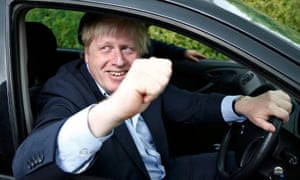
‘Prospered by treating public life as a game’: Boris Johnson leaves his home in Oxfordshire on Saturday. Photograph: Peter Nicholls/Reuters
Where was the champagne at the Vote Leave headquarters? The happy tears and whoops of joy? If you believed Boris Johnson and Michael Gove, the Brexit vote was a moment of national liberation, a day that Nigel Farage said our grateful children would celebrate with an annual bank holiday.
Johnson and Gove had every reason to celebrate. The referendum campaign showed the only arguments that matter now in England are on the right. With the Labour leadership absent without leave and the Liberal Democrats and Greens struggling to be heard, the debate was between David Cameron and George Osborne, defending the status quo, and the radical right, demanding its destruction. Johnson and Gove won a dizzying victory with the potential to change every aspect of national life, from workers’ rights to environmental protection.
Yet they gazed at the press with coffin-lid faces and wept over the prime minister they had destroyed. David Cameron was “brave and principled”, intoned Johnson. “A great prime minister”, muttered Gove. Like Goneril and Regan competing to offer false compliments to Lear, they covered the leader they had doomed with hypocritical praise. No one whoops at a funeral, especially not mourners who are glad to see the back of the deceased. But I saw something beyond hypocrisy in those frozen faces: the fear of journalists who have been found out.
The media do not damn themselves, so I am speaking out of turn when I say that if you think rule by professional politicians is bad wait until journalist politicians take over. Johnson and Gove are the worst journalist politicians you can imagine: pundits who have prospered by treating public life as a game. Here is how they play it. They grab media attention by blaring out a big, dramatic thought. An institution is failing? Close it. A public figure blunders? Sack him. They move from journalism to politics, but carry on as before. When presented with a bureaucratic EU that sends us too many immigrants, they say the answer is simple, as media answers must be. Leave. Now. Then all will be well.
Johnson and Gove carried with them a second feature of unscrupulous journalism: the contempt for practical questions. Never has a revolution in Britain’s position in the world been advocated with such carelessness. The Leave campaign has no plan. And that is not just because there was a shamefully under-explored division between the bulk of Brexit voters who wanted the strong welfare state and solid communities of their youth and the leaders of the campaign who wanted Britain to become an offshore tax haven. Vote Leave did not know how to resolve difficulties with Scotland, Ireland, the refugee camp at Calais, and a thousand other problems, and did not want to know either.
It responded to all who predicted the chaos now engulfing us like an unscrupulous pundit who knows that his living depends on shutting up the experts who gainsay him. For why put the pundit on air, why pay him a penny, if experts can show that everything he says is windy nonsense? The worst journalists, editors and broadcasters know their audiences want entertainment, not expertise. If you doubt me, ask when you last saw panellists on Question Time who knew what they were talking about.
Naturally, Michael Gove, former Times columnist, responded to the thousands of economists who warned he was taking an extraordinary risk with the sneer that will follow him to his grave: “People in this country have had enough of experts.” He’s being saying the same for years.
If sneers won’t work, the worst journalists lie. The Times fired Johnson for lying to its readers. Michael Howard fired Johnson for lying to him. When he’s cornered, Johnson accuses others of his own vices, as unscrupulous journalists always do. Those who question him are the true liars, he blusters, whose testimony cannot be trusted because, as he falsely said of the impeccably honest chairman of the UK Statistics Authority, they are “stooges”.
The Vote Leave campaign followed the tactics of the sleazy columnist to the letter. First, it came out with the big, bold solution: leave. Then it dismissed all who raised well-founded worries with “the country is sick of experts”. Then, like Johnson the journalist, it lied.
I am not going to be over-dainty about mendacity. Politicians, including Remain politicians lie, as do the rest of us. But not since Suez has the nation’s fate been decided by politicians who knowingly made a straight, shameless, incontrovertible lie the first plank of their campaign. Vote Leave assured the electorate it would reclaim a supposed £350m Brussels takes from us each week. They knew it was a lie. Between them, they promised to spend £111bn on the NHS, cuts to VAT and council tax, higher pensions, a better transport system and replacements for the EU subsidies to the arts, science, farmers and deprived regions. When boring experts said that, far from being rich, we would face a £40bn hole in our public finances, Vote Leave knew how to fight back. In Johnsonian fashion, it said that the truth tellers were corrupt liars in Brussels’ pocket.
Where was the champagne at the Vote Leave headquarters? The happy tears and whoops of joy? If you believed Boris Johnson and Michael Gove, the Brexit vote was a moment of national liberation, a day that Nigel Farage said our grateful children would celebrate with an annual bank holiday.
Johnson and Gove had every reason to celebrate. The referendum campaign showed the only arguments that matter now in England are on the right. With the Labour leadership absent without leave and the Liberal Democrats and Greens struggling to be heard, the debate was between David Cameron and George Osborne, defending the status quo, and the radical right, demanding its destruction. Johnson and Gove won a dizzying victory with the potential to change every aspect of national life, from workers’ rights to environmental protection.
Yet they gazed at the press with coffin-lid faces and wept over the prime minister they had destroyed. David Cameron was “brave and principled”, intoned Johnson. “A great prime minister”, muttered Gove. Like Goneril and Regan competing to offer false compliments to Lear, they covered the leader they had doomed with hypocritical praise. No one whoops at a funeral, especially not mourners who are glad to see the back of the deceased. But I saw something beyond hypocrisy in those frozen faces: the fear of journalists who have been found out.
The media do not damn themselves, so I am speaking out of turn when I say that if you think rule by professional politicians is bad wait until journalist politicians take over. Johnson and Gove are the worst journalist politicians you can imagine: pundits who have prospered by treating public life as a game. Here is how they play it. They grab media attention by blaring out a big, dramatic thought. An institution is failing? Close it. A public figure blunders? Sack him. They move from journalism to politics, but carry on as before. When presented with a bureaucratic EU that sends us too many immigrants, they say the answer is simple, as media answers must be. Leave. Now. Then all will be well.
Johnson and Gove carried with them a second feature of unscrupulous journalism: the contempt for practical questions. Never has a revolution in Britain’s position in the world been advocated with such carelessness. The Leave campaign has no plan. And that is not just because there was a shamefully under-explored division between the bulk of Brexit voters who wanted the strong welfare state and solid communities of their youth and the leaders of the campaign who wanted Britain to become an offshore tax haven. Vote Leave did not know how to resolve difficulties with Scotland, Ireland, the refugee camp at Calais, and a thousand other problems, and did not want to know either.
It responded to all who predicted the chaos now engulfing us like an unscrupulous pundit who knows that his living depends on shutting up the experts who gainsay him. For why put the pundit on air, why pay him a penny, if experts can show that everything he says is windy nonsense? The worst journalists, editors and broadcasters know their audiences want entertainment, not expertise. If you doubt me, ask when you last saw panellists on Question Time who knew what they were talking about.
Naturally, Michael Gove, former Times columnist, responded to the thousands of economists who warned he was taking an extraordinary risk with the sneer that will follow him to his grave: “People in this country have had enough of experts.” He’s being saying the same for years.
If sneers won’t work, the worst journalists lie. The Times fired Johnson for lying to its readers. Michael Howard fired Johnson for lying to him. When he’s cornered, Johnson accuses others of his own vices, as unscrupulous journalists always do. Those who question him are the true liars, he blusters, whose testimony cannot be trusted because, as he falsely said of the impeccably honest chairman of the UK Statistics Authority, they are “stooges”.
The Vote Leave campaign followed the tactics of the sleazy columnist to the letter. First, it came out with the big, bold solution: leave. Then it dismissed all who raised well-founded worries with “the country is sick of experts”. Then, like Johnson the journalist, it lied.
I am not going to be over-dainty about mendacity. Politicians, including Remain politicians lie, as do the rest of us. But not since Suez has the nation’s fate been decided by politicians who knowingly made a straight, shameless, incontrovertible lie the first plank of their campaign. Vote Leave assured the electorate it would reclaim a supposed £350m Brussels takes from us each week. They knew it was a lie. Between them, they promised to spend £111bn on the NHS, cuts to VAT and council tax, higher pensions, a better transport system and replacements for the EU subsidies to the arts, science, farmers and deprived regions. When boring experts said that, far from being rich, we would face a £40bn hole in our public finances, Vote Leave knew how to fight back. In Johnsonian fashion, it said that the truth tellers were corrupt liars in Brussels’ pocket.
Now they have won and what Kipling said of the demagogues of his age applies to Michael Gove, Boris Johnson and Nigel Farage.
I could not dig; I dared not rob:
Therefore I lied to please the mob.
Now all my lies are proved untrue
And I must face the men I slew.
What tale shall serve me here among
Mine angry and defrauded young?
The real division in Britain is not between London and the north, Scotland and Wales or the old and young, but between Johnson, Gove and Farage and the voters they defrauded. What tale will serve them now? On Thursday, they won by promising cuts in immigration. On Friday, Johnson and the Eurosceptic ideologue Dan Hannan said that in all probability the number of foreigners coming here won’t fall. On Thursday, they promised the economy would boom. By Friday, the pound was at a 30-year low and Daily Mail readers holidaying abroad were learning not to believe what they read in the papers. On Thursday, they promised £350m extra a week for the NHS. On Friday, it turns out there are “no guarantees”.
If we could only find a halfway competent opposition, the very populist forces they have exploited and misled so grievously would turn on them. The fear in their eyes shows that they know it.
I could not dig; I dared not rob:
Therefore I lied to please the mob.
Now all my lies are proved untrue
And I must face the men I slew.
What tale shall serve me here among
Mine angry and defrauded young?
The real division in Britain is not between London and the north, Scotland and Wales or the old and young, but between Johnson, Gove and Farage and the voters they defrauded. What tale will serve them now? On Thursday, they won by promising cuts in immigration. On Friday, Johnson and the Eurosceptic ideologue Dan Hannan said that in all probability the number of foreigners coming here won’t fall. On Thursday, they promised the economy would boom. By Friday, the pound was at a 30-year low and Daily Mail readers holidaying abroad were learning not to believe what they read in the papers. On Thursday, they promised £350m extra a week for the NHS. On Friday, it turns out there are “no guarantees”.
If we could only find a halfway competent opposition, the very populist forces they have exploited and misled so grievously would turn on them. The fear in their eyes shows that they know it.