David Shariatmadari in The Guardian
When you picture a “grammar nazi”, what does that person look like?
Are they old or young? Male or female? Professorial or blue-collar?
A new study suggests they could be any of those things. In an experiment involving 80 Americans from a range of backgrounds, linguists Julie Boland and Robin Queen found no significant links between a judgmental attitude towards “typos” and “grammos” and gender, age or level of education.
So you can’t tell if someone hunts down misprints and writes letters to editors just by looking at them. If you know something about the way they experience the world, though, you might be able to take an educated guess.
Introverts, it turns out, are more likely to get annoyed at both typos and grammos. Not only that; they’ll probably not want to share their lives with you if you’re particularly error-prone.
Boland and Queen tested people’s reactions to emails responding to an ad for a housemate. Some of them contained typos, some grammos and some were perfectly written. They were then asked whether they agreed with statements like “the writer seems friendly”, “the writer seems considerate”, “the writer seems trustworthy”. Their ratings were combined to produce an overall “good housemate” score.
They then had to fill out questionnaires about their own personalities, based on the “big five” traits – openness, conscientiousness, extraversion, agreeableness and neuroticism.
And that’s how the researchers found that introverts were more likely than extraverts to rate people as poor potential housemates if their spelling or grammar was bad. There were other findings – agreeable people, perhaps unsurprisingly, were easygoing when it came to grammos. Conscientious people tended to see typos as a problem. Levels of neuroticism, oddly enough, didn’t predict any kind of penchant for pet peeves.
But the finding about introversion is intriguing, because it’s harder to understand.
First, a word about what makes an introvert. It’s not the same as being shy. The following quote summarises one common view, associated with psychologist Hans Eysenck.
Eysenck’s theory was that extroverts have just a slightly lower basic rate of arousal. The effect is that they need to work a little harder to get themselves up to the level others find normal and pleasant without doing anything. Hence the need for company, seeking out novel experiences and risks. Conversely, highly introverted individuals find themselves overstimulated by things others might find merely pleasantly exciting or engaging.
I spoke to Robin Queen. “We hadn’t quite anticipated that introversion would have the effect it did,” she told me.
“I found myself asking: this is weird – why would it be the case that introverts care more?”
Queen isn’t an expert in the study of personality – she’s a linguist – but she has a hunch. “My guess is that introverts have more sensitivity to variability.” That could make variations from the norm like mistakes – which require extra processing that increases arousal – more irksome.
“Maybe there’s something about extraverts that makes them less bothered by it. Because extraverts enjoy variability and engaging with people. They find that energising. This could be an indirect manifestation of that.”
I would describe myself as an introvert (I just took two “big five” personality tests and scored 42/100 and 47/100 for extraversion, so maybe I’m more of a people-person than I thought). I’m also an editor, with more than a passing interest in language. Two forces compete within me when I see a grammo or worse. As a linguist, I know that meaning is use – so, if lots of people use “disinterested” to mean “uninterested”, well, that’s now part of its meaning. Error is the engine of language change. Error is inevitable.
But at the same time, I feel something akin to having a stone in my shoe when I see a mistake. It acts as an irritant. If I had to relate that to my introversion, then I would say a sense of order and predictability is important to me. I like it when things are under control.
I’m not sure whether that makes me a good housemate or not. But I can spot a dangling modifier a mile off.
Wednesday, 30 March 2016
Apple v FBI - Some Uncomfortable Truths

‘We must not lose sight of corporate power.’ Grand Central, an installation by Valentin Ruhry, cleverly subverts digital consumer culture with a product display featuring everyday objects found at a train station. MAK GALLERY, Vienna, 2014, curated by Marlies Wirth. Courtesy of Christine König Galerie, Vienna.
Julia Powles and Enrique Chaparro in The Guardian
It has been a spectacular six-week showdown – the world’s most valuable brand, Apple, pitted against the powerful American agents of the FBI. Two titans of spin, locked in a fast-moving battle over a dead terrorist’s smartphone. Now, as dramatically as it exploded, the FBI’s legal demand that Apple help it crack the iPhone of one of the San Bernardino killers has evaporated – the agents hacked their way in anyway, assisted by a mysterious third party.
There was always more to the Apple v FBI case than met the eye – and it is true for this latest twist too. The biggest issue is that both sides stand to gain a lot more from this battle than any of us. With little relation to reality, and backed by a worryingly partisan chorus, the notoriously closed Apple is emerging as a champion of users’ rights. Equally worryingly, a government agency is claiming the power to keep to itself a tool that can potentially break security features on millions of phones, while earmarking a demand for further judicial or legislative intervention in the future. Whichever way you look, this feud is far from a road to freedom in the digital environment.
Julia Powles and Enrique Chaparro in The Guardian
It has been a spectacular six-week showdown – the world’s most valuable brand, Apple, pitted against the powerful American agents of the FBI. Two titans of spin, locked in a fast-moving battle over a dead terrorist’s smartphone. Now, as dramatically as it exploded, the FBI’s legal demand that Apple help it crack the iPhone of one of the San Bernardino killers has evaporated – the agents hacked their way in anyway, assisted by a mysterious third party.
There was always more to the Apple v FBI case than met the eye – and it is true for this latest twist too. The biggest issue is that both sides stand to gain a lot more from this battle than any of us. With little relation to reality, and backed by a worryingly partisan chorus, the notoriously closed Apple is emerging as a champion of users’ rights. Equally worryingly, a government agency is claiming the power to keep to itself a tool that can potentially break security features on millions of phones, while earmarking a demand for further judicial or legislative intervention in the future. Whichever way you look, this feud is far from a road to freedom in the digital environment.
Breaching Fortress Apple
From the FBI’s side, it seems clear that the case was opportunistically selected. No one wants to defend a terrorist. And after hammering on about law enforcement “going dark” on secured communications, the authorities were salivating for a pin-up case. Terror on home soil provided it.
But the FBI failed to account for one thing: the fallout of enraging a cultish brand on top of the most guarded, controlling ecosystem that computing has ever seen. Apple, incensed at the idea of anyone trespassing on its authority, went public – an equally opportunistic move, straight from the Taylor Swift playbook. And in so doing, Apple debunked the FBI’s otherwise earnest rhetoric that it only wanted to get at one iPhone, from one terrorist.
The key fact is that the FBI demanded a general tool: a modified operating system able to circumvent certain user-set security features in any given iPhone. There are clear dangers in bringing such a tool into existence. As forensics expert Jonathan Ździarski puts it, this is “a bomb on a leash”; a leash that can be undone, legally or otherwise. The FBI’s last-minute deferral of the court hearing in this case would, ideally, have been the enlightened recognition of this reality, as well as the multiple case-handling incompetencies and dubious legal foundations of the FBI’s request. Bizarrely, the withdrawal was on another ground: a third party had emerged with a hack. With the case now wholly dropped, we have a new danger: a classified bomb held by the FBI and unknown third-party hackers – but not by Apple, the one party capable of defusing it.
These facts are as much as the public debate has countenanced, resulting in predictable mud-slinging between techies and bureaucrats; big tech and big brother. What this misses is that this case has been a cause célèbre all along because it presents minimal threat to vested interests and power.
Apple v FBI was never the mother of all privacy battles. It is and always has been a security battle, between alleged national security and individual security, fought over a landscape of increasing insecurity.
It is this insecurity – existing, pervasive, worsening, global vulnerability of our infrastructure, communications and rights – that has been the greatest deception in this battle to date. Because despite how Apple has portrayed itself and been valorized by the media, phones are not impregnable, nor are our data and the platforms they reside on. Not by a long shot. The outside hack proves just that: if an external source that decided to cooperate with the FBI could break into the phone, and in shockingly short time, other less savory sources could do so too.
This case should be a tremendous opportunity for a global conversation about technology fragility. We need responsible leadership that recognizes that there is no such thing as perfect security, and that responds with restraint and redundancy, rather than a headlong tumble into connecting all the things.
Coupled to this must be a specific concession at the heart of the case and the unsatisfactory truce now reached. Digital locks and picks, by their very nature, are binary – they work for all or for none. In the current state of the art, it isimpossible to manufacture what the FBI wants: implanted vulnerabilities, or “backdoors”, that work exclusively for “good guys with a warrant”. Whatever the FBI is holding now, it suffers from this reality. But the problem is also bigger than that. As renowned computer security expert Matt Blaze describes the essence of the dilemma: “We can’t discuss how to make our systems secure with backdoors until we can figure out how to do it without backdoors.”
Boxing in the shadows of vast corporate power
This case, and others like it, are also an opportunity for a deep and reaching conversation about corporate power, and about the increasing intrusion of tech majors into democratic space. This is an angle that has been worryingly absent in most of the case’s commentary.
Regardless of the merits of its position, many of the arguments that have been marshaled at Apple’s feet in recent weeks set a dangerous, potentially pernicious trend. In particular, the argument that corporations are subjects entitled to human rights such as freedom of expression is deeply problematic, undermining reasonable regulation and presenting a destabilizing influence on democracy. The black box society is real, and this case and inevitable future iterations of the same battle have every indication of making it worse.
So we are at the crossroads. And out in the cold. Many decisive questions still remain open, and despite the reams of technical jargon written about this case, its core is not primarily technical, but political.
Under ideal circumstances, and privilege against self-incrimination aside, we should expect that any society would reasonably cooperate with law enforcement to investigate heinous crimes. But what is the most rational response to take when authorities such as the FBI, as well as lawmakers around the world,continue to overreach in their demands, seemingly unwilling to protect an already fragile technology ecosystem and our rights within it?
At the same time, the sheer scale of corporate power challenges the very foundations of democracy, while keeping us locked within walled gardens. Apple,Google, Facebook and the rest have received a tremendous windfall from this case, with nothing more than their words to induce our trust. But trust must be earned. It is predicated on transparency and it demands accountability, not marketing and press releases. Big tech will maintain privacy (or whatever theydefine as privacy) as far as it is convenient for their business. And when it is not, they will gladly forgo it. Apple is no more immune to this than any other business, and we should be as vigilant about its power as we are about any government.
Political, legal and technical solutions (in that order) for these problems may exist. Only honest, open, democratic discussion can find them.
Tuesday, 29 March 2016
FBI-Apple case: Investigators break into dead San Bernardino gunman's iPhone
The FBI has managed to unlock the iPhone of the San Bernardino gunman without Apple's help, ending a court case, the US justice department says.
Apple had been resisting a court order issued last month requiring the firm to write new software to allow officials to access Syed Rizwan Farook's phone.
But officials on Monday said that it had been accessed independently and asked for the order to be withdrawn.
Farook and his wife killed 14 in San Bernardino, California, in December.
They were later shot dead by police.
The FBI said it needed access to the phone's data to determine if the attackers worked with others, were targeting others and were supported by others.
US officials said Farook's wife, Tashfeen Malik, had pledged allegiance to the so-called Islamic State on social media on the day of the shooting.
Last week, prosecutors said "an outside party" had demonstrated a possible way of unlocking the iPhone without the need to seek Apple's help.
A court hearing with Apple was postponed at the request of the justice department, while it investigated new ways of accessing the phone.
At the time, Apple said it did not know how to gain access, and said it hoped that the government would share with them any vulnerabilities of the iPhone that might come to light.
On Monday a statement by Eileen Decker, the top federal prosecutor in California, said investigators had received the help of "a third party", but did not specify who that was.
Investigators had "a solemn commitment to the victims of the San Bernardino shooting", she said.
"It remains a priority for the government to ensure that law enforcement can obtain crucial digital information to protect national security and public safety, either with co-operation from relevant parties, or through the court system when co-operation fails," the statement added.
Responding to the move, Apple said: "From the beginning, we objected to the FBI's demand that Apple build a backdoor into the iPhone because we believed it was wrong and would set a dangerous precedent. As a result of the government's dismissal, neither of these occurred. This case should never have been brought."
The company said it would "continue to increase the security of our products as the threats and attacks on our data become more frequent and more sophisticated".

Analysis: Dave Lee, BBC North America technology reporter
The court case that had the US technology industry united against the FBI has for the time being gone away.
Now this debate moves into more uncertain territory. The US government has knowledge of a security vulnerability that in theory weakens Apple devices around the world.
To protect its reputation, Apple will rush to find and fix that flaw. Assuming it can do that, this row is back to square one.
Therefore Apple has called for the matter to remain part of the "national conversation", while the US department of justice says it will still try to use the courts to compel Apple and other phone makers to help with future investigations.
An Israeli newspaper last week reported that data forensics experts at cybersecurity firm Cellebrite, which has its headquarters in Israel, are involved in the case.
Cellebrite told the BBC that it works with the FBI but would not say more.
Its website, however, states that one of its tools can extract and decode data from the iPhone 5C, the model in question, among other locked handsets.
The court order had led to a vigorous debate over privacy, with Apple receiving support from other tech giants including Google, Microsoft, and Facebook.
FBI director James Comey said it was the "hardest question" he had tackled in his job.
However, he said, law enforcement saved lives, rescued children and prevented terror attacks using search warrants that gave it access to information on mobile phones.
This may shock you: Hillary Clinton is fundamentally honest
Jill Abramson in The Guardian
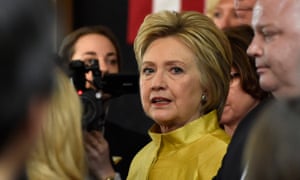
It’s impossible to miss the “Hillary for Prison” signs at Trump rallies. At one of the Democratic debates, the moderator asked Hillary Clinton whether she would drop out of the race if she were indicted over her private email server. “Oh for goodness – that is not going to happen,” she said. “I’m not even going to answer that question.”
Based on what I know about the emails, the idea of her being indicted or going to prison is nonsensical. Nonetheless, the belief that Clinton is dishonest and untrustworthy is pervasive. A recent New York Times-CBS poll found that 40% of Democrats say she cannot be trusted.
For decades she’s been portrayed as a Lady Macbeth involved in nefarious plots, branded as “a congenital liar” and accused of covering up her husband’s misconduct, from Arkansas to Monica Lewinsky. Some of this is sexist caricature. Some is stoked by the “Hillary is a liar” videos that flood Facebook feeds. Some of it she brings on herself by insisting on a perimeter or “zone of privacy” that she protects too fiercely. It’s a natural impulse, given the level of scrutiny she’s attracted, more than any male politician I can think of.
I would be “dead rich”, to adapt an infamous Clinton phrase, if I could bill for all the hours I’ve spent covering just about every “scandal” that has enveloped the Clintons. As an editor I’ve launched investigations into her business dealings, her fundraising, her foundation and her marriage. As a reporter my stories stretch back to Whitewater. I’m not a favorite in Hillaryland. That makes what I want to say next surprising.
Hillary Clinton is fundamentally honest and trustworthy.
The yardsticks I use for measuring a politician’s honesty are pretty simple. Ever since I was an investigative reporter covering the nexus of money and politics, I’ve looked for connections between money (including campaign donations, loans, Super Pac funds, speaking fees, foundation ties) and official actions. I’m on the lookout for lies, scrutinizing statements candidates make in the heat of an election.
The connection between money and action is often fuzzy. Many investigative articles about Clinton end up “raising serious questions” about “potential” conflicts of interest or lapses in her judgment. Of course, she should be held accountable. It was bad judgment, as she has said, to use a private email server. It was colossally stupid to take those hefty speaking fees, but not corrupt. There are no instances I know of where Clinton was doing the bidding of a donor or benefactor.
As for her statements on issues, Politifact, a Pulitzer prize-winning fact-checking organization, gives Clinton the best truth-telling record of any of the 2016 presidential candidates. She beats Sanders and Kasich and crushes Cruz and Trump, who has the biggest “pants on fire” rating and has told whoppers about basic economics that are embarrassing for anyone aiming to be president. (He falsely claimed GDP has dropped the last two quarters and claimed the national unemployment rate was as high as 35%).
I can see why so many voters believe Clinton is hiding something because her instinct is to withhold. As first lady, she refused to turn over Whitewater documents that might have tamped down the controversy. Instead, by not disclosing information, she fueled speculation that she was hiding grave wrongdoing. In his book about his time working in the Clinton White House, All Too Human, ABC’s George Stephanopoulos wrote that failing to convince the first lady to turn over the records of the Arkansas land deal to the Washington Post was his biggest regret.
The same pattern of concealment repeats itself through the current campaign in her refusal to release the transcripts of her highly paid speeches. So the public is left wondering if she made secret promises to Wall Street or is hiding something else. The speeches are probably anodyne (politicians always praise their hosts), so why not release them?
Colin Diersing, a former student of mine who is a leader of Harvard’s Institute of Politics, thinks a gender-related double standard gets applied to Clinton. “We expect purity from women candidates,” he said. When she behaves like other politicians or changes positions, “it’s seen as dishonest”, he adds. CBS anchor Scott Pelley seemed to prove Diersing’s point when he asked Clinton: “Have you always told the truth?” She gave an honest response, “I’ve always tried to, always. Always.” Pelley said she was leaving “wiggle room”. What politician wouldn’t?
Clinton distrusts the press more than any politician I have covered. In her view, journalists breach the perimeter and echo scurrilous claims about her circulated by unreliable rightwing foes. I attended a private gathering in South Carolina a month after Bill Clinton was elected in 1992. Only a few reporters were invited and we sat together at a luncheon where Hillary Clinton spoke. She glared down at us, launching into a diatribe about how the press had invaded the Clintons’ private life. The distrust continues.
These are not new thoughts, but they are fundamental to understanding her. Tough as she can seem, she doesn’t have rhino hide, and during her husband’s first term in the White House, according to Her Way, a critical (and excellent) investigative biography of Clinton by Jeff Gerth and Don Van Natta, she became very depressed during the Whitewater imbroglio. A few friends and aides have told me that the email controversy has upset her as badly.
Like most politicians, she’s switched some of her positions and sometimes shades the truth. In debates with Sanders, she cites her tough record on Wall Street, but her Senate bills, like one curbing executive pay, went nowhere. She favors ending the carried interest loophole cherished by hedge funds and private equity executives because it taxes their incomes at a lower rate than ordinary income. But, according to an article by Gerth, she did not sign on to bipartisan legislation in 2007 that would have closed it. She voted for a bankruptcy bill favored by big banks that she initially opposed, drawing criticism from Elizabeth Warren. Clinton says she improved the bill before voting for passage. Her earlier opposition to gay marriage, which she later endorsed, has hurt her with young people. Labor worries about her different statements on trade deals.
Still, Clinton has mainly been constant on issues and changing positions over time is not dishonest.
It’s fair to expect more transparency. But it’s a double standard to insist on her purity.
It’s impossible to miss the “Hillary for Prison” signs at Trump rallies. At one of the Democratic debates, the moderator asked Hillary Clinton whether she would drop out of the race if she were indicted over her private email server. “Oh for goodness – that is not going to happen,” she said. “I’m not even going to answer that question.”
Based on what I know about the emails, the idea of her being indicted or going to prison is nonsensical. Nonetheless, the belief that Clinton is dishonest and untrustworthy is pervasive. A recent New York Times-CBS poll found that 40% of Democrats say she cannot be trusted.
For decades she’s been portrayed as a Lady Macbeth involved in nefarious plots, branded as “a congenital liar” and accused of covering up her husband’s misconduct, from Arkansas to Monica Lewinsky. Some of this is sexist caricature. Some is stoked by the “Hillary is a liar” videos that flood Facebook feeds. Some of it she brings on herself by insisting on a perimeter or “zone of privacy” that she protects too fiercely. It’s a natural impulse, given the level of scrutiny she’s attracted, more than any male politician I can think of.
I would be “dead rich”, to adapt an infamous Clinton phrase, if I could bill for all the hours I’ve spent covering just about every “scandal” that has enveloped the Clintons. As an editor I’ve launched investigations into her business dealings, her fundraising, her foundation and her marriage. As a reporter my stories stretch back to Whitewater. I’m not a favorite in Hillaryland. That makes what I want to say next surprising.
Hillary Clinton is fundamentally honest and trustworthy.
The yardsticks I use for measuring a politician’s honesty are pretty simple. Ever since I was an investigative reporter covering the nexus of money and politics, I’ve looked for connections between money (including campaign donations, loans, Super Pac funds, speaking fees, foundation ties) and official actions. I’m on the lookout for lies, scrutinizing statements candidates make in the heat of an election.
The connection between money and action is often fuzzy. Many investigative articles about Clinton end up “raising serious questions” about “potential” conflicts of interest or lapses in her judgment. Of course, she should be held accountable. It was bad judgment, as she has said, to use a private email server. It was colossally stupid to take those hefty speaking fees, but not corrupt. There are no instances I know of where Clinton was doing the bidding of a donor or benefactor.
As for her statements on issues, Politifact, a Pulitzer prize-winning fact-checking organization, gives Clinton the best truth-telling record of any of the 2016 presidential candidates. She beats Sanders and Kasich and crushes Cruz and Trump, who has the biggest “pants on fire” rating and has told whoppers about basic economics that are embarrassing for anyone aiming to be president. (He falsely claimed GDP has dropped the last two quarters and claimed the national unemployment rate was as high as 35%).
I can see why so many voters believe Clinton is hiding something because her instinct is to withhold. As first lady, she refused to turn over Whitewater documents that might have tamped down the controversy. Instead, by not disclosing information, she fueled speculation that she was hiding grave wrongdoing. In his book about his time working in the Clinton White House, All Too Human, ABC’s George Stephanopoulos wrote that failing to convince the first lady to turn over the records of the Arkansas land deal to the Washington Post was his biggest regret.
The same pattern of concealment repeats itself through the current campaign in her refusal to release the transcripts of her highly paid speeches. So the public is left wondering if she made secret promises to Wall Street or is hiding something else. The speeches are probably anodyne (politicians always praise their hosts), so why not release them?
Colin Diersing, a former student of mine who is a leader of Harvard’s Institute of Politics, thinks a gender-related double standard gets applied to Clinton. “We expect purity from women candidates,” he said. When she behaves like other politicians or changes positions, “it’s seen as dishonest”, he adds. CBS anchor Scott Pelley seemed to prove Diersing’s point when he asked Clinton: “Have you always told the truth?” She gave an honest response, “I’ve always tried to, always. Always.” Pelley said she was leaving “wiggle room”. What politician wouldn’t?
Clinton distrusts the press more than any politician I have covered. In her view, journalists breach the perimeter and echo scurrilous claims about her circulated by unreliable rightwing foes. I attended a private gathering in South Carolina a month after Bill Clinton was elected in 1992. Only a few reporters were invited and we sat together at a luncheon where Hillary Clinton spoke. She glared down at us, launching into a diatribe about how the press had invaded the Clintons’ private life. The distrust continues.
These are not new thoughts, but they are fundamental to understanding her. Tough as she can seem, she doesn’t have rhino hide, and during her husband’s first term in the White House, according to Her Way, a critical (and excellent) investigative biography of Clinton by Jeff Gerth and Don Van Natta, she became very depressed during the Whitewater imbroglio. A few friends and aides have told me that the email controversy has upset her as badly.
Like most politicians, she’s switched some of her positions and sometimes shades the truth. In debates with Sanders, she cites her tough record on Wall Street, but her Senate bills, like one curbing executive pay, went nowhere. She favors ending the carried interest loophole cherished by hedge funds and private equity executives because it taxes their incomes at a lower rate than ordinary income. But, according to an article by Gerth, she did not sign on to bipartisan legislation in 2007 that would have closed it. She voted for a bankruptcy bill favored by big banks that she initially opposed, drawing criticism from Elizabeth Warren. Clinton says she improved the bill before voting for passage. Her earlier opposition to gay marriage, which she later endorsed, has hurt her with young people. Labor worries about her different statements on trade deals.
Still, Clinton has mainly been constant on issues and changing positions over time is not dishonest.
It’s fair to expect more transparency. But it’s a double standard to insist on her purity.
Subscribe to:
Posts (Atom)