Mathew Syed in The Guardian
Accountability. We hear a lot about it. It’s a buzzword. Politicians should be accountable for their actions; social workers for the children they are supervising; nurses for their patients. But there’s a catastrophic problem with our concept of accountability.
Consider the case of Peter Connelly, better known as Baby P, a child who died at the hands of his mother, her boyfriend and her boyfriend’s brother in 2007. The perpetrators were sentenced to prison. But the media focused its outrage on a different group: mainly his social worker, Maria Ward, and Sharon Shoesmith, director of children’s services. The local council offices were surrounded by a crowd holding placards. In interviews, protesters and politicians demanded their sacking. “They must be held accountable,” it was said.
Many were convinced that the social work profession would improve its performance in the aftermath of the furore. This is what people think accountability looks like: a muscular response to failure. It is about forcing people to sit up and take responsibility. As one pundit put it: “It will focus minds.”
But what really happened? Did child services improve? In fact, social workers started leaving the profession en masse. The numbers entering the profession also plummeted. In one area, the council had to spend £1.5m on agency social work teams because it didn’t have enough permanent staff to handle a jump in referrals.
Those who stayed in the profession found themselves with bigger caseloads and less time to look after the interests of each child. They also started to intervene more aggressively, terrified that a child under their supervision would be harmed. The number of children removed from their families soared. £100m was needed to cope with new child protection orders.
Crucially, defensiveness started to infiltrate every aspect of social work. Social workers became cautious about what they documented. The bureaucratic paper trails got longer, but the words were no longer about conveying information, they were about back-covering. Precious information was concealed out of sheer terror of the consequences.
Almost every commentator estimates that the harm done to children following the attempt to “increase accountability” was high indeed. Performance collapsed. The number of children killed at the hands of their parents increased by more than 25% in the year following the outcry and remained higher for every one of the next three years.
Let us take a step back. One of the most well-established human biases is called the fundamental attribution error. It is about how the sense-making part of the brain blames individuals, rather than systemic factors, when things go wrong. When volunteers are shown a film of a driver cutting across lanes, for example, they infer that he is selfish and out of control. And this inference may indeed turn out to be true. But the situation is not always as cut-and-dried.
After all, the driver may have the sun in his eyes or be swerving to avoid a car. To most observers looking from the outside in, these factors do not register. It is not because they don’t think such possibilities are irrelevant, it is that often they don’t even consider them. The brain just sees the simplest narrative: “He’s a homicidal fool!”
Even in an absurdly simple event like this, then, it pays to pause to look beneath the surface, to challenge the most reductionist narrative. This is what aviation, as an industry, does. When mistakes are made, investigations are conducted. A classic example comes from the 1940s where there was a series of seemingly inexplicable accidents involving B-17 bombers. Pilots were pressing the wrong switches. Instead of pressing the switch to lift the flaps, they were pressing the switch to lift the landing gear.
Should they have been penalised? Or censured? The industry commissioned an investigator to probe deeper. He found that the two switches were identical and side by side. Under the pressure of a difficult landing, pilots were pressing the wrong switch. It was an error trap, an indication that human error often emerges from deeper systemic factors. The industry responded not by sacking the pilots but by attaching a rubber wheel to the landing-gear switch and a small flap shape to the flaps control. The buttons now had an intuitive meaning, easily identified under pressure. Accidents of this kind disappeared overnight.
This is sometimes called forward accountability: the responsibility to learn lessons so that future people are not harmed by avoidable mistakes.
But isn’t this soft? Won’t people get sloppy if they are not penalised for mistakes? The truth is quite the reverse. If, after proper investigation, it turns out that a person was genuinely negligent, then punishment is not only justifiable, but imperative. Professionals themselves demand this. In aviation, pilots are the most vocal in calling for punishments for colleagues who get drunk or demonstrate gross carelessness. And yet justifiable blame does not undermine openness. Management has the time to find out what really happened, giving professionals the confidence that they can speak up without being penalised for honest mistakes.
In 2001, the University of Michigan Health System introduced open reporting, guaranteeing that clinicians would not be pre-emptively blamed. As previously suppressed information began to flow, the system adapted. Reports of drug administration problems led to changes in labelling. Surgical errors led to redesigns of equipment. Malpractice claims dropped from 262 to 83. The number of claims against the University of Illinois Medical Centre fell by half in two years following a similar change. This is the power of forward accountability.
High-performance institutions, such as Google, aviation and pioneering hospitals, have grasped a precious truth. Failure is inevitable in a complex world. The key is to harness these lessons as part of a dynamic process of change. Kneejerk blame may look decisive, but it destroys the flow of information. World-class organisations interrogate errors, learn from them, and only blame after they have found out what happened.
And when Lord Laming reported on Baby P in 2009? Was blame of social workers justified? There were allegations that the report’s findings were prejudged. Even the investigators seemed terrified about what might happen to them if they didn’t appease the appetite for a scapegoat. It was final confirmation of how grotesquely distorted our concept of accountability has become.
Saturday, 3 October 2015
Thursday, 1 October 2015
The Tories are setting up their own trade union movement
Jon Stone in The Independent
The Conservative party is launching a new organisation to represent trade unionists who have Tory sympathies, it has said.
Robert Halfon, the Conservatives’ deputy chairman, said his party was now “the party of working people” and that “militant” union leaders were putting workers’ off existing structures.
“We want to provide a voice for Conservative-minded trade unionists and moderate trade unionists and this week we will announcing a new organisation in the Conservative party called the Conservative Workers and Trade Unionists movement and that is going to be a voice for Conservative trade unionists,” he said in an interview with parliament’s The House magazine.
“We are recreating the Conservative trade union workers’ movement. There will be a new website and people will be able to join. There will be a voice for moderate trade unionists who feel they may have sympathy with the Conservatives or even just feel that they’re not being represented by militant trade union leaders.”
The organisation could act as a caucus within existing workplace trade unions and allow the Tories to stand candidates in internal elections. It will be formally announced at the party’s conference in Manchester next week.
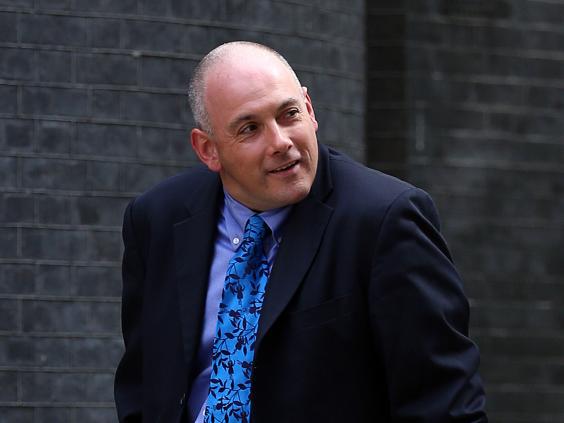
Robert Halfon: Deputy Conservative Chairman
The announcement comes as the Conservative government launches the biggest crackdown on trade unionists for 30 years.
Business Secretary Sajid Javid is moving to criminalise unlawful picketing, as well as new rules making it harder for workers to strike legally.
New financing rules will also make it far more difficult for trade unions to direct funds to Labour, the political party they founded.
Labour leader Jeremy Corbyn described the claim the Tories were a party for workers as an “absurd lie” in his speech to Labour’s annual conference in Brighton.
He pointed to cuts to tax credits that would leave people in work worse off, even after a steep rise in the minimum wage.
“We’ll fight this every inch of the way and we’ll campaign at the workplace, in every community against this Tory broken promise and to expose the absurd lie that the Tories are on the side of working people, that they are giving Britain a pay rise,” Mr Corbyn said.
Research by the Institute for Fiscal Studies found that the rebranded higher minimum wage introduced by George Osborne in the Budget came “nowhere near” to compensating for benefit cuts.
Other research conducted by the institute found that the sharpest benefit cuts would fall on people with jobs.
The Conservative party is launching a new organisation to represent trade unionists who have Tory sympathies, it has said.
Robert Halfon, the Conservatives’ deputy chairman, said his party was now “the party of working people” and that “militant” union leaders were putting workers’ off existing structures.
“We want to provide a voice for Conservative-minded trade unionists and moderate trade unionists and this week we will announcing a new organisation in the Conservative party called the Conservative Workers and Trade Unionists movement and that is going to be a voice for Conservative trade unionists,” he said in an interview with parliament’s The House magazine.
“We are recreating the Conservative trade union workers’ movement. There will be a new website and people will be able to join. There will be a voice for moderate trade unionists who feel they may have sympathy with the Conservatives or even just feel that they’re not being represented by militant trade union leaders.”
The organisation could act as a caucus within existing workplace trade unions and allow the Tories to stand candidates in internal elections. It will be formally announced at the party’s conference in Manchester next week.
Robert Halfon: Deputy Conservative Chairman
The announcement comes as the Conservative government launches the biggest crackdown on trade unionists for 30 years.
Business Secretary Sajid Javid is moving to criminalise unlawful picketing, as well as new rules making it harder for workers to strike legally.
New financing rules will also make it far more difficult for trade unions to direct funds to Labour, the political party they founded.
Labour leader Jeremy Corbyn described the claim the Tories were a party for workers as an “absurd lie” in his speech to Labour’s annual conference in Brighton.
He pointed to cuts to tax credits that would leave people in work worse off, even after a steep rise in the minimum wage.
“We’ll fight this every inch of the way and we’ll campaign at the workplace, in every community against this Tory broken promise and to expose the absurd lie that the Tories are on the side of working people, that they are giving Britain a pay rise,” Mr Corbyn said.
Research by the Institute for Fiscal Studies found that the rebranded higher minimum wage introduced by George Osborne in the Budget came “nowhere near” to compensating for benefit cuts.
Other research conducted by the institute found that the sharpest benefit cuts would fall on people with jobs.
Sweden introduces six-hour work day
Hardeep Matharu in The Independent
Sweden is moving to a six-hour working day in a bid to increase productivity and make people happier.
Employers across the country have already made the change, according to the Science Alert website, which said the aim was to get more done in a shorter amount of time and ensure people had the energy to enjoy their private lives.
Toyota centres in Gothenburg, Sweden’s second largest city, made the switch 13 years ago, with the company reporting happier staff, a lower turnover rate, and an increase in profits in that time.
Filimundus, an app developer based in the capital Stockholm, introduced the six-hour day last year.
“The eight-hour work day is not as effective as one would think," Linus Feldt, the company’s CEO told Fast Company.
"To stay focused on a specific work task for eight hours is a huge challenge. In order to cope, we mix in things and pauses to make the work day more endurable. At the same time, we are having it hard to manage our private life outside of work."
Mr Feldt has said staff members are not allowed on social media, meetings are kept to a minimum, and that other distractions during the day are eliminated - but the aim is that staff will be more motivated to work more intensely while in the office.
He said the new work day would ensure people have enough energy to pursue their private lives when they leave work – something which can be difficult with eight-hour days.
“My impression now is that it is easier to focus more intensely on the work that needs to be done and you have the stamina to do it and still have the energy left when leaving the office,” Mr Feldt added.
According to Science Alert, doctors and nurses in some hospitals in the country have even made the move to the six-hour day.
A retirement home in Gothenburg made the six-hour switch earlier this year and is conducting an experiment, until the end of 2016, to determine whether the cost of hiring new staff members to cover the hours lost is worth the improvements to patient care and boosting of employees’ morale.
Sweden is moving to a six-hour working day in a bid to increase productivity and make people happier.
Employers across the country have already made the change, according to the Science Alert website, which said the aim was to get more done in a shorter amount of time and ensure people had the energy to enjoy their private lives.
Toyota centres in Gothenburg, Sweden’s second largest city, made the switch 13 years ago, with the company reporting happier staff, a lower turnover rate, and an increase in profits in that time.
Filimundus, an app developer based in the capital Stockholm, introduced the six-hour day last year.
“The eight-hour work day is not as effective as one would think," Linus Feldt, the company’s CEO told Fast Company.
"To stay focused on a specific work task for eight hours is a huge challenge. In order to cope, we mix in things and pauses to make the work day more endurable. At the same time, we are having it hard to manage our private life outside of work."
Mr Feldt has said staff members are not allowed on social media, meetings are kept to a minimum, and that other distractions during the day are eliminated - but the aim is that staff will be more motivated to work more intensely while in the office.
He said the new work day would ensure people have enough energy to pursue their private lives when they leave work – something which can be difficult with eight-hour days.
“My impression now is that it is easier to focus more intensely on the work that needs to be done and you have the stamina to do it and still have the energy left when leaving the office,” Mr Feldt added.
According to Science Alert, doctors and nurses in some hospitals in the country have even made the move to the six-hour day.
A retirement home in Gothenburg made the six-hour switch earlier this year and is conducting an experiment, until the end of 2016, to determine whether the cost of hiring new staff members to cover the hours lost is worth the improvements to patient care and boosting of employees’ morale.
Right to 30-day refund becomes law
Brian Milligan in BBC News
New consumer protection measures - including longer refund rights - have come into force under the Consumer Rights Act.
For the first time anyone who buys faulty goods will be entitled to a full refund for up to 30 days after the purchase.
Previously consumers were only entitled to refunds for a "reasonable time".
There will also be new protection for people who buy digital content, such as ebooks or online films and music.
They will be entitled to a full refund, or a replacement, if the goods are faulty.
The Act also covers second-hand goods, when bought through a retailer.
People buying services - like a garage repair or a haircut - will also have stronger rights.
Under the new Act, providers who do not carry out the work with reasonable care, as agreed with the consumer, will be obliged to put things right.
Or they may have to give some money back.
'Fit for purpose'
"The new laws coming in today should make it easier for people to understand and use their rights, regardless of what goods or services they buy," said Gillian Guy the chief executive of Citizens Advice.
When disputes occur, consumers will now be able to take their complaints to certified Alternative Dispute Resolution (ADR) providers, a cheaper route than going through the courts.
The Consumer Rights Act says that goods
- must meet the expectations of the consumer
The Act has been welcomed by many consumer rights groups and further information can be found here.
"Now, if you buy a product - whether physical or digital - and discover a fault within 30 days you'll be entitled to a full refund," said Hannah Maundrell, the editor of money.co.uk. "The party really is over for retailers that try to argue the point."
The Act also enacts a legal change that will enable British courts to hear US-style class action lawsuits, where one or several people can sue on behalf of a much larger group.
It will make it far easier for groups of consumers or small businesses to seek compensation from firms that have fixed prices and formed cartels.
New consumer protection measures - including longer refund rights - have come into force under the Consumer Rights Act.
For the first time anyone who buys faulty goods will be entitled to a full refund for up to 30 days after the purchase.
Previously consumers were only entitled to refunds for a "reasonable time".
There will also be new protection for people who buy digital content, such as ebooks or online films and music.
They will be entitled to a full refund, or a replacement, if the goods are faulty.
The Act also covers second-hand goods, when bought through a retailer.
People buying services - like a garage repair or a haircut - will also have stronger rights.
Under the new Act, providers who do not carry out the work with reasonable care, as agreed with the consumer, will be obliged to put things right.
Or they may have to give some money back.
'Fit for purpose'
"The new laws coming in today should make it easier for people to understand and use their rights, regardless of what goods or services they buy," said Gillian Guy the chief executive of Citizens Advice.
When disputes occur, consumers will now be able to take their complaints to certified Alternative Dispute Resolution (ADR) providers, a cheaper route than going through the courts.
The Consumer Rights Act says that goods
- must be of satisfactory quality, based on what a reasonable person would expect, taking into account the price
- must be fit for purpose. If the consumer has a particular purpose in mind, he or she should make that clear
- must meet the expectations of the consumer
The Act has been welcomed by many consumer rights groups and further information can be found here.
"Now, if you buy a product - whether physical or digital - and discover a fault within 30 days you'll be entitled to a full refund," said Hannah Maundrell, the editor of money.co.uk. "The party really is over for retailers that try to argue the point."
The Act also enacts a legal change that will enable British courts to hear US-style class action lawsuits, where one or several people can sue on behalf of a much larger group.
It will make it far easier for groups of consumers or small businesses to seek compensation from firms that have fixed prices and formed cartels.
Subscribe to:
Posts (Atom)