Search This Blog

Wednesday, 3 July 2013

NSA spying revelations: why so many are keen to play down the debate


The mass surveillance that Edward Snowden has exposed asks questions not only of government but of telecoms companies too
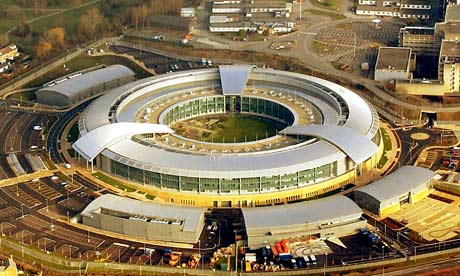
GCHQ
GCHQ reportedly snooped on foreign politicians attending two G20 summit meetings in London in 2009. Photograph: Barry Batchelor/PA
Covering the Edward Snowden story has not been straightforward for many in the mainstream media, which is reflected in the disjointed coverage it has received in the UK so far. For the newspapers that campaigned so hard to get the communications data bill thrown out because of the implications for privacy, he should be a hero. But then the brash young American "stole" the material, came to the Guardian with it, and has ended up stranded in Russia, where he may or may not receive asylum with the help of Julian Assange. All of which makes him rather unpalatable to many in Fleet Street – and indeed the House of Commons. For many of them, the easier story to tell was the one about Snowden's girlfriend, who was left bereft in Hawaii.
This week there have been more revelations about the way the US spied on the EU, which followed the Guardian's disclosures about how the British snooped on diplomats from Turkey and South Africa, among others, at the G20 summit in London four years ago. This has caused genuine fury among those targeted, particularly the Germans and the French. But their anger has been met with shoulder-shrugging indignation from former British diplomats and security experts, who say this sort of thing happens all the time.
They would hardly say anything different. In all likelihood, they have either authorised or benefited from such covert intelligence gathering, so the lack of biting analysis was entirely predictable. For those in the media unsure how to deal with Snowden, and rather hoping the complex saga would go away, this was another easy escape route: "No story here, let's move on."
But there is a story. It gets lost, all too conveniently, in the diplomatic rows and the character-assassinations, but ultimately it is the legacy of the Snowden files. The documents have shown that intelligence agencies in the UK and the US are harvesting vast amounts of information about millions of people. This is fact, not fantasy. They are doing this right now, on a scale that could not have been envisaged five years ago, let alone when the laws covering the collection and retention of data were drafted. They are also sharing this treasure trove of intelligence with each other, and other close allies.
In the UK, the same ministers who sign off operations to spy on our allies, are also approving countless warrants to allow GCHQ to siphon off data from cables that carry internet traffic in and out of the country. Emails, conversations on Skype, the details of phone calls – they all go into the intelligence pot ready for analysis and digestion.
The methods that GCHQ has developed may be ingenious. But are they right? Do the laws really legitimise this activity? And can the handful of MPs and commissioners tasked with the scrutinising the agencies really keep on top of all this? Do they have the staff, the expertise? Those are the questions that need proper argument. The reassurances of senior cabinet ministers, such as William Hague, who is responsible for GCHQ, needed to be tested, not just repeated unchallenged.
Those who wail about the leaks affecting national security might consider the words of Bruce Schneier, a security specialist, who wrote in the New York Times: "The argument that exposing these documents helps the terrorists doesn't even pass the laugh test; there's nothing here that changes anything any potential terrorist would do or not do."
And where are the telecoms companies in all this, and the internet service providers? For now, they are still keeping quiet. But at some point they will be asked to explain to their millions of customers what they knew about this industrial-scale snooping. None of this is easy, and ministers and intelligence officials would like nothing more than to shut down the debate. The clues are in their discomfort.

Egypt, Brazil, Turkey: without politics, protest is at the mercy of the elites


From Egypt to Brazil, street action is driving change, but organisation is essential if it's not to be hijacked or disarmed
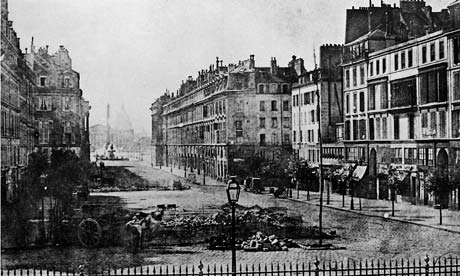
1848 paris
A barricade on the Rue Royale in Paris during the 1848 revolution. 'The European revolutions of 1848, which were led by middle class reformers and offered the promise of a democratic spring, had as good as collapsed within a year.' Photograph: Roger-Viollet / Rex Features
Two years after the Arab uprisings fuelled a wave of protests and occupations across the world, mass demonstrations have returned to their crucible in Egypt. Just as millions braved brutal repression in 2011 to topple the western-backed dictator Hosni Mubarak, millions have now taken to the streets of Egyptian cities to demand the ousting of the country's first freely elected president, Mohamed Morsi.
As in 2011, the opposition is a middle-class-dominated alliance of left and right. But this time the Islamists are on the other side while supporters of the Mubarak regime are in the thick of it. The police, who beat and killed protesters two years ago, this week stood aside as demonstrators torched Morsi's Muslim Brotherhood offices. And the army, which backed the dictatorship until the last moment before forming a junta in 2011, has now thrown its weight behind the opposition.
Whether its ultimatum to the president turns into a full-blown coup or a managed change of government, the army – lavishly funded and trained by the US government and in control of extensive commercial interests – is back in the saddle. And many self-proclaimed revolutionaries who previously denounced Morsi for kowtowing to the military are now cheering it on. On past experience, they'll come to regret it.
The protesters have no shortage of grievances against Morsi's year-old government, of course: from the dire state of the economy, constitutional Islamisation and institutional power grabs to its failure to break with Mubarak's neoliberal policies and appeasement of US and Israeli power.
But the reality is, however incompetent Morsi's administration, many key levers of power – from the judiciary and police to the military and media – are effectively still in the hands of the old regime elites. They openly regard the Muslim Brotherhood as illegitimate interlopers, whose leaders should be returned to prison as soon as possible.
Yet these are the people now in alliance with opposition forces who genuinely want to see Egypt's revolution brought at least to a democratic conclusion. If Morsi and the Muslim Brotherhood are forced from office, it's hard to see such people breaking with neoliberal orthodoxy or asserting national independence, as most Egyptians want. Instead, the likelihood is that the Islamists, also with mass support, will resist being denied their democratic mandate, plunging Egypt into deeper conflict.
Egypt's latest eruption has immediately followed mass protests in Turkey and Brazil (as well as smaller upheavals in Bulgaria and Indonesia). None has mirrored the all-out struggle for power in Egypt, even if some demonstrators in Turkey called for the prime minister, Recep Tayyip Erdoğan, to go. But there are significant echoes that highlight both the power and weakness of such flash demonstrations of popular anger.
In the case of Turkey, what began as a protest against the redevelopment of Istanbul's Gezi Park mushroomed into mass demonstrations against Erdoğan, 's increasingly assertive Islamist administration, bringing together Turkish and Kurdish nationalists, liberals and leftists, socialists and free-marketeers. The breadth was a strength, but the disparate nature of the protesters' demands is likely to weaken its political impact.
In Brazil, mass demonstrations against bus and train fare increases turned into wider protests about poor public services and the exorbitant cost of next year's World Cup. As in Turkey and Egypt, middle-class and politically footloose youth were at the forefront, and political parties were discouraged from taking part, while rightwing groups and media tried to steer the agenda from inequality to tax cuts and corruption.
Brazil's centre-left government has lifted millions out of poverty, and the protests have been driven by rising expectations. But unlike elsewhere in Latin America, the Lula government never broke with neoliberal orthodoxy or attacked the interests of the rich elite. His successor, Dilma Rousseff – who responded to the protests by pledging huge investments in transport, health and education and a referendum on political reform – now has the chance to change that.
Despite their differences, all three movements have striking common features. They combine widely divergent political groups and contradictory demands, along with the depoliticised, and lack a coherent organisational base. That can be an advantage for single-issue campaigns, but can lead to short-lived shallowness if the aims are more ambitious – which has arguably been the fate of the Occupy movement.
All of them have, of course, been heavily influenced and shaped by social media and the spontaneous networks they foster. But there are plenty of historical precedents for such people power protests – and important lessons about why they are often derailed or lead to very different outcomes from those their protagonists hoped for.
The most obvious are the European revolutions of 1848, which were also led by middle-class reformers and offered the promise of a democratic spring, but had as good as collapsed within a year. The tumultuous Paris upheaval of May 1968 was followed by the electoral victory of the French right. Those who marched for democratic socialism in east Berlin in 1989 ended up with mass privatisation and unemployment. The western-sponsored colour revolutions of the last decade used protesters as a stage army for the transfer of power to favoured oligarchs and elites. The indignados movement against austerity in Spain was powerless to prevent the return of the right and a plunge into even deeper austerity.
In the era of neoliberalism, when the ruling elite has hollowed out democracy and ensured that whoever you vote for you get the same, politically inchoate protest movements are bound to flourish. They have crucial strengths: they can change moods, ditch policies and topple governments. But without socially rooted organisation and clear political agendas, they can flare and fizzle, or be vulnerable to hijacking or diversion by more entrenched and powerful forces.
That also goes for revolutions – and is what appears to be happening in Egypt. Many activists regard traditional political parties and movements as redundant in the internet age. But that's an argument for new forms of political and social organisation. Without it, the elites will keep control – however spectacular the protests.

No Asian superstars in English cricket. Why?

Bopara and the cultural conundrum

Why does Britain still await its first batting star of Asian stock?
July 3, 2013
A

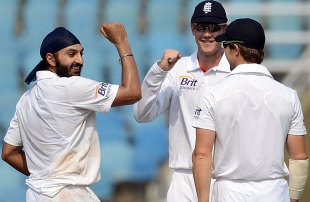
Ravi Bopara plays to the off side off his toes, England v India, Champions Trophy final, Edgbaston, June 23, 2013
Bopara: more liable to reverse the course of a game with thrusts than parries © International Cricket Council 
Enlarge
Related Links
"Oh, Raa-vee Bow-pah-rah... Oh, Raa-vee Bow-pah-rah... " As the chant went up to the tune of The White Stripes' "Seven Nation Army", again and again and once more with feeling, it was possible to glimpse a brave new world. With all due respect to Nasser Hussain, who captured the nation's heart with splenetic disciplinarian leadership and spiky spunk rather than runs, was last Tuesday's frolic at The Oval going to go down as the night we finally acclaimed a British Asian batting hero?
It didn't quite turn out that way. First came the Champions Trophy final, then an even more agonising loss to New Zealand. For the second match running, Bopara took his team to the brink of victory and fluffed his lines. So much good came out of those two assertive, cold-eyed knocks, it would be heartless to harp on about their anti-climactic denouements, but the scoreboard is the most damning and ruthless of bottom lines.
We've been here before, of course, and not just with Bopara, who has defied those who contended that his fitful international career had ground to a permanent halt in Pallekele last October. In that same World Twenty20 fixture, while Samit Patel was battling Sri Lanka alone on that burning English deck, it was tempting to imagine, once more, that a corner had been turned. Here, after all, was a British batsman of Asian origin not simply capable enough to command regular selection but comfortable enough to be himself, to strut his stuff and dominate. Sadly, Patel's ensuing tribulations in India confirmed that the no-entry sign remained intact.
Call it the Shah Question: why does Britain still await its first batting star of Asian stock - or, rather, its first not called Sachin, Rahul, or Virender? Given that Owais Shah, one of about four and a half Englishmen to make even a small splash in the IPL, was overlooked for the last World Twenty20, a tournament that could and should have been the making of this most feckless yet dazzling of Anglo-Asian cricketers, the question of courage, of whether to fear failure or keep its extensive tentacles at bay, is not one that can be lightly dismissed.
But why? For all Monty Panesar's cult following, for all the progress made lately by Moeen Ali and Varun Chopra, for all Adil Rashid's nascent revival, for all the abundant promise of Azeem Rafiq, Shiv Thakor and Kishen Velani, it remains difficult to subdue the sense that the existing resources are not being tapped as well as they might. It would also be naïve to pretend that all cultural differences have been erased.
Unsurprisingly, being a Muslim may still be a major roadblock, as exemplified, perhaps, by the sad decline ofBilal Shafayat. We may never know how much his failure to live up to the predictions of some sage judges is traceable to the prayers he once shared with Pakistani opponents during an Under-19 tournament.
Better placed than most to comment is Wasim Khan, the first British-born son of Pakistani parents to play professional cricket, author of an award-winning autobiography, and now chief executive of Chance to Shine, for which he recently won a deserved gong. The way he sees it, Muslim cricketers have external pressures unfamiliar to the majority on the county circuit, such as being the breadwinner for an extended family or the perplexing duality of living a westernised life in the dressing room and a traditional one at home, even if county menus do now encompass halal meat.
For the best part of the previous decade, Dan Burdsey, my University of Brighton colleague, plunged into vexatious waters by examining the experiences of British Muslims in the sporting arena. Cricket, to him, is the "notable exception" to the general rule. "I guess I'm just a bit stronger," one interviewee, a professional who insisted on anonymity, said in reference to his faith. "Maybe if I become more successful," said another, "people will look at Muslims differently, and maybe it will change, you know, the stereotype and the perspective of how British Muslims are."
 
 
Cricket's first Anglo-Asian superstar, one strongly suspects, will need a spot of brashness to go with the thick skin
 
For all the priceless perspectives he gleaned, Burdsey was honest enough to acknowledge the shortcomings of his research: "There were occasions when participants seemed to be holding back from completely explicating their feelings around experiences of prejudice and some of the more problematic aspects of gaining inclusion in the sport." He attributed this, among other factors, to "a reluctance to talk openly to people who do not directly share their experiences; a belief that their position as professional sportsmen may be compromised through open dialogue on controversial topics; or a deliberate attempt to avoid being viewed as fulfilling dominant stereotypes of young Muslim men... and coming across as acrimonious about their engagement with predominantly white, British institutions."
Hussain, the most successful British Asian cricketer, if always a bit too grimly focused to be a batting hero per se, highlights the fear factor. "The Asian family's love of cricket means you get lots of opportunities but it also gives you a fear of failure," he told the Cricketer a few months back. The experience was personal as well as general: he often lied to his father, who ran a popular cricket school in the east London suburbia of Ilford, about how many he had scored. "If your father has driven six hours for an Under-11 game at Taunton and you nick a wide one, it can be a long journey home. It makes you intense and quite complicated."
Hussain believes Bopara, Patel, Shah and Mark Ramprakash were similarly cursed. "Ravi says he has changed, that cricket has become more of a hobby, but I suspect there's bluff in that. He would still love to be a superstar."
Though he has charmed us with his wickets and unbridled enthusiasm, Panesar doesn't quite qualify: superstars should only be conversant with ridicule on the way up or down. He is, rather, a folk hero, in large part because, being a fairly useless fielder and a bit of a dunce with the bat - and hence not at all like the ebullient Graeme Swann - he makes us giggle. As for those singularly joyous celebrations, they evoke empathy: not a superstar's due but an underdog's just desserts. Outbowling Swann in India merely served to amplify his misfortune in being the No. 2 spinner in what is habitually a one-twirler XI. In the Tendulkar Era, a batsman will have to break the mould.

Monty Panesar finished with 3 for 64, Mumbai A v England XI, tour match, Mumbai, 3rd day, November 5, 2012
Monty Panesar: not a superstar but a folk hero who won England over at a delicate time © AFP 
Enlarge
Bopara and Shah have been the prime candidates. As batsmen they are more adventurous, more liable to reverse the course of a game with thrusts than parries, more bedroom-poster-friendly, more brittle. Duncan Fletcher may have cause to see Shah as one of his chief failures as England coach, but it is also entirely plausible that the most damaging hurdle was Shah's family baggage. Bopara has scarcely lacked chances, and if treating one's job as a hobby leads to profoundly injudicious shots in each innings of the first Test of a series, as happened against South Africa last summer, maybe it isn't quite the best policy. In fairness, at the time a crisis at home was looming far too large.
Which brings us to the f-word: flaky. Such would appear to be the polite epithet de jour. It's the catch-all, equally applicable to Bopara playing daft shots, Shah being a liability between the wickets, Monty shelling sitters, Patel being overweight or Rashid or Ajmal Shahzad asserting themselves too much for Yorkshire tastes. Then there's the masculinity thing.
Millwall FC are a south-east London working-class institution, long notorious for their violent and racist supporters (unofficial motto "No one likes us, we don't care"). Yet they embraced their own black players - a contradiction that Tony Witter, a decent central defender, explained to Arsenal's Ian Wright, English football's most celebrated black striker, now a voluble TV host. "Ian says to me: 'Witts, man, how can you play here, man?' I said to him: 'Ian, they're as good as gold to me.' That's the whole thing, I am playing for them."
What helped Witter and Wright find acceptance on opposing banks of the Thames was the fact that they played a masculine sport in a masculine manner, underpinned, respectively, by strength and speed. In their case, masculinity - aided by the We Syndrome - trumped race. Spinners may be deft, daring, and expert mind-readers, but beyond Shane Warne, who perceives them as macho?
Panesar's greatest achievement - a rather miraculous one - was to win over a nation at an extremely delicate time, a time when wearing a patka on the wrong high street could get you beaten up, as it still can. Cricket's first Anglo-Asian superstar, one strongly suspects, will need a spot of brashness to go with the thick skin, a Nasser or Wrighty sort of brashness: a projection of absolute inner certainty that fools most of the people pretty much all the time.
Is it too late for the more flamboyant but sometimes equally cocky Bopara? He certainly looks more focused since he took a furlough to deal with that discreetly reported domestic disturbance. In recent weeks we've seen a lightness of tread and an often gasp-worthy breadth of shot selection. He may still talk it marginally better than he walks it, but the balance, helped as much by those useful wobblers as by a capacity to compartmentalise, is shifting.
They couldn't quite exhort him over the line, but that uplifting chorus line at The Oval dropped a refreshingly heavy hint that Forest Gate's finest may yet win over minds as well as hearts. Anyone for the Bopara Bop?

Tuesday, 2 July 2013

Pick up Lines

Hey girls, do you have a map? Because I just got lost in your eyes.

Did it hurt when you fell from heaven?

You must be Jamaican, because Jamaican me crazy

 What have you got in that handbag? 

"Hey baby, this fondue is waiting for you. You wanna taste it?"

You remind me of my son

Nice legs. What time do they open


The word of the day is "legs". Let's go back to my place and spread the word.

Your left leg is Thanksgiving and your right leg is Christmas. I'd love to meet you between the holidays.

"Have you got any Irish (substitute nationality / race) in you?"   "No".  "Would you like some ?"

I've just won the lottery and I'm a friendless orphan

"Where have I been all your life?"

'So you fancy a shag'?  'No', 'Well d'ya mind laying down while I have one'

Hi, you're pretty. Would you like a drink?

Oy! Love! Do you like chocolate? Coz I've got half a bar for you

Awreet hen, fancy a poke an a tickle?

"Hi, I'm [insert name here], what's your name?" and then asking them about themselves.

How do you like your eggs ? fertilised ?

Was your father a mechanic because when you just walked into the room I felt my nuts tighten

Your facial symmetry suggests that you might be a fertile mating partner.

My favourite gay bar chat up line is, "Please allow me to push your stool in for you".

"I'll just go and pop the kettle on for tea, feel free to be naked and lying on the couch when I get back."

You have eyes like spanners. When I look into them, my nuts tighten.

“Would you be in any way offended if I said that you seem to me to be in every way the visible personification of absolute perfection?”


    Do you sleep on your chest? No. Can I?

    Me: Do you like chicken?
    Potential love making partner: Yes.
    Me: Well you should suck my cock, it's fowl!

    There's a party in my pants and you're invited

    "I'm not much of a cook so i'll have to take you out for breakfast"

    I'm drunk and you're ugly lets settle

    You know how brown is good for you? Try me

    ''I've had my name changed, to Bond, but not James bond, Unibond, cos I was made to fill your crack''.

    I may not be Fred Flinstone...but I can make your bedrock

    Hey... so, do you know what's got 100 teeth and holds back the Incredible Hulk?
    It's the zipper on my jeans

    You have a boyfriend? Call me when you want a man friend.

    A guy once came up to me and asked if I could help him identify what material his t-shirt was made of. I said it looks like cotton to me. He said no, you're wrong, it's boyfriend material...

    Excuse me, do you have any raisins?
    Well, how about a date then?

    Buy me a drink and I'll give you my undivided attention

    Do you drive?
    Yes.
    Well, back onto THIS then baby!

    Me :"50 ton penguin?"
    Target: What?"
    M: "Need something to break the ice"
    M:"Did it hurt?"
    T: "Did what hurt?"
    M: "When you fell out of the cute/babe/gorgeous/lovely tree, and hit all the branches all the way down?"

    "Stare at me in disgust if you want to blow me"

    "You'll do."

    "This face leaves in half an hour. Be on it"

     "Do you want to come back and meet my cat?"

    Go up to a woman in a bar, put your hand on her backside and say "excuse me is this seat taken?".

    Fuck me if I'm wrong but is your name Gertrude

    If I was your dad, I'd still be bathing you.

    "Those clothes would look good as a crumpled heap on my bedroom floor!"

    "No hablo español pero beso muy bien..." ("I dont speak Spanish but I kiss very well....")

    *Walk up to a girl whilst bringing mobile phone from your ear*...“I just called my girlfriend to described you to her; she admits, it is only fair and proper that we break up so that I can have this once-in-a-lifetime opportunity to try to kiss you.”

    “Do you come here often? Give me the chance and I’ll make it five times in ten minutes.”

    “It’s a medical emergency and only you can save me: either help me to get off or stay out of my line of sight, ‘cos every time I catch sight of you, so much blood rushes to my penis that I faint.”

    “Are you paying for that skirt in instalments? If so, I’m very glad you’re skint; let me buy you a drink.”

    A friend of mine used to go up to women in pubs and extremely politely ask them if they had a pen and bit of paper in their handbag as he had urgent need of said items. Once the pen and paper were produced and handed to him he would ask for their phone number, simple.

    "You look way too expensive for me, so I'm just going to walk off. But you can follow me if you like."

    "Would you consider spending the night with me? My ex is coming round tomorrow and you're so hot, it would really make her jealous."

    'I've got a magic watch'
    '...why is it magic?'
    'Well, at the moment, it's telling me that you're not wearing any knickers'
    'I think your watch is broken'
    'Hmm, yes you're right, it's an hour fast'

    "There's only going to be seven planets left tonight, after I destroy Uranus."

    "I hope you have pet insurance, because when we get back to yours I'm going to destroy your pussy."

    "Do you like dried fruit? How about a date?"

    Have you farted because you just blew me away

    The only thing between us is air and opportunity.

    A woman once asked me what I thought of her outfit, to which I replied "I don't know, I've already undressed you with my eyes." 

    My cat said I would never meet somebody like you, shall we prove her wrong?

    "Make sure you don't get arrested for being so hot!"


    Schumpeter's long revenge


    By Chan Akya in Asia Times Online

    News about major retail chains such as HMV and Blockbuster closing shop inevitably attract greater than usual attention because they sell media content and therefore operate on the edge of the world of entertainment. That said, the demise was fairly obvious to anyone who had read their balance sheets, which have been decimated by technological changes led essentially by Apple but more generically by the broader applications of the Internet and improved hardware. 

    Selling and renting films respectively, HMV and Blockbuster were a key part of all retail malls and "high" streets in the UK with similar brands in other countries including in Hong Kong and Singapore. The advent of amazon.com was the first shot across their bows; one that both chains failed to heed. As the business of selling books through bookstores evaporated in the late '90s, the retail chains selling and renting movies and music failed to make the connection between the physical world and the augmented reality shopping of the Internet. 

    The process was to accelerate with improved software - Apple's iTunes comes to mind - even as hardware continued to provide an underwhelming experience. The inability to bridge the quality gaps in films and music (or else apply them to an environment where more people were using crummy mobile devices for enjoying the same) simply meant that all competition ended up being about price. This was the wrong battleground and, much like Napoleon's forces marooned in the harsh Russian winter 200 years ago, the retail chains were destroyed. 

    Oddly enough, HMV also played a small part in the global financial crisis; one of the largest lawsuits from that era pertained to Guy Hands' private equity firm Terra Firm filing suit for misrepresentations against its banker, Citibank, over its purchase of EMI from which HMV had been spun off to a separate listing in 1998. 

    Although the suit was pretty quickly dismissed, opportunities for mirth abounded from the materials provided as part of the proceedings. Such large leveraged buyouts generated billions in loans that were purchased by collateralized loan obligation vehicles, which in turn were partly funded by the shadow banking system that helped to fell the global economy in 2007-08. 

    In any event, the various reorganization plans filed by HMV management provided fodder for private equity firms on its own; in parallel, Blockbuster went through its own interaction with the forces of competition. While the global business of Blockbuster went into administration in 2010, the company continued to operate in many parts of the world. Last week's closure of the UK business is a continuation of the global process. 

    The circle of stupidity

    On the other end of the scale from market forces is the circle of stupidity that underpins global monetary policy today. 

    An industrial version of the HMV/ Blockbuster process of creative destruction is Japan, an article about which I wrote late last year, touching upon the effects of competitive landscape changes ushered in by the pincer grip of South Korea and China at the branded and generic ends of manufacturing respectively; even as sclerotic politics and inane monetary policies end up accelerating the decline. (See The end of Japan as we know it, Asia Times Online, November 27, 2012). 

    Following the elections, Japan's monetary policy impetus has moved into aggressive easing as the government and the Bank of Japan attempt to push the yen sharply lower by easing quantitative policy and accelerating the purchase of bonds issued by the US and European governments (the Italians and the Spanish sent a couple of "thank you" notes to the new government, presumably). 

    Meanwhile, other Asian countries - primarily Korea and China - are increasing their own purchase of Japanese government bonds to offset the effect of a falling yen on their own currencies. And all along, Federal Reserve chairman Ben Bernanke and European Central Bank president Mario Draghi are cheerfully printing money by the trillions to support yawning fiscal deficits and to keep their currencies from rising. 

    Think of the average pensioner anywhere in the Group of Eight leading industrialized nations and the picture is downright depressing. With regular income from bonds and bank accounts whittled down to barely nothing, they are being forced to take on financial risks by purchasing "high dividend" stocks or worse, corporate bonds. These are not folks who are equipped to analyze such risks, let alone manage them. 

    Businesses go bust when they run out of liquidity, not when they run out of "capital" or any such esoteric concept. Granted that HMV and Blockbuster were so bad that not even all the money sloshing around the global financial system could save them, but that also raises the question of how many companies and governments survive today because of the excess money sloshing around. 

    At the very least, we know that interest rates and risk premia are severely depressed in G-8 countries and, as a result, across much of the financial world. There are countries that would be considered borderline default where government bond spreads are trading well under 5%, an anomaly that makes no sense irrespective of the "base" funding rate. Similarly, equity markets are getting record inflows at a time when valuations aren't exactly cheap anywhere in the world. 

    Such conditions are usually spelt b-u-b-b-l-e; and I entirely hold Bernanke, Draghi and their kin responsible for this state of affairs. There will be time of reckoning later, but for now we will have to live with all the Keynesian rationalization. 

    Why is Schumpeter important

    One of the key defenses used by those seeking to broaden the ambit of monetary policy whilst emptying government coffers is that corporate closures are bad form and cause disruptions for employees and other stakeholders alike. This is indeed true over the short term, but over the longer term the truth is perhaps in the opposite direction and in line with the views of Austrian economist Joseph Schumpeter on "creative destruction". 

    Systems that weed out inefficient capital users end up deploying funds to more deserving users thereby reducing the overall risk of the system and increasing the gap between risky and less risky ventures; this extra compensation therefore ends up attracting more robust capital - and perhaps more appropriate capital for risky ventures. 

    In contrast to this, folk who lend money to French companies - typically only other French folk - see their risk analysis dulled by constant government intervention and corporate subsidies (internally) to their worst divisions. When the car firm Peugeot decided to shutter some plants and fire workers recently, the howls of protest were loudest from the country's socialist government, which may however not have quite realized that by denying the company such internal efficiencies they inevitably put the firm at a longer-term disadvantage that increases the chances of a comprehensive collapse at a later date. 

    Investors in such countries will also be confused as to the correct risk premium for a loss-making company compared to that for a profitable company; because debt is about getting one's funds back, the question becomes academic if loss-makers are routinely bailed out. This dulls the calculation of risk, inevitably driving inappropriate funds - pension funds and the like - towards risky assets. 

    That is the reason why the HMV and Blockbuster stories are important. By providing a timely reminder that bad businesses will not survive even the easiest of monetary conditions, they have served to remind all of us of events likely to unfold when the price of money starts adjusting towards more appropriate levels.