In conversation with Rajiv Malhotra
Wednesday, 14 June 2017
Yes this really is the end of Tory austerity – because it was never about economics in the first place
Ben Chu in The Independent
“The crisis”, the economist Rudiger Dornbusch once noted, “takes a much longer time coming than you think. And then it happens much faster than you would have thought.” A similar dynamic describes the progress of Conservative austerity politics.
The stunning failure of Theresa May in last week’s general election signalled to Tory MPs that the public have had enough of spending cuts. Though the deficit still stands at £50bn and the national debt is £1,700bn (and rising), austerity is over, we’re now told.
Seven years of Tory lectures that eradicating the deficit for the good of future generations is paramount suddenly fall silent. Politicians who have tarred critics as criminally irresponsible for suggesting an increase in public borrowing have now, in an instant, changed their tune.
People who insisted that if we did not balance the budget at the earliest possible date Britain was destined to become an economic basket case, like Greece, apparently no longer fear such a gruesome outcome. The collapse of the citadel of austerity rhetoric is truly remarkable in its rapidity.
But it was a very long time coming. It became clear within a year of George Osborne’s 2010 “emergency budget”, which forced through huge cuts in capital budgets and an intense squeeze on Whitehall departments and welfare spending, that the austerity medicine was hurting, not helping.
The economy was flatlining, teetering on the verge of recession. Whether this was primarily due to the crisis in the neighbouring eurozone or because the negative knock-on impact of the government’s domestic spending cuts was bigger than initially thought is still debated by economists.
But it doesn’t really matter. Even the conservative estimates of the Office for Budget Responsibility suggest that GDP growth would have been around one per cent higher in both 2010-2011 and 2011-2012, if the Coalition government hadn’t slashed domestic spending on the scale and pace it did.
With interest rates as low as they could go and the Bank of England struggling to support demand through money printing, this was a time for the Government to ramp up capital investment spending to offset the general slowdown – something numerous distinguished academic economists, and even the IMF eventually, urged. It would have made us all better off, putting idle resources to use.
But despite such a capital spending stimulus being permitted under his own fiscal rules, the former Chancellor George Osborne refused to do it. He told us that the international bond markets would lose confidence in the UK’s creditworthiness if we deviated from his original plan – a risible claim given that UK borrowing costs were plumbing new depths as investors around the world ploughed money into government bonds.
The reality was that Mr Osborne didn’t want to do it because it would have meant losing face. He would have had to admit that his previous pigheaded insistence that he didn’t need a fiscal “plan B” was wrong. The credibility risk was not to the UK’s borrowing status but his own political stock.
With the help of a cynically conceived and distorting subsidy to the housing market, the Conservatives managed to eke out a surprise victory in the 2015 general election. Drawing the lesson that austerity had become an electoral asset and useful stick with which to beat Labour, the Chancellor doubled down. He tightened his fiscal rules in a way that virtually the entire economics profession regarded as economically illiterate, making no distinction whatsoever between day-to-day government spending and productive capital spending, and also unveiled a round of large welfare cuts for the working poor.
Hubris set in. And nemesis soon followed. Unexpected parliamentary resistance mounted to Osborne’s welfare cuts, prompting a humiliating reversal on tax credits. At the same time the impact of extensive cuts to policing, schools, social care and the NHS finally became apparent in the form of deteriorating services. It took longer than expected, but it finally arrived.
Yet when Theresa May replaced David Cameron as Prime Minister and Philip Hammond replaced George Osborne as Chancellor last year, they didn’t reverse any of the inherited departmental spending or welfare cuts. And they went into the 2017 election with the same old scare stories about Labour’s reasonable capital investment plans, the same old specious lines like “no magic money tree”. Only now has the dam of Conservative denial crumbled.
Reducing the UK’s deficit, which had ballooned to 10 per cent of GDP in 2010 due to the financial crisis, was a necessity. Cutting it without regard for the state of the overall economy and the feedback effects on aggregate demand was unscientific stupidity and wanton vandalism. Austerity, as practiced by the Conservatives, was a policy driven not by economics, but by politics and ideology. The politics was baiting Labour. And the ideology was the desire to reduce the size of the state.
Who was to blame? The prime culprits were George Osborne and David Cameron of course. But Treasury civil servants were also enthusiastic supporters. It was enabled by two senior Coalition Liberal Democrats, Nick Clegg and Danny Alexander. It was endorsed by economists in the City of London and cheered on by Tory-supporting newspapers. It was abetted by ostensibly neutral political journalists, who unthinkingly succumbed to the fatally misleading idea that a government’s finances can be compared to a household’s budget.
They say victory has a thousand fathers whereas defeat is an orphan. But if we look carefully it’s clear the austerity failure of the past seven years has a sprawling parentage.
“The crisis”, the economist Rudiger Dornbusch once noted, “takes a much longer time coming than you think. And then it happens much faster than you would have thought.” A similar dynamic describes the progress of Conservative austerity politics.
The stunning failure of Theresa May in last week’s general election signalled to Tory MPs that the public have had enough of spending cuts. Though the deficit still stands at £50bn and the national debt is £1,700bn (and rising), austerity is over, we’re now told.
Seven years of Tory lectures that eradicating the deficit for the good of future generations is paramount suddenly fall silent. Politicians who have tarred critics as criminally irresponsible for suggesting an increase in public borrowing have now, in an instant, changed their tune.
People who insisted that if we did not balance the budget at the earliest possible date Britain was destined to become an economic basket case, like Greece, apparently no longer fear such a gruesome outcome. The collapse of the citadel of austerity rhetoric is truly remarkable in its rapidity.
But it was a very long time coming. It became clear within a year of George Osborne’s 2010 “emergency budget”, which forced through huge cuts in capital budgets and an intense squeeze on Whitehall departments and welfare spending, that the austerity medicine was hurting, not helping.
The economy was flatlining, teetering on the verge of recession. Whether this was primarily due to the crisis in the neighbouring eurozone or because the negative knock-on impact of the government’s domestic spending cuts was bigger than initially thought is still debated by economists.
But it doesn’t really matter. Even the conservative estimates of the Office for Budget Responsibility suggest that GDP growth would have been around one per cent higher in both 2010-2011 and 2011-2012, if the Coalition government hadn’t slashed domestic spending on the scale and pace it did.
With interest rates as low as they could go and the Bank of England struggling to support demand through money printing, this was a time for the Government to ramp up capital investment spending to offset the general slowdown – something numerous distinguished academic economists, and even the IMF eventually, urged. It would have made us all better off, putting idle resources to use.
But despite such a capital spending stimulus being permitted under his own fiscal rules, the former Chancellor George Osborne refused to do it. He told us that the international bond markets would lose confidence in the UK’s creditworthiness if we deviated from his original plan – a risible claim given that UK borrowing costs were plumbing new depths as investors around the world ploughed money into government bonds.
The reality was that Mr Osborne didn’t want to do it because it would have meant losing face. He would have had to admit that his previous pigheaded insistence that he didn’t need a fiscal “plan B” was wrong. The credibility risk was not to the UK’s borrowing status but his own political stock.
With the help of a cynically conceived and distorting subsidy to the housing market, the Conservatives managed to eke out a surprise victory in the 2015 general election. Drawing the lesson that austerity had become an electoral asset and useful stick with which to beat Labour, the Chancellor doubled down. He tightened his fiscal rules in a way that virtually the entire economics profession regarded as economically illiterate, making no distinction whatsoever between day-to-day government spending and productive capital spending, and also unveiled a round of large welfare cuts for the working poor.
Hubris set in. And nemesis soon followed. Unexpected parliamentary resistance mounted to Osborne’s welfare cuts, prompting a humiliating reversal on tax credits. At the same time the impact of extensive cuts to policing, schools, social care and the NHS finally became apparent in the form of deteriorating services. It took longer than expected, but it finally arrived.
Yet when Theresa May replaced David Cameron as Prime Minister and Philip Hammond replaced George Osborne as Chancellor last year, they didn’t reverse any of the inherited departmental spending or welfare cuts. And they went into the 2017 election with the same old scare stories about Labour’s reasonable capital investment plans, the same old specious lines like “no magic money tree”. Only now has the dam of Conservative denial crumbled.
Reducing the UK’s deficit, which had ballooned to 10 per cent of GDP in 2010 due to the financial crisis, was a necessity. Cutting it without regard for the state of the overall economy and the feedback effects on aggregate demand was unscientific stupidity and wanton vandalism. Austerity, as practiced by the Conservatives, was a policy driven not by economics, but by politics and ideology. The politics was baiting Labour. And the ideology was the desire to reduce the size of the state.
Who was to blame? The prime culprits were George Osborne and David Cameron of course. But Treasury civil servants were also enthusiastic supporters. It was enabled by two senior Coalition Liberal Democrats, Nick Clegg and Danny Alexander. It was endorsed by economists in the City of London and cheered on by Tory-supporting newspapers. It was abetted by ostensibly neutral political journalists, who unthinkingly succumbed to the fatally misleading idea that a government’s finances can be compared to a household’s budget.
They say victory has a thousand fathers whereas defeat is an orphan. But if we look carefully it’s clear the austerity failure of the past seven years has a sprawling parentage.
Monday, 12 June 2017
Jeremy Corbyn has won the first battle in a long war against the ruling elite
Italian Marxist Antonio Gramsci understood that before taking power, the left must disrupt and defy common sense – just as Labour defeated the proposition that ‘Corbyn can’t win’
Paul Mason in The Guardian
To stop Jeremy Corbyn, the British elite is prepared to abandon Brexit – first in its hard form and, if necessary, in its entirety. That is the logic behind all the manoeuvres, all the cant and all the mea culpas you will see mainstream politicians and journalists perform this week.
And the logic is sound. The Brexit referendum result was supposed to unleash Thatcherism 2.0 – corporate tax rates on a par with Ireland, human rights law weakened, and perpetual verbal equivalent of the Falklands war, only this time with Brussels as the enemy; all opponents of hard Brexit would be labelled the enemy within.
But you can’t have any kind of Thatcherism if Corbyn is prime minister. Hence the frantic search for a fallback line. Those revolted by the stench of May’s rancid nationalism will now find it liberally splashed with the cologne of compromise.
Labour has, quite rightly, tried to keep Karl Marx out of the election. But there is one Marxist whose work provides the key to understanding what just happened. Antonio Gramsci, the Italian communist leader who died in a fascist jail in 1937, would have had no trouble understanding Corbyn’s rise, Labour’s poll surge, or predicting what happens next. For Gramsci understood what kind of war the left is fighting in a mature democracy, and how it can be won.
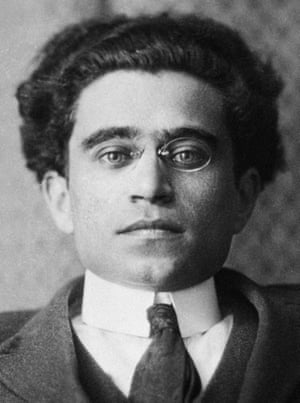
Antonio Gramsci, the Italian Marxist theoretician and politician. Photograph: Laski Diffusion/Getty Images
And Gramsci would have understood the reasons here, too. When most socialists treated the working class as a kind of bee colony – pre-programmed to perform its historical role – Gramsci said: everyone is an intellectual. Even if a man is treated as “trained gorilla” at work, outside work “he is a philosopher, an artist, a man of taste ... has a conscious line of moral conduct”. [Antonio Gramsci, Selections from the Prison Notebooks]
On this premise, Gramsci told the socialists of the 1930s to stop obsessing about the state – and to conduct a long, patient trench warfare against the ideology of the ruling elite.
Eighty years on, the terms of the battle have changed. Today, you do not need to come up from the mine, take a shower, walk home to a slum and read the Daily Worker before you can start thinking. As I argued in Postcapitalism, the 20th-century working class is being replaced as the main actor – in both the economy and oppositional politics – by the networked individual. People with weak ties to each other, and to institutions, but possessing a strong footprint of individuality and rationalism and capacity to act.
What we learned on Friday morning was how easily such networked, educated people can see through bullshit. How easily they organise themselves through tactical voting websites; how quickly they are prepared to unite around a new set of basic values once someone enunciates them with cheerfulness and goodwill, as Corbyn did.
The high Conservative vote, and some signal defeats for Labour in the areas where working class xenophobia is entrenched, indicate this will be a long, cultural war. A war of position, as Gramsci called it, not one of manoeuvre.
But in that war, a battle has been won. The Tories decided to use Brexit to smash up what’s left of the welfare state, and to recast Britain as the global Singapore. They lost. They are retreating behind a human shield of Orange bigots from Belfast.
The left’s next move must eschew hubris; it must reject the illusion that with one lightning breakthrough we can envelop the defences of the British ruling class and install a government of the radical left.
The first achievable goal is to force the Tories back to a position of single-market engagement, under the jurisdiction of the European court of justice, and cross-party institutions to guide the Brexit talks. But the real prize is to force them to abandon austerity.
A Tory party forced to fight the next election on a programme of higher taxes and increased spending, high wages and high public investment would signal how rapidly Corbyn has changed the game. If it doesn’t happen; if the Conservatives tie themselves to the global kleptocrats instead of the interests of British business and the British people, then Corbyn is in Downing Street.
Either way, the accepted common sense of 30 years is over.
Paul Mason in The Guardian
To stop Jeremy Corbyn, the British elite is prepared to abandon Brexit – first in its hard form and, if necessary, in its entirety. That is the logic behind all the manoeuvres, all the cant and all the mea culpas you will see mainstream politicians and journalists perform this week.
And the logic is sound. The Brexit referendum result was supposed to unleash Thatcherism 2.0 – corporate tax rates on a par with Ireland, human rights law weakened, and perpetual verbal equivalent of the Falklands war, only this time with Brussels as the enemy; all opponents of hard Brexit would be labelled the enemy within.
But you can’t have any kind of Thatcherism if Corbyn is prime minister. Hence the frantic search for a fallback line. Those revolted by the stench of May’s rancid nationalism will now find it liberally splashed with the cologne of compromise.
Labour has, quite rightly, tried to keep Karl Marx out of the election. But there is one Marxist whose work provides the key to understanding what just happened. Antonio Gramsci, the Italian communist leader who died in a fascist jail in 1937, would have had no trouble understanding Corbyn’s rise, Labour’s poll surge, or predicting what happens next. For Gramsci understood what kind of war the left is fighting in a mature democracy, and how it can be won.
Antonio Gramsci, the Italian Marxist theoretician and politician. Photograph: Laski Diffusion/Getty Images
Consider the events of the past six weeks a series of unexpected plot twists. Labour starts out polling 25% but then scores 40%. Its manifesto is leaked, raising major questions of competence, but it immediately boosts Corbyn’s popularity. Britain is attacked by terrorists but it is the Tories whose popularity dips. Diane Abbott goes sick – yet her majority rises to 30,000. Sitting Labour candidates campaign on the premise “Corbyn cannot win” yet his presence delivers a 10% boost to their own majorities.
None of it was supposed to happen. It defies political “common sense”. Gramsci was the first to understand that, for the working class and the left, almost the entire battle is to disrupt and defy this common sense. He understood that it is this accepted common sense – not MI5, special branch and the army generals – that really keeps the elite in power.
Once you accept that, you begin to understand the scale of Corbyn’s achievement. Even if he hasn’t won, he has publicly destroyed the logic of neoliberalism – and forced the ideology of xenophobic nationalist economics into retreat.
Brexit was an unwanted gift to British business. Even in its softest form it means 10 years of disruption, inflation, higher interest rates and an incalculable drain on the public purse. It disrupts the supply of cheap labour; it threatens to leave the UK as an economy without a market.
But the British ruling elite and the business class are not the same entity. They have different interests. The British elite are in fact quite detached from the interests of people who do business here. They have become middle men for a global elite of hedge fund managers, property speculators, kleptocrats, oil sheikhs and crooks. It was in the interests of the latter that Theresa May turned the Conservatives from liberal globalists to die-hard Brexiteers.
The hard Brexit path creates a permanent crisis, permanent austerity and a permanent set of enemies – namely Brussels and social democracy. It is the perfect petri dish for the fungus of financial speculation to grow. But the British people saw through it. Corbyn’s advance was not simply a result of energising the Labour vote. It was delivered by an alliance of ex-Ukip voters, Greens, first-time voters and tactical voting by the liberal centrist salariat.
The alliance was created in two stages. First, in a carefully costed manifesto Corbyn illustrated, for the first time in 20 years, how brilliant it would be for most people if austerity ended and government ceased to do the work of the privatisers and the speculators. Then, in the final week, he followed a tactic known in Spanish as la remontada – the comeback. He stopped representing the party and started representing the nation; he acted against stereotype – owning the foreign policy and security issues that were supposed to harm him. Day by day he created an epic sense of possibility.
The ideological results of this are more important than the parliamentary arithmetic. Gramsci taught us that the ruling class does not govern through the state. The state, Gramsci said, is just the final strongpoint. To overthrow the power of the elite, you have to take trench after trench laid down in their defence.
Last summer, during the second leadership contest, it became clear that the forward trench of elite power runs through the middle of the Labour party. The Labour right, trained during the cold war for such trench warfare, fought bitterly to retain control, arguing that the elite would never allow the party to rule with a radical left leadership and programme.
The moment the Labour manifesto was leaked, and support for it took off, was the moment the Labour right’s trench was overrun. They retreated to a second trench – not winning, with another leadership election to follow – but that did not exactly go well either.
As to the third trench line – the tabloid press and its broadcasting echo chamber – this too proved ineffectual. More than 12 million people voted for a party stigmatised as “backing Britain’s enemies”, soft on terror, with “blood on its hands”.
None of it was supposed to happen. It defies political “common sense”. Gramsci was the first to understand that, for the working class and the left, almost the entire battle is to disrupt and defy this common sense. He understood that it is this accepted common sense – not MI5, special branch and the army generals – that really keeps the elite in power.
Once you accept that, you begin to understand the scale of Corbyn’s achievement. Even if he hasn’t won, he has publicly destroyed the logic of neoliberalism – and forced the ideology of xenophobic nationalist economics into retreat.
Brexit was an unwanted gift to British business. Even in its softest form it means 10 years of disruption, inflation, higher interest rates and an incalculable drain on the public purse. It disrupts the supply of cheap labour; it threatens to leave the UK as an economy without a market.
But the British ruling elite and the business class are not the same entity. They have different interests. The British elite are in fact quite detached from the interests of people who do business here. They have become middle men for a global elite of hedge fund managers, property speculators, kleptocrats, oil sheikhs and crooks. It was in the interests of the latter that Theresa May turned the Conservatives from liberal globalists to die-hard Brexiteers.
The hard Brexit path creates a permanent crisis, permanent austerity and a permanent set of enemies – namely Brussels and social democracy. It is the perfect petri dish for the fungus of financial speculation to grow. But the British people saw through it. Corbyn’s advance was not simply a result of energising the Labour vote. It was delivered by an alliance of ex-Ukip voters, Greens, first-time voters and tactical voting by the liberal centrist salariat.
The alliance was created in two stages. First, in a carefully costed manifesto Corbyn illustrated, for the first time in 20 years, how brilliant it would be for most people if austerity ended and government ceased to do the work of the privatisers and the speculators. Then, in the final week, he followed a tactic known in Spanish as la remontada – the comeback. He stopped representing the party and started representing the nation; he acted against stereotype – owning the foreign policy and security issues that were supposed to harm him. Day by day he created an epic sense of possibility.
The ideological results of this are more important than the parliamentary arithmetic. Gramsci taught us that the ruling class does not govern through the state. The state, Gramsci said, is just the final strongpoint. To overthrow the power of the elite, you have to take trench after trench laid down in their defence.
Last summer, during the second leadership contest, it became clear that the forward trench of elite power runs through the middle of the Labour party. The Labour right, trained during the cold war for such trench warfare, fought bitterly to retain control, arguing that the elite would never allow the party to rule with a radical left leadership and programme.
The moment the Labour manifesto was leaked, and support for it took off, was the moment the Labour right’s trench was overrun. They retreated to a second trench – not winning, with another leadership election to follow – but that did not exactly go well either.
As to the third trench line – the tabloid press and its broadcasting echo chamber – this too proved ineffectual. More than 12 million people voted for a party stigmatised as “backing Britain’s enemies”, soft on terror, with “blood on its hands”.
And Gramsci would have understood the reasons here, too. When most socialists treated the working class as a kind of bee colony – pre-programmed to perform its historical role – Gramsci said: everyone is an intellectual. Even if a man is treated as “trained gorilla” at work, outside work “he is a philosopher, an artist, a man of taste ... has a conscious line of moral conduct”. [Antonio Gramsci, Selections from the Prison Notebooks]
On this premise, Gramsci told the socialists of the 1930s to stop obsessing about the state – and to conduct a long, patient trench warfare against the ideology of the ruling elite.
Eighty years on, the terms of the battle have changed. Today, you do not need to come up from the mine, take a shower, walk home to a slum and read the Daily Worker before you can start thinking. As I argued in Postcapitalism, the 20th-century working class is being replaced as the main actor – in both the economy and oppositional politics – by the networked individual. People with weak ties to each other, and to institutions, but possessing a strong footprint of individuality and rationalism and capacity to act.
What we learned on Friday morning was how easily such networked, educated people can see through bullshit. How easily they organise themselves through tactical voting websites; how quickly they are prepared to unite around a new set of basic values once someone enunciates them with cheerfulness and goodwill, as Corbyn did.
The high Conservative vote, and some signal defeats for Labour in the areas where working class xenophobia is entrenched, indicate this will be a long, cultural war. A war of position, as Gramsci called it, not one of manoeuvre.
But in that war, a battle has been won. The Tories decided to use Brexit to smash up what’s left of the welfare state, and to recast Britain as the global Singapore. They lost. They are retreating behind a human shield of Orange bigots from Belfast.
The left’s next move must eschew hubris; it must reject the illusion that with one lightning breakthrough we can envelop the defences of the British ruling class and install a government of the radical left.
The first achievable goal is to force the Tories back to a position of single-market engagement, under the jurisdiction of the European court of justice, and cross-party institutions to guide the Brexit talks. But the real prize is to force them to abandon austerity.
A Tory party forced to fight the next election on a programme of higher taxes and increased spending, high wages and high public investment would signal how rapidly Corbyn has changed the game. If it doesn’t happen; if the Conservatives tie themselves to the global kleptocrats instead of the interests of British business and the British people, then Corbyn is in Downing Street.
Either way, the accepted common sense of 30 years is over.
Subscribe to:
Comments (Atom)