Jasper Jackson in The Guardian
As your mind wearily contemplates being exposed to yet another political campaign, are your dreams haunted by battle buses, billboards and TV debates? Or is it Facebook, YouTube, Twitter and Google?
On the evidence of last year’s EU referendum, much of the campaigning, and much of the money spent on political advertising, will be online. And it will happen in a way that will be largely hidden from scrutiny by either the public or regulators.
During the referendum, Vote Leave spent £2.7m with one small Canadian digital marketing firm that specialises in political campaigns – Aggregate IQ. The sum was well over a third of Vote Leave’s total budget.
Two other campaign groups – both of which received large donations from the Leave campaign - gave Aggregate IQ a further £765,000, taking the total pumped through the company to almost £3.5m. Vote Leave director Dominic Cummings is quoted on the company’s website saying “We couldn’t have done it without them.”
Yet the invoices for the money they paid to Aggregate IQ, which were handed to the Electoral Commission, list vague jargon-filled specifications with little indication of how the ads were delivered. It may tell us Aggregate IQ were running a “targeted video app installed and display media campaign” but gives no clue about where those ads appeared or who saw them. Did most of the money go on Facebook or YouTube? Did they spend more money on reaching under 45s in Hull or pensioners in Canterbury? There’s no way of knowing, not least because the Electoral Commission doesn’t ask for the information.
Meanwhile Cambridge Analytica, the digital targeting experts part-owned by US billionaire Robert Mercer, were credited with super-charging the Leave.EU campaign, even getting a mention in a book about campaign by its chief funder Arron Banks. Yet according to filings with the Electoral Commission there was no paid relationship with the firm at all. The Electoral Commission is currently investigating, as is the Information Commissioner’s Office over the company’s use of data.
These two companies promise to sway the electorate using high-tech targeting of voters, yet not only does the Electoral Commission have little idea of how the money is being spent, but many of the different messages those campaigns show chosen sets of targets are hidden from the rest of us.
An ad in a newspaper or magazine, a billboard or tube poster, can be seen by anybody who happens to come across it. They are targeted in a blunt way, by location, readership etc, but who they are appealing to, the messages used and the money spent is clear for all to see.
But online, ads are directed at far more specific target groups, and shown only to them. Suspect someone is a bit racist? Show them pictures of dark skinned migrants lining up at a border. Know someone regularly visits Spain? Emphasise how much longer it will take to go through airport security.
Just as importantly, you can make sure that you don’t show the wrong ads to the wrong people. The racist dog whistle doesn’t get pushed at people likely to be from, or comfortable with, ethnic minorities. The lengthy customs checks don’t get shown to those with an all-consuming fear of terror attacks.
Of course, people will see ads that aren’t aimed at them online – the targeting is far from perfect - but the digital world allows paid-for political campaigning to split into numerous conversations that rarely overlap.
This combination of digital marketing firms that are required to reveal little about what they do, and digital ads that are different for each segment of the population, make political advertising online opaque in way traditional ads were not.
And the approach seems to work. A more sophisticated digital strategy is regularly cited by Cummings and other Leave campaigners as as example of how they outsmarted Remain. If you were planning how to win June’s election, you’d be mad not to pay close attention to how they did it, and do your best to replicate it. And that means as we approach yet another nationwide vote, it will be harder than ever to see what impact money and the political advertising it pays for is having on the result.
Friday, 21 April 2017
Thursday, 20 April 2017
Global Capitalism: Trump’s Big Economic Plans Fade
Richard D Wolff - Economics Professor (retired) April 2017
March 2017
March 2017
George Osborne: history will not be kind to a man whose flaws led to Brexit
Larry Elliott in The Guardian
Had things turned out differently, George Osborne would now be counting down the days to becoming prime minister. His close friend David Cameron had pledged to stand down before the next general election and a smooth transition was planned. As the architect of Cameron’s unexpected overall majority at the 2015 election, Osborne appeared to have the keys to 10 Downing Street there for the taking.
Instead, he is living proof of Enoch Powell’s dictum that all political careers end in failure unless they are cut off in midstream at an opportune moment. Osborne will be remembered as the austerity chancellor who got the Brexit referendum campaign spectacularly wrong and was then brutally sacked by Theresa May.
His personal responsibility for last June’s referendum needs to be put into perspective. He was against the decision to hold a plebiscite and told Cameron he was taking an unnecessary risk. Once the decision had been taken, however, he took control of the campaign and opted for the same strategy that had proved successful in the Scottish referendum of 2014 and the general election the following year: a warning that a vote for change would have severe economic costs.
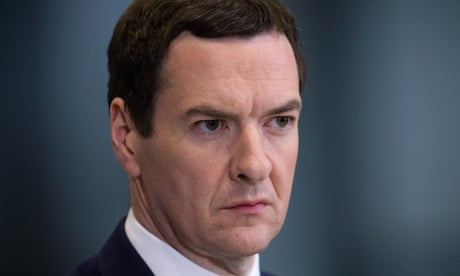
This time it didn’t work. In part, that was because the EU referendum was an opportunity to protest about low pay, welfare cuts and stagnant living standards. In part, it was because the Conservative-supporting papers – who had backed Osborne when he was taking on Alex Salmond and Ed Miliband – came out strongly against what they called Project Fear. In part, it was due to overkill.
When it became clear that many voters were impervious to the warnings, Osborne doubled down. He warned that the economy would plunge into an immediate recession in the event of a vote for Brexit. He said he would be forced to bring in an emergency budget that would raise taxes and cut spending by £30bn. But there was no last-minute swing to remain and when Cameron stepped down as prime minister on the morning after the referendum, Osborne’s days were numbered. A political career that saw him become an MP before his 30th birthday, shadow chancellor before he was 35 and chancellor before turning 40 was effectively over at the age of 45.
Osborne’s rise was smoothed by the financial crisis of 2007 and the deep recession that followed. As shadow chancellor, he had two main lines of attack: Labour had failed to regulate the City properly and had borrowed too much.
The first charge was justified, and Osborne responded by giving far more power to the Bank of England to ensure there was no repeat of the reckless lending seen before 2007. The global nature of the crisis meant the second charge was specious, but Osborne showed himself to be a master of the political dark arts by making it stick.
As Labour turned in on itself during the leadership contest that followed the 2010 election, Osborne said he had no choice but to impose a tough austerity package because Labour had “failed to mend the roof while the sun was shining”. The new chancellor said voters should blame Gordon Brown for the spending cuts and the tax increases he had been forced to impose. Voters believed Osborne in 2010 and carried on believing him right up until the 2015 election.
Unfortunately, Osborne’s economic strategy proved less successful than his political strategy. The economy had been on the mend by the time of the 2010 election, but too much austerity too soon resulted in growth slowing down. Plans to tackle the deficit in one parliament proved wildly optimistic.
By halfway through the 2010-15 parliament, Osborne was in a spot. He had claimed – correctly – that the UK economy had been too dependent on debt in the years before the crisis, but now found that the economy was flatlining.
His solution was to get a moribund housing market moving by giving banks and building societies money to lend. A growing economy allowed Osborne to claim that his critics were wrong and that austerity had worked. Collapsing oil prices led to falling inflation and a surge in living standards that peaked around the time of the 2015 election. It was little more than a sugar rush, but Osborne was seen as a political wizard.
He capitalised on victory in 2015 by announcing a fresh assault on the deficit. There would be fresh cuts in spending by government departments and £12bn of additional welfare cuts in order to put the public finances back in the black by the end of the parliament. Osborne softened the blow by announcing a souped-up national minimum wage and outlining plans to create a “northern powerhouse”. At the Conservative party conference in October 2015, he made a clear leadership pitch with his “we are the builders” speech. It was the moment his career peaked.
Whatever his tenure as editor of the Evening Standard has in store, history is unlikely to be kind to Osborne, and not just because the referendum campaign went so badly wrong. He marketed himself as a one-nation Conservative, yet targeted the poor for spending cuts. He made deficit reduction the acid test of his chancellorship, yet austerity will continue deep into a third parliament. He said he would sort out Britain’s structural problems, but will leave parliament with the economy as dependent on debt and low-skill, low-productivity jobs as it has ever been. Those failures helped create the conditions for Brexit – and for his political demise.
Had things turned out differently, George Osborne would now be counting down the days to becoming prime minister. His close friend David Cameron had pledged to stand down before the next general election and a smooth transition was planned. As the architect of Cameron’s unexpected overall majority at the 2015 election, Osborne appeared to have the keys to 10 Downing Street there for the taking.
Instead, he is living proof of Enoch Powell’s dictum that all political careers end in failure unless they are cut off in midstream at an opportune moment. Osborne will be remembered as the austerity chancellor who got the Brexit referendum campaign spectacularly wrong and was then brutally sacked by Theresa May.
His personal responsibility for last June’s referendum needs to be put into perspective. He was against the decision to hold a plebiscite and told Cameron he was taking an unnecessary risk. Once the decision had been taken, however, he took control of the campaign and opted for the same strategy that had proved successful in the Scottish referendum of 2014 and the general election the following year: a warning that a vote for change would have severe economic costs.
This time it didn’t work. In part, that was because the EU referendum was an opportunity to protest about low pay, welfare cuts and stagnant living standards. In part, it was because the Conservative-supporting papers – who had backed Osborne when he was taking on Alex Salmond and Ed Miliband – came out strongly against what they called Project Fear. In part, it was due to overkill.
When it became clear that many voters were impervious to the warnings, Osborne doubled down. He warned that the economy would plunge into an immediate recession in the event of a vote for Brexit. He said he would be forced to bring in an emergency budget that would raise taxes and cut spending by £30bn. But there was no last-minute swing to remain and when Cameron stepped down as prime minister on the morning after the referendum, Osborne’s days were numbered. A political career that saw him become an MP before his 30th birthday, shadow chancellor before he was 35 and chancellor before turning 40 was effectively over at the age of 45.
Osborne’s rise was smoothed by the financial crisis of 2007 and the deep recession that followed. As shadow chancellor, he had two main lines of attack: Labour had failed to regulate the City properly and had borrowed too much.
The first charge was justified, and Osborne responded by giving far more power to the Bank of England to ensure there was no repeat of the reckless lending seen before 2007. The global nature of the crisis meant the second charge was specious, but Osborne showed himself to be a master of the political dark arts by making it stick.
As Labour turned in on itself during the leadership contest that followed the 2010 election, Osborne said he had no choice but to impose a tough austerity package because Labour had “failed to mend the roof while the sun was shining”. The new chancellor said voters should blame Gordon Brown for the spending cuts and the tax increases he had been forced to impose. Voters believed Osborne in 2010 and carried on believing him right up until the 2015 election.
Unfortunately, Osborne’s economic strategy proved less successful than his political strategy. The economy had been on the mend by the time of the 2010 election, but too much austerity too soon resulted in growth slowing down. Plans to tackle the deficit in one parliament proved wildly optimistic.
By halfway through the 2010-15 parliament, Osborne was in a spot. He had claimed – correctly – that the UK economy had been too dependent on debt in the years before the crisis, but now found that the economy was flatlining.
His solution was to get a moribund housing market moving by giving banks and building societies money to lend. A growing economy allowed Osborne to claim that his critics were wrong and that austerity had worked. Collapsing oil prices led to falling inflation and a surge in living standards that peaked around the time of the 2015 election. It was little more than a sugar rush, but Osborne was seen as a political wizard.
He capitalised on victory in 2015 by announcing a fresh assault on the deficit. There would be fresh cuts in spending by government departments and £12bn of additional welfare cuts in order to put the public finances back in the black by the end of the parliament. Osborne softened the blow by announcing a souped-up national minimum wage and outlining plans to create a “northern powerhouse”. At the Conservative party conference in October 2015, he made a clear leadership pitch with his “we are the builders” speech. It was the moment his career peaked.
Whatever his tenure as editor of the Evening Standard has in store, history is unlikely to be kind to Osborne, and not just because the referendum campaign went so badly wrong. He marketed himself as a one-nation Conservative, yet targeted the poor for spending cuts. He made deficit reduction the acid test of his chancellorship, yet austerity will continue deep into a third parliament. He said he would sort out Britain’s structural problems, but will leave parliament with the economy as dependent on debt and low-skill, low-productivity jobs as it has ever been. Those failures helped create the conditions for Brexit – and for his political demise.
Wednesday, 19 April 2017
Crush the saboteurs! How hard-Brexit rhetoric turned Leninist
Steven Poole in The Guardian
Hatred of dissent, it seems, is the new normal in British politics. “Crush the saboteurs,” screamed the Daily Mail, announcing Theresa May’s calling of a snap election. “Crush pro-EU saboteurs, PM,” advised the Sun for good measure. But what exactly are saboteurs and how should we crush them?
Surprisingly, the language of hard-Brexit Tory supporters is now that of the Russian Revolution. In 1918, the Bolsheviks dissolved Russia’s democractically elected constituent assembly on the grounds that it was a front for the bourgeois counter-revolution. “All power to the Soviets!” Lenin declared. “We shall crush the saboteurs.” For a while, it had seemed as though neo-Soviet rhetoric was the preserve of squabbling factions within the Labour party, with both Corbyn and his opponents accused of organising “purges”. But since three judges defending the rights of the British people were denounced in the rightwing press last autumn as “enemies of the people”, it appears to have become the de facto mode of political argument on left and right. Supporters of the two main parties are complicit in creating an ambient political atmosphere of paranoid permanent revolution. (Rather sweetly, the Mail devoted pages two and three on 19 April to a Soviet-style heroic-agriculture tribute to a British farmer who insists on ploughing his field with horses, which is just as well, since he probably won’t be able to afford a tractor, post-Brexit.)
The political saboteurs Lenin complained of were alleged conspirators, working behind the scenes to ruin his virtuous plans, but the word actually originates in the language of industrial disputes. “Saboteur” and “sabotage” are of French origin, and a popular etymology relates them to “sabots”, the wooden clogs that Luddite workers supposedly threw into machines to break them. Whether or not that is true, the verb “saboter”, meaning to deliberately mess something up, came to be used in the late 19th century by anarchist thinkers, and “sabotage” appeared in English in 1910 to describe the destructive actions of French railway strikers.
The word’s origins in the struggle between workers and capital, then, makes it an appropriate term for enemies of the modern Conservative party in particular. (Home counties Tories, of course, are especially likely to disdain people thus characterised, given their historic battles with “hunt saboteurs”.) And it is no doubt thrilling for well-lunched tabloid editors to dream of “crushing” people they wouldn’t dare pick a physical fight with in person. But Theresa May did not call anyone a saboteur, so perhaps this is all just an unfortunate case of macho projection.
Yet May’s speech announcing the election was, paradoxically, profoundly anti-democratic. “At this moment of enormous national significance, there should be unity here in Westminster, but instead there is division,” she complained. “The country is coming together, but Westminster is not.” This rather charmingly combined a totally made-up fact (the country is coming together) with a bizarre whine that parliamentary democracy is functioning as it should. Any persistent total unity in an elected assembly, after all, would signal that it had been hijacked by a fascist. If there were no “division” in Westminster, we would find ourselves in a de facto one-party state, in which the wisdom of the dear leader is all – a vision of “strong leadership” at which Vladimir Putin would nod sagely.
May’s contempt for the democratic functioning of government neatly mirrors Lenin’s own nearly a century ago, when he asserted that the workers’ councils were better than any democratically elected body: “The Soviets, being revolutionary organisations of all the people, of course became immeasurably superior to all the parliaments in the world.”
In Theresa May’s implicit view, too, superior to all the parliaments in the world would be a British establishment that offered zero obstacles to her “getting on with the job” of delivering what she considers best for the British people (whatever that turns out to be, since apparently no one needs to know right now). In May’s habitual way of phrasing things, the normal workings of parliament – in which MPs and members of the Lords may disagree with a government’s plans – are nothing but “playing politics” or “political game-playing” which must not be allowed to continue lest it cause “damaging uncertainty and instability”. To cast disagreement as game-playing is to characterise dissent as fundamentally unserious, and to bring the very idea of politics into disrepute.
And so, despite her disavowal of the term, the tabloid characterisation of May’s plan as one of crushing the “saboteurs” does not seem inaccurate. Indeed, the recent finale of the TV drama Homeland, which saw the newly elected president Elizabeth Keane holed up in the Oval Office ordering arrests of senators and congressmen, now looks as relevant to British as to American politics. When you have a hammer, everything looks like a nail; when you are a paranoid aspiring autocrat, everyone is a potential saboteur.
In George Orwell’s Nineteen Eighty-Four, Winston Smith invents the heroic historical figure Comrade Ogilvy, who had “no aim in life except the defeat of the Eurasian enemy and the hunting-down of spies, saboteurs, thought-criminals, and traitors generally”. Theresa May’s world, too, seems to have shrunk to one in which the greatest enemies are the enemies within and democracy must be democratically eliminated for the good of the people.
Hatred of dissent, it seems, is the new normal in British politics. “Crush the saboteurs,” screamed the Daily Mail, announcing Theresa May’s calling of a snap election. “Crush pro-EU saboteurs, PM,” advised the Sun for good measure. But what exactly are saboteurs and how should we crush them?
Surprisingly, the language of hard-Brexit Tory supporters is now that of the Russian Revolution. In 1918, the Bolsheviks dissolved Russia’s democractically elected constituent assembly on the grounds that it was a front for the bourgeois counter-revolution. “All power to the Soviets!” Lenin declared. “We shall crush the saboteurs.” For a while, it had seemed as though neo-Soviet rhetoric was the preserve of squabbling factions within the Labour party, with both Corbyn and his opponents accused of organising “purges”. But since three judges defending the rights of the British people were denounced in the rightwing press last autumn as “enemies of the people”, it appears to have become the de facto mode of political argument on left and right. Supporters of the two main parties are complicit in creating an ambient political atmosphere of paranoid permanent revolution. (Rather sweetly, the Mail devoted pages two and three on 19 April to a Soviet-style heroic-agriculture tribute to a British farmer who insists on ploughing his field with horses, which is just as well, since he probably won’t be able to afford a tractor, post-Brexit.)
The political saboteurs Lenin complained of were alleged conspirators, working behind the scenes to ruin his virtuous plans, but the word actually originates in the language of industrial disputes. “Saboteur” and “sabotage” are of French origin, and a popular etymology relates them to “sabots”, the wooden clogs that Luddite workers supposedly threw into machines to break them. Whether or not that is true, the verb “saboter”, meaning to deliberately mess something up, came to be used in the late 19th century by anarchist thinkers, and “sabotage” appeared in English in 1910 to describe the destructive actions of French railway strikers.
The word’s origins in the struggle between workers and capital, then, makes it an appropriate term for enemies of the modern Conservative party in particular. (Home counties Tories, of course, are especially likely to disdain people thus characterised, given their historic battles with “hunt saboteurs”.) And it is no doubt thrilling for well-lunched tabloid editors to dream of “crushing” people they wouldn’t dare pick a physical fight with in person. But Theresa May did not call anyone a saboteur, so perhaps this is all just an unfortunate case of macho projection.
Yet May’s speech announcing the election was, paradoxically, profoundly anti-democratic. “At this moment of enormous national significance, there should be unity here in Westminster, but instead there is division,” she complained. “The country is coming together, but Westminster is not.” This rather charmingly combined a totally made-up fact (the country is coming together) with a bizarre whine that parliamentary democracy is functioning as it should. Any persistent total unity in an elected assembly, after all, would signal that it had been hijacked by a fascist. If there were no “division” in Westminster, we would find ourselves in a de facto one-party state, in which the wisdom of the dear leader is all – a vision of “strong leadership” at which Vladimir Putin would nod sagely.
May’s contempt for the democratic functioning of government neatly mirrors Lenin’s own nearly a century ago, when he asserted that the workers’ councils were better than any democratically elected body: “The Soviets, being revolutionary organisations of all the people, of course became immeasurably superior to all the parliaments in the world.”
In Theresa May’s implicit view, too, superior to all the parliaments in the world would be a British establishment that offered zero obstacles to her “getting on with the job” of delivering what she considers best for the British people (whatever that turns out to be, since apparently no one needs to know right now). In May’s habitual way of phrasing things, the normal workings of parliament – in which MPs and members of the Lords may disagree with a government’s plans – are nothing but “playing politics” or “political game-playing” which must not be allowed to continue lest it cause “damaging uncertainty and instability”. To cast disagreement as game-playing is to characterise dissent as fundamentally unserious, and to bring the very idea of politics into disrepute.
And so, despite her disavowal of the term, the tabloid characterisation of May’s plan as one of crushing the “saboteurs” does not seem inaccurate. Indeed, the recent finale of the TV drama Homeland, which saw the newly elected president Elizabeth Keane holed up in the Oval Office ordering arrests of senators and congressmen, now looks as relevant to British as to American politics. When you have a hammer, everything looks like a nail; when you are a paranoid aspiring autocrat, everyone is a potential saboteur.
In George Orwell’s Nineteen Eighty-Four, Winston Smith invents the heroic historical figure Comrade Ogilvy, who had “no aim in life except the defeat of the Eurasian enemy and the hunting-down of spies, saboteurs, thought-criminals, and traitors generally”. Theresa May’s world, too, seems to have shrunk to one in which the greatest enemies are the enemies within and democracy must be democratically eliminated for the good of the people.
Subscribe to:
Comments (Atom)