Search This Blog

Wednesday, 7 December 2016

How to Criticize with Kindness: Philosopher Daniel Dennett on the Four Steps to Arguing Intelligently

Maria Popova in Brainpickings


“In disputes upon moral or scientific points,” Arthur Martine counseled in his magnificent 1866 guide to the art of conversation, “let your aim be to come at truth, not to conquer your opponent. So you never shall be at a loss in losing the argument, and gaining a new discovery.” Of course, this isn’t what happens most of the time when we argue, both online and off, but especially when we deploy the artillery of our righteousness from behind the comfortable shield of the keyboard. That form of “criticism” — which is really a menace of reacting rather than responding — is worthy of Mark Twain’s memorable remark that “the critic’s symbol should be the tumble-bug: he deposits his egg in somebody else’s dung, otherwise he could not hatch it.” But it needn’t be this way — there are ways to be critical while remaining charitable, of aiming not to “conquer” but to “come at truth,” not to be right at all costs but to understand and advance the collective understanding.

In Intuition Pumps and Other Tools for Thinking (public library) — the same fantastic volume that gave us Daniel Dennett on the dignity and art-science of making mistakes — Dennett offers what he calls “the best antidote [for the] tendency to caricature one’s opponent”: a list of rules formulated decades ago by the legendary social psychologist and game theorist Anatol Rapoport, best-known for originating the famous tit-for-tat strategy of game theory. Dennett synthesizes the steps:


How to compose a successful critical commentary:

You should attempt to re-express your target’s position so clearly, vividly, and fairly that your target says, “Thanks, I wish I’d thought of putting it that way.

You should list any points of agreement (especially if they are not matters of general or widespread agreement).

You should mention anything you have learned from your target.

Only then are you permitted to say so much as a word of rebuttal or criticism.


If only the same code of conduct could be applied to critical commentary online, particularly to the indelible inferno of comments.

But rather than a naively utopian, Pollyannaish approach to debate, Dennett points out this is actually a sound psychological strategy that accomplishes one key thing: It transforms your opponent into a more receptive audience for your criticism or dissent, which in turn helps advance the discussion.

Compare and contrast with Susan Sontag’s three steps to refuting any argument.
Tuesday, 6 December 2016

How airlines and Uber rip you off

Arwa Mahadwi in The Guardian


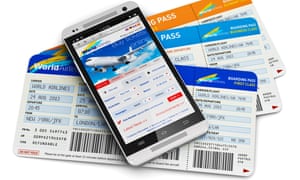
Flighty prices: many airlines employ ‘dynamic pricing’ – and the practice is growing. Photograph: Getty Images/iStockphoto


Even rocket scientists, I would wager, are befuddled by airline pricing. One minute, a flight you’re looking at costs £400; 30 seconds later it has increased by £100. Panic sets in; you buy a ticket before it ascends out of your price range.

I experienced this fluctuation frustration recently while trying to buy a ticket home to London from New York for Christmas. After about a gazillion visits to British Airways’ website, I decided finally to book something. Immediately, the price went up. That’s OK, I thought, trying to console myself. I read on Twitter that London has gone all Islamic anyway and Christmas has been banned. Probably nothing to go home to any more, just ritual stonings and sharia. Then I remembered a rumour that clearing your browser cookies could get you a cheaper flight. I gave it a go and, voila, the flight reverted to its earlier, cheaper price.

The thinking behind the cookies trick is that airlines can tell from your browser history when you’re particularly interested in a flight – and thus willing to pay a higher price – and take advantage of this. Whether this is true is known only to a few (when the Guardian asked BA about this in 2010 they said they didn’t use cookies this way). What is clear, however, is that airlines – and many other companies – are increasingly moving towards “personalised pricing”. Sometimes called “differential pricing” or “price discrimination”, this means charging customers different prices for the same product based on how much they think people are willing to pay.

Price discrimination, to be clear, is not the same as “dynamic pricing”. Airlines have practised dynamic pricing for a long time: there are a set number of prices available, and you get a different fare based on factors including when you book and the availability of seats on the flight. Prices, however, are starting to get more personal. In 2014, a US regulator approved an industry-wide system, the implementation of which started only recently, that allows airlines and travel agencies to collect personal data – information such as marital status, address and travel history – and use that data to offer you “more agile pricing and more personalised offerings”. So, if an airline can see that you live in a fancy neighbourhood and regularly fly business-class, it may offer you a higher fare than it would someone whom it believes is more price-sensitive. As technology grows more sophisticated, companies may be able to serve you higher prices based on factors such as your emotional state.

Businesses are already using customised pricing online based on information they can glean about you. It is hard to know how widespread the practice is; companies keep their pricing strategies closely guarded and are wary of the bad PR price discrimination could pose. However, it is clear that a number of large retailers are experimenting with it. Staples, for example, has offered discounted prices based on whether rival stores are within 20 miles of its customers’ location. Office Depot has admitted to using its customers’ browsing history and location to vary its range of offers and products. A 2014 study from Northeastern Universityfound evidence of “steering” or differential pricing at four out of 10 general merchandise websites and five out of five travel websites. (Steering is when a company doesn’t give you a customised price, but points you towards more expensive options if it thinks you will pay more.) The online travel company Orbitz raised headlines in 2012 when it emerged that the firm was pointing Mac users towards higher-priced hotel rooms than PC users.

Price discrimination doesn’t happen only online. Supermarkets have used personalised pricing based on information gleaned from loyalty cards and shopping habits. Broadly speaking, economists tend to think of price discrimination as a good thing for businesses and customers. Essentially, it is algorithms robbing from the rich to subsidise the poor, all while growing a company’s market.

There is the potential for this to go further still and for customised pricing to help reduce some of the inequities in society. In Finland, speeding tickets are linked to income, a system known as progressive punishment. Could we not have progressive pricing, a system where the cost of necessities such as bread and milk is linked to your ability to pay for them?

However, it seems more likely that companies will exploit the increasing amounts of data they have about us to our detriment. Take Uber, for example. Its much-hated “surge pricing” is an example of dynamic pricing: prices change according to supply and demand. They don’t change according to how desperate you, as an individual, are to get a cab, but this may not be the case for long. Uber knows a hell of a lot about you – including, for example, how low the battery is on your phone. It also has data that shows people are more likely to pay surge pricing when their phone battery is low. “We absolutely don’t use that ... but it’s an interesting kind of psychological fact of human behaviour,” a behavioural economist at Uber said earlier this year. This may be true, but why do you think Uber employs behavioural economists? It is not simply to marvel at the psychology of human behaviour.

As airlines become more adept at gathering and exploiting data, I shudder to think what “interesting facts” of human behaviour they will start to factor into their pricing strategies. Fares will stop being linked to variables such as seats already sold and start fluctuating according to how many times your mum has texted you to ask if you’ve bought your ticket yet, and how guilty you feel that you haven’t. Good luck trying to clear your cookies to fix that.

Mark Blyth - The man who predicted Brexit, Trump and Renzi explains it all

Blyth explains Brexit, Trump, Corbyn and the fall of Renzi


Blyth on Austerity