Search This Blog

Thursday, 24 March 2016

When the state becomes the nation

G Sampath in the Hindu


What has not received adequate scrutiny is the present regime’s doctoring of the very idea of a nation


Sixty-eight years after independence, India has suddenly rediscovered nationalism. At a recent meeting of its National Executive, the Bharatiya Janata Party affirmed nationalism as its guiding philosophy. Its leaders announced that a refusal to chant ‘Bharat Mata ki Jai’ signifies disrespect to the Constitution.
In case you were in winter hibernation and have just woken up, no, we are not at war like, say, Syria is. No imperial power has invaded us like, say, in Iraq. But all of a sudden, a country hit hard by a stuttering economy, growing unemployment, agrarian distress, and wracked by malnutrition, illiteracy, and environmental degradation seems to have decided that its topmost national priority is to settle the question of who is an anti-national.
Alphabet soup

In this nationalism debate, both within Parliament and without, a variety of terms have been used to describe the brand of nationalism invoked by the NDA government to identify anti-nationals: from ‘pseudo-nationalism’ to ‘aggressive nationalism’ to ‘Hindu nationalism’, ‘cultural nationalism’, ‘chauvinistic nationalism’, ‘hyper-nationalism’, ‘regimented nationalism’, and ‘partisan nationalism’. Only a few commentators have used the word ‘fascism’, which too is a particular kind of nationalism.
But branding a democratically elected government as fascist – even though history tells us that a fascist government can be voted to power – is typically viewed as an exaggeration; as a misguided attempt to revoke the moral legitimacy of the government in power. Besides, in a constitutional democracy, it is never difficult to adduce evidence in support of an administration’s democratic credentials.
Rather, what concerns us here is the nationalism debate. The question is not whether India is on the verge of fascism but whether the particular kind of nationalist ideology espoused by the ruling dispensation has anything in common with the ideology of fascism. To answer this, we can do no better than go back to the father of fascism, Benito Mussolini, and his seminal work, The Doctrine of Fascism, published in 1935.
Mussolini’s five principles

In this essay, Mussolini identifies five principles as central to a fascist ideology. The first and most fundamental is the primacy of the state’s interests over an individual’s rights. As he writes, “The fascist conception of life stresses the importance of the state and accepts the individual only in so far as his interests coincide with those of the State (italics mine).”
The second principle is the primacy of the state over the nation: “It is not the nation which generates the State… rather it is the State which creates the nation.”
The third is the rejection of democracy. “In rejecting democracy, fascism rejects the absurd conventional lie of political equilatarianism,” Mussolini says, dismissing both democracy and equality in one go.
Fourth is the state’s non-secular character: “The Fascist state sees in religion one of the deepest of spiritual manifestations and for this reason it not only respects religion but defends and protects it.” For the Italian fascist, it was “Roman Catholicism, the special, positive religion of the Italians.” One doesn’t need to spell out what the “special, positive religion” of the Indian fascist would be.
Fifth, tying the other four principles together is a conception of the state as the repository of all virtue. For Mussolini, the state is “the conscience of the nation”.
At the heart of the brand of nationalism that is currently seeking to establish its hegemony over India’s cultural and political landscape is the idea of the anti-national. No doubt purely by coincidence, Mussolini’s five principles — primacy of the state over citizen’s rights and the nation, contempt for democracy, investment in a national religion, and a belief in the nation-state as a moral agent — converge neatly in the discourse of the ‘anti-national’. The microphone that amplifies this discourse is the sedition law.
Speaking about the sedition law, Kanhaiya Kumar made a distinction between ‘raaj droh’ and ‘desh droh’. ‘Raaj droh’, according to him, is a betrayal of the state, whereas ‘desh droh’ is a betrayal of the nation. The British needed a sedition law because the natives had every reason to betray a colonial state that was oppressing them. An independent state that is democratic would not need a sedition law for the simple reason that it is, in principle, subordinate to the nation. The nation, in this democratic paradigm, is essentially a cultural construct given currency by groups of people who have agreed to be part of one nation. This agreement is an ongoing conversation, as Rahul Gandhi observed in Parliament. In Mr. Kumar’s words, “India is not just a nation but a federation of nations.”
Put another way, it is impossible for an Indian to utter anything ‘anti-national’ because anything she says would always already constitute the self-expression of a cell of that body known as the Indian nation. While enough has been written about the present regime’s distortion of the idea of India, what has not received adequate scrutiny is its doctoring of the very idea of a nation. This is taking place at four levels: conflation of the state with the nation; conflation of the nation with the territory; presenting criticism of the state as a crime against the nation; and finally, applying a law meant for those undermining the state, on those acting to strengthen the nation. When such doctoring happens, it is often the case that those who control the state machinery are people seeking to harm the nation. It is perfectly possible to strengthen the state and destroy the nation at the same time – no contradiction here.
Therefore the most effective response to the challenge posed by the discourse of anti-nationalism is not joining the competition to decide who is the greater or truer nationalist but to delink the nation from both territory and the state. This is also the only way out for the Left that finds in an (anti-)nationalistic bind every time it is subjected to the ‘litmus test’ of Kashmir.
If the Indian nation is not synonymous with Indian territory – a territory that is a contingent product of colonial history – but an idea vested in a covenant among the Indian people, then the Left can take a stand on Kashmir that is in consonance with the principles of democracy without becoming vulnerable to the charge of being ‘anti-national’.
Delinking the nation from the state also prepares the ground for exposing the dangers of a nationalism that fetishes the state at the expense of the people. And once this danger is exposed, fighting it becomes easier, for history and morality are both on the side of the anti-fascist.
The moral repugnance that a fascist ideology evokes is such that no respectable individual, not even those who witch-hunt anti-nationals on prime time every night, can openly endorse fascism. The strategy of Mussolini’s heirs will never be to openly espouse their ideology — as Mussolini did — but to pursue it covertly. This is the significance of the question Kanhaiya Kumar posed to the Prime Minister: “You spoke about Stalin and Khrushchev, but why didn’t you speak of Hitler too?”
Tuesday, 22 March 2016

Tarek Fatah on Islam, India, Balochistan, and Pakistan


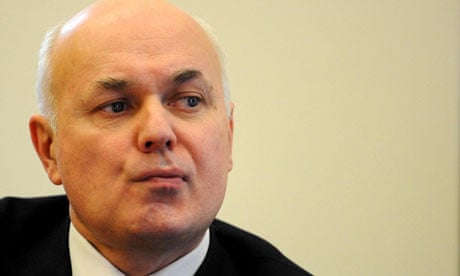
Iain Duncan Smith will do anything for Brexit – even tell the truth

Polly Toynbee in The Guardian

There’s only one question about Iain Duncan Smith: is he a “bastard”, as described by his former prime minister John Major, or a “shit” – as reportedly described by his current leader, David Cameron? For hypocrisy and outright dishonesty do you howl in indignation, or roar with crazed laughter at his new compassion? How has this architect of so much torment for so many, justifier of injustice, scourge of the poor and the sick, become the champion of underdogs? How can this Nosferatu say he never had a taste for blood?

As for David Cameron’s riposte yesterday – improving life chances, rebuilding sink estates? – reviving his old pretence of “modern compassionate Conservatism”, that deserves the same raspberries of ridicule. But he does it well, for those who hear the words and never see the facts on the ground. And now he is forced to abandon extra cuts.

What is the former welfare secretary up to? Look at the backers who defend him: all are Brexiteers, mostly on the right, not friends of the poor. He was always the pre-referendum ticking time bomb, and now he has pulled the pin to inflict maximum damage to the authority of the prime minister. As the Daily Express headline gloats: “Tory split helps fight to free us from Brussels.” The IDS backer and Europhobe Owen Paterson has never knowingly objected to cuts for the poor, nor has Bernard Jenkin: his wife, Baroness Jenkin, presented a Church of England report on 4 million people going hungry, saying: “Poor people don’t know how to cook. I had a large bowl of porridge today, which cost 4p.” In their world, poverty is always due to fecklessness: IDS never acknowledges that most of the poor are in work.

Worse than cuts has been this government’s relentless anti-poor propaganda, with George Osborne’s sneers at households sleeping on with blinds closed; or IDS’s attacks on the “something for nothing culture” as he warned those on benefits: “This is not an easy life any more, chum. I think you’re a slacker.”

The invention of “compassionate conservatism” came in 2002 when Duncan Smith staged a public epiphany with photographers in Glasgow’s Easterhouse estate: he said he was shocked by the wretchedness he saw. Cameron seized on this to detoxify the party. When I retraced Duncan Smith’s steps, I found those in the Easterhouse community centre he visited who had warmly welcomed his conversion now distraught at the effects of his policies. Many had been cut off benefits, one man with acute psychosis, another who was barely literate and failed to claim correctly. Food banks everywhere are filled with victims of sanctions: abolishing the emergency social fund – handing out £5 a day to the truly desperate – was emblematic.


Iain Duncan Smith rapped by watchdog for misusing benefits cap statistics


It’s hard to exaggerate the cruelty of his cuts, boasting of the £30bn “saved”. Not a croaky whisper of protest came from him at £12bn more cuts in the manifesto. The bedroom tax left most people unable to downsize, their income massively depleted. The benefits cap poleaxed families in the south-east. Universal credit has a 50-page online form, leaving many with learning difficulties or mental health problems unable to apply. Billed as a modest technical tidying up, universal credit has wasted billions with failed IT systems; it is years late and doesn’t do what he says it does: incentives to work are no better, its recipientslosing 65p or more in any extra pound they earn. It disincentivises partners from working, losing earnings in withdrawn credits.

IDS ignored warnings, claiming magical solutions to eternal welfare conundrums: how do you give the needy enough for a decent life without damaging the impulse to work? How do you taper benefits gently so that earning more doesn’t lose them money? At first he plainly didn’t understand the complexity: later he just denied it, claiming that putting six benefits together was “simplifying”. But each of those still has to be recalculated monthly.

His successor inherits a morass of expensive bungles and needless viciousness. IDS’s reign of terror extended to every jobcentre, though he denied there were targets for staff to knock claimants off benefits. The word “target” is replaced with euphemisms like “spinning plates”. One unhappy jobcentre adviser told me: “You park your conscience when you work here.” Advisers tell of orders to apply sanctions for tiny infractions, closing the claims of those who fail to follow the “50 steps to work” so they vanish from statistics. Every month managers check “sanction-raising figures”: low sanctioners are “managed out” of their jobs.

Duncan Smith’s numerical jiggery-pokery became legendary, undeterred by stern rebukes from the public accounts committee, the National Audit Office and the UK Statistics Authority. As few understand benefits, he felt free to make any claim and distort any figure. He, like Cameron and Osborne, is a serial user of factoids: the UK has 1% of the world’s population but spends 7% of the world’s welfare. True, but meaningless to compare ourselves with Sudan and other nations with no welfare.

Like Cameron yesterday, IDS denied cuts by pointing to the still rising total welfare bill. But rises in the population and numbers of pensioners, or in soaring housing benefit, are no comfort to those whose benefits certainly have been brutally cut. One legacy will be hundreds of thousands more children projected by the Institute for Fiscal Studies to fall into poverty by 2020. His answer was to change the measurement – until the Lords rebelled.

All this makes his sudden fit of truth-telling such a culture shock. He is entirely right: the budget was “deeply unfair”, extra money for the rich taken from poor and disabled people. How startlingly honest when he says his party ignores the poor because they don’t vote Tory. But what’s new?

Duncan Smith has always had a pious way, followed by irritability if challenged. The man’s psyche hardly matters, but he has a stock of self-belief and self-deceit that lets him utter sorrowful words of tough love towards the poor. Little is genuine – not his name, his qualifications, his repeated epiphanies. It’s the third time he has inflicted near-mortal damage on his party – against John Major, then as worst ever leader, now as would-be assassin of a winning leader.

In other times all this would be joy for Labour. But even they must realise this man’s only intent is to get Britain out of the EU. So gripping is the Brexit virus that its victims will sacrifice all other beliefs to pursue it. Here his chosen weapon is truth.

Monday, 21 March 2016

The secret of a happy marriage? Low expectations

Daisy Buchanan in The Guardian

Since I got married last October, I’ve been thinking a lot about divorce. Not in a “serving papers” way, but in the sense that nothing is impossible and it’s good to be prepared. Divorce is something that could never have happened to me before the wedding – but now there’s a chance that it’s in my future. Just as some people believe there’s no better way of appreciating life than by contemplating the inevitability of death (“You might get knocked down by a bus tomorrow!” Not if I stick to heavily pedestrianised areas!), I think that the best way of appreciating the best bits of my relationship is to remind myself that we’re both free to leave at any time.

Reader, I married him hoping that it will last for ever, but knowing that it’s going to be hard, because life is hard. The variables are infinite – loved ones might get seriously ill, we might get ill, one of us could do something thoughtless and hurtful and stupid that changes the nature of the relationship, we might end up growing apart instead of growing together. Surely any idiot knows that the romantic bits – wearing your best underwear, snogging your way through plane safety demonstrations on your endless minibreaks and holding in your farts – happen in the six months after you meet. Marriage is all “Can you get a birthday present for my mum? By the way, the toilet’s broken and we’ve just had a council tax bill for 800 quid.”

So I’m not surprised by the results of a recent study which show that the higher a couple’s expectations of marriage, the more likely the union was doomed to failure. When couples had low expectations that were easily reached, they were happier than the couples who had higher expectations, despite having the same needs met.

The study surmised: “Among spouses who either reported less severe problems or were in marriages observed to be characterised by lower levels of destructive behaviour, standards were positively associated with satisfaction over time,” but that bringing impossibly high expectations to marriage was as damaging as undermining each other, or communicating badly.

Dr James McNulty, the psychologist in charge of the research, advises newlyweds to “realise their strengths and weaknesses and calibrate their standards accordingly”, explaining that the problems occur when couples experience “a mismatch between what they demand and what they can actually attain”.

The lesson is obvious. Love the one you’re wedded to, not the tidier, healthier, cleverer, more committed person you hope marriage might make them. If they’re always hitting on your friends and being sick in taxis, they won’t be cured of it just because all of your relatives have bought you flatware from a John Lewis list .

I know I’m incredibly lucky to have met my husband in the UK, in 2015. In other countries and other eras, marriage hasn’t been a choice for women but an inevitability. Many hoped that courtship, and the chance to live away from home, would lead to slightly more independence and fun. In some households, you’re still better off as a matriarch than as an adult female child. But that only reinforces my point.

If you’re marrying in the belief that it will make your life significantly better, then things probably aren’t great to begin with.

Literature is littered with characters who have entered disastrous marriages in the failed pursuit of wealth and adventure. Your Becky Sharps and Emma Bovarys start unions in the hope that they will allow them to realise personal ambitions, and it never ends well.

I’m optimistic for my own marriage because I have no hopes for social betterment, grand balls, or private jets. I married my husband knowing that we have the same idea of what constitutes a good time. We believe there is no greater state of wedded bliss than lying on a sofa with your head on your spouse’s bottom, and six hours of QI repeats scheduled. If I were to dare to dream and get ideas above my station, I might hope that one day we could replace our customary bag of own-brand crisps with a big sack of Kettle Chips.

Ultimately, a marriage can only ever be as good as the people in it. You can’t make coq au vin with a can of Red Stripe and a £1.99 six-piece selection from Chicken Cottage, but you’ll have a nicer dinner if you appreciate the tasty charm of your raw ingredients instead of moaning about their lack of nutritional value. My greatest ambition for my marriage is that we keep treating each other with as much tenderness and respect as we did when we first met, and that we love each other enough to admit it’s time to call it a day if we ever can no longer do this. I hope it will never happen, but at least when it comes to love, a pessimist is never disappointed.