Search This Blog

Tuesday, 9 February 2016

Declare a No Ball when a batsman attempts an early run

Girish Menon from CamKerala CC

David Hopps in his piece, 'Is the game going to the dogs' suggests that Stuart Broad in the forthcoming World T20 should without warning 'mankad' Kohli and Raina off successive balls. This is his way of reminding us of the role of convention and civilised behaviour in cricket and he implies that in its absence anarchy would prevail.

So, I decided to look up the meaning of convention on the omniscient Google and found that one of the meanings of convention is 'a way in which something is done'. I think it is this definition of convention that Hopps uses to criticise Keemo Paul for mankading Richard Ngarava in the U19 World Cup.

----Other pieces by the author

Sreesanth - Another modern day Valmiki?


----

I then asked myself what would be at the other end of the spectrum of convention and I felt the term 'creativity' would fit the bill. Google defines creativity as ' the use of imagination or original ideas to create something'.  When Keemo's act is examined from this perspective it is a creative act, not illegal, and an imaginative way to reach the objectives of his task.

In the history of the world, not just cricket, whenever any creative solution is implemented, affected governments would debate and proscribe such activity if it was not in the 'public' interest. In the case of 'mankading' such an inquiry has been conducted by the ICC and the act has still been deemed legal, hence the furore baffles me.

Hopps felt that it was newcomers who failed fail to honour cricket's conventions. So I asked myself, two questions:

'Is it newcomers to cricket who disrespect its conventions'?

and

 'Are conventions in the best interests of all participants?'

In the case of Keemo Paul, yes he is definitely a newcomer to cricket, so probably was the original sinner Vinoo Mankad and the other mankaders in between. I suppose these guys may have read about the laws of cricket and how the umpire's decision should not be questioned. As they plotted to get the opposing batsmen out, a difficult task at the best of times, they may have noticed this anomaly between the law and its actual practice. Being young and innocent they may have focussed on their objectives and failed to realise the opprobrium that will befall them if they challenged cricket's archaic anomalies.

So who makes conventions? A historical examination of societies will reveal that conventions and practices evolve out of the systems devised by the powerful. A history of cricket also reveals that it's rules and conventions were determined by upper class batsmen epitomised by the roguish W G Grace. The bowlers were the proverbial servants meant to exist for the pleasure of batsmen. It is these servants, like the erstwhile British colonies, who now challenge the prevalent conventions albeit legally in the case of the mankaders.

Hopps then gives an example of queue jumping to illustrate the catastrophe that will befall mankind if any convention is broken. Yes, the effects of queue jumping has created havoc in India and probably other erstwhile British colonies. Yet, as any economics student will tell you the problem with a queue is that it does not ration a scarce resource based on greatest need. If the A&E departments of NHS hospitals worked on the convention of queues then a Friday night over-reveller would have priority over a critical patient and an ambulance would be perennially stuck in traffic.
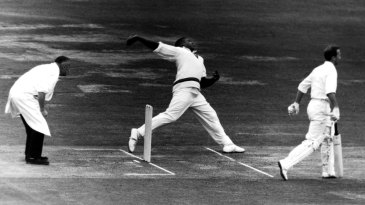

Charlie Griffith bowls
© PA Photos


Returning to mankading, I believe that cricket's current convention enable non striking batsmen to cheat wilfully throughout an innings and it is time for conventions keep in tandem with the laws of the game? I actually even have a solution for the mankading problem. Declare a no ball* and penalise the batting side every time a non striker steps out of the crease illegally. This could be done by the third umpire while the on field umpire focuses on the bowler's actions.


* This no ball means a one run penalty and a ball reduced from the batting side's quota.

If we want to solve the housing crisis, we must answer these three questions

Paul Mason in The Guardian

As housing charity Shelter turns 50, the country is still plagued by overcrowding, rogue landlords, insecure tenancies and homelessness. How do we even begin to make things better?


Boys from the City Of London school on a charity walk in aid of Shelter from Blackfriars, London, to Windsor, Berkshire, on 26 March 1969. Photograph: Len Trievnor/Getty Images


Its official name was Navigation Street, and a glance at a 19th century map suggests its origin: an isolated row of terraced houses leading down to the canal that runs through the middle of my hometown.

Canals were originally called “navigations” and the people who dug them “navvies”. This term – still in use in the 1960s – was code for poor, itinerant, Irish manual workers. So we called it “Navvy Street”: it was where the poorest people in the town lived and probably served that function from when it was built to when it was knocked down and turned into a “close”.

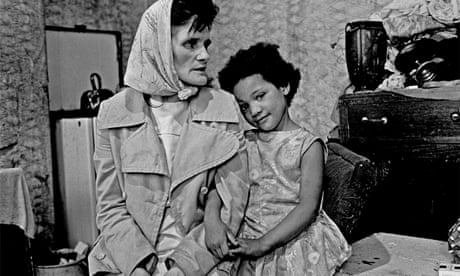
Navigation Street was the place I thought of when the housing charity Shelter reissued documentary photographs from the 1960s to mark its 50th anniversary. If you flick through Nick Hedges’ photos now, you could be forgiven for thinking they depict some kind of uniform, northern industrial bleakness at of the time. But you’d be wrong.


Shelter and the slums: capturing bleak Britain 50 years ago


The overcrowding, dirt and abject poverty in those images shocked people because they were exceptional. Two decades of post-war social housebuilding, plus a pro-active welfare state, had done a lot to suppress poverty. Places like Navigation Street were rare by the late sixties.

Shelter was born because people realised dwindling number of classic slum streets were not the only problem: there was widespread hidden homelessness expressed through overcrowding. The private rented sector was utterly insecure and housing costs were devouring the incomes of the poor.

Skip forward 50 years and we too have rising homelessness – 54,000 families in England last year, up 36% since the financial crisis began. Housing charities record rising overcrowding, precarious tenancies, predatory landlords and unaffordable rents. The difference is it’s not only the poor who suffer.

The shared student house has been reincarnated as the shared young professional’s house, with some even forced to share rooms. According to Crisis, there are 3.5m households containing a “concealed” adult or couple in England.

Meanwhile apartments too small to live in are being built across southern England: their occupants will have jobs once considered middle class. Precarious tenancies, outlawed during the housing reform movement of the 1960s, have created a “complain and you’re out” culture.

If you wanted to photograph the modern housing problem you’d go to the coffee shops where young people perch over laptops, late into the night, rather than endure their overcrowded flat. You would photograph the sofa-surfers; the migrants forced to live in converted garages; the families packing their bags as rent hikes and benefit cuts in the private rented sector force them to move to the periphery of towns and cities, or throw themselves at the local council for help.

The root of this problem is not one of policy – though the row over social housing and housing supply will probably shape this parliament – the deeper problem is the financialisation of home ownership.

At one point, rising home ownership solved many of the problems identified the 1960s. The predictably steady rise in house prices over time, like predictable inflation, created an escalator for the working class. If you combined that with vigorous social housebuilding, as practised by both Labour and Conservative councils in the 1970s, you created affordability at both ends of the scale.

If you then dramatically slash the supply of social housing, through right-to-buy and reduced council building, you create a permanent imbalance that turns home ownership into a form of asset investment.


‘Pay to stay’ trap will force working families out of council homes


What you get then is boom and bust. And the only way to cure the bust is for the government to greet every collapse in market prices with effective state subsidies for home ownership. This, in turn, induces a speculative frenzy of one way bets – on development, on buy to let, on off-plan investment buying from abroad.

To economists who study financial frenzy, the British housing market has followed the classic curve: the certainty of rising prices and short supply draws more and more people into the market, knowing a crash cannot wipe them out – because when confronted with falling house prices, governments have used taxpayers’ money and micromanagement of the banks to halt a spiral of repossessions and falling prices.

We don’t know what Britain would look like if the same levels of explicit subsidy and implicit preference had been pumped into the social rented sector. All we know is that the current situation is not tenable.

But we can ask ourselves the following questions:

First: how much space are people entitled to live in?
The market sets no limits; even such formal rules as they still exist (they are being weakened) are flouted by the young salariat.

Second: what is the optimal balance between the private, social and state-owned rented housing and the owner-occupied sector? This cannot be hard to fathom since many cities in the 1980s and early 1990s achieved housing markets that “cleared” in economic terms: in Leicester in the 1980s I had no problem finding a secure private tenancy; no problem getting the council to hound my landlord to maintain it properly; very little problem moving from there to a housing association flat; very little problem transferring, as a key worker, from there to a council flat in London. Yes, London.

Third, what do we mean by “affordable”– when it comes to either rents or prices on state-specified newbuild homes? Under both Labour, Coalition and the Conservatives the concept of affordability has become delinked from incomes and attached to a percentage of the market rate. The same state that decided nobody should be repossessed during the 2008-11 housing slump could decide that nobody has to pay more than a fixed percentage of their incomes on housing costs.

Maybe we need to start with principles: that everyone has a right to a home; that every person has a right to a minimum amount of space in that home; and that those who claim the right to own houses nobody lives in should pay a hefty, disincentivising penalty.

Yes, that’s an infringement of the market – but housing in Britain has never been a free market: it is being created and re-created through regulation and deregulation – on benefits, on affordability, on building standards, on right to buy. The point is to shape the market towards smart outcomes.

This NHS crisis is not economic. It's political

Aditya Chakrabortty in The Guardian


As the health services endures its biggest squeeze, talk of it being unviable is wide of the mark. We cannot afford to do without it


Patients wait for spaces in A&E at Royal Stoke university hospital in Stoke-on-Trent. A&E waiting time targets have been watered down in recent years. Photograph: Alicia Canter for the Guardian


How many times have you read that the NHS is bust? No need for answers on a postcard: I can tell you.

Over 2015, the number of national newspaper headlines featuring “NHS” alongside the words bust, deficit, meltdown or financial crisis came to a grand total of 80. Call this the NHS panic index – a measure of public anxiety over the viability of our health service. Using a database of all national newspapers, our librarians added up the number of such headlines for each year. The index shows that panic over the sustainability of our healthcare isn’t just on the rise ­– it has begun to soar.


During the whole of 2009, just two pieces appeared warning of financial crisis in the NHS. By 2012 that had nudged up a bit, to 12. Then came liftoff: the bust headlines more than doubled to 30 in 2013, before nearly tripling to 82 in 2014. Newspapers such as this one now regularly carry warnings that our entire system of healthcare could go bankrupt – unless, that is, radical change ­are made. For David Prior, the then chair of the health watchdog the Care Quality Commission - and now health minister, that means giving more of the system to private companies.

This means that the press and political classes are now discussing a theoretical impossibility. Think about it for a moment, and you realise the NHS can’t go broke. It’s not an endowment with a set pot of cash, but a giant service with a yearly budget. Unlike a business, it doesn’t need to raise money from sales – as taxpayers and voters, we have the final say over how much funding it gets. This panic isn’t economic at all, but politically created.

The balance to be struck with the NHS, as with all public services, is between how much cash we sink into it and how much we expect in return. Give the NHS less money, get less healthcare. Give it more, and the opposite happens. As Rowena Crawford at the Institute for Fiscal Studies says: “Financial stability just requires that healthcare demand and expectations are constrained to match the available funding.”

And that right there is the rub. Because the NHS is enduring the sharpest and most prolonged spending squeeze in its history – even while the government pretends no such thing is happening and the public expect the same service. Our health service is where all the paradoxes of austerity come home to roost.

This may seem an odd thing to say. Isn’t the NHS one of the very few parts of the public realm to be sheltered from this decade’s cuts? Didn’t David Cameron promise before the last general election to “protect the NHS budget and continue to invest more”?


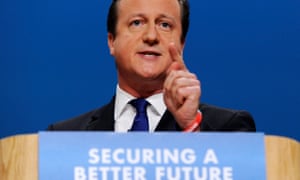
  David Cameron addresses the Tory conference in October 2014. Photograph: Facundo Arrizabalaga/EPA

The figures suggest otherwise. True, the NHS is seeing a rise in its funding. Between 2010 and 2014, health spending went up 0.8% each year, adjusting for inflation. A plus sign in front, granted, but a teeny-tiny one – since its creation in 1948, the health service has never had it so bad. Over this decade as a whole, that allocation will amount to 1.2% a year, which is way down on the average 3.7% that health spending grew each year between 1949 and 1979. And, coming after the 6.7% extra that Gordon Brown was shovelling in annually by the time of the banking crash, it feels like a recession.

So on the one hand, you have a healthcare system that can cause even the most secular of Brits to get religion, that can drive Telegraph-reading colonels to channel their inner Nye Bevan – hell, that even beats Justin Bieber to a Christmas No 1. And on the other you have a Tory prime minister who wants to cut public spending but knows that harming the NHS will be electoral poison.

Put the two together and what do you get? A dangerous muddle of overspending, frontline service cuts and political self-denial.

Cameron pretends the NHS isn’t on austerity rations and expects it to do the same work to pretty much the same targets. The various parts of the NHS try to do just that with a budget smaller than they need, with the result that they begin missing targets and making cuts even while breaking their budgets.

Take the A&E waiting times. Under Labour, the old rule was that 98% of patients must be seen within four hours. Soon after Cameron moved into Downing Street in 2010, the target was watered down to 95% of patients – even so it is now routinely missed. The number of patients stuck on trolleys in A&E, while staff try to find them beds is now at levels that “no civilised society should tolerate”, according to the Royal College of Emergency Medicine .

Even while falling short, arm after arm of the NHS is now in the red: 95% of hospital and other acute care providers in England plunged into deficit in the first half of the financial year starting in April, joining 80% of ambulance providers and 46% of those in mental health.

Demoralised staff can resign, go on an agency book, pick their shifts and earn more

You might treat all this as argument for NHS staff to be more productive. Except that, as John Appleby of the King’s Fund thinktank argues, they are. He calculates that, had NHS activity only gone up in line with government money, between 2010 and 2015 it would have treated 3.7 million fewer outpatients and 4.5 million fewer A&E patients than actually got seen.

This is productivity as doing more with less, which is almost always unsustainable. A real increase in productivity would come from doing things differently. There’s certainly scope to do that – by doing more phone consultations with GPs, perhaps, or upgrading technology. One joke among NHS professionals runs that, in all of China, there’s but one factory left still making fax machines, and that its only client is the NHS. But this sort of change is never going to come in an organisation now in a frenzy of cost-cutting.

One example of NHS austerity’s screwy logic is its sudden reliance on expensive agency staff. This, says Anita Charlesworth of the Health Foundation charity, is a direct result of staff pay freezes and overwork: “If you’re a permanent member of staff and you’ve had no pay rise and you’re demoralised and disengaged you can resign from the NHS, you can go on an agency book, you can pick your shifts, you can pick your wards and you earn more.”

The result is that agency staff costs are rising at over 25% a year.


Meanwhile, NHS England pretends it can cap hospital deficits for the year at £2.2bn – even though in the first six months alone that had already hit £1.6bn . Some of Britain’s biggest and most renowned hospitals are now actively planning on ending the year in the red. And Appleby points out that everything from patient time with doctors and nurses to repairs of your local hospital’s roof is being sacrificed in order to do the same work with less money.

“I can see another Jennifer’s ear coming,” Appleby says, referring to the five-year-old with glue ear who waited a year for a simple operation and ended up being used by Neil Kinnock to attack John Major on health spending. “Only this time it probably won’t be something as innocuous as glue ear. It might be a child who dies of cancer because their medical care has been so drastically cut.”

As societies get richer and older, they spend more on healthcare. Compared with nearly everyone else in western Europe, the UK spends much less of its national income on health. By the end of this decade, we will be even further behind. Meanwhile, pundits will continue to claim the entire system is unaffordably expensive, even while the public still want and need doctors and nurses, their medicines and operations.

This is the paradox of austerity: pretending that you can scrap and scrimp on the services and institutions that make you a civilised country, without making your country less civilised.

Friday, 5 February 2016

When economists ignore the human factor, we all pay the price

Timothy Garton Ash in The Guardian


Economics is not a hard science, and mathematical models won’t explain why people behave as they do. A much broader perspective is needed.


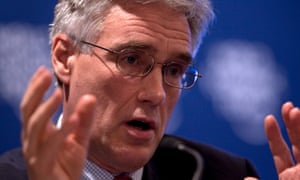
Adair Turner argued that ‘the dominant strain of academic economics and of policy-making orthodoxy’ failed to see the crisis coming. Photograph: Bloomberg via Getty Images


The Guardian recently asked nine economists whether we’re heading for another global financial crash and they gave many different answers. Yet still we turn to economists as if they were physicists, armed with scientific predictions about the behaviour of the body economic. We consumers of economics, and economists themselves, need to be more realistic about what economics can do. More modesty on both the supply and the demand side of economics will produce better results.

Following the great crash that began nearly a decade ago, there has been some soul-searching about what economics got wrong. Probably the self-criticism should have been more far-reaching, both in academia and banking, but it’s there if you look for it. In particular, the economic thinkers loosely clustered around George Soros’s Institute for New Economic Thinking (Inet) have produced a telling account of what went wrong.

Adair Turner, who saw top-level decision-making as head of Britain’s Financial Services Authority and now chairs Inet, gives a measured, cogent version of the critique in his book Between Debt and the Devil. Yes, leading academic economists did challenge the mathematical models of market perfection and, yes, financial markets may have followed oversimplistic versions of those models. Nonetheless, Turner argues, “the dominant strain of academic economics and of policy-making orthodoxy” failed to see the crisis coming, and actually contributed to it.
The key flaws were the efficient market hypothesis and the rational expectations hypothesis: economists too often assumed that market actors not only behave rationally but do so according to the same mental models deployed by economists. (Soros himself has spent a half century trying to expose this fallacy.) Modern big-picture economics (macroeconomics) also “largely ignored the operations of the financial system and in particular the role of banks”.

Market fundamentalism understood itself as the diametric opposite of the communist command economy, but in fact made the same cardinal mistake: to believe that a rational model could encompass, predict and optimise the dynamic complexity of collective human behaviour. As Roman Frydman and Michael Goldberg write: “Like a socialist planner, the economist thus believes that he can accomplish great feats, because he supposes that he has finally uncovered the fully determined mechanism which drives market outcomes.”

Large parts of academic economics fell prey to what has been called physics envy, by analogy with the Freudian notion of penis envy. Like some other areas of social science, it aspired to the status, certainty and predictability of physics. I have long thought that this hubris was fed by the fact that economics, alone among the social sciences, has a Nobel prize. Strictly speaking, it is only the Sveriges Riksbank Prize in Economic Sciences in Memory of Alfred Nobel, endowed by the Swedish central bank and first awarded in 1969, not one of the original Nobel prizes. But everyone calls it the Nobel prize. Moreover, politicians and decision-makers listen to economists in ways that they don’t, for example, listen to political scientists of the rational choice school that dominates many American university departments. This may partly be because a politician who practised rational choice politics would soon be kicked out of office, whereas the public has had to pick up the bill for those who practised rational choice economics. 

This does not mean we should not pay attention to economists, nor that economics is unworthy of a Nobel prize. It just means it’s not a hard science like physics. Done properly, it takes account of culture, history, geography, institutions, individual and group psychology. John Stuart Mill said: “A man is not likely to be a good economist if he is nothing else,” and John Maynard Keynesobserved that an economist should be “mathematician, historian, statesman and philosopher in some degree”.

In another remarkable formulation, Keynes wrote: “Economics is essentially a moral science.” Indeed, one could argue that the Nobel prize for economics belongs somewhere midway between those for physics, literature and peace.Economics is, at best, a multidimensional, evidence-based craft, alert to all the influences on human behaviour, at once ambitious in scope and modest in its claims for what we can ever predict in human affairs.

What should follow from this revised, new-old understanding of the character and place of economics? I don’t know enough about university economics courses to say whether they need to adapt, but I was struck by a manifesto published a couple of years ago by economics students at Manchester University. This advocated an approach “that begins with economic phenomena and then gives students a toolkit to evaluate how well different perspectives can explain it”, rather than mathematical models based on unrealistic assumptions. (A colleague of mine claims to have heard a fierce argument between two economists in the common room of Nuffield College, Oxford, which culminated in one exclaiming to the other: “All right, assume immortality!”)

If economics is like other disciplines, it probably changes more slowly than it should, because of the strong inertial effect of older faculty personally invested in a certain way of doing the subject. Then there’s the conduct of major players, be they ministers, central bankers or business leaders. I recently read a splendidly robust lecture by the veteran investor Charlie Munger, Warren Buffett’s partner in Berkshire Hathaway, delivered in 2003, well before the crash. “Berkshire’s whole record has been achieved without paying one ounce of attention to the efficient market theory in its hard form,” he said, adding that the results of that efficient market doctrine in corporate finance “became even sillier than they were in the economics”.

Munger’s sage advice was to restore economics’ proper multidisciplinary character, not overweighting what can be counted against the unquantifiable, nor yielding to the craving for false precision, nor privileging theoretical macroeconomics over the real-life microeconomics that helped guide Berkshire’s long-term investment decisions.

We ordinary punters should learn the same lesson. We should ask of our economists, as of our doctors, only what they can deliver. There is a scientific component to medicine, larger than that in economics, but medical studies themselves indicate how much our health depends on other factors, especially psychological ones, and how much is still unknown. Economists are like doctors, only less so.