Search This Blog

Thursday, 4 February 2016

Teachers increasingly boosting predicted A-level grades to help pupils win top university places

Richard Garner in The Independent

Increasing numbers of teachers are boosting their pupils’ predicted A-level grades to help them secure offers of places at Britain’s top universities – which in turn are accepting more students who miss their targets, largely to increase their income.


Figures from Ucas, the university admissions body, show that 63 per cent of all candidates are now predicted to get at least an A and two B grades at A level – up 9 percentage points from four years ago.

Yet the data shows that only a fifth of those predicted to score ABB actually achieve those grades – a 40 per cent drop from just six years ago.



READ MORE
Students increasingly admitted to university without three A-levels


The ploy by teachers has been successful because growing numbers of universities are offering “discounts” on their conditional offers to prospective students when A-level results are released.

This is because the Government decision to lift the cap on the number of places universities can offer has increased competition among the institutions when it comes to signing up students.

However, many teachers still reckon they need to bump up their students’ potential A-level grades to ensure they are noticed and are given a provisional offer by universities. More than half of pupils accepted on predicted A-level results – 52 per cent – missed their conditional offer grades by one grade or two, another substantial rise on four years ago. Senior academics say controversy over the issue could reignite calls to move to a system whereby pupils apply for their university places after they receive their A-level results.



Many teachers believe they need to bump up their students’ potential A-level grades to ensure they receive offers by universities (iStock)

The change was called for by a government inquiry headed by former Vice-Chancellor Steven Schwartz a decade ago but disappeared from the table when universities and schools could not agree to the changes necessary to the education calendar to implement it.

The new figures and the trend they highlight were disclosed by Mary Curnock Cook, chief executive of Ucas, at a conference at Wellington College on the future of higher education.


University admissions in numbers

63% of all candidates predicted to get at least an A and two B grades at A-levels
One in five actually achieve those grades
495,940 university applicants in England
52% of candidates accepted on predicted grades miss them by one grade or two
44% of students being admitted with three B grade passes or lower, compared with 20 per cent in 2011


Ms Curnock Cook said that, in discussions with teachers, she had asked: “Surely you wouldn’t be over-predicting your students’ grades last summer?” She told the conference: “I have teachers coming back to me saying: ‘Actually, yes we would.’

“The offers are being discounted at confirmation time,” said Ms Curnock Cook, referring to A-level results day. “It’s been [caused by] the lifting of the number controls that has increased competition [amongst universities].”

“You have to hope you can unlock some latent talent [in those taken in with lower grades],” said one university source. “If you don’t take them in, they could be snapped up by a rival and their reputation increases.”

As well as lower-ranking institutions, high-tariff universities – those most selective in their intake – are also lowering their entry requirements, with 44 per cent of students being admitted with three B-grade passes or lower, compared with just 20 per cent in 2011.

Professor Michael Arthur, provost of University College London, said his university had dropped a grade in 9 per cent of admissions.

Many universities have seen huge rises in the numbers of students they are enrolling. Professor Arthur said the number of students at his university had soared from 24,000 six years ago to 37,500. Part of the increase was down to mergers with other bodies such as the Institute of Education – but at least half was due to a rise in student numbers.

However, the number of university applicants from England decreased on the previous year by 0.2 percentage points to 495,940, the new figures show. The number of 18-year-olds applying also fell by 2.2 per cent.

Overall the number of university applicants for this autumn has held steady – with 593,720 applicants (up 0.2 percentage points on last year) by the time of the January deadline. But the increase was down to a significant rise in applications from the EU – up 6 percentage points to 45,220.

The figures show that more disadvantaged pupils applied than ever before – up 5 percentage points in England, 2 in Scotland and 8 in Wales.

Ms Curnock Cook urged students to be “bold” in their Ucas applications and take advantage of the fact that leading universities were lowering their admissions criteria. Speakers at the conference said parental pressure was partly to blame for teachers upping predictions for their pupils. 
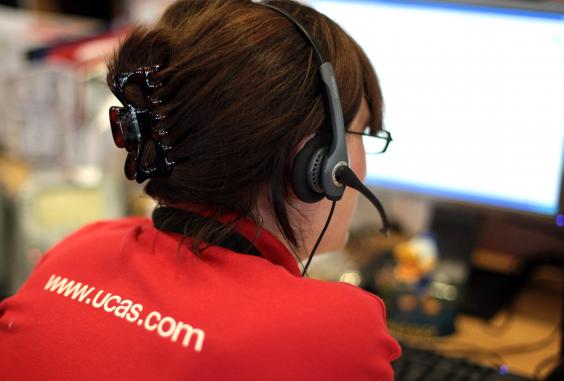


The UCAS clearing house call centre in Cheltenham (Getty Images)

Another teacher said that performance-related pay, which means teachers’ salary increases depend on the results of their pupils – was leading them to predict higher grades.


“Performance-related pay and performance-related management play a part,” they said. “It is why you have to be a little bit aspirational.”

However, it was acknowledged this could be a double-edged sword – as failure to achieve the grades could result in teachers being penalised for failing to meet their targets.

Ms Curnock Cook also predicted that the number of students taking the A-level route to university would continue to drop over the next four years,

Last week Ucas showed that the number of students taking the vocational route through Btecs had almost doubled from 14 per cent in 2008 to 26 per cent last year. Predicted outcomes showed the number taking the traditional A-level route was likely to decline by 25,000 by 2020 – while the number with vocational qualifications would go up by 15,000.

A Department for Education spokesperson said: "We trust teachers to act in the best interests of their students by giving fair predicted A level grades that accurately reflect their ability.

"Distorting grades would be unfair on the pupils involved and could result in universities having to artificially inflate their entrance requirements, rendering it pointless in the long run."
Wednesday, 3 February 2016

David Cameron's ever-shifting view of Britain's place in EU

Long before current renegotiations, PM made series of half promises and pledges that never materialised. Here is a selection


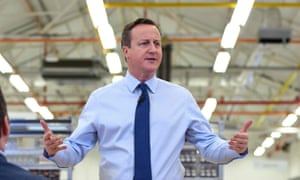
David Cameron speaks to factory staff at the Siemens manufacturing plant in Chippenham on Tuesday. Photograph: Ben Pruchnie/AFP/Getty Images


Alberto Nardelli in The Guardian

David Cameron has come a long way in how he views Britain’s place in the European Union. Over the years, long before the current renegotiations even started, the prime minister has made a series of bold comments, half promises and pledges.

Tuesday’s draft agreement demonstrates that only a handful of his commitments have been delivered. Here is a selection of some of them:

• In 2009, he promised that a Tory government would stop the European court of justice overruling UK criminal law by limiting its jurisdiction. The government has since opted back in to 35 justice and home affairs measures, including the European arrest warrant.

In 2012, Cameron said that the government was “committed to revising the working time directive”, a set of EU-wide working standards. However, last December, George Osborne, told the Treasury select committee that this formed no part of the negotiation. Back in 2007, before becoming prime minister, Cameron had even pledged to pull Britain out of Europe’s social chapter on workers’ rights.

The prime minister also promised in the Conservative manifesto last May to push for further reform of the EU’s common agricultural policy. This promise was not part of the renegotiation as it was likely to face fierce opposition from some member states.

Cameron said in early 2014 that he would put in place treaty change before the referendum. Tuesday’s documents make it clear that there will be no changes to the EU’s governing treaties – including its headline principle of “ever closer union” – ahead of the vote because this would not be feasible in the referendum’s timeframe.

In any event, Tusk said in Tuesday’s letter that the principle of ever closer union is already not equivalent to an objective of political integration, and the substance of this will be incorporated into the treaties when they are next revised.

Last year Cameron said that he wanted EU jobseekers to have a job before they come to Britain. Such a measure is contrary to the principle of free movement and as such was also not part of the negotiations.

When the renegotiations formally began Cameron started by asking for a cap in the number of EU migrants allowed into the UK. That idea lasted the length of a phonecall to the German chancellor, Angela Merkel, in 2014. She was not very impressed.

The prime minister had to think of a new idea and proposed – in writing this time – that people coming to Britain from the EU must live in the UK and contribute for four years before they qualify for in-work benefits or social housing. It has proven to be the most controversial – albeit the most precise – of Cameron’s demands.

What he is set to get is the dilution of an already diluted idea: an “emergency brake” on in-work benefits for up to four years. The one-off restriction would not amount to an outright ban on benefits either but would be graduated. That means that EU migrants would receive no benefits upon arrival but would get an increasing proportion each year – another piece of complexity for an already over-complex benefit system.

When it came to the formal negotiations, Cameron’s other requests included:

Ending the practice of sending child benefit overseas. This was also watered down. The UK will be allowed to index the payments to the country where the child is based.

On measures to crack down on the abuse of free movement, members states will be able to take action against fraudulent claims and sham marriages, as well as against individuals who pose a threat to national security. None of these measures would appear to be new, but are simply based on the interpretation of current rules.

• On “economic governance”, Cameron had asked for a series of principles to be recognised ranging from a simple recognition of the idea that the EU has more than one currency, and that taxpayers in non-euro countries should never be financially liable for operations to support the eurozone as a currency.

Here Cameron did better, although only because Tusk clarified, in effect, that all these things are already covered by existing rules and principles.

As part of the competitiveness basket, Cameron had said he wanted the EU to be more competitive. In response, Tusk has committed the EU to increasing efforts to enhance competitiveness. It is probably not surprising that the contents of this basket proved the easiest to agree on.

Nevertheless, however much has been negotiated away, Cameron has still won some important concessions. Take the emergency brake: just a month ago the measure seemed to be off the table but now it is a centre piece of his pitch to the British people. The European commission has accepted that the UK is facing exceptional circumstances due to high levels of immigration and must be allowed to do something about it – assuming the British people vote to stay in the EU.

However, the vast majority of the words in the draft agreement are dedicated to clarifying how existing rules and principles can be applied to ease British fears. The achievement is somewhat distant from the grander aspirations set out by Cameron over the past five years, but in the end it may be enough.

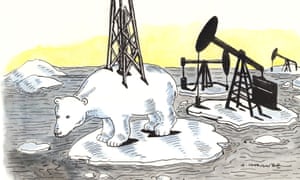
We’re drowning in cheap oil – yet still taxpayers prop up this toxic industry

George Monbiot in The Guardian


As these new crisis bailouts for fossil fuels show, it’s those who are least deserving who get the most government protection


‘Oil companies have already been granted ‘ministerial buddies’ to ‘improve access to government’ – as if they didn’t have enough already.’ Illustration: Andrzej Krauze


Those of us who predicted, during the first years of this century, an imminent peak in global oil supplies could not have been more wrong. People like the energy consultant Daniel Yergin, with whom I disputed the topic, appear to have been right: growth, he said, would continue for many years, unless governments intervened. 

Oil appeared to peak in the United States in 1970, after which production fell for 40 years. That, we assumed, was the end of the story. But through fracking and horizontal drilling, production last year returned to the level it reached in 1969. Twelve years ago, the Texas oil tycoon T Boone Pickens announced that “never again will we pump more than 82 million barrels”. By the end of 2015, daily world production reached 97m .

Instead of a collapse in the supply of oil, we confront the opposite crisis: we’re drowning in the stuff. The reasons for the price crash – an astonishing slide from $115 a barrel to less than $30 over the past 20 months – are complex: among them are weaker demand in China and a strong dollar. But an analysis by the World Bank finds that changes in supply have been a much greater factor than changes in demand. Oil production has almost doubled in Iraq, as well as in the US. Saudi Arabia has opened its taps, to try to destroy the competition and sustain its market share – a strategy that some peak oil advocates once argued was impossible.


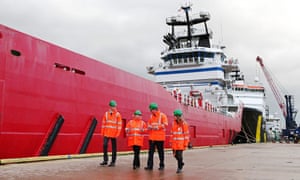
‘Last week David Cameron flew to Aberdeen, where he announced another £250m of funding for, er, free enterprise, much of which will be used to prop up oil and gas.’ Photograph: Andrew Milligan/AFP/Getty Images

The outcomes are mixed. Cheaper oil means that more will be burned, accelerating climate breakdown. But it also means less investment in future production. Already, $380 billion that was to have been ploughed into oil and gas fields has been delayed. The first places to be spared are those in which extraction is most difficult or hazardous. Fragile ecosystems in the Arctic, in rainforests, in remote and stormy seas, have been granted a stay of execution.

BP reported a massive loss today, partly because of low prices. A falling oil price drags down the price of gas, exposing coal-mining companies to the risk of bankruptcy: good riddance to them. But some renewables firms are being tanked by the same forces; they are losing their subsidies just as gas prices crash. One day they will compete unaided, but not yet.

To cheer or lament these vicissitudes is pointless. They are chance events that counteract each other, and will at some point be reversed. The oil age, which threatens the conditions sustaining life on Earth, will come to an end through political, not economic, change. But the politics, for now, are against us.

Already, according to the International Monetary Fund, more money is spent, directly and indirectly, on subsidising fossil fuels than on funding health services.
The G20 countries alone spend over three times as much public money on oil, gas and coal than the whole world does on renewable energy. In 2014, subsidies for fossil fuel production in the UK reached £5bn. Enough? Oh no. While essential public services are being massacred through want of funds, last year the government announced a further £1.3bn in tax breaks for oil companies in the North Sea. Much of this money went to companies based overseas. They must think we’re mad.

Last week David Cameron flew to Aberdeen, where he announced another £250m of funding for, er, free enterprise, much (though not all) of which will be used to prop up oil and gas. A further £20m of public money will be spent on seismic testing. Expect more whale strandings, and ask yourself why the industry that threatens our prosperity shouldn’t cover its own bloody costs.

The energy secretary, Amber Rudd, says she stands “100% behind” this “fantastic industry”. She will “build a bridge to the future for UK oil and gas”. Had she been born 300 years ago, I expect she would have said the same about the slave trade. In a few years’ time her observations will look about as pertinent and about as ethical.

Oil companies have already been granted “ministerial buddies” to “improve access to government” – as if they didn’t have enough already. Now they get an“oil and gas ambassador”, and a new ministerial group, to “reiterate the UK government’s commitment to supporting the oil and gas industry”. A leaked letter shows that Rudd and other ministers want to silence local people by transferring the power to decide whether fracking happens from elected councils to an unelected commission. Let’s sack the electorate and appoint a new one.

Compare all this to the government’s treatment of renewables. Local people have been given special new powers to stop onshore windfarms being built. To the renewables companies Rudd says this: “We need to work towards a market where success is driven by your ability to compete in a market, not by your ability to lobby government.” Strangely, the same rules do not apply to the oil companies. Your friends get protection. The free market is reserved for enemies.

Yes, I do mean enemies. An energy transition threatens the kind of people who attend the Conservative party’s fundraising balls. It corrodes the income of old schoolfriends and weekend guests. For all the talk of enterprise, old money still nurtures its lively hatred of new money, and those who control the public purse use it to protect the incumbents from the parvenus. As they did for the bankers, our political leaders ensure that everyone must pay the costs imposed by the fossil fuel companies – except the fossil fuel companies.

So they lock us into the 20th century, into industrial decline and air pollution, stranded assets and – through climate change – systemic collapse. Governments of this country cannot resist the future forever. Eventually they will succumb to the inexorable logic, and recognise that most of the vast accretions of fossil plant life in the Earth’s crust must be left where they are. And those massive expenditures of public money will prove to be worthless.

Crises expose corruption – that is one of the basic lessons of politics. The oil price crisis finds politicians with their free-market trousers round their ankles. When your friends are in trouble, the rigours imposed religiously on the poor and public services suddenly turn out to be negotiable. Throw money at them, trash their competitors, rig the outcome: those who deserve the least receive the most.

Tuesday, 2 February 2016

Cambridge University to introduce written admissions tests


Prospective students will have to complete assessment as part of their application ‘to prove potential to succeed’


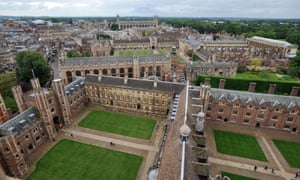
Cambridge University is to introduce the tests in autumn 2017. Photograph: Nick Ansell/PA


Press Association

Tuesday 2 February 2016 10.48 GMT


Potential Cambridge students will have to sit written tests as part of their application in future, the university has announced.


In a change to its admission system, the prestigious institution confirmed it was introducing written assessments, tailored to each subject, which will be taken by candidates either before or at their interview.

The move will affect students applying for courses starting in autumn 2017 – when in a major overhaul of the exams system sixth-formers will sit the first batch of new GCSEs and A-levels in some subjects.

In a letter to UK schools and colleges, Dr Sam Lucy, the university’s director of admission, said the change would provide “valuable additional evidence of our applicants’ academic abilities, knowledge base and potential to succeed in the Cambridge course for which they have applied”.

“This move is a result of responding to teacher and student feedback, a desire to harmonise and simplify our existing use of written assessments and a need to develop new ways to maintain the effectiveness and fairness of our admissions system during ongoing qualification reform,” Lucy added.

Cambridge University has been outspoken about a key plank of the government’s exams reforms – the decision to hive off AS-levels from A-levels to form a standalone qualification.

It has argued that for admission to its courses, AS-levels are the best predictor of how well a student will perform in every subject except maths.


In November 2014, it wrote to all schools and colleges urging teachers to continue to offer the qualification.

From summer 2017, sixth-formers will be sitting new A-level exams in some subjects, and existing A-levels in others.

In addition, while some schools and colleges will opt to keep one-year AS-levels and teach them alongside A-levels, others are set to drop the qualification to focus on the two-year qualifications.