Search This Blog

Monday, 1 February 2016

One year on, Syriza has sold its soul for power .


Costas Lapavitsas in The Guardian


Alexis Tsipras has embraced wholesale the austerity he once decried
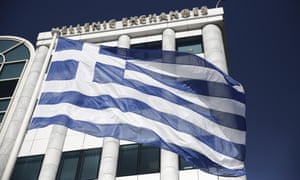
 
‘Above all, Tsipras and his circle were personally committed to the euro. Confronted with the catastrophic results of his strategy, he surrendered abjectly to the lenders.’ Photograph: Petros Giannakouris/AP


Today marks a year since a radical left government was elected in Greece; its dynamic young prime minster, Alexis Tsipras, promising a decisive blow against austerity. Yanis Varoufakis, his unconventional finance minister, arrived in London soon after and caused a media sensation. Here was a government that disregarded stuffy bourgeois conventions and was spoiling for a fight. Expectations were high.

A year on, the Syriza party is faithfully implementing the austerity policies that it once decried. It has been purged of its left wing and Tsipras has jettisoned his radicalism to stay in power at all costs. Greece is despondent.

Why did it end like this? An urban myth propagated in some media circles suggests that the radicals were stopped by a coup engineered by conservative politicians and EU officials, determined to eliminate any risk of contagion. Syriza was overcome by the monsters of neoliberalism and privilege. Still, it fought the good fight, perhaps even sowed the seeds of rebellion.

The reality is very different. A year ago the Syriza leadership was convinced that if it rejected a new bailout, European lenders would buckle in the face of generalised financial and political unrest. The risks to the eurozone were, they presumed, greater than the risks to Greece. If Syriza negotiated hard, it would be offered an “honourable compromise” relaxing austerity and lightening the national debt. The mastermind of this strategy was Varoufakis, but it was avidly adopted by Tsipras and most of Syriza’s leadership.

Well-meaning critics repeatedly pointed out that the euro had a rigid set of institutions with their own internal logic that would simply reject demands to abandon austerity and write off debt. Moreover, the European Central Bank stood ready to restrict the provision of liquidity to the Greek banks, throttling the economy – and the Syriza government with it. Greece could not negotiate effectively without an alternative plan, including the possibility of exiting the monetary union, since creating its own liquidity was the only way to avoid the headlock of the ECB. That would be far from easy, of course, but at least it would have offered the option of standing up to the catastrophic bailout strategies of the lenders. Unfortunately, the Syriza leadership would have none of it.

The disastrous nature of the Syriza strategy became clear as early as 20 February 2015. European politicians forced the new Greek government to agree to target budget surpluses, implement “reforms”, meet all debt obligations fully and desist from using existing bailout funds for any purpose other than supporting banks. The EU calmly turned off the liquidity tap at the European Central Bank, and refused to give a penny of additional financial support until Greece complied.

Conditions in the country became increasingly desperate as the government soaked up liquidity reserves, the banks went dry, and the economy barely ticked over. By June Greece was forced to impose capital controls and to declare a bank holiday. Syriza attempted one last throw of the dice in July, when Tsipras called a referendum on a new, harsh bailout. Amazingly, and with considerable bravery, 62% of Greeks voted to reject. Tsipras had campaigned for a rejection but when the result came in he realised that in practice, it meant exiting the euro, for which his government had made no serious preparations. To be sure there were back-of-the-envelope “plans” for a parallel currency, or a parallel banking system, but such amateurish ideas were of no use at one minute to midnight. Furthermore, the Greek people had not been prepared and Syriza as a political party barely functioned on the ground. Above all, Tsipras and his circle were personally committed to the euro. Confronted with the catastrophic results of his strategy, he surrendered abjectly to the lenders.

Since then he has adopted a harsh policy of budget surpluses, raised taxes and sold off Greek banks to speculative funds, privatised airports and ports, and is about to slash pensions. The new bailout has condemned a Greece mired in recession to long-term decline as growth prospects are poor, the educated youth is emigrating and national debt weighs heavily.

Syriza is the first example of a government of the left that has not simply failed to deliver on its promises but also adopted the programme of the opposition, wholesale. Its failure has strengthened the perception across Europe that austerity is the only way and nothing can ever change. The implications are severe for several countries, including Spain, where Podemos is knocking on the door of power.

Syriza failed not because austerity is invincible, nor because radical change is impossible, but because, disastrously, it was unwilling and unprepared to put up a direct challenge to the euro. Radical change and the abandonment of austerity in Europe require direct confrontation with the monetary union itself. For smaller countries this means preparing to exit, for core countries it means accepting decisive changes to dysfunctional monetary arrangements. This is the task ahead for the European left and the only positive lesson from the Syriza debacle.

Sunday, 31 January 2016

Written your child’s personal statement yet? Get a move on...

It is now so difficult to isolate a child’s contribution, why not go straight to the source – start testing the parents?


Co-authorship seems to be the order of the day. Photograph: PhotoAlto / Alamy/Alamy


Catherine Bennett in The Guardian

For as long as I can remember, I have been fascinated by the importance attached to personal statements, written to a formula, and not by the candidates alone, as part of applications to British universities. The longer it persists, the more farcical, unfair – and excruciating for students – this requirement becomes.

Every year, experts on the process refine their advice and share disdainful lists of cliches that should never be used to start a personal statement, such as: “For as long as I can remember I have been fascinated” (used 196 times in 2013), or: “Nursing is a profession I have always looked upon with” (178 times), thereby adding to the self-consciousness of students required to appeal, in around 700 fresh and original – yet thoughtful and relevant – words, to admissions tutors, some of whom admit they never glance at these exercises in supplication.

And why, anyway, the horror of cliches? They are not, most of these 600,000 or so young applicants, applying for BAs in Being Martin Amis, in a world where originality of expression is the key to worldly success. You need only read one of George Osborne’s op-ed contributions, or cast your mind back to the Labour leadership hustings, to appreciate that 17-year-olds are being held to far higher standards than middle-aged politicians.

If Osborne can begin a piece: “Britain is firmly on the road to recovery, thanks to the hard graft of working people”, and Cameron blither: “I’m so passionate”, and Corbyn believe that “Jeff wants to know” constitutes a compelling barb, why shouldn’t an aspiring nurse begin a personal statement with: “Nursing is a profession I have always looked upon with...”? It can only mean, in the nurse’s case, that in the event of a tiebreak between two equally qualified candidates, a more dashingly phrased as opposed to unvarnished expression of intent would be taken to indicate superior potential. How much British politics has to learn.

Now, to add to the pressure on our future accountants and chemists to demonstrate tenacity without tedium, vivacity without froth, research suggests that much of the advice given by schools to young statement writers is wrong.

Arriving just after the final deadline for this year’s Ucas submissions, a report for the Sutton Trust, written by Dr Steven Jones of Manchester University, may well cause consternation among candidates who have just put, for example, a declaration of commitment, carefully stripped of cliches, before proof of intellectual curiosity.

It was not unexpected, perhaps, that support with personal statements, routine in independent schools, should help students from comprehensives make more successful applications to highly selective universities. But Jones also discovered that some existing guidance may be counterproductive. “Admissions tutors,” he writes, “tend to value focused and sustained analysis of a specific topic of interest or case study rather than broad statements about a subject or attempts to make the statement more ‘personal’.”

He shows how one candidate’s expression of enthusiasm (“I am particularly interested in Victorian literature”), and explanation – “the social constraints and etiquette of the time are vividly portrayed, yet the novels of this period remain timeless” – was considered “bland” by an admissions tutor. “There is a much stronger way to put this tension.”

No doubt. Then again, the hapless candidate, who has, we note, commendably avoided the now deprecated word “passion”, is only aiming to please. It could be that the author is capable of stronger phraseology, on the febrile, emotionally explosive content of Victorian literature, but reluctant to go over the top, since she is applying for five different courses, in places offering conflicting advice on personal statements. Perhaps this application’s authors have been studying the university website, which holds up as exemplary the hardly less tepid: “Computing is a thought-provoking subject, covering a range of disciplines and has permeated every aspect of modern life.”

The writers might be focusing, instead, on transferable and relevant skills: “Your child can also mention how their current qualifications have broadened their knowledge,” the University of Bath tells parents. Except that qualifications speak for themselves. So don’t bother. Don’t mention sport. Try to be interesting, instead. OK, do mention sport. It’s character-building. Ditto the Duke of Edinburgh award, which has no conceivable connection with your passion for, sorry, interest in, medieval history. “This is your opportunity to sell yourself,” is Ucas’s charming summary of this exercise, one which appears to have few, if any, parallels outside the UK. So grab attention. But don’t be glib. Or a prat. “We want you to be different, but not TOO different,” one tutor told Which?, a whimsical preoccupation, perhaps, when English teenagers are ranked the world’s worst for literacy and not much better at maths.

But what is uniform, in all this advice, is the assumption that the statement is co-authored. The mothers who ask you: “Have you done yours yet?”, who urge early submission, to beat the crowds, and who go on websites to share about “personal statement hell”, are doing no more than comply with Ucas expectations, as they follow through on years of help with homework, securing work experience, renting violins. “Do ask people that you trust, like your teacher/adviser or parent/carer to read through what you have written and give you feedback,” Ucas says, advice that is unlikely to help tutors with the true state of applicant literacy.

Having never, mercifully, been invited to collaborate on a personal statement, I can’t be sure how tempting it is to tinker, redraft, maybe reword the thing, in line with Ucas hints and its stern warnings on plagiarism. Very, probably, when your child is effectively competing with adults, including dedicated coaches in independent schools, brilliant stay-at-home mothers and others willing to pay £150 for a shop-bought item, from, say, Oxbridge Personal Statements. Liberal instructions to parents – “Your child’s personal statement needs to create a strong impression” – confirm that its editing is, indeed, your duty.

While coursework is being phased out in GCSEs and A-levels, for reasons having to do with the lamentable shortage, in many homes, of parents qualified to write 3,000 words on Macbeth, personal statements continue to make parental competence, finances and cultural capital a factor in applications to universities whose graduates will dominate the professions. So long as inequality of access remains a theme in higher education, the survival of the personal statement, in its cheat-friendly, whole-family format, must vitiate all corrective projects.

Whatever happens to the Sutton Trust’s recommendations, that personal statements be demystified, perhaps reformed, its findings on admissions tutor preferences guarantee one thing: formal analytical passages, modelled on Dr Jones’s examples, will be all the rage in next year’s statements.

In fact, since adults are likely to supervise this development, it would save precious student time, time perhaps better devoted to numeracy and literacy, if the universities invited parents to submit the resulting creations to Ucas under their own names, with the child merely confirming it is the adult’s own, unaided work.

Wednesday, 27 January 2016

China accuses George Soros of 'declaring war' on yuan

Billionaire investor ‘trying to create panic for profit’, says scathing editorial, after he predicted the Chinese economy is headed for a hard landing


George Soros said China had left it to late to move from an export to a consumer-led economy. Photograph: Pascal Lauener/Reuters


Agence France-Presse in Beijing

Wednesday 27 January 2016 06.04 GMT

Chinese state media has stepped up a salvo of biting commentaries against George Soros and other currency traders as the yuan comes under pressure, with the billionaire investor accused of “declaring war” on the unit.

At the annual World Economic Forum in Davos last week, Soros told Bloomberg TV that the world’s second-largest economy – where growth has already slowed to a 25-year low according to official figures – was heading for more troubles.

“A hard landing is practically unavoidable,” he said.


Global markets turmoil echoes 2008 financial crisis, warns George Soros


Soros – whose enormous trades are still blamed in some countries for contributing to the Asian financial crisis of 1997 – pointed to deflation and excessive debt as reasons for China’s slowdown.

The normally stable yuan, whose value is closely controlled by Beijing, has come under pressure in recent weeks and months in overseas markets and from capital outflows. Authorities have spent hundreds of billions of dollars to defend it.

China’s official Xinhua news agency on Wednesday said that Soros had predicted economic troubles for China “several times in the past”.

“Either the short-sellers haven’t done their homework or … they are intentionally trying to create panic to snap profits,” it said.

An English-language op-ed in the nationalistic Global Times newspaper blamed “westerners” for not “accepting responsibility for the mess” in the world economy.

The comments came after the overseas edition of the People’s Daily, the official mouthpiece of the Communist party, published a front-page article Tuesday titled “Declaring war on China’s currency? Ha ha” that was widely shared on Chinese social media.

Soros “publicly ‘declared war’ on China”, the paper said, citing the 85-year-old as saying that he had taken positions against Asian currencies.

But some readers questioned whether the official rhetoric could fuel Chinese investors’ fears.

“They say a lot of loud slogans, but do official media even know that Chinese investors are in hell?” said one poster on social media network Weibo.

“I’m afraid that Chinese investors will die in a stampede before Soros even shows his hand.”

In the 1990s Soros led speculators in bets against the Bank of England, which unsuccessfully sought to defend the pound’s exchange rate peg.

“The Chinese left it too long” to change their growth model from dependence on exports to a consumer-led one, Soros said, even though Beijing had “greater latitude” than others to manage such a transition because of its currency reserves, which stand at over US$3tn.

Monday, 25 January 2016

Back from the enemy country

Pervez Hoodbhoy in The Dawn

RARELY are Pakistanis allowed to cross their eastern border. We are told that’s so because on the other side is the enemy. Visa restrictions ensure that only the slightest trickle of people flows in either direction. Hence ordinary academics like me rarely get to interact with their Indian counterparts. But an invitation to speak at the Hyderabad Literary Festival, and the fortuitous grant of a four-city non-police reporting visa, led to my 11-day 12-lecture marathon at Indian universities, colleges, and various public places. This unusual situation leads me here to share sundry observations.
At first blush, it seemed I hadn’t travelled far at all. My first public colloquium was delivered in Urdu at the Maulana Azad National Urdu University (MANUU) in Hyderabad. With most females in burqa, and most young men bearing beards, MANUU is more conservative in appearance than any Urdu university (there are several) on the Pakistani side.
Established in 1998, it seeks to “promote and develop the Urdu language and to impart education and training in vocational and technical subjects”. Relative to its Pakistani counterparts, it is better endowed in terms of land, infrastructure and resources.
But there’s a still bigger difference: this university’s students are largely graduates of Indian madressahs while almost all university students in Pakistan come from secular schools. Thus, MANUU’s development of video “bridge courses” in Urdu must be considered as a significant effort to teach English and certain marketable skills to those with only religious training. I am not aware of any comparable programme in Pakistan. Shouldn’t we over here be asking how the surging output of Pakistani madressahs is to be handled? Why have we abandoned efforts to help those for whom secular schooling was never a choice? 
To my embarrassment, I was unable to fulfil my host’s request to recommend good introductory textbooks in Urdu from Pakistan. But how could I? Such books don’t exist and probably never will. Although I give science lectures as often in Urdu as English, the books I use are only in English. Somehow Pakistan never summoned the necessary vigour for transplanting modern ideas into Urdu. The impetus for this has been lost forever. Urdu, as the language of Islam in undivided India, once had enormous political significance. Education in Urdu was demanded by the Muslim League as a reason for wanting Pakistan!
A little down the road lies a different world. At the Indian Institute of Information Technology (IIIT) the best and brightest of India’s young, selected after cut-throat competition, are engaged in a furious race to the top. IIIT-H boasts that its fresh graduates have recently been snapped up with fantastic Rs1.5 crore (Indian) salaries by corporate entities such as Google and Facebook.
This face of modern India is equally visible at the various Indian Institutes of Technology (IIT), whose numbers have exploded from four to 18. They are the showpieces of Indian higher education. I spoke at three — Bombay, Gandhinagar, and Delhi — and was not disappointed. But some Indian academics feel otherwise.
Engineering education at the IITs, says Prof Raghubir Sahran of IIT-GN, has remained “mainly mimetic of foreign models (like MIT) and captive to the demands of the market and corporate agendas”. My physicist friend, Prof Deshdeep Sahdev, agrees. He left IIT-K to start his own company that now competes with Hewlett Packard in making tunnelling electron microscopes and says IIT students are strongly drill-oriented, not innovative.
Still, even if the IITs are not top class, they are certainly good. Why has Pakistan failed in making its own version of the IITs? One essential condition is openness to the world of ideas. This mandates the physical presence of foreign visitors.
Indeed, on Indian campuses one sees a large number of foreigners — American, European, Japanese, and Chinese.
They come for short visits as well as long stays, enriching universities and research centres.
Not so in Pakistan where foreigners are a rarity, to be regarded with suspicion. For example, at the National Centre for Physics, which is nominally a part of Quaid-i-Azam University but is actually ‘owned’ by the Strategic Plans Division (the custodian of Pakistan’s nuclear weapons), academic visitors are so tightly restricted that they seek to flee their jails soon after arrival.
Those who came from Canada, Turkey and Iran to a recent conference at the NCP protested in writing and privately told us that they would never want to come back.
Tensions between secular and religious forces appear high in Modi’s India. Although an outsider cannot accurately judge the extent, I saw sparks fly when Nayantara Sahgal, the celebrated novelist who was the first of 35 Indian intellectuals to hand back their government awards, shared the stage with the governor of Andhra Pradesh and Telangana. After she spoke on the threats to writers, the murder of three Indian rationalists, and the lynching of a Muslim man falsely accused of possessing beef, the enraged governor threw aside his prepared speech and excoriated her for siding with terrorists.
Hindutva ideology has put the ‘scientific temper’ of Nehruvian times under visible stress. My presentations on science and rationality sometimes resulted in a number of polite, but obviously unfriendly, comments from the audience.
Legitimate cultural pride over path-breaking achievements of ancient Hindu scholars is being seamlessly mixed with pseudoscience. Shockingly, an invited paper at the recent Indian Science Congress claimed that Lord Shiva was the world’s greatest environmentalist. Another delegate blew on a ‘conch’ shell for a full two minutes because it would exercise the rectal muscles of Congress delegates!
Pakistan and India may be moving along divergent paths of development but their commonalities are becoming more accentuated as well. Engaging with the other is vital — and certainly possible.
Although I sometimes took unpopular political positions at no point did I, as a Pakistani, experience hostility. The mature response of both governments to the Pathankot attack gives hope that Pakistan and India might yet learn to live with each other as normal neighbours. This in spite of the awful reality that terrorism is here to stay.