Search This Blog

Saturday, 21 November 2015

Enough PhD’s, thank you

Pervez Hoodbhoy in The Dawn
When Freeman Dyson suggested we have lunch together at the Princeton University cafeteria on my next visit, I almost fell off my chair. To be invited by this legendary physicist, now 90-plus but sharp as ever, meant more than a banquet especially arranged for me by the Queen of England. Countless kings, queens, and generals have come and gone but only a tiny number of visionaries, Dyson included, actually make history.
Overwhelmed, I was about to blurt “thank you, Dr Dyson” but stopped in time. Else this would have violated an unstated protocol. We theoretical physicists address colleagues by their first name. And so I simply thanked him as Freeman. This avoided a still more serious error. Freeman Dyson does not have a PhD and has never sought or needed one.
Three books and biographies have been written on this PhD-less scientific genius. But, were he to apply to a Pakistani university, at best he might become an assistant professor. I thought of this while suffering through some lectures last week at an international physics conference in Islamabad.
Sadly, the presentations by most Pakistani PhD’s were uninteresting, others were wrong. One was even laughably wrong. Probably the worst was by a professor who was not just a ‘doctor’ but a ‘professor doctor’. This terrible pomposity, borrowed from some German tradition, is now routinely augmented with ‘distinguished professor’, ‘national professor’ and what-not. Like cartoon generals who have won no wars but have medals stuck to oversized chests, Pakistan now has legions of highly paid ignoramus cartoon professors.

Pakistan now has legions of highly paid ignoramus cartoon professors.


But wait, am I not being terribly unfair? Our professors are publishing huge numbers of research papers these days, almost 10 times more than a decade ago. Some produce as many as 40-60 every year (Dyson’s lifetime total is a mere 50). These appear in so-called international journals with high-impact factors, are well-cited, and seeming fulfil all requirements of high quality. The authors rake in cash prizes, national awards, and the Higher Education Commission (HEC) screams about the post-2002 ‘revolution’ at every opportunity.
But the truth forlornly begs to be heard: there is no actual research behind most of these so-called research papers. The internet has placed at an author’s fingertip vast amounts of literature from which to freely cut and paste, invent data, and plagiarise ideas. Although software checks like Turn-It-In exist, they are next to useless. True, the ideal journal referee is supposed to be a know-all. But in fact he is too hard-pressed to check everything, or may even be complicit. Publishing in fly-by-night journals, or arranging for your paper to be cited, is now a finely developed art form.
Crime in Pakistani academia has overtaken even the legendary bribery of our police departments or the easy corruption of income tax authorities. But dealing with academic heist, now organised and systematised, won’t be easy. Here’s why.
First, knowledge is increasingly specialised and to detect cheating isn’t easy. A molecular biologist might not fairly judge the work of an ethologist, or a plasma physicist that of a string theorist. In principle any academic community must police itself rather than be policed from outside. But the small number of genuine academics in Pakistan means that there are precious few policemen.
Second, a thoughtless government policy that pays by the number of research papers and PhD’s produced allows cheats to get rich. Unable to tell good from bad, the Pakistan Council for Science and Technology actively encourages our professors to pillage public property.
The same dynamics applies to PhD production. The basic subject knowledge of PhD candidates is rarely tested and, if ever, only perfunctorily. Although the referees of a candidate’s thesis are supposed to be impartial, they are often chosen by a supervisor for being cooperative. Of course, the reports can be appropriately doctored when necessary.
Most PhD supervisors never get caught while doctoring. But if by rare chance someone does, he gets little more than a tap on the wrist. A colleague, a former professor of biology at Quaid-i-Azam University, then also the dean, was caught red-handed while faking referee reports for his PhD students. He admitted guilt but was not terminated and retained all retirement benefits. The administration and other colleagues shrugged off the incident; why be strict to one of your own kind? The man moved on to become dean at another university, and then emerged yet again as vice chancellor at still another university.
This ‘kindness’ has put the cancer of corruption into metastasis. Arresting further growth will require a harsh chemotherapy regime. As the very first step, rewarding authors of research papers with cash should be stopped. PCST, as well as other government organisations deliberately fuelling academic corruption, should be closed down and their directors charge-sheeted.
Transparency should be non-negotiable. While it cannot end abuse, it can discourage. So, before the author of a research paper gets any kind of credit, such as for promotion, he must give a presentation that anyone can freely attend. This should be video-recorded and archived for open access on HEC’s website. Whereas HEC’s present chairman privately agreed to my suggestion nearly two years ago, and then publicly on television a year later, I see no signs of implementation.
Still more radical therapy may be needed. As with a driving licence, all PhD degrees (including my own) should be de-recognised every 10 years, and re-recognised only after passing a literacy test in that particular discipline. Administered by some trustable overseas organisation, the written test should be at the level of an undergraduate examination equivalent to that taken by students after their first year of studies at a good foreign university. Will this reduce our current PhD population by 50 per cent? Eighty per cent?
No country becomes wealthy by printing a mountain of paper currency. And no university system becomes better by dishing out substandard PhD degrees, or by accepting vacuous research papers as valid. Instead, the way forward lies in adhering to strict ethical standards, cultivating excellence, rejecting mediocrity, and nurturing a spirit of inquiry and intellectual excitement.
Wednesday, 18 November 2015

We accept that Russian bombs can provoke a terror backlash. Ours can too


Mehdi Hasan in The Guardian


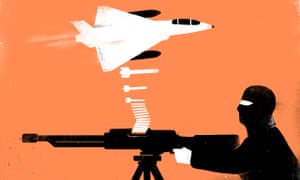
‘Isn’t it odd that in the case of Russia, western governments have been keen to link Vladimir Putin’s – and only Vladimir Putin’s – foreign policy to terrorist violence?’ Illustration: Sébastien Thibault


“The hardest thing to explain is the glaringly evident which everybody has decided not to see,” wrote Ayn Rand in her novel The Fountainhead. That there is a link, a connection, between the west’s military interventions in the Middle East and terrorist attacks against the west, that violence begets violence, is “glaringly evident” to anyone with open eyes, if not open minds.

Yet over the past 14 years, too many of us have “decided not to see”. From New York to Madrid to London, any public utterance of the words “foreign” and “policy” in the aftermath of a terrorist attack has evoked paroxysms of outrage from politicians and pundits alike.

The response to the atrocities in Paris has followed the same pattern. Derided by a former Labour minister as “west-hating fury chimps”, the UK’s Stop the War coalition removed from its website a piece that blamed the rise of Islamic State (Isis) and the Paris attacks on “deliberate policies and actions undertaken by the United States and its allies”. The Labour leader, Jeremy Corbyn, scrapped a speech in which he was due to say that Britain’s “disastrous wars” have “increased, not diminished, the threats to our own national security”. Such arguments are verboten in our public discourse.

Isn’t it odd, then, that in the case of Russia, western governments have been keen to link Vladimir Putin’s – and only Vladimir Putin’s – foreign policy to terrorist violence? On 1 October the US government and its allies issued a joint statement declaring that the Russian president’s decision to intervene in Syria would “only fuel more extremism and radicalisation”. Yes, you heard them: it’ll “fuel” it.

Moscow’s bombing campaign will “lead to further radicalisation and increased terrorism”, claimed David Cameron on 4 October. Note the words “lead to”. Speaking at a Nato summit on 8 October the US defence secretary, Ashton Carter, warned of the “consequences for Russia itself, which is rightly fearful of attacks”. Got that? “Rightly fearful”.

And, in the days since the crash of the Russian Metrojet airliner in Egypt on 31 October, which killed 224 civilians, commentators have queued up to join the dots between Russia’s actions in Syria and this alleged terrorist attack by Isis. On a BBC panel discussion the Telegraph’s Janet Daley referred to the crash as “a direct consequence of [Russia’s] involvement in Syria”, adding: “[Putin] has perhaps incited this terrorist incident on Russian civilians.”

Compare and contrast Daley’s remarks on the downing of Flight 9268 with her reaction to the Paris attacks. Rather than accusing President Hollande of “inciting” terrorism against the people of France, or calling the carnage a “direct consequence” of French involvement in Syria, she took aim at anyone who might dare draw attention to the country’s military interventions in Muslim-majority countries such as Libya, Mali and, yes, Syria.

“If there is any need to argue about these matters, it should come at some other time,” she wrote, because “the French people did not deserve this”, and “it is wicked and irresponsible to suggest otherwise”. (To quote one of the leading foreign policy sages of our time, Phoebe Buffay of Friends: “Hello, kettle? This is pot. You’re black.”)

If Isis did bring down the Russian airliner, then of course it would be madness to pretend it wasn’t linked to Putin’s military campaign on behalf of the dictator of Damascus. Yet it would be equally insane to pretend that the horror in Paris had nothing at all to do with France’s recent military interventions in the Middle East and west Africa.

Yes, the attackers in the Bataclan concert hall chanted Allahu Akbar as they opened fire on the crowd, but they were also heard saying: “What you are doing in Syria? You are going to pay for it now.” Yes, Isis’s official statement of responsibility referred to Paris as “the capital of prostitution and obscenity”, but it also singled out the French government for leading a “Crusader campaign” and “striking the Muslims … with their planes”.

To understand political violence requires an understanding of political grievances; to blame terrorism only on religious ideology or medieval mindsets is short-sighted and self-serving. The inconvenient truth is that geopolitics is governed as much as is physics by Newton’s third law of motion: “For every action there is an equal and opposite reaction.” The CIA, back in the 1950s, even coined a term – “blowback” – to describe the unintended negative consequences, for US civilians, of US military operations abroad.

Today, when it comes to Russia, an “official enemy”, we understand and embrace the concept of blowback. When it comes to our own countries, to the west, we become the child in the playground, sticking our fingers in our ears and singing “La la la, I can’t hear you.”

You can argue that French – or for that matter UK or US – military action in the Middle East is a legitimate and unavoidable response to the rise of a terrorist mini-state; but you can’t argue that actions don’t have consequences.

The former chief of the CIA’s Bin Laden Unit, Michael Scheuer, told me in 2011 that “people are going to ... bomb us because they don’t like what we’ve done”. In an interview for al-Jazeera in July, the retired US general Michael Flynn, who ran the Defense Intelligence Agency from 2013-15, admitted to me that “the more bombs we drop, that just … fuels the conflict”.

It is a view backed by the Pentagon’s Defence Science Board, which observed as long as ago as 1997: “Historical data show a strong correlation between US involvement in international situations and an increase in terrorist attacks against the United States.”

Let me be clear: to explain is not to excuse; explication is not justification. There is no grievance on earth that can justify the wanton slaughter of innocent men, women and children, in France or anywhere else.

The savagery of Isis is perhaps without parallel in the modern era. But the point is that it did not emerge from nowhere: as the US president himself has conceded,Isis “grew out of our invasion” of Iraq.

Yet we avert our gaze from the “glaringly evident” and pretend that “they” – the Russians, the Iranians, the Chinese – are attacked for their policies while “we” –Europe, the west, the liberal democracies – are attacked only for our principles. This is the simplistic fantasy, the geopolitical fairytale, that we tell ourselves. It gives us solace and strength in the wake of terrorist atrocities. But it does nothing to stop the next attack.

Double standards on terror: American or French lives are not more valuable than Indian lives

M J Akbar in The Times of India


After every terrorist outrage India asks a question that repeatedly withers on the dry sand of evasive clichés. How long will the apartheid of two laws for the same crime continue?

When America is stunned by 9/11, President George Bush pulverises Afghanistan, changes regime and exiles Taliban. When Paris is the scene of wanton murder, President François Hollande orders war machines to bomb regions held by ISIS in Iraq and Syria.

Neither goes into a brown study to ponder the causes of terrorism, a manipulative phrase designed specifically to provide cover for perpetrators of terrorism. Neither American nor French public opinion would accept such a pussyfoot leadership.

But when India is attacked by barbaric terrorists operating out of nearby sanctuaries, Washington and Paris, closely followed by London and Brussels, rush to Delhi to advise restraint. Why? Is an Indian life less valuable than an American or French life?

We need an answer.

There is one. I am not being unmindful of potential consequences in a nuclear-military zone, although at some point the big powers will have to grapple with the possibility of Pakistan’s tactical nuclear weapons finding their way into the hands of terrorists. The time has come for a war doctrine against terrorism that has no space for alibis.

Anyone who provides sanctuary to terrorists – whether individuals or governments – must be punished, swiftly and decisively, through collective military action and economic sanctions. There has to be a cost to hypocrisy.

We have a precedent. Perhaps predictably, it has been set by America. Washington has pursued and eliminated its terrorist enemies in half a dozen countries. The death of Osama bin Laden, who had been provided a secure home next to a large military establishment, was only the most dramatic instance.

How is Hafiz Saeed, living without a hint of remorse in Lahore, and planning more attacks while protected by state security, any less guilty? The United Nations has evidence against him, as has America. But Washington takes a nuanced view between those who attack America and those who target other nations. This is a compromise that cannot be sustained.

It is curious that a priest had clarity about Paris while politicians and pundits hedged. Pope Francis got it right when he called the ongoing conflict a ‘piecemeal third world war’. My qualification is that it merely seems piecemeal. Its impact is pervasive. Paris is attacked and every city feels instantly vulnerable. The purpose is achieved.

At this moment, conventional systems of security are still groping their way towards what precisely it is that they are fighting. The objective of terrorism is terror; to terrorise people and government through random mass killings. It exploits the very freedoms – of expression, communication, movement available in societies it targets.

It maximises impact with minimal investment in human capital; suicide missions are undertaken by young minds vulnerable to illusions about this life or the next. It exalts hatred as heroism.

The Geneva Convention was not written for a struggle against shadow armies that glorify mass murder or refuse to distinguish between war and peace. We need a doctrine for permanent war, and we need signatories that are ready to implement this doctrine with all the muscle at their command.

Walter Nicolai, the now forgotten head of Germany’s intelligence services during World War I, told his country that if it wanted to succeed it would have to adopt a new theory: ‘war in peace’. A hundred years later, this seems a relevant basis for an effective counteroffensive. But before we can solve the problem we must learn to recognise it. Fudge will not serve.

America cannot long continue a policy of selective punishment in a war that also afflicts its allies, friends and like-minded nations. It must accept what Prime Minister Narendra Modi has been saying repeatedly: There is no good terrorism and bad terrorism; terrorism is terrorism. To measure Osama and Hafiz by different yardsticks is akin to America saying that it would fight only Japan in World War II.

Terrorists are clear about who their enemy is: The ‘near enemy’ are those who challenge their ideas and politics within their own countries, hence the multiple civil wars; the ‘far enemy’ are those who support the ‘near enemy’, broadly the West, including Russia; and those who have ‘usurped Islamic space’, like China or India. Do we have equal clarity about terrorists?

Modi also noted that we must delink terrorism from religion. The refugees who are escaping their tortured homeland are also Muslim; in fact they are more honest Muslims than the deranged ‘jihadis’. We must learn something from this epic tragedy.

This is also a conflict between theocracy and democracy; between practitioners of faith-supremacy and believers in faith-equality as the basis of civilised behaviour. This war has to be fought at both military and ideological levels.

The answer to regression is not complicated: modernity. Modernity has four basic, non-negotiable principles. A modern nation must be democratic; it must believe in secularism; it must promote gender equality; and it must eliminate the curse of inequity and poverty. This is the charter for regions in chaos, which can save the future from ravages of the present.

Tuesday, 17 November 2015

France’s unresolved Algerian war sheds light on the Paris attack

Robert Fisk in The Independent


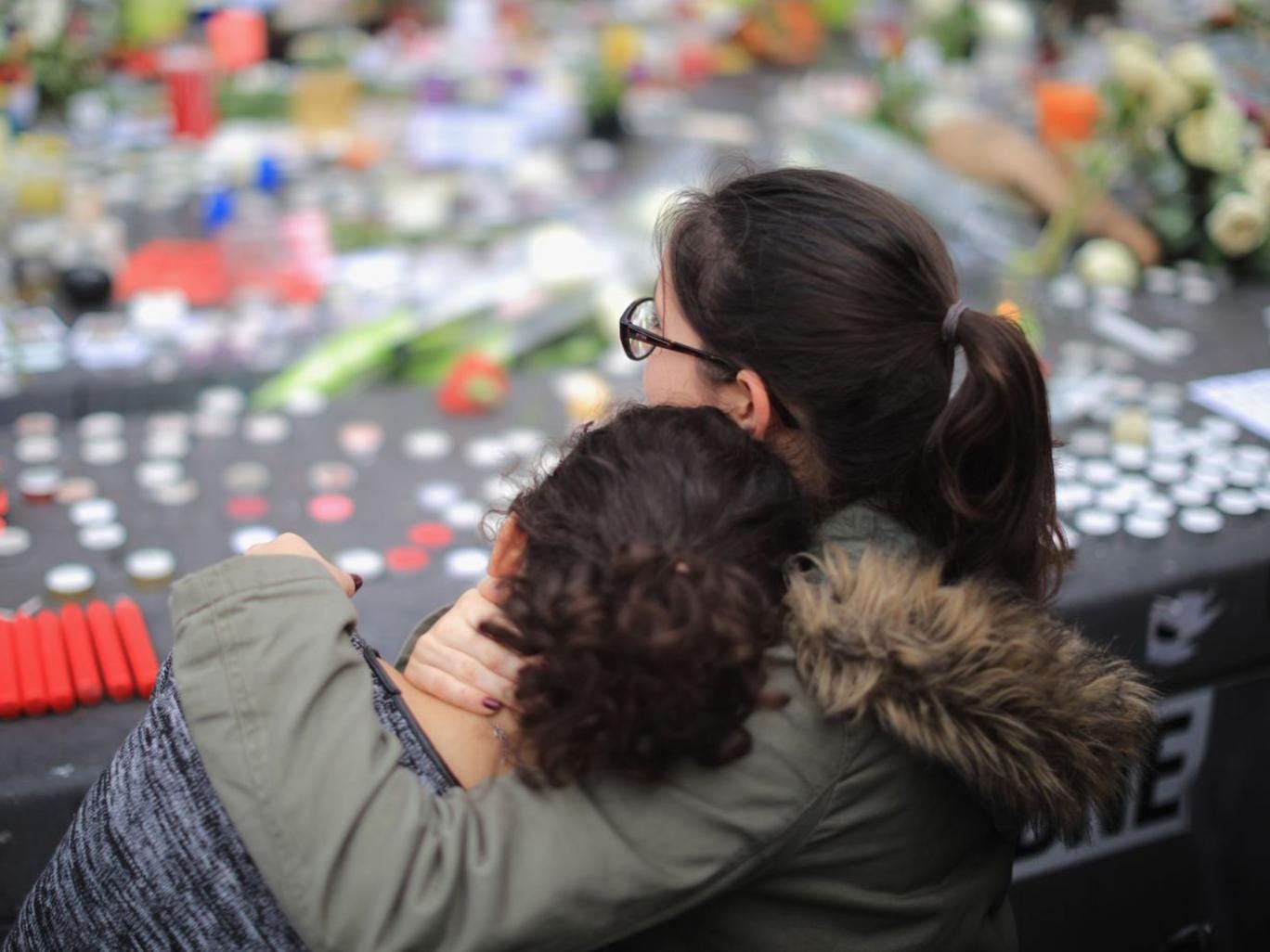
People weep as they gather to observe a minute-silence at the Place de la Republique in memory of the victims of the Paris terror attacksGetty


It wasn’t just one of the attackers who vanished after the Paris massacre. Three nations whose history, action – and inaction – help to explain the slaughter by Isis have largely escaped attention in the near-hysterical response to the crimes against humanity in Paris: Algeria, Saudi Arabia and Syria.
The French-Algerian identity of one of the attackers demonstrates how France’s savage 1956-62 war in Algeria continues to infect today’s atrocities. The absolute refusal to contemplate Saudi Arabia’s role as a purveyor of the most extreme Wahabi-Sunni form of Islam, in which Isis believes, shows how our leaders still decline to recognise the links between the kingdom and the organisation which struck Paris. And our total unwillingness to accept that the only regular military force in constant combat with Isis is the Syrian army – which fights for the regime that France also wants to destroy – means we cannot liaise with the ruthless soldiers who are in action against Isis even more ferociously than the Kurds.


Brother of Paris attack suspect has no idea where his brother is


Whenever the West is attacked and our innocents are killed, we usually wipe the memory bank. Thus, when reporters told us that the 129 dead in Paris represented the worst atrocity in France since the Second World War, they failed to mention the 1961 Paris massacre of up to 200 Algerians participating in an illegal march against France’s savage colonial war in Algeria. Most were murdered by the French police, many were tortured in the Palais des Sports and their bodies thrown into the Seine. The French only admit 40 dead. The police officer in charge was Maurice Papon, who worked for Petain’s collaborationist Vichy police in the Second World War, deporting more than a thousand Jews to their deaths.

Omar Ismail Mostafai, one of the suicide killers in Paris, was of Algerian origin – and so, too, may be other named suspects. Said and Cherif Kouachi, the brothers who murdered the Charlie Hebdo journalists, were also of Algerian parentage. They came from the five million-plus Algerian community in France, for many of whom the Algerian war never ended, and who live today in the slums of Saint-Denis and other Algerian banlieues of Paris. Yet the origin of the 13 November killers – and the history of the nation from which their parents came – has been largely deleted from the narrative of Friday’s horrific events. A Syrian passport with a Greek stamp is more exciting, for obvious reasons.

A colonial war 50 years ago is no justification for mass murder, but it provides a context without which any explanation of why France is now a target makes little sense. So, too, the Saudi Sunni-Wahabi faith, which is a foundation of the “Islamic Caliphate” and its cult-like killers. Mohammed ibn Abdel al-Wahab was the purist cleric and philosopher whose ruthless desire to expunge the Shia and other infidels from the Middle East led to 18th-century massacres in which the original al-Saud dynasty was deeply involved.

The present-day Saudi kingdom, which regularly beheads supposed criminals after unfair trials, is building a Riyadh museum dedicated to al-Wahab’s teachings, and the old prelate’s rage against idolaters and immorality has found expression in Isis’s accusation against Paris as a centre of “prostitution”. Much Isis funding has come from Saudis – although, once again, this fact has been wiped from the terrible story of the Friday massacre.


Francois Hollande announces plans to change extend anti-terror powers


And then comes Syria, whose regime’s destruction has long been a French government demand. Yet Assad’s army, outmanned and still outgunned – though recapturing some territory with the help of Russian air strikes – is the only trained military force fighting Isis. For years, both the Americans, the British and the French have said that the Syrians do not fight Isis. But this is palpably false; Syrian troops were driven out of Palmyra in May after trying to prevent Isis suicide convoys smashing their way into the city – convoys that could have been struck by US or French aircraft. Around 60,000 Syrian troops have now been killed in Syria, many by Isis and the Nusrah Islamists – but our desire to destroy the Assad regime takes precedence over our need to crush Isis.

The French now boast that they have struck Isis’s Syrian “capital” of Raqqa 20 times – a revenge attack, if ever there was one. For if this was a serious military assault to liquidate the Isis machine in Syria, why didn’t the French do it two weeks ago? Or two months ago? Once more, alas, the West – and especially France – responds to Isis with emotion rather than reason, without any historical context, without recognising the grim role that our “moderate”, head-chopping Saudi “brothers” play in this horror story. And we think we are going to destroy Isis...