George Monbiot in Outlook India
Be reasonable in response to the unreasonable: this is what voters in the Labour election are told. Accommodate, moderate, triangulate, for the alternative is to isolate yourself from reality. You might be inclined to agree. If so, please take a look at the reality to which you must submit.
To an extent unknown since before the First World War, economic relations in this country are becoming set in stone. It's not just that the very rich no longer fall while the very poor no longer rise. It's that the system itself is protected from risk. Through bail-outs, quantitative easing and delays in interest rate rises, speculative investment has been so well cushioned that, as Larry Elliott puts it, financial markets are "one of the last bastions of socialism left on earth."
Public services, infrastructure, the very fabric of the nation: these too are being converted into risk-free investments. Social cleansing is transforming inner London into an exclusive economic zone for property speculation. From a dozen directions, government policy converges on this objective. The benefits cap and the bedroom tax drive the poor out of their homes. The forced sale of high-value council houses creates a new asset pool. An uncapped and scarcely regulated private rental market turns these assets into gold. The freeze on council tax banding since 1991, the lifting of the inheritance tax threshold and £14 billion a year in breaks for private landlords all help to guarantee stupendous returns.
And for those who wish simply to sit on their assets, the government can help here too, by ensuring that there are no penalties for leaving buildings empty. As a result, great tracts of housing are removed from occupation. Agricultural land has proved an even better punt for City money: with the help of capital gains, inheritance and income tax exemptions, as well as farm subsidies, its price has quadrupled in 12 years.
Property in this country is a haven for the proceeds of international crime. The head of the National Crime Agency, Donald Toon, notes that "the London property market has been skewed by laundered money. Prices are being artificially driven up by overseas criminals who want to sequester their assets here in the UK."
It's hardly surprising, given the degree of oversight. Private Eye has produced a map of British land owned by companies registered in offshore tax havens. The holdings amount to 1.2 million acres, including much of our prime real estate. Among those it names as beneficiaries are a cast of Russian oligarchs, oil sheikhs, British aristocrats and newspaper proprietors. These are the people for whom government policy works, and the less regulated the system that enriches them, the happier they are.
The speculative property market is just one current in the great flow of cash that sluices through Britain while scarcely touching the sides. The financial sector exploits an astonishing political privilege: the City of London is the only jurisdiction in the UK not fully subject to the authority of parliament. In fact, the relationship seems to work the other way. Behind the Speaker's chair in the House of Commons sits the Remembrancer, whose job is to ensure that the interests of the City of London are recognised by the elected members. (A campaign to rescind this privilege — Don't Forget the Remembrancer — will be launched very soon). The City has one foot in the water: it is a semi-offshore state, a bit like the UK's Crown dependencies and overseas territories, tax havens legitimised by the Privy Council. Britain's financial secrecy undermines the tax base while providing a conduit into the legal economy for gangsters, kleptocrats and drug barons.
Even the more orthodox financial institutions deploy a long succession of scandalous practices: pension mis-selling, endowment mortgage fraud, the payment protection insurance con, Libor rigging. A former minister in the last government, Lord Green, ran HSBC while it engaged in money laundering for drugs gangs, systematic tax evasion and the provision of services to Saudi and Bangladeshi banks linked to the financing of terrorists. Sometimes the UK looks to me like an ever-so-civilised mafia state.
At next month's Conservative party conference, corporate executives will pay £2,500 to sit with a minister. Doubtless, because we are assured that there is no link between funding and policy, they will spend the day discussing the weather and the films they have seen. If we noticed such arrangements overseas, we might be inclined to regard them as corruption. But that can't be the case here, not least because the invitation explains that "fees associated with business day & dinner are considered a commercial transaction and therefore do not constitute a political donation."
The government also insists that there is no link between political donations and seats in the House of Lords. But a study by researchers at Oxford University found that the probability of so many major donors arriving there by chance is 1.36 x 10-38: roughly "equivalent to entering the National Lottery and winning the jackpot 5 times in a row". Why does the Lords remain unreformed? Because it permits plutocratic power to override democracy. Both rich and poor are kept in their place.
Governed either by or on behalf of the people who fleece us, we cannot be surprised to discover that all public services are being re-engineered for the benefit of private capital. Nor should we be surprised when governments help to negotiate, without public consent, treaties such as TTIP and CETA (the Comprehensive Economic and Trade Agreement), which undermine the sovereignty of both parliament and the law. Aesop's observation that "we hang the petty thieves and appoint the great ones to public office" remains true in spirit, though hanging has been replaced by community payback.
Wherever you sniff in British public life, something stinks: I could fill this newspaper with examples. But, while every pore oozes corruption, our task, we are told, is merely to trim the nails of the body politic.
To fail to confront this system is to collaborate with it. Who on the left would wish to stand on the sidelines as this carve-up continues? Who would vote for anything but sweeping change?
Sunday, 13 September 2015
Jeremy Corbyn's victory means Labour's living dead have been vanquished - and English politics has come to life again
Tariq Ali in The Independent
The ironies of history never fail to surprise. Measured by any criteria, Jeremy Corbyn is the most left-wing leader in the history of the Labour Party. He understands that those who do evil abroad are unlikely to do much good at home. He is the staunchest anti-imperialist Member of Parliament.
A contrast with his political forebears proves this assertion. Keir Hardie’s socialism floundered on the battlefields of the First World War. Clement Attlee was a great reformer domestically, but abroad his government approved the nuking of Hiroshima and Nagasaki. Harold Wilson redistributed wealth but supported the US in Vietnam; Michael Foot as Leader of the Opposition was a rabid supporter of Margaret Thatcher’s war to retrieve the Malvinas/Falklands.
The Thatcherite Blair/Brown twins agreed to share power thus creating two power-hungry factions with no political differences except that Tony Blair hungered for both power and money. He gave us the wars in the former Yugoslavia and Iraq, while Gordon Brown was oblivious to the vulnerabilities of financialised capitalism and spent billions of taxpayers’ money bailing out banks that might have (after paying the depositors) been best left to croak. Both bureaucratised the Labour Party by neutering the party conference, reducing it to a tacky version of the US Democrats. All show, no substance. They denuded constituency Labour parties of the right to select their own prospective parliamentary candidates. This was the only way they could transform a large chunk of the Parliamentary Labour Party (PLP) into a collection of over-promoted office boys and girls together with bandwagon careerists.
Three of them were on regular display in the campaign to succeed another of their number, Ed Miliband. What is ironic is that Miliband’s reform of the party’s electoral system was designed to appease the Blairites and their media chums by eliminating what was left of trade union power in the party and opening it up to outsiders in the lame hope that more congenial voters would ensure the domination of extreme centre politics.
So confident were they, that a few Blairites gave Corbyn the necessary parliamentary votes to stand as a token lefty and reveal the party’s generosity and attachment to diversity. Who would have thought that it would backfire so sensationally? Certainly not Corbyn. Nor anyone else. The Guardian came out for Yvette Cooper, its Blairite columnists denouncing the dinosaur from Islington, forgetting that, for younger folk, dinosaurs are a much loved and missed species. The Daily Mirror backed Andy Burnham.
------
READ MORE:
COMMENT: TODAY IS OUR DARKEST HOUR – WE HAVE BECOME UNELECTABLE
-----
No one who knows or sees and hears Corbyn can doubt his authenticity. I have shared numerous platforms with him over the past 40 years. On the key issues he has remained steadfast. What appealed to the young, who transformed the campaign into a social movement, was precisely what alienated the traditional political and media cliques. Corbyn was untutored, discursive, too left-wing, wanted to reverse the privatisations of the railways and utilities, etc. Many who registered to vote for him did so because of this and to break from the bland, unimaginative and visionless New Labour.
Corbyn had underestimated the changes in Scotland, but these actually helped his campaign. A Scottish National Party cohort in parliament that wanted to ditch the redundant and over-priced Trident; an electrifying maiden speech by 20-year-old Mhairi Black that took on the Tories. All this helped the Corbyn campaign. If Scotland, why not England?
As Labour members elect their most left-wing leader, the overwhelming majority of the PLP is in the death grip of the right. Anyone listening to Sadiq Khan’s speech after being elected as Labour’s choice for London mayor would have noticed the difference with the Corbyn campaign. Khan’s clichés were a reminder of how isolated Corbyn will be in the PLP. Corbyn will call on the party to unite behind him. But there is no getting away from the fact that the PLP majority is opposed to his policies. I guess they will try to tire him out and force compromise after compromise to discredit him (remember Alexis Tsipras in Greece), but I doubt they’ll succeed.
Corbyn understands the key issues on which no compromise is possible. He’s been campaigning for them long enough. His closeness to the Green agenda is not a secret, and the single Green MP now has a solid supporter in the new Labour leader. Taking back public transport from the profiteers is another element; cheap public housing for the young and the old will help rebuild communities. A robust tax regime that reverses the decades of privileges afforded the rich will unleash a fierce offensive by the City and its media and political acolytes, but it’s considered absolutely necessary.
Since the late Seventies, the redistribution of wealth in favour of the rich and the very rich has risen faster in Britain than in any other country in the Organisation for Economic Co-operation and Development. Corbyn is not interested in power for its own sake or to amass personal wealth.
Within the party, Corbyn will undoubtedly move to restore democracy. It’s the only way for Labour supporters in the country to be properly represented in parliament. None of this is easy and that is why a powerful movement, a new model campaigning army outside Parliament remains essential. It is the only way to ensure that the Corbyn agenda is fulfilled. None of this will happen overnight, and supporters have to be patient and not scream from the sidelines.
Some Labour MPs will desert. After all, they happily supported austerity. But, whatever happens, it will no longer be possible for the self-censoring BBC to keep the views espoused by the new Labour leader off the screen. The living dead have been vanquished, if temporarily. English politics has come to life again.
The ironies of history never fail to surprise. Measured by any criteria, Jeremy Corbyn is the most left-wing leader in the history of the Labour Party. He understands that those who do evil abroad are unlikely to do much good at home. He is the staunchest anti-imperialist Member of Parliament.
A contrast with his political forebears proves this assertion. Keir Hardie’s socialism floundered on the battlefields of the First World War. Clement Attlee was a great reformer domestically, but abroad his government approved the nuking of Hiroshima and Nagasaki. Harold Wilson redistributed wealth but supported the US in Vietnam; Michael Foot as Leader of the Opposition was a rabid supporter of Margaret Thatcher’s war to retrieve the Malvinas/Falklands.
The Thatcherite Blair/Brown twins agreed to share power thus creating two power-hungry factions with no political differences except that Tony Blair hungered for both power and money. He gave us the wars in the former Yugoslavia and Iraq, while Gordon Brown was oblivious to the vulnerabilities of financialised capitalism and spent billions of taxpayers’ money bailing out banks that might have (after paying the depositors) been best left to croak. Both bureaucratised the Labour Party by neutering the party conference, reducing it to a tacky version of the US Democrats. All show, no substance. They denuded constituency Labour parties of the right to select their own prospective parliamentary candidates. This was the only way they could transform a large chunk of the Parliamentary Labour Party (PLP) into a collection of over-promoted office boys and girls together with bandwagon careerists.
Three of them were on regular display in the campaign to succeed another of their number, Ed Miliband. What is ironic is that Miliband’s reform of the party’s electoral system was designed to appease the Blairites and their media chums by eliminating what was left of trade union power in the party and opening it up to outsiders in the lame hope that more congenial voters would ensure the domination of extreme centre politics.
So confident were they, that a few Blairites gave Corbyn the necessary parliamentary votes to stand as a token lefty and reveal the party’s generosity and attachment to diversity. Who would have thought that it would backfire so sensationally? Certainly not Corbyn. Nor anyone else. The Guardian came out for Yvette Cooper, its Blairite columnists denouncing the dinosaur from Islington, forgetting that, for younger folk, dinosaurs are a much loved and missed species. The Daily Mirror backed Andy Burnham.
------
READ MORE:
COMMENT: TODAY IS OUR DARKEST HOUR – WE HAVE BECOME UNELECTABLE
-----
No one who knows or sees and hears Corbyn can doubt his authenticity. I have shared numerous platforms with him over the past 40 years. On the key issues he has remained steadfast. What appealed to the young, who transformed the campaign into a social movement, was precisely what alienated the traditional political and media cliques. Corbyn was untutored, discursive, too left-wing, wanted to reverse the privatisations of the railways and utilities, etc. Many who registered to vote for him did so because of this and to break from the bland, unimaginative and visionless New Labour.
Corbyn had underestimated the changes in Scotland, but these actually helped his campaign. A Scottish National Party cohort in parliament that wanted to ditch the redundant and over-priced Trident; an electrifying maiden speech by 20-year-old Mhairi Black that took on the Tories. All this helped the Corbyn campaign. If Scotland, why not England?
As Labour members elect their most left-wing leader, the overwhelming majority of the PLP is in the death grip of the right. Anyone listening to Sadiq Khan’s speech after being elected as Labour’s choice for London mayor would have noticed the difference with the Corbyn campaign. Khan’s clichés were a reminder of how isolated Corbyn will be in the PLP. Corbyn will call on the party to unite behind him. But there is no getting away from the fact that the PLP majority is opposed to his policies. I guess they will try to tire him out and force compromise after compromise to discredit him (remember Alexis Tsipras in Greece), but I doubt they’ll succeed.
Corbyn understands the key issues on which no compromise is possible. He’s been campaigning for them long enough. His closeness to the Green agenda is not a secret, and the single Green MP now has a solid supporter in the new Labour leader. Taking back public transport from the profiteers is another element; cheap public housing for the young and the old will help rebuild communities. A robust tax regime that reverses the decades of privileges afforded the rich will unleash a fierce offensive by the City and its media and political acolytes, but it’s considered absolutely necessary.
Since the late Seventies, the redistribution of wealth in favour of the rich and the very rich has risen faster in Britain than in any other country in the Organisation for Economic Co-operation and Development. Corbyn is not interested in power for its own sake or to amass personal wealth.
Within the party, Corbyn will undoubtedly move to restore democracy. It’s the only way for Labour supporters in the country to be properly represented in parliament. None of this is easy and that is why a powerful movement, a new model campaigning army outside Parliament remains essential. It is the only way to ensure that the Corbyn agenda is fulfilled. None of this will happen overnight, and supporters have to be patient and not scream from the sidelines.
Some Labour MPs will desert. After all, they happily supported austerity. But, whatever happens, it will no longer be possible for the self-censoring BBC to keep the views espoused by the new Labour leader off the screen. The living dead have been vanquished, if temporarily. English politics has come to life again.
Thursday, 10 September 2015
Travelling to work 'is work', European court rules
BBC News
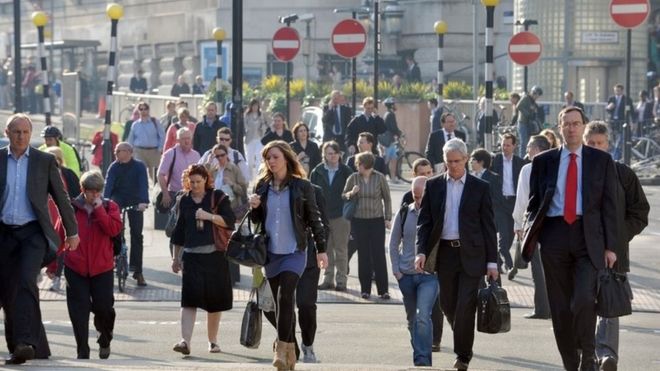
Time spent travelling to and from first and last appointments by workers without a fixed office should be regarded as working time, the European Court of Justice has ruled.
This time has not previously been considered work by many employers.
It means firms including those employing care workers, gas fitters and sales reps may be in breach of EU working time regulations.
BBC legal correspondent Clive Coleman said it could have a "huge effect".
"Thousands of employers could now find themselves in breach of working time regulations," he added.
This time has not previously been considered work by many employers.
It means firms including those employing care workers, gas fitters and sales reps may be in breach of EU working time regulations.
BBC legal correspondent Clive Coleman said it could have a "huge effect".
"Thousands of employers could now find themselves in breach of working time regulations," he added.
'Falling below minimum wage'
Chris Tutton, from the solicitors Irwin Mitchell, agreed the ruling would be "very significant" and could have an impact on pay.
"People may now be working an additional 10 hours a week once you take into account their travel time, and that may mean employers are falling below the national minimum wage level when you look at the hourly rate that staff are paid," he said.
The court says its judgment is about protecting the "health and safety" of workers as set out in the European Union's working time directive.
The directive is designed to protect workers from exploitation by employers, and it lays down regulations on matters such as how long employees work, how many breaks they have, and how much holiday they are entitled to.
'Bear the burden'
One of its main goals is to ensure that no employee in the EU is obliged to work more than an average of 48 hours a week.
The ruling came about because of an ongoing legal case in Spain involving a company called Tyco, which installs security systems.
The company shut its regional offices down in 2011, resulting in employees travelling varying distances before arriving at their first appointment.
The court ruling said: "The fact that the workers begin and finish the journeys at their homes stems directly from the decision of their employer to abolish the regional offices and not from the desire of the workers themselves.
"Requiring them to bear the burden of their employer's choice would be contrary to the objective of protecting the safety and health of workers pursued by the directive, which includes the necessity of guaranteeing workers a minimum rest period."
Technology and the amateur cricketer
Jon Hotten in Cricinfo
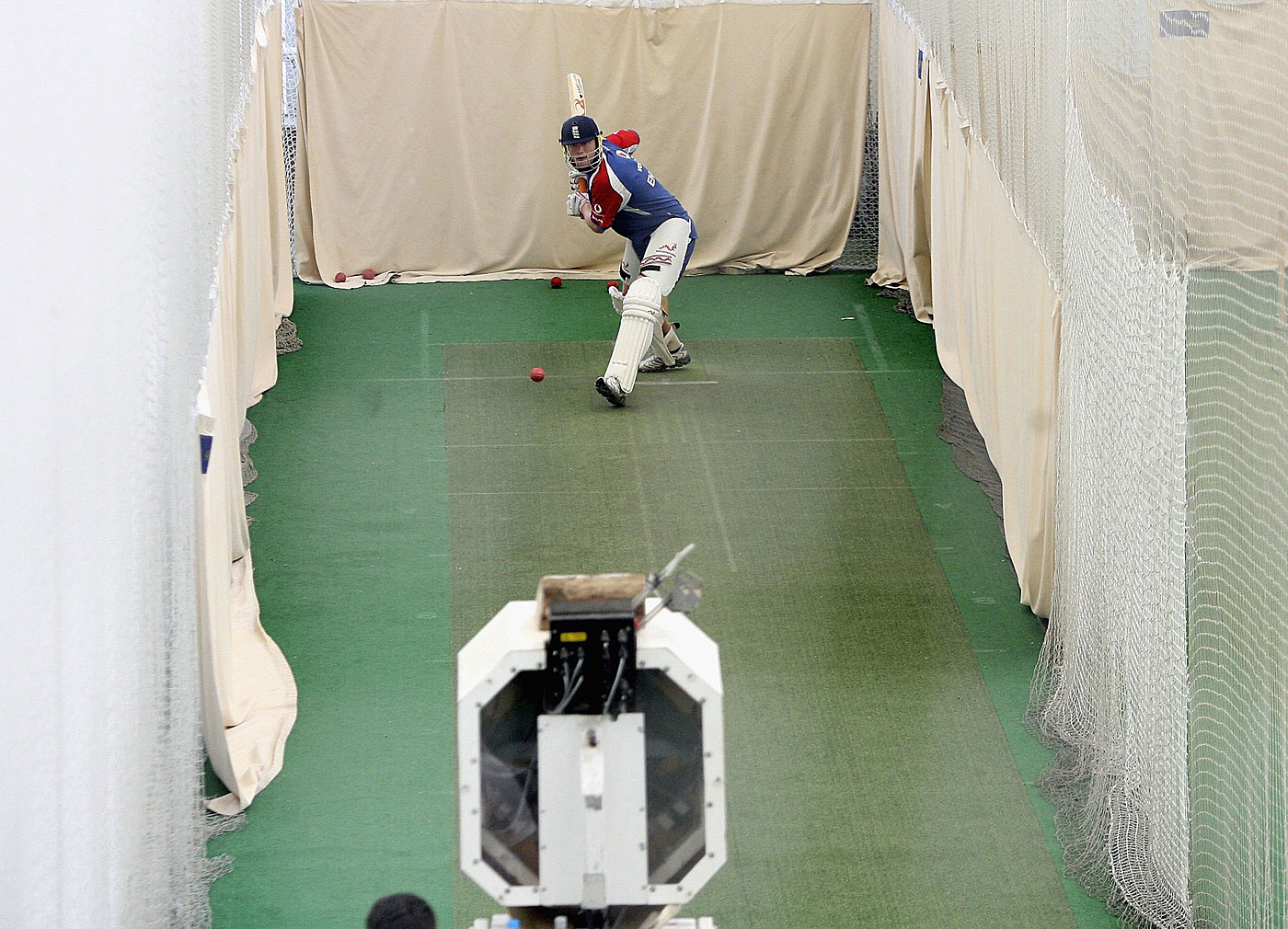 The professional cricketer lives an examined life, with feedback from various corners © Getty Images
Every journalist knows the horror of their own voice. The realisation comes early, when you begin recording interviews. There, on the tape or in the bytes or the VT, is not the voice you thought that you had, the one that's been echoing in your ears for your whole life, but the one that the rest of the world hears - reedy, nasal, pitched entirely differently.
It takes a while to get over the discovery and to become acquainted with the notion that self-image overlaps only slightly with the objective view of the rest of the world.
Cricket is deep into its age of analysis. Kartikeya Date's lovely piece in the current Cricket Monthly illuminates the depth of it: every ball in every major match is logged, filed, deconstructed. It means that the professional cricketer lives an examined life, and its information comes at them from all angles: their coaches, their laptops, the television, the internet, YouTube, Twitter… a bombardment of feedback that can leave them in no doubt as to what they look like in the eyes of the world. Reality here is absolute, self-image challenged from an early age.
It has a purpose, of course; all of this stuff, and in a sport that exacts a high psychological price, strong self-knowledge can be an important anchor. It's why the analysed player speaks constantly of "knowing my game", "executing my skills" and so on. There is no longer any mystery to how they do what they do and so they take refuge in the empirical evidence of their talents.
The amateur cricketer (apart from the serious, higher-level one) is the polar opposite, a player who relies almost totally on the powers of delusion. In our heads we are younger, stronger, faster and better than ever. Fleeting successes sustain the vision.
The classic response to failure is not to practise more but to buy a new bat or try a new grip or take up a new place in the order. Bowlers gaze at the television and imagine that their pace is up there at the dibbly-dobbly end of the pro game - Paul Collingwood maybe, or David Warner.
Does analysis have a role to play here, where the idea of preparation is a few taps on the boundary edge when you're next in? Can an encounter with the awful reality of your game offer the way towards the radical and constant self-improvement sought and often attained by the professional cricketer?
As with all technologies, the machinery required for analysing cricket is becoming more available as the hardware becomes affordable. As a joint birthday present (and maybe a not-so-subtle hint) our team-mates bought me and my fellow senior player Big Tone a session at the indoor school at Lord's, where they have installed a lane with Pitch Vision technology and another with Hawk-Eye. Pitch Vision ("Come face to face with your own performance outcomes") utilises sensors and cameras to offer immediate video playback and analysis of every delivery on both a big screen behind the net and via downloadable post-session data for perusal at your leisure.
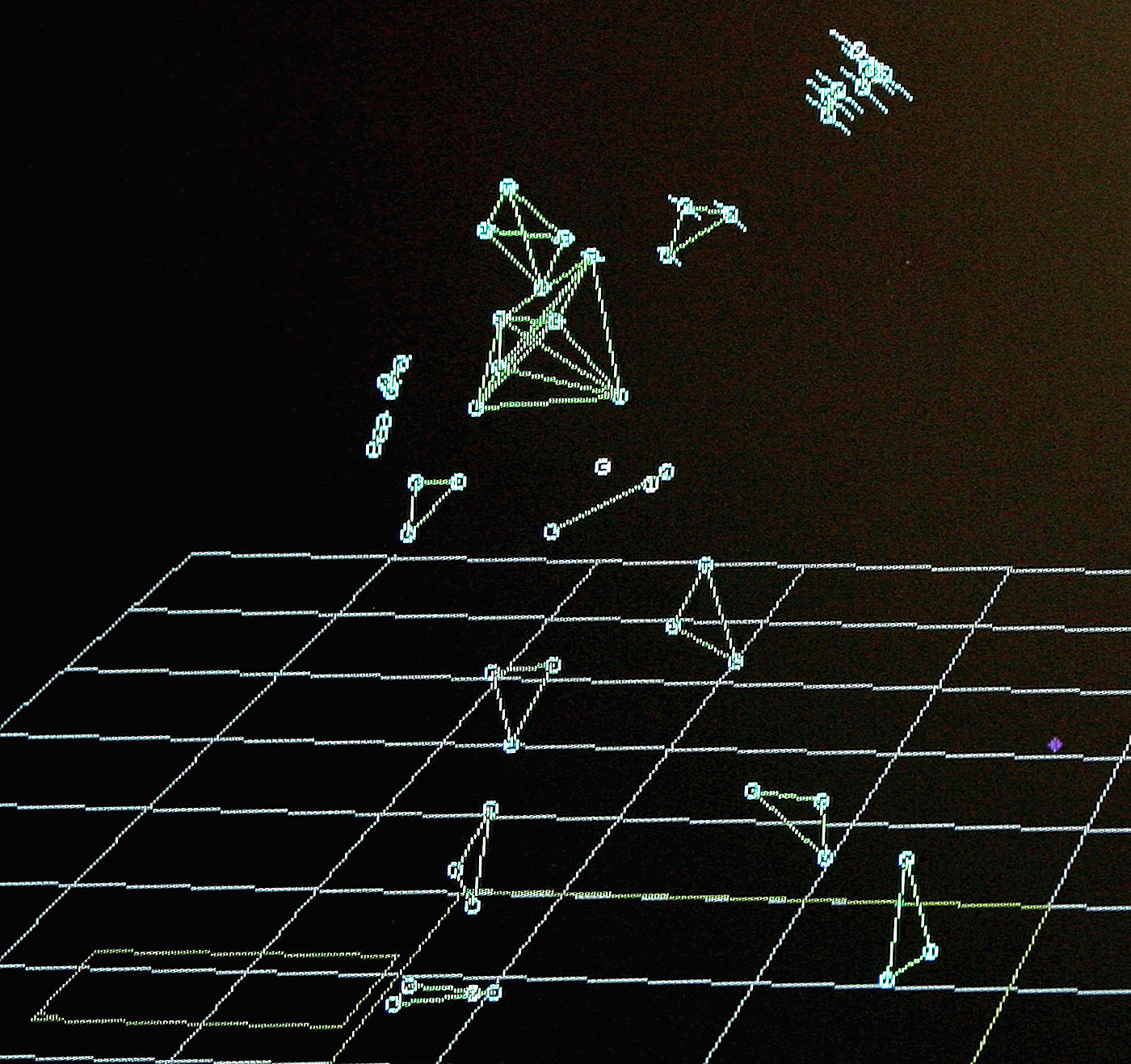 A bowling action in pixels © Getty Images
Disconcertingly, it also measures the speed of each delivery. Accompanying me and Big Tone (ostensibly both batsmen) is our captain Charlie, who is an opening bowler and as such has more invested in the unyielding outcome of the speed gun.
I watch a playback as a stooped, shuffling figure advances slowly - really slowly - towards the crease before hopping into a round-arm, bent-backed delivery that progresses at a stately 50mph towards the batsman. "Ha!" I think. "Who's that old man…" before the dreaded realisation that, of course, it is me.
In my mind, I have a jaunty and rapid run-up and quite a high arm. The screen before me shatters that illusion forever. Sybil Fawlty's withering description of the hapless Basil as "a brillianteened stick-insect" flashes into my head as I watch myself replayed in super slo-mo. I briefly salvage some self-esteem with a delivery recorded at 62mph before realising that the screen is still showing Charlie's last ball.
The batting was a little better, or at least a little more familiar. I'd seen myself on camera years ago and so my psyche had absorbed the fact that I wasn't exactly King Viv, more of a taller Boycott type, whose defence was nonetheless far more permeable than the great man's. I had, though, an idea that my backlift was high and that I had a dynamic stance ready to push forward or back with coiled power. Sadly it was all more of a non-committed shuffle. Although my bat speed was something of a triumph, especially watching in normal time after a period of slow motion.
The Hawk-Eye session was equally revelatory. Its on-screen analysis is identical to its televisual output - the beehive, the pitch map, the strike zones and so on - except with very different, and reduced, figures. The finest moment was the side-on ball-tracker of one of Big Tone's medium-pacers. Stopping the gun at 42mph, it ascribed two long and looping parabolas and was actually descending as it hit the stumps. The ball's pathway resembled a 22-yard letter "m".
It was a lot of fun, and illuminated the gulf between the world of the pro cricketer, who must worry and fret about this sort of stuff, and the amateur, who, like me, watched Glenn Maxwell bowl the next day at 57mph with renewed admiration for his pace. In the blinding light of technology's glare, your game is laid bare. It will take me a while to retreat back into the land of comfortable and happily deluded fantasy.
The professional cricketer lives an examined life, with feedback from various corners © Getty ImagesEvery journalist knows the horror of their own voice. The realisation comes early, when you begin recording interviews. There, on the tape or in the bytes or the VT, is not the voice you thought that you had, the one that's been echoing in your ears for your whole life, but the one that the rest of the world hears - reedy, nasal, pitched entirely differently.
It takes a while to get over the discovery and to become acquainted with the notion that self-image overlaps only slightly with the objective view of the rest of the world.
Cricket is deep into its age of analysis. Kartikeya Date's lovely piece in the current Cricket Monthly illuminates the depth of it: every ball in every major match is logged, filed, deconstructed. It means that the professional cricketer lives an examined life, and its information comes at them from all angles: their coaches, their laptops, the television, the internet, YouTube, Twitter… a bombardment of feedback that can leave them in no doubt as to what they look like in the eyes of the world. Reality here is absolute, self-image challenged from an early age.
It has a purpose, of course; all of this stuff, and in a sport that exacts a high psychological price, strong self-knowledge can be an important anchor. It's why the analysed player speaks constantly of "knowing my game", "executing my skills" and so on. There is no longer any mystery to how they do what they do and so they take refuge in the empirical evidence of their talents.
The amateur cricketer (apart from the serious, higher-level one) is the polar opposite, a player who relies almost totally on the powers of delusion. In our heads we are younger, stronger, faster and better than ever. Fleeting successes sustain the vision.
The classic response to failure is not to practise more but to buy a new bat or try a new grip or take up a new place in the order. Bowlers gaze at the television and imagine that their pace is up there at the dibbly-dobbly end of the pro game - Paul Collingwood maybe, or David Warner.
Does analysis have a role to play here, where the idea of preparation is a few taps on the boundary edge when you're next in? Can an encounter with the awful reality of your game offer the way towards the radical and constant self-improvement sought and often attained by the professional cricketer?
As with all technologies, the machinery required for analysing cricket is becoming more available as the hardware becomes affordable. As a joint birthday present (and maybe a not-so-subtle hint) our team-mates bought me and my fellow senior player Big Tone a session at the indoor school at Lord's, where they have installed a lane with Pitch Vision technology and another with Hawk-Eye. Pitch Vision ("Come face to face with your own performance outcomes") utilises sensors and cameras to offer immediate video playback and analysis of every delivery on both a big screen behind the net and via downloadable post-session data for perusal at your leisure.
A bowling action in pixels © Getty ImagesDisconcertingly, it also measures the speed of each delivery. Accompanying me and Big Tone (ostensibly both batsmen) is our captain Charlie, who is an opening bowler and as such has more invested in the unyielding outcome of the speed gun.
I watch a playback as a stooped, shuffling figure advances slowly - really slowly - towards the crease before hopping into a round-arm, bent-backed delivery that progresses at a stately 50mph towards the batsman. "Ha!" I think. "Who's that old man…" before the dreaded realisation that, of course, it is me.
In my mind, I have a jaunty and rapid run-up and quite a high arm. The screen before me shatters that illusion forever. Sybil Fawlty's withering description of the hapless Basil as "a brillianteened stick-insect" flashes into my head as I watch myself replayed in super slo-mo. I briefly salvage some self-esteem with a delivery recorded at 62mph before realising that the screen is still showing Charlie's last ball.
The batting was a little better, or at least a little more familiar. I'd seen myself on camera years ago and so my psyche had absorbed the fact that I wasn't exactly King Viv, more of a taller Boycott type, whose defence was nonetheless far more permeable than the great man's. I had, though, an idea that my backlift was high and that I had a dynamic stance ready to push forward or back with coiled power. Sadly it was all more of a non-committed shuffle. Although my bat speed was something of a triumph, especially watching in normal time after a period of slow motion.
The Hawk-Eye session was equally revelatory. Its on-screen analysis is identical to its televisual output - the beehive, the pitch map, the strike zones and so on - except with very different, and reduced, figures. The finest moment was the side-on ball-tracker of one of Big Tone's medium-pacers. Stopping the gun at 42mph, it ascribed two long and looping parabolas and was actually descending as it hit the stumps. The ball's pathway resembled a 22-yard letter "m".
It was a lot of fun, and illuminated the gulf between the world of the pro cricketer, who must worry and fret about this sort of stuff, and the amateur, who, like me, watched Glenn Maxwell bowl the next day at 57mph with renewed admiration for his pace. In the blinding light of technology's glare, your game is laid bare. It will take me a while to retreat back into the land of comfortable and happily deluded fantasy.
Subscribe to:
Posts (Atom)