George Monbiot in The Guardian
Bring out the violins. The land reform programme announced by the Scottish government is the end of civilised life on earth, if you believe the corporate press. In a country where 432 people own half the private rural land(1), all change is Stalinism. The Telegraph has published a string of dire warnings, insisting, for example, that deer stalking and grouse shooting could come to an end if business rates are introduced for sporting estates(2). Moved to tears yet?
Yes, sporting estates—where the richest people in Britain, or oil sheikhs and oligarchs from elsewhere, shoot grouse and stags—are exempt from business rates: a present from John Major’s government in 1994(3). David Cameron has been just as generous with our money: as he cuts essential services for the poor, he has almost doubled the public subsidy for English grouse moors(4), and frozen the price of shotgun licences(5), at a public cost of £17m a year.
But this is small change. Let’s talk about the real money. The Westminster government claims to champion an entrepreneurial society, of wealth creators and hard-working families, but the real rewards and incentives are for rent. The power and majesty of the state protects the patrimonial class. A looped and windowed democratic cloak barely covers the corrupt old body of the nation. Here peaceful protestors can still be arrested under the 1361 Justices of the Peace Act. Here, the Royal Mines Act 1424 gives the Crown the right to all the gold and silver in Scotland(6). Here the Remembrancer of the City of London sits behind the Speaker’s chair in the House of Commons(7), to protect the entitlements of a Corporation that pre-dates the Norman conquest. This is an essentially feudal nation.
It’s no coincidence that the two most regressive forms of taxation in the UK—council tax banding and the payment of farm subsidies—both favour major owners of property. The capping of council tax bands ensures that the owners of £100 million flats in London pay less than the owners of £200,000 houses in Blackburn(8,9). Farm subsidies, which remain limitless as a result of the Westminster government’s lobbying(10), ensure that every household in Britain hands £245 a year to the richest people in the land(11). The single farm payment system—under which landowners are paid by the hectare—is a reinstatement of a mediaeval levy called feudal aid(12): a tax the vassals had to pay to their lords.
If this is the government of enterprise, not rent, ask yourself why capital gains tax (at 28%) is lower than the top rate of income tax. Ask yourself why principal residences, though their value may rise by millions, are altogether exempt(13). Ask yourself why rural landowners are typically excused capital gains tax, inheritance tax and the first five years of income tax(14). The enterprise society? It’s a con, designed to create an illusion of social mobility.
The Scottish programme for government(15) is the first serious attempt to address the nature of landholding in Britain since David Lloyd George’s budget of 1909. Some of its aims hardly sound radical until you understand the context. For example it will seek to discover who owns the land. Big deal. Yes, in fact, it is. At the moment the owners of only 26% of the land in Scotland have been identified(16).
Walk into any mairie in France or ayuntamiento in Spain and you will be shown the cadastral registers on request, on which all the land and its owners are named. When The Land magazine tried to do the same in Britain(17), it found that there was a full cadastral map available at the local library, which could be photocopied for 70p. But it was made in 1840. Even with expert help, it took the magazine several weeks of fighting official obstruction and obfuscation and cost nearly £1000(18) to find out who owns the 1.4 km2 around its offices in Dorset. It discovered that the old registers had been closed and removed from public view, at the behest of a landed class that wishes to remain as exempt from public scrutiny as it is from taxes. (The landowners are rather more forthcoming when applying for subsidies from the rural payments agency, which possesses a full, though unobtainable, register of their agricultural holdings). What sort of nation is this, in which you cannot discover who owns the ground beneath your feet?
The Scottish government will consider breaking up large land holdings when they impede the prospects of local people(19). It will provide further help to communities to buy the land that surrounds them. Compare its promise of “a fairer, wider and more equitable distribution of land” to the Westminster government’s vision of “greater competitiveness, including by consolidation”(20): which means a continued increase in the size of land holdings. The number of holdings in England is now falling by 2% a year(21), which is possibly the fastest concentration of ownership since the acts of enclosure.
Consider Scotland’s determination to open up the question of property taxes, which might lead to the only system that is fair and comprehensive: land value taxation(22). Compare it to the fleabite of a mansion tax proposed by Ed Miliband, which, though it recoups only a tiny percentage of the unearned income of the richest owners, has so outraged the proprietorial class that some of them (yes Griff Rhys Jones, I’m thinking of you(23)) have threatened to leave the country. Good riddance.
The Scottish government might address the speculative chaos which mangles the countryside while failing to build the houses people need. It might challenge a system in which terrible homes are built at great expense, partly because the price of land has risen from 2% of the cost of a house in the 1930s to 70% today(24). It might take land into public ownership to ensure that new developments are built by and for those who will live there, rather than for the benefit of volume housebuilders. It might prevent mountains from being burnt and overgrazed(25) by a landowning class that cares only about the numbers of deer and grouse it can bag and the bragging rights this earns in London clubs. As Scotland, where feudalism was not legally abolished until 2000(26), becomes a progressive, modern nation, it leaves England stuck in the pre-democratic past.
Scotland is rudely interrupting the constructed silences that stifle political thought in the United Kingdom. This is why the oligarchs who own the media hate everything that is happening there: their interests are being exposed in a way that is currently impossible south of the border.
For centuries, Britain has been a welfare state for patrimonial capital. It’s time we broke it open, and broke the culture of deference that keeps us in our place. Let’s bring the Highland Spring south, and start discussing some dangerous subjects.
References:
1. http://bit.ly/1vi0kuK
2. http://www.telegraph.co.uk/news/uknews/scotland/11262856/Future-bleak-for-grouse-shooting-and-deer-stalking.html
3. http://www.andywightman.com/?p=3975
4. Defra has tried to pass this off as payments for “moorland farmers”, but all owners of grazed or managed moorlands, of which grouse moors are a major component, are eligible. https://www.gov.uk/government/news/cap-boost-for-moorland
5. http://www.theguardian.com/uk-news/2014/apr/22/cameron-blasted-battle-shotgun-licence-fees
6. The Land Reform Review Group, 2014. The Land of Scotland and the Common Good.
http://www.scotland.gov.uk/About/Review/land-reform/events/FinalReport23May2014
7. http://www.monbiot.com/2011/10/31/wealth-destroyers/
8. http://www.theguardian.com/commentisfree/2014/mar/29/why-do-we-pay-more-council-tax-than-knightsbridge-oligarchs
9. This assumes that a house in Blackburn valued at £69,000 in 1991 would cost around £200,000 today. http://www.blackburn.gov.uk/Pages/Council-tax-charges.aspx
10. http://www.monbiot.com/2014/03/03/the-benefits-claimants-the-goverment-loves/
11. Defra, 31st August 2011, by email.
12. http://en.wikipedia.org/wiki/Feudal_aid
13. http://www.theguardian.com/business/2014/sep/22/charge-capital-gains-tax-main-residencies-says-housing-expert
14. http://www.ft.com/cms/s/2/99ae5756-1d89-11df-a893-00144feab49a.html#ixzz3Kexs2dL2
15. http://www.scotland.gov.uk/Publications/2014/11/6336
16. http://www.andywightman.com/?p=3816
17. http://www.thelandmagazine.org.uk/issue/land-issue-14-summer-2013
18. http://www.thelandmagazine.org.uk/issue/land-issue-14-summer-2013
19. http://www.scotland.gov.uk/Publications/2014/11/6336
20. http://archive.defra.gov.uk/foodfarm/policy/capreform/documents/110128-uk-cap-response.pdf
21. Compare the figures, Agriculture in the United Kingdom 2013: http://bit.ly/1vLQSi4
to the figures in the 2011 version: https://www.gov.uk/government/statistics/agriculture-in-the-united-kingdom-2011
22. http://www.theguardian.com/commentisfree/2013/jan/21/i-agree-with-churchill-shirkers-tax
23. http://www.theguardian.com/commentisfree/2014/nov/04/griff-rhys-jones-mansion-tax-soft-option
24. The Land Reform Review Group, 2014. The Land of Scotland and the Common Good. http://www.scotland.gov.uk/About/Review/land-reform/events/FinalReport23May2014
25. http://www.theguardian.com/commentisfree/2014/may/19/vote-yes-rid-scotland-of-feudal-landowners-highlands
26. http://www.scotland.gov.uk/Topics/Justice/law/17975/Abolition
Sunday, 7 December 2014
Friday, 5 December 2014
Premier Foods accused over 'pay and stay' practice

Premier Foods, one of the UK's biggest manufacturers, has been asking its suppliers for payments to continue doing business with the firm.
One supplier said the practice - known as pay and stay - was like "blackmail".
Newsnight understands the struggling company has received millions of pounds from its suppliers in this way.
Premier Foods said it was confident the scheme did not break any rules under competition law. The government said it was "concerned by recent reports".
The company, which owns brands like Mr Kipling, Ambrosia, Bisto and Oxo, demanded the payments from suppliers across the country.
Newsnight has seen a letter sent by chief executive Gavin Darby, dated 18 November.
'Nominated for de-list'
He wrote: "We are aiming to work with a smaller number of strategic suppliers in the future that can better support and invest in our growth ideas."
He added: "We will now require you to make an investment payment to support our growth.
"I understand that this approach may lead to some questions.
"However, it is important that we take the right steps now to support our future growth."
But when a supplier raised questions in an email about the annual payments, another member of Premier's staff replied.
"We are looking to obtain an investment payment from our entire supply base and unfortunately those who do not participate will be nominated for de-list."
One of the company's more than 1,000 suppliers, Bob Horsley, said he had been "taken aback" to receive the letter.
Scared to speak out
Mr Horsley, who has had a maintenance contract with Ambrosia in Devon for more than 10 years, said: "I think it's like blackmail.
"What they are saying is 'unless you pay this money, you can't do the work'."
He has decided not to pay and risk losing the contract.
"I'm just a layman but I can't see how that is right."
Another businessman said Premier had previously asked for more than £70,000.
"They know you can't afford solicitors to fight them. I'd never pay anyone for work."
Another said: "It's like a gun held to your head."
Many businesses are scared to speak out for fear of losing their contracts.
'Unjust'
Premier Foods has reduced its number of suppliers dramatically in the last 12 months.
In 2013 it made a similar approach to some of its suppliers.
The practice of pay to stay is not unheard of in manufacturing and retail.
After a competition inquiry, tighter rules were issued for the supermarkets under the Groceries' Code.
But that applies to the relationship between supermarkets and suppliers, not manufacturers.
Liesl Smith, from the Federation of Small Businesses, said: "This is the first time that we have ever seen anything so blatant... in this very direct way before.
"We think it is unjust, it is not competitive and it is not helping the supply chain.
"Premier Foods certainly don't value their suppliers, it's crippling small businesses.
"It's not just going to affect the business owners, it will affect staff as well."
'Support crucial'
Premier Foods told Newsnight: "We launched our 'invest for growth' programme in July last year as part of a broader initiative to reduce complexity in support of plans to help turnaround the business.
"This included a commitment to halve the number of our suppliers and develop more strategic partnerships focused on mutual growth.
"The programme requires our suppliers to make an annual investment to help fund our growth plans.
"In return, our suppliers benefit from opportunities to secure a larger slice of our current business.
"They also stand to gain as our business grows in the future."
It added: "In the current challenging environment, the support of all of our suppliers is crucial.
"We have had a positive response from many who are actively engaging in building a new partnership with us, including many small companies."
Newsnight understands many suppliers have paid a total in the low millions so far.
Competition law states that in some cases, pay to stay can be against the law.
Premier Foods is confident its scheme is within the rules.
Labour bid
But concerns about the wider problem have been raised with the regulator, the Competition and Markets Authority, and this week with the government.
Labour tried to amend the law recently to make the practice explicitly illegal.
Toby Perkins, the shadow business minister, said: "Labour pushed to outlaw companies charging to stay on their supplier list.
"But, alongside steps to prevent customer late payment, they were rejected by the government.
"Building a stronger economy relies on free and fair markets, but where unfair practices emerge, government should be willing to take action as today's revelations appear to expose."
A spokesperson for the Department of Business Innovation and Skills said it was a "hugely important issue" that ministers were taking "very seriously".
"We are concerned by recent reports, and are consulting to assess the evidence so we can establish what more we can do.
"We are also consulting on whether the biggest companies should be required to report publically on whether businesses need to pay to be on their supplier lists."
Newsnight understands that the regulator, the Competition and Markets Authority, is reluctant to commit resources to an investigation unless more businesses are willing to come forward.
Thursday, 4 December 2014
Cuba’s extraordinary global medical record shames the US blockade
From Ebola to earthquakes, Havana’s doctors have saved millions. Obama must lift this embargo
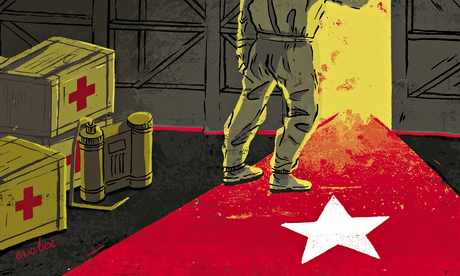
Four months into the internationally declared Ebola emergency that has devastated west Africa, Cuba leads the world in direct medical support to fight the epidemic. The US and Britain have sent thousands of troops and, along with other countries, promised aid – most of which has yet to materialise. But, as the World Health Organisation has insisted, what’s most urgently needed are health workers. The Caribbean island, with a population of just 11m and official per capita income of $6,000 (£3,824), answered that call before it was made. It was first on the Ebola frontline and has sent the largest contingent of doctors and nurses – 256 are already in the field, with another 200 volunteers on their way.
While western media interest has faded with the receding threat of global infection, hundreds of British health service workers have volunteered to join them. The first 30 arrived in Sierra Leone last week, while troops have been building clinics. But the Cuban doctors have been on the ground in force since October and are there for the long haul.
The need could not be greater. More than 6,000 people have already died. So shaming has the Cuban operation been that British and US politicians have felt obliged to offer congratulations. John Kerry described the contribution of the state the US has been trying to overthrow for half a century “impressive”. The first Cuban doctor to contract Ebola has been treated by British medics, and US officials promised they would “collaborate” with Cuba to fight Ebola.
But it’s not the first time that Cuba has provided the lion’s share of medical relief following a humanitarian disaster. Four years ago, after the devastating earthquake in impoverished Haiti, Cuba sent the largest medical contingent and cared for 40% of the victims. In the aftermath of the Kashmir earthquake of 2005, Cuba sent 2,400 medical workers to Pakistan and treated more than 70% of those affected; they also left behind 32 field hospitals and donated a thousand medical scholarships.
That tradition of emergency relief goes back to the first years of the Cuban revolution. But it is only one part of an extraordinary and mushrooming global medical internationalism. There are now 50,000 Cuban doctors and nurses working in 60 developing countries. As Canadian professor John Kirk puts it: “Cuban medical internationalism has saved millions of lives.” But this unparalleled solidarity has barely registered in the western media.
Cuban doctors have carried out 3m free eye operations in 33 countries, mostly in Latin America and the Caribbean, and largely funded by revolutionary Venezuela. That’s how Mario Teran, the Bolivian sergeant who killed Che Guevara on CIA orders in 1967, had his sight restored 40 years later by Cuban doctors in an operation paid for by Venezuela in the radical Bolivia of Evo Morales. While emergency support has often been funded by Cuba itself, the country’s global medical services are usually paid for by recipient governments and have now become by far Cuba’s largest export, linking revolutionary ideals with economic development. That has depended in turn on the central role of public health and education in Cuba, as Havana has built a low-cost biotech industry along with medical infrastructure and literacy programmes in the developing countries it serves – rather than sucking out doctors and nurses on the western model.
Internationalism was built into Cuba’s DNA. As Guevara’s daughter, Aleida, herself a doctor who served in Africa, says: “We are Afro-Latin Americans and we’ll take our solidarity to the children of that continent.” But what began as an attempt to spread the Cuban revolution in the 60s and became the decisive military intervention in support of Angola against apartheid in the 80s, has now morphed into the world’s most ambitious medical solidarity project.
Its success has depended on the progressive tide that has swept Latin America over the past decade, inspired by socialist Cuba’s example during the years of rightwing military dictatorships. Leftwing and centre-left governments continue to be elected and re-elected across the region, allowing Cuba to reinvent itself as a beacon of international humanitarianism.
But the island is still suffocated by the US trade embargo that has kept it in an economic and political vice for more than half a century. If Barack Obama wants to do something worthwhile in his final years as president he could use Cuba’s role in the Ebola crisis as an opening to start to lift that blockade and wind down the US destabilisation war.
There are certainly straws in the wind. In what looked like an outriding operation for the administration, the New York Times published six editorials over five weeks in October and November praising Cuba’s global medical record, demanding an end to the embargo, attacking US efforts to induce Cuban doctors to defect, and calling for a negotiated exchange of prisoners.
The paper’s campaign ran as the UN general assembly voted for the 23rd time, by 188 votes to 2 (US and Israel), to demand the lifting of the US blockade, originally imposed in retaliation for the nationalisation of American businesses and now justified on human rights grounds – by a state allied to some of the most repressive regimes in the world.
The embargo can only be scrapped by congress, still stymied by the heirs of the corrupt US-backed dictatorship which Fidel Castro and Guevara overthrew. But the US president has executive scope to loosen it substantially and restore diplomatic ties. He could start by releasing the remaining three “Miami Five” Cuban intelligence agents jailed 13 years ago for spying on anti-Cuba activist groups linked to terrorism.
The obvious moment for Obama to call time on the 50-year US campaign against Cuban independence would be at next April’s Summit of the Americas – which Latin American governments had threatened to boycott unless Cuba was invited. The greatest contribution those genuinely concerned about democratic freedoms in Cuba can make is to get the US off the country’s back.
If the blockade really were to be dismantled, it would not only be a vindication of Cuba’s remarkable record of social justice at home and solidarity abroad, backed by the growing confidence of an independent Latin America. It would also be a boon for millions around the world who would benefit from a Cuba unshackled – and a demonstration of what can be achieved when people are put before corporate profit.
Tuesday, 2 December 2014
Why doctors fail
Atul Gawande in the Guardian
Doctors are fallible; of course they are. So why do they find this so hard to admit, and how can they work more openly? Atul Gawande lifts the veil of secrecy in the first of his Reith lectures
Millions of moments like this occur every day: a human being coming to another human being with the body or mind’s troubles and looking for assistance. That is the central act of medicine – that moment when one human being turns to another human being for help.
And it has always struck me how small and limited that moment is. We have 13 different organ systems and at the latest count we’ve identified more than 60,000 ways that they can go awry. The body is scarily intricate, unfathomable, hard to read. We are these hidden beings inside this fleshy sack of skin and we’ve spent thousands of years trying to understand what’s going on inside. To me, the story of medicine is the story of how we deal with the incompleteness of our knowledge and the fallibility of our skills.
There was an essay that I read two decades ago that I think has influenced almost every bit of writing and research I’ve done ever since. It was by two philosophers – Samuel Gorovitz and Alasdair MacIntyre – and their subject was the nature of human fallibility. They wondered why human beings fail at anything that we set out to do. Why, for example, would a meteorologist fail to correctly predict where a hurricane was going to make landfall, or why might a doctor fail to figure out what was going on inside my son and fix it? They argued that there are two primary reasons why we might fail. The first is ignorance: we have only a limited understanding of all of the relevant physical laws and conditions that apply to any given problem or circumstance. The second reason, however, they called “ineptitude”, meaning that the knowledge exists but an individual or a group of individuals fail to apply that knowledge correctly.
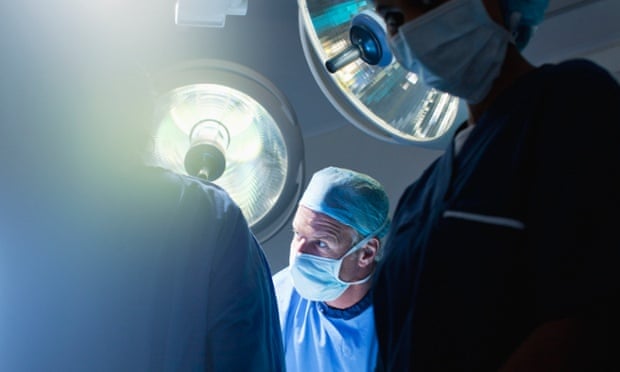
We’ve relied on science to overcome ignorance, and the course of that work has itself been fascinating. That visit we made in 1995 to our paediatrician and everything that she did to sort out what was happening in my son could be traced back to 1628 when the English physician William Harvey, after millennia of ignorance, finally worked out that the heart is a pump that moves blood in a circular course through the body.
Another critical step came three centuries later, in 1929, when Werner Forssmann, a surgical intern in Eberswalde, Germany, made an observation. Forssmann was reading an obscure medical journal when he noticed an article depicting a horse in which researchers had threaded a long tube up its leg all the way into its heart. They described, to his amazement, taking blood samples from inside a living heart without harm. And he said: “Well, if we could do that to a horse, what if we did that to a human being?” Forssmann went to his superiors and said: “How about we take a tube and thread it into a human being’s heart?”
Their response was, in essence, “You’re crazy. You can’t do that. Whenever anyone touches the heart in surgery, it goes into fibrillation and the patient dies.”
He said: “Well what about in an animal?”
And they said: “There’s no point and you’re just an intern anyway. Who says you should even deserve to get to ask these questions? Go back to work.”
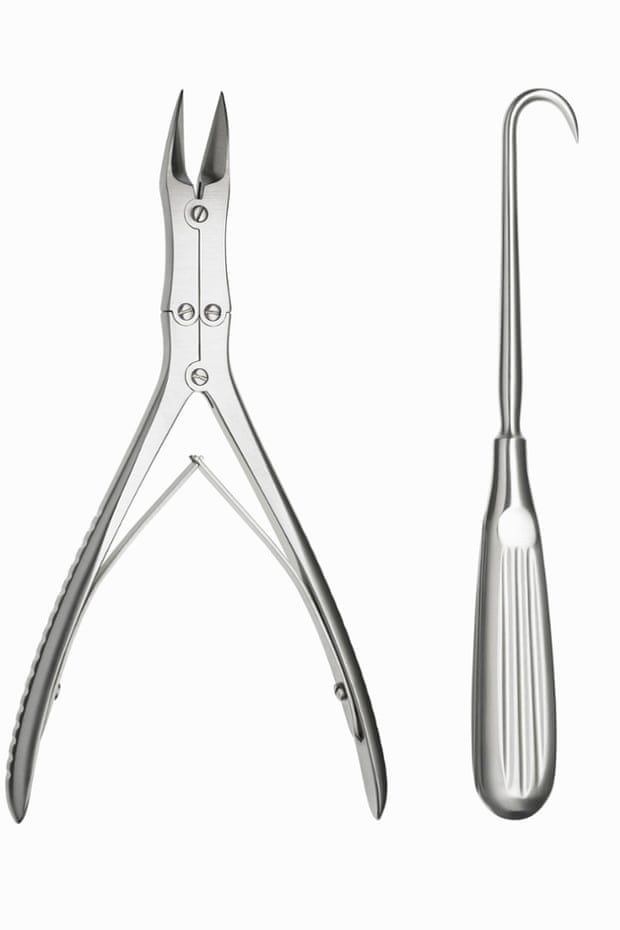
But Forssmann just had to give it a try. So he stole into the x-ray room, took a urinary catheter, made a slit in his own arm, threaded it up his vein and into his own heart and convinced a nurse to help him take a series of nine x-rays showing the tube inside his own heart.
He published the evidence – and was fired. Then in 1956, he was awarded the Nobel prize in medicine with André Cournand and Dickinson Richards who, some 20 years later at Columbia University, had taken Forssmann’s findings and recognised that you could not only put a catheter into the human heart but also shoot dye through the catheter. That enabled them to take pictures and see from the inside how the heart actually worked. Together the three had founded the field of cardiology. After this, doctors began devising ways to fix what was found going wrong inside the heart.
Science is concerned with universal truths, laws of how the body or the world behaves. Application, however, is concerned with the particularities, and the test of the science is how the universalities apply to the particularities. Do the general ideas about the worrying sounds the paediatrician heard in my son’s chest correspond with the unique particularities of Walker? Here Gorovitz and MacIntyre saw a third possible kind of failure. Besides ignorance, besides ineptitude, they said that there is necessary fallibility, some knowledge science can never deliver on. They went back to the example of how a given hurricane will behave when it makes landfall, how fast it will be going when it does, and what they said is that we’re asking science to do more than it can when we ask it to tell us what exactly is going on. All hurricanes follow predictable laws of behaviour but no hurricane is like any other hurricane. Each one is unique. We cannot have perfect knowledge of a hurricane, short of having a complete understanding of all the laws that describe natural processes and a complete description of the world, they said. It required, in other words, omniscience, and we can’t have that.
The interesting question, then, is how do we cope? It’s not that it’s impossible to predict anything. Some things are completely predictable. Gorovitz and MacIntyre gave the example of a random ice cube in a fire. An ice cube is so simple and so similar to other ice cubes that you can have complete assurance that if you put it in the fire, it will melt. Our puzzle is: are human beings more like hurricanes or more like ice cubes?
Following the paediatrician’s instructions, we took Walker to the emergency room. It was a Sunday morning. A nurse took an oxygen monitor, one of those finger probes with the red light, and put it on the finger of his right hand. And the oxygen level was 98%, virtually perfect. They took a chest x-ray, and it showed that the lungs were both whited out. They read it. They said: “This is pneumonia.” They did a spinal tap to make sure that it wasn’t signs of infection that had spread from meningitis. They started him on antibiotics and they called the paediatrician to let her know the diagnosis they’d found. It wasn’t the heart, they said. It was the lungs. He had pneumonia. And she said: “No, that can’t be right.” She came into the emergency room and she took one look at him – he was having trouble breathing, he was not doing great – and she saw that the finger probe with the oxygen monitor was on the wrong finger.
It turns out there are certain conditions in which the aorta can be interrupted. You can be born with an incomplete aorta and so the blood flow can come out of the heart and go to the right side of the upper body, into the hand that had that probe, but it may not go to the left side of the upper body or anywhere else. And that turned out to be what was going on. She switched the probe over to the left hand and he had an unreadable oxygen level. He was in fact going into kidney and liver failure. He was in serious trouble. She had caught a failure to apply the knowledge science has to this particular situation.
Then the team made a prediction. In this circumstance, we do have a drug – only put into use, it turned out, about a decade before my son was born: prostaglandin E2, a little molecule that can reopen the foetal circulation. When you’re a foetus in the womb, you have a bypass system that sends a separate blood supply that can stay open for a couple of weeks after birth. This system had shut down and that’s why he went into failure. But this molecule can reopen that pathway and the prediction was that this child was like every other child – that you could know what had happened to other children and could apply it here and that it would open up that foetal circulation, this bypass system. And it did. That gave him time to recover in the intensive care unit, to let his kidney and his liver recover, to let his gut start working again, and then to undergo cardiac surgery to replace his malformed aorta and to fix the holes that were present in his heart as well. They saved him.
They saved him.
There are more and more ways in which we are as knowable as ice cubes. We understand with great precision how mothers can die in childbirth, how certain tumours behave, how the Ebola virus spreads, how the heart can go wrong and be fixed. Certainly, we have many, many areas of continuing ignorance – how to stop Alzheimer’s disease or metastatic cancers, how we might make a vaccine against this virus we’re dealing with now. But the story of our time, I think, is as much a story about struggling with ineptitude as struggling with ignorance.
You go back a hundred years or more, and we lived in a world where our futures were governed largely by ignorance. But over this last century, we’ve come through an extraordinary explosion of discovery. The puzzle has, therefore, become not only how we close the gaps of ignorance open to us, but also how we ensure that the knowledge gets through, that the finger probe is on the correct finger.
Next to my son, in the intensive care unit, there was a child from Maine, which is about 200 miles away, who had virtually the same diagnosis that Walker had. And when this boy was diagnosed, it took too long for the problem to be recognised, for transportation to be arranged, and for him to get that drug to give him back that open circulation. The result was that the poor child with the same condition my son had, in the very next bed to ours, gone into complete liver and kidney failure, and his only chance was to wait for an organ transplant and hope for a future that was going to be very different from the one my son was going to have.
And then I think back on my family. My parents come from India; my father from a rural village, my mother from a big city in the north. If Walker had been anything like my nieces and nephews in the village where my family still farms – they’re farmers growing wheat and sugarcane and cotton – and if he’d been there, there would have been no chance at all.
There’s a misconception about global health. We think global health is about care in just the poorest parts of the world. But the way I think about global health, it’s about making care better everywhere – the idea that we are trying to deploy the capabilities that we have discovered over the last century, town by town, to every person alive. We’ve had an extraordinary transformation around the world. Economically, even with the last recession, we’ve had the rising of global economies on every continent and the result has been a dramatic change in the length of lives all across the world. Respiratory illness and malnutrition used to be the biggest killers. Now it’s cardiovascular disease; road traffic accidents are a top five killer and cancers are in the top 10. With economic progress has come the broader knowledge for people that solutions exist.
My family members in our village in India know that solutions exist to the problems they have, and so the puzzle is how we deploy that capability everywhere – in India, in Maine, across the UK, Europe, Latin America, the world. We’re only just discovering the patterns of how we begin to do that.
In the course of this year’s Reith lectures, I’m going to attempt to unpack three ideas. First is what we’re learning from opening the door, from seeing behind the curtains of how medicine and public health are actually practised and discovering how much can be done better that saves lives and reduces suffering. Second is the reality of our necessary fallibility and how we cope effectively with the fact that our knowledge is always limited. Third, I will consider the implications of both of these – the implications of what we’re learning about our ineptitude and about our necessary fallibility – for the global future of medicine and health.
It is uncomfortable looking inside our fallibility. We have a fear of looking. We’re like the doctors who dug up bodies in the 19th century to dissect them, in order to know what was really happening inside. We’re looking inside our systems and how they really work. And like before, what we find is messier than we knew and sometimes messier than we might have wanted to know.
In some ways, turning on the cameras inside our world can be more treacherous. There’s a reason that Gorovitz and MacIntyre labelled the kind of failures we have “ineptitude”. There’s a sense that there’s some shame or guilt attached to the fact that we don’t get it right all the time. And exposing this reality can make people more angry than exposing the reality of how the body works. Therefore, we’ve blocked many of these efforts to try to provide some transparency to what’s going on. Audiotapes are often not allowed, the video recorders are turned off. We have no black box for what happens in our operating rooms or in our clinics. The data, when we have it, is often locked up. You can’t know, even though we have the information, which hospitals have a better complication rate in certain kinds of operations than others. There’s a fear of misuse, a fear of injustice in doing it, in exposing it.
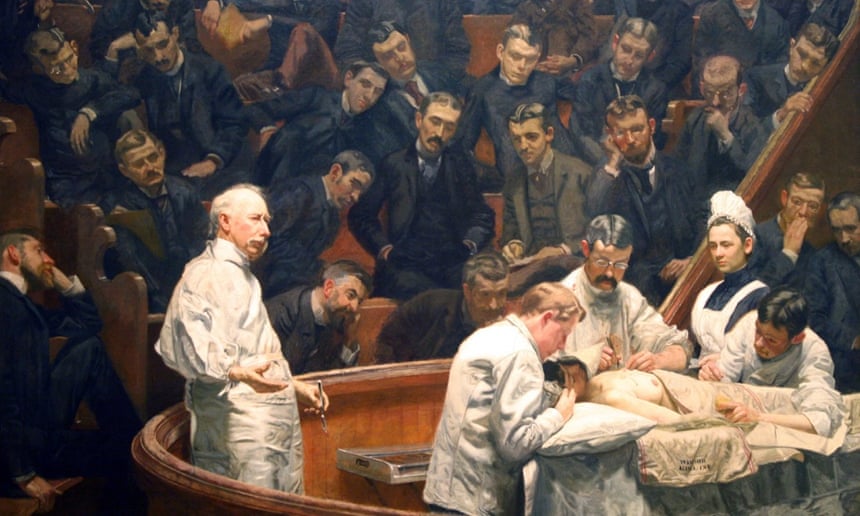
Arguably, not opening up the doors puts lives at stake. What we find out can often be miraculous. By closing ourselves off, we’re missing important opportunities.
The doctors told us when Walker went home that he was going to need a second operation. The repair that he’d had was one that replaced a section of his aorta – the tube coming out of his heart to carry blood supply throughout the rest of the body – with an artificial tube when he was 11 days old. It was almost like a straw. Now they had designed it to expand a bit as he grew, but it was not going to accommodate an adult-sized body. So they told us that when he became a teenager he would have to get a new replacement aorta and that he would have to undergo a major operation. Being a surgery resident, I knew what that entailed. Repeat aortic surgery has up to a 5% chance of death and a 25% chance of paralysis. We lived in some fear about when that moment would come.
When that moment came, he was 14 years old, and the world had changed. By then technology had developed to allow his aorta to be expanded with a simple catheter. We found the expert who had learned, and even devised, some of the methods for being able to do that, in Boston. He explained to me, cardiologist to surgeon, just how it’s done and sometimes you learn stuff you don’t necessarily want to know. He talked about how he would have to apply pressure to a balloon that would be threaded up inside the aorta. I asked how he knew what pressure to apply. He said it was by feel. He could feel the vessel tearing, and the trick was to tear it just enough that it can expand but not so much that it ruptures.
There was a necessary fallibility in what he was attempting to do – some irreducible probability of failure. But Walker got through that procedure just fine. The extraordinary thing was the very next day he went home, and the day after that he was so well that he played sports and injured his ankle on the playing field. This June he graduated from high school and this autumn he started college. He’s going to live a long and normal life, and that is amazing. The key question we have to ask ourselves is how are we going to make it possible for others to have that, how do we fulfil our duty to make it possible for others? The only way I can see is by removing the veil around what happens in that procedure room, in that clinic, in that office or that hospital. Only by making what has been invisible visible. This is why I write, this is why we do the science we do – because this is how we understand – and that is the key to the future of medicine.
Subscribe to:
Comments (Atom)