Search This Blog

Thursday, 15 December 2022

Why are the rich world’s politicians giving up on economic growth?

 Even when they say they want more prosperity, they act as if they don’t writes The Economist

The prospect of recession might loom over the global economy today, but the rich world’s difficulties over growth are graver still. The long-run rate of growth has dwindled alarmingly, contributing to problems including stagnant living standards and fulminating populists. Between 1980 and 2000, gdp per person grew at an annual rate of 2.25% on average. Since then the pace of growth has sunk to about 1.1%.

Although much of the slowdown reflects immutable forces such as ageing, some of it can be reversed. The problem is that reviving growth has slid perilously down politicians’ to-do lists. Their election manifestos are less focused on growth than before, and their appetite for reform has vanished.

The latter half of the 20th century was a golden age for growth. After the second world war a baby boom produced a cohort of workers who were better educated than any previous generation and who boosted average productivity as they gained experience. In the 1970s and 1980s women in many rich countries flocked into the workforce. 

The lowering of trade barriers and the integration of Asia into the world economy later led to much more efficient production. Life got better. In 1950 nearly a third of American households were without flush toilets. By 2000 most had at least two cars.

Many of those growth-boosting trends have since stalled or gone into reverse. The skills of the labour force have stopped improving as fast. Ever more workers are retiring, women’s labour-force participation has flattened off and little more is to be gained by expanding basic education. As consumers have become richer, they have spent more of their income on services, for which productivity gains are harder to come by. Sectors like transport, education and construction look much as they did two decades ago. Others, such as university education, housing and health care, are lumbered with red tape and rent-seeking.

Ageing has not just hurt growth directly, it has also made electorates less bothered about gdp. Growth most benefits workers with a career ahead of them, not pensioners on fixed incomes. Our analysis of political manifestos shows that the anti-growth sentiment they contain has surged by about 60% since the 1980s. Welfare states have become focused on providing the elderly with pensions and health care rather than investing in growth-boosting infrastructure or the development of young children. Support for growth-enhancing reforms has withered.

Moreover, even when politicians say they want growth, they act as if they don’t. The twin problems of structural change and political decay are especially apparent in Britain, which since 2007 has managed annual growth in gdp per person averaging just 0.4%. Its failure to build enough houses in its prosperous south-east has hampered productivity, and its exit from the European Union has damaged trade and scared off investment. In September Liz Truss became prime minister by promising to boost growth with deficit-financed tax cuts, but succeeded only in sparking a financial crisis.

Ms Truss fits a broader pattern of failure. President Donald Trump promised 4% annual growth but hindered long-term prosperity by undermining the global trading system. America’s government introduced 12,000 new regulations last year alone. Today’s leaders are the most statist in many decades, and seem to believe that industrial policy, protectionism and bail-outs are the route to economic success. That is partly because of a misguided belief that liberal capitalism or free trade is to blame for the growth slowdown. Sometimes this belief is exacerbated by the fallacy that growth cannot be green.

In fact, demographic decline means that liberal, growth-boosting reforms are more vital than ever. These will not restore the heady rates of the late 20th century. But embracing free trade, loosening building rules, reforming immigration regimes and making tax systems friendly to business investment may add half a percentage point or so to annual per-person growth. That will not put voters in raptures, but today’s growth is so low that every bit of progress matters—and in time will add up to much greater economic strength.

For the time being the West is being made to look good by autocratic China and Russia, which have both inflicted deep economic wounds on themselves. Yet unless they embrace growth, rich democracies will see their economic vitality ebb away and will become weaker on the world stage. Once you start thinking about growth, wrote Robert Lucas, a Nobel-prizewinning economist, “it is hard to think about anything else”. If only governments would take that first step.


The Modi government has delivered on Infrastructure Projects


The DWP has become Britain’s biggest debt collector.

Gordon Brown in The Guardian

Prime Minister Sunak talks about the need for “compassion” from the government this winter. But how far do social security benefits have to fall before our welfare system descends into a form of cruelty?

Take a couple with three children whose universal credit payment is, in theory, £46.11 a day. However, when their payment lands they have just £35, because around a quarter of their benefit has been deducted to pay back the loan they had to take out on joining universal credit to cover the five weeks they were denied benefit. And an extra 5% has been deducted as back payment to their utility company. According to Department of Work and Pensions (DWP) rules, money can be deducted for repayment of advance or emergency loans, and even on behalf of third parties for rent, utilities and service charge payments.

With gas and electricity likely to cost, at a minimum, £7 on cold days like today, and with a council tax contribution to be paid on top, they find that they have just £25. 80 a day left over, or £5.16 per person, to pay for food and all other essentials. Even if the Scottish child poverty payment comes their way, clothes, travel, toiletries and home furnishings remain out of reach. Parents like them are just about the best accountants I could ever meet , but you can’t budget with nothing to budget with. And that’s why so many have had to tell their children they can’t afford presents this Christmas. No wonder they need the weekly bag of food they get from the local food bank. But they also need a toiletries and hygiene bank, a clothes bank, a bedding bank, a home furnishings bank, and a baby bank.

The DWP has now become the country’s biggest debt collector, seizing money that should never have had to be paid back, from people who cannot afford to pay anyway. In fact, the majority of families on universal credit do not receive the full benefit that the DWP advertises. More than 20% is deducted at source from each benefit payment made to a million households, leaving them surviving on scraps and charity as they run out of cash in the days before their next payment. In total, 2 million children are in families suffering deductions.

Gordon Brown with workers at the Big Hoose multi-bank project, Fife, 8 November 2022. Photograph: Murdo MacLeod/The Guardian

When the money runs out, and the food bank tokens are gone, parents become desperate and ashamed that their children cannot be fed, and fall victim to loan sharks hiding in the back alleys who exploit hardship and compound it, and prey on pain and inflame it.

The case for each community having its own multi-bank – its reservoir of supplies for those without – is more urgent this winter than at any time I have known. Since the Trussell Trust’s brilliant expansion of UK food banks, creative local and national charities have pioneered community banks of all kinds offering free clothes, furnishings, bedding, electrical goods and, in the case of the national charity In Kind Direct, toiletries.

In Fife, Amazon, PepsiCo, Scotmid Fishers and other companies helped to set up a multi-bank. It’s a simple idea that could be replicated nationwide: they meet unmet needs by using unused goods. The companies have the goods people need, and the charities know the people who need them. With a coordinating charity, a warehouse to amass donations and a proper referral system, multi-banks can ensure their goods alleviate poverty.

But the charities know themselves that they can never do enough. With the state privatisations of gas, water, electricity and telecoms, the government gave up on responsibility for essential national assets. But now, with what is in effect the privatisation of welfare, our government is giving up on its responsibility to those in greatest need – passing the buck to charities, which cannot cope. Just as breadwinners cannot afford bread, food banks are running out of food.

Charities, too,are at the mercy of exceptionally high demand and the changing circumstances of donors whose help can be withdrawn as suddenly as it has been given. And so while voluntary organisations – and not the welfare state – are currently our last line of defence, the gap they have to bridge is too big for them to ever be the country’s safety net.

According to Prof Donald Hirsch and the team researching minimum income standards at Loughborough University, benefit levels for those out of work now fall 50% short of what most of us would think is a minimum living income, with their real value falling faster in 2022 than at any time for 50 years since up-ratings were introduced. And still 800,000 of the poorest children in England go without free school meals.
---

I’m so cold I live in my bed – like the grandparents in Charlie and the Chocolate Factory
Marin

---

When it comes to helping with heating, the maximum that any family will receive, no matter its size, is £24 a week emergency help to cover what the government accepts is the £50 a week typical cost of heating a home. From April, the extra payments will be even less – just £16 to cover nearly the typical £60 a week they now expect gas and electricity to cost. And then, as Jeremy Hunt says, help with heating will become a thing of the past.

One hundred years ago, Winston Churchill was moved to talk of the unacceptable contrast between the accumulated excesses of unjustified privilege and “the gaping sorrows of the left-out millions”. Our long term priority must be to persuade a highly unequal country of the need for a decent minimum income for all, but our immediate demand must be for the government to suspend for the duration of this energy crisis the deductions that will soon cause destitution.

Ministers have been forced to change tack before. In April 2021 the government reduced the cap on the proportion of income deducted from 30% to 25%. During the first phase of Covid, ministers temporarily halted all deductions. In April, they discouraged utility firms from demanding them, but deductions as high as 30% of income are still commonplace.

There is no huge cost to the government in suspending deductions, for it will get its money back later. But this could be a lifesaver for millions now suffering under a regime that seems vindictive beyond austerity. Let this be a Christmas of compassion, instead of cruelty.

Tuesday, 13 December 2022

A Strong Labour movement Raises everyone’s Living Standards

Owen Jones in The Guardian

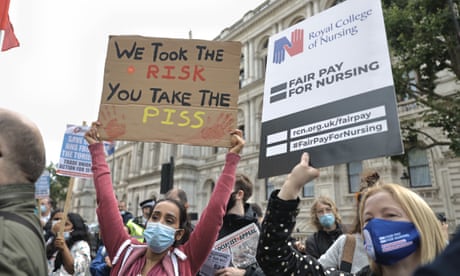
Respect for tradition, we are told, underpins the Conservative party. But there’s one tradition for which it has unwavering contempt – strike action: a part of our culture and heritage it has ferociously and instinctively demonised as an antisocial attack on the general public. Tories are known to extol the virtues of rugged individualism, but it seems the collective suddenly matters when industrial action is declared. Then, it seems, society – which in previous Tory eras was doubted to even exist – becomes a totem to be protected from sinister forces, from a malign and externalised striking rabble.

Strikes bring inconvenience. Of course they do. They disrupt our normal life, our plans, our expectations. But the concentrated attempt to stigmatise the very notion of the strike is something that must be resisted. The strike – and the threat of striking – should be celebrated precisely because it underpins many rights and freedoms we now take for granted. Union struggles in the 19th century played a pivotal role in shortening the working day, and in the 20th century, in creating the weekend. In the postwar heyday of union power, they drove up incomes. Strikes are a profound social good.

Yet how little this argument is heard. Anti-union sentiment is profoundly embedded in our political culture. When the Tory chairman, Nadhim Zahawi, suggested on national television that the upcoming nurses’ strike would aid Vladimir Putin by worsening inflation in the west, it was yet another crude illustration of this very British phenomenon, echoing Margaret Thatcher’s denunciation of striking miners as the “enemy within” in the 1980s. This hostility has a long pedigree and, historically at least, the Tories have been known to be candid about their real intentions.
RMT picket at Slough railway station, 8 October 2022. Photograph: Maureen McLean/Rex/Shutterstock

As the 20th century dawned, the Tories defended a legal ruling making unions financially liable for profits lost to strikes, leading the Conservative prime minister Stanley Baldwin to later confess: “The Conservatives can’t talk of class war. They started it.” In 1926, they introduced a raft of anti-union laws in the aftermath of the general strike, including the banning of solidarity industrial action.

But while unions were hobbled in the 1930s, a spirit of collectivism nurtured by wartime sacrifice helped their rebirth. The three-decade social democratic consensus established by Clement Attlee’s Labour government led the Trades Union Congress in 1968 to boast that it had grown from a “small debating assembly” into a body that shared “in the making of government policies, taking part in administering major social services and meeting on equal terms with the spokesmen of the nation’s employers”. This was the era in which Britain enjoyed its highest ever sustained period of economic growth, which – thanks in part to strong unions – was more equitably distributed, boosting the pay of ordinary workers.

When the oil shock of the 1970s sent prices surging, unions mobilised in an effort to match wages with the cost of living. The grand climax – the winter of discontent – was successfully spun by Thatcher to label unions as national bogeyman for a generation. Her successors took up that framing as well. When Tony Blair became prime minister in 1997, he promised that his government would “leave British law the most restrictive on trade unions in the western world”. And David Cameron assailed Ed Miliband as “taking his script from the trade unions”, and turned the screw further, with even more restrictive laws.

But today this anti-union approach jars with political reality. One poll has suggested that nearly six in 10 voters back the nurses’ strike, and another found that more people backed the rail strike than opposed it. After an unprecedented fall in living standards, the default position of millions whose pay packets are shrivelling in real terms has become “well, fair play to them, at least someone is taking a stand”.

While earlier generations of Tories may have used the language of class warfare openly, their modern cohort is savvier. They seek to isolate striking workers from the wider public, portraying them as somehow separate from society at large. Rishi Sunak denounces strikers as a threat to “hardworking families”, as if nurses, paramedics or transport workers are excluded from that category. But this attempt to separate striking workers from society at large collides with the reality people see every day. The withdrawal of strikers’ labour is so noticeable precisely because of how central they are to our way of life. Rather than a middle-finger salute at the general public, it is one part of society crying for help from another.


Despite all the talk of monstrous disruption, for most the real inconvenience is struggling to pay bills and feed their children, rather than the irritation of a postponed train journey. Real wages are projected to be lower in 2026 than they were in 2008.

Indeed, a fundamental reason for wages being so low and conditions so poor in the UK is because of the dilution of union power. According to one study, the “changes in bargaining power” suffered by unions explains half of the decline in the share of the economy going to wages over four decades in several rich countries, including Britain. Rather than union action inconveniencing everybody else, the decline of unions has dragged down the wages of non-unionised workers, too, according to a US study. A strong labour movement, in other words, brings up everyone’s living standards.

A strike, then, isn’t antisocial behaviour, on a collision course with the interests of the wider public. By neutering the threat of strike action with authoritarian laws, the Tories have succeeded only in weakening a mechanism with a proven record in raising the living standards of all workers. Despite the mythology, no one goes on strike on a whim. A worker forfeiting a day’s pay isn’t just a sacrifice for the sake of their own interests, it’s a gamble and a sacrifice. Indeed, one of the government’s fears is that a victory for nurses or railway workerswould embolden the pay claims of other workers – an anxiety that is well founded.

Union membership should be honoured not just as a democratic right, but as a cornerstone of collective prosperity. Even many union sympathisers have retreated from such an argument, instead blaming bosses and government for any regretful breakdown in industrial relations. But to strike isn’t a sin, or antisocial or an act of mendacity: it’s a key to a society less beset by injustice than our own.

    Actual data on Revdis, Subsidies and Deficits of the Modi Government