Search This Blog

Monday, 10 February 2014

How internet dating became everyone's route to a perfect love match

The algorithm method: how internet dating became everyone's route to a perfect love match

Six million Britons are looking for their perfect partner online before Valentine's day on Friday, but their chance of success may depend on clever maths rather than charisma

Woman kissing a computer
Six million Britons visit dating sites each month. Photograph: Tom Merton/Getty Images/OJO Images RF
In the Summer of 2012, Chris McKinlay was finishing his maths dissertation at the University of California in Los Angeles. It meant a lot of late nights as he ran complex calculations through a powerful supercomputer in the early hours of the morning, when computing time was cheap. While his work hummed away, he whiled away time ononline dating sites, but he didn't have a lot of luck – until one night, when he noted a connection between the two activities.
One of his favourite sites, OkCupid, sorted people into matches using the answers to thousands of questions posed by other users on the site.
"One night it started to dawn on me the way that people answer questions on OkCupid generates a high dimensional dataset very similar to the one I was studying," says McKinlay, and it transformed his understanding of how the system worked. "It wasn't like I didn't like OkCupid before, it was fine, I just realised that there was an interesting problem there."
McKinlay started by creating fake profiles on OkCupid, and writing programs to answer questions that had also been answered by compatible users – the only way to see their answers, and thus work out how the system matched users. He managed to reduce some 20,000 other users to just seven groups, and figured he was closest to two of them. So he adjusted his real profile to match, and the messages started rolling in.
McKinlay's operation was possible because OkCupid, and so many other sites like it, are much more than just simple social networks, where people post profiles, talk to their friends, and pick up new ones through common interest. Instead, they seek to actively match up users using a range of techniques that have been developing for decades.
Every site now makes its own claims to "intelligent" or "smart" technologies underlying their service. But for McKinlay, these algorithms weren't working well enough for him, so he wrote his own. McKinlay has since written a book Optimal Cupid about his technique, while last year Amy Webb, a technology CEO herself, published Data, a Love Story documenting how she applied her working skills to the tricky business of finding a partner online.
Two people, both unsatisfied by the programmes on offer, wrote their own; but what about the rest of us, less fluent in code? Years of contested research, and moral and philosophical assumptions, have gone into creating today's internet dating sites and their matching algorithms, but are we being well served by them? The idea that technology can make difficult, even painful tasks – including looking for love – is a pervasive and seductive one, but are their matchmaking powers overstated?

Rodin's the Kiss The Kiss, 1901-4, by sculptor Auguste Rodin. Photograph: Sarah Lee for the Guardian

In the summer of 1965, a Harvard undergraduate named Jeff Tarr decided he was fed up with the university's limited social circle. As a maths student, Tarr had some experience of computers, and although he couldn't program them himself, he was sure they could be used to further his primary interest: meeting girls. With a friend he wrote up a personality quiz for fellow students about their "ideal date" and distributed it to colleges across Boston. Sample questions included: "Is extensive sexual activity [in] preparation for marriage, part of 'growing up?'" and "Do you believe in a God who answers prayer?" The responses flooded in, confirming Tarr's suspicion that there was great demand for such a service among the newly liberated student population. Operation Match was born.
In order to process the answers, Tarr had to rent a five-ton IBM 1401 computer for $100 an hour, and pay another classmate to program it with a special matching operation. Each questionnaire was transferred to a punch-card, fed into the machine, and out popped a list of six potential dates, complete with address, phone number and date of graduation, which was posted back to the applicant. Each of those six numbers got the original number and five others in their response: the program only matched women with their ideal man if they fitted his ideal too.
When Gene Shalit, a reporter from Look magazine, arrived to cover the emerging computer-dating scene in 1966, Operation Match claimed to have had 90,000 applications and taken $270,000 in revenue. Even at the birth of the computer revolution, the machine seemed to have an aura about it, something which made its matches more credible than a blind date or a friend's recommendation. Shalit quoted a freshman at Brown University who had dumped her boyfriend but started going out with him again when Operation Match sent her his number. "Maybe the computer knows something that I don't know," she said. Shalit imbued it with even more weight, calling it "The Great God Computer".
The computer-dating pioneers were happy to play up to the image of the omniscient machine – and were already wary of any potential stigma attached to their businesses. "Some romanticists complain that we're too commercial," Tarr told reporters. "But we're not trying to take the love out of love; we're just trying to make it more efficient. We supply everything but the spark." In turn, the perceived wisdom of the machine opened up new possibilities for competition in the nascent industry, as start-up services touted the innovative nature of their programs over others. Contact, Match's greatest rival, was founded by MIT graduate student David DeWan and ran on a Holywell 200 computer, developed in response to IBM's 1401 and operating two to three times faster. DeWan made the additional claim that Contact's questions were more sophisticated than Match's nationwide efforts, because they were restricted to elite college students. In essence, it was the first niche computer-dating service.
Over the years since Tarr first starting sending out his questionnaires, computer dating has evolved. Most importantly, it has become online dating. And with each of these developments – through the internet, home computing, broadband, smartphones, and location services – the turbulent business and the occasionally dubious science of computer-aided matching has evolved too. Online dating continues to hold up a mirror not only to the mores of society, which it both reflects, and shapes, but to our attitudes to technology itself.
The American National Academy of Sciences reported in 2013 that more than a third of people who married in the US between 2005 and 2012 met their partner online, and half of those met on dating sites. The rest met through chatrooms, online games, and elsewhere. Preliminary studies also showed that people who met online were slightly less likely to divorce and claimed to be happier in their marriages. The latest figures from online analytics company Comscore show that the UK is not far behind, with 5.7 million people visiting dating sites every month, and 49 million across Europe as a whole, or 12% of the total population. Most tellingly for the evolution of online dating is that the biggest growth demographic in 2012 was in the 55+ age range, accounting for 39% of visitors. When online dating moves not only beyond stigma, but beyond the so-called "digital divide" to embrace older web users, it might be said to have truly arrived.
It has taken a while to get there. Match.com, founded in 1993, was the first big player, is still the biggest worldwide, and epitomises the "online classifieds" model of internet dating. Match.com doesn't make any bold claims about who you will meet, it just promises there'll be loads of them. eHarmony, which followed in 2000, was different, promising to guide its users towards long-term relationships – not just dating, but marriage. It believed it could do this thanks to the research of its founder, Neil Clark Warren, a then 76-old psychologist and divinity lecturer from rural Iowa. His three years of research on 5,000 married couples laid the basis for a truly algorithmic approach to matching: the results of a 200-question survey of new members (the "core personality traits"), together with their communication patterns which were revealed while using the site.
Whatever you may think of eHarmony's approach – and many contest whether it is scientifically possible to generalise from married people's experiences to the behaviour of single people – they are very serious about it. Since launch, they have surveyed another 50,000 couples worldwide, according to the current vice-president of matching, Steve Carter. When they launched in the UK, they partnered with Oxford University to research 1,000 British couples "to identify any cultural distinctions between the two markets that should be represented by the compatibility algorithms". And when challenged by lawsuits for refusing to match gay and lesbian people, assumed by many to be a result of Warren's conservative Christian views (his books were previously published in partnership with the conservative pressure group, Focus on the Family), they protested that it wasn't morality, but mathematics: they simply didn't have the data to back up the promise of long-term partnership for same-sex couples. As part of a settlement in one such lawsuit, eHarmony launched Compatible Partners in 2009.
Carter says: "The Compatible Partners system is now based on models developed using data collected from long-term same-sex couples." With the rise of Facebook, Twitter, and celebrity-driven online media, have come more personalised and data-driven sites such as OkCupid, where Chris McKinlay started his operation. These services rely on the user supplying not only explicit information about what they are looking for, but a host of assumed and implicit information as well, based on their morals, values, and actions. What underlies them is a growing reliance not on stated preferences – for example, eHarmony's 200-question surveys result in a detailed profile entitled "The Book of You" – but on actual behaviour; not what people say, but what they do.
In 2007, Gavin Potter made headlines when he competed successfully in the Netflix Prize, a $1m competition run by the online movie giant to improve the recommendations its website offered members. Despite competition from teams composed of researchers from telecoms giants and top maths departments, Potter was consistently in the top 10 of the leaderboard. A retired management consultant with a degree in psychology, Potter believed he could predict more about viewers' tastes from past behaviour than from the contents of the movies they liked, and his maths worked. He was contacted by Nick Tsinonis, the founder of a small UK dating site called yesnomayb, who asked him to see if his approach, called collaborative filtering, would work on people as well as films.
Collaborative filtering works by collecting the preferences of many people, and grouping them into sets of similar users. Because there's so much data, and so many people, what exactly the thing is that these groups might have in common isn't always clear to anyone but the algorithm, but it works. The approach was so successful that Tsinonis and Potter created a new company, RecSys, which now supplies some 10 million recommendations a day to thousands of sites. RecSys adjusts its algorithm for the different requirements of each site – what Potter calls the "business rules" – so for a site such as Lovestruck.com, which is aimed at busy professionals, the business rules push the recommendations towards those with nearby offices who might want to nip out for a coffee, but the powerful underlying maths is Potter's. Likewise, while British firm Global Personals provides the infrastructure for some 12,000 niche sites around the world, letting anyone set up and run their own dating website aimed at anyone from redheads to petrolheads, all 30 million of their users are being matched by RecSys. Potter says that while they started with dating "the technology works for almost anything". RecSys is already powering the recommendations for art discovery site ArtFinder, the similar articles search on research database Nature.com, and the backend to a number of photography websites. Of particular interest to the company is a recommendation system for mental health advice site Big White Wall. Because its users come to the site looking for emotional help, but may well be unsure what exactly it is they are looking for, RecSys might be able to unearth patterns of behaviour new to both patients and doctors, just as it reveals the unspoken and possibly even unconscious proclivities of daters.

A Tinder profile on a smartphone Tinder is a new dating app on smartphones.

Back in Harvard in 1966, Jeff Tarr dreamed of a future version of his Operation Match programme which would operate in real time and real space. He envisioned installing hundreds of typewriters all over campus, each one linked to a central "mother computer". Anyone typing their requirements into such a device would receive "in seconds" the name of a compatible match who was also free that night. Recently, Tarr's vision has started to become a reality with a new generation of dating services, driven by the smartphone.
Suddenly, we don't need the smart algorithms any more, we just want to know who is nearby. But even these new services sit atop a mountain of data; less like Facebook, and a lot more like Google.
Tinder, founded in Los Angeles in 2012, is the fastest-growing dating app on mobile phones but its founders don't like calling it that. According to co-founder and chief marketing officer Justin Mateen, Tinder is "not an online dating app, it's a social network and discovery tool".
He also believes that Tinder's core mechanic, where users swipe through Facebook snapshots of potential matches in the traditional "Hot or Not" format, is not simple, but more sophisticated: "It's the dynamic of the pursuer and the pursued, that's just how humans interact." Tinder, however, is much less interested in the science of matching up couples than its predecessors. When asked what they have learned about people from the data they have gathered, Mateen says the thing he is most looking forward to seeing is "the number of matches that a user needs over a period of time before they're addicted to the product" – a precursor of Tinder's expansion into other areas of ecommerce and business relationships.
Tinder's plans are the logical extension of the fact that the web has really turned out to be a universal dating medium, whatever it says on the surface. There are plenty of sites out there deploying the tactics and metrics of dating sites without actually using the D-word. Whether it's explicit – such as Tastebuds.fm, which matches up "concert buddies" based on their Spotify music tastes – or subtle, the lessons of dating research have been learned by every "social" site on the web. Nearly every Silicon Valley startup video features two photogenic young people being brought together, whatever the product, and the same matching algorithms are at work whether you're looking for love, a jobbing plumber, or a stock photograph.
Over at UCLA, Chris McKinlay's strategy seems to have paid off. After gathering his data and optimising his profile, he started receiving 10-12 unsolicited messages every day: an unheard of figure online, where the preponderance of creeps tends to put most women on the defensive. He went on 87 dates, mostly just a coffee, which "were really wonderful for the most part". The women he met shared his interests, were "really intelligent, creative, funny" and there was almost always some attraction. But on the 88th date, something deeper clicked. A year later, he proposed.
Online dating has always been in part about the allure and convenience of the technology, but it has mostly been about just wanting to find "the one". The success of recommendation systems ,which are just as applicable to products as people, says much about the ability of computers to predict the more fundamental attractions that would have got McKinlay there sooner – his algorithms improved his ability to get dates, but not much on the likelihood of them progressing further.
In the end, the development of online dating tells us more about our relationship with networked technology than with each other: from "the Great God Computer", to a profusion of data that threatens to overwhelm us, to the point where it is integrated, seamlessly and almost invisibly, with every aspect of our daily lives.


Leaders, systems and structures

"All too often, on the long road up, young leaders become 'servants of what is rather than shapers of what might be'. In the long process of learning how the system works, they are rewarded for playing within the intricate structure of existing rules. By the time they reach the top, they are very likely to be trained prisoners of the structure. This is not all bad; every vital system reaffirms itself. But no system can stay vital for long unless some of its leaders remain sufficiently independent to help it to change and grow."
                                                                                                 - John W Gardner

Sunday, 9 February 2014

The public sector isn't perfect but at least it doesn't fleece us


A culture in which the customer comes last will fail and fail again
call centre worker
However friendly people working a call centre are, they are caught in a process that puts the customer last. Photograph: Murdo Macleod for the Observer
Lloyds Bank casually announced last week that it was setting aside another £1.8bn to meet potential claims from customers after knowingly selling them expensive insurance policies they could not need nor use. The grand total of provisions it has made is now nearly £10bn for claims from up to 700,000 people – a stunning indictment of its business practices.
Yet there is little public angst. Last December, Lloyds was fined a record £28m by the Financial Conduct Authority for the period between 1 January 2010 and 31 March 2012 – during which the government held a 39% stake in the bank – for having lax controls and incentivising its staff to treat its customers as milch cows. Extravagant "champagne" bonuses were offered to staff who could loot their customers with policies cynically designed to offer nothing of value, nothing less than organised theft. In Ireland at least, the former executives of the bust Anglo Irish bank are on trial. In Britain, the former head of Lloyds retail banking division, Helen Weir, has gone on to become finance director of John Lewis, but at least she has said how sorry she is. That's all right then.
Otherwise, Lloyds Bank is hardly eating humble pie. While Barclays chief executive, Antony Jenkins, is trying to engineer a massive change in his bank's culture, his counterpart at Lloyds seems to be focused on one target only – ensuring sufficient profitability to allow the government to offload more of its stake and, along the way, to vastly enrich himself. There has been zero pressure from his largest shareholder – the government – to reproduce Jenkins's initiative and do more about the mis-selling scandal than to utter bromides about winning back trust. The solution is for the bank to become 100% owned by the private sector as soon as possible, seen as an unalloyed good thing.
This combination – feckless owners, in this case HM Treasury, which cares nothing about the bank's ethics but only about its share price, alongside managers who appear to see their customers as objects to be fleeced – is deadly. But the media are hardly abuzz with sustained complaint and protest. Rather, they have helped construct the doctrine that anything done in the private sector is generally fabulous, and that £10bn scandals such as Lloyds, while deplorable, are the exception. Meanwhile, anything done in the public sector is by definition abominable, wasteful and ripe for privatisation or contracting out. The sooner Lloyds is in the private sector away from the "dead" hand of state ownership the better. But the state has not been a dead hand: it has been preoccupied with its own financial interests, like every other private owner.
Lloyds is not alone: the other banks have earmarked another £10bn for mis-selling similar products. Their investment bank arms are engulfed with charges of colluding to rig interest rates and foreign exchange markets on a global scale, along with more record-breaking fines. Meanwhile, the average customer's experience remains dismal. Staff in disempowered branches and industrialised call centres do their best to be friendly, but work within processes in which a good customer experience is plainly a low priority. Trying to exercise my right to flex a credit facility recently was a descent into a privatised Orwellian madness, while anyone who has had to look after an elderly relative's financial affairs enters a bureaucratic, time-consuming labyrinth.
This is not a culture confined to banking. Bombardier recently walked away from a £350m contract to provide signalling for London Underground: it had underestimated the technical complexity and would not commit the resource to meet its side of the bargain. But last week it picked up the £1bn contract to build 65 trains for Crossrail, with its disgraceful behaviour over the signalling contract forgotten, threatening to close its Derby plant if it did not get the business.
Then there are Serco and G4S, with their litany of failures as holders of government contracts. The root of their difficulties is, whatever their original virtues, both have built a culture in which exploiting, rather than serving, the customer comes first – whether it's Serco charging the state for electronically tagging prisoners who did not exist or G4S woefully underproviding security guards for the Olympics. The same dynamic – transient, greedy owners and pay systems that over-reward short-term financial success and cutting corners – produces the same result.
Now large parts of the probation service are to be run in the same way by the same kind of company, with the justice secretary, Chris Grayling, absurdly promising more " reform" and "efficiency". He is outdone by his colleague Dan Poulter at health, selling off 80% of Plasma Resources UK, the NHS company that secures blood plasma for British patients, to Bain Capital, the private equity company built by presidential candidate Mitt Romney. Bain's sole interest is financial, constrained only by its fear of a reputational disaster if patients start dying as it cuts costs and over-rewards managers who try to fleece the NHS, as they necessarily will. Who could consign the provision of blood plasma to such custodians? Only a fool, knave or Tory politician.
The NHS takes a daily pummelling, but enter its portals and a very different culture rules. Despite all the efforts of successive New Labour and Conservative ministers intent on reproducing the private sector "disciplines" that so animate Lloyds, Bombardier, Serco, G4S et al, it still manages to combine humanity and efficiency. Its systems are not extravagant, but there is a sense, as I recently discovered with a close family member in a long spell in hospital, that the patient remains at the centre of everyone's preoccupations.
The public sector is imperfect: it is run and operated by fallible human beings. There are spectacular failings, ranging from the BBC's wasted £100m on its digital media initiative to the unfolding IT disaster over universal credit. But what it does not deserve is universal castigation because a priori it must be useless. It is accountable. It does not loot its users. It is pretty efficient. It is humane.
Nor does the private sector warrant such fawning praise or the self-pity of many of its leaders who claim that profit is still a dirty word. It can do magic – the smartphone, anti-cancer drugs, multiple apps, robots – but it cuts corners too. The headlines, as I write, are of a food scandal in which a third of sampled foodstuffs are wrongly labelled. Regulation, derided as a burden on business, is, rather, what society deploys to keep business honest, whether it emanates from London or Brussels. It is time for a reset and a rebalance. End the jihad against all things public and invite business genuinely to earn its profits.

Friday, 7 February 2014

Of Boycott, KP, and the ECB's alienation


Jon Hotten in Cricinfo
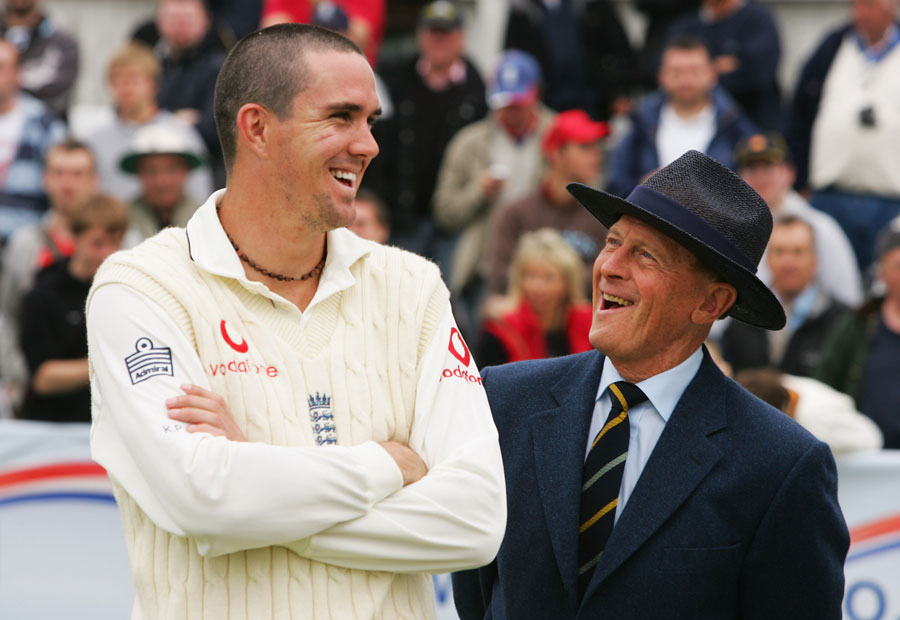
Funny that Boycott should be annoyed by someone hellbent on batting the way they want to  © Getty Images
Enlarge
On 13 August 1983, Geoffrey Boycott made a century for Yorkshire against Gloucestershire at Cheltenham. He stayed in all day, scoring 140 from 347 deliveries and angered his captain Raymond Illingworth by running out the free-scoring Kevin Sharp, who'd made a much faster hundred, while trying to keep the strike, and refusing to raise his own scoring rate.
Illingworth reported the incident to the Yorkshire committee and set in motion one of the most extraordinary uprisings in the history of English cricket. The committee issued a statement rebuking Boycott for batting that was "not in the best interests of the side", and was met with a furious response - from Boycott himself, who went on radio to deny that he had been officially reprimanded; from his friend Brian Clough, who used his Daily Mirror column to defend Boycott's batting; and from Sid Fielden, who led a group of reformers that would become central to the story. 
On 3 October, the committee voted unanimously not to offer Boycott a contract for the 1984 season. The Reform Group swung into action. More than 400 people attended a meeting in a hotel in Ossett, and the committee was forced to vote again on the issue. The sacking was upheld via a statement that stressed the need to encourage younger players without the "dissension and discord that creates a lack of confidence".
Another group, the Members 84, was formed specifically to deal with the Boycott situation, and nothing less than a civil war broke out. Under tremendous public pressure, the committee offered a bizarre compromise that would have allowed Boycott to take part in six Championship games, but at a meeting on 21 January 1984, amid scenes described as "evangelical", a vote of no confidence in the committee was carried by the Yorkshire members, along with a motion to reinstate Boycott. The committee, which included Fred Trueman and Ronnie Burnett, resigned, and Boycott ultimately played on until his retirement at the end of the 1986 season. "Boycottshire" had spoken.
That winter of discontent came to mind as another story played out this week. It had many of the same elements: a dominant player of polarising force, an organisation out of touch with the feelings of its public, and a maverick media operator speaking out.
For Boycott read Kevin Pietersen, for the Yorkshire committee the ECB, and for Brian Clough read Piers Morgan.
Pietersen is one of the few English players to have commanded public attention in the way that Boycott had done. They could not be further apart as batsmen and yet they share certain traits, foremost a tendency to speak utterly plainly. They both have complex, sensitive personalities and have often found themselves the injured party in their confrontations with authority. It's fair to say that both have been scapegoats at times, and that both contributed to their own woes, too.
Around Boycott was the blunt, often brutal language of Yorkshire cricket in the 1980s. We live now in the age of euphemism, and thus the battle for the advantage has been more subtly fought. Pietersen has not been publicly denounced as Boycott was. All of that has been hidden in legality and management speak. Yet this language, opaque and non-specific, is key to the Pietersen issue.
The desire to control information is a phenomenon of modern sport and cricket is not unique in striving to do so, but the ECB has a particularly bad case of it. The rigid paradigm that they have constructed around their communications, from the way they school young players to talk about the game to the press statements laden with meaningless office jargon, has detached them from the very people they most need to understand them: the fans.
It resulted in the slapstick interview given by the new chief selector James Whitaker (to rights holders Sky and the BBC only) this week. Even pre-recording could not save the unfortunate Whitaker, who was chained to desperate sentences like "There's a group of players there looking forward to re-energising this team, going forward with different values, re-evaluating the culture of the team."
These constructs of language echo emptily. They are designed to sound good without conveying anything specific, and they have a dehumanising effect. The people who step forward to utter them become trapped and typecast by the image that they create. They lack the linguistic power to challenge a forceful attack in plain English. They are evasive and diversionary and ultimately counter-productive.
It's probably fair to say that the ECB has never been as alienated from public opinion as it is now, and as the Yorkshire committee found out, that can be a dangerous space to occupy.
Only one person has attempted to argue a case for Pietersen's exclusion on cricketing grounds. Geoffrey Boycott took the airwaves to say that KP's batting this winter had been irresponsible and selfish, and he deserved to be dropped for it. You may or may not agree with him (and there is humour in Boycott becoming annoyed by someone hellbent on batting he way they want to) but his argument was clear. There is some sanity in that.

The truth about the criminal bloodbath in Iraq can't be 'countered' indefinitely

The media cover-up has been a weapon in the crimes of western states since the first world war. But a reckoning is coming for those paid to keep the record straight
babt pilger
A baby in a Baghdad hospital in July 2003. 'Half a million Iraqi infants died as a result of sanctions, according to Unicef.' Photograph: Joseph Barrak/AFP/Getty Images
The BBC's Today programme is enjoying high ratings, and the Mail and Telegraph are, as usual, attacking the corporation as leftwing. Last month a single edition of the Radio 4 show was edited by the artist and musician PJ Harvey. What happened was illuminating.
Harvey's guests caused panic from the moment she proposed the likes of Mark Curtis, a historian rarely heard on the BBC who chronicles the crimes of the British state; the lawyer Phil Shiner and the Guardian journalist Ian Cobain, who reveal how the British kidnap and torture; the WikiLeaks founder, Julian Assange; and myself.
There were weeks of absurd negotiation at Broadcasting House about ways of "countering" us and whether or not we could be allowed to speak without interruption from Today's establishment choristers. What this brief insurrection demonstrated was the fear of a reckoning. The crimes of western states like Britain have made accessories of those in the media who suppress or minimise the carnage.
The Faustian pacts that contrived a world war a century ago resonate today across the Middle East and Asia, from Syria to Japan. Then, as now, cover-up was the principal weapon. In 1917 David Lloyd George, the British prime minister, declared: "If people knew the truth, the war would be stopped tomorrow. But of course they don't know and can't know."
On Harvey's Today programme I referred to a poll conducted by ComRes last year that asked people in Britain how many Iraqis had been killed as a result of the 2003 invasion.A majority said that fewer than 10,000 had been killed: a figure so shockingly low it was a profanity.
I compared this with scientific estimates of "up to a million men, women and children [who] had died in the inferno lit by Britain and the US". In fact, academic estimates range from less than half a million to more than a million. John Tirman, the principal research scientist at the MIT Centre for International Studies, has examined all the credible estimates; he told me that an average figure "suggests roughly 700,000". Tirman pointed out that this excluded deaths among the millions of displaced Iraqis, up to 20% of the population.
The day after the Harvey programme, Today "countered" with Toby Dodge of the LSE – a former adviser to General Petraeus, one of the architects of the disasters in both Iraq and Afghanistan – along with Mowaffak al-Rubaie, a former Iraqi "national security adviser" in the occupation regime, and the man who led Saddam Hussein to his lynching.
These BBC-accredited "experts" rubbished, without evidence, the studies and reduced the number of dead by hundreds of thousands. The interviewer, Mishal Husain, offered no challenge to their propaganda. They then "debated" who was responsible. Lloyd George's dictum held; culpability was diverted.
But for how long? There is no question that the epic crime committed in Iraq has burrowed into the public consciousness. Many recall that "shock and awe" was the extension of a murderous blockade imposed for 13 years by Britain and the US and suppressed by much of the mainstream media, including the BBC. Half a million Iraqi infants died as a result of sanctions, according to Unicef. I watched children dying in hospitals, denied basic painkillers.
Ten years later, in New York, I met the senior British official responsible for these "sanctions". He is Carne Ross, once known in the UN as "Mr Iraq". He is now a truth-teller. I read to him a statement he had made to a parliamentary select committee in 2007: "The weight of evidence clearly indicates that sanctions caused massive human suffering among ordinary Iraqis, particularly children. We, the US and UK governments, were the primary engineers and offenders of sanctions and were well aware of the evidence at the time but we largely ignored it and blamed it on the Saddam government … effectively denying the entire population the means to live."
I said to him: "That's a shocking admission."
"Yes, I agree," he replied. "I feel ashamed about it ..." He described how the Foreign Office manipulated a willing media. "We would control access to the foreign secretary as a form of reward to journalists. If they were critical, we would not give them the goodies of trips around the world. We would feed them factoids of sanitised intelligence, or we'd freeze them out."
In the build-up to the 2003 invasion, according to studies by Cardiff University andMedia Tenor, the BBC followed the Blair government's line and lies, and restricted airtime to those opposing the invasion. When Andrew Gilligan famously presented a dissenting report on Today, he and the director general were crushed.
The truth about the criminal bloodbath in Iraq cannot be "countered" indefinitely. Neither can the truth about our support for the medievalists in Saudi Arabia, the nuclear-armed predators in Israel, the new military fascists in Egypt and the jihadist "liberators" of Syria, whose propaganda is now BBC news. There will be a reckoning – not just for the Blairs, Straws and Campbells, but for those paid to keep the record straight.

The dark soul of English cricket lies exposed


Paul Downton's role as managing director of England cricket has come at a pivotal time

We are not going to take this lying down. Now is not the moment to supinely accept the latest act of cruelty our ECB overlords determine to perpetrate against us.

On Tuesday night, at the height of my anger, I wrote on Facebook that Pietersen’s dismissal constituted the greatest act of betrayal in the history of British sport.

If anyone bothered to read my outburst, they may have deemed me insane. But even in the cold light of day, I stand by every word.

We, the followers of the England cricket team, have been treated with an arrogance and contempt to a degree which is grotesque even by the standards of the English game’s hierarchy.

The ECB has taken a long, slow look at us, and then – quite deliberately – thrown a bucket of cold piss in our face.

They have sacked our best player – a cricketer whom some of us disliked, but many of us adored, and the vast majority valued. In so doing, they have ruined any chance of our short- or medium-term revival in Test cricket.

Pietersen’s sacking was not only a vindictive and cowardly way to treat one of English cricket’s finest servants. It was also a self-inflicted and catastrophic act of vandalism against the very fabric of our team.

Our team. Not their team. Our team.

We – the supporters, the spectators, the TV viewers – are the people who make English cricket what it is. Without us, it has no meaning or purpose – and becomes merely the private enterprise of two hundred professional sportsmen and administrators.

Our passion and our participation are the essence of the entire game. And our money pays for it. The salaries of the ECB executives and the England players are funded directly by the – very expensive – match tickets and Sky Sports subscriptions we buy.

The ECB have always taken us for granted – never doubting that we poor saps will obediently fork out whatever it costs to follow the team, even when they sold the game to Rupert Murdoch to line their pockets and then sent us the bill.

Depending on how you look at it, we are either the taxpayer or the customer. But when Downton, Whitaker and Giles conspired to make their fateful decision, do you think that for one nanosecond they thought about us?

Did they ask themselves – is the removal of Pietersen in the best interests of England supporters? Is it what they’d want? Is it a fair way to treat them?
I think not. But once that call had been made – with all its huge significance for the future health and performance of the test side – Paul Downton couldn’t even be bothered to explain to us the reasons why.

The ECB’s failure to tell us why – and exactly why – they sacked KP is breathtaking in its arrogance. We need to know the precise reasoning behind a decision which has caused such pain and which has such immense significance for our future.

We are stakeholders – and as such we have an unquestionable right to know the truth. And yet they are hiding still behind that wretchedly bland and evasive press release. Did Downton really think we’d accept those weasel words?

There is no justification for the ECB’s secrecy. If Pietersen’s behaviour genuinely made it impossible for him to continue in the side, then we must be told the specific facts, in detail: what happened, when, where, and involving whom. The excuse of employer confidentiality is nonsense; in no other walk of life would this happen – if a public sector employee was dismissed for gross misconduct, the facts would be placed in the public domain.

The other excuse offered is the sanctity of the dressing room: the notion whatever happens there, stays there. Usually, that’s fair enough. But in this affair, the England players have forfeited any such rights to confidentiality. The anti-KP faction have got what they wanted – their enemy has been liquidated – and in return they are obliged to reveal the facts which cost a man his career and the team its best player. If indeed Pietersen was fired as a result of conflicts and other incidents which occurred in private, they can no longer be kept private.

Piers Morgan was absolutely right to make the claims about Matt Prior on Twitter yesterday. The CNN and Life Stories host may not be to everyone’s taste, but at the moment he is the only journalist with the balls to challenge the establishment head-on, and shine a light into the incestuous and insular culture of the England squad. There may be no reason to single out Prior (although he did not deny Morgan’s allegation), but that’s not the point – in this climate of secrecy and obfuscation, the only answer is guerilla warfare and nuclear tactics.

Many people say – why is Morgan sticking his nose in, when he’s not a cricket journalist? It’s precisely because he’s outside the cricket world that his intervention is so valuable. Morgan is a total pain in the arse for the cricket establishment, and right now that’s exactly what we need – someone who’s not afraid to upset the ECB. That’s in contrast to the leading media cricket correspondents, who have been so disappointingly supine and reverent, especially Jonathan Agnew and – uncharacteristically – Mike Atherton.

The truth is that cricket hacks live in the same cosy bubble as the players and administrators, and they all have far more in common with each other than any of them do with the public. The Fleet Street press pack need good relationships with the ECB and plentiful access to the talent – which makes them too cowardly to speak very far out of turn. Thank the heavens that Michael Vaughan, at least, has had the guts and intelligence to see through the bullshit and tell us the truth.

But to return to the subject of openness – it might be, of course, that the ECB have not revealed the reasons for KP’s execution for the very simple reason that they don’t have any. They can’t tell us the detail of Pietersen’s offences because he never actually committed any. Even Derek Pringle, the arch-KP hater, and a journalist close to both Alastair Cook and Graham Gooch, can’t come up with much beyond a possible row with Andy Flower in Sydney. The BBC today report that no row took place between Cook and KP, and Graeme Swann told The Sun that ”I saw or heard no issues with [KP] in Australia this winter. His approach was exceptional”.

If this is true – that nothing much really happened – it means that Pietersen was dismissed purely because a few people didn’t like him.

Neither Downton or Whitaker have deigned to give a press conference to explain themselves. No ECB representative has yet given an interview. The most plausible explanation for the silence is this: it’s never occurred to anyone at Lord’s that we, the public, deserve a proper account of the facts. It would be beneath Paul Downton to actually have to address the great unwashed.
As far as the ECB are concerned, our purpose in cricketing life is merely to buy tickets and subscribe to Sky. Beyond that we are at best an irrelevance, but mainly an inconvenience.

The Guardian report that James Whitaker is due to give two broadcast interviews today, on the T20 squad selection. These were already scheduled before KP-gate arose. It remains to be seen what he will, or won’t say.
Downton, meanwhile, has given no interviews at all since he took charge, not even to discuss the abrupt and surprise departure of Andy Flower – who himself did not speak publicly either. The entire landscape of Team England has been bulldozered, without a word of explanation.

The ECB have turned the clock back to the Middle Ages, to the days when the MCC, a private club, ran the game as a personal fiefdom – aloof, patrician, and self-appointed.

And the wrecking balls have been wielded by a dismal triumvirate who remain steadfastly in the shadows, and whose credibility – to put it mildly – is open to question.

Paul Downton, the new England managing director, has been out of the game for more than twenty years. How did he get the job? Did Giles Clarke get chatting to him at a cocktail party?

James Whitaker, the new chair of selectors, is best described with this summary from Darren Gough on Talksport: “Lovely man – he always looks smart, nice hair, nice suits. Chairman of selectors – one Test match for England”. 
Presumably, the ECB didn’t have the phone number for any Englishman who’d had a proper test career.

Ashley Giles also had one hand on the dagger’s handle, and goodness knows why he was given the right to decide who the next coach will be able to pick. Unless he has already been told that the job is his. And if so, god help us.
You might think that I’m exaggerating, that I’m hysterical, that I’m paranoid and mad. What a fuss I’m making, you may say, about dropping a player who was a git anyway.

OK then, fair enough. Let’s just put up with it and carry on. I mean, everything’s fine like this, isn’t it?

Wednesday, 5 February 2014

If Kevin Pietersen was Australian …


kp

Nine months ago, a proud cricketing nation was in turmoil. Dressing room dissent was ubiquitous and their highly regarded captain under fire. Senior players were disillusioned with the management structure and key members of the squad even refused to do their homework (the horror!).

This is the team that recently won the Ashes 5-0. It didn’t take much to sort things out, did it. They drew a line under their disagreements – like good men do – and united in a common cause.

The Aussies didn’t look for scapegoats. They assimilated the troublemakers. They did not – I repeat not – drop their best players for complaining about the captain and coach. Had they done so, and jettisoned the likes of Shane Watson in a fit of petulance (“how dare you question us”), they wouldn’t have won the Ashes.

The Aussies knew that sacking the rebels would leave huge holes in their side. They realised they had nobody better than Philip Hughes and Usman Khawaja – players not of an international standard – to replace the rebellious big guns.
The Australians were practical. The ACB wasn’t impressed with Watson’s sulking, but they accepted that losing sides in international sport (whatever the sport) tend to argue a bit. Dissent, when all is going wrong, is a fact of life.

When faced with such crises, management teams have two options: they can either get over it, shake hands and move on, or throw the cry-baby out with the bath water and cut off their own nose to spite their face.

Although this is probably one metaphor too many, it’s clear the Ashes winners chose the first option (the difficult one which brings rewards in the long run), whilst England, the miserable losers, have chosen the latter.

England, in my opinion, have chosen the easy option: the weak, lazy and, let’s not beat around the bush here, the selfish option – in other words, putting personal prejudice, scapegoating, and making their individual lives easier, ahead of the general welfare. The ECB’s pride, and their desire to teach a rebel a lesson, has triumphed over cricketing logic.

The decision to ditch Kevin Pietersen from international cricket is a weak decision made by weak men – and it’s come about because England have a weak captain, and an even weaker management team.

Not everyone in the Aussie dressing room gets on with Michael Clarke, but he doesn’t need to be mollycoddled. Clarke and Lehmann do not need to purge strong personalities in order to create an intangible ‘team ethic’. The same cannot be said of Alastair Cook, who is lucky to retain his job, and England’s coach in waiting, Ashley Giles.

Australia has a history of good players clashing in the dressing room: Shane Warne didn’t like John Buchanan, wasn’t afraid to tell everyone, and openly admits his teammates didn’t always get along. If only they’d dropped Warne, or Matthew Hayden, in his pomp to improve the team ethic. Had they done so, we would have laughed at them.

We hear rumours about an altercation between Cook and Pietersen in Sydney, but if the Aussies had dropped every player that swore at Ricky Ponting, the Skoda driver behind the wheel of a Ferrari, there wouldn’t have been enough touring Australian players to comprise an XI. When your captain isn’t very good, there’s bound to be dissent and backbiting about tactics.

The Aussies responded to their troubles by appointing Darren Lehmann – a good egg who everyone liked. He got the players to make up, put Australia first, and stop looking for scapegoats.

Lehmann assessed the likes of David Warner – the bad boy who likes to throw punches as well as throwing his wicket away – and thought hmmm, there’s a management challenge here. He did not – I repeat not – label Warner as disruptive and throw him out of the team. Lehmann wanted his best players. Lehamann was rewarded.

So why have England’s committee done the opposite? In this observer’s opinion, it’s all down to personalities and circumstances. England’s committee consisted of newly installed chief selector James Whitaker (a nice guy new to his job), Paul Downton (also new to his job), Ashley Giles (a guy desperate for a new job), and Alastair Cook (a man fighting to keep his job).

Essentially, all these men were / are in weak positions. The last thing they need at the moment is a headache like Pietersen. They’d rather make things as simple as possible going forward.

What’s more, all of them are acutely aware that their paymasters, the ECB, want Pietersen out. Why else make the decision before a new coach has been officially appointed?! Why not let the new coach decide if he wants to work with KP?

The ECB dislike Pietersen, with his big mouth and refusal to settle for second best (think Roy Keane), as much as they love Ashley Giles, the steady eddy who goes out of his way to be amenable and smile at the right people (think Roy Hodgson, but without the experience or credentials).

It speaks volumes that a fortnight ago, Giles described KP as a million pound asset and wanted him in the side for the world T20. One meeting with the ECB later, suddenly Giles is part of a unanimous committee that doesn’t want England’s best player. Gilo has, in effect, rolled over and had his belly tickled. Funny that.

The ECB have had it in for Pietersen ever since he told them that Peter Moores was out of his depth. It matters not that Moores was indeed out of his depth, the truth doesn’t matter: it’s all about the principle of being shown up by an underling.

When England were going stale under Andy Flower and Andrew Strauss, once again it was Pietersen – arguably the hardest working and dedicated player in the side – who refused to let things lie. He might have gone about things the wrong way, but it showed he cared.

What’s more, Pietersen was spot on in his analysis (again). Andrew Strauss didn’t resign because he couldn’t work with KP. He resigned because he knew his straight-talking teammate was right: Strauss’ tactics weren’t working anymore, he wasn’t scoring enough runs, and it was time to move on.

Unfortunately, however, being right – or even being good for that matter – doesn’t matter to the ECB. Remember the time when an England selector uttered, to the fans’ astonishment, the immortal phrase: “what does Graham Thorpe bring to the England side except runs?”

And herein lies the problem. The ECB acts like a club that enjoys patting itself on the back. If you can dress correctly, say the right things, and keep your head down, then your face fits. But if you don’t suffer fools lightly, and you resent stuffiness and incompetence, you’re a loose cannon whose days are numbered.

Why else would the ECB stay married to Cook – a poor captain who scored less runs that Pietersen in Australia – and line up Ashley Giles, who has an extremely poor record but is the archetypal committeeman, as head coach?
The bottom line is this: if you took the ECB out of the equation, and concocted a recipe for Ashes success in 2015, Kevin Pietersen would probably be captain. Alastair Cook would be consigned to the rank and file. Meanwhile, Ashley Giles would be nowhere near the management team. He certainly wouldn’t have been fast tracked as a selector and then ODI coach.

For all the talk of England moving on for the right reasons, we know all the real agenda here – and it’s got nothing to do with cricket. Kevin Pietersen is the same age as Michael Clarke – the captain nobody liked. I don’t see Australia dropping their best player because they need to look forward. Clarke is 10-3 to be their leading run scorer against South Africa in the latest online odds, and will remain their linchpin until 2015 at least.

England’s best player, meanwhile, is out in the cold at the age of 33. He’s been labelled as unmanageable, but what the ECB really mean is that Cook (and probably Giles) cannot manage him.

Darren Lehmann had a dressing room full of rebels. England can’t cope with one. It’s pathetic.