Search This Blog

Wednesday, 17 September 2008

A tribunal must tell us what to fix. And whom to punish


The state shirked its role while City stupidity and greed slid into thieving. When the crisis subsides, an inquiry is needed

Who are they? Where are they now? They said it could not happen again. They said they were masters of the universe. They had conquered history itself and had that wily monster quivering at their feet. There would be no more crashes, no more recessions, no more booms and busts, just moonbeams and rainbows and jam for tea.
If the mistakes that have collapsed the world's financial markets had been made by statesmen and had led to war, there would be corpses swinging from lampposts. If they had been made by generals, they would be falling on their swords. If they had been made by judges or surgeons or scholars, some framework of professional retribution would be rolling into action. But those responsible for our finances can apparently vanish into the forest like Cheshire cats, leaving only gold-plated grins. Not for them a Hague tribunal or a Hutton inquiry. They are not just good at shedding risk - they shed blame.
We are seeing what historians of ideas call a paradigm shift. In the last century, the necessities of war and the rise of socialism thrust government intervention to the fore. When that failed in the 60s and 70s, the "Reagan-Thatcher revolution" turned the emphasis back to private enterprise and deregulation. That era has ended with astonishing abruptness. Governments in Britain and the US have been nationalising and spending public money with a will that would have made Attlee or Roosevelt blush.
Those of us who learned economics in the old days were taught that banks had to be regulated oligopolies because their role in a capitalist economy was crucial. It relied on the sustenance of public trust which only government, backed by the citizen as taxpayer, could dispense. In Britain, retail banks, merchant banks and building societies were legally distinct, separated by barriers to prevent cross-pollution of the sort that caused the 1929 crash.
JK Galbraith's book on that crash is the Dr Strangelove of financial holocaust. If it offers one lesson, it is that crashes are not acts of God; they are caused by the interaction of corporate behaviour and state regulation. Nor does the market supply its own discipline. Understanding that, wrote Galbraith, "remains our best safeguard against recurrence".
Such lessons learned in youth tend to stick. Hence I remember feeling queasy when Thatcher's "big bang" of 1986 demolished the firewalls and permitted the trading of risk and reward across the entire financial sector. It was a reform repeated in the US with the repeal of the post-depression Glass-Steagall law. The same nervousness greeted each subsequent shock to the system - the 1991 housing crash, Lloyd's of London, Barings, Enron, Northern Rock. Each time we were assured that new lessons had been learned. Light-touch regulation was working fine, even if sometimes boys will be boys.
The naivety of all this is now exposed. Politicians encouraged the public to treat home ownership as a "right"; property became the citizen's gilt-edged stock. Bankers encouraged staff to speculate with depositors' money by awarding them huge bonuses to maintain turnover. Those charged with the guardianship of other people's savings behaved, in effect, like thieves. Sheer greed drove young men and women mad. Nobody in authority batted an eyelid.
At the same time Gordon Brown "set free" the Bank of England to fix interest rates. I recall one commentator telling me that I should be "overjoyed your children and grandchildren will now never have to experience inflation". No, they are just unemployed. It was a charade. On the back of low inflation, the Bank fuelled a credit boom that was clearly vulnerable if prices rose and/or credit collapsed. Both have occurred.
There is no such thing as a "non-political" official rate of interest. The Bank is now under pressure both to cut rates to beat recession, and yet raise them to beat inflation. It cannot do both. Since it would be 1929-style lunacy to increase rates just now, Brown must in effect tell the Bank to reduce them by shifting his inflation target. It is a blatant and properly political decision.
There is no perfect market. Markets need regulation, just as communities need law. Yet as Galbraith again wrote, regulators may start life "vigorous, aggressive, evangelical, even intolerant", but mellow with age and become "an arm of the industry they are regulating - or senile".
To ignore the danger in 125% mortgages or the City bonus culture showed both industry capture and senility. The first was loan-sharkery, and the second was obscene. So distorting to sound finance are year-end bonuses that they should simply be banned. Those with the responsibility of gambling with other people's savings should do so on salary.
While naive Thatcherism may have taken a pasting, there is no reason why capitalism should protest the presence of big government in what is its proper realm. We do not curb state power when the security of the state is at risk. Nor should we do so when the security of the economy is equally jeopardised.
The strangest phenomenon these past few days has been the eagerness to enforce "moral hazard", a concept regarded by the governor of the Bank of England as a deterrent to risk-taking. This is absurd. The collapse of Enron was no deterrent to Lehman derivative traders. The psychology of money does not work that way. The victims of the credit crunch are not just a few wild traders. They are all participants in the UK economy. I cannot see the sense in letting Northern Rock or Lehman or any other deposit-holding institution go bust just so regulators who have failed in their jobs can seem macho after the event.
This is not a question of blowing taxpayers' money on fat cat financiers. I would happily arrest and try all those whose stupidity and greed are about to cause untold hardship to millions - if I could find a law they had broken. Dr Johnson was quite wrong to say a man is "never more innocently employed than in getting money". But when a building collapses, you do not kill the architect. You try to get him to build it again.
Underpinning financial credit is an absolute function of government and one that has not changed since the birth of capital. It clearly needs constant redefinition. When this saga is through there should be a tribunal of inquiry. Then we can be told what needs mending, and whom to take out and shoot.


Try Facebook in Windows Live Messenger! Try it Now!
Crunch time


We've heard the bankers' stories. The economists have had their say. But what do the opponents of capitalism make of the global financial crisis? Is this the moment they have been waiting for? Stephen Moss and Jon Henley ask high-profile leftwingers for their views on the meltdown - and whether any good can come of it

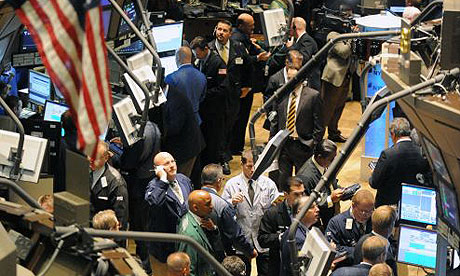
Wall Street traders

Traders at the Wall Street Stock Exchange during the collapse of Lehman Brothers Holdings. Photograph: Rex Features

Daniel Cohn-Bendit

Student leader in Paris, 1968
This financial crisis is for capitalist neo-liberals what Chernobyl was for the nuclear lobby. It's a catastrophe. I hope we all learn lessons from it. But am I optimistic that we will? That's another question. To think that the biggest neo-liberal nation in the world would start nationalising banks ... we're rubbing our eyes in disbelief.
It's not the end of capitalism because capitalism has always had the intelligence to reform itself. It will be the end of capitalism when it's incapable of reforming. However, the belief that the market is god is over. It must now be regulated.
We fought for 20 years to bring attention to climate change. It took us a while, but we were right. This crisis will help us in our arguments for sustainable development - that we need a balance between the environment, society and the economy - but I get no joy from it; it saddens me deeply. Ordinary people lose everything, while the big bankers themselves walk away with millions.
· Daniel Cohn-Bendit was leader of the May 1968 student protests in Paris, when he was known as 'Danny the Red'; he is now a green MP

Jarvis Cocker

Singer
It's really nice seeing capitalism getting its comeuppance. It had gone too far: I think most people can understand capitalism when it's about companies that make real products, but when it's about organisations that just make money ... that's abstract capitalism, it's beyond most ordinary people - and I include myself among them. I mean, you see the FTSE index, or whatever, running along the bottom of the TV screen and generally it just doesn't impinge at all on the way you live your life, and then suddenly you're told your life is going to take a nosedive. Who understands that?
The truly sad thing is that all this is taking place with a so-called Labour government in power, a government that should have the interests of the majority at heart, but has instead played the role of a pimp.
Maybe a bit of a recession will do us some good. A lot of people have been living beyond their means. We've all done it, I've done it: you feel a bit depressed, you go and buy something. People might now actually talk to each other a bit more, make their own entertainment, all those other great northern cliches. The tragedy is that it will be the ordinary people who will bear the brunt. The guys who are responsible may have to sell the yacht.

Salma Yaqoob

Birmingham City councillor
This crisis opens up possibilities for alternative economic models as the wheels come off this one, but I'm worried about the immediate social consequences. A leaked report from the Home Office a couple of weeks ago referred to a rise in racism and social tensions. My concern is that we'll now see some ugly racist scapegoating as politicians try to pass the buck.
When the markets were being treated as gods, we were always being promised that there'd be a trickle-down of prosperity. But all that's trickled down has been a greed-is-good philosophy. The consequence is a more unequal, self-centred, crueller Britain. It's important that we should reflect on the kind of society we've become, but also on the kind of society we want to be. Recently, Unicef reported that Britain's children are the unhappiest in Europe, and I think that is not unconnected to an economic climate that forces parents to work longer and longer hours. We hear a lot of talk about youth and gangs and guns; what we don't talk about are the economic policies that would allow families to nurture each other and make young people feel valued.
The very people for whom it was a sacred othodoxy that there should be no government intervention are now coming to the government on their hands and knees begging for assistance. But what about the government intervening on behalf of ordinary people? Why not do something literally concrete on the ground and start building cheaper social housing? Why not put people at the centre of things?
· Salma Yaqoob is a Birmingham councillor and vice-chair of the Respect party

Ken Livingstone

Former Mayor of London
Sadly, I don't think this will be the end of capitalism. But there is going to have to be a return to a much, much more interventionist state. As a system for the distribution and exchange of goods, you can't beat the market. But the mistake a lot of politicians have made is to think that because the market was good at that, it could be good at everything: it could train workers, create infrastructure, protect the environment, regulate itself. Quite obviously, it can't.
So the real issue is, what sort of international structures do we need to ensure this never happens again? Thatcher and Reagan deregulated massively and let the financial markets do as they liked - and they've turned into one bloody great big rip-off. The good news is, there'll now be a realisation - even George Bush sees this now - that we need international regulatory mechanisms that will ensure, for example, that these people and operations actually pay tax. There'll be a realisation in Britain that while it's certainly useful to host a world financial centre, it has to rest on a solid, genuinely productive real economy. In China now they make things; we've decided we're not interested in that.

Bob and Roberta Smith

Artist
Yesterday, at the same time as Lehman Brothers went belly up and Merrill Lynch was bailed out, Damien Hirst made £70m. This tells us that capitalism is not dead. The rich got richer, and the poor got poorer - and in the evening, the rich went to an art sale and spent the small change in their pockets. This crisis is kind of like the capitalist cat shifting on its cushion.
I don't buy the romanticism of the left: you can't kill capitalism, trade is how people operate. But I do think the left's analysis has to be coruscating and hard. The number-crunching, the smokescreens, that particular flavour of snake oil has to be finished; this has to be about real people now. There should be no self-congratulation, no, "Oh good, they're getting their comeuppance," because behind every banker there are ordinary people in bigger trouble.
· Bob and Roberta Smith is the pseudonym of artist Patrick Brill

Caroline Lucas

Green MEP
This is a defining moment; the end of the kind of unbridled, deregulated capitalism of the past few decades. We are going to have to return finance to its role as servant rather than master of the global economy, and we're going to have to break up financial institutions into smaller units: mega-banks make mega-mistakes that affect us all.
The way forward is the Green New Deal [co-formulated by, among others, Caroline Lucas and Guardian economics editor Larry Elliott]. We have to tackle a triple global crunch. In the face of a credit-fuelled financial crisis, we're going to have to re-regulate finance and taxation, clamp down on tax havens, split retail banking from merchant banking and securities trading. In the face of accelerating climate change, we have to face up to global warming. And in the face of an oil-price crisis, we're going to have to find the solutions to encroaching peak oil.
The situation we're in now is an opportunity, although it remains an enormous threat also. It's the chance for us to move forward in a way that's sustainable economically and environmentally. This is about real people and real jobs, right now. I really wish we'd managed to get that message through before it happened.

Ken Loach

Film director
This is further evidence, if any were needed, of the fact that the market is not and never can be the answer. (The need to pursue illegal wars is pretty strong evidence too, of course.) You look around the world and you see massive need on the one hand, and massive wealth on the other, and the two never connect. The market is massively inefficient, capitalism is massively unstable and turbulent, and it's insane that we are all bound to this terrible wheel of instability.
The real left is making a lot of noise about this. There'll be a convention of the left during the Labour party conference, all the shades of genuine leftwing opinion, and we'll be hammering all these questions out from a socialist perspective. But if the papers and the broadcasters fail to record it, it's very difficult for these ideas to penetrate the public consciousness. The media just turns a deaf ear; it chooses not to hear it. It's a lot more interested in the careerism of whoever's after Gordon Brown's job.
Will this be a defining moment for the left? It should be, of course but it's very difficult to be optimistic given our history of failure. The war against Iraq was a massive opportunity to create a coherent anti-capitalist movement, to find a real socialist alternative, and we let it slip through our fingers. This is another such opportunity, and we must not let it go.

Michel Onfray

Philosopher
Is this the end of capitalism? Absolutely not. The key feature of capitalism is that it's malleable. It has been through antiquity, feudalism, the industrial era, it has worn the guise of fascism and now it's wedding itself to the ecology cause. After this latest event, it will take on a new form. It is indestructible and works like the Hydra of Lerne, cut off one head and another grows in its place. Is this the end of society's obsession with money and credit? Not at all.

Chris Harman

Socialist Workers Party
This is a very, very serious crisis of capitalism: it has been the build-up of private borrowing that has kept the system going, and it's coming unstuck. The whole system is unwinding; the other day we saw the biggest nationalisation in the history of humanity and that still wasn't enough. Governments don't know what to do, and it's the rest of us who have to live with the consequences. The Labour party is offering no alternative, the Lib Dems are offering no alternative, the Conservatives are offering no alternative.
This could be a big moment for the left. But we really need to stand up and use the "c" word, say this is a crisis of capitalism and that people are suffering. The thing is, all the media coverage yesterday was of the bankers leaving Lehman Brothers with their boxes, but the people who will really be hit are the cleaners, the secretaries - what did we see of them? We have to build resistance. Because so far we've only seen the minor problems; people stuck in foreign airports or having a bit of trouble getting a job. Things are going to get much, much worse.
· Chris Harman is the editor of International Socialism (SWP)

George Monbiot

Green campaigner
It's only in times of crisis that people are prepared to contemplate taking to the streets. It was noticeable that there were a lot more protests - against road developments, for instance, and against the Criminal Justice Act and other infringements of civil rights - in the wake of the 1991 recession than there were in the mid-90s, when people were feeling richer. Some people, faced with recession, tend to hunker down, but others confront the government and demand a better deal, and that gives the left hope.
A Keynesian solution along the lines of Roosevelt's New Deal could deliver many of the things that the left is calling for - more public spending, more training and education. I'm particularly interested in the idea of a green new deal, which would employ large numbers of people to insulate homes and carry out major environmental works. Remember that the central plank in the New Deal was the Civilian Conservation Corps, which employed three million people.
It is striking that the left has been slow to capitalise on the situation. There is now a good opportunity to build a common front between trade unions, disillusioned labour voters, greens and people who feel that their economic position is slipping.
· George Monbiot is a Guardian columnist

Max Keiser

Former broker
This is not a blip. It's extremely significant. We will see a shift in power away from the US, and towards the developing world - to countries such as Brazil and the Gulf states that have commodities to sell, and to China, where the savings ratio is high. We are going to see a new world order. America as a driver of the global economy is finished.
The left has nothing to say about any of this. And because the left has no economic programme, we will see the rise of social unrest. We are already seeing it in the US. The left has no real response to that either.
· Max Keiser is a former broker, and presenter of The Truth About Markets on Resonance FM

Tony Benn

Former Labour minister
I remember the 1930s. What the Depression did then was to stimulate antisemitism. I met Oswald Mosley in 1928 when he was a Labour MP. The next time I met him he was wearing a blackshirt. Where there is fear, there is scapegoating, and that is very dangerous.
Blair and Brown based their politics on a belief in the market: the market answered all your needs and the state had to be kept out. That confidence has now collapsed and New Labour is seen for what it is. You can't, as New Labour believed, nurse capitalism.
I believe a new labour movement will emerge from this with a more realistic sense of how capitalism works. There is a left convention at this year's Labour conference, a sort of parallel conference. This year's Labour conference is the first in my lifetime when you will not be allowed to vote, so the left convention will get a lot of attention. At last, after a period when we've been told to trust the gamblers, there are many relevant ideas emerging on the left.

Lindsey German

Stop the War coalition
This growing crisis will mean misery for working people and shows that everything we've been told about the free market has been false. At the same time, it's a big opportunity. Millions of people will be questioning why this has happened, what's wrong with the system, is it 1929 all over again? The left needs to put forward answers. People have the right to work; we have a housing crisis, so why not employ people to build more houses? We are facing great challenges, but there is also a historic opportunity for the left to remake itself. Capitalism has had its chance and failed; now it's socialism's turn.
· Lindsey German is Convenor of the Stop the War Coalition and Left List candidate in this year's London Mayoral election

Sheila Rowbotham

Socialist feminist
In the late 19th century and also in the 1930s, the impact of depression made people begin to question whether the free market and a completely unfettered form of capitalism was the best form of organising society. In both periods it encouraged on the left the idea of a complete social transformation through revolution, and also encouraged people to devise various schemes for social reform. The problem now - unlike in the 1880s, when people discovered the ideas of socialism, and in the 1930s, when it seemed that communism was the solution - is that the left doesn't have a coherent alternative vision.
The Labour party has always been ambiguous about whether it is trying to make capitalism more efficient, or whether it is trying to soften its harshness. Since the 1970s, the left has been much weakened, as neoliberal ideas became totally ascendent. Under Blair, the idea that the Labour party was committed to any redistribution was pushed to the sidelines. I would like to see a new kind of left - a left that would relate to the present predicament. There is a consensus forming that says an unregulated financial system is a disaster, but whether that new left can be formed is questionable. I'd be very glad to see it happen.
· Sheila Rowbotham is professor of gender and labour history at Manchester University

George Galloway

Respect MP
I think the end of capitalism will be a process, not a single event. But each event we've seen so far has gone deeper than people have predicted, and we don't know how deep this one will go. It could well be that it marks the collapse of at least a major section of the capitalist economy: the financialisation of the economy that has been powering ahead since the deregulation and neo-liberalisation of the Thatcher-Reagan years.
As far as the left is concerned, well, the Liberal Democrats have effectively moved to the right in the face of this week's events, and New Labour, with a few honourable exceptions, abandoned that territory a very long time ago. Now I would have thought - in fact, I know - that among the public in general there is a much bigger and a much wider audience for progressive ideas than there has been for some time. But what the left still has to overcome is its inability to speak in a language that ordinary people can understand. And to stop arguing about dead Russians.

Hari Kunzru

Novelist
I'm in New York right now and the feeling here is quite visibly one of panic. I've just met, quite randomly, three people who were helping their friends clear their desks. Apparently, 12,000 jobs went, just like that, and Wall Street represents 20% of the city's jobs and something like 90% its tax base. So there's a definite sense here of systemic crisis.
A great financial economist and historian called Michael Hudson talks about how the US economy is basically fictitious, based on pretend earnings and pretend values. This will only genuinely become a crisis of capitalism if people generally become aware that much of the growth and prosperity produced by capitalism is a fiction, and if the consensus about where the real global value lies shifts radically. In other words, if people stop believing that apparently wealthy countries actually are producing wealth.
I don't immediately expect to be living in some kind of Mad Max world. But this could be the death knell of the time when we were all singing the beauties of free-market capitalism.


Get Hotmail on your mobile from Vodafone Try it Now!

In praise of perversion

Few instincts are so strong or so widely shared as the urge to condemn other people for their sexual idiosyncrasies. And yet, argues Howard Jacobson, it is when we explore the outer boundaries of our sexual desires that we become most fully human

Wednesday, 17 September 2008


"We are all sick in our own way," Felix Quinn declares. Felix Quinn is the hero of my new novel, The Act of Love, and he, admittedly, has an axe to grind. He is a cuckold and he likes it. His idea of a good time is lying lonely in his bed, knowing that his wife is out on the night, enjoying the embraces of her lover. This will be incomprehensible to some men, and not to others. But we shouldn't, where the daemon of sex is concerned, be surprised by anything. I don't always agree with the heroes of my novels but I agree with Felix: we are all sick in our way. In the erotic life of men and women there is no such thing as health.


A new book about Franz Kafka discloses that he was more than casually interested in hard pornography. Lovers of literature shudder inwardly, as they did when they discovered something similar about Philip Larkin, and as an earlier generation shook their heads in disbelief over Charles Dickens's indiscretions with women young enough to be his daughters. Though we want our writing muddied, we like our writers clean. But what else should we have expected of the author of The Metamorphosis and The Trial, those bleakly comic unforgiving tales of ignominy, guilt and shame? This is not to say that pornography is the only explanation for his temperament or the only route he might have taken to explore it, but it makes sense to me that such a man would have found something congenial to him I don't say pleasant or even satisfying in the act of perusing it. "The sense of the tragic increases and diminishes with sensuality," Nietzsche wrote. Meaning that the more the senses engross us, the more philosophically serious we become. It is an important formulation: we are philosophers by virtue of our sexual appetites, not despite them.

Pornography is not, of course, the only expression of sensuality, but some extreme sorts of sensuality tend inexorably in its direction. In its written form, pornography's only convincing conclusion is death, for ecstasy without restraint wants nothing less. Pictorially, too, in the mortuary fixity of its imagery it is essentially morbid, refusing change of mood or flux of feeling. Either way, pornography is a trance, demeaning all parties to it, those looked at and those looking, locking them into a perpetuity of shame. There is nowhere to run to in pornography as there is nowhere to run to in the novels of Kafka. On the last page of The Trial, Joseph K watches impassively as the mysterious "partners" thrust a knife into his heart. "Like a dog!" he says. "It was as if he meant the shame of it to outlive him." That could be pornography he is describing..........

It is not, I hope, perverse of me to cite the above as prime among the reasons along with what we owe to curiosity why we should acquaint ourselves with pornography, in whatever form it takes. In its ominous nothingness, pornography familiarises us with humiliation and humiliation with despair and loss. And loss stimulates the imagination. Winning is a dead end, in sex as in everything else. It is only out of a keen sense of loss that we tell stories, write poems, and learn to liberate ourselves from damagingly misleading optimistic fantasies of sex as purposeful and joyous, whether purposeful in God's sense of procreation in the divine image, or in Darwin's sense of selecting what's best of us for futurity. Sex is for nothing, pornography teaches. Unless you call ignominy something.

When he wasn't looking at pornography or writing The Trial Kafka visited brothels, which if you like is just putting pornography into action. I am glad for his sake and for literature's that he did. I feel about prostitution as I do about pornography that a man ought to avail himself of whatever is on offer. Paid-for sex, in all its varieties sex stripped of responsibility and sentimentality (though even with a prostitute it will not always be so simple) answers to imperatives which respectable courtship and marriage prefer to ignore. Whenever I encounter a man who says he has never visited a prostitute, either because the thought appals him or, as is more commonly asserted, because he doesn't need to pay for sex, thank you very much, I believe that he is lying, or, worse, that he is a fool. Among the many reasons for paying for sex the most salient is the wanting to pay for sex; and that "want" is not to be confused with need. We know that from the examples of famously glamorous men who have all the women their hearts' desire but still routinely get caught and who is to say don't hope to get caught? with a hooker in the back seat of their automobiles. All the women one needs do not satisfy the desire to pay for a woman one does not need.

So what does drive a man to pay for sex, when paying must negate so much of the romantic baggage and vanity with which sex is laden? Loneliness explains some of it, but the lonely are obviously needy, and we are addressing needs which are less apparent. Feminist opponents of the institution of prostitution see paying for sex as an expression, pure and simply, of male aggression. The man shells out to subject a woman to his will. I don't doubt that some men pay to feel in charge, though it's a paltry authority that must be bought and men of this sort will soon discover they can impose themselves more effectively (in their own eyes at least) through violence that doesn't cost a penny. Those who go on paying do so not to assert their masculinity but to demean it. It is an ironic or self-defeating transaction, an act of mockery and submission, a species of masochism whether the man asks the prostitute to beat and degrade him or not. Catherine Millett, author of The Sexual Life of Catherine M, says she took on promiscuity to show that sex is separable from feeling. This is nonsense. The attempt to find feelinglessness in sex is an ambition loaded with feeling. To those who aspire not to feel in the course of a sexual encounter, the attainment of the illusion of feelinglessness is exquisite.

Thus the nothingness one goes in search of in a brothel is, by the wonderful inverse law of eroticism, not a nothingness at all. Beyond a certain stage the stage at which many of us call time on eroticism and pour what's left of our desires into work or an allotment sex functions as an exchange of shame and power: merely functional procreation giving way to the longing to pass from person into thing, to be the instrument (or controller) of another's will, to be less (or more) than human.

"In the end," the great French philosopher of eroticism Georges Bataille wrote, "we resolutely desire that which imperils our life." Not accidentally, not half-heartedly, but resolutely. I do not say we want to die (though on occasions we think we do) but we want sex to take us as close to death as life allows, the paradox being and this is a paradox which most sexual perversions celebrate, whereas love, sweet love does not that we are never more alive than when we are staring into loss..........

Not quite true that love, sweet love does not. Allow love to be its own perversion and it too can take one to the precipice. This is the principle by which my hero Felix lives his life. Imperilled by love and the hold it exerts on him, he embraces the very thing he dreads - embraces it because he dreads it - which is his wife Marisa's infidelity. He is never more alive than when she is in the arms of another man. Othello is, of course, the same: a man energised by jealousy. The difference being that Othello doesn't know that jealousy energises him whereas Felix does. And here's a question: could it be that what appals us most when we descend to jealous rage is not the thought that we have been betrayed, but the kernel of sickly pleasure we discover in it? Is Othello, in other words, more disgusted by himself than he is by Desdemona? The question isn't only academic. Had Othello taken the Leopold Bloom route, or indeed Felix's, and fetishised his fears, might not things have turned out differently for all parties? I don't say happily, I simply say otherwise. Better, anyway, to be familiar with one's nature and accepting of its shameful depths, than to flounder hopelessly as Othello does. Though I accept that tragedy might still await the complaisant husband whose taste for cuckoldom demands ever more extravagant betrayal - a spiral from which the hero of my novel is unable, or unwilling, to break free.

Or is that the moralist in me talking? The masochism into which Felix hurls himself is without doubt self-destructive and tyrannical, but what is not. Perverted or obsessive sex lands up in an emotional cul-de-sac, rubbing at its single itch, finding pleasure only in the one thing endlessly repeated or exacerbated - more and more pain, more and more pornography, more and more visits to houses of ill repute - but that which we call respectability fares no better. When I was growing up it was common to hear husbands call their wives "mother". Whether this was an allusion to their own mother or the mothers of their children their wives had become I doubt they knew. Either way, the wife was locked into her role and the husband into his script. The endearments of the long happily married fulfil the same function, and in the narratives of their cheerful longevity one always detects the cruelty of opportunities foregone, disappointment, equivocation, compromise, and a haunted curiosity as though they know they will go to their graves with the majority of their questions unanswered. You cannot enjoy the consolations of calm if you are an obsessive: but nor can you attain the poisoned bliss vouchsafed to the dissolute and the deranged if you are cautious and well-adjusted. Sex lets no one off.

It is for this reason that we are fools ever to be censorious about the sexual lives of others. It is fair enough that a Catholic bishop should castigate Max Mosley for his romps with prostitutes dressed in pantomime military uniforms. Churchmen exist to excoriate the fleshly. But the rest of us have no business being superior. And no business laughing either. It's true that the banalities of life the cups of tea, the prattle of the whores, our own sad bodies unflattered by the uniforms of fantasy will always compromise our frenzied worship of the god Dionysus. But in desire tomorrow is another day; we wake to find Dionysus every bit as demanding as he was the night before. What's odd is not how Max Mosley passes his time away from motor racing administration but why more of us don't turn our hands to something similar, given the agitation of our curiosity. Which raises the question of where we draw the line between fantasy and fact. Felix acknowledges no such distinction - for him, to want is to do - but then a cuckold is the least dangerous of men. Other sexual preferences are more menacing. That Max Mosley, whatever he intended, was in some measure exorcising his family's ghosts, parodying (to erotic end) their ideology, it is reasonable to surmise; but how would we have felt about such exorcisms had they spilled into actual, un-negotiated violence? It is tempting to take the safety-valve view of pornography and fantasy and see them as licensed liberty, sex's version of carnival. But that consigns the erotic life to an eternity of pretence. And we cannot live forever in pretence. Some doing, outside the mind, is necessary. Thereafter, it is up to society to decide what it can and cannot allow to happen. The best eroticism can do against the law, in so fas as it has a choice in the matter, is to keep pushing the boundaries of the imaginable. We grow a little freer when we read De Sade's One Thousand Days of Sodom, though we know we cannot live up to its lawlessness. The imagination is an unbordered continent. In art, which is the province of the imagination, we do not judge as we judge municipally, as magistrates or policemen. Which is why, whatever our education and our civic institutions try to lull us into believing about the nature of desire, we must find the space to think, and where possible to act, rebelliously, refusing all attempts to confine us to the hell of the normative.

We are strange creatures, part angels of reflection, part beasts that claw the earth. It is too cruel that an accidental species as peculiar as we are should ever have been made to think there is a right way and a wrong way of conducting ourselves sexually, as though there were some divine pattern we were framed to follow. I don't say that giving ourselves over to the demoniacal, or just the deviant, will necessarily make us happy - why should it when it is so rarely happiness we seek in sex? - but the straight and narrow has never yet made anyone anything but miserable.


Howard Jacobson's new novel, 'The Act of Love' is published by Jonathan Cape (17.99)

Sex doctor: Keep your love life spicy

By Tracey Cox
Tuesday, 16 September 2008


You can make love to the same person for the rest of your life in a million different ways, places and situations. Here are some foreplay tips for familiar lovers and some great ideas for just about anyone.


*Combine romance with eroticism. You feel great when he sends you flowers, so why not return the favour? Try sending a bottle of expensive vintage champagne, red wine or port. Now turn that loving gesture into a sexy one. Enclose a note explaining in great detail exactly what he did to deserve such luxurious spoils.

*Become a bookworm. Invest 50 in your love life by walking into any good bookshop and walking out with your arms full of sex books. You don't have to read them cover to cover, just dip inside once in a while to keep things fresh. While you're there, splash out on a racy novel too. Find the good bits and read them out to each other as a form of foreplay.

*Have a bed picnic. Set up chilled wine and an ice-bucket in your bedroom, foods you can eat with your fingers (fresh fruit, chocolates); have an erotic movie playing in the background on the bedroom DVD player.

*Once isn't always enough. There's a lot of hype about women having more than one orgasm, but he likes double helpings too. Have sex in the morning on the weekend, then drag him back to bed an hour later.

*Be her sex slave for a day. An especially good idea if you're broke and her birthday is looming. All you need to do is offer to devote one entire day to pleasuring her.

*Flirt with each other even if you've been together years. Experts say flirting sends natural stimulants surging through the body, creating an instant emotional "high" not unlike orgasm. Pretend you've just met him and act as you did at the beginning. Be aware of your body when you move in front of him and chances are he'll sit up and take notice too.

*Send sexy notes. The written word is extremely powerful. In the fridge stuck to the juice, in her briefcase and make-up bag. Each one describes bits of her you find so sexy. Or you could make them 10 things you'd love to do to her right that second.

*Be his mistress. If he's going to have an affair, make sure it's with you. Arrange to meet him at lunchtime in the bar of a plain but presentable hotel. Book a room, buy a bottle of champagne and have forbidden, illicit, wild sex.

*Remember kissing? It's what you used to do when you first met. Many couples find that kissing stops once the relationship gets going or dwindles to a quick snog before getting down to business. A long, passionate kiss can do more to turn both of you on than putting your hands straight down the front of his trousers.

*Keep your clothes on. Feel each other through your clothing, put your leg in between her thighs and let her gyrate against it.

*Be pushy. Bearing down with your vaginal muscles during sex seems to trigger orgasm for many women.

*Keep your eyes open. Watch what's going on when you have sex: look into their face, watch your genitals moving in and out. Stimulate the sense of sight, not just touch.

*Be unpredictable. You're not going to surprise him if you suggest having sex on a Saturday night as you both climb into bed. But you will catch him unawares if you cuddle him from behind when he's cleaning the car, washing up or reading a book.

*Make the move. If your partner is always the one to initiate sex, the message you're sending is: I do it to please you, not because I want to. This leaves both of you feeling cheated. The person initiating sex feels sexier because they're taking control and giving themselves power. Be the boss by taking the lead role during lovemaking as well.

*Lie a little. He's away on business? The next time he calls you late at night, skip the usual stuff and tell him, in intimate detail, what you're wearing. Move on to what you're going to do to him when you get your hands on him. The juicier the better.

*Try one new thing each fortnight. Start off simple. Have a bath together, give each other a foot massage, take off her top or his shirt without using your hands. Then move into things like making love to them with their hands tied behind their back and masturbating in front of each other.

*If you're excited, show it. The biggest turn-on of all is seeing how much you're exciting your partner. If he's driving you wild, show him better still, say so.


Adapted from 'Hot Sex', by Tracey Cox (Transworld, 8.99)

Tuesday, 16 September 2008

Hank Paulson has turned a drama into a crisis

By punishing shareholders, the US Treasury Secretary had made the rescue of other troubled banks almost impossible
Anatole Kaletsky

It looks as if the prophets of doom may have been right after all. With the demise of Lehman Brothers and Merrill Lynch - and the threatened collapse of the world's largest insurance company, American International Group - we are now unquestionably in the worst financial crisis since the Great Depression.

But does this mean that the “real” economy of non-financial jobs, investment, consumer spending and housing also faces its greatest disaster in 60 years, as Alistair Darling has said?

Probably not. The real economy and the world of finance can easily move in opposite directions. Most of the truly imprudent borrowing and lending of the past few years has occurred within the financial sector, with one bank or hedge fund lending insane amounts of money to another. Much of this debt could, in principle, be wiped away without affecting anybody apart from the financiers who were riding this crazy merry-go-round - and that has been pretty much the story of the past 12 months. Tens of thousands of jobs have been lost in Wall Street and the City, but the impact beyond that has been quite modest, except on property values and some of the luxury goods and services previously bought by these millionaires.

The past few days' events, however, have raised two alarming qualifications to this generally reassuring story. The first is that the decoupling between financial and economic conditions that I have been expecting - and which has broadly happened - can only be a matter of degree. The non-financial economy can shrug off a certain amount of bloodletting in the City and Wall Street, but if the turmoil escalates to the point where a country's entire financial structure starts collapsing, the consequences are bound to be dire for non-financial businesses and jobs.

This tipping point has not yet been reached in America or Britain. But it suddenly seems perilously close - with stock market prices plunging on Monday to the point where serious questions could be raised for the first time about the viability of key financial institutions such as AIG, Citibank and Bank of America, or of UBS in Switzerland or of Halifax, Royal Bank of Scotland and Barclays in the UK.

Why are these banks suddenly in such deep trouble? This brings us to the second alarming qualification to my optimism about economic and financial decoupling.

It could be that the divergence between the financial and real economies, instead of resulting in a better-than-expected performance of the real economy, will take the form of a much more catastrophic financial crisis than the economic fundamentals seem to justify. Such a financial catastrophe could then turn what would have been just a modest economic slowdown or mild recession into a genuine disaster.

The risk of such a disastrous divergence between the worlds of finance and economics, with the financial system spinning completely out of control despite an otherwise decent outlook for the US and world economies, is much greater today than two weeks ago. And the reason can be reduced to one name - Henry Paulson, the Secretary of the US Treasury.

By deciding essentially to wipe out shareholders in Fannie Mae and Freddie Mac and acting even more harshly to the shareholders of Lehman Brothers this weekend, Mr Paulson has sent the clearest possible message to investors around the world: do not buy shares in any bank or insurance company that could, under any conceivable circumstances, run short of capital and need to ask for government help; if this happens, the shareholders will be obliterated and will not be allowed to participate in any potential gains should the bank later recover.

This punitive policy towards the shareholders in Fannie, Freddie and Lehman, who had put more than $20billion of capital into these companies in the hope of keeping them alive, means that no US bank or insurance company can hope to raise any extra capital in the foreseeable future.

This is true of both domestic investors and the Middle Eastern and Asian sovereign wealth funds, whose trillions of dollars of assets were, until a month ago, viewed as an ultimate safety net for the Western financial system.

Both groups have been so badly burnt by Mr Paulson that they are unlikely to support any refinancing by an American bank. And because governments and central bankers elesewhere, particularly in Britain, have loudly praised Mr Paulson's punitive treatment of shareholders, investors would presumably reach similar conclusions about the folly of helping any British bank.

The upshot is that any US or British bank that suffers unexpected losses or is subject to a powerful speculative attack by stock market short-sellers has nowhere to turn. And that in turn means that the total liquidation of a large financial institution in America, Britain or Europe is now seriously conceivable for the first time.

What makes the situation even more alarming is the perversity of the hardline approach taken by the US and British authorities. The investors who were “punished” by the loss of shareholder wealth in Fannie Mae, Freddie Mac and Lehman were not the speculators who encouraged and financed their reckless lending in 2004-06. They were value-orientated investors betting on a long-term recovery in the US economy and whose willingness to invest on the basis of such recovery could have prevented these companies' collapse.

By wiping out these investors - and instead rewarding the speculators who were trying to drive the share prices of these companies down to zero and thereby put them out of business - Mr Paulson has tilted the balance of power in the financial markets to a point where it is impossible to say for certain that any financial institution will survive.

In short, Mr Paulson has created an open season for speculators to attack financial companies around the world. These attacks are likely to continue and grow in ferocity until the point when governments start supporting not just the deposits and bonds, but also the shares of financial institutions whose survival is essential to keeping their economies running.

But surely it is impossible to suggest such a misunderstanding of basic finance from Mr Paulson, a former chairman of Goldman Sachs? Perhaps.

But then it is worth recalling that Andrew Mellon, the US Treasury Secretary under Herbert Hoover in 1929, was also considered the leading financier of his generation, It is also worth recalling that Donald Rumsfeld was supposed to know something about military strategy and President Bush, a former governor of Texas, about emergency flood control.

The fruit of hypocrisy - Dishonesty in the finance sector dragged us here, and Washington looks ill-equipped to guide us out.

The fruit of hypocrisyDishonesty in the finance sector dragged us here, and Washington looks ill-equipped to guide us out
All comments ()
Joseph Stiglitz The Guardian, Tuesday September 16 2008 Article historyHouses of cards, chickens coming home to roost - pick your cliche. The new low in the financial crisis, which has prompted comparisons with the 1929 Wall Street crash, is the fruit of a pattern of dishonesty on the part of financial institutions, and incompetence on the part of policymakers.

We had become accustomed to the hypocrisy. The banks reject any suggestion they should face regulation, rebuff any move towards anti-trust measures - yet when trouble strikes, all of a sudden they demand state intervention: they must be bailed out; they are too big, too important to be allowed to fail.

Eventually, however, we were always going to learn how big the safety net was. And a sign of the limits of the US Federal Reserve and treasury's willingness to rescue comes with the collapse of the investment bank Lehman Brothers, one of the most famous Wall Street names.

The big question always centres on systemic risk: to what extent does the collapse of an institution imperil the financial system as a whole? Wall Street has always been quick to overstate systemic risk - take, for example, the 1994 Mexican financial crisis - but loth to allow examination of their own dealings. Last week the US treasury secretary, Henry Paulson, judged there was sufficient systemic risk to warrant a government rescue of mortgage giants Fannie Mae and Freddie Mac; but there was not sufficient systemic risk seen in Lehman.

The present financial crisis springs from a catastrophic collapse in confidence. The banks were laying huge bets with each other over loans and assets. Complex transactions were designed to move risk and disguise the sliding value of assets. In this game there are winners and losers. And it's not a zero-sum game, it's a negative-sum game: as people wake up to the smoke and mirrors in the financial system, as people grow averse to risk, losses occur; the market as a whole plummets and everyone loses.

Financial markets hinge on trust, and that trust has eroded. Lehman's collapse marks at the very least a powerful symbol of a new low in confidence, and the reverberations will continue.

The crisis in trust extends beyond banks. In the global context, there is dwindling confidence in US policymakers. At July's G8 meeting in Hokkaido the US delivered assurances that things were turning around at last. The weeks since have done nothing but confirm any global mistrust of government experts.

How seriously, then, should we take comparisons with the crash of 1929? Most economists believe we have the monetary and fiscal instruments and understanding to avoid collapse on that scale. And yet the IMF and the US treasury, together with central banks and finance ministers from many other countries, are capable of supporting the sort of "rescue" policies that led Indonesia to economic disaster in 1998. Moreover, it is difficult to have faith in the policy wherewithal of a government that oversaw the utter mismanagement of the war in Iraq and the response to Hurricane Katrina. If any administration can turn this crisis into another depression, it is the Bush administration.

America's financial system failed in its two crucial responsibilities: managing risk and allocating capital. The industry as a whole has not been doing what it should be doing - for instance creating products that help Americans manage critical risks, such as staying in their homes when interest rates rise or house prices fall - and it must now face change in its regulatory structures. Regrettably, many of the worst elements of the US financial system - toxic mortgages and the practices that led to them - were exported to the rest of the world.

It was all done in the name of innovation, and any regulatory initiative was fought away with claims that it would suppress that innovation. They were innovating, all right, but not in ways that made the economy stronger. Some of America's best and brightest were devoting their talents to getting around standards and regulations designed to ensure the efficiency of the economy and the safety of the banking system. Unfortunately, they were far too successful, and we are all - homeowners, workers, investors, taxpayers - paying the price.

· Joseph E Stiglitz is university professor at Columbia University and recipient of the 2001 Nobel prize in economics josephstiglitz.com

Till death do us part: why marriage remains popular

Paul Vallely ponders the surprising resilience of institutionalised monogamy

Tuesday, 16 September 2008


How very modern we are. There is a temptation to think that with fewer people getting married, more divorces, more cohabitation and now civil partnerships for gays we have, in recent decades, overturned a traditional view of marriage that goes back thousands of years. But history tells another tale.


It is true that throughout the late 19th and early 20th centuries, as the population of Great Britain grew, the number of marriages rose steadily, reaching a peak around 1970 as the bulge of babies born after World War II reached child-rearing age. Since then the overall number of people marrying has been declining. Moreover, close to two in five marriages in the UK now ends in divorce one of the highest rates in Europe. Yet what we regard as the traditional institution of marriage may merely be a Victorian middle-class invention and all we're doing now is reverting to an even more traditional pattern of behaviour.

Men and women have always paired off. After the Enlightenment there was a school of anthropology suggesting that humankind's natural state was one of tribal promiscuity, but this was always an ideological standpoint rather than one rooted in empirical evidence. There were cultures in which polygamy (many marriages) or, more correctly, polygyny (many wives) was common. In some societies, particularly after war had wiped out large numbers of men, this practice was at times commonplace but often it was restricted to the kings, chiefs and strong men of the community. Even more rare was polyandry, the union of several husbands with one wife.

History, boringly, shows that monogamy has been the norm; indeed, the numerical balance of the sexes, the overpowering force of human jealousy, and the welfare of children would seem to suggest that monogamy is not just normal, but dictated by evolution. "Between husband and wife friendship seems to exist by nature," as Aristotle put it in his Nicomachean Ethics, "for man is naturally disposed to pairing."

The institution through which human society has regulated sexual activity, and minimised the social conflicts that can arise from it, is marriage. That is what turns sex from a carnal indulgence into a form of social cement that brings legal, social, and economic stability to the pleasures of procreation.

Throughout the ages, there have been people who sought to express this in mystical terms. Marriage was considered to be woven deeply into the human spirit. The complementarity of sexual difference goes beyond legal contract or social institution to become, through the business of love, a binding covenant of mutual faithfulness. In Christian metaphor this is expressed as "one flesh" the notion that the couple no longer own their own body; that their body belongs to the other spouse, and to them both jointly. Eastern Orthodoxy even speaks of marriage as a martyrdom in which husband and wife learn to die to themselves for the sake of the other.

And yet for all that theological extravagance it has not been religion contrary to what many might suppose that has been the chief regulator of marriage. It is the state that has taken the leading role.

Four thousand years ago in Babylon, the king enacted a law decreeing that adulterers should be bound together and drowned. In more civilised Ancient Greece, despite Plato's perverse philosophical recommendation that the family should be abolished, a hierarchy of sexual regulation was in place that Demosthenes summarised with the epigram: "We have mistresses for pleasure, concubines to care for our daily body's needs and wives to bear us legitimate children and to be faithful guardians of our households."

So it continued in Rome, which became the source for many of our own marriage traditions the wedding ring on the third finger of the left hand, the bride in white and veiled, the hand-clasp of the married couple. The Romans too had various degrees of marriage: in one a woman lost the rights of inheritance from her father and gained them from her husband; in another the woman retained control of her own money, making divorce easier for her; in a third less binding form, a man could dispose of his wife by sending her a note saying "take your things away" as one Roman famously did, just because his wife went to the games without telling him.

It is hardly surprising then that serial monogamy which many assume we invented after the swinging Sixties was rife in the latter days of the Roman Republic and throughout the Empire. So much so that the Emperor Augustus tightened up the divorce laws fearing that the new trend would lead to low birth-rates and a population crisis.

Religion, surprisingly, kept a low profile in all this. The Jewish scriptures were full of stories of sexual liaisons which were, shall we say, unorthodox from the father of the faith, Abraham, having a child outside wedlock, to the great king Solomon with his 700 wives and 300 concubines. These were far from simple tales of ordinary family life, though in later Judaism monogamy came to be the ideal.

Christianity for centuries took its lead from St Paul's back-handed recommendation that it was "better to marry than to burn". The gospels were ambiguous on marriage; the first recorded miracle of Jesus was at a wedding, but St Luke's genealogy of Christ included only four women, all of whom had irregular sexual relationships. The early church fathers took the view that since the end of the world was looming, the faithful really had no time for sex, but should get on with preparing for Christ's imminent second coming.

The idea that celibacy, to allow a more single-minded devotion to God and his people, was the preferable option persisted within the church for centuries. The Romans saw early Christianity as decidedly not pro-marriage. And for hundreds of years thereafter the church did not concern itself overmuch with marriage, largely just accepting the marital practices of the societies into which it expanded.

It was not for a thousand years that the church began to claim exclusive jurisdiction over matrimonial cases. Even in the Middle Ages couples were betrothed not at the altar but merely in the porch of the church. It was only in the 1540s that Catholics were required to get married before a priest. And it was the 1750s before British Protestants had to wed in church, Luther having decreed that marriage was not a sacrament but a "worldly thing... subject to worldly authority".

It was only with the coming of the Industrial Revolution that marriage began to be legally codified. It was the Marriage Act of 1753 that demanded a formal ceremony of marriage, with the publishing of banns, and parental consent for minors. It outlawed common-law marriage (the notion that a couple living together were subject to the rights and obligations of a legal marriage). Within 80 years, civil marriages had been recognised as a legal alternative to church marriages under the Marriage Act 1836.

But what persisted through all this and where real change has since come in the modern era was the status of marriage as a social institution. Throughout the centuries, marriage had crucially been an economic arrangement between two families, though among poorer classes it was governed by social form and class more than financial advantage. This reached its high point in the Victorian era. As Charles Pickstone, whose book For Fear of the Angels is an intriguing study of shifting attitudes to sex and marriage, puts it: "The Victorian era, with its high moral standards, was, able to buttress the difficulties of marriage with a scaffolding of public blame and private licence (at least for men)." It was when that scaffolding gave way that marriage shifted from being a social institution to a vehicle for personal fulfilment.

Economics consolidated the shift. Life became more comfortable as the Industrial Revolution continued. The affluent began to have more time on their hands for "relationships". Individuals who in previous centuries would have been content to settle for second best now developed much higher demands of what marriage should deliver emotionally. As the younger generation moved away from home to go to college, and broke links with their extended family, they began to invest more emotionally in marriage and the bond of sexual fidelity.

Women going out to work provided another gear change in the process. A century earlier, John Stuart Mill in The Subjection of Women had pointed out that women's decisions to marry could scarcely be called "free" given their low wages, precarious employment situation and poor educational prospects. The choice to marry, he said, was a Hobson's choice. When women began to go out and earn decent money, things changed again.

Feminist critiques of marriage followed. In The Feminine Mystique in 1963, Betty Friedan criticised the idea that women could only find fulfillment through child rearing and home making. In Feminism: An Agenda, 20 years later, Andrea Dworkin likened marriage to prostitution. Sheila Cronan took the view that marriage constitutes slavery for women, and that liberation meant the abolition of marriage. There followed gender feminism, equity feminism and post-feminism with suggestions that "marriages" should be replaced by five-year rolling contracts or that domestic responsibilities should be set down in legally binding documents.

Most of the world could not quite come round to applying doctrines of jurisprudence to dishwashing and continued to see marriage as rooted in ties of love and affection rather than the principles of justice. But expectations of marriage continued to rise and with it rates of divorce as those elevated expectations were dashed. "If love goes, the marriage goes" became the new orthodoxy. In the past, divorce had been a luxury for the rich, but almost everyone in the West was rich by the end of the 20th century.

Even so, Aristotle's truth still obtains. Marriage remains the commonest form of partnership between men and women. In 2006, of the 17 million families in the UK, 70 per cent were headed by a married couple. And though the number of cohabiting couples has doubled in two decades to around 2.2 million couples in the UK more than half of those will go on to marry.

Wedding ceremonies that a generation earlier had marked the start of a new household within the community now were seen as consolidations of an established relationship. The children of the couple became the bridesmaids and pages. And since cohabiting couples are statistically twice as likely to split up as married ones the wedding ritual has become an expression of stability.

There are new variations on the old theme, with solid second marriages after the failure of a "starter marriage" earlier on. But still today 95 per cent of women and 91 per cent of men in the UK have been married by the age of 50. And divorces have fallen for the past three years.

If the external pressures to marry have declined, the inner ones remain strong. Marriage still has an enduring magic. Even in recessions a high proportion of income continues to be spent on weddings, and the fairytale elements of the veil and white dress persist across the social scale; indeed there is very little difference in how different classes celebrate their weddings, apart from in scale and cost. Four Weddings and a Funeral remains one of the most successful British films ever made.

The fact that a third of marriages now end in divorce seems to make little difference. Couples queue to make vows that are splendidly extravagant. "Love seeks not a promise of affection," as the philosopher Roger Scruton has noted, "but a vow of loyalty" unconditional, lifelong and extraordinarily ambitious.

"The marriage contract is unlike most contracts," writes the academic L J Weitzman in that most unromantic of titles, The Economic Consequences of Divorce. "Its provisions are unwritten, its penalties are unspecified, and the terms of the contract are typically unknown to the contracting parties... No one would sign it if they had read it first."

But we do. And we continue to.